2027 How to Write a Strong SAP Appeal

Co-Founder and Chief Data Scientist
Losing financial aid because of Satisfactory Academic Progress can put enrollment, housing, and graduation plans at risk. College Board's Trends in College Pricing and Student Aid 2024 reports average published tuition and fees of $11,610 for in-state students at public four-year colleges, so even one aid disruption can be costly.
This guide is for students on financial aid warning, suspension, or probation who need to appeal. You will learn what SAP means, what evidence schools expect, how to write the letter, and how to choose the academic plan most likely to keep you moving toward graduation.
Key Things You Should Know
- A strong SAP appeal explains what changed, proves it with documentation, and shows how you will meet the school's GPA, pace, and maximum-timeframe rules.
- Federal SAP rules generally require students to finish within 150% of the published program length, so a 120-credit bachelor's program often has a 180-credit aid limit.
- Because published in-state tuition and fees at public four-year colleges average $11,610, restoring aid can materially affect whether a student can stay enrolled.
What is a SAP appeal and when do you need to submit one?
A SAP appeal is a formal request asking your college to restore financial aid after you failed to meet Satisfactory Academic Progress standards. SAP is not only about grades. Schools usually evaluate whether you have a minimum GPA, whether you are completing enough of the credits you attempt, and whether you can finish your program within the allowed time frame.
You usually need to submit a SAP appeal after your school places you on financial aid suspension. Some students first receive a warning term, while others move directly to suspension depending on the institution's policy and the type of SAP problem. The appeal gives you a chance to explain why you fell short and why the same issue is unlikely to continue.
The most important thing to understand is that a SAP appeal is not a general apology letter. It is a decision document. The financial aid office needs to see a clear cause, a supported explanation, and a realistic plan that matches the school's academic standards.
This table summarizes common SAP situations and what they usually mean for the student's next step. Use it to identify which problem your appeal must address before you start writing.
| SAP issue | What it means | Why it matters for the appeal |
| Low GPA | Your cumulative GPA is below the school's minimum standard, often near a 2.0 for undergraduate programs. | Your appeal should explain the cause of poor grades and show how your grades will improve in specific courses. |
| Low completion rate | You withdrew from, failed, or did not complete too many attempted credits. | Your appeal should address attendance, workload, health, transportation, technology, or other barriers that affected completion. |
| Maximum timeframe | You have attempted too many credits for your degree or certificate. | Your appeal should include a degree audit showing the exact courses still needed to graduate. |
| Repeated or changed programs | Transfer credits, repeated classes, or major changes increased attempted credits. | Your appeal should clarify why the current program is now the right path and how many terms remain. |
You should submit the appeal as soon as you receive the notice, because many colleges set short deadlines before the next term's payment due date. If you miss the deadline, you may need to pay out of pocket, enroll part time, or sit out until the next appeal cycle.
How do you write a strong SAP appeal letter step by step?
A strong SAP appeal letter is short, specific, and supported by documents. The goal is to help the reviewer understand three things: what happened, what has changed, and why your academic plan is now realistic.
Use the following sequence to build the letter before you submit it. Each step should connect directly to the school's SAP standards and your evidence.
- Read the SAP notice and identify the exact standard you failed, such as GPA, pace, maximum timeframe, or more than one standard.
- Open the letter with your name, student ID, program, term, and a direct statement that you are appealing financial aid suspension.
- Explain the circumstance that affected your academic performance, using plain language and dates when possible.
- Take responsibility without overexplaining, blaming instructors, or making the letter sound like an excuse.
- Describe what has changed since the problem occurred, such as treatment, a reduced work schedule, stable housing, childcare coverage, or a new course plan.
- List the documentation you are attaching and make sure every document supports a claim in your letter.
- Summarize your academic improvement plan, including courses, credit load, tutoring, advising, and grade targets.
- Close with a clear request for financial aid reinstatement and a commitment to meet SAP by the required checkpoint.
Keep the tone professional and factual. A reviewer does not need every personal detail, but they do need enough context to see that the appeal is credible. For example, "I missed several weeks of class because I was hospitalized from March 3 to March 17, and I have attached discharge paperwork" is stronger than "I had health problems."
Here is a simple structure you can adapt without copying word for word:
Dear Financial Aid Appeals Committee, I am writing to appeal my financial aid suspension for the upcoming term. I did not meet SAP because my completion rate and GPA fell below the required standards after a documented medical and family emergency during the spring term. Since then, I have completed treatment, adjusted my work schedule to weekends only, met with my academic advisor, and created a term-by-term plan to complete the courses required for my degree. I am attaching medical documentation, an advisor-approved academic plan, and proof of tutoring appointments. I respectfully request reinstatement of my financial aid so I can continue my program and return to good SAP standing.
The biggest mistake is writing a long emotional letter without a corrective plan. A strong appeal does not simply ask for another chance; it shows why the next term will be different.
What reasons and documentation strengthen a SAP appeal for financial aid?
Schools usually approve SAP appeals when the student can show an unusual, disruptive, or serious circumstance and provide documentation. Common examples include illness, injury, family emergency, death of a close relative, housing instability, domestic violence, military service obligations, unexpected childcare disruption, or other events outside the student's normal control.
The documentation should be specific enough to verify the timing and seriousness of the situation. This table shows examples of evidence that may support different appeal reasons, but your school may require its own forms or formats.
| Appeal reason | Potential documentation | What the reviewer is trying to verify |
| Medical or mental health issue | Provider letter, discharge paperwork, treatment plan, appointment summary | The condition occurred during the affected term and interfered with attendance, coursework, or exams. |
| Death in the family | Obituary, death certificate, funeral program, travel records | The timing and relationship reasonably explain the academic disruption. |
| Family or caregiving emergency | Court documents, caregiver letter, school closure notice, social service record | The student had a temporary responsibility that affected academic performance. |
| Housing, food, or financial instability | Lease termination, shelter letter, benefits record, employer letter | The barrier was significant and has been addressed or stabilized. |
| Military, legal, or civic obligation | Orders, summons, court record, official agency letter | The obligation conflicted with the enrollment period or course requirements. |
Some circumstances are harder to document, but that does not mean you should give up. If you cannot get a medical or legal record, ask whether the school accepts a third-party letter from a counselor, advisor, employer, clergy member, case manager, or community agency. Avoid submitting unsupported statements when stronger documentation is available.
The strongest appeals also explain the resolution. A hospital visit explains what happened; a follow-up care plan explains why the problem is now being managed. A job-loss notice explains financial stress; a new work schedule shows that the conflict has changed.
Common documentation mistakes can weaken an otherwise valid appeal. Watch for these red flags before submitting.
- Submitting private details that are not relevant while leaving out dates, term names, or the academic impact.
- Attaching documents that prove the event occurred but not that it overlapped with the failed term.
- Relying only on a personal statement when third-party records are reasonably available.
- Claiming the issue is resolved without explaining what changed in your schedule, care plan, finances, or support system.
If your appeal involves sensitive information, ask the financial aid office how documents are stored and who reviews them. You should be honest, but you do not need to disclose more than is necessary for the school to make a decision.
What SAP standards do colleges use to decide financial aid eligibility?
Colleges that award federal student aid must have a SAP policy that is at least as strict as the policy used for students in the same academic program who are not receiving federal aid. The exact thresholds vary by school, but the core categories are consistent across U.S. institutions.
The federal framework matters because your appeal has to address the specific standard you missed. A student with a strong GPA but too many withdrawals needs a different plan than a student who completed all classes but earned low grades.
| SAP standard | Common meaning | Typical evidence in an appeal |
| Qualitative standard | Academic quality, usually measured by cumulative GPA. | Grade trend, retake plan, tutoring schedule, reduced course load, advisor notes. |
| Quantitative pace | The percentage of attempted credits that you successfully complete. | Completion plan, explanation for withdrawals or failures, schedule changes. |
| Maximum timeframe | The outer limit for aid-funded attempted credits, commonly 150% of the published program length. | Degree audit, remaining-course list, graduation timeline, major-change explanation. |
| Evaluation frequency | How often the school checks SAP, such as each term or annually. | Awareness of the next checkpoint and plan to meet it by that date. |
| Appeal/probation conditions | Requirements you must meet if the appeal is approved. | Signed academic plan, required GPA, course completion requirement, advising agreement. |
A key federal benchmark is the 150% maximum timeframe rule. For a 60-credit associate degree, this often means financial aid eligibility may be limited to 90 attempted credits. For a 120-credit bachelor's degree, it often means 180 attempted credits. Transfer credits accepted toward the program may count, so students who changed majors or transferred schools should pay close attention to this rule.
The GPA standard is also important, but students should not assume that a 2.0 always solves the issue. A program may have higher academic requirements, especially in nursing, education, engineering, or other selective majors. Graduate programs may also require a higher GPA than undergraduate programs.
Before writing your appeal, ask the financial aid office for your SAP calculation. You need to know your attempted credits, earned credits, current GPA, required GPA, and how many credits remain in the program. Without those numbers, your academic plan may sound sincere but fail to address the actual eligibility problem.
How does a SAP appeal affect your ability to stay enrolled and graduate?
A SAP appeal can affect both your financial aid and your enrollment strategy. If approved, you may be placed on financial aid probation for one term or allowed to continue under an academic plan for more than one term. If denied, you may have to pay without federal aid, reduce your course load, use a payment plan, transfer, or pause enrollment while you regain eligibility.
The best decision depends on how close you are to meeting SAP. If you only missed the standard by a small margin and the underlying problem has been resolved, staying in your current program may make sense. If you are far below the pace requirement or near the maximum timeframe, a degree audit and a candid advisor meeting are essential before you borrow or pay out of pocket.
Students sometimes respond to SAP suspension by enrolling in too many credits to "catch up." That can backfire. A heavier schedule may improve pace only if you pass everything, but another failed or withdrawn term can make the recovery much harder. A smaller schedule with high completion may be the smarter choice.
For students considering a program change after a SAP problem, it is worth comparing workload, transfer credits, and completion requirements rather than choosing only by perceived difficulty. Researching easy degrees to get online can help you understand which programs may offer more flexible pacing, but the right choice still depends on accreditation, career goals, and how your credits apply.
This comparison can help you think through common paths after a SAP appeal decision. It is not a substitute for school-specific advice, but it shows the trade-offs that matter most.
| Option | When it may make sense | Main risk |
| Stay full time after approval | You have a realistic academic plan, stable schedule, and manageable course difficulty. | Another poor term can lead to renewed suspension or dismissal. |
| Enroll part time after approval | You need to rebuild grades while working, caregiving, or managing health needs. | Graduation may take longer, and some aid or housing rules may require minimum enrollment. |
| Pay out of pocket after denial | You can afford a limited number of credits and need only a few successful classes to regain SAP. | Out-of-pocket costs can add financial pressure without guaranteeing future aid restoration. |
| Transfer programs or schools | Your current program no longer fits, or transfer credits apply better elsewhere. | SAP history, credit transfer, and aid rules may still affect eligibility. |
| Pause enrollment temporarily | You need time to stabilize health, finances, work, housing, or family obligations. | A break can delay graduation and may affect loan repayment timing. |
Regaining SAP is not only about keeping aid for the next term. It also protects degree momentum. The longer a student is away from school, the more likely work, family, and financial responsibilities can make returning harder.
How should you work with academic advisors when preparing a SAP appeal?
Your academic advisor is one of the most important people in a SAP appeal because the financial aid office needs to see that your plan is academically possible. An advisor can verify remaining requirements, identify repeated courses, recommend a realistic credit load, and help you avoid classes that do not count toward the degree.
Meet with your advisor before submitting the appeal, not after. Bring your SAP notice, unofficial transcript, degree audit, work schedule, and any known constraints such as childcare, transportation, internet access, or medical appointments. The more specific you are, the more useful the plan will be.
Ask focused questions during the meeting so your appeal includes concrete details. These questions help you turn a general desire to improve into a plan the school can evaluate.
- Which SAP standard did I fail, and by how much?
- How many credits must I complete next term to meet the pace requirement or stay on plan?
- What grades do I need in specific courses to raise my cumulative GPA?
- Which remaining courses are required for my degree, and which are optional or not aid-eligible?
- Should I repeat any failed courses, and how will repeats affect GPA, pace, and aid eligibility?
- Is my proposed course load realistic given my work, family, health, and transportation constraints?
- Can you provide or sign an academic plan for my appeal packet?
Advisors may not decide whether your aid is reinstated, but their input can make the appeal stronger. A letter that says "I will do better" is weak. A letter that says "My advisor and I reduced my schedule to 9 credits, replaced a non-required elective, and added weekly tutoring for college algebra" is much more credible.
Be careful not to ask an advisor to approve an unrealistic plan just because you want to graduate quickly. If the plan requires perfect grades in too many difficult courses while you work long hours, the appeal committee may question whether it is achievable.
What academic improvement plans do schools expect with a SAP appeal?
An academic improvement plan is the school's roadmap for getting you back into good SAP standing. It may be a one-term probation plan or a multi-term plan, depending on whether you can meet SAP by the end of the next term. The plan should be specific enough for the school to measure progress.
Most schools expect the plan to include both academic requirements and support actions. Your goal is to show that you understand the standards and have built safeguards around the areas that caused the SAP problem.
- Course list for the next term, limited to classes that count toward your program.
- Target grades or minimum term GPA required to raise your cumulative GPA.
- Minimum number of credits you must complete without withdrawing.
- Tutoring, writing center, math lab, disability services, counseling, or other academic support appointments.
- Advising check-ins before registration, midterm, and the withdrawal deadline.
- Work-hour, childcare, transportation, housing, or technology changes that make attendance and studying more reliable.
- A graduation timeline if you are close to the maximum timeframe limit.
If your appeal is approved under an academic plan, read the conditions carefully. Some schools require you to pass every class, earn a specified term GPA, avoid withdrawals, or take only approved courses. Violating the plan can lead to another suspension even if your overall performance improves.
Students who plan to continue into graduate school should also think ahead, but they should not use future ambitions to justify an unrealistic current schedule. Accelerated options such as 1-year master's programs online may be attractive later, but a SAP appeal should focus first on completing the current credential with stable academic progress.
One practical way to strengthen the plan is to build in checkpoints before problems become permanent. For example, commit to meeting an advisor before the add/drop deadline, checking grades at midterm, and contacting tutoring before the first failed quiz rather than after the final exam.
How do online, hybrid, and campus programs handle SAP and appeals differently?
Online, hybrid, and campus programs usually follow the same federal SAP framework if they award federal financial aid, but the student experience can differ. The appeal review may also vary because different formats create different academic risks.
Online students often cite technology access, time management, isolation, or asynchronous deadlines as barriers. Campus students may face commuting, housing, class attendance, or lab scheduling issues. Hybrid students have to manage both online and in-person expectations. Your appeal should match the format you are actually using.
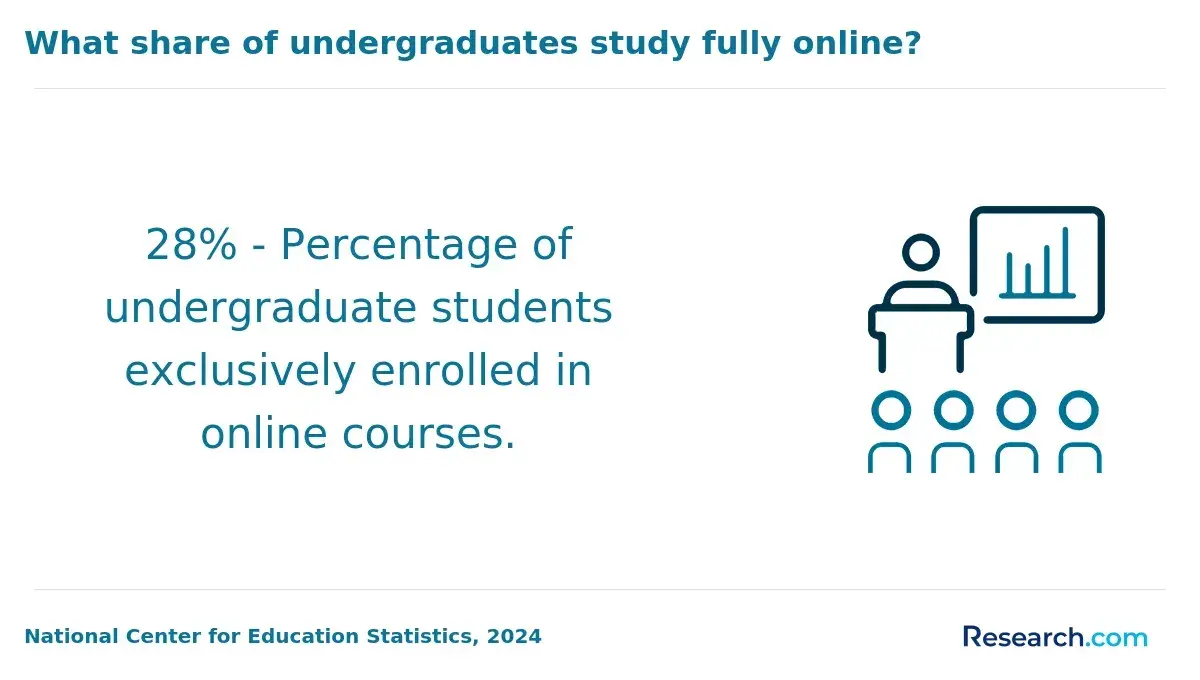
Online education remains a major part of U.S. higher education. NCES data released in 2024 shows that millions of U.S. college students take at least one distance education course, which means SAP policies increasingly affect students who are balancing school with work, caregiving, and remote learning. For readers, the takeaway is simple: flexibility helps only when the program structure matches your habits and support needs.
This table compares format-specific SAP considerations. Use it to identify what your appeal should address if your academic challenges were tied to course delivery.
| Program format | Common SAP challenge | What to address in the appeal |
| Online | Missed deadlines, weak time management, technology problems, limited instructor contact. | Reliable internet, weekly study schedule, LMS reminders, virtual tutoring, instructor communication plan. |
| Hybrid | Confusion between online and in-person requirements, commute conflicts, lab or clinical scheduling. | Calendar system, transportation plan, clear attendance strategy, reduced work conflicts. |
| Campus | Attendance issues, commuting, housing instability, childcare, schedule conflicts. | Housing or transportation stability, childcare coverage, realistic class times, campus support use. |
| Accelerated | Fast deadlines and heavy weekly workload. | Reduced outside commitments, prior success in intensive courses, frequent advisor check-ins. |
If you are considering transferring to a more flexible format after a SAP issue, compare policies before applying. Lists of accredited online universities with no application fee can help reduce upfront search costs, but you still need to ask how SAP history, transfer credits, and aid eligibility will be reviewed.
A common mistake is assuming online courses are automatically easier. In reality, online courses may require more self-management because reminders, attendance cues, and peer accountability are less visible. If your appeal involves online learning, show exactly how you will manage weekly deadlines.
How can regaining SAP status influence future career and salary prospects?
Regaining SAP status can influence long-term outcomes because it helps you preserve access to aid, continue earning credits, and complete the credential tied to your career plan. It does not guarantee a job or salary, but it can keep you on the education path required for many occupations.
The salary context is important. The U.S. Bureau of Labor Statistics reported in 2024 that full-time workers age 25 and older with a bachelor's degree had median weekly earnings of $1,543, compared with lower median earnings for workers with only a high school diploma. This does not mean every degree pays off equally, but it shows why completing a credential can matter in the labor market.
Your SAP appeal should connect to graduation, not just aid. If the program still fits your career goal, the appeal protects your investment. If the program no longer fits, the appeal process may reveal that a major change, transfer, certificate, or different schedule is smarter than continuing in a path with weak motivation or poor credit applicability.
Students who recover academically and later consider graduate education should weigh cost carefully. Comparing affordable master's degrees online can be useful for long-term planning, especially if undergraduate SAP problems were partly tied to debt stress or overwork.
AI and automation also make program choice more important. Employers increasingly value applied skills, digital fluency, communication, and evidence of persistence. A SAP appeal can show personal resilience, but your degree plan should still build marketable skills through projects, internships, clinicals, portfolios, licensure preparation, or industry-aligned electives.
Before recommitting to a program after a SAP issue, ask whether the credential leads to a clear next step. Good signs include required internships, licensure alignment where relevant, transparent career services, transfer pathways, and courses that build demonstrable skills. Red flags include unclear outcomes, excessive unused credits, weak advising, or a major chosen only because it seems easier in the short term.
How do you compare accredited colleges' SAP policies before choosing a program?
SAP policies can affect the real cost and risk of attending a college, so they should be part of your program comparison. Accreditation, tuition, transfer credit, aid packaging, and graduation support all matter, but SAP rules determine what happens if life interrupts your progress.
When comparing colleges, first confirm institutional accreditation through recognized U.S. accrediting agencies and make sure the program fits any licensure or employer requirements in your field. Accreditation alone does not guarantee quality or affordability, but it is often essential for federal aid, credit transfer, graduate admissions, and professional eligibility.
This table summarizes SAP policy questions to ask before choosing or transferring to a program. The goal is to identify schools that are transparent, supportive, and realistic about student recovery.
| Policy area | Question to ask | Why it matters |
| Evaluation timing | How often do you check SAP? | Frequent checks can catch problems earlier, but they can also lead to faster suspension. |
| Warning term | Do students receive a warning term before suspension? | A warning term may give you time to recover before aid is suspended. |
| Appeal requirements | What documents and forms are required? | Clear requirements reduce the chance of denial for an incomplete appeal. |
| Academic plans | Can students remain eligible under a multi-term plan? | This matters if you cannot mathematically regain SAP in one term. |
| Transfer credits | How do accepted transfer credits count toward SAP pace and maximum timeframe? | Transfer students can lose eligibility faster if many credits count as attempted. |
| Repeated courses | How do repeats affect GPA, completion rate, and aid? | Repeating failed courses may help GPA but can also affect attempted-credit calculations. |
| Support services | Are tutoring, advising, disability services, and emergency grants available? | Support services can make an approved appeal more likely to succeed. |
Program fit can also depend on personal circumstances. For example, students with criminal records should compare admissions rules, field placement requirements, licensure barriers, and employer expectations before enrolling; resources on degrees felons can get may help frame those questions before choosing a path.
Do not choose a college based only on the lowest tuition or fastest completion promise. A low-cost program with poor transfer-credit evaluation or unclear SAP recovery rules can become expensive if aid is suspended. Likewise, a fast program may be risky if you need a slower pace to maintain grades and completion.
The best school for a student with prior SAP challenges is usually one that offers transparent policies, proactive advising, flexible scheduling, and a degree plan that uses as many applicable credits as possible. Before enrolling, ask for the SAP policy in writing and request an unofficial review of how your credits and academic history would be treated.
Other Things You Should Know About
A SAP appeal letter is usually best at one page, or about 300 to 600 words, unless your school asks for a specific format. It should be long enough to explain what happened, what changed, and what plan you will follow.
It is possible at some schools, but it is less likely. Documentation makes the appeal more credible because it verifies the timing and seriousness of the circumstance that affected your grades or completion rate.
You may have to pay out of pocket, enroll without federal aid, reduce your course load, transfer, or pause enrollment. Ask whether you can submit a second appeal, what new evidence is required, and what grades or credits you need to regain eligibility.
No. Approval usually restores aid conditionally, but your transcript and SAP calculation still reflect attempted credits, completed credits, withdrawals, and grades. You must meet the probation or academic plan requirements to keep aid.
References
- Satisfactory Academic Progress for Financial Aid https://moore.edu/admissions-aid/tuition-financial-aid/financial-aid-resources/satisfactory-academic-progress-for-financial-aid/
- Satisfactory Academic Progress (SAP) - Maintaining Eligibility for Financial Aid https://catalog.morgancc.edu/satisfactory-academic-progress-sap-maintaining-eligibility-for-financial-aid
- Maintaining Motivation and Consistent Career Growth in SAP - IgniteSAP https://ignitesap.com/maintaining-motivation-and-consistent-career-growth-in-sap/
- Satisfactory Academic Progress (SAP) Policy for Financial Aid Recipients - Mayland Community College https://www.mayland.edu/catalog/policies-and-procedures/satisfactory-academic-progress-policy/
- Writing a Successful SAP Appeal: Guide and Examples https://www.gradgpt.com/blog/sap-appeal-personal-statement-examples
- SAP Appeals That Work: Templates and Strategies from Successful Cases https://aimilitaryservices.com/blog/sap-appeals-that-work/
- Requesting an SAP Appeal https://wcc.yccd.edu/student/financialaid/requestingsapappeal/
- Ask a Question https://www.lonestar.edu/satisfactory-academic-progress.htm
- SAP appeal support https://www.uaspire.org/resources/financial-aid-resources/sap-appeal-support-for-students