2027 College Success for Students Who Work Full-Time

Co-Founder and Chief Data Scientist
Working full-time while earning a degree is a scheduling, money, and career decision all at once. NCES' latest college employment reporting shows that about 40% of full-time undergraduates and 74% of part-time undergraduates worked while enrolled, so this is not a niche path.
This guide is for adults, career changers, parents, and traditional students who cannot stop working. You will learn how to choose a realistic program, set a sustainable course load, compare online and campus options, use aid wisely, and avoid decisions that delay graduation.
Key Things You Should Know
- Most full-time workers should plan around time capacity first: 6 to 9 credits per term is often more sustainable than a 12-credit full-time load when work requires 35 to 40 hours weekly.
- Cost comparisons should include total price, not tuition alone; College Board's 2024 data lists average published 2024-25 tuition and fees at $4,050 for public two-year in-district colleges and $11,610 for public four-year in-state colleges.
- Online and hybrid programs usually fit working adults best when they are accredited, asynchronous, transfer-friendly, and supported by evening advising, prior learning assessment, and career services.
How can you balance full-time work and college to stay on track for graduation?
Balancing full-time work and college starts with defining the real constraint: time. Full-time employment usually means 35 to 40 hours per week, while each college credit commonly requires several hours of class time, reading, assignments, and exam preparation. The goal is not to be busy; it is to create a weekly structure that you can repeat for an entire term without falling behind.
A practical plan begins with a graduation map rather than a vague intention to "take classes when possible." Ask your advisor to show the exact courses, prerequisites, course rotation, and credit requirements for your degree. This matters because many delays happen when working students take available courses that do not count toward their major, miss prerequisite sequences, or enroll in classes offered only once per year.
Use the following sequence before each term to protect both your GPA and your work performance:
- List non-negotiable work hours, commute time, caregiving time, and sleep before adding classes.
- Choose courses based on workload mix, not just credit count; avoid stacking multiple writing-heavy, lab-heavy, or math-intensive courses unless you have extra time.
- Block weekly study sessions on your calendar before the term starts, including a backup block for overtime or family interruptions.
- Tell instructors early that you work full-time and ask about deadline policies, exam windows, group projects, and required live attendance.
- Review your progress at week three, not midterm, because early corrections are easier than late withdrawals.
The biggest mistake is treating college as whatever fits after work. Students who stay on track usually reverse that logic: they protect a few predictable academic blocks each week and then build work, family, and errands around those blocks where possible. If your work schedule changes every week, prioritize asynchronous courses, shorter sessions, or programs designed for adult learners.
| Common obstacle | Why it delays graduation | Better alternative |
| Taking random open courses | Credits may not apply to the degree or may delay prerequisites. | Use a degree audit and confirm every course with an advisor. |
| Overloading to "finish faster" | Work fatigue can lead to withdrawals, failed courses, or lower grades. | Use a steady load you can complete with strong performance. |
| Ignoring course rotation | A missed prerequisite can push required courses into a later term. | Ask when each required course is offered before registering. |
| Waiting to ask for help | Small issues become GPA, aid, or academic probation problems. | Contact tutoring, advising, and instructors during the first difficulty. |
What types of degree programs best fit students who work full-time?
The best degree program for a full-time worker is one that matches the student's available time, career goal, prior credits, and tolerance for long-term commitment. A "best" program is not always the fastest or cheapest; it is the one you are most likely to finish and use.
Working students often compare certificates, associate degrees, bachelor's degrees, master's degrees, and doctoral programs. The right choice depends on whether you need a credential for entry, promotion, licensure, or a career change. Students who need a faster starting point may consider an online associates degree, especially if they want a lower-cost path that can later transfer into a bachelor's program.
The table below compares common credential options for full-time workers. Use it to identify the level that fits your current goal before you compare individual schools.
| Program type | Best fit for full-time workers who need | Typical strengths | Key caution |
| Certificate | A focused skill upgrade or entry into a technical role | Shorter timeline, targeted coursework, often career-specific | May not substitute for a degree when employers require one |
| Associate degree | A lower-cost start, transfer pathway, or credential for allied health, IT, business, or public service roles | Usually fewer credits than a bachelor's degree and often available at community colleges | Transfer policies must be checked before enrolling |
| Bachelor's degree | Access to roles that require a four-year degree or long-term career mobility | Broadest undergraduate credential for many professional fields | Time to completion can expand if credits do not transfer cleanly |
| Master's degree | Promotion, specialization, career change, or professional advancement | Often designed for adults with existing work experience | ROI depends heavily on field, employer, and credential requirements |
| Doctoral degree | Executive, research, academic, or advanced professional goals | Can support leadership or specialized expertise | Requires sustained time commitment and careful program fit |
Choose a certificate when you need a narrow skill quickly, such as data analytics, medical coding, project management fundamentals, cybersecurity basics, or bookkeeping. Choose a degree when your target role commonly screens for formal education, requires licensure, or offers stronger advancement with a completed credential. If you already have credits, the fastest path may be a degree-completion program rather than starting over.
Red flags include programs that will not provide a transfer evaluation before enrollment, unclear accreditation, vague career outcomes, or schedules built around daytime attendance. For working adults, flexibility is not a bonus feature; it is a completion factor.
Are online degree programs or campus programs better for full-time working students?
Online programs are often better for full-time working students when the program is accredited, asynchronous, and built with strong student support. Campus programs can be better when the field requires hands-on labs, clinical placements, studio work, networking, or access to specialized equipment. The right choice is less about format and more about whether the schedule and learning model fit your life.
Online learning is especially useful for workers with fixed shifts, caregiving responsibilities, long commutes, or frequent travel. However, online does not mean easy. Strong online courses still require deadlines, discussion participation, exams, projects, and consistent reading. Students who need face-to-face structure may perform better in hybrid or evening campus programs.
The table below summarizes the main trade-offs. Use it to compare program delivery formats before you focus on rankings or advertising claims.
| Format | Best for | Advantages | Limitations |
| Fully online asynchronous | Workers with unpredictable schedules or limited commute time | High flexibility and easier access from any location | Requires self-discipline and clear time management |
| Online synchronous | Students who want live interaction but cannot commute | Real-time class discussion and instructor access | Live meeting times may conflict with shifts |
| Hybrid | Students who need some campus support or hands-on learning | Balances flexibility with in-person connection | Campus requirements may still disrupt work schedules |
| Evening or weekend campus | Workers near campus who learn best in person | Structured routine and direct access to facilities | Commute, parking, and schedule rigidity can add stress |
| Competency-based | Experienced adults who can move quickly through familiar material | May reward prior knowledge and self-paced progress | Not ideal for students who need frequent instructor structure |
Before choosing online or campus, ask whether exams require proctoring, whether group projects require live meetings, whether labs or practicums happen during business hours, and whether student services are available outside 9-to-5 office hours. A program that looks flexible on the homepage can still be difficult for a working adult if advising, tutoring, or clinical placement support is unavailable after work.
How many credits or courses should you take each term while working full-time?
The right credit load depends on your work schedule, course difficulty, family responsibilities, financial aid status, and deadline tolerance. Many colleges define 12 undergraduate credits as full-time enrollment, but full-time enrollment is not always realistic for someone working full-time. A sustainable load is the number of credits you can complete successfully without repeated withdrawals or GPA damage.
A useful starting point is to test your capacity with 6 credits if you are new to college, returning after several years, changing fields, or working overtime. Students with stable schedules and strong academic habits may handle 9 credits. A 12-credit load while working full-time is possible, but it usually requires a highly predictable work schedule, limited outside obligations, and disciplined weekly study blocks.
Use this planning guide to choose a term load. It is not a rule, but it helps you avoid enrolling based on optimism instead of available hours.
| Weekly work situation | Often realistic course load | Who may choose it | Main risk |
| 40+ hours, overtime, rotating shifts, or caregiving | 3 to 6 credits | Students protecting GPA or adjusting to college | Longer time to graduation |
| 35 to 40 hours with stable schedule | 6 to 9 credits | Many full-time workers seeking steady progress | Requires consistent weekly study routines |
| 30 to 35 hours or flexible remote work | 9 to 12 credits | Students with strong support and predictable time | Burnout if multiple hard courses overlap |
| Temporary reduced hours or employer education leave | 12+ credits | Students trying to accelerate for one term | High workload and less margin for disruption |
Credit load also affects financial aid. Federal aid rules often use enrollment intensity, and many grants, loans, scholarships, and employer tuition benefits have minimum-credit requirements. The 2024-25 maximum federal Pell Grant is $7,395, but the actual amount depends on eligibility, cost of attendance, and enrollment intensity. That means dropping from full-time to half-time can affect aid, so speak with financial aid before changing your schedule.
Do not assume that faster enrollment equals faster completion. A student who completes 6 credits every term, including summer, may outpace a student who attempts 12 credits, drops one course, and repeats another. Completion beats attempted credits.
What admission requirements and scheduling options should working adults look for in colleges?
Working adults should look for admissions and scheduling policies that reduce friction. Many colleges advertise flexibility, but the details determine whether the program truly works for someone employed full-time. Admissions requirements, transfer credit rules, start dates, and course delivery can either shorten your path or create hidden delays.
If your past GPA is a concern, do not rule yourself out automatically. Some institutions use open admissions, test-optional policies, provisional admission, or holistic review for adult learners. Researching online colleges that accept 2.0 GPA can be useful for students who have older academic records but stronger recent work experience.
Before applying, check these features because they directly affect whether you can start, persist, and graduate while working:
- Regional or national accreditation appropriate to your goal: Accreditation affects credit transfer, graduate school eligibility, employer recognition, and licensure pathways.
- Transfer credit evaluation before enrollment: Ask for a written estimate showing which previous credits count toward general education, electives, and major requirements.
- Multiple start dates: Monthly, eight-week, or six-start calendars can help adults begin sooner without waiting for a traditional semester.
- Asynchronous course options: These are important if work shifts change or if live class times conflict with employment.
- Evening and weekend support: Advising, tutoring, library help, technical support, and financial aid counseling should be available when workers can use them.
- Prior learning assessment: Some colleges award credit for military training, professional certifications, standardized exams, portfolios, or documented workplace learning.
- Clear practicum or clinical scheduling: Education, counseling, nursing, social work, and allied health programs may require site hours that are difficult to complete during standard workdays.
Admissions red flags include pressure to enroll before receiving transfer information, unclear licensure disclosures, vague statements about accreditation, or advisors who cannot explain how often required courses are offered. If a school cannot show you a realistic term-by-term plan, keep comparing options.
How do tuition, fees, and financial aid work for students employed full-time?
Tuition is only one part of the cost of college for full-time workers. The total price can include fees, books, technology, transportation, childcare, lost overtime, exam proctoring, graduation fees, and unpaid practicum hours. A lower tuition rate may not be the best deal if the program accepts fewer transfer credits or delays completion.
College Board's 2024 Trends in College Pricing reports average published 2024-25 tuition and fees of $4,050 at public two-year in-district colleges, $11,610 at public four-year in-state colleges, and $43,350 at private nonprofit four-year colleges. For working students, the takeaway is not that one sector is automatically best; it is that credits accepted, time to completion, and aid eligibility can change the real cost substantially.
Students considering graduate study should compare total program cost carefully, because per-credit pricing and required credits vary widely. Lists of online affordable master's programs can be a starting point, but you should still verify fees, transfer limits, employer reimbursement rules, and graduation requirements directly with each school.
The table below shows the main cost categories working students should compare. This helps you avoid choosing a school based only on the tuition number in an advertisement.
| Cost factor | Why it matters for full-time workers | What to ask the school |
| Tuition per credit | Determines the base academic cost | Is tuition different for online, out-of-state, or upper-division courses? |
| Required credits after transfer | Controls how long you pay and how long you study | How many credits remain after my official evaluation? |
| Fees | Technology, lab, program, online, and graduation fees can add up | Can you provide a full fee schedule for my program? |
| Books and materials | Some programs require software, kits, subscriptions, or exam tools | What are typical course material costs per term? |
| Employer tuition assistance | Can reduce out-of-pocket cost but may require grades or continued employment | Does the school defer billing until employer reimbursement is paid? |
| Time away from work | Clinicals, labs, or student teaching can reduce earnings | Are required field hours available during evenings or weekends? |
Financial aid for working students can include Pell Grants, federal student loans, state grants, institutional scholarships, employer tuition assistance, veterans benefits, and payment plans. Complete the FAFSA even if you assume you earn too much; eligibility varies by household, dependency status, cost of attendance, and enrollment intensity. Borrow conservatively, especially if you already have undergraduate debt or if your target role has modest salary growth.
A smart affordability test is simple: compare the total remaining cost against the credential's likely career value for your specific field. A degree that helps you qualify for a licensed profession, a promotion track, or a higher-paying technical role may justify more investment than a degree chosen without a clear labor-market purpose.
Which accredited colleges and universities are most supportive of working adult learners?
The most supportive colleges for working adult learners are not always the most famous. They are the ones that combine recognized accreditation, flexible scheduling, strong transfer policies, transparent costs, accessible services, and career-aligned programs. A supportive institution makes it easier to keep moving even when work gets busy.
Rather than relying on a single ranking, evaluate schools by adult-learner fit. This is especially important because working students may need different features than residential students, such as evening advising, online tutoring, generous transfer credit, and shorter academic terms.
Use the checklist below when comparing colleges. It focuses on features that directly affect completion for students who work full-time:
- Accreditation that fits your goal: Confirm institutional accreditation and any programmatic accreditation needed for fields such as nursing, counseling, social work, education, business, or engineering.
- Adult-focused advising: Look for advisors who understand transfer credits, military credits, employer reimbursement, and part-time pacing.
- Flexible academic calendar: Eight-week, seven-week, or rolling-start terms can help you progress without waiting months between courses.
- Transfer-friendly policies: Strong schools explain maximum transfer credits, residency requirements, credit age limits, and articulation agreements clearly.
- Online student services: Tutoring, library access, disability services, writing support, and technical help should be available remotely.
- Career services for adults: Resume help, employer partnerships, internship alternatives, and portfolio guidance matter for students already in the workforce.
- Transparent outcomes: Ask for graduation rates, retention rates, licensure pass rates, job placement information where available, and typical debt by program.
Institution type alone does not determine quality or return on investment. Public, private nonprofit, and private for-profit institutions can differ widely in price, support, transfer policy, and outcomes. The safer approach is to verify accreditation, compare total cost, ask for a written degree plan, and speak with current adult learners or alumni if possible.
Be especially careful with programs that promise unusually fast completion without reviewing your credits, use aggressive sales tactics, or cannot explain licensure eligibility. A supportive college should help you make an informed decision, not rush you into enrollment.
What skills, coursework, and majors align best with full-time workers' career goals?
The best major for a full-time worker is one that connects current experience with future opportunity. Working students often bring practical skills that can strengthen classroom learning, such as customer service, operations, supervision, budgeting, scheduling, sales, caregiving, troubleshooting, or team leadership. A degree or certificate should build on that experience rather than ignore it.
Current employer expectations are shifting toward demonstrable skills as well as credentials. AI tools, data systems, automation, and digital collaboration platforms are changing many roles, so students should look for coursework that includes applied projects, communication, analytics, technology use, and ethical decision-making. If you need a shorter upgrade before committing to a full degree, comparing certificate programs that pay well can help you identify focused options with clearer near-term career relevance.
The table below connects common working-adult goals with majors and coursework that often fit those goals. Use it as a starting point, then verify requirements for your target employers or licensing boards.
| Career goal | Relevant majors or programs | Coursework to prioritize | Useful workplace evidence |
| Move into management | Business administration, organizational leadership, management | Accounting, operations, HR, project management, business analytics | Supervisory duties, process improvements, training responsibilities |
| Enter or advance in technology | Information technology, cybersecurity, computer science, data analytics | Networking, databases, Python, cloud systems, security fundamentals | Help desk work, systems support, certifications, technical projects |
| Build a healthcare career | Nursing, health administration, public health, allied health | Anatomy, healthcare law, informatics, patient care systems | Clinical experience, caregiving, medical office work, compliance exposure |
| Work in education or human services | Education, psychology, social work, human services | Development, assessment, counseling basics, ethics, field experience | Childcare, mentoring, case support, community service |
| Strengthen communication-heavy roles | Communications, marketing, English, public relations | Writing, digital media, audience research, analytics, presentation design | Sales materials, reports, campaigns, client communication |
When choosing courses, prioritize assignments that create portfolio evidence. Projects, case studies, capstones, technical labs, presentations, and applied research can help you show employers what you can do. This is particularly useful for career changers who need evidence beyond a job title.
A common mistake is choosing a major because it sounds broadly useful without checking job postings. Before enrolling, review several postings for your target role and identify repeated degree requirements, software tools, certifications, and experience expectations. Then choose the program that closes the largest number of gaps.
How does working full-time during college affect salary growth and long-term career outcomes?
Working full-time during college can affect career outcomes in both positive and negative ways. The positive side is that students may keep earning, avoid some borrowing, build work experience, and apply classroom concepts immediately. The negative side is that heavy work hours can slow progress, reduce internship availability, limit networking, or lower academic performance if the schedule is unrealistic.
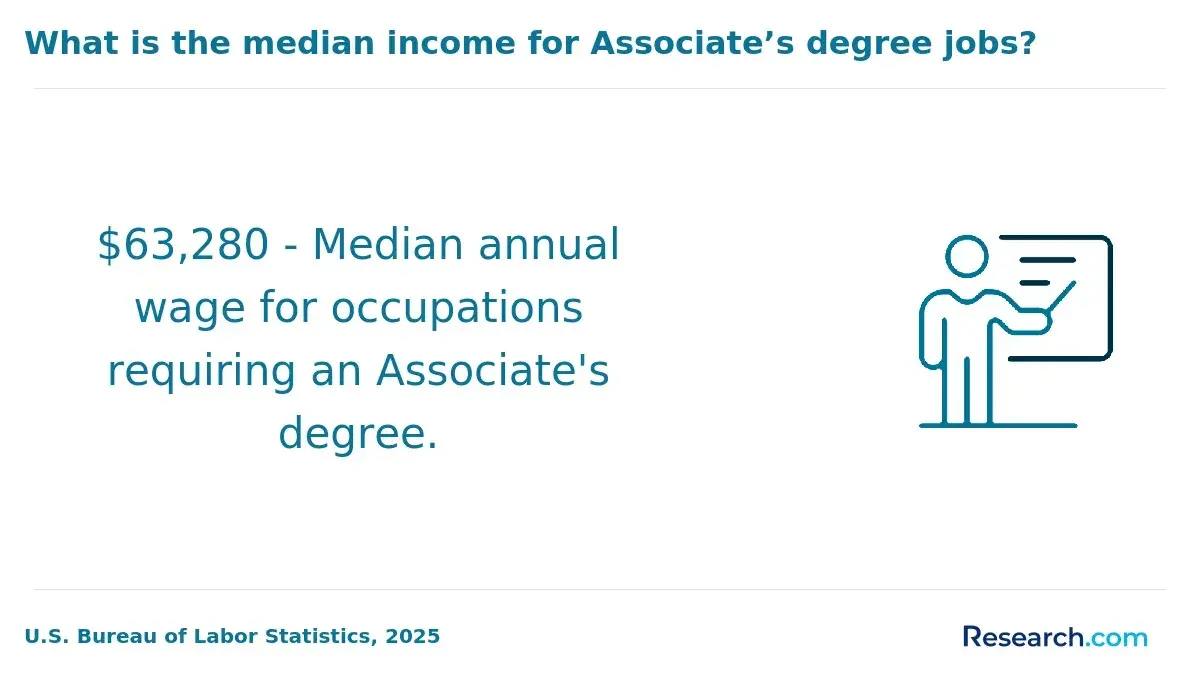
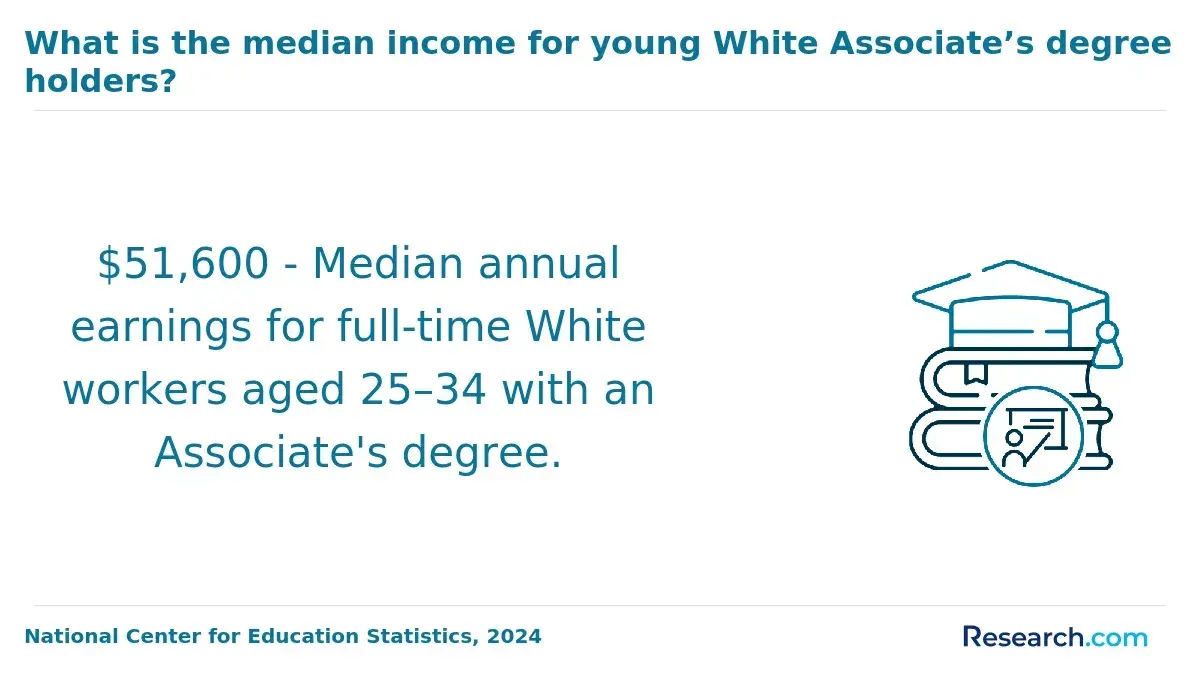
BLS' 2024 Education Pays analysis reports that workers age 25 and over with a bachelor's degree had median weekly earnings of $1,493 in 2023, compared with $1,058 for those with an associate degree and $899 for those with a high school diploma. These figures do not guarantee individual outcomes, but they show why completing a credential can matter over a career, especially when the degree aligns with a field that rewards it.
The strongest salary growth usually comes from combining a credential with relevant experience, not from the credential alone. A full-time worker can use current employment strategically by seeking projects, promotions, lateral moves, or internal openings related to the degree. For example, a retail supervisor studying business analytics might ask to assist with inventory reporting, while a medical assistant studying health administration might volunteer for scheduling or compliance projects.
The table below shows how work and college can interact over time. It helps clarify why students should think beyond graduation and plan for career movement while still enrolled.
| Stage | Academic priority | Career priority | Outcome to aim for |
| First terms | Build study rhythm and complete prerequisites | Stabilize work schedule and identify career direction | Good grades and a realistic degree plan |
| Middle terms | Choose electives and projects strategically | Seek related tasks, internal roles, or portfolio evidence | Experience that supports the target career |
| Final terms | Complete capstone, licensure steps, or internship alternatives | Update resume and apply before graduation | Clear transition plan into a better role |
| Post-graduation | Consider certifications or graduate study only if needed | Negotiate, advance, or change employers based on market fit | Credential used for measurable career progress |
Some fields reward advanced credentials more than others. A teacher, nurse, counselor, executive leader, researcher, or higher education professional may eventually consider graduate or doctoral study, while many technology or business roles may place more weight on experience, certifications, and portfolio evidence. If an advanced credential is part of your long-term plan, compare whether an online doctorate is appropriate for your field, schedule, and career goals before assuming it is necessary.
The key is to avoid delaying all career planning until graduation. Full-time workers already have a professional platform; the smartest approach is to turn the job into a bridge toward the next role whenever possible.
What strategies and campus resources help full-time workers maintain academic performance?
Academic performance for full-time workers depends less on motivation and more on systems. Motivation fluctuates after long shifts, family emergencies, or busy seasons. Systems make studying predictable even when life is not.
Start by identifying the support services you are most likely to use before you need them. Tutoring, writing centers, library research help, disability accommodations, mental health counseling, financial aid counseling, and career services can prevent small problems from becoming withdrawals or failed courses. Online students should confirm that these services are available remotely and outside standard work hours.
The following strategies are especially helpful because they reduce decision fatigue and create early warning signals:
- Use a weekly academic dashboard: Track due dates, grades, readings, discussion posts, exams, and instructor messages in one place.
- Study in fixed blocks: Short, protected sessions are usually more reliable than waiting for a large free day that may never come.
- Work ahead during predictable weeks: Build a buffer before overtime seasons, holidays, travel, or family obligations.
- Contact instructors before deadlines: Early communication is more effective than asking for exceptions after missing work.
- Use tutoring before you are failing: Tutoring works best when you still have time to change study methods and assignment quality.
- Limit simultaneous hard courses: Balance quantitative, writing-heavy, lab, and project courses across terms when possible.
- Protect sleep: Chronic sleep loss weakens memory, attention, and decision-making, which makes every course harder.
Working students should also watch for burnout signals: missed logins, repeated late assignments, irritability, declining work performance, and loss of sleep. If those appear, talk to an advisor before dropping a course. A withdrawal may be better than a failing grade in some cases, but it can affect financial aid, academic progress, employer reimbursement, and graduation timing.
The most successful approach is not perfection. It is early adjustment. If your first schedule is too heavy, reduce next term's load, switch formats, use summer strategically, or change course sequencing. Staying enrolled and completing credits consistently is usually better than cycling between overload and stopping out.
Other Things You Should Know About
Yes, but it requires a realistic course load, flexible scheduling, and early use of support services. Many full-time workers succeed by taking 6 to 9 credits per term instead of trying to carry a traditional full-time college load.
Usually, yes, if it is safe and professional to do so. Your employer may offer tuition assistance, schedule flexibility, internal internships, or projects related to your degree. Review reimbursement rules carefully before relying on employer funding.
Online college is often more flexible, but it is not automatically easier. Asynchronous courses can help with scheduling, but you still need consistent study time, deadlines, exams, projects, and communication with instructors.
The biggest mistake is enrolling in too many credits without calculating weekly time demands. A slower, steady plan that protects GPA and completion is often better than an aggressive schedule that leads to withdrawals or repeated courses.
References
- Smart Strategies Colleges Are Using to Boost Student Employability https://www.careeros.com/resources/smart-strategies-colleges-are-using-to-boost-student-employability
- Defining your long term career goals - SEEK New Zealand https://nz.seek.com/career-advice/article/defining-your-long-term-career-goals
- How to Balance College and Work: Practical Tips for Students https://beal.edu/how-to-balance-college-and-work/
- The Twelve Most Innovative Colleges for Adult Learners https://washingtonmonthly.com/2017/08/27/the-twelve-most-innovative-colleges-for-adult-learners/
- Home https://www.husson.edu/online/blog/2023/07/tips-for-balancing-work-and-college
- What Do Colleges Look For In An Application? https://smiletutor.sg/what-do-colleges-look-for-in-an-application/
- Alma Career – A better world of work for everyone https://www.almacareer.com/blog/how-does-a-university-degree-influence-pay
- How To Balance Career College Studying While Working https://myaolcc.com/studying-while-working-full-time-career-college/
- How does a college degree improve graduates’ employment and earnings potential? - APLU https://www.aplu.org/our-work/4-policy-and-advocacy/publicuvalues/employment-earnings/
- Facts about working full-time as a full-time student https://www.luminafoundation.org/topics/todays-students/working-adults/