2027 How to Succeed as an Online College Student

Co-Founder and Chief Data Scientist
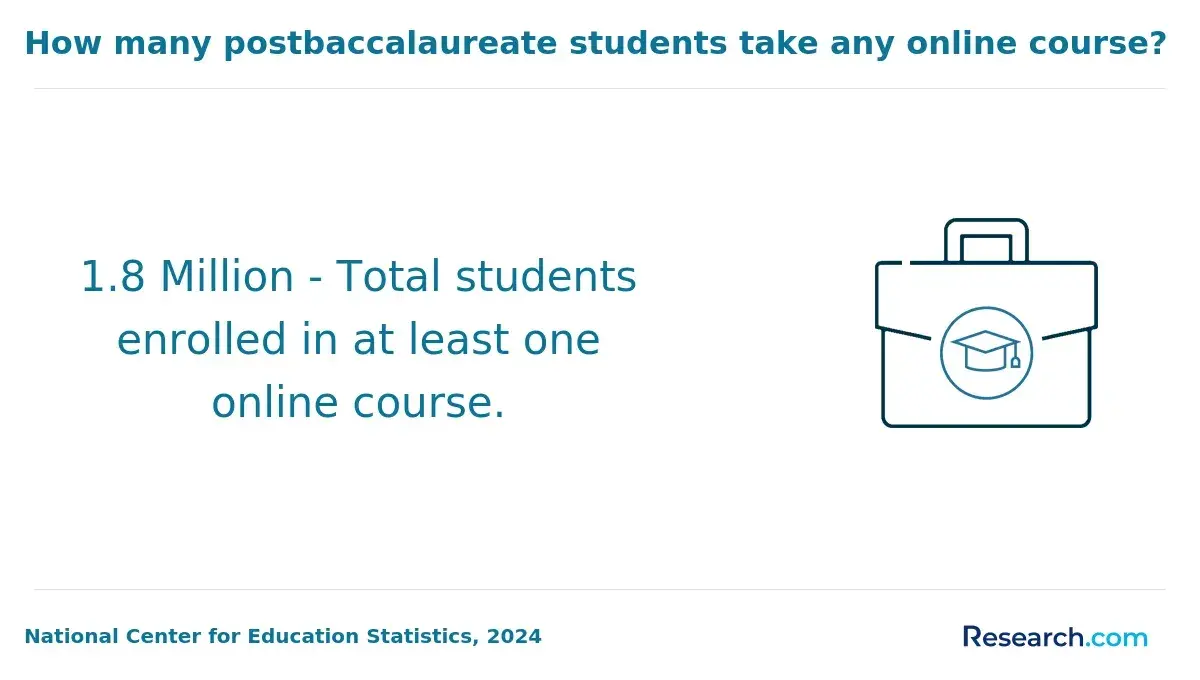
Online college can be flexible, but it also puts more responsibility on the student. NCES data released in 2024 show that more than half of U. S. postsecondary students took at least one distance education course in fall 2022, making online learning a mainstream college pathway. This guide is for new, returning, and working students who want to stay on track, avoid costly mistakes, and choose programs wisely. You will learn how online classes work, what technology you need, how to compare schools, and how to connect your degree to career goals.
Key Things You Should Know
- Online success depends less on being "tech-savvy" and more on weekly structure: students should plan around deadlines, discussion boards, exams, work hours, and family obligations before classes begin.
- Cost varies widely by school and program; College Board's 2024 data list average published 2024-25 tuition and fees at $11,610 for in-state public four-year colleges and $43,350 for private nonprofit four-year colleges.
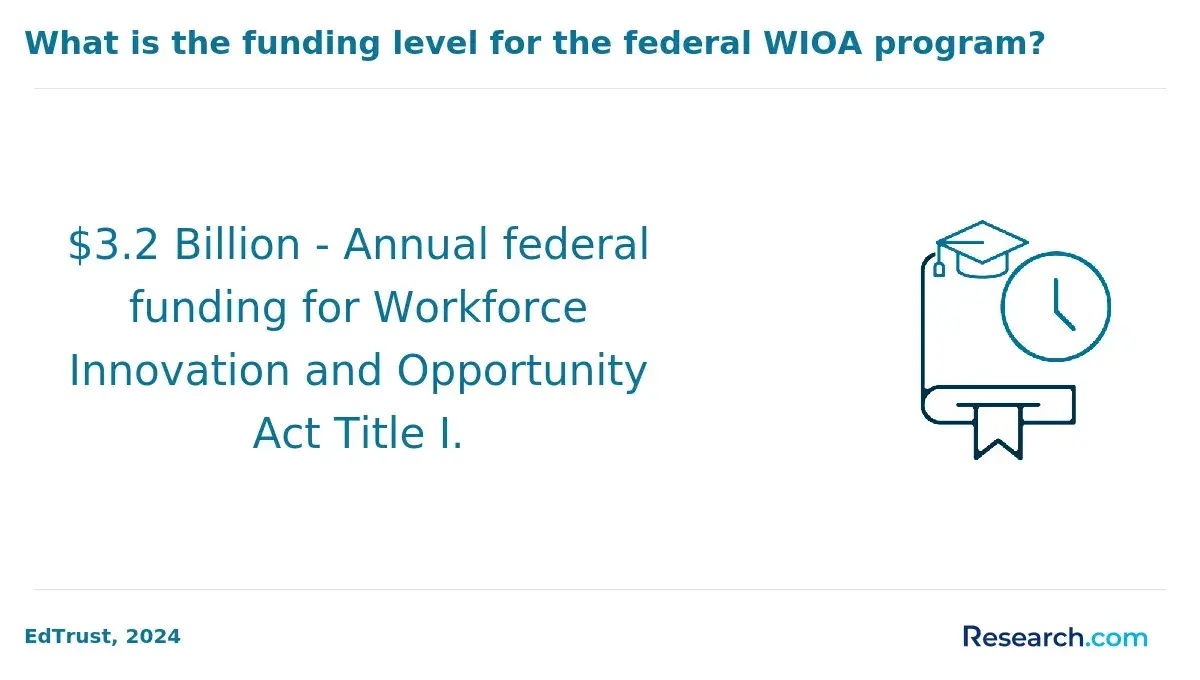
- Accreditation and career fit matter as much as convenience because financial aid eligibility, transfer credits, graduate school admission, licensure, and employer recognition can all depend on the school and program you choose.
How can online college students stay organized and on schedule?
Online students stay organized by treating each course like a scheduled commitment, not a set of optional tasks. The biggest challenge is that online classes often hide work across learning modules, announcements, quizzes, discussion boards, and email, so you need one system that brings everything together.
A strong weekly routine should convert course expectations into visible tasks. This is especially important for students balancing work, caregiving, military service, or multiple part-time responsibilities, which is why many learners compare online degrees for working adults before enrolling.
- Review every syllabus during the first two days of class and record major exams, papers, projects, clinical requirements, discussion deadlines, and withdrawal dates in one calendar.
- Create a weekly "course command center" using a planner, spreadsheet, task app, or learning management system checklist so you can see all assignments by due date.
- Block study time before deadlines rather than after work is due; for example, reserve separate time for reading, drafting, discussion replies, and exam review.
- Use recurring reminders for predictable tasks such as weekly quizzes, Sunday discussion posts, lab submissions, or instructor office hours.
- Check the course site and school email at least once per weekday so you do not miss schedule changes, professor feedback, or group project updates.
The common mistake is relying on motivation instead of a system. Online courses move quickly, and falling behind by one week can create a backlog of readings, lectures, posts, and graded assignments that is difficult to fix while working or taking multiple courses.
A practical test is simple: by the end of the first week, you should be able to answer, "What is due next, how long will it take, and when will I do it?" If the answer is unclear, your schedule needs more detail.
What study habits help online college students succeed?
Successful online study habits are active, consistent, and evidence-based. Watching lectures or rereading chapters can feel productive, but most students learn better when they retrieve information, apply it, and get feedback before the exam or final project.
The best study plan depends on course type. A math, accounting, coding, or statistics class usually requires frequent practice problems, while a history, psychology, or business course may require reading notes, short writing, and concept review. Use the list below to build habits that match the class instead of studying every subject the same way.
- Use active recall by closing your notes and explaining the concept, formula, case rule, or process from memory before checking your answer.
- Practice in shorter sessions across the week instead of cramming; online courses often reward steady participation because quizzes, discussions, and drafts are spread throughout the term.
- Turn lecture videos into tasks by pausing to summarize key points, answer embedded questions, or write down examples you do not understand.
- Ask for help early when feedback shows a pattern, such as weak citations, incomplete calculations, unclear thesis statements, or low quiz scores.
- Join or create a small online study group when the course involves problem-solving, test preparation, peer review, or complex terminology.
AI tools are now part of many students' workflows, but they should support learning rather than replace it. Use AI for brainstorming, practice questions, flashcard prompts, or explaining a difficult concept in simpler language, but do not submit AI-generated work unless your instructor allows it and you can verify accuracy and cite sources properly.
One red flag is earning good discussion grades while failing exams. That usually means you are completing visible assignments but not building durable knowledge. If that happens, add weekly self-testing and instructor feedback before the next assessment.
How do you create a productive home study space?
A productive home study space reduces friction. You do not need a perfect office, but you do need a place where your laptop, internet connection, materials, and concentration can support college-level work.
Think of your study space as a low-distraction workstation. The goal is to make starting easy and interruptions less likely, especially during timed exams, live class meetings, presentations, or proctored assessments.
- Choose one primary study location with reliable Wi-Fi, lighting, a chair that supports longer sessions, and enough surface space for notes or a second screen.
- Keep required materials nearby, including chargers, textbooks, headphones, notebooks, calculator, lab kit items, or webcam equipment.
- Set household expectations by telling family members or roommates when you are in class, testing, recording a presentation, or attending office hours.
- Prepare a backup location such as a library, campus learning center, coworking space, or quiet room in case your home internet, power, or noise level becomes a problem.
- Protect focus by silencing nonessential notifications, closing unrelated browser tabs, and using website blockers if social media or streaming sites disrupt your work.
The most common mistake is studying only from a bed, couch, or noisy shared space. That can work occasionally, but it often blurs the line between rest, entertainment, family responsibilities, and academic work.
If you have limited space, use a portable setup: a backpack or bin with your laptop, charger, notebook, headphones, and printed checklist. The key is not the size of the room; it is whether you can start quickly and finish without constant interruption.
How do online classes and campus classes differ?
Online and campus classes can lead to the same degree, but the day-to-day experience is different. Online learning usually offers more flexibility, while campus learning often gives students more built-in structure, immediate social contact, and access to physical facilities.
The comparison below shows how the formats differ in ways that affect time management, learning style, cost, and career preparation. Use it to decide whether online, campus, or hybrid study fits your life best.
| Factor | Online classes | Campus classes | Best fit |
| Schedule | Often asynchronous, with weekly deadlines and optional or required live sessions | Set meeting times, classroom attendance, and campus-based routines | Online fits students who need flexibility; campus fits students who need structure |
| Interaction | Discussion boards, video meetings, email, chat, group tools, and virtual office hours | In-person discussion, labs, clubs, advising, and informal peer contact | Online students must be more intentional about networking |
| Hands-on learning | May use simulations, local placements, mailed lab kits, or required campus intensives | Often easier for labs, studios, clinics, performances, and equipment-heavy courses | Campus or hybrid formats may be better for highly practical fields |
| Cost factors | May reduce commuting, housing, parking, and relocation costs | May include more campus fees, transportation, housing, and meal costs | Online can lower indirect costs, but tuition and fees still vary by school |
| Self-direction | Requires strong planning, written communication, and independent follow-through | Provides more external reminders through class meetings and campus routines | Online works best for students who can manage deadlines without daily prompts |
Students sometimes search for the cheapest easiest online degree, but "easy" should not be the main selection factor. A better question is whether the program's workload, support services, accreditation, and career outcomes match your goals.
Choose online if you need schedule flexibility, live far from campus, or already have work experience you want to build on. Choose campus or hybrid study if you need frequent in-person support, specialized facilities, clinical supervision, or a stronger sense of campus community.
What technology do online college students need?
Online college students need reliable technology, not necessarily expensive technology. Before enrolling, check the school's technology requirements because some programs require specific operating systems, webcams, proctoring software, statistical tools, design software, lab simulations, or secure testing environments.
The list below covers the practical baseline most online students should confirm before classes start. Requirements can be higher for programs in computer science, engineering technology, graphic design, nursing, data analytics, education, and cybersecurity.
- Use a laptop or desktop computer that meets the school's minimum specifications; a phone alone is usually not enough for papers, exams, spreadsheets, presentations, or proctored testing.
- Confirm stable broadband internet and identify a backup connection, such as a library, campus location, mobile hotspot, or trusted alternate study site.
- Test your webcam, microphone, speakers, headphones, browser, learning management system access, and school login before the first live session or exam.
- Install required software early, including office productivity tools, citation managers, statistics programs, coding environments, virtual lab platforms, or remote proctoring applications.
- Set up cloud storage and automatic backups so a lost laptop, corrupted file, or failed hard drive does not become an academic emergency.
Cybersecurity is also part of online student success. Use strong passwords, turn on multifactor authentication, avoid public Wi-Fi for exams or financial aid forms when possible, and watch for phishing emails that imitate school offices or scholarship providers.
A common red flag is waiting until the night before a proctored exam to test required software. Proctoring tools can require identity verification, room scans, browser lockdowns, or system permissions, and technical problems may not be excused if the instructions were available in advance.
How do online college admissions work?
Online college admissions usually follow the same academic standards as campus admissions, but the process may be more streamlined for adult learners, transfer students, and applicants with prior college credit. Requirements vary by school level, selectivity, program, and degree type.
Most applicants should expect to provide a combination of academic records and identity or residency documents. Program-specific requirements may be added for nursing, education, social work, counseling, business analytics, engineering technology, or graduate degrees.
- Submit an online application with personal information, academic history, intended major, and enrollment term.
- Request official high school, GED, community college, military, or previous university transcripts as required.
- Check whether standardized tests are optional, required, or waived based on GPA, transfer credits, age, or professional experience.
- Complete financial aid forms early, especially the FAFSA, scholarship applications, employer tuition benefit paperwork, or military education benefit documents.
- Ask for a transfer credit evaluation before enrolling if you already have college credits, industry certifications, military training, or prior learning assessment opportunities.
Choosing the right academic direction matters as much as getting admitted. If you are still comparing fields, reviewing different university majors can help you connect your interests with realistic coursework, costs, and career paths.
The biggest admissions mistake is enrolling before confirming how many credits will transfer. A school may admit you quickly, but that does not mean your previous credits will satisfy major requirements, general education requirements, prerequisites, or residency rules.
How long does an online degree take and what does it cost?
The time and cost of an online degree depend on degree level, transfer credits, enrollment intensity, tuition model, fees, textbooks, technology, and whether the program requires fieldwork or campus visits. Online learning can reduce commuting and housing costs, but it does not automatically make a degree inexpensive.
College Board's 2024 pricing report helps put tuition in context: average published 2024-25 tuition and fees were $11,610 for in-state students at public four-year institutions and $43,350 at private nonprofit four-year institutions. Those figures are not online-specific prices, but they show why comparing total cost before enrolling is essential.
The table below summarizes common online degree timelines and cost factors. Use it as a planning tool, not as a guarantee, because school policies and transfer credit rules can change the final time to completion.
| Program type | Typical time frame | Main cost factors | Decision point |
| Online certificate | A few months to one year | Program fees, exam fees, software, continuing education requirements | Best when you need a focused skill or credential, not a full degree |
| Online associate degree | About two years full time | Community college tuition, books, labs, transfer pathway planning | Best for lower-cost general education, career entry, or transfer preparation |
| Online bachelor's degree | About four years full time, shorter with transfer credits | Tuition per credit, fees, textbooks, prior credit acceptance, residency requirements | Best for careers requiring a bachelor's degree or graduate school preparation |
| Online master's degree | About one to three years | Graduate tuition, professional fees, practicum or residency costs | Best when the credential supports advancement, licensure, specialization, or a career change |
Students comparing cheap online degrees should look beyond tuition per credit. Fees, textbook subscriptions, course retake policies, technology requirements, transfer credit limits, and unpaid practicum hours can change the real cost.
Financial aid can help, but borrowing should be planned carefully. For 2024-25, Federal Student Aid listed a 6.53% interest rate for Direct Subsidized and Unsubsidized Loans for undergraduate students; that rate makes it important to estimate monthly payments, not just the amount you can borrow.
How do you choose an accredited online college?
Accreditation is one of the most important quality checks for an online college. In the U.S., institutional accreditation means an accrediting agency recognized by the U.S. Department of Education or CHEA has reviewed the school's academic quality, student support, finances, and operations.
Programmatic accreditation is separate and may matter for fields such as nursing, education, counseling, social work, business, engineering, public health, and allied health. A school can be institutionally accredited while a specific program still lacks the program-level accreditation needed for licensure or employer preference.
The table below separates accreditation signals from red flags. This helps you avoid confusing marketing language with recognized quality assurance.
| What to check | Good sign | Red flag |
| Institutional accreditation | The school appears in the U.S. Department of Education accreditation database | The school claims "international," "private," or "lifetime" accreditation without recognized U.S. approval |
| Program accreditation | The program lists a recognized accreditor for regulated fields | The program says licensure is "possible" but does not identify state requirements |
| Transfer credits | The school provides a written transfer evaluation before or soon after admission | Admissions staff make verbal promises that credits will transfer without documentation |
| Student outcomes | The school publishes retention, graduation, job placement, licensure pass rate, or debt information when applicable | The school uses vague claims about fast jobs or high salaries without transparent evidence |
| Costs | Tuition, fees, refund rules, and required materials are easy to find | The school pressures you to enroll before giving a full cost breakdown |
If you prefer mission-driven schools that do not distribute profits to owners, comparing non profit universities in USA can be a useful starting point, but nonprofit status alone does not prove a program is the best fit.
Before enrolling, ask admissions and academic advisors direct questions. You should know whether the program is accredited, whether it meets your state's licensure rules, how credits transfer, what support services online students receive, and what happens if you need to stop out for a term.
What careers can an online degree lead to?
An online degree can lead to many of the same careers as a campus degree when the school is accredited and the program fits the field. Employers usually care about the credential, skills, experience, licensure when required, and evidence that you can do the work.
BLS employment projections released in 2024 show especially strong long-term demand in several degree-linked fields, including healthcare, computer and information technology, and business and financial operations. Use those projections as labor-market context, not as a promise of individual employment.
The table below connects broad online degree areas with common career directions and the skills employers often expect. It can help you evaluate whether your program builds job-relevant capabilities, not just credits.
| Degree area | Possible career paths | Skills to build | Important caveat |
| Business | Operations coordinator, financial analyst, project specialist, human resources associate, marketing analyst | Data interpretation, communication, spreadsheets, budgeting, process improvement | Advancement may depend on experience, internships, certifications, or graduate study |
| Computer science and IT | Software developer, systems analyst, cybersecurity analyst, database specialist, help desk to network administration roles | Programming, troubleshooting, cloud tools, security fundamentals, documentation | Portfolios, labs, certifications, and technical interviews often matter alongside the degree |
| Healthcare and nursing | RN-to-BSN roles, healthcare administration, public health support, health informatics | Patient systems, compliance, leadership, data privacy, clinical or administrative judgment | Clinical hours, state licensure, and approved placements may be required |
| Education | Teacher preparation, instructional design, curriculum support, education administration | Lesson planning, assessment, classroom technology, communication, state standards | Teacher licensure requirements vary by state and program approval status |
| Psychology and social sciences | Case management support, human services, research assistant roles, graduate school preparation | Research literacy, ethics, writing, interviewing, cultural competence | Clinical counseling or psychologist roles usually require graduate education and licensure |
Career planning should start before graduation. Compare degree fields, employer requirements, internships, and regional demand rather than choosing only by interest; broader lists of university majors can help you see how different paths connect to work.
Online students should build proof of ability while enrolled. That can include projects, supervised fieldwork, internships, capstones, portfolios, certifications, volunteer work, writing samples, coding repositories, or employer-sponsored assignments.
What licenses or certifications do online graduates need?
Some online graduates need a license, certification, or professional exam before they can work in their target role. This is most common in regulated fields where public safety, clinical practice, classroom teaching, financial responsibility, or technical standards are involved.
Licensure is government permission to practice, usually set by a state board. Certification is often a professional credential from an industry organization, employer-recognized body, or software vendor. Some careers require both, while others treat certification as optional but helpful.
Use the following steps before enrolling in any online program that leads to a regulated occupation. Requirements can vary by state, so general program descriptions are not enough.
- Identify the exact job title you want, such as registered nurse, teacher, licensed clinical social worker, CPA, school counselor, or cybersecurity analyst.
- Find the state board or licensing agency that controls that occupation in the state where you plan to work.
- Confirm whether the online program meets education, accreditation, clinical, practicum, student teaching, or supervised experience requirements for that state.
- Ask the school for written licensure disclosures, exam pass-rate information when available, and placement support details for clinical or field experiences.
- Check whether certification exams, background checks, fingerprinting, liability insurance, continuing education, or supervised hours will add time and cost after graduation.
Common examples include nursing licenses, teacher certification, counseling and social work licensure, CPA eligibility, project management credentials, CompTIA or Cisco certifications, SHRM credentials for HR, and medical coding certifications. Not all are required for entry-level work, but they can affect hiring, promotion, or legal permission to practice.
The mistake to avoid is assuming that "online" means "available everywhere." A program may accept students from many states while meeting licensure requirements in only some of them. Always confirm before paying deposits, taking prerequisites, or relocating your career plan around the program.
Other Things You Should Know About
Yes, but success depends on fit and follow-through. Accredited online programs can offer the same credential as campus programs, but students need strong time management, reliable technology, active communication, and a plan for internships, labs, networking, or licensure if their field requires them.
A common planning estimate is two to three hours of study time per credit each week, but the real number depends on the subject, course length, and your preparation. Accelerated courses, writing-heavy classes, labs, and quantitative subjects may require more time.
Employers are more likely to respect an online degree when it comes from an accredited school, aligns with the role, and is supported by relevant skills or experience. Avoid unaccredited schools and programs that make unrealistic job or salary promises.
The biggest mistake is treating online courses as self-paced when they are actually deadline-driven. Students should read the syllabus early, build a weekly schedule, communicate with instructors, and ask for help before missed assignments become a pattern.
References
- How to create a productive study space at home. https://www.ikea.com/ca/en/ideas/how-to-create-a-productive-study-space-at-home-pubf0ba6c50/
- How to Apply for College? - Connections Academy® https://www.connectionsacademy.com/support/resources/article/online-school-to-college-application-guide/
- College Study Habits That Lead to Academic Success https://cbrg.info/the-college-study-habits-experts-recommend/
- In-Person vs. Online Courses: Which Is Right for You? | StraighterLine https://www.straighterline.com/blog/in-person-vs-online-courses
- How to Make a Study Space More Productive: 10 Easy Changes That Make a Big Difference https://thenuggetsacademy.sg/ideal-study-space/
- Online Certificate Programs | Certifications Programs https://www.uscareerinstitute.edu/online-certificate-programs
- How to Easily Stay Organized and Productive in College https://collegeinfogeek.com/how-to-stay-organized-in-college/
- Careers - OnlineDegree.com https://www.onlinedegree.com/careers/
- Top Online Certifications for Jobs - Certificates that Pay Well | GreatValueColleges https://www.greatvaluecolleges.net/online-certifications-that-pay-well/
- Cost of Online Education vs. Traditional Education [2025]: Comparison https://educationdata.org/cost-of-online-education-vs-traditional-education