2027 Final College Success Checklist

Co-Founder and Chief Data Scientist
Choosing a college path is a financial, academic, and career decision, not just an application task. College Board reported that published in-state tuition and fees at public four-year colleges averaged $11,610 for 2024-25, before housing, books, and personal costs.
This checklist is for high school seniors, transfer students, adults returning to school, and career changers who want a practical way to compare options. You will learn how to check accreditation, costs, curriculum, online formats, admissions rules, career outcomes, salaries, and licensing issues before committing.
Key Things You Should Know
- Start with fit and legitimacy: confirm institutional accreditation, program-level approval when relevant, transfer-credit policies, and whether the program meets licensing or certification rules in your state.
- Compare total cost, not tuition alone: College Board's 2024-25 data shows average published tuition and fees of $4,050 at public two-year colleges, $11,610 for in-state public four-year colleges, and $43,350 at private nonprofit four-year colleges.
- Use outcomes carefully: BLS May 2024 wage data and 2024-34 employment projections can help you compare career paths, but salaries vary by region, experience, employer, industry, and credential level.
How do you complete a college success checklist?
A college success checklist is a decision tool that helps you move from "I might enroll" to "this program fits my goals, budget, timeline, and career requirements." The strongest checklist covers academic fit, accreditation, cost, schedule, admissions, student support, career outcomes, and licensing considerations.
Use the checklist in order so you do not commit to a school before answering the questions that affect your long-term options. If you are still choosing a program in college, start with career direction first, then work backward to the credential that employers or licensing boards actually require.
- Define your target outcome, such as transferring to a bachelor's program, qualifying for an entry-level role, preparing for graduate school, or meeting licensure requirements.
- Confirm the school is institutionally accredited by an agency recognized by the U.S. Department of Education or Council for Higher Education Accreditation.
- Check whether the specific program has specialized accreditation or approval if the field requires it, such as nursing, education, counseling, social work, engineering, or allied health.
- Compare total cost of attendance, including tuition, fees, books, technology, transportation, housing, exam fees, background checks, and lost work time.
- Review admissions requirements, transfer-credit rules, placement testing, prerequisite courses, GPA expectations, and application deadlines.
- Evaluate format and support, including online access, tutoring, advising, disability services, career services, internships, clinical placements, and faculty availability.
- Estimate likely return on investment by comparing program cost, completion time, debt risk, local job demand, salary ranges, and advancement options.
Many students make avoidable mistakes because they focus on one attractive feature, such as a low tuition rate or a short timeline. The table below summarizes common red flags and the better question to ask before enrolling.
| Common mistake | Why it can hurt you | Better question to ask |
| Choosing the cheapest program without checking outcomes | Low tuition does not help if credits do not transfer or graduates struggle to qualify for the intended job. | What are the graduation, transfer, licensure, and job-placement outcomes for students in this program? |
| Assuming online means easier | Online courses often require stronger time management, reading discipline, and independent problem-solving. | How many hours per week should I expect to study, and what support is available online? |
| Ignoring accreditation | Unaccredited or improperly approved programs may limit financial aid, transfer credit, graduate admission, and licensure eligibility. | Is the institution accredited, and does this specific program meet professional requirements? |
| Looking only at advertised tuition | Fees, books, software, commuting, labs, uniforms, background checks, and certification exams can significantly raise total cost. | What is the full cost of attendance for the entire program? |
What should you look for in an accredited college?
Accreditation is a quality-review process that evaluates whether a college or program meets accepted academic and administrative standards. For students, it affects financial aid eligibility, credit transfer, employer recognition, graduate school admission, and licensure eligibility in regulated fields.
The first thing to confirm is institutional accreditation. Then check whether your specific major needs programmatic accreditation, state board approval, or professional recognition.
- Search the school in the U.S. Department of Education's accreditation database or the Council for Higher Education Accreditation directory.
- Verify the exact campus, online division, or legal institution name because similarly named schools can differ.
- Ask admissions whether the program is approved for licensure or certification in your state, not just in the school's home state.
- Review transfer agreements if you plan to move from a certificate or associate degree into a bachelor's program.
- Be cautious if a school pressures you to enroll immediately, avoids direct accreditation questions, or promises unusually fast career results.
Different fields require different levels of review. This table shows the accreditation or approval questions that matter most by program type.
| Program area | What to verify | Why it matters |
| General associate or bachelor's degrees | Institutional accreditation and transfer policies | These affect federal aid, credit transfer, and graduate school options. |
| Nursing and allied health | Program accreditation, state board approval, clinical placement availability, and exam pass-rate reporting | Licensure eligibility often depends on program approval and supervised clinical training. |
| Education | State educator preparation approval and student-teaching requirements | Teacher certification rules vary by state and grade level. |
| Engineering, technology, and computing | Program-level accreditation when required for professional pathways | Some employers, graduate programs, and licensing tracks prefer or require recognized program accreditation. |
| Counseling, social work, and psychology-related fields | Licensure-aligned curriculum, supervised practice requirements, and graduate-level expectations | Many roles require graduate education and state licensure beyond the undergraduate degree. |
A strong accredited college should be transparent about outcomes, faculty qualifications, student services, complaint procedures, and costs. If you cannot find basic information without repeated calls or high-pressure sales conversations, treat that as a warning sign.
Which degree or training path fits your career goals?
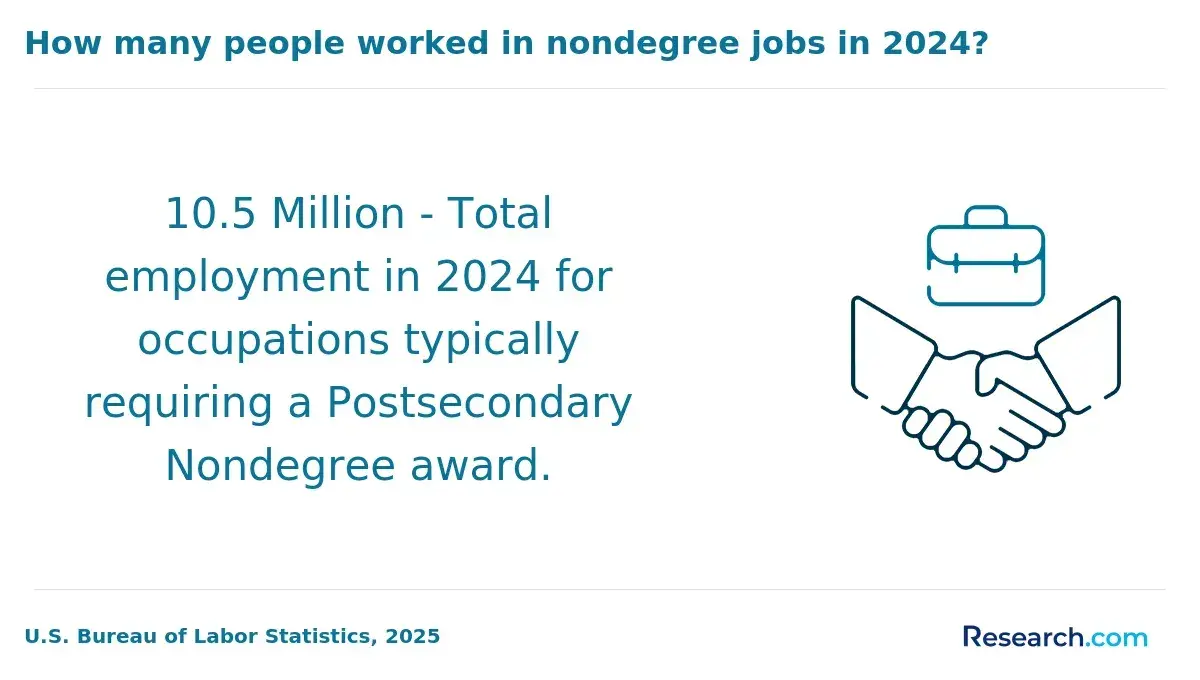
The right path depends on the job you want, how soon you need to work, how much you can spend, and whether your field values degrees, certificates, portfolios, apprenticeships, or licenses. A degree can be worth it when it is required for entry, raises your ceiling for advancement, or gives you transferable skills across industries.
Start by matching the credential to the outcome. Shorter programs can be efficient for technical or entry-level goals, while bachelor's and graduate degrees make more sense for fields with formal education requirements or advancement ladders.
| Path | Best fit | Typical trade-off |
| Certificate or diploma | Students seeking fast, job-focused training in areas such as medical assisting, bookkeeping, IT support, welding, or paralegal support | Lower time commitment, but fewer general education credits may transfer later. |
| Associate degree | Students who want an affordable start, a transfer pathway, or preparation for technical roles | Often cost-effective, but some career goals still require a bachelor's degree. |
| Bachelor's degree | Students targeting professional, management-track, STEM, healthcare, education, business, or graduate-school pathways | Broader career options, but higher cost and longer time to completion. |
| Graduate degree | Students entering advanced clinical, leadership, research, legal, academic, or specialized professional roles | Can improve eligibility for advanced roles, but ROI depends heavily on field and debt level. |
| Apprenticeship or employer training | Students who learn best by working and want paid training in skilled trades or employer-specific technical roles | Strong practical experience, but the credential may be less portable outside the occupation or employer network. |
Associate programs can be especially useful for students who need a lower-cost start or want to test a field before committing to a four-year plan. If speed and flexibility matter, compare traditional community college options with online associate degrees, but verify transferability and whether the accelerated schedule is realistic for your weekly availability.
Choose a different path if the program does not connect to a clear outcome. For example, a short certificate may not be enough for licensed teaching, counseling, nursing, engineering licensure, or graduate-level clinical work. Likewise, a bachelor's degree may be more than you need if your target job mainly requires a certification, portfolio, apprenticeship, or employer-specific training.
How do online and campus programs compare?
Online and campus programs can both be high quality when they are accredited, well supported, and aligned with your career goal. The best format is the one you can complete successfully while meeting any hands-on, lab, practicum, internship, or clinical requirements.
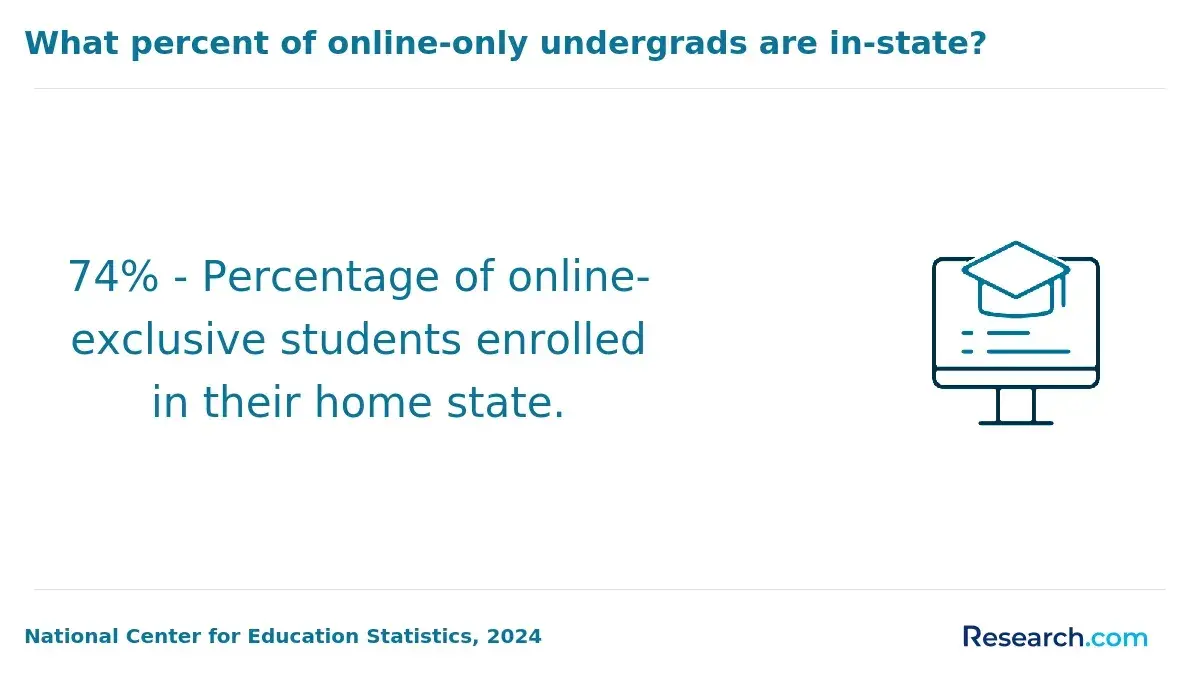
Online education has become a mainstream option, not a backup plan. NCES data released in 2024 showed that a large share of U.S. college students took at least one distance education course in recent years, which means employers and schools are increasingly familiar with legitimate online learning.
The table below compares the practical differences that matter most when choosing a format. Use it to identify which environment supports your schedule, learning style, and career requirements.
| Factor | Online program | Campus program |
| Schedule | Often better for working adults, caregivers, military students, and students with transportation limits | Often better for students who want a fixed routine and face-to-face structure |
| Learning style | Requires self-direction, strong reading habits, and comfort using learning platforms | Provides in-person discussion, immediate classroom interaction, and campus study spaces |
| Hands-on requirements | May require local clinicals, labs, internships, residencies, or proctored exams | Usually easier to coordinate labs, studio work, clinical simulations, and campus-based services |
| Networking | Can be strong if the program offers live sessions, faculty access, group projects, and career events | Often easier for students who benefit from clubs, campus recruiting, and informal peer contact |
| Cost | May reduce commuting or housing costs, but technology and online fees can still apply | May involve commuting, parking, housing, meal plans, or relocation costs |
Students comparing the best online degrees should look beyond convenience. Ask whether online students receive the same advising, library access, tutoring, internship support, career services, and faculty feedback as campus students.
Online may be the smarter choice if you need flexibility, already have work experience, and can manage deadlines independently. Campus may be better if you need structure, hands-on facilities, local networking, or intensive faculty interaction. Hybrid programs can offer a useful middle ground, especially in healthcare, education, science, and technical fields.
What classes and skills are in the curriculum?
The curriculum is the real product you are buying. A strong program should teach both field-specific knowledge and transferable skills such as writing, quantitative reasoning, communication, teamwork, digital fluency, ethical judgment, and problem-solving.
Because AI tools are changing how many entry-level tasks are performed, students should look for programs that teach judgment, applied problem-solving, data literacy, and responsible technology use rather than only memorization. Employers increasingly expect graduates to use software, automation, and data tools while still showing human skills such as communication and accountability.
Review the curriculum in detail before applying. These items help you tell whether the coursework is current, practical, and connected to real work.
- Required core courses should clearly match the knowledge used in your target field.
- General education courses should build writing, reasoning, communication, and quantitative skills that transfer across jobs.
- Electives or concentrations should let you specialize without delaying graduation unnecessarily.
- Applied learning, such as labs, simulations, capstones, internships, practicums, clinicals, or portfolios, should be built into the program when relevant.
- Technology tools should reflect current industry practice, especially in business, healthcare, computing, design, analytics, education, and media.
- Assessment should include projects, case studies, presentations, exams, writing, or demonstrations that prove you can apply what you learn.
Also check course rotation. A program may look short on paper, but if required classes are offered only once a year, one missed prerequisite can delay graduation. Ask whether courses are available every term, whether online and campus students have equal access, and whether part-time students can complete the sequence without scheduling conflicts.
What are the admission requirements for college programs?
Admission requirements vary by school, degree level, selectivity, and field. Open-admission community colleges may require a high school diploma or equivalent, while selective bachelor's programs may consider GPA, course rigor, essays, recommendations, test scores, portfolios, auditions, or prerequisite coursework.
Do not assume admission to the college means admission to the major. Nursing, engineering, business, education, computer science, social work, and allied health programs may have separate competitive admission steps after you complete prerequisites.
Before you apply, gather the requirements that apply to your exact student type. This list is especially important for transfer students, adult learners, international applicants, military students, and students returning after a break.
- High school transcript, GED, HiSET, or prior college transcript
- Minimum GPA or prerequisite course grades
- Placement testing or college readiness assessment
- Standardized test policy, if the school or scholarship requires scores
- Essay, personal statement, interview, portfolio, or audition
- Letters of recommendation for selective, honors, health, education, or graduate pathways
- Background check, immunization records, drug screening, or physical exam for clinical and field-placement programs
- Transfer-credit evaluation and residency-credit rules
- Financial aid forms, scholarship deadlines, and program-specific aid applications
Students with criminal records should be especially careful in fields involving licensure, clinical placements, schools, vulnerable populations, finance, security, or government contracts. Resources on online degrees for felons can help frame questions to ask, but the final answer may depend on state law, employer policy, background-check results, and licensing-board review.
A practical admissions strategy is to apply to a balanced set of schools: one or two likely-admit options, one or two strong-fit target programs, and one or two more competitive choices if they offer better aid or stronger outcomes. This approach reduces the risk of having no affordable path when decisions arrive.
How long does the program take and what does it cost?
Program length and cost depend on credential level, enrollment intensity, transfer credits, placement results, course availability, and whether you study online, on campus, full time, or part time. The published length is only useful if it reflects your real schedule and starting point.
Cost should be evaluated as total cost of attendance, not only tuition. College Board's 2024-25 figures show why this matters: average published tuition and fees at public two-year colleges were far lower than at four-year institutions, but students still need to budget for books, transportation, technology, housing, food, and lost wages.
The table below gives a practical comparison of common program lengths and cost considerations. Use it to identify which pathway is affordable and realistic before you borrow or enroll.
| Credential | Common full-time timeline | Main cost factors | Best-fit use case |
| Certificate | Several months to about 1 year | Tuition, tools, equipment, exam fees, books, and program fees | Fast entry into a focused skill area or career change with limited general education requirements |
| Associate degree | About 2 years | Tuition, fees, books, commuting, online fees, and transfer planning | Lower-cost start, technical employment, or pathway to a bachelor's degree |
| Bachelor's degree | About 4 years | Tuition, fees, housing, meal plans, transportation, books, and opportunity cost | Professional roles, graduate-school preparation, and fields where a bachelor's is the common entry credential |
| Master's degree | About 1 to 3 years | Graduate tuition, fees, licensing prep, internships, and reduced work hours | Advanced practice, leadership, specialized technical roles, or licensure-aligned fields |
If you need flexibility, compare term-based programs with online self-paced colleges. Self-paced formats can help motivated students move faster, but they may be risky if you need frequent deadlines, live instruction, or a cohort to stay accountable.
To reduce cost, ask direct financial questions before committing. These questions can prevent debt surprises and help you compare offers fairly.
- What is the total cost for the full program, including mandatory fees, books, software, equipment, background checks, and exam costs?
- How much grant and scholarship aid is renewable, and what GPA or credit-load rules apply?
- How many credits will transfer, and will they apply to the major or only count as electives?
- Does the school charge different rates for online, out-of-state, summer, lab, or clinical courses?
- What happens financially if I withdraw, reduce my course load, or need to repeat a class?
- What is the average debt for students who complete this program, if the school reports it?
What jobs can this education lead to?
The jobs connected to your education depend on the field, credential level, location, experience, internships, certifications, and the strength of your portfolio or clinical training. A college program should connect to real occupations, not just broad promises about opportunity.
Students should compare career paths before choosing a major because the same degree can lead to different outcomes. For example, a psychology bachelor's degree may support roles in human services, HR, research assistance, sales, or graduate study, while licensed counseling generally requires a graduate degree and supervised experience.
The table below shows how different education levels commonly connect to career options. It is not a guarantee of eligibility; always confirm employer requirements and state rules for your target role.
| Education level | Possible career directions | What strengthens employability |
| Certificate | IT support, medical office support, bookkeeping, coding bootcamp-related roles, skilled trades support, administrative roles | Industry certification, hands-on projects, employer partnerships, and documented technical skills |
| Associate degree | Registered nursing pathways, dental hygiene, radiologic technology, paralegal support, web development, accounting support, transfer pathways | Licensure exam eligibility, clinical experience, internships, transfer agreements, and career services |
| Bachelor's degree | Business, education, computing, engineering-related roles, communications, public service, healthcare administration, analytics, marketing, social services | Internships, portfolio work, undergraduate research, leadership experience, and job-relevant electives |
| Graduate degree | Counseling, advanced nursing, education leadership, data science, public health, social work, management, research, specialized clinical roles | Licensure alignment, supervised practice, professional networks, capstones, and employer-recognized specialization |
Career preparation should begin early, not in the final semester. Build a plan that includes resume development, networking, internships, faculty references, projects, interview practice, and evidence of skills. In fields affected by AI and automation, focus on work that combines technical fluency with judgment, communication, ethics, and domain expertise.
What salary and job outlook can graduates expect?
Salary and job outlook can help you compare programs, but they should be treated as planning data, not promises. The U.S. Bureau of Labor Statistics May 2024 wage data and 2024-34 projections are useful because they are national, standardized, and occupation-based, but they do not capture every local employer, emerging role, or individual career path.
When evaluating salary, compare the typical credential for the role with the cost and time required to qualify. A lower-cost program with strong local demand may offer better practical value than a more expensive degree with unclear job alignment.
The table below gives examples of occupations students often connect to college pathways. Use these figures as context, then check local wages, state licensing rules, employer postings, and program outcomes before making a final decision.
| Occupation | Typical entry education listed by BLS | U.S. median pay, May 2024 | Projected employment change, 2024-34 |
| Registered nurse | Bachelor's degree or associate degree pathways, depending on employer and state context | $93,600 | Growth expected to be faster than the average for all occupations |
| Software developer | Bachelor's degree commonly listed | $133,080 | Growth expected to be much faster than the average for all occupations |
| Accountant or auditor | Bachelor's degree commonly listed | $81,680 | Growth expected to be about as fast as the average for all occupations |
| Paralegal or legal assistant | Associate degree commonly listed | $61,010 | Growth expected to be about as fast as the average for all occupations |
| Medical assistant | Postsecondary nondegree award commonly listed | $44,200 | Growth expected to be much faster than the average for all occupations |
Look beyond the median. Entry-level wages may be lower, and high-cost regions may pay more while also costing more to live in. For a realistic ROI estimate, compare expected early-career pay, total debt, local job postings, internship access, licensing exam pass rates, and the likelihood that you will complete the program.
What licenses or certifications are required for this field?
Licenses and certifications matter when a field restricts who can legally practice, perform certain services, use a professional title, or qualify for insurance reimbursement. Certification may be optional in some industries but still valuable because employers use it to verify job-ready skills.
Requirements vary by state, employer, and occupation, so never rely only on a school's general marketing page. Check the state board, professional association, employer postings, and program handbook before enrolling.
The table below summarizes common credential patterns. It is designed to help you know when to ask deeper questions, not to replace state-specific rules.
| Field | Common requirement type | What students should verify |
| Nursing | State licensure and national exam eligibility | State board approval, clinical placements, NCLEX preparation, and pass-rate reporting |
| Teaching | State certification or licensure | Approved educator preparation program, student teaching, subject exams, and background checks |
| Accounting | Licensure for CPA practice, optional certifications for other roles | State CPA education-hour rules, exam eligibility, work-experience requirements, and ethics requirements |
| Social work and counseling | Graduate-level licensure for many clinical roles | Accredited degree requirements, supervised hours, exams, and state scope-of-practice rules |
| Information technology | Often employer-valued certifications rather than legal licensure | Whether certifications such as cloud, cybersecurity, networking, or vendor credentials match target job postings |
| Skilled trades | State or local licensing, apprenticeship hours, and exams in many areas | Apprenticeship approval, required work hours, local licensing rules, and safety credentials |
Before choosing a licensed field, ask the program these questions in writing. Written answers are useful if policies change or if you later need to confirm eligibility.
- Does this program meet educational requirements for licensure in my state?
- Are clinicals, practicums, student teaching, internships, or supervised hours guaranteed or only supported?
- What exam or certification pass-rate information is available for recent cohorts?
- Are there background-check, drug-screening, citizenship, age, health, or moral-character requirements?
- If I move states, what additional requirements might apply?
- What happens if I complete the degree but do not pass the required exam?
The safest approach is to treat licensure as part of program selection, not something to investigate after graduation. A program can be academically interesting and still be the wrong choice if it does not meet the rules for the career you want.
Other Things You Should Know About
The most important item is fit between the program and your goal. Confirm that the school is accredited, the program meets career or licensure requirements, the cost is manageable, and the schedule is realistic before enrolling.
Compare total cost of attendance with completion rates, transfer options, financial aid, local job demand, required credentials, and realistic early-career wages. A program is more likely to be worth it when it leads to a clear outcome without excessive debt.
An online program can be a good choice if it is properly accredited, offers strong student support, fits your schedule, and meets any hands-on or licensure requirements. It may not be ideal if you need frequent in-person structure or campus-based labs.
Start before applying, then revisit it after admission and before paying a deposit. The checklist is most useful when comparing schools, reviewing financial aid offers, confirming transfer credits, and checking career or licensing requirements.
References
- What is Curriculum for Excellence? https://education.gov.scot/curriculum-for-excellence/about-curriculum-for-excellence/what-is-curriculum-for-excellence/
- A Comprehensive Guide to 21st Century Skills https://www.panoramaed.com/blog/comprehensive-guide-21st-century-skills
- Choosing a Major to Support Your Career Goals | Wizeprep Blog https://www.wizeprep.com/blog/choosing-a-major-to-support-your-career-goals
- What’s the Job Market Look Like for 2025 Graduates? https://www.legacycapitalplanners.com/blog/whats-job-market-look-2025-graduates
- ELEMENTARY CURRICULUM - CAMS K-8 SCHOOL https://www.channelsideacademy.com/academics/elementary-curriculum
- Admission Requirements https://www.ontariocolleges.ca/en/applying/admission-requirements
- The Benefits of Choosing an Accredited College - Graduate Programs for Educators https://www.graduateprogram.org/blog/the-benefits-of-choosing-an-accredited-college/
- Ultimate College Checklist: 39 Essential Steps for Success https://checklist.com/college-checklist
- What Do Colleges Look For in Students? https://www.collegedata.com/resources/getting-in/what-do-colleges-look-for-in-students
- 7 Unique Career Paths for Education Graduates | MANCOSA https://www.mancosa.co.za/blog/7-unusual-career-paths-for-education-graduates/