2027 How to Stay on Track for Graduation After Changing Majors

Co-Founder and Chief Data Scientist
Changing majors can protect you from spending years in the wrong field, but it can also add credits, costs, and scheduling pressure if you do not plan carefully. The stakes are real: the College Board reported average published in-state tuition and fees of $11,610 at public four-year colleges for 2024-25, so even one extra semester can be expensive.
This guide is for students considering or completing a major change. You will learn how to audit credits, rebuild your course plan, use flexible formats, manage aid, and connect your new major to career goals.
Key Things You Should Know
- Changing majors does not automatically delay graduation, but it often does when major-specific prerequisites, course sequencing, or minimum residency credits do not overlap with your previous program.
- Use a formal degree audit before registering for your next term; NCES degree-completion data published in 2024 show that finishing within six years remains a key benchmark for bachelor's students, making early planning important.
- Cost matters as much as credits: if a major change adds time, review tuition, aid limits, scholarship rules, and summer or accelerated options before assuming an extra semester is unavoidable.
How can changing majors affect your expected graduation timeline and credit requirements?
Changing majors affects your graduation timeline when your completed credits no longer apply to the new major, when prerequisite chains start earlier than your current standing, or when required courses are offered only in certain terms. A degree audit is the official tool that shows how your credits fit, but you should also understand the common reasons a major switch adds time.
At most U.S. bachelor's programs, students need about 120 credits to graduate, but those credits must be in the right categories: general education, major requirements, electives, upper-division credits, and sometimes internships, labs, clinical placements, or capstones. If your old courses become free electives instead of major requirements, you may still be "credit-rich" while remaining short on graduation requirements.
The table below summarizes how different types of major changes tend to affect graduation planning. It is not a substitute for your school's catalog, but it helps you identify the risk level before you meet with an advisor.
| Major change scenario | Likely timeline impact | Why it matters |
| Changing within the same department, such as from biology to environmental science | Often lower | Introductory courses, labs, and electives may overlap, reducing the number of new requirements. |
| Changing within the same college but to a different discipline, such as psychology to business | Moderate | General education may transfer well, but core major sequences may need to start over. |
| Changing into a highly sequenced major, such as engineering, nursing, education, or architecture | Often higher | Prerequisites, accreditation rules, cohort starts, clinical hours, or studio sequences can limit flexibility. |
| Changing from a transfer-heavy or undecided pathway into a selective major | Variable | Admission to the new major may depend on GPA, completed prerequisites, space availability, or portfolio review. |
A common mistake is counting total credits instead of counting usable credits. For example, 75 completed credits may sound close to a 120-credit degree, but if only 45 satisfy the new program's requirements, the remaining gap may be larger than expected. Another mistake is assuming electives are "wasted." In many cases, unused credits can still support a minor, certificate, second major, or graduation credit total.
NCES completion data published in 2024 continue to show that many students take longer than the traditional four-year timeline to complete a bachelor's degree. That does not mean a delayed graduation is inevitable after changing majors, but it does mean you should treat time-to-degree as a planning problem rather than a guess.
What steps should you take with academic advising to stay on track after switching majors?
Your first move after deciding to change majors should be to meet with the right advisor before registering for additional classes. In many universities, your current advisor can explain exit rules, but the advisor in your new department is the person who understands hidden requirements such as course rotations, prerequisite grades, fieldwork, licensure rules, and capstone timing.
Use advising as a decision meeting, not just a signature appointment. Bring your transcript, unofficial degree audit, catalog year, transfer-credit evaluations, and a list of courses you are considering for the next term.
Follow this sequence to make the advising meeting productive and reduce the chance of taking unnecessary credits:
- Confirm whether you have been formally admitted to the new major or whether you still need prerequisite courses, GPA review, portfolio approval, or departmental permission.
- Ask which completed courses satisfy major, general education, elective, upper-division, residency, or writing-intensive requirements in the new program.
- Identify prerequisite chains that could delay graduation if not started immediately, especially math, science, lab, language, clinical, or practicum sequences.
- Review when required courses are typically offered, because a course available only in spring can affect your plan more than a course available every term.
- Request a written semester-by-semester plan and save the advisor's notes so you can compare future registration choices against the approved path.
Ask direct questions during the appointment. Good advising questions include: "Which of my credits no longer apply?" "What is the earliest realistic graduation term?" "Which courses must I take next to avoid a delay?" "Can any prior courses substitute for requirements?" and "Would a minor or certificate help use my existing credits?"
One red flag is being told informally that "everything should count" without a documented audit. Another is registering for courses based only on peer advice. Other students can share useful experiences, but catalog requirements, transfer evaluations, and major admission rules can vary by cohort and catalog year.
How do you complete a degree audit to see which credits still count toward graduation?
A degree audit is a structured comparison between your completed coursework and your new program's graduation requirements. It usually shows completed requirements, unmet requirements, in-progress courses, credit totals, GPA requirements, residency rules, and sometimes exceptions approved by the department.
Do not treat the automated audit as final without human review. Automated systems can misclassify transfer credits, special topics courses, study abroad credits, cross-listed classes, or older catalog requirements. The audit is the starting point; advisor-approved exceptions make it reliable.
Use the following checklist to complete a practical audit before you build your new schedule:
- Run an official or unofficial audit for the new major in your student portal, not just for your old major.
- Mark each completed course as major requirement, general education, elective, minor requirement, transfer credit, or unused credit.
- Separate credits that count toward total graduation hours from credits that satisfy specific major requirements.
- Check minimum grade rules, because some majors require a C or higher in prerequisites even if the university grants credit for a lower grade.
- Review upper-division, residency, writing, diversity, lab, internship, and capstone requirements that may not be obvious from the total credit count.
- Ask your department to document substitutions, waivers, or exceptions in the official system before you rely on them for graduation planning.
The biggest audit mistake is ignoring course sequencing. A missing prerequisite can delay you even when the credit gap looks small. For example, a student who needs Organic Chemistry II before Biochemistry may not be able to compress both into one term, while a student missing two flexible electives may be able to make up the gap quickly through summer, online, or accelerated courses.
If your audit shows many completed credits that only count as electives, ask whether a minor or embedded certificate can convert some of that work into a credential. This is especially useful when your old major and new major share a broad career theme, such as communication plus marketing, biology plus public health, or computer science plus data analytics.
How can you build a revised semester-by-semester course plan for your new major?
A revised course plan turns your audit into a realistic graduation roadmap. It should show what you will take each term, which requirements each course satisfies, whether prerequisites line up, and what alternatives exist if a class is full or not offered.
Start with required courses that have the least flexibility. These usually include prerequisites, cohort courses, labs, clinicals, student teaching, internships, studio courses, and senior capstones. Then add general education, electives, minors, or certificates around them.
Use these planning rules to avoid building a schedule that looks good on paper but fails during registration:
- Place prerequisite chains first, especially courses that must be completed in a specific order.
- Check course-rotation patterns for fall-only, spring-only, alternate-year, or limited-seat courses.
- Balance workload by mixing demanding major courses with lighter electives when possible.
- Keep backup courses approved by your advisor in case a required section fills before your registration window.
- Confirm that online or transfer courses will satisfy the exact requirement before enrolling elsewhere.
- Re-run your degree audit after every registration cycle to catch missing requirements early.
Students sometimes try to solve a major-change delay by overloading credits every semester. That can work for some students, but it is risky if the new major includes heavy labs, studio work, clinical hours, advanced math, or intensive writing. A smarter plan compares time, cost, workload, and academic performance together.
The table below compares common schedule strategies after a major change. Use it to discuss trade-offs with your advisor rather than choosing the fastest option automatically.
| Planning strategy | Best fit | Main trade-off |
| Standard full-time load | Students who can still graduate on time with 12 to 15 credits per term | Lower burnout risk, but less room to make up lost major requirements. |
| Credit overload | Students with strong academic performance and flexible work or family responsibilities | Can shorten the timeline, but may hurt grades if the workload is unrealistic. |
| Summer or winter coursework | Students missing general education, electives, or non-sequenced requirements | Can be efficient, but may add tuition costs and reduce time for work or internships. |
| Minor or certificate integration | Students with many credits from the old major | Can preserve value from prior coursework, but may not shorten time if requirements do not overlap. |
If your long-term plan includes graduate education, avoid choosing courses only for speed. Some graduate programs expect specific prerequisites, research methods, statistics, lab sciences, or writing-intensive preparation. Students exploring future doctoral pathways can compare options such as the easiest PhD to get, but undergraduate course choices should still be guided by admissions requirements and career fit.
What role do online, hybrid, and campus-based formats play in staying on track to graduate?
Online, hybrid, and campus-based formats can help you stay on track when the main barrier is scheduling, not academic fit. A course format will not fix a missing prerequisite or unapproved transfer credit, but it can make it easier to complete general education, electives, writing courses, or some major requirements without waiting another semester.
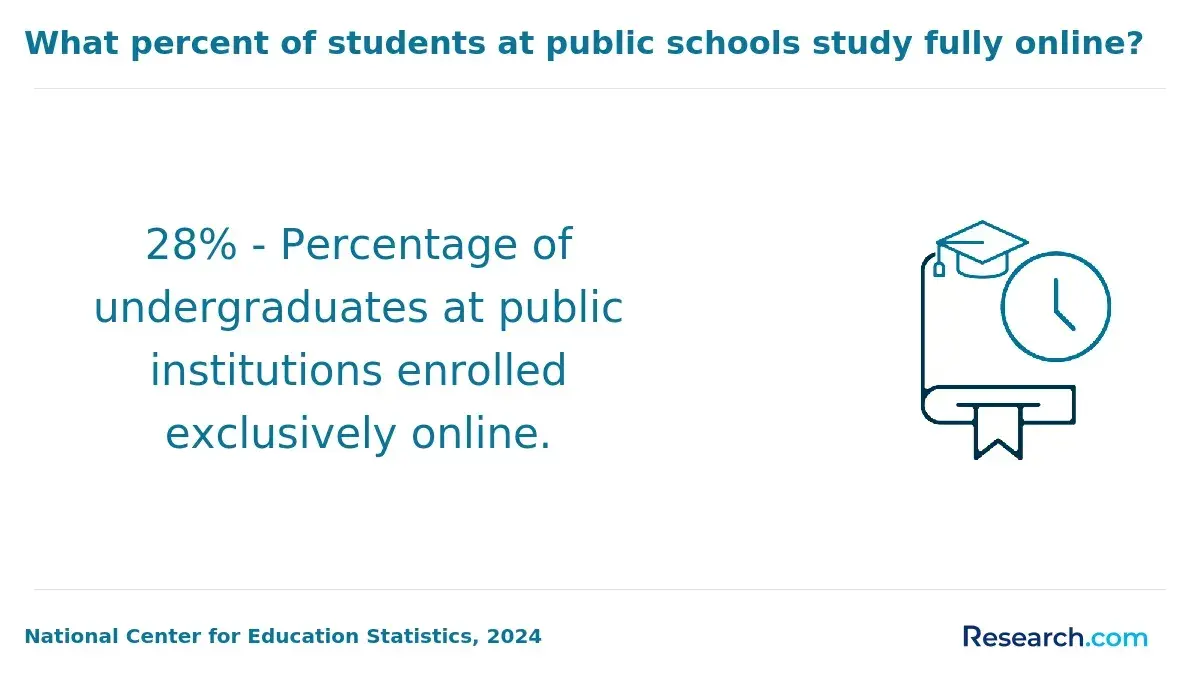
Format choice matters because more students now expect flexible learning options. NCES data released in 2024 show that distance education remained a major part of U.S. higher education after the pandemic shift, which means many colleges have expanded online and hybrid course availability. For students changing majors, that flexibility can reduce scheduling conflicts between old requirements, new prerequisites, work, and commuting.
The table below compares formats by how they typically affect a student trying to graduate after changing majors. Requirements vary by institution and program, especially in fields with labs, clinicals, licensure, or supervised practice.
| Course format | How it can help | When it may not work well |
| Online asynchronous | Useful for flexible electives, general education, and students balancing work schedules | May be difficult for students who need live structure, lab access, or frequent instructor interaction. |
| Online synchronous | Provides scheduled class meetings without commuting | Still creates time conflicts if required sessions overlap with campus-based courses or work. |
| Hybrid | Combines flexibility with some in-person learning, labs, or discussion | May require commuting on specific days, which can limit scheduling flexibility. |
| Campus-based | Often best for labs, studios, clinical preparation, networking, and hands-on majors | Can slow progress if required sections are limited or conflict with other sequenced courses. |
Before enrolling in an online or hybrid course, verify that it satisfies the same requirement as the campus version. This is especially important for science labs, teacher education, nursing prerequisites, internships, and courses tied to licensure or accreditation standards.
If you are a working adult or a student whose new plan requires faster completion, review whether your school offers compressed eight-week terms, competency-based courses, or approved online substitutions. You can also compare accelerated online bachelor degree programs accredited when your current institution cannot provide the course availability you need, but always confirm transferability before switching schools.
How can summer, winter, and accelerated sessions help you make up lost credits?
Short sessions can help you recover credits after changing majors, especially when the missing requirements are electives, general education courses, introductory prerequisites, or courses with no lab or field-placement component. They are less useful when the bottleneck is a year-long sequence or a course offered only once per academic year.
The main benefit of summer, winter, and accelerated terms is that they create extra enrollment windows without forcing you to overload every fall and spring. The main risk is intensity. A five-week course may cover the same learning outcomes as a full-semester course, so poor time management can quickly affect grades.
Use short sessions strategically rather than filling them with random credits. The best candidates usually meet one of these conditions:
- The course satisfies a confirmed requirement in your new degree audit.
- The course is not part of a difficult prerequisite chain that requires more time for mastery.
- The course is available at your institution or has written transfer approval from your registrar or department.
- The tuition and aid rules are clear before you enroll.
- The workload fits your employment, family responsibilities, internship plans, and need for rest.
Accelerated sessions are often strongest for writing, communication, humanities, social science, business basics, introductory technology, and some math courses when the student has the preparation to keep pace. They may be less appropriate for students who struggled in the subject previously or who need extensive tutoring support.
If you are still early in your college pathway, an accelerated associate route may help you rebuild momentum before transferring into a bachelor's program. For example, students comparing lower-division options can review fast-track associate's degree online pathways, but transfer approval should come before enrollment, not after completion.
What financial aid, tuition, and cost considerations arise when you change majors?
Changing majors can affect your budget in three ways: additional tuition for extra credits, changes in aid eligibility, and indirect costs such as housing, transportation, books, fees, lost work hours, or delayed full-time employment. The financial question is not only "Can I afford another semester?" but also "Is there a cheaper way to complete the exact remaining requirements?"
Federal aid rules make planning especially important. For 2024-25, the maximum Federal Pell Grant was $7,395, and annual federal direct loan limits for dependent undergraduates remained capped by year in school. If a major change adds credits, you should confirm whether your aid package covers the added term and whether satisfactory academic progress rules could become an issue.
The table below explains common cost factors that students overlook after changing majors. It can help you prepare better questions for financial aid, the registrar, and your department.
| Cost factor | Why it can change after a major switch | What to verify |
| Tuition for added credits | New prerequisites or major courses may increase total credits attempted | Per-credit tuition, flat-rate tuition rules, overload fees, and summer tuition rates. |
| Program-specific fees | Some majors charge lab, clinical, technology, studio, testing, or equipment fees | Published fee schedules and required materials for each course. |
| Scholarships | Some awards are tied to major, college, GPA, credit load, or graduation timeline | Whether changing majors affects renewal conditions. |
| Federal aid eligibility | Extra terms can affect loan limits and satisfactory academic progress | Pace requirements, maximum timeframe rules, and remaining annual or aggregate loan eligibility. |
| Transfer or transient coursework | Taking courses elsewhere may be cheaper but can create credit-recognition risk | Written preapproval, equivalency, grade requirements, and financial aid consortium rules. |
Before paying for extra credits, compare at least three options: staying at your current institution, taking approved transient courses at a community college, or shifting to a lower-cost accredited online program if your credits transfer well. Students who need a more affordable completion route can compare the cheapest online university options, but the lowest tuition only helps if the program accepts enough of your completed credits and matches your career goals.
A major financial mistake is focusing only on tuition per credit. A course that looks cheaper can cost more if it does not transfer, delays a prerequisite sequence, or fails to satisfy a major requirement. Ask for written confirmation before enrolling outside your home institution.
How do accreditation and transfer policies influence credit recognition in your new program?
Accreditation and transfer policies determine whether your previous coursework is recognized, how it is applied, and whether your new program meets academic or professional standards. Institutional accreditation affects the general legitimacy and transferability of credits, while programmatic accreditation may matter in fields such as nursing, education, engineering, social work, business, public health, and allied health.
Transfer recognition is not all-or-nothing. A school may accept a course as elective credit but refuse to apply it to a specific major requirement. That distinction is critical because elective credit can help you reach the total credit threshold but may not move you closer to completing the major.
Before relying on prior credits, review these policy areas with the registrar and department:
- Institutional accreditation status of the school where each transfer course was completed.
- Programmatic accreditation requirements for your new major, if the field uses specialized accreditation.
- Minimum grade requirements for major, prerequisite, transfer, and upper-division courses.
- Credit age limits for fields where knowledge changes quickly, such as technology, health sciences, and accounting.
- Residency requirements that specify how many credits must be completed at the degree-granting institution.
- Limits on community college, exam-based, military, portfolio, or prior-learning credits.
Accreditation can also affect licensure preparation. For example, a teacher education, nursing, counseling, or engineering pathway may require specific coursework, supervised hours, exams, or state approval. If your new major connects to licensure, ask whether your program meets requirements in the state where you plan to work.
A common red flag is transferring into a program because it promises speed without clearly explaining accreditation, licensure alignment, or credit applicability. Faster completion is valuable only when the credential is recognized by employers, graduate schools, licensing boards, or transfer institutions relevant to your goal.
How should you align your new major with long-term career goals, salaries, and job outlook?
A major change should solve both an academic fit problem and a career-direction problem. The goal is not to pick the highest-paying major in isolation, but to choose a program that fits your strengths, required education level, job-market realities, and willingness to complete any licenses, certifications, internships, portfolios, or graduate study tied to the field.
Labor-market data can help you evaluate the trade-off. BLS 2024 education-pay data show bachelor's degree holders had median usual weekly earnings of $1,543, but outcomes vary widely by occupation, region, experience, industry, and skills. Use salary data as a comparison tool, not a guarantee.
The table below shows how to compare a new major with your career goals. It focuses on fit factors because salary alone does not capture licensure, workload, advancement paths, or personal sustainability.
| Career-fit factor | What to examine | Why it matters after changing majors |
| Required credential | Whether the target role needs a bachelor's degree, graduate degree, license, certificate, portfolio, or experience | A major that looks short may not be enough if the career requires additional preparation. |
| Skill alignment | Writing, analytics, coding, lab work, communication, design, teaching, caregiving, or management skills | Better alignment can improve persistence and make internships or entry-level work more realistic. |
| Job outlook | BLS projections, regional demand, employer postings, and industry trends | A growing field may offer more entry points, but competition and location still matter. |
| Experience requirements | Internships, clinical placements, research, co-ops, projects, or fieldwork | Changing majors late may require a plan to gain experience quickly before graduation. |
| Technology impact | AI, automation, data tools, software platforms, and digital workflows used in the field | Majors that build adaptable technical and human skills may offer broader options. |
AI and automation are changing employer expectations across many fields. Students in business, communication, health, education, social science, and technology programs increasingly benefit from data literacy, ethical AI awareness, digital collaboration, and problem-solving skills. Even if your major is not technical, adding relevant tools or certificates can make your degree more adaptable.
If your new major adds too much time or does not align with your target occupation, consider a complementary certificate, minor, or shorter credential instead of a full major switch. Students who want a faster skills-based option can review short certificate programs that pay well online, especially when the career goal values demonstrable skills alongside or instead of a new degree concentration.
Before finalizing the change, compare your target roles using BLS Occupational Outlook Handbook entries, state labor-market dashboards, alumni outcomes, internship availability, and employer job postings. Look for repeated requirements, not just attractive job titles.
What university support services can help you manage stress and stay motivated to graduate?
Changing majors can bring relief, but it can also create stress about time, money, identity, and whether you made the "right" choice. Support services are not extras; they can directly affect persistence by helping you handle academic gaps, financial uncertainty, motivation, and workload.
Start with services that match the specific barrier you are facing. Academic advising helps with requirements, but tutoring, counseling, career services, financial aid, disability services, and faculty mentoring each solve different problems.
These campus resources are especially useful after a major change:
- Academic advising for degree audits, substitutions, course sequencing, and graduation checks.
- Career services for interest assessments, internship searches, resume updates, interview preparation, and employer research.
- Tutoring and writing centers for difficult gateway courses in the new major.
- Financial aid counseling for satisfactory academic progress, loan limits, scholarship changes, and summer aid questions.
- Mental health counseling for stress, uncertainty, burnout, or family pressure related to the change.
- Faculty mentors for research opportunities, graduate-school preparation, professional norms, and field-specific advice.
- Disability or accessibility services for accommodations if health, learning, or access needs affect your revised plan.
One common mistake is waiting until grades drop before asking for help. If your new major includes unfamiliar quantitative work, labs, public speaking, writing, clinical expectations, or software tools, contact support services during the first two weeks of the term. Early help is usually easier to schedule and more effective than emergency help near finals.
It also helps to create a motivation plan. Write down why you changed majors, what career or life outcome you are working toward, what requirements remain, and which milestone comes next. A visible plan turns an overwhelming transition into a series of manageable decisions.
Other Things You Should Know About
No. Changing majors can be a smart decision if your current program does not fit your abilities, interests, health, finances, or career goals. The risk is not the change itself; the risk is changing without checking credits, costs, prerequisites, and graduation requirements.
Yes, some students graduate on time after changing majors, especially when the new program overlaps with completed credits or when summer, winter, online, or accelerated courses fill the gap. You need a degree audit and advisor-approved course plan to know whether it is realistic.
Run a degree audit for the new major and meet with an advisor in the new department before registering for more classes. Ask which credits count, which requirements remain, and which courses must be taken next to avoid delaying graduation.
It can. Extra credits or added terms may affect satisfactory academic progress, scholarship renewal, loan limits, and summer aid eligibility. Contact financial aid before assuming your current aid package will cover the revised timeline.
References
- How to Catch Up on Credits Over Winter Break: Online Options for High School Students https://www.theamericanacademy.com/blogs/articles/how-to-catch-up-on-credits-over-winter-break-online-options-for-high-school-students
- Satisfactory Academic Progress https://ccsfkb.blackbelthelp.com/it/can-i-change-my-major-and-still-get-financial-aid/
- The Importance of Understanding Transfer Credit Policies https://www.sophia.org/blog/higher-education/understanding-transfer-credit-policies/
- Supporting Student Stress with Coaching | Strategies for Supporting Students https://www.worthit.org.uk/blog/student-stress
- 5 Reasons To Recover Credits And Reduce Academic Pressure - Roots to Routes Academy https://rootstoroutes.ca/recover-credits-and-reduce-academic-pressure/
- Online vs Hybrid vs On-Campus: Which Fits You? https://myaolcc.com/online-vs-hybrid-vs-on-campus-learning/
- Long-Term Career Goals: 20 SMART Goal Examples and How to Set Them https://www.qooper.io/blog/long-term-career-goals
- What Is a Degree Audit? A Guide for Students & Schools https://www.classe365.com/blog/what-is-a-degree-audit-a-guide-for-students-and-universities/
- Accreditation and Transfer of Credit | Council for Higher Education Accreditation https://www.chea.org/accreditation-and-transfer-credit
- How University Students Can Manage Their Mental Health https://www.lifepathgroup.co.za/how-university-students-can-manage-their-mental-health/