2027 Re-Enrolling in College: Step-by-Step Guide

Co-Founder and Chief Data Scientist
Returning to college can feel complicated when you have old credits, work obligations, family responsibilities, and cost concerns. It is also a decision with real upside: the National Student Clearinghouse Research Center reported in 2024 that 36.8 million U.S. adults under 65 had some college but no credential.
This guide is for adult learners who want to finish a degree, change careers, or qualify for advancement. You will learn how to re-enroll, transfer credits, compare formats, plan costs, and choose a program that fits your goals.
Key Things You Should Know
- Start by requesting every prior transcript and asking each target college for a written transfer-credit estimate before you apply, because credit acceptance can change your timeline, tuition, and graduation plan.
- For 2024-25, College Board reported average published tuition and fees of $4,050 at public two-year colleges, $11,610 for in-state public four-year colleges, and $43,350 at private nonprofit four-year colleges, so school type can dramatically affect the cost of finishing.
- Federal Student Aid set the maximum Pell Grant at $7,395 for 2024-25; returning adults should submit the FAFSA even if they assume they earn too much, because grants, loans, work-study, and state aid often depend on it.
What are the key steps to successfully re-enroll in college as an adult learner?
Successful re-enrollment starts with a clear goal and a paper trail. Adult learners often lose time and money when they apply before checking transcripts, financial aid eligibility, academic standing, and program fit.
- Define your target outcome: degree completion, career change, promotion, licensure preparation, graduate school preparation, or personal enrichment.
- Collect official transcripts from every college you attended, including community colleges, online programs, military training providers, and institutions where you completed only one course.
- Check your student account status at your former college, including unpaid balances, academic probation, financial aid suspension, and whether you must submit a readmission application instead of a new application.
- Ask each college for a preliminary degree audit or transfer-credit evaluation that shows which credits apply to your intended major, general education requirements, electives, and residency requirements.
- Compare total cost, schedule, delivery format, accreditation, support services, and career alignment before committing to a program.
- Submit the FAFSA and ask about institutional grants, employer tuition assistance, state adult-completion programs, scholarships for returning students, and payment plans.
- Build a realistic weekly schedule that includes class time, study time, commuting or login requirements, family duties, and recovery time.
- Meet with an academic advisor before registration and choose courses that move you toward graduation rather than simply filling a semester.
A good re-enrollment plan should answer three practical questions: how many credits you still need, how long completion will take, and whether the degree supports a specific career or advancement goal. If a school cannot explain these clearly, keep asking questions before you enroll.
Common mistake to avoid: returning to the same college automatically because it feels familiar. Your former school may still be the right choice, but another accredited institution may accept more credits, offer a better adult-student schedule, or provide a lower total cost.
How do you choose the right college and program when returning to school?
The right college is the one that helps you complete the credential you actually need at a cost, pace, and format you can sustain. For adults, "best" usually means accredited, transfer-friendly, affordable, flexible, and aligned with a realistic career goal.
Use the comparison below to narrow your options before speaking with admissions teams. It summarizes common return-to-college pathways and when each tends to make sense.
| Option | Best fit | Trade-off to check |
| Community college | Students finishing an associate degree, completing general education, or lowering transfer costs | Credits may not all apply to a bachelor's major unless transfer agreements are clear |
| Public four-year university | Students seeking a bachelor's degree with broad major options and regional employer recognition | Adult-friendly scheduling varies widely by campus and department |
| Private nonprofit college | Students who want smaller classes, cohort programs, or specialized majors | Published tuition may be higher, so compare net price after aid |
| Online university | Working adults who need location flexibility and asynchronous coursework | Quality, support, accreditation, and credit policies differ by institution |
| Certificate or stackable credential | Students who need a faster employment skill or want to test a field before a degree | May not replace a degree for roles that require a bachelor's or graduate credential |
Start with accreditation. Institutional accreditation affects financial aid eligibility, credit transfer, graduate-school options, and employer acceptance. For career fields such as nursing, teaching, counseling, social work, and accounting, also check whether the program has the required programmatic accreditation or state approval.
Adult learners should also evaluate age-inclusive advising, flexible pacing, prior learning assessment, career services, and accessibility. If you are exploring degrees for older adults, look for programs that clearly explain technology requirements, transfer rules, and student support rather than relying only on marketing language.
Questions to ask before choosing a program:
- How many of my previous credits will apply directly to this degree, not just appear as electives?
- What is the total estimated cost to finish after transfer credits, grants, fees, books, and required technology?
- Are courses offered at times and in formats that match my work and family schedule?
- Does this program meet licensing, certification, or graduate-school requirements in my state?
- What career outcomes, internship options, employer partnerships, or alumni support are available for adult learners?
How can you transfer previous college credits and avoid retaking courses?
Transfer credit is one of the biggest levers in making degree completion faster and less expensive. However, colleges decide not only whether credits transfer, but also how they apply to your degree.
The table below explains the main ways prior learning may count toward graduation. Use it to ask more precise questions when you contact registrars and academic advisors.
| Credit source | How it may apply | What to verify |
| Previous college courses | General education, major requirements, electives, or prerequisites | Minimum grade rules, course age limits, and whether credits apply to the current major |
| Associate degree | Block transfer, general education completion, or junior standing | Whether an articulation agreement exists with the receiving college |
| Military training | Elective, technical, or general education credit depending on ACE recommendations and school policy | Required military transcripts and maximum credit limits |
| Credit by exam | Introductory course credit through exams such as CLEP or DSST | Accepted exams, minimum scores, and whether credit applies to your program |
| Prior learning assessment | Portfolio-based credit for college-level learning from work or professional experience | Fees, documentation standards, and whether credits count toward residency requirements |
| Professional certifications | Credit for approved industry credentials or training | Whether the college has evaluated the credential for academic credit |
To avoid retaking courses, do not rely on verbal estimates. Ask for a written degree audit that separates accepted transfer credits into major requirements, general education requirements, free electives, and credits that do not apply.
Follow this sequence when transferring credits:
- Order official transcripts from every institution and send them directly to each college you are seriously considering.
- Request an unofficial review before applying if the college offers one, especially if you have many credits.
- Ask whether older STEM, business, nursing, education, or technology courses expire for your intended major.
- Compare how each school applies your credits to the same degree, because two colleges may accept the same transcript very differently.
- Appeal transfer decisions when you can provide syllabi, course descriptions, portfolios, certifications, or evidence of equivalent learning.
Red flag: a school that says "most credits transfer" but will not show how they fit your degree plan. Credits that transfer only as electives may still leave you paying for many required courses.
What admission requirements and re-enrollment policies should returning students expect?
Returning students may go through readmission, transfer admission, adult learner admission, or standard undergraduate admission depending on the school and how long they have been away. The process is usually manageable, but policies can affect your start date and financial aid.
Most colleges ask returning students to provide some combination of the following materials. Requirements vary, so confirm deadlines and documentation directly with each admissions office.
- Application for readmission, transfer admission, or degree completion
- Official transcripts from all previously attended colleges
- High school transcript or GED record, especially if you have limited college credit
- Personal statement or explanation of academic interruption, if required
- Placement testing or prerequisite review for math, writing, science, or language courses
- Proof of immunization or residency for campus-based and in-state tuition purposes
- Financial aid documents, including FAFSA information and satisfactory academic progress review
Academic standing is especially important. If you left with a low GPA, incomplete grades, or financial aid suspension, you may need an academic recovery plan before receiving aid or registering for a full course load.
The 2024-25 FAFSA introduced a simplified application and the Student Aid Index, replacing the older Expected Family Contribution. For returning adults, this matters because household size, income, dependency status, and prior aid usage can change your aid eligibility compared with your last enrollment period.
Policies to check before re-enrolling:
- Residency requirement: the minimum number of credits you must complete at the institution awarding the degree.
- Catalog year: whether you can finish under older degree requirements or must follow the current curriculum.
- Academic renewal: whether the college allows older low grades to be excluded from GPA calculations under specific conditions.
- Satisfactory academic progress: whether your GPA, completion rate, or maximum attempted credits affect financial aid eligibility.
- Major admission: whether your intended program has separate GPA, prerequisite, portfolio, background check, or licensure requirements.
How do online, hybrid, and campus-based programs compare for returning students?
Online, hybrid, and campus-based programs can all work for returning students, but each format creates different demands. The best format depends on your schedule, learning style, commute, technology access, and whether your field requires labs, clinical hours, studio work, or student teaching.
This comparison can help you choose a format based on how you actually learn and live, not just which option sounds most convenient.
| Format | Strengths | Potential drawbacks | Best for |
| Online asynchronous | Maximum schedule flexibility and no commute | Requires strong self-management and reliable technology | Working adults with unpredictable schedules |
| Online synchronous | Live interaction with instructors and classmates | Fixed meeting times may conflict with work or caregiving | Students who want structure without commuting |
| Hybrid | Combines online flexibility with in-person support or labs | Campus visits still require planning | Students in fields with hands-on requirements |
| Campus-based | Direct access to facilities, faculty, tutoring, and peer networks | Commute and fixed schedules can be difficult | Students who prefer face-to-face learning or need campus resources |
| Competency-based | May allow faster progress through material you already know | Not ideal for students who need frequent instructor-led structure | Experienced adults with strong independent learning skills |
Online learning has become a mainstream pathway for adult learners, but it is not automatically easier. You still need weekly study blocks, access to tutoring, clear instructor communication, and a plan for group projects or exams.
If cost and flexibility are your top concerns, reviewing the most affordable online colleges can help you identify schools worth deeper investigation. Still, affordability should be paired with accreditation, transfer-credit fit, student support, and career relevance.
Choose online if your work schedule changes often, you can study independently, and your program does not require frequent in-person activities. Choose hybrid or campus-based if you need labs, clinical placements, in-person accountability, or direct access to specialized equipment.
What financial aid, grants, loans, and tuition assistance options are available?
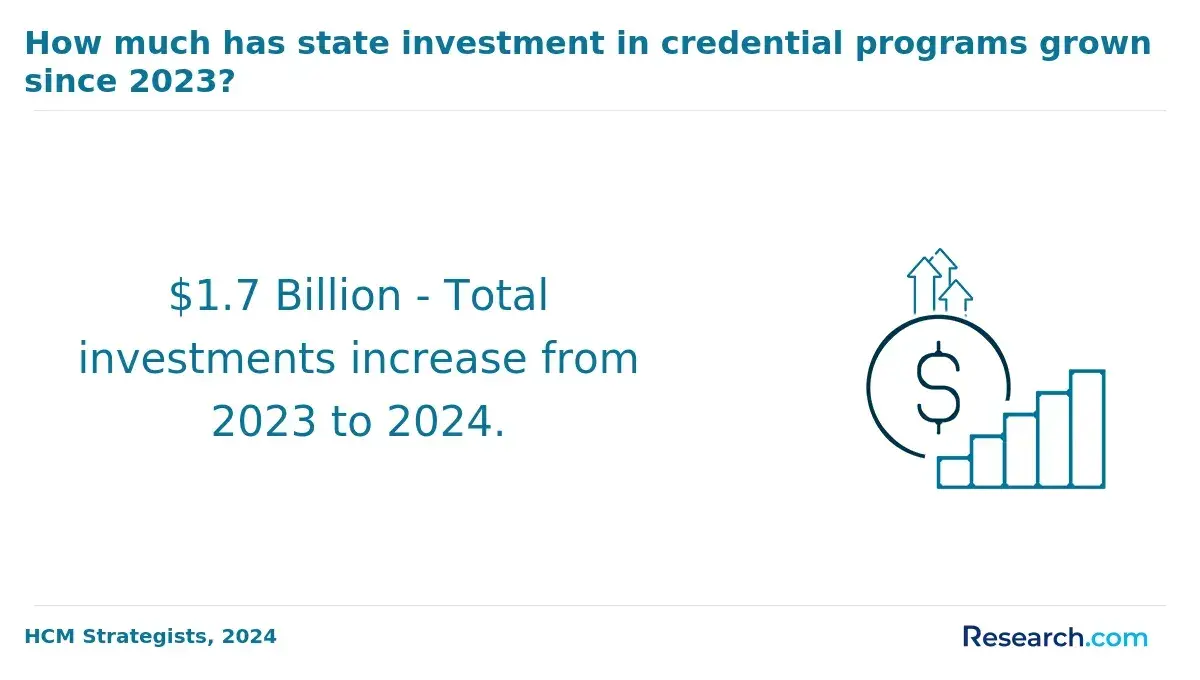
Financial aid is not only for first-time students. Returning adults may qualify for federal aid, state grants, institutional scholarships, employer benefits, military benefits, workforce funding, and payment plans.
The maximum Federal Pell Grant for 2024-25 is $7,395. That amount is not guaranteed for every student, but it shows why submitting the FAFSA is worth doing before assuming college is unaffordable.
Consider these funding options in order, starting with money that does not need to be repaid:
- Submit the FAFSA as early as possible to determine eligibility for Pell Grants, federal loans, work-study, and many state or institutional programs.
- Ask your state higher education agency about adult completion grants, workforce scholarships, last-dollar tuition programs, and grants for high-demand fields.
- Contact your employer about tuition reimbursement, direct billing, apprenticeship funding, or professional development benefits.
- Ask colleges about scholarships for transfer students, adult learners, parents, veterans, first-generation students, and students returning after a stop-out.
- Use federal student loans cautiously after comparing grant aid, payment plans, employer funding, and lower-cost institutions.
- Explore military education benefits if you are a veteran, active-duty service member, reservist, spouse, or dependent.
Graduate students returning for a master's degree should be especially careful because federal graduate aid is mostly loan-based. Comparing options such as the cheapest online master's degree pathways can help reduce borrowing before you start.
Common mistake to avoid: looking only at tuition. Fees, books, software, transportation, child care, unpaid clinical hours, and reduced work hours can change the real cost of attending.
How much does finishing a degree typically cost, and how can you budget?
The cost to finish a degree depends on how many credits you need, where you enroll, whether you attend full time or part time, and how much aid you receive. A student with 90 applicable credits may have a very different budget from a student whose old credits transfer only as electives.
College Board's 2024-25 tuition data gives a useful starting point for comparing school types. These are published tuition and fee averages, so your actual net cost may be lower after grants and scholarships.
| Institution type | Average published tuition and fees for 2024-25 | Budget implication for returning students |
| Public two-year college, in district | $4,050 | Often useful for completing lower-division credits or an associate degree before transfer |
| Public four-year college, in state | $11,610 | Can be cost-effective for bachelor's completion if transfer credits apply well |
| Public four-year college, out of state | $30,780 | May make sense only if the program is uniquely aligned with your goals or offers strong aid |
| Private nonprofit four-year college | $43,350 | Requires careful net-price comparison because grants can substantially change the real cost |
To build a realistic budget, estimate the full cost of completion rather than the cost of one semester. This helps you compare schools that accept different numbers of transfer credits.
- Calculate remaining credits required for graduation after transfer evaluation.
- Multiply remaining credits by tuition per credit or estimate the number of terms using full-time or part-time tuition.
- Add mandatory fees, books, course materials, exam fees, software, technology, transportation, parking, and child care.
- Subtract grants, scholarships, employer aid, military benefits, and tuition waivers that are confirmed in writing.
- Estimate lost income if you reduce work hours, especially for intensive programs, clinical placements, internships, or student teaching.
- Compare the total remaining cost with expected career value, not just with the lowest advertised tuition.
Budgeting tip: part-time enrollment may reduce short-term stress but increase the total time to completion. Full-time enrollment may finish faster but can be risky if it forces you to borrow more or cut work hours beyond what your household can manage.
What careers can a completed degree unlock, and how do outcomes differ by major?
A completed degree can help qualify you for roles that require a credential, strengthen promotion prospects, and support a career change. The value depends heavily on the major, local labor market, work experience, internships, certifications, and whether the degree matches the role you want.
Use the table below to connect broad majors with common career directions. It is not a promise of employment, but it can help you decide whether a program supports your target outcome.
| Major area | Career directions | What improves outcomes |
| Business | Operations, accounting support, human resources, sales management, project coordination | Internships, analytics skills, Excel or business intelligence tools, industry experience |
| Healthcare | Nursing, health administration, allied health, public health, care coordination | Licensure alignment, clinical placement quality, state approval, patient-care experience |
| Computer science and IT | Software development, cybersecurity, data analytics, systems support, cloud administration | Portfolio projects, certifications, internships, coding or systems experience |
| Education | Teaching, instructional support, curriculum roles, training and development | State certification fit, student teaching, classroom experience, endorsement options |
| Social sciences and human services | Case management, nonprofit work, public administration, community services | Field experience, graduate-school planning, licensure awareness, writing and research skills |
| Engineering and applied technology | Engineering support, manufacturing, quality assurance, logistics, technical management | ABET-related considerations where relevant, labs, co-ops, math readiness, technical projects |
Researching highest paying majors can be useful, but salary should not be the only factor. A high-paying major that you cannot complete, cannot afford, or do not want to work in may produce worse results than a moderate-paying field with strong fit and clear advancement routes.
Degree completion tends to make the most sense when the credential is required for your target role, your transfer credits shorten the path, the program has strong support for adult learners, and the expected career benefits justify the cost. It may make less sense if a lower-cost certificate, apprenticeship, employer training program, or license-preparation course would meet your goal faster.
How do salary potential and job outlook influence your choice of degree program?
Salary potential and job outlook should influence your degree choice, but they should not be treated as guarantees. National medians describe broad labor markets; your results can vary by region, employer, experience, internships, certifications, and economic conditions.
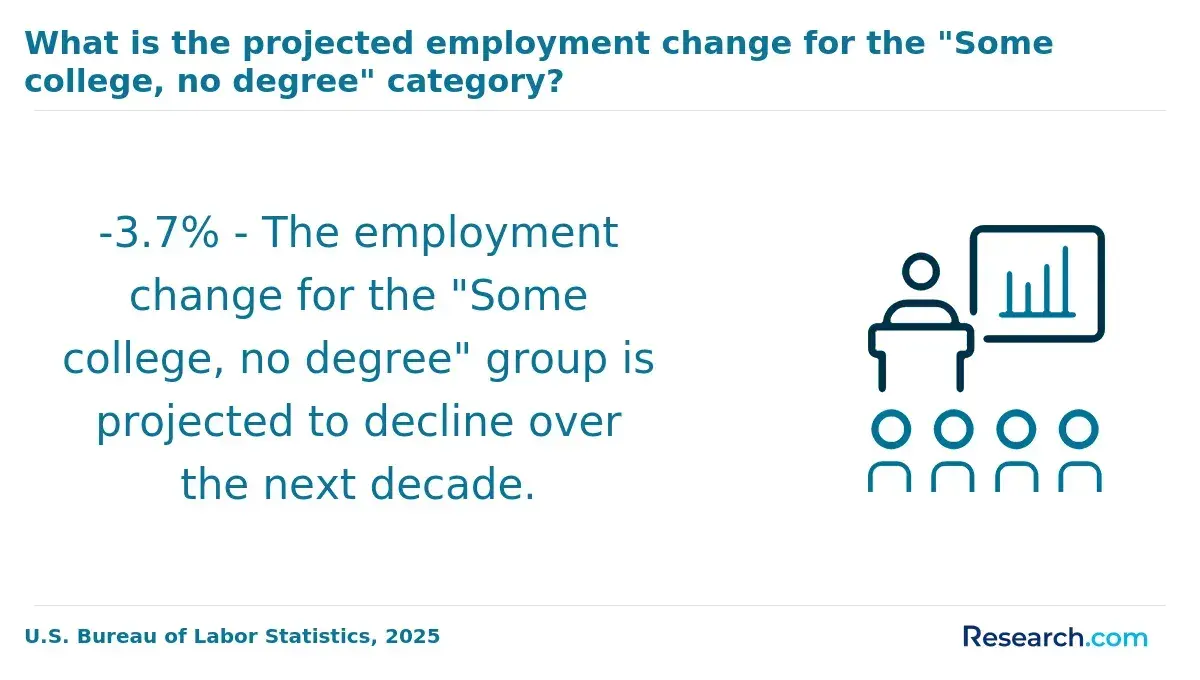
According to the U.S. Bureau of Labor Statistics, full-time workers age 25 and older with a bachelor's degree had median weekly earnings of $1,543 in 2024, compared with $992 for those with some college but no degree. For returning students, the key takeaway is not that any degree automatically pays off; it is that completing the right credential can expand access to roles with stronger earning potential.
Evaluate salary and outlook using this practical sequence:
- Identify three to five job titles you want after graduation, not just the major name.
- Check whether job postings in your area require a specific degree, license, certification, portfolio, or amount of experience.
- Compare national salary data with local wages, because local labor markets can differ significantly.
- Review job growth projections, but give extra weight to whether employers near you are hiring for the role.
- Estimate your break-even point by comparing total remaining college cost with realistic wage growth or promotion potential.
- Ask the college for career services data, internship access, employer partnerships, and support for adult students changing careers.
For some fields, a bachelor's degree is only one step. Healthcare administration, counseling, education leadership, research, and executive roles may require graduate study or licensure, while some technology roles may value portfolios and certifications alongside degrees.
If your long-term plan includes advanced credentials, explore timelines early. Shorter online doctorate programs may interest professionals planning for leadership or academic roles, but doctoral study should be evaluated separately from bachelor's completion because costs, admissions standards, and career returns vary widely.
How can returning students build an academic success plan and support system?
Adult learners often succeed when they treat college like a managed project rather than a hopeful restart. The goal is to create a support system before the semester becomes stressful.
Build your academic success plan around the specific risks that commonly affect returning students: time pressure, math or writing gaps, technology issues, family demands, financial stress, and uncertainty about policies.
- Schedule a meeting with an academic advisor before registration and confirm that every course applies to your degree plan.
- Use tutoring early, especially for writing, math, statistics, science, accounting, coding, and research-heavy courses.
- Create a weekly calendar with fixed study blocks and backup time for emergencies.
- Tell your household or support network what your school schedule requires and what help you may need.
- Contact instructors during the first week if you are unsure about expectations, technology, exams, or participation rules.
- Meet with financial aid before dropping or withdrawing from a course, because withdrawals can affect aid eligibility and satisfactory academic progress.
- Use career services before your final term, not after graduation, to prepare resumes, portfolios, interview materials, and internship applications.
Technology is also part of academic readiness. Many courses now use learning management systems, proctoring tools, video platforms, digital textbooks, analytics dashboards, or AI-supported study tools. Learn the rules before using AI for assignments, because colleges differ in what they allow.
Warning signs that you may need to adjust your plan:
- You are consistently studying after midnight because there is no protected study time.
- You enrolled in a course sequence without confirming prerequisites.
- You are using loans to cover avoidable costs without comparing lower-cost programs.
- You do not know your advisor, financial aid contact, tutoring options, or withdrawal deadlines.
- Your major does not connect clearly to a career, promotion, license, or graduate-school goal.
A strong finish plan should be flexible enough to survive real life. If full-time study is not sustainable, a slower part-time route may be better than stopping out again.
Other Things You Should Know About
Yes, but you may need readmission approval, academic advising, or an academic recovery plan. Ask about academic renewal, probation rules, and financial aid satisfactory academic progress before registering.
Many general education credits do not formally expire, but some programs limit older credits in fast-changing fields such as nursing, technology, science, and business. Each college sets its own policy.
Online college can be a strong option if the school is accredited, the program fits your career goal, and you can manage deadlines independently. It is less ideal if you need frequent in-person support or hands-on training.
Choose the path that best matches your current career goal and uses the most applicable credits. Finishing the old major may be faster, but changing majors can be smarter if your target job requires different preparation.
References
- How To Go Back to School: Your Complete Guide - New England Tech https://www.neit.edu/blog/i-want-to-go-back-to-school
- I have a degree, now what? https://targetjobs.co.uk/careers-advice/career-ideas/i-have-degree-now-what
- Average Cost Of College 2024-2025 | Bankrate https://www.bankrate.com/loans/student-loans/average-cost-of-college/
- Building a Plan to Enroll in College: First Steps for Adult Learners - ReUp Education https://reupeducation.com/blog/building-a-plan-to-enroll-in-college-first-steps-for-adult-learners/
- Hybrid Programs- Which Students Want Them? https://encoura.org/resources/wake-up-call/hybrid-programs-which-students-want-them/
- How hybrid and online learning supports student accessibility and affordability - OI Digital Institute https://oidigitalinstitute.com/news/how-hybrid-and-online-learning-supports-student-accessibility-and-affordability/
- Benefits of a College Degree on Salary & Earning Potential | UMass Global https://www.umassglobal.edu/blog-news/how-college-impacts-salary-and-future-earning-potential
- How Much Does a Bachelor's Degree Cost? | SoFi https://www.sofi.com/learn/content/bachelor-degree-cost/
- Returning to College: Explore Your Options https://www.princetonreview.com/college-advice/returning-to-college
- Hybrid class vs. online: Choosing the best for your student https://www.asuprepdigital.org/blog/hybrid-class-vs-online/