2027 Academic Recovery Checklist for Students on Probation

Co-Founder and Chief Data Scientist
Academic probation can feel like a verdict, but it is usually a warning system designed to help you recover before dismissal or aid loss. NCES reported in 2024 that about 64% of first-time, full-time bachelor's students completed within six years, which means many students face delays, repeats, or academic setbacks.
This guide is for students, parents, advisors, and returning learners who need a clear plan. You will learn how probation works, what to do first, how to protect financial aid, and how to choose a realistic path back to good standing.
Key Things You Should Know
- Most colleges define undergraduate good standing around a 2.0 cumulative GPA, while federal satisfactory academic progress rules also consider completion pace and maximum timeframe, often measured against a 150% program-length limit.
- The fastest useful response is not "take more classes"; it is to confirm your exact probation conditions, calculate the grades needed, meet advising deadlines, and build a lighter, higher-support schedule.
- Probation can affect financial aid, scholarships, transfers, and graduation timing, so students should review costs early; College Board's 2024 data put average published in-state tuition and fees at public four-year colleges at $11,610 for 2024-25.
What does being on academic probation mean and how does it affect your degree progress?
Academic probation means your college has determined that your grades, credit completion rate, or both have fallen below the school's minimum academic standards. It is not the same as being expelled. In most cases, it is a temporary status that gives you one or more terms to improve before stronger consequences, such as suspension, dismissal, or financial aid loss, may occur.
The most common trigger is a cumulative GPA below the school's minimum, often 2.0 for undergraduates. Some programs, however, require higher grades in major courses, clinical courses, teacher preparation courses, or prerequisites. A student can also be in trouble even with a passable GPA if they withdraw from too many credits or repeatedly fail required courses.
The table below explains the language colleges often use in probation notices. Understanding these terms helps you avoid reacting emotionally to the letter and focus on the specific standard you need to meet.
| Term | What it usually means | Why it matters |
| Academic probation | Your academic record is below institutional standards, but you are still enrolled. | You may have a limited time to raise your GPA or complete more credits. |
| Good academic standing | You meet the college's GPA and progress requirements. | This status is usually required for normal registration, graduation eligibility, and many scholarships. |
| Satisfactory academic progress | A financial aid standard that considers GPA, credit completion pace, and maximum program timeframe. | You may lose federal aid if you do not meet SAP after warning or appeal periods. |
| Academic suspension | You are temporarily removed from enrollment after not meeting recovery conditions. | You may need to sit out, appeal, or complete conditions before returning. |
| Academic dismissal | The college ends your enrollment because standards were not met. | Readmission may be possible, but rules vary and can require a formal petition. |
Probation affects degree progress in practical ways. You may have a registration hold, be required to meet with an advisor, lose access to overload credits, or be limited to certain course combinations. If you failed a prerequisite, the effect can cascade: one missed math, writing, science, or major course can delay several future courses that depend on it.
The most important point is that probation is a solvable academic planning problem if you treat it early. The right question is not "Am I a bad student?" but "Which standard did I miss, what deadline applies, and what mix of grades and credits will restore my standing?"
What immediate steps should you take after receiving an academic probation notice from your college?
Your first week after receiving a probation notice matters because many colleges attach short deadlines to advising, appeals, registration changes, and financial aid reviews. Do not wait until classes begin to ask what the notice means.
Use this checklist to convert the notice into a clear action plan. Each step should produce a document, appointment, or decision you can track.
- Read the notice carefully and identify the exact problem: cumulative GPA, term GPA, major GPA, completion rate, SAP status, or a combination of these.
- Find the deadline for advising, appeal submission, course changes, academic contracts, and financial aid SAP review.
- Schedule meetings with your academic advisor and financial aid office before changing your schedule.
- Request a degree audit so you can see which failed, withdrawn, or missing courses affect prerequisites and graduation timing.
- Ask whether repeat-course policies, grade replacement, academic renewal, or course forgiveness can improve your GPA calculation.
- List nonacademic causes honestly, including work hours, health needs, caregiving, housing, technology access, transportation, or course format mismatch.
- Build a written semester plan that includes credits, target grades, tutoring appointments, weekly study blocks, and midterm check-ins.
When you meet with staff, bring your probation letter, unofficial transcript, current schedule, degree audit, work schedule, and a short explanation of what changed or what support you need. Advisors can help more when you arrive with specifics rather than a general statement that you want to "do better."
A common mistake is dropping or adding classes before checking aid rules. If you fall below full-time enrollment, repeat a course that aid will not cover, or withdraw after the census date, you may create a billing problem while trying to solve an academic one.
How can you build a semester-by-semester academic recovery plan to regain good standing?
An academic recovery plan should be built backward from the requirement you must meet. If the college says you need a 2.0 cumulative GPA, calculate the grades required. If the issue is credit completion pace, focus on passing enrolled credits. If the issue is a major GPA, prioritize the courses that count toward that major calculation.
The table below summarizes how recovery priorities change across terms. It is not a substitute for your school's degree audit, but it shows the sequence most students should expect.
| Recovery stage | Main academic focus | Typical decision point |
| Before the next term | Clarify probation rules, adjust schedule, calculate target grades, and arrange support. | Whether to repeat failed courses, reduce credits, or change course format. |
| Weeks 1-3 | Confirm attendance, complete early assignments, and identify courses that feel risky. | Whether tutoring, office hours, or a schedule change is needed before add/drop deadlines. |
| Midterm | Compare actual grades with the target GPA plan. | Whether a withdrawal, pass/fail option, or intensified support is better than staying unchanged. |
| End of term | Complete all finals, projects, and missing work permitted under course policy. | Whether good standing is restored or another appeal or plan is needed. |
| Following term | Protect the progress made and avoid overloading too soon. | Whether to increase credits, change major requirements, or continue a reduced load. |
To build the plan, use your transcript rather than your memory. Students often underestimate the effect of old low grades or overestimate how quickly one good semester can repair a cumulative GPA.
Follow these practical steps when creating your recovery plan with an advisor:
- Separate cumulative GPA, term GPA, major GPA, and SAP pace because each may require a different solution.
- Identify courses eligible for repeat or grade replacement and confirm how the new grade will be calculated.
- Choose the smallest credit load that still supports your aid, housing, visa, athletic, or program requirements.
- Set a target grade for every course, not just a general goal to "pass."
- Schedule weekly study blocks before work shifts, commuting time, clubs, and social plans fill the calendar.
- Set two checkpoints before midterm so you can act while withdrawal, tutoring, and instructor feedback are still useful.
If your GPA deficit is large, one semester may not be enough to restore good standing. That does not mean recovery is impossible. It means your plan should show steady improvement, successful credit completion, and documented use of support services, which may help if you need to appeal for another term.
How do course load, major choice, and program format influence academic recovery success?
Course load, major fit, and delivery format can make the difference between a realistic recovery plan and another unsuccessful semester. Students on probation often feel pressure to catch up quickly, but adding more credits can backfire if the original problem was time, preparation, health, or format mismatch.
The comparison below helps you think through structural choices. These are not instructions by themselves; they are planning factors to discuss with advising and financial aid staff before registration.
| Choice | When it can help | When it can hurt |
| Reduced course load | You need more time per class, are repeating difficult courses, or work significant hours. | It may affect aid, housing, athletics, immigration status, or graduation timeline. |
| Full-time course load | You need full-time status and can handle the workload with stronger support. | It may repeat the same overload pattern that led to probation. |
| Changing major | Your current major requires courses that do not match your strengths, goals, or preparation. | It may add credits, delay graduation, or create new prerequisites. |
| Online courses | You need flexibility, commute relief, recorded lectures, or better control over study time. | They require self-direction and may be risky if procrastination caused past problems. |
| In-person courses | You benefit from live structure, immediate questions, labs, or face-to-face accountability. | They may be hard to attend consistently if transportation or work schedules are unstable. |
| Accelerated courses | You have one manageable subject, strong time availability, and need to repeat a course quickly. | Compressed deadlines can be risky during academic recovery. |
Major choice deserves special attention. If you repeatedly fail gateway courses in the same sequence, the issue may not be effort alone. It may be a mismatch among the major, your preparation, your interest level, and the time you can realistically invest. A change of major can be smart if it preserves credits and aligns better with your goals, but it should not be used to avoid all difficult courses.
Program format also matters. Some students recover best in structured campus courses; others do better with flexible online options. If you are considering a faster path after lost credits, compare policies carefully before choosing accelerated bachelor's degrees, because speed only helps when the format matches your learning habits and support needs.
A good rule is to rebuild confidence with a schedule you can execute. That may mean fewer credits, one repeated course, one high-support course, and no unnecessary electives during the recovery term.
Which campus and online support services best help students improve grades on probation?
The most effective support services are the ones tied directly to the courses and barriers that caused probation. General motivation helps, but targeted tutoring, advising, counseling, and accountability are usually more useful.
The table below shows common support services and the academic problems they are best suited to address. Use it to decide which offices to contact first rather than signing up for everything at once.
| Support service | Best suited for | Typical benefit |
| Academic advising | Probation rules, degree audits, course sequencing, repeat policies, and registration holds. | Clarifies what must happen to regain good standing. |
| Tutoring center | Specific course content in math, writing, science, accounting, languages, and other high-demand subjects. | Improves weekly problem-solving and assignment performance. |
| Writing center | Essays, lab reports, research papers, citations, and writing-heavy general education courses. | Helps students improve drafts before grades are final. |
| Instructor office hours | Course expectations, exam review, missing concepts, and grade feedback. | Gives direct insight from the person grading the work. |
| Counseling or mental health services | Anxiety, depression, grief, burnout, trauma, or stress affecting academic function. | Connects academic recovery with personal stability. |
| Disability services | Documented disabilities, chronic illness, learning differences, ADHD, or temporary medical conditions. | May provide approved accommodations for access and assessment. |
| Financial aid office | SAP status, appeals, aid warnings, enrollment intensity, and cost planning. | Helps prevent academic decisions from creating unexpected bills. |
| Career center | Major uncertainty, motivation problems, internships, and career-goal alignment. | Connects coursework to a more concrete future plan. |
Support services work best when you use them before a crisis. Waiting until the week before finals limits what tutors, instructors, and advisors can do. Early use also creates a record of effort, which may matter if you need to file an academic or financial aid appeal.
Ask these questions when choosing support:
- Which course has the highest risk of pulling down my GPA again?
- Which service can help before the first major exam or paper?
- Do I need academic support, personal support, financial guidance, or all three?
- Can I schedule recurring appointments instead of relying on last-minute help?
- Will the service provide documentation if an appeal later requires proof of participation?
If your college does not offer enough tutoring in your subject, ask about online tutoring platforms, supplemental instruction, peer-led study groups, library workshops, or department-specific labs. The best option is the one you will actually attend consistently.
How should you use study strategies, time management, and GPA tracking to raise performance?
Academic recovery requires changing the system that produced the grades, not just hoping for more motivation. The three tools that matter most are active study methods, a weekly time plan, and a GPA tracker that shows whether your current grades are enough.
Passive studying is one of the biggest traps. Rereading notes and highlighting can feel productive, but many courses require retrieval practice, problem solving, drafting, and feedback. Your study plan should match the way the course tests learning.
Use the following strategy set to make study time more measurable and less dependent on mood:
- Convert each syllabus into a weekly task list with readings, quizzes, papers, labs, exams, and discussion posts.
- Use active recall by closing notes and answering questions from memory before checking accuracy.
- Practice under test-like conditions for quantitative, science, language, and certification-style courses.
- Start papers with outlines and rough drafts early enough to use the writing center or instructor feedback.
- Track grades after every assignment so you know whether you are above or below the target for good standing.
- Reserve weekly catch-up time so one illness, work shift, or family emergency does not destroy the whole schedule.
Time management should be built around fixed commitments first: class meetings, work, commuting, caregiving, sleep, meals, and medical appointments. Then place study blocks next to the courses they support. For example, studying immediately after a lecture can be more effective than waiting several days, because confusion is still fresh and easier to fix.
GPA tracking is especially important because probation rules are mathematical. A student with many completed credits and a low cumulative GPA may need several strong terms to move the overall average, while a newer student may recover faster. Ask your advisor to verify the calculator you use, because repeat policies and institutional GPA rules vary.
Watch for these red flags during the term:
- You miss the first assignment or quiz in more than one course.
- You do not know your current grade by the fourth week.
- You are studying many hours but avoiding the hardest tasks.
- You stop attending a course because you are embarrassed or behind.
- You are relying on one final exam to rescue the entire semester.
If any of these occur, act before midterm. The best recovery plans are adjusted early, not judged after grades are already posted.
What are typical probation policies, deadlines, and dismissal risks at U.S. colleges?
Probation policies vary by college, but most U.S. institutions combine GPA rules, credit completion rules, advising requirements, and deadlines for appeals or academic contracts. The safest approach is to treat your school catalog and probation letter as the controlling documents.
Federal aid rules add another layer. The U.S. Department of Education requires schools to monitor satisfactory academic progress for federal student aid, including qualitative progress such as GPA and quantitative progress such as pace toward completion within a maximum timeframe. Many undergraduate programs use the 150% timeframe concept, meaning students cannot take unlimited credits with aid while pursuing the same credential.
The table below summarizes common policy areas you may see. It is designed to help you recognize what to look for in your own catalog, not to replace institutional rules.
| Policy area | Common approach | Risk if ignored |
| Minimum GPA | Undergraduate good standing often requires a cumulative GPA around 2.0, with higher standards in some majors. | Continued probation, suspension, or dismissal. |
| Term GPA requirement | Some colleges require a minimum GPA during the probation term even if the cumulative GPA remains below standard. | You may fail the probation contract despite improvement in one area. |
| Credit completion pace | Schools often require students to complete a minimum share of attempted credits. | Withdrawals can create SAP problems even when GPA improves. |
| Academic contract | Students may need advisor approval, tutoring, limited credits, or regular check-ins. | Registration holds or loss of appeal eligibility. |
| Appeal deadline | Appeals often require written explanation, documentation, and a future plan. | Missing the deadline may delay enrollment or aid. |
| Dismissal or suspension review | Students who do not meet probation conditions may be removed for a term or longer. | You may need readmission approval before continuing. |
Dismissal risk increases when students do not understand which standard they failed. For example, a student may raise their term GPA but still be dismissed for not meeting a required cumulative GPA or contract condition. Another student may pass classes but lose aid because too many prior withdrawals damaged the completion rate.
Nontraditional and older students should pay close attention to program length, transfer credit, and pacing. If you are returning after years away, compare formats carefully; some students explore one-year degree programs for seniors, but probation recovery still requires checking accreditation, credit acceptance, and aid eligibility before enrolling.
If dismissal is possible, ask your advisor what evidence strengthens an appeal. Documentation may include medical records, counseling notes, employer schedule changes, proof of caregiving disruption, tutoring attendance, or a written academic plan. Keep the explanation honest and focused on what changed and why the next term will be different.
How can academic probation affect financial aid, scholarships, and tuition planning?
Academic probation and financial aid are connected but not identical. A student can be on academic probation and still receive aid for a warning period, or be in good standing with the college but fail a financial aid SAP rule. You need to check both offices.
Cost planning matters because repeating courses, extending graduation, or losing aid can be expensive. College Board reported in 2024 that average published tuition and fees for 2024-25 were $11,610 for in-state students at public four-year colleges and $4,050 at public two-year colleges. The gap shows why even one extra semester can change the total cost of recovery.
The table below identifies financial areas that students on probation should review early. It can help you prepare for a financial aid meeting with the right questions.
| Financial area | What to check | Why it matters |
| Federal aid SAP | GPA, completion pace, maximum timeframe, warning status, and appeal options. | Federal grants and loans may be paused if SAP is not met. |
| State grants | State-specific GPA, credit, residency, and renewal rules. | Requirements may differ from federal aid rules. |
| Institutional scholarships | Minimum GPA, full-time enrollment, and renewal appeal rules. | Merit awards often have stricter standards than general enrollment. |
| Repeat courses | Whether aid covers the repeat and how many repeats are allowed. | A repeated class may not always be funded the way you expect. |
| Withdrawals | Refund dates, return of Title IV funds rules, and transcript impact. | Dropping late can create both debt and SAP problems. |
| Payment balance | Outstanding charges, holds, and payment plan deadlines. | Balances can block registration even if you are academically eligible. |
Before changing enrollment, ask financial aid staff to model the effect of full-time, three-quarter-time, half-time, and less-than-half-time schedules. A reduced load can be academically smart, but it must be financially sustainable.
If you need a lower-cost reset, compare community college options, transfer agreements, and an online college that accepts FAFSA. Do not assume that cheaper automatically means better; verify accreditation, credit transfer, degree applicability, and whether the program supports your recovery goals.
One common mistake is using private loans to cover a recovery term without first fixing the academic plan. Borrowing may be necessary for some students, but it should not fund the same course load, work schedule, or study habits that caused the probation problem.
In what ways can probation influence transfer options, graduate school plans, and licensing?
Academic probation can affect future opportunities, but it does not automatically close every door. The impact depends on how low your GPA is, whether you recover, how competitive the next program is, and whether the field has licensing or professional conduct requirements.
Transfer schools usually review cumulative GPA, completed credits, standing at the previous institution, and sometimes whether you are eligible to return. Some colleges will admit transfer students with lower GPAs conditionally, while selective programs may require stronger academic records, prerequisite grades, or evidence of improvement.
The table below summarizes how probation can appear in later academic and professional decisions. Use it to identify which pathway needs the most careful planning.
| Future pathway | How probation may matter | What reviewers often look for |
| Transfer admission | Low GPA or dismissal may limit options or lead to conditional admission. | Recent grade improvement, completed prerequisites, and eligibility to return. |
| Major admission | Competitive majors may require minimum grades in gateway courses. | Strong performance in required math, science, writing, business, or field-specific courses. |
| Graduate school | A low cumulative GPA may weaken competitiveness, especially for selective programs. | Upper-division improvement, relevant experience, recommendations, and explanation if requested. |
| Professional licensing | Some fields review education history, clinical performance, exam eligibility, or conduct issues. | Completion of accredited coursework and compliance with state or board rules. |
| Employer tuition programs | Employers may require passing grades or degree progress for reimbursement. | Documentation that courses apply to the approved program. |
If your current bachelor's path no longer fits, an associate's degree may be a practical intermediate credential, especially if it captures completed credits and supports transfer later. This option makes the most sense when it reduces wasted credits and keeps you moving toward a realistic education or career goal.
Graduate school applicants should focus on trends and readiness. A transcript with early probation followed by several strong terms can tell a different story from a transcript with repeated unresolved academic problems. If an application asks about academic discipline or probation, answer truthfully and briefly, then explain the concrete changes that led to improvement.
For licensing fields such as nursing, teaching, counseling, accounting, social work, engineering, and allied health, never assume that institutional readmission equals professional eligibility. Requirements can vary by state board, accreditor, and program, so check official rules before investing in additional coursework.
How do you explain academic probation on resumes and applications while protecting career prospects?
In most cases, you do not list academic probation on a resume. A resume should focus on education, skills, experience, projects, certifications, and results. However, some applications, transfer forms, graduate programs, internships, scholarships, security clearances, and licensing processes may ask about academic standing or past institutional action. If asked directly, answer accurately.
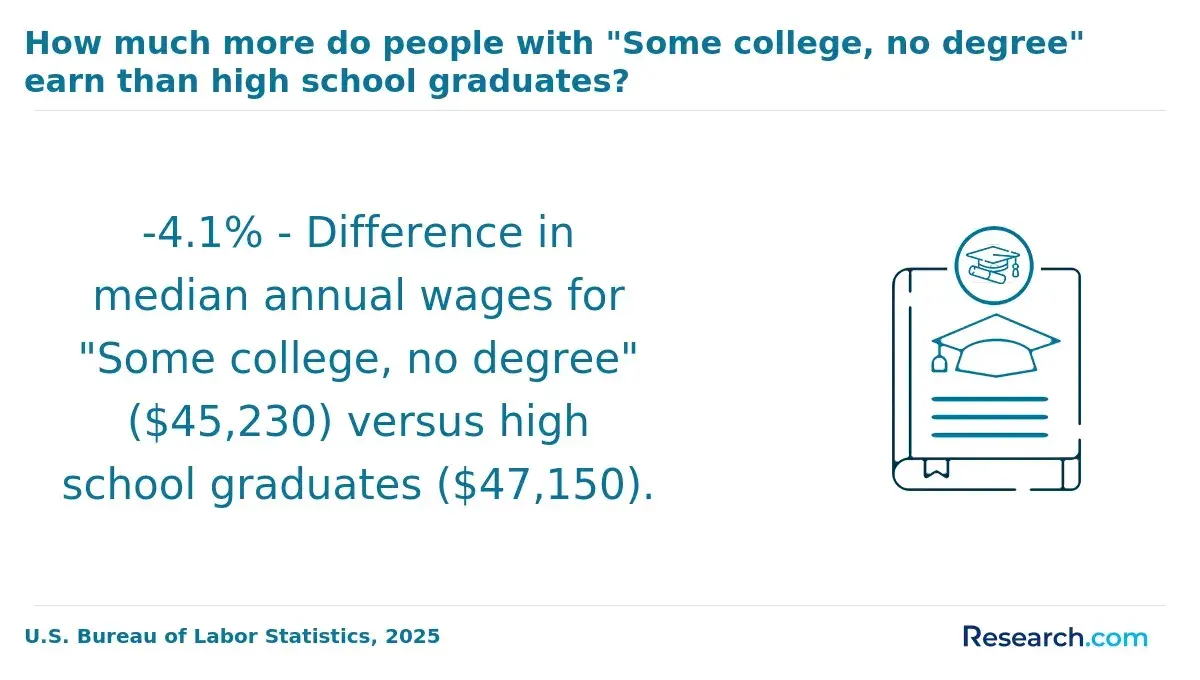
The U.S. Bureau of Labor Statistics reported 2024 median weekly earnings of $1,543 for workers with a bachelor's degree compared with $992 for workers with some college but no degree. That difference does not guarantee an outcome for any individual, but it shows why protecting degree progress can matter for long-term career options.
Use this approach when an explanation is required:
- Keep it brief and factual: name the term, the issue, and the academic standard involved.
- Take responsibility without oversharing personal details that are not relevant to the decision.
- Explain what changed, such as reduced work hours, tutoring, health support, a major change, or improved study systems.
- Point to evidence of recovery, including stronger grades, completed credits, projects, internships, or recommendations.
- Connect the experience to a professional strength, such as resilience, planning, communication, or accountability.
A weak explanation sounds like an excuse or blames instructors. A stronger explanation shows insight and a corrective pattern: "During my sophomore year, I took an unrealistic course load while working nights, which led to academic probation. I met with advising, reduced my work schedule, repeated two required courses, and have since maintained stronger grades in my major."
If your recovery plan includes shorter credentials while you rebuild momentum, compare easy licenses and certifications to get carefully. A certificate can strengthen a resume, but it should complement your degree plan rather than distract from the academic requirements needed to regain good standing.
Protecting career prospects also means building current evidence of skill. Join a project, complete a portfolio assignment, volunteer in a relevant setting, pursue a supervised internship when eligible, or ask an instructor from a strong recovery course for a recommendation. Employers usually care more about what you can do now than about your past academic status, especially when you can show improvement.
Other Things You Should Know About
Yes, some students can regain good standing in one semester, especially if they have fewer completed credits or were only slightly below the GPA requirement. Students with many credits or a very low cumulative GPA may need more than one strong term.
No. Academic probation is an institutional academic status, while financial aid suspension is tied to satisfactory academic progress rules. They often overlap, but you must confirm your status with both academic advising and financial aid.
Sometimes, but only after checking academic and aid consequences. A withdrawal may protect your GPA, but it can hurt completion pace, delay prerequisites, reduce aid eligibility, or create a balance.
Some transcripts show academic standing notations, while others do not. Most employers do not request transcripts for every role, but graduate schools, licensing boards, internships, and some employers may review them. If asked, be honest and focus on your recovery.
References
- How Can Institutions Best Support Their Online Learners? https://www.higheredtoday.org/2025/04/21/how-can-institutions-best-support-their-online-learners/
- Course Load Analytics Interventions on Higher Education Course Selection https://learning-analytics.info/index.php/JLA/article/view/8473
- The Importance of Student Support Services in Modern Higher Ed - The EvoLLLution https://evolllution.com/attracting-students/customer_service/the-importance-of-student-support-services-in-modern-higher-ed
- Supporting Your Student Through Academic Recovery https://pridefamilies.widener.edu/fam/s/blog/supporting-your-student-through-academic-recovery
- Addressing Academic Probation in a Professional and Growt... https://residencyadvisor.com/resources/personal-statement-tips/addressing-academic-probation-in-a-professional-and-growth-oriented-way
- What is Academic Probation? Prevention Guide for Future University Students 2025-2026 https://www.amerigoeducation.com/news/what-is-academic-probation-prevention-guide-for-future-university-students-2025-2026
- Unlocking the power of shortened academic terms for student success - Achieving the Dream https://achievingthedream.org/unlocking-the-power-of-shortened-academic-terms-for-student-success/
- Graduate School Probation: What It Means & What to Do https://www.getadvocated.com/blog/graduate-school-probation-what-it-means-and-how-to-respond-20260615
- Effective Time Management Techniques for Studying | Score At The Top — Score At The Top https://www.scoreatthetop.com/blog/effective-time-management-techniques-for-improved-study-skills
- Academic Probation: What It Means and Next Steps https://nexford.freshdesk.com/support/solutions/articles/64000253183-academic-probation-what-it-means-and-next-steps