2027 How to Choose a College With Strong Student Support

Co-Founder and Chief Data Scientist
Choosing a college is not just about the major or campus; it is about whether the school can help you stay enrolled, manage costs, and graduate. NCES reported that about 64% of first-time, full-time bachelor's students who started at 4-year institutions completed within 6 years, showing how much persistence matters.
This guide is for students, parents, transfer students, and working adults who want practical ways to compare support services, costs, accreditation, online options, and outcomes before enrolling.
Key Things You Should Know
- Strong student support means coordinated academic advising, tutoring, financial aid guidance, career services, mental health resources, disability accommodations, and early-alert systems-not just a long list of offices.
- College Board's 2024 pricing data shows published tuition and fees averaged $11,610 for in-state public 4-year colleges and $43,350 for private nonprofit 4-year colleges, so support should be judged against total cost and net price.
- Graduation outcomes are a useful signal but not a promise: NCES reported a 64% 6-year completion rate for first-time, full-time bachelor's students at 4-year institutions, so compare completion, transfer, retention, and career data together.
What makes a college strong in student support?
A college is strong in student support when it helps students prevent problems, not just react after they are already struggling. Good support is coordinated across academic, financial, personal, and career needs, so a student who is failing a class, losing aid eligibility, or questioning a major can find help quickly.
Student support also includes the systems behind the services. A school may advertise tutoring, advising, counseling, and career coaching, but the real question is whether students can access them on time, whether staff follow up, and whether the college measures results such as retention, credit completion, and graduation.
The table below summarizes what strong support looks like in practice. Use it to separate meaningful services from marketing language.
| Support feature | What it means | Why it matters |
| Proactive advising | Advisors contact students before registration deadlines, failed courses, or aid problems become serious. | It reduces the chance of taking unnecessary credits, missing prerequisites, or delaying graduation. |
| Accessible tutoring | Tutoring is available for high-risk courses, writing, math, labs, and online students. | It helps students recover early instead of waiting until a final grade is beyond repair. |
| Financial aid coaching | Staff explain FAFSA steps, satisfactory academic progress, scholarships, emergency aid, and payment plans. | It helps students understand the real cost of staying enrolled. |
| Mental health and wellness support | Counseling, crisis referral, wellness programming, and reasonable appointment access are available. | Personal stress, anxiety, caregiving, and burnout can directly affect persistence. |
| Career-connected planning | Career services are built into the student journey through internships, resumes, employer events, and job search coaching. | Students can connect coursework to employment before graduation. |
A key trend is the use of early-alert technology and AI-supported advising tools. These tools can flag missed assignments or low attendance, but they work best when real advisors, faculty, and support staff follow up with practical help.
Which support services should colleges offer students?
Supportive colleges usually offer a connected set of services that address academics, finances, well-being, belonging, and career preparation. The most important services are the ones students can actually use without long delays, confusing referrals, or hidden eligibility rules.
When comparing schools, look for the following services and ask how often students use them, not just whether they exist.
- Academic advising that helps students choose courses, understand degree maps, avoid excess credits, and change majors without losing unnecessary time.
- Tutoring, writing centers, math labs, supplemental instruction, and academic coaching for difficult gateway courses.
- Financial aid counseling that explains grants, scholarships, loans, work-study, emergency aid, satisfactory academic progress, and appeal options.
- Mental health services, wellness programming, crisis response protocols, and referral partnerships for longer-term care when campus counseling is limited.
- Disability services that provide accommodations, assistive technology, testing support, and clear documentation procedures.
- Career services that include resume help, internship support, interview practice, employer connections, graduate school planning, and alumni networking.
- Transfer, first-generation, veteran, adult learner, and commuter support for students whose needs may not fit a traditional residential model.
- Technology support for learning management systems, remote proctoring, accessibility tools, and online library resources.
Major selection is part of student support because a poor academic fit can lead to lost credits and delayed graduation. If you are still exploring fields, reviewing the best majors in college can help you connect interests, workload, earning potential, and long-term goals before committing.
How do I compare student support at different colleges?
To compare student support across colleges, move beyond the admissions brochure. The best approach is to collect the same evidence from each school, then compare access, quality, and outcomes side by side.
Follow this sequence when evaluating schools. It keeps the process practical and helps you avoid choosing based only on rankings or campus impressions.
- Identify your highest-risk needs, such as math support, mental health access, disability accommodations, transfer credits, childcare, online flexibility, or career placement.
- Ask each college for the same information: advisor availability, tutoring hours, counseling access, retention rates, graduation rates, transfer policies, and career outcomes.
- Check whether services are available to your student type, including online, part-time, commuter, transfer, adult learner, or evening students.
- Compare net price, not just tuition, because a cheaper college with weak support may cost more if it leads to repeated courses or delayed graduation.
- Look for documented outcomes such as retention, completion, licensure pass rates, internship participation, and job placement methods.
The table below shows the kind of evidence that is worth comparing. It is designed to help you evaluate support quality without relying only on slogans.
| What to compare | Stronger sign | Possible red flag |
| Advising | Assigned advisor, degree maps, proactive outreach, and clear appointment access | Students must find help on their own or wait weeks during registration |
| Tutoring | Support for high-failure courses, online availability, and evening options | Tutoring exists only for limited subjects or limited hours |
| Financial aid | Clear net price tools, scholarship guidance, and aid appeal information | Admissions focuses on monthly payments without explaining total debt |
| Career services | Internship help, employer events, outcome reports, and alumni connections | Career support begins only near graduation |
| Online support | Remote advising, tutoring, library access, tech support, and student success coaching | Online students are told to use campus-only services |
If you need to finish quickly, compare support more carefully, not less. Students reviewing accelerated programs for career changers should ask whether the faster pace includes dedicated advising, transfer-credit review, and career coaching, because compressed timelines leave less room for trial and error.
Common mistakes include choosing the college with the most attractive website, assuming a low acceptance rate means better support, ignoring transfer-credit limits, and comparing sticker prices instead of net prices. A better approach is to ask for proof of how students are supported from enrollment through graduation.
What questions should I ask on a college visit?
A college visit, virtual open house, or admissions appointment is your chance to test how support works in real life. Ask specific questions and listen for clear processes, not vague reassurance.
Use these questions to compare colleges consistently. They are especially useful if you are deciding among schools with similar programs or similar costs.
- Who will be my academic advisor, and how often can I meet with that person?
- What happens if I fail or withdraw from a required course?
- Which courses have the highest failure or withdrawal rates, and what support exists for them?
- Are tutoring, counseling, career services, and disability accommodations available to online, commuter, transfer, and part-time students?
- How long does it usually take to get a counseling appointment or academic advising appointment during busy periods?
- What is the college's first-year retention rate and graduation rate for students like me?
- How does the school help students keep financial aid eligibility if they struggle academically?
- Can I see a degree map showing the exact courses, prerequisites, and typical timeline for my program?
- What career outcomes are reported for this program, and how are they verified?
- What support is available after business hours for students who work or care for family members?
Pay attention to how staff respond. A supportive college should be able to explain who helps, when help is available, how students access it, and what happens when a student is at risk of stopping out.
How important are accreditation and licensing requirements?
Accreditation and licensing requirements are critical because they affect financial aid eligibility, credit transfer, graduate school admission, and professional licensure. A college can offer friendly advising and modern facilities, but if it lacks the right accreditation for your goal, the program may not serve your long-term plans.
Institutional accreditation generally applies to the college as a whole, while programmatic accreditation applies to specific fields such as nursing, education, social work, counseling, engineering, and allied health. Licensing rules vary by state and profession, so the safest move is to verify requirements before you enroll.
Take these steps before committing to a program that leads to a licensed occupation.
- Confirm the college's institutional accreditation through recognized accrediting information.
- Ask whether your specific program has programmatic accreditation if your profession expects or requires it.
- Check the licensing board in the state where you plan to work, especially for health care, teaching, counseling, accounting, law, and public safety roles.
- Ask whether the program's curriculum, clinical hours, student teaching, internships, or exams meet state requirements.
- Get written confirmation if you are an online or out-of-state student, because state authorization and placement rules can differ.
Be cautious if a school avoids direct answers about licensure, says accreditation is "in progress," or implies that graduating automatically qualifies you for a license. Licensure often depends on exams, supervised hours, background checks, state-specific coursework, and application approval.
Should I choose an online or campus college?
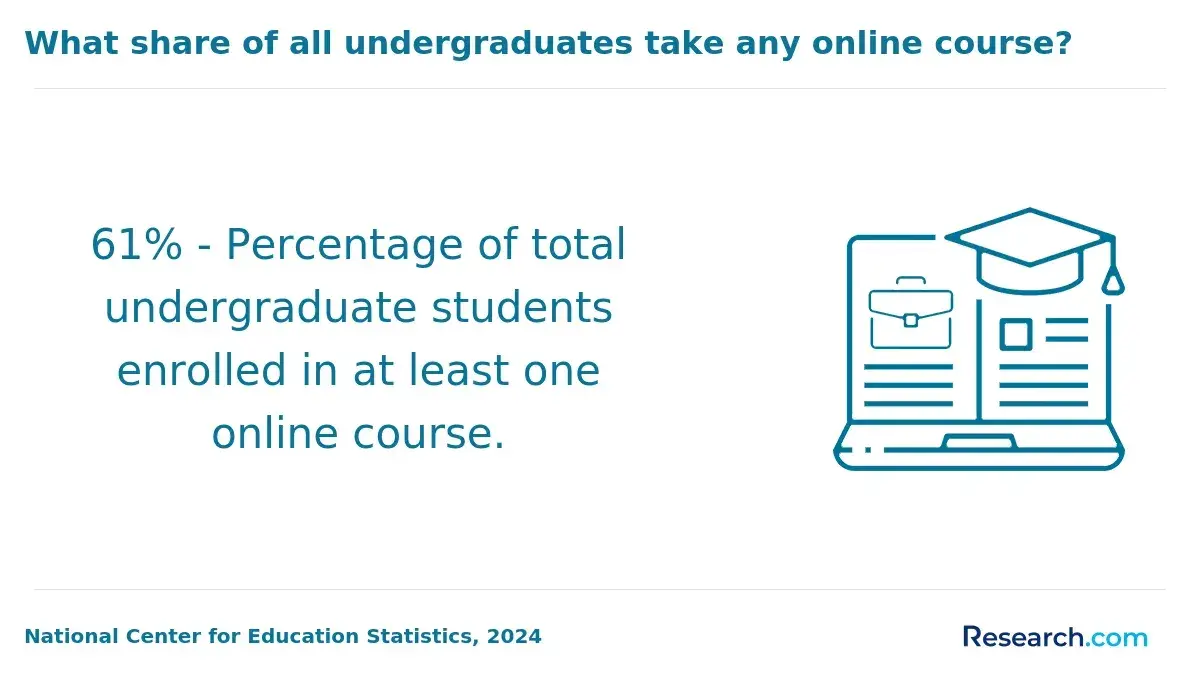
Online and campus colleges can both provide strong student support, but the right choice depends on your schedule, learning style, program requirements, and need for in-person services. The best format is the one you can complete consistently while still accessing advising, tutoring, technology help, and career support.
Online enrollment has become a mainstream option for working adults, parents, military students, and rural students. If you are comparing online degree programs, pay close attention to whether support services are designed for remote learners or simply adapted from campus offices.
The table below compares the practical trade-offs. Use it to decide which format better matches your life and academic needs.
| Format | Best fit | Support strengths | Support risks |
| Online | Students who need flexibility because of work, caregiving, location, or military responsibilities | Remote advising, asynchronous coursework, digital tutoring, and flexible scheduling | Isolation, weaker peer connection, limited local placement options, or slower tech support |
| Campus | Students who want in-person structure, labs, residence life, athletics, or frequent face-to-face help | Physical tutoring centers, campus counseling, peer communities, and easier faculty access | Less schedule flexibility, commuting costs, housing costs, and fewer options for working adults |
| Hybrid | Students who want flexibility but still need labs, clinicals, studios, or occasional in-person support | Mix of online convenience and campus-based services | Scheduling complexity and possible travel requirements |
Choose online if you are self-directed, comfortable with technology, and need scheduling flexibility. Choose campus if you benefit from routine, in-person accountability, hands-on learning, or a stronger peer environment. Choose hybrid if your program requires labs, clinicals, or fieldwork but you still need some flexibility.
What admission requirements do supportive colleges usually have?
Supportive colleges usually make admission requirements clear, predictable, and aligned with the program's difficulty. They do not necessarily admit everyone, but they help applicants understand prerequisites, placement tests, transfer credits, financial aid steps, and readiness expectations before enrollment.
Requirements vary by school and credential level. Students comparing short, affordable pathways such as the best associates degrees to get should still check whether the program has placement rules, prerequisites, or selective admission requirements for competitive fields.
The table below explains common admission expectations by program type. It can help you anticipate what documents and preparation you may need.
| Program type | Common requirements | Support-related detail to check |
| Associate degree | High school diploma or equivalent, placement review, transcripts, and possible program prerequisites | Ask about developmental education, transfer pathways, and advising for students planning a bachelor's degree later. |
| Bachelor's degree | High school transcript, GPA review, essays or recommendations at some schools, and test scores if required | Ask whether first-year advising, major exploration, and early-alert systems are built into the first year. |
| Transfer admission | College transcripts, minimum credits or GPA, course equivalencies, and good academic standing | Ask for a written transfer-credit evaluation before enrolling whenever possible. |
| Graduate or professional program | Bachelor's degree, prerequisites, resume, recommendations, statement of purpose, and possible test scores | Ask about cohort support, faculty mentoring, assistantships, licensure alignment, and career placement. |
| Selective health or technical program | Prerequisite courses, minimum GPA, entrance exam, background check, immunizations, or clinical eligibility | Ask whether admission to the college guarantees admission to the program; often it does not. |
A supportive admissions process should explain both acceptance and readiness. Be careful if a school pressures you to enroll before reviewing transcripts, financial aid, placement requirements, or licensure implications.
How much do colleges with strong support cost?
Colleges with strong support can range from affordable community colleges to expensive private universities. The key is to compare total cost, net price after aid, time to completion, and the support that may help you avoid repeated courses or delayed graduation.
College Board's 2024 Trends in College Pricing reported the following average published tuition and fees for the 2024-25 academic year. These are sticker prices, not what every student pays after grants and scholarships.
- $11,610 for in-state students at public 4-year colleges
- $30,780 for out-of-state students at public 4-year colleges
- $43,350 at private nonprofit 4-year colleges
- $4,050 at public 2-year colleges for in-district students
The table below shows cost factors that affect the real price of a supportive college experience. Use it to compare schools beyond tuition.
| Cost factor | Why it matters | What to ask |
| Net price | Grants and scholarships can change affordability significantly. | What is my estimated net price after gift aid? |
| Time to degree | Extra semesters can increase tuition, fees, housing, and lost earnings. | How many credits do students in this program usually complete before graduating? |
| Course availability | Unavailable required courses can delay graduation. | Are required courses offered every term or only once per year? |
| Support fees | Some services may be included, while others may have extra charges. | Are tutoring, counseling, technology, labs, and career services included in mandatory fees? |
| Living and commuting costs | Housing, transportation, food, and parking can change the total cost. | What is the full cost of attendance, not just tuition? |
A higher-cost college is not automatically better, and a lower-cost college is not automatically weaker. The better question is whether the school's support, program quality, completion timeline, and career outcomes justify the net price for your specific goal.
What career outcomes should I check before enrolling?
Before enrolling, check whether the college can connect your program to realistic career outcomes. Good career support should help you understand employment options, salary ranges, internship access, graduate school pathways, and whether your degree matches the work environment you want.
BLS 2024 annual data shows that workers with a bachelor's degree had median usual weekly earnings of $1,543, compared with $1,099 for workers with an associate degree. This does not mean every bachelor's degree pays more than every associate degree, but it shows why credential level, field of study, location, and experience should all be part of your ROI calculation.
The table below highlights career outcome measures worth reviewing before you commit. These indicators are more useful when they are specific to your program, not just the college overall.
| Outcome to check | What it can tell you | Limitation |
| Job placement information | Whether graduates report employment related to their field | Methods vary, and self-reported data may be incomplete |
| Internship or clinical placement access | Whether students gain experience before graduation | Availability may depend on location, GPA, background checks, or competition |
| Licensure or certification pass rates | Whether the program prepares students for required exams | Pass rates may not include every student who started the program |
| Graduate school admission | Whether the program supports students pursuing advanced credentials | Admission depends on grades, exams, experience, and recommendations |
| Employer partnerships | Whether the college has active relationships with organizations hiring in the field | Partnerships do not guarantee a job offer |
Career fit also includes work style. For example, students who prefer independent, low-interruption environments may want to compare programs that lead to introvert jobs, while students who enjoy collaboration may prioritize majors with more client-facing or team-based pathways.
Ask career services how early students can use support. A strong college does not wait until senior year; it helps students build resumes, portfolios, references, internships, and employer connections throughout the program.
How do graduation rates reflect student support quality?
Graduation rates can reveal whether a college helps students persist, but they should never be used alone. A low graduation rate may signal weak advising, poor course availability, financial barriers, or a large population of part-time and transfer students whose outcomes are harder to capture in traditional measures.
NCES reported that about 64% of first-time, full-time bachelor's students who began at 4-year institutions completed within 6 years. For readers, the key lesson is not that every student has the same odds; it is that completion depends on fit, finances, academic preparation, enrollment intensity, and the quality of support available when problems arise.
The table below explains how to interpret graduation data responsibly. It helps you avoid both overvaluing and dismissing completion rates.
| Metric | What it suggests | How to use it |
| First-year retention rate | How many students return after the first year | Use it as an early signal of student satisfaction, advising, affordability, and academic support. |
| Graduation rate | How many students complete within a defined time period | Compare it with similar institutions and similar student populations. |
| Transfer-out rate | How many students leave for another college | A high rate may be normal for community colleges but concerning if students expected to finish there. |
| Program completion rate | How students perform in a specific major or credential | Use it when available because college-wide rates can hide weak or strong programs. |
| Licensure pass rate | How test-takers perform on required professional exams | Use it for regulated fields, but also ask how many students reach the exam stage. |
A supportive college should be willing to discuss its outcomes honestly, including where students struggle and what the institution is doing to improve. Be cautious if a school refuses to share basic completion data or relies only on individual success stories.
Other Things You Should Know About
Academic advising is often the most important starting point because it affects course selection, degree progress, transfer credits, financial aid eligibility, and graduation timing. Strong advising should be proactive and easy to access.
No. Price does not automatically equal better support. Compare net price, graduation rates, advising access, tutoring availability, mental health resources, career outcomes, and student fit before deciding.
Ask whether online students can access remote advising, tutoring, library services, disability accommodations, counseling referrals, career services, and technology support. Also ask whether these services are available outside standard business hours.
Not by itself. A high graduation rate is a positive signal, but you should compare student population, program fit, cost, accreditation, transfer policies, and support services. The best choice is the school where you can realistically succeed and afford to finish.
References
- Understanding the Distinction Between Licensing and Accreditation: QAHE's Institutional and Course Accreditation https://www.qahe.org/article/understanding-the-distinction-between-licensing-and-accreditation-qahes-institutional-and-course-accreditation/
- The Importance and Benefits of Company Accreditation https://iacus.org/blogs/accreditation/the-importance-and-benefits-of-company-accreditation
- Questions to Ask on a College Tour (60+ examples) https://www.collegeessayguy.com/blog/questions-to-ask-college-tour
- Comparing Student Support Systems in Traditional vs. Open Education • Teachers Institute https://teachers.institute/institutional-management/comparing-student-support-traditional-open-education/
- Graduation Rates an Imperfect Measure of School Excellence https://www.mackinac.org/V2002-04
- What to Know about College Career Outcomes - Champlain College https://www.champlain.edu/blog/stories/what-to-know-about-college-career-outcomes/
- What Graduation Rates Miss About Student Success https://www.ellucian.com/blog/graduation-rates-lie-cohort-data-isnt-telling-you-about-student-success
- How to Use Career Outcome Data to Attract Prospective Students https://writesea.com/blog/how-to-use-career-outcome-data-to-attract-prospective-students/
- What Do Colleges Look For in Students? https://www.collegedata.com/resources/getting-in/what-do-colleges-look-for-in-students
- Supporting students to and through college: What does the evidence say? | Brookings https://www.brookings.edu/articles/supporting-students-to-and-through-college-what-does-the-evidence-say/