2027 What to Do If You're Thinking About Dropping Out

Co-Founder and Chief Data Scientist
Dropping out can feel like the only option when money, health, family, work, or motivation hit a breaking point. But it is a decision with financial aid, credit-transfer, and career consequences. National Student Clearinghouse data released in 2024 showed that about one in four first-year students did not persist into a second year, so this is a common problem-not a personal failure.
This guide helps current students, parents, and adult learners compare withdrawal, leave, part-time study, transfer, online programs, jobs, and credentials before making a permanent move.
Key Things You Should Know
- Before you withdraw, ask about a leave of absence, reduced course load, tuition refund deadline, financial aid return rules, and whether your credits will remain usable later.
- The Federal Pell Grant maximum is $7,395 for the 2024-25 award year, so leaving midterm can affect both current aid and future eligibility if your school must return funds.
- BLS 2024 data show median weekly earnings are generally higher with more education, but apprenticeships, associate degrees, certifications, and employer-paid training can be better short-term fits than forcing a degree that is not working.
What should you do before dropping out of college?
Before dropping out of college, slow the decision down enough to separate a temporary crisis from a long-term mismatch. "Dropping out" usually means formally withdrawing from your institution before completing your program. A "leave of absence" pauses enrollment with a pathway back, while "reduced course load" keeps you enrolled with fewer classes.
The smartest first step is to find out what problem you are actually solving. A student who cannot afford housing needs a different solution than a student who chose the wrong major or is failing because of untreated health issues. Use the following sequence to protect your money, transcript, and future options.
- Contact your academic advisor before submitting any withdrawal form and ask whether you can change majors, take an incomplete, repeat a course, or switch to part-time status.
- Meet with financial aid and ask how withdrawal would affect grants, scholarships, loans, satisfactory academic progress, and repayment timing.
- Check the academic calendar for the last day to drop without a grade penalty and the last day to receive any tuition refund.
- Request your unofficial transcript and degree audit so you know how many credits you have earned and which requirements remain.
- Talk to student support services about emergency grants, food assistance, counseling, disability accommodations, childcare, tutoring, or technology loans.
- Compare at least three alternatives: leave of absence, transfer, part-time enrollment, online study, certificate training, apprenticeship, or work plus future re-enrollment.
Cost is often the pressure point. College Board's 2024 pricing data put average published tuition and fees at about $11,610 for in-state public four-year colleges and $43,350 for private nonprofit four-year colleges. Those figures do not include every living expense, but they show why a student should calculate total cost-not just tuition-before deciding whether staying is realistic.
This table summarizes the first conversations to have and why each one matters. It is meant to help you gather facts before emotions or urgency push you into an irreversible choice.
| Office or person to contact | What they can clarify | Why it matters |
| Academic advisor | Major change, course withdrawal, incomplete grades, graduation timeline | Prevents you from leaving when a schedule or program change could solve the issue |
| Financial aid office | Grant return rules, loan status, satisfactory academic progress, future aid | Helps you avoid surprise balances or lost eligibility |
| Registrar | Official withdrawal process, transcript notation, deadlines | Protects your academic record and confirms the right paperwork |
| Student accounts | Refunds, unpaid balances, payment plans | Shows whether leaving reduces costs or creates a debt to the school |
| Career services | Career fit, internships, short-term training, job search help | Connects your decision to employment instead of only academics |
How do you decide between leaving, taking a leave, or reducing classes?
You should decide between leaving, taking a leave, or reducing classes based on whether your problem is temporary, academic, financial, personal, or career-related. A permanent withdrawal makes the most sense only when you have confirmed that staying enrolled is not financially, medically, academically, or strategically workable right now.
The comparison below shows how each option usually functions. Policies vary by school, so treat this as a decision framework rather than a substitute for your institution's rules.
| Option | Best fit | Main advantage | Main risk |
| Leave of absence | Temporary health, family, military, financial, or personal interruption | Keeps a clearer path back to the same program | May be time-limited and may still affect aid or housing |
| Reduced course load | Students who are overwhelmed but still want to progress | Maintains enrollment while lowering workload | Can extend graduation timeline and affect aid minimums |
| Transfer | Wrong school, wrong cost structure, poor fit, or unavailable major | Preserves progress if credits are accepted | Some credits may transfer only as electives or not at all |
| Full withdrawal | Clear decision to stop attending with no immediate return plan | Stops current coursework obligations | Can create aid, loan, transcript, and re-entry complications |
Use a simple decision rule: if the barrier can be solved within one or two terms, ask about leave or part-time study first. If the barrier is the institution, program, cost, or location, explore transfer before withdrawal. If your career goal no longer requires the degree, compare job training and credential routes before you keep paying for credits you do not need.
Common mistake: assuming that "taking a break" automatically keeps your place. Some schools require formal approval, a return date, good academic standing, or separate financial aid review. Get the policy in writing before you stop attending classes.
What happens to financial aid and tuition if you withdraw?
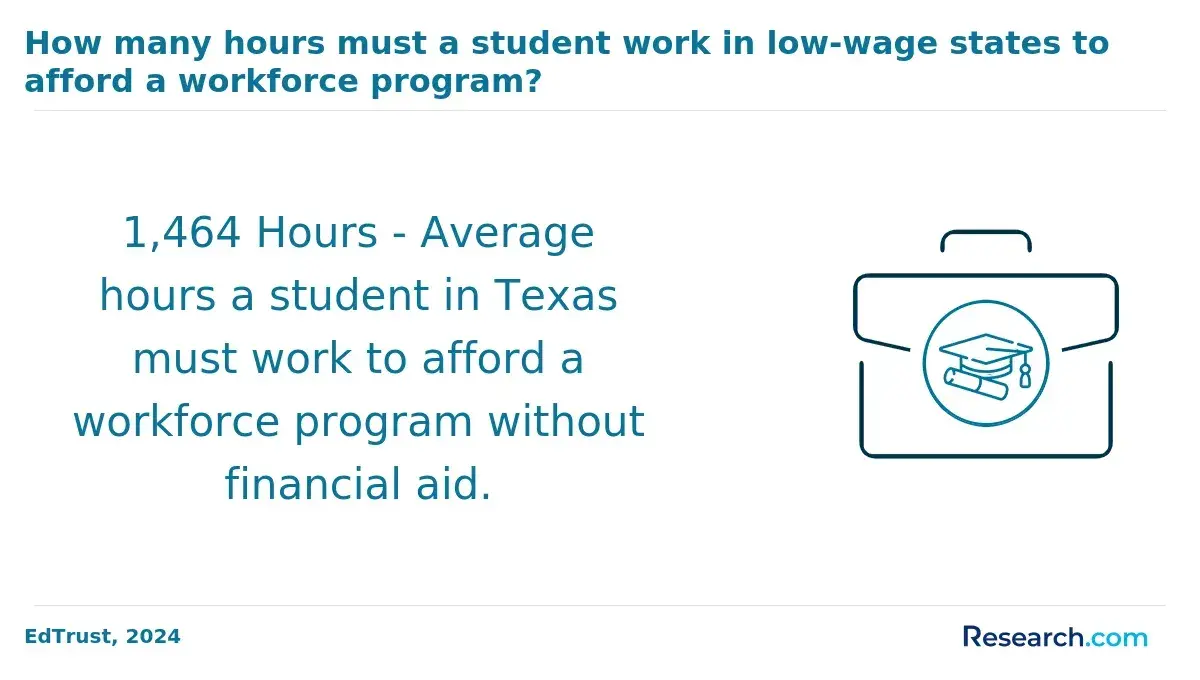
If you withdraw, your tuition, grants, scholarships, and loans may be recalculated based on the date you officially stop attending. The most important rule to understand is Return of Title IV funds, often called R2T4. For federal aid, schools generally determine how much aid you "earned" based on the portion of the term you completed; unearned aid may have to be returned by the school, the student, or both.
The 2024-25 maximum Federal Pell Grant is $7,395, but that does not mean every student can keep the full amount after withdrawing. If you leave early in the term, part of the grant or loan disbursement may be reversed, and you may owe a balance to the school even if you thought financial aid had covered the bill.
Before withdrawing, ask the financial aid and student accounts offices for written answers to these specific questions. These are the questions that most often determine whether leaving reduces your cost or creates a new financial problem.
- What is my official withdrawal date if I stop attending now?
- How much tuition and fee refund, if any, would apply on that date?
- How much federal, state, institutional, or private aid would be returned?
- Would I owe a balance to the school after the recalculation?
- Would this affect my satisfactory academic progress status for future aid?
- When would my student loans enter grace period or repayment?
- Would my scholarship be renewable if I return next term or next year?
Student loans add another layer. Many federal student loans have a six-month grace period after a student drops below half-time enrollment, but grace periods and repayment timing can vary by loan type and prior enrollment history. If you already used a grace period before, do not assume you will receive a new one.
The major red flag is simply walking away without paperwork. Schools may record failing grades, delay the withdrawal date, or use your last documented attendance date. That can make the academic and financial consequences worse than if you had completed the official process.
How can you transfer credits if you change schools later?
You can often transfer credits later, but transfer is never automatic. A receiving school decides whether your previous courses match its curriculum, minimum grade standards, accreditation expectations, and degree requirements. Credits may transfer as direct equivalents, general education credits, electives, or not at all.
To protect your credits, save more than your transcript. Course syllabi, catalog descriptions, lab hours, clinical documentation, and portfolio work can help a new school evaluate what you already learned. This is especially important for technical, health, education, and licensure-related programs.
Credit transfer depends on several factors. The table below shows what schools commonly review and how that affects your ability to use old coursework toward a new credential.
| Transfer factor | Why schools review it | What it can mean for you |
| Accreditation | Confirms the prior institution met recognized quality standards | Credits from unaccredited schools are harder to transfer |
| Course grade | Shows whether you met the receiving school's minimum standard | Many schools require a C or higher for transfer credit |
| Course match | Compares content, level, credits, and learning outcomes | A course may transfer but not satisfy a major requirement |
| Program age limits | Protects fields where knowledge changes quickly | Older science, technology, or clinical credits may expire |
| Residency requirement | Ensures students complete a minimum number of credits at the new school | You may need to retake or complete additional credits before graduating |
If you may return to college later, prioritize regionally accredited institutions, keep your balance paid if possible, and request official transcripts before accounts are sent to collections. An unpaid institutional balance can block transcript release in some situations, though state rules and school policies vary.
A common mistake is choosing a new school because it advertises generous transfer credit, then discovering that most accepted credits do not apply to the intended major. Always ask for a degree audit showing exactly how each credit applies before enrolling.
What are your options if college is not the right path?
If college is not the right path right now, you still have structured options. The best alternative depends on your timeline, income needs, learning style, and target occupation. Some students need faster entry into work; others need a lower-cost credential that can stack into a degree later.
Associate degrees, certificates, apprenticeships, military pathways, workforce programs, employer training, and entrepreneurship can all be valid routes. For students who want a shorter credential with practical career value, comparing easy associate degrees that pay well can be a useful starting point, especially if a four-year program feels too expensive or too broad.
The table below compares common nontraditional routes. It is designed to help you match the option to your immediate goal rather than assume there is one "best" alternative for everyone.
| Path | Typical fit | Strength | Possible limitation |
| Community college certificate | Students who want job-specific training in months rather than years | Lower cost and focused skill development | May not transfer fully into a degree |
| Associate degree | Students who want a credential that can lead to work or transfer | Balances affordability, structure, and future flexibility | Still requires general education and sustained enrollment |
| Registered apprenticeship | Students who prefer paid hands-on learning | Combines wages, supervised training, and classroom instruction | Availability depends on occupation and region |
| Industry certification | Students targeting IT, healthcare support, logistics, skilled trades, or business tools | Can signal specific skills quickly | Not all certifications carry employer value |
| Full-time work with employer tuition support | Students who need income immediately but may return later | Can reduce future education costs | Work schedule may slow academic progress |
The key is to avoid replacing one unclear path with another. Before paying for any short program, check job postings in your area, ask employers which credentials they actually recognize, and confirm whether the credential can stack into a higher award later.
How do online programs compare with campus-based programs?
Online programs can be a strong alternative if your main barriers are commuting, scheduling, relocation, caregiving, military-family mobility, or work hours. They are not automatically easier or cheaper, though. Good online programs still require deadlines, participation, exams, projects, and consistent study time.
For cost-sensitive students, the question is not simply whether online is better. It is whether online lowers your total cost while still giving you the support, accreditation, transferability, and career preparation you need. If affordability is the main issue, researching what is the cheapest online college can help you compare tuition models before you withdraw completely.
This table compares online and campus-based study across the factors that usually matter most for students considering leaving school.
| Factor | Online programs | Campus-based programs |
| Schedule | Often more flexible, especially asynchronous courses | More fixed meeting times and location requirements |
| Cost | May reduce commuting, housing, and relocation costs | May offer campus jobs, local services, and in-person resources |
| Support | Depends heavily on advising, tutoring, tech support, and instructor access | Can make face-to-face advising and tutoring easier to use |
| Learning style | Works best for self-directed students with reliable internet and time management | Works well for students who need routine, labs, studios, or direct interaction |
| Career preparation | Can be strong when programs include projects, internships, simulations, or local placements | Often stronger for fields requiring hands-on labs, clinicals, or equipment |
Online education is also affected by employer expectations and technology. AI tools are making online learning more interactive through tutoring, feedback, writing support, and simulations, but they also require stronger academic integrity policies. A credible online program should explain how it uses technology, verifies student work, and supports students who struggle.
The common mistake is enrolling online because it feels like a quick fix. If your problem is motivation, burnout, or lack of direction, an online format may make isolation worse unless the program has strong advising and a realistic weekly structure.
What should you check in an accredited school or program?
Accreditation is one of the most important checks before you transfer, switch online, or enroll in a shorter program. Institutional accreditation means a recognized accreditor has reviewed the school. Programmatic accreditation applies to specific fields, such as nursing, counseling, education, engineering technology, or allied health, where licensure or employer acceptance may depend on program quality standards.
Students with frequent moves, family obligations, or military-connected benefits should be especially careful because transferability and support services matter. For example, comparing online colleges for military spouses can help mobile learners focus on institutions that understand continuity, benefits, and flexible enrollment needs.
Before enrolling anywhere new, verify the school through the U.S. Department of Education's Database of Accredited Postsecondary Institutions and Programs or the accreditor's own directory. Then ask whether the program meets requirements for your intended state, employer, certification exam, or licensing board.
Use this checklist to avoid programs that look convenient but may not protect your future options.
- Confirm institutional accreditation and, when relevant, programmatic accreditation.
- Ask whether credits are accepted by public colleges or universities in your state.
- Review graduation, retention, job placement, licensure pass-rate, and loan-default information when available.
- Compare total cost, including fees, books, technology, exams, uniforms, tools, travel, and clinical expenses.
- Ask whether online students receive the same advising, tutoring, library, disability, and career services as campus students.
- Check whether the program has required labs, internships, student teaching, practicums, or clinical placements near you.
- Avoid schools that pressure you to enroll immediately, refuse to provide written cost details, or promise guaranteed jobs or salaries.
Accreditation does not guarantee that a program is affordable, selective, or the best fit. It is a baseline quality and transferability check. You still need to compare outcomes, cost, schedule, and career alignment.
What jobs can you get without finishing a degree?
You can get some jobs without finishing a degree, but the best options usually require a skill, license, portfolio, apprenticeship, certification, or work history. Leaving school without a plan and applying broadly to "any job" often leads to lower-wage work with limited mobility. Leaving with a targeted training plan can be very different.
BLS 2024 wage data show why occupation choice matters. For example, the median annual wage for electricians was $62,350, a role that commonly combines apprenticeship, technical instruction, and state or local licensing rather than a bachelor's degree. That does not mean every nondegree path pays well, but it shows that structured skill routes can compete with some degree-based entry paths.
The table below lists examples of roles that may be accessible without completing a bachelor's degree. Requirements vary by state, employer, union, and industry, so use this as a starting point for research rather than a guarantee.
| Role or field | Typical preparation | What the work involves | Important caution |
| Electrician | Apprenticeship and licensing | Install, maintain, and repair electrical systems | Licensing rules and apprenticeship access vary by location |
| Medical assistant | Certificate, diploma, or employer training | Support clinical and administrative tasks in healthcare settings | Certification may improve competitiveness |
| IT support specialist | Certification, labs, portfolio, or experience | Troubleshoot hardware, software, networks, and user issues | Entry-level competition can be strong without hands-on proof |
| Commercial driver | CDL training and licensing | Operate trucks or commercial vehicles | Schedules, safety rules, and lifestyle demands can be difficult |
| Sales representative | Product knowledge, communication skills, and experience | Sell products or services, manage accounts, meet targets | Income may depend heavily on commissions |
If income potential is your main reason for reconsidering school, compare realistic career pathways rather than only degree labels. Some of the highest paying jobs still require degrees or advanced credentials, so the better question is whether your specific target role requires college, training, experience, licensure, or a combination.
AI and automation also affect entry-level work. Routine office tasks, basic content production, and simple data processing are becoming more automated, while roles requiring repair, patient interaction, skilled trades, logistics, cybersecurity, customer relationships, and field service may still reward hands-on judgment. Build skills that are hard to replace: troubleshooting, communication, technical practice, safety awareness, and problem-solving.
How do certifications and apprenticeships change your career options?
Certifications and apprenticeships can change your career options by giving employers evidence of specific skills. A certification usually verifies knowledge or competence in a focused area. An apprenticeship combines paid work with supervised training and related classroom instruction. Both can be useful, but only when they are recognized in the occupation you want.
Certifications work best when job postings repeatedly name the same credential. Apprenticeships work best when the occupation requires supervised practice, safety training, tools, and progressive skill development. Neither is automatically better than college; the right choice depends on the career.
The following comparison shows how credentials differ. It can help you decide whether you need a fast skill signal, a paid training route, or a longer academic credential.
| Credential type | Best for | What employers may value | Risk to check |
| Industry certification | IT, project tools, healthcare support, bookkeeping, logistics, safety | Specific, testable skills tied to job tasks | Some certifications are too basic or not widely recognized |
| Registered apprenticeship | Skilled trades, advanced manufacturing, utilities, transportation, healthcare support | Paid experience, supervised hours, and job-ready competence | Openings can be competitive and location-dependent |
| College certificate | Students who want school-based training with transcripted credits | Structured coursework and possible transfer into a degree | Not all certificates lead directly to employment |
| Licensure | Regulated fields such as practical nursing, electrical work, cosmetology, real estate, or commercial driving | Legal permission to practice in a state or occupation | Requirements vary by state and may include exams or background checks |
Before paying for a certification or apprenticeship preparation program, take these steps. They help you avoid credentials that sound impressive but do not improve hiring prospects.
- Search current job postings in your target city and count how often the credential appears.
- Ask two or three employers, unions, workforce boards, or hiring managers whether the credential helps applicants.
- Compare total cost, exam fees, renewal fees, required tools, and unpaid time.
- Check whether the credential stacks into college credit, licensure, or a higher-level credential.
- Verify that training includes hands-on practice, projects, clinical hours, labs, or supervised work when the occupation requires it.
Some students later return to longer academic pathways after stabilizing their finances or career direction. If your long-term goal eventually includes graduate school, compare each step carefully-from certificate to bachelor's to master's or even cheap online PhD programs, so you do not overpay for credits that will not move you toward the next credential.
How do you build a practical plan after leaving school?
A practical plan after leaving school should cover money, records, work, skills, health, and a return option. The goal is not to justify leaving; it is to make sure leaving does not become a dead end. Put the plan in writing before your last day if possible.
Start with a 90-day plan because it is short enough to act on and long enough to stabilize. The steps below create structure during a period that can otherwise become vague and stressful.
- Complete the official withdrawal, leave, or enrollment-change process and save confirmation emails.
- Get copies of your unofficial transcript, syllabi, degree audit, financial aid record, and account balance.
- Build a basic monthly budget that includes loan payments if they begin, rent, food, transportation, insurance, phone, and training costs.
- Choose one near-term goal: full-time work, transfer application, certificate enrollment, apprenticeship application, military pathway, health recovery, or family-care stabilization.
- Update your resume to include completed credits, projects, software, labs, customer service, leadership, work experience, and volunteer experience.
- Apply for jobs or training programs on a weekly schedule rather than waiting until motivation returns.
- Set a review date in three months to decide whether to continue working, enroll part time, transfer, or pursue a credential.
A useful plan also defines what would make returning to school worthwhile. For example, you might return only if the new program is accredited, affordable, tied to a specific career, accepts your credits, offers online or evening courses, and has support services you will actually use.
This table summarizes common mistakes after leaving and the better alternative. It can help you avoid decisions that make re-entry, employment, or finances harder later.
| Common mistake | Why it causes problems | Better alternative |
| Leaving without official withdrawal | Can lead to failing grades, aid recalculation issues, or transcript problems | Complete the formal process and keep written confirmation |
| Ignoring student loans | Missed payments can damage credit and increase stress | Contact the loan servicer and ask about repayment, deferment, or income-driven options |
| Choosing a quick program without checking employers | May waste money on a credential with little local value | Validate the credential through job postings and employer conversations |
| Letting credits sit undocumented | Makes future transfer evaluation harder | Save transcripts, syllabi, catalog descriptions, and project evidence |
| Working with no skill plan | Can make it harder to move beyond entry-level pay | Pair work with a specific skill, certification, apprenticeship, or transfer plan |
If you are unsure, choose the option that preserves the most future flexibility at the lowest manageable cost. For many students, that means a formal leave, part-time enrollment, community college transfer, or low-cost online program rather than an abrupt full withdrawal.
Other Things You Should Know About
No. It can be reasonable if school is harming your finances, health, family stability, or career progress. The risky part is leaving without checking aid, transcripts, loans, transfer credits, and a realistic next step.
If your problem is temporary, a formal leave of absence is usually safer than withdrawing permanently. It may protect your path back, but you still need to confirm financial aid, housing, scholarship, and return policies.
Yes, many students return later, but the process depends on your academic standing, unpaid balances, transcript access, program changes, and credit-transfer rules. Keep records and ask future schools for a written transfer evaluation.
Do not simply stop attending. Email your advisor, financial aid office, and registrar, then ask for your withdrawal deadline, refund status, aid impact, and alternatives such as incomplete grades, reduced course load, emergency aid, or leave of absence.
References
- Preparing for Life After High School: A Comprehensive Guide for Students and Parents https://www.vbisd.org/o/mesl/article/1885456
- Planning Your Next Steps After High School | Northampton Community College https://www.northampton.edu/news/planning-your-next-steps-after-high-school.html
- How to Change Career Through an Apprenticeship as an Adult https://www.totalpeople.co.uk/about/news-blogs/career-change-apprenticeship-for-adults/
- The Value of Earning Certification Along the Way https://nitc.com/post-details-two/From-Apprentice-to-Journeyman-The-Value-of-Earning-Certification-Along-the-Way
- 20 Jobs You Don't Need Experience For: Learn While You Earn https://www.tafecourses.com.au/resources/jobs-that-require-no-experience/
- CHEA - Find Accredited Higher Education Institutions & Programs https://www.chea.org/directories
- How to Verify a US Partner School's Accreditation Before Committing https://www.amerigoeducation.com/news/how-to-verify-a-us-partner-schools-accreditation-before-committing
- 22 Alternatives to College | Explore Other Options https://tiltingfutures.org/content/alternatives-to-college/
- What career is right for me? | ASVAB Career Exploration Program https://www.asvabprogram.com/media-center-article/61
- Online Vs On Campus Study: Which is Right For You? https://studee.com/guides/online-vs-on-campus-study-which-is-right-for-you