2027 How to Stay on Track for Graduation Credit by Credit

Co-Founder and Chief Data Scientist
Falling behind by even one class can delay graduation, increase costs, and affect financial aid. NCES reported in 2024 that about 64% of first-time, full-time bachelor's students completed within six years, which means many students need more than the "standard" timeline.
This guide is for associate and bachelor's students, transfer students, online learners, working adults, and families helping plan college. You'll learn how credits work, how to check your pace, and how to build a realistic semester-by-semester plan that protects your timeline, budget, and career goals.
Key Things You Should Know
- Most bachelor's degrees require about 120 credits, which usually means averaging 15 credits per fall and spring semester or 30 credits per academic year to finish in four years.
- Associate degrees commonly require about 60 credits, so a full-time student usually needs around 15 credits per semester to finish in two years.
- Federal financial aid rules generally require satisfactory academic progress, including GPA standards, course-completion pace, and a maximum timeframe often capped at 150% of the published program length.
How do college credits work and determine your path to on-time graduation?
College credits are the units schools use to measure academic progress. A typical three-credit course represents one standard class, while labs, clinical placements, internships, studios, and accelerated courses may carry different credit values. Your path to on-time graduation depends not just on how many credits you earn, but on whether those credits satisfy the right requirements.
Most degree plans are divided into categories: general education, major requirements, electives, prerequisites, and sometimes residency requirements that must be completed at the school awarding the degree. A student can have enough total credits and still be off track if the missing credits are in required sequences, such as chemistry before nursing courses or calculus before upper-level engineering.
The table below shows the major credit categories students usually see in a degree plan. Understanding these categories helps you avoid the common mistake of taking classes that count toward total credits but not toward graduation.
| Credit category | What it means | Why it matters for graduation timing |
| General education | Broad courses in areas such as writing, math, science, humanities, and social science | Missing a required gen ed can block graduation even if your major credits are complete |
| Major core | Required courses for your specific academic program | These often have prerequisites and may be offered only once per year |
| Electives | Courses that add credits but may not be tied to a specific requirement | Useful for reaching the total credit requirement, but risky if they crowd out required courses |
| Prerequisites | Courses that must be completed before another course | One missed prerequisite can delay an entire course sequence |
| Residency credits | Credits that must be completed at your current institution | Important for transfer students who bring in many outside credits |
If you are new to college planning, think of your degree as a checklist with both quantity and fit. The quantity is the total number of credits. The fit is whether each credit applies to a specific graduation requirement.
How many credits do you need per term and year to graduate on schedule?
The simplest way to stay on schedule is to divide your required credits by the number of terms you plan to study. For a 120-credit bachelor's degree, four-year completion usually requires 30 credits per year. For a 60-credit associate degree, two-year completion also usually requires 30 credits per year.
That does not mean every student must take exactly 15 credits every fall and spring. Some students use summer courses, winter sessions, dual enrollment, or transfer credits to balance work, family, athletics, military duties, or health needs. The key is to plan the full year, not just the next semester.
The table below summarizes common pacing targets. Use it as a planning benchmark, then confirm your exact requirements with your school because programs can vary.
| Credential goal | Common total credits | Typical on-time pace | Best fit |
| Associate degree | About 60 credits | 15 credits per fall and spring semester for two years | Students seeking a shorter credential, transfer pathway, or career entry point |
| Bachelor's degree | About 120 credits | 15 credits per fall and spring semester for four years | Students preparing for professional, graduate, or broader career options |
| Part-time bachelor's plan | About 120 credits | Often 6 to 11 credits per term over a longer timeline | Working adults or caregivers who need flexibility |
| Accelerated plan | Varies by school | More credits per year through summer, winter, or shorter terms | Students with strong time management and clear academic readiness |
Cost is a major reason to take pacing seriously. The College Board's 2024 pricing data placed average published in-state tuition and fees at public four-year institutions at $11,610 for the academic year, before housing, books, transportation, and lost work time. An extra year can therefore add more than tuition alone; it can also delay full-time earnings and career advancement.
How can you tell if you are currently on track to graduate?
You are on track to graduate when your completed credits, current courses, remaining requirements, GPA, financial aid status, and course sequencing all align with your target graduation date. Looking only at your total credits is not enough.
A useful progress check combines the degree audit, transcript, catalog year, and advisor input. Before registration opens, use the following sequence to identify whether you are ahead, on pace, or falling behind.
- Confirm your exact degree requirement, including total credits, major credits, general education credits, electives, and residency rules.
- Compare completed credits against required credits and separate "applied" credits from credits that only count as extras.
- Identify prerequisites and courses offered only in specific terms, because these can create delays even when your credit count looks healthy.
- Calculate how many credits remain and divide them by the number of terms left before your intended graduation date.
- Check whether your GPA and course-completion rate meet your school's satisfactory academic progress policy.
- Ask your advisor to confirm the plan in writing or through the official advising system before you register.
Common warning signs include repeated withdrawals, too many electives, failed prerequisites, changed majors without a revised plan, and transfer credits that appear on your transcript but do not meet specific requirements. If any of these show up, act before the add-drop deadline rather than waiting until the end of the term.
How should you use degree audits and advising to plan every remaining semester?
A degree audit is your official map from enrolled student to graduate. It shows which requirements are complete, in progress, or still missing. Advising turns that map into a realistic schedule by accounting for course availability, workload, prerequisites, career goals, and personal constraints.
The table below explains what to look for in a degree audit. These categories matter because students often mistake "credits earned" for "requirements completed."
| Audit item | What to verify | Why it can affect graduation |
| Catalog year | The academic requirements that apply to you | Changing catalogs can add or remove required courses |
| In-progress courses | Classes you are currently taking | Dropping or failing one may change your graduation timeline |
| Unmet requirements | Specific courses or categories still open | These are the real targets for future registration |
| Prerequisite chains | Courses that must be taken in order | Missing one course can delay later courses by a full term or year |
| Residency requirement | Minimum credits required at your institution | Transfer-heavy students may still need additional in-house credits |
Once you understand the audit, build every remaining semester from graduation backward. This method helps you place limited-offering courses first and use electives only where they genuinely fit.
- Start with your intended graduation term and list every unmet requirement.
- Mark courses that are offered only in fall, spring, summer, or alternating years.
- Place prerequisite-dependent courses in the correct order before adding flexible courses.
- Balance difficult courses with lighter requirements so one term does not become unmanageable.
- Confirm that each planned course applies to the audit before registration.
- Recheck the plan after grades post, after any schedule change, and before financial aid deadlines.
Advising is most valuable when you arrive prepared. Bring your audit, unofficial transcript, intended graduation date, work schedule, transfer-credit questions, and career plans so the meeting produces a usable registration strategy rather than general advice.
What strategies help you make up missing credits without overloading or burning out?
If you are missing credits, the goal is not to take the largest course load possible. The smarter goal is to recover credits in a way that preserves GPA, financial aid eligibility, health, and momentum. Overloading can backfire if it leads to withdrawals or failed courses.
Students typically use a mix of credit-recovery options. The best choice depends on why you are behind, which requirements remain, and how much time you can realistically give to coursework.
- Use summer or winter courses for general education, electives, or repeat courses that do not require a long prerequisite sequence.
- Choose one additional course in a regular term only if your prior grades, work schedule, and personal responsibilities suggest you can handle it.
- Repeat failed required courses as early as possible when they block later courses in the major.
- Consider approved online courses if they fit your learning style and transfer cleanly into your audit.
- Ask whether credit by exam, portfolio review, military training, workplace learning, or professional certifications can apply to your program.
- Protect high-stakes terms by avoiding too many lab, clinical, writing-intensive, or quantitative courses at the same time.
For students comparing flexible options, lists of affordable online colleges can be useful starting points, especially when the main challenge is scheduling rather than academic readiness. Still, affordability should be evaluated alongside accreditation, transfer policy, student support, and whether the course applies to your exact degree audit.
A practical rule is to recover credits early and gradually. Taking six summer credits after sophomore year is usually easier to manage than discovering in senior year that you need 18 credits in your final semester plus a required course that is not being offered.
How do online, hybrid, and campus programs differ in credit structure and pacing?
Online, hybrid, and campus programs can lead to the same credential, but they often differ in pacing, term length, attendance expectations, and support structure. These differences matter because a format that looks convenient can become difficult if it does not match how you learn, work, or stay organized.
The table below compares common delivery formats. Use it to decide which structure supports steady credit completion rather than simply choosing the format that seems fastest.
| Program format | Credit structure | Best fit | Potential risk |
| Campus-based | Often follows traditional 15-week semesters | Students who benefit from face-to-face classes, labs, campus resources, and fixed routines | Less flexibility for work, caregiving, commuting, or military-related moves |
| Online asynchronous | May use standard semesters or shorter accelerated terms | Self-directed students who need schedule flexibility | Procrastination can lead to missed deadlines and incomplete credits |
| Online synchronous | Online courses with scheduled meeting times | Students who want remote access but still need live structure | Set meeting times may conflict with work or time-zone changes |
| Hybrid | Combines online work with campus meetings, labs, or intensives | Students in fields that need hands-on learning but also want some flexibility | Campus requirements can be difficult for students far from school |
| Competency-based | Progress may depend on demonstrated mastery instead of weekly seat time | Experienced learners with strong prior knowledge and discipline | Not ideal for students who need frequent instructor structure |
Format choice is especially important for mobile families and service-connected students. A military spouse online college option may help students maintain credit momentum through relocations, but they should still confirm residency rules, transfer policies, and term withdrawal protections before enrolling.
Online education is also becoming more technology-supported, with learning platforms, AI tutoring tools, virtual labs, and automated degree-planning systems. These tools can help students monitor deadlines and progress, but they do not replace official advising, accreditation checks, or careful reading of program requirements.
How do transfer, dual enrollment, and prior learning credits affect graduation timelines?
Transfer, dual enrollment, and prior learning credits can shorten your timeline, but only when they apply correctly. A credit that transfers as a free elective may increase your total credits without satisfying a required course, which can leave your graduation date unchanged.
Transfer planning is strongest when you compare equivalencies before taking the course, not after. Students starting at community colleges or returning with prior credits should ask how each course applies to the target degree, whether grades transfer, and whether there is a limit on outside credits.
The table below summarizes common credit sources and the key timing issue for each. The goal is to make sure outside credits reduce requirements, not just appear on the transcript.
| Credit source | How it can help | What to verify first |
| Transfer credits | Can reduce remaining coursework after changing schools | Course equivalency, grade minimums, residency rules, and major applicability |
| Dual enrollment | Can give high school students a head start on college requirements | Whether credits apply to general education, prerequisites, or only electives |
| Advanced Placement or similar exams | May satisfy introductory requirements at some schools | Required scores and whether the credit fits the major |
| Military training | May convert documented training into college credit | Institutional policy and whether credits apply beyond electives |
| Professional certifications or prior learning | Can recognize work-based knowledge in adult-focused programs | Portfolio rules, fees, credit caps, and program acceptance |
An online associate degree can be a strategic first step for students who want lower-division credits, career preparation, or a transfer pathway, but it works best when the associate curriculum is aligned with the intended bachelor's program.
One common mistake is assuming "transferable" means "useful." Always ask for a degree-audit view showing exactly where each incoming credit lands before you make enrollment, tuition, or relocation decisions.
How do credit requirements, GPA, and accreditation impact financial aid and eligibility?
Credit planning and financial aid are closely connected. Federal, state, and institutional aid programs usually require students to make satisfactory academic progress, often called SAP. SAP rules vary by school, but they commonly include a minimum GPA, a minimum percentage of attempted credits completed, and a maximum timeframe for finishing the program.
The 150% maximum timeframe is especially important. In a 120-credit bachelor's program, a school may measure aid eligibility against a maximum attempted-credit limit rather than allowing unlimited retakes, withdrawals, and extra electives. Once you approach that limit, even classes you still need may not be covered by aid.
Financial aid stakes can be significant. The maximum Federal Pell Grant for the 2024-25 award year was $7,395, so losing eligibility can create an immediate funding gap for students who depend on need-based aid. If you are at risk, contact the financial aid office before dropping, withdrawing, or changing majors.
Accreditation also matters because federal student aid is generally tied to eligible institutions and programs. Before enrolling, confirm that the school is institutionally accredited by an agency recognized for federal aid purposes and that any program-specific accreditation needed for licensure or employment is in place.
Use these checks before making a change that could affect aid or eligibility.
- Ask how many credits you have attempted, completed, and still need for the degree.
- Confirm the GPA required by your school and by your major, because some programs set higher standards than the institution-wide minimum.
- Review how withdrawals, repeats, incompletes, and transfer credits count under SAP.
- Check whether changing majors will add credits that push you closer to the maximum timeframe.
- Ask about appeal options if documented circumstances affected your academic progress.
The safest approach is to talk to both advising and financial aid before you act. Advisors can explain degree impact, while financial aid staff can explain eligibility impact.
How do different majors and career pathways shape your semester-by-semester credit plan?
Different majors create different credit-planning challenges. A flexible humanities or social science major may allow more elective choice, while engineering, nursing, education, architecture, accounting, and lab sciences often require strict course sequences, minimum grades, clinical hours, field placements, or program admission checkpoints.
If you are still comparing majors in college, do not look only at personal interest or salary potential. Also compare how structured the curriculum is, how often required courses are offered, and whether changing into or out of the major would add time.
The table below shows how major type can affect your semester-by-semester plan. This can help you choose a path that fits both your career goal and your tolerance for structured scheduling.
| Major or pathway type | Credit-planning pattern | Graduation risk to watch |
| STEM and engineering | Often sequential with math, science, and lab prerequisites | Delaying one prerequisite can postpone multiple upper-level courses |
| Nursing and allied health | May include admission gates, clinical hours, background checks, and required grades | Not all completed credits guarantee progression into clinical coursework |
| Education | Often includes fieldwork, licensure requirements, and student teaching | State or program requirements may limit course substitution flexibility |
| Business and accounting | Usually combines core business courses with concentration requirements | Certification or graduate-school goals may require extra accounting or exam-related coursework |
| Liberal arts and social sciences | Often more flexible, with broader elective choices | Too much flexibility can lead to scattered credits without a clear career plan |
| Creative and design fields | May require studios, portfolios, critiques, or sequential production courses | Studio courses can be time-intensive even if credit totals look manageable |
Career pathways can also affect whether part-time study is realistic. Programs with clinical placements, labs, or cohort-based sequences may be harder to slow down or rearrange, while programs with flexible electives may be easier to adapt around work or family responsibilities.
How can you monitor progress and adjust your credit plan to match career and salary goals?
Staying on track is not a one-time planning task. It is a recurring habit that connects academic progress to career direction. Your plan should answer two questions at the same time: "Will I graduate on schedule?" and "Will these credits move me toward the kind of work I want?"
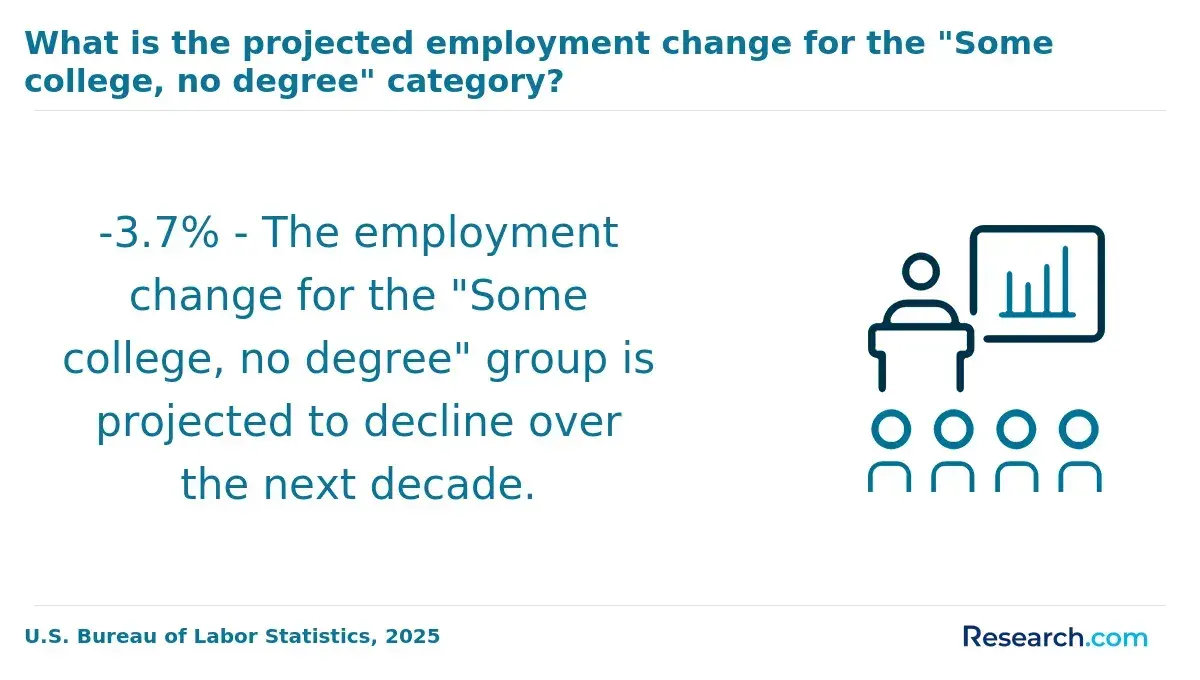
BLS 2024 data show that workers age 25 and older with a bachelor's degree had median weekly earnings of $1,543, compared with lower median earnings for workers with some college but no degree. That does not mean every bachelor's program leads to the same outcome, but it does show why completing the credential can matter when evaluating the cost of delayed graduation.
Use a simple monitoring rhythm so problems are caught early. The following steps work for most students, whether they study online, on campus, full time, or part time.
- At the start of each term, confirm that every enrolled course applies to your degree audit.
- Before the withdrawal deadline, estimate your likely grades and talk to advising before dropping any required course.
- After grades post, update your remaining-credit count and GPA status.
- Before registration, prioritize courses that are prerequisites, offered infrequently, or required for licensure or graduate school.
- Once per year, compare your major, internships, certifications, and elective choices with your target roles and salary expectations.
- Before your final year, request an official graduation check rather than relying only on your own spreadsheet.
Students who want to balance academic fit and earnings potential can use resources on easiest college majors with high pay as a starting point, but the better decision is always personal: choose a plan you can complete, afford, and connect to credible career opportunities.
Watch for red flags such as taking random electives to stay full time, ignoring failed prerequisites, changing majors without a new completion plan, assuming AI tools or planning apps are always accurate, or choosing a faster program without checking accreditation. The strongest credit plan is specific, verified, and updated whenever your goals or circumstances change.
Other Things You Should Know About
For a typical 120-credit bachelor's degree, 15 credits per fall and spring semester keeps you near a four-year pace. If you take fewer, you may need summer, winter, transfer, or prior learning credits to stay on schedule.
Yes, but it depends on whether the course is required, whether it is a prerequisite, and when it is offered again. Meet with an advisor quickly so you can repeat or replace the course without disrupting later requirements.
Only if they apply to your degree requirements. Extra electives may increase your total credit count without reducing the courses you still need for your major, general education, residency, or licensure requirements.
It depends on your grades, workload, finances, and responsibilities. Taking more credits can save time if you can perform well, but extending the timeline may be smarter if overload would risk failed courses, lost aid, or burnout.
References
- Career Goals: 17 Inspirational Examples for you in 2026 https://www.imd.org/blog/learning-and-development/career-goals/
- Hybrid Programs- Which Students Want Them? https://encoura.org/resources/wake-up-call/hybrid-programs-which-students-want-them/
- How Many Credits Do You Need to Graduate from College? https://www.trident.edu/how-many-credits-to-graduate-college
- Giving Credit Where Credit is Due | All4Ed https://all4ed.org/publication/giving-credit-where-credit-is-due/
- How Many Credits Do You Need to Graduate College? (2026 Guide) https://www.straighterline.com/blog/self-paced-how-many-credits-do-you-need-to-graduate-college-2026-guide
- Understanding Majors and Minors: The Key to Navigating Your College Education https://www.providenceready.org/resources/blog/2025/may/understanding-majors-and-minors-the-key-to-navig/
- Creating a Personal Development Plan for Career Advancement | ICON news and blogs https://careers.iconplc.com/blogs/2024-10/creating-a-personal-development-plan-for-career-advancement
- Graduate Tracker: How Schools Track Student Progress https://www.educationadvanced.com/blog/graduate-tracker
- How Many Credits to Graduate College? A Complete Guide for Students https://blog.trevecca.edu/thehill/how-many-credits-to-graduate-college-a-complete-guide-for-students
- What Are Credit Hours In College? https://www.citizensbank.com/student/articles/what-are-credit-hours-in-college.aspx