2027 What to Look for in a College if You Want to Graduate on Time

Co-Founder and Chief Data Scientist
Choosing a college is also choosing a timeline, and the wrong fit can add semesters, debt, and stress. NCES data published in 2024 shows that only about 44% of first-time, full-time bachelor's students at four-year institutions completed their degree at the same school within four years.
This guide is for students, parents, transfers, and adult learners who want to finish efficiently. You'll learn which graduation metrics, academic policies, support services, costs, and program formats matter most so you can compare colleges with fewer surprises.
Key Things You Should Know
- Look beyond the six-year graduation rate: the four-year graduation rate, first-year retention rate, average credits attempted, and course availability are better signals of whether a college helps students finish on schedule.
- Cost and completion are connected: College Board's 2024 pricing data lists average published tuition and fees at $11,610 for in-state public four-year colleges and $43,350 for private nonprofit four-year colleges, so extra semesters can materially change total cost.
- The strongest on-time graduation fit usually combines recognized accreditation, clear degree maps, proactive advising, predictable course rotations, manageable work hours, and transparent transfer-credit and major-change policies.
What college graduation rates and on-time completion statistics should you look for?
The most important college completion metric is not simply "graduation rate." For on-time graduation, you want to know how many students finish within the standard timeline for the credential: four years for most bachelor's degrees, two years for associate degrees, and the published program length for certificates or accelerated degrees.
NCES data published in 2024 reports that about 64% of first-time, full-time bachelor's degree-seeking students completed a bachelor's degree at the same institution within six years, while the four-year completion share was much lower. That gap matters because a college can look strong on six-year completion while still leaving many students paying for a fifth or sixth year.
Use the following metrics together rather than relying on one number. The table explains what each metric tells you and how to interpret it when comparing colleges.
| Metric to review | What it tells you | Why it matters for finishing on time |
| Four-year graduation rate | The share of bachelor's students who finish at the same school within four years | This is the clearest outcome measure for students planning a traditional full-time path |
| Six-year graduation rate | The share who finish within 150% of the normal bachelor's timeline | Useful for overall completion, but it can hide delayed graduation patterns |
| First-year retention rate | The share of first-year students who return for year two | Low retention can signal advising, academic fit, financial, or campus-support problems |
| Transfer-out rate | The share of students who leave and enroll elsewhere | A high rate may not be bad, but you should ask whether students are leaving because of poor fit or limited program access |
| Average time to degree | The typical number of years students take to complete | This helps estimate real cost, especially when the four-year rate is modest |
The best question to ask admissions is not "What is your graduation rate?" Ask for the four-year graduation rate for your intended major or college within the university. Engineering, nursing, education, architecture, and performing arts programs can have highly structured requirements that differ from campus-wide averages.
Also compare a school's graduation outcomes with its admissions profile. A highly selective college may post strong completion numbers partly because incoming students arrive with more academic preparation, financial resources, and college-level credits. A less selective college can still be a strong choice if it has robust advising, clear degree maps, and strong retention for students with your background.
How can you tell if a college's accreditation supports graduating on time?
Accreditation is a quality-control process that evaluates whether a college or program meets recognized academic and operational standards. For on-time graduation, accreditation matters because it affects transfer credit, financial aid eligibility, licensure preparation, graduate-school admission, and employer confidence.
Start with institutional accreditation. In the United States, colleges should be accredited by an accrediting agency recognized by the U.S. Department of Education or the Council for Higher Education Accreditation. If a school lacks recognized institutional accreditation, you may not be able to use federal financial aid, and your credits may be difficult to transfer if the program does not work out.
Programmatic accreditation can also affect your timeline. Some majors, especially those tied to licensure or professional practice, may require or strongly prefer graduation from a program accredited by a field-specific body. If you enroll in the wrong program, you may later need bridge courses, a second degree, or extra supervised training.
Before committing, verify accreditation in a practical way. These checks help you avoid schools that look convenient but may create credit, licensure, or graduation delays later.
- Confirm the college's institutional accreditation through a recognized accreditor, not only through marketing claims on the school's website.
- Ask whether your intended major has programmatic accreditation if the field commonly requires it, such as nursing, social work, education, counseling, engineering, or business.
- Check whether the accreditation status is active, probationary, teach-out, or recently changed, because instability can disrupt course availability and degree planning.
- Ask graduate schools, licensing boards, or employers in your target field whether they accept the credential from that institution and program.
- Request a written transfer-credit evaluation if you are bringing in dual-enrollment, AP, IB, military, community college, or previous college credits.
A common mistake is assuming "accredited" means every program is equally recognized. Institutional accreditation covers the college as a whole, while programmatic accreditation covers a specific degree or department. For students aiming to graduate on time, the safest choice is a school where both the institution and the intended program meet the expectations of the next step you want to take.
What program structures and credit requirements affect your ability to finish in four years?
A college can have excellent faculty and still make on-time graduation difficult if its degree structure is hard to navigate. The most graduation-friendly programs provide clear semester-by-semester plans, predictable course rotations, reasonable prerequisite chains, and enough sections of required classes.
Most bachelor's degrees require about 120 credits, but the real issue is sequencing. If a required course is offered only once per year, missing it can delay graduation even if you have enough total credits. This is especially important in majors with labs, clinical placements, studios, field experiences, or senior capstones.
The table below compares common program structures and the timeline risks students should evaluate before enrolling.
| Program structure | Best fit | On-time graduation risk to check |
| Traditional 120-credit bachelor's degree | Students who can attend full time and follow a standard four-year plan | Course bottlenecks, hidden prerequisites, and limited summer options |
| Highly sequenced professional major | Students pursuing fields such as nursing, engineering, education, architecture, or fine arts | Missing one prerequisite may delay multiple future courses |
| Competency-based or self-paced format | Motivated adult learners with strong time management and prior knowledge | Progress can slow if assessments, faculty feedback, or motivation lag |
| Accelerated bachelor's pathway | Students with transfer credits, summer availability, or strong academic preparation | Compressed terms may be difficult with heavy work or family responsibilities |
| Dual-degree or combined bachelor's/master's pathway | Students with a clear graduate-school goal and strong academic record | Extra requirements can extend the timeline if not planned early |
If speed is a top priority, compare standard programs with fast track programs, but be realistic about workload. Accelerated formats can save time, yet they often require consistent weekly study time, fewer course withdrawals, and careful sequencing.
Ask the college for a sample four-year degree map for your intended major and compare it with the actual course schedule. A beautiful degree map is not useful if required courses are not offered often enough or if seats are consistently unavailable.
When reviewing credit requirements, pay attention to these graduation blockers. They are not always obvious in admissions brochures, but they can add a term or more to your timeline.
- Required courses offered only in fall or only in spring
- Prerequisite chains that start in the first semester and cannot be skipped
- Major admission gates after the first or second year, such as minimum GPA or portfolio review
- Clinical, internship, practicum, or student-teaching placements with limited availability
- Credit caps that prevent students from taking enough courses per term without special approval
- Excessive elective requirements that do not align with transfer credits or career goals
How do advising, tutoring, and academic support services influence on-time graduation?
Advising, tutoring, and academic support services directly affect whether students choose the right courses, recover from academic difficulty, and stay eligible for financial aid. Strong support is especially important for first-generation students, transfer students, adult learners, students in demanding STEM or health majors, and anyone balancing school with work.
A good advising system is proactive, not just available. That means the college contacts students before registration problems become graduation delays, flags missing prerequisites early, and helps students understand how major changes, withdrawals, repeated courses, and transfer credits affect their timeline.
Evaluate support services by asking how they work in practice, not whether they exist. The following questions help separate meaningful support from basic brochure language.
- Will I have an assigned academic advisor in my major, and how often am I required or encouraged to meet with that person?
- Does the college use degree-audit software that shows remaining requirements, completed credits, prerequisites, and expected graduation term?
- Are tutoring, writing support, math labs, and supplemental instruction included in tuition, or do they carry extra fees?
- Can students get advising appointments during evenings, weekends, or online if they work or commute?
- Does the college intervene when students fail an early assignment, miss class repeatedly, or register for courses that do not apply to the degree?
- Are high-failure courses redesigned with study groups, peer mentors, or extra lab sections?
For online students, support should be just as visible as the learning platform. If you are comparing an easiest online degree option with a more structured campus program, do not judge difficulty only by the major name. Look at advising access, course pacing, instructor response times, and whether the program offers a realistic graduation plan for your weekly schedule.
A red flag is a college that tells students to "just follow the catalog." Catalogs explain requirements, but they do not always show sequencing, course availability, transfer rules, or financial aid implications. Students who graduate on time usually have both a written plan and regular human review.
What role do major selection and changing majors play in time to degree?
Major selection is one of the biggest timeline decisions you will make. Changing majors is common and sometimes wise, but it can delay graduation when completed credits do not apply to the new program or when the new major has a long prerequisite sequence.
The key distinction is between changing within a related academic area and switching to a highly structured field. Moving from psychology to sociology may preserve many general education and elective credits. Moving from business to nursing, engineering, architecture, or education may require starting a sequenced set of prerequisites much earlier than you expected.
Use this comparison to understand how major decisions can affect time to degree.
| Major decision | Likely timeline effect | What to check before deciding |
| Choosing an exploratory or undeclared pathway | Can work well if the college has meta-majors and structured first-year advising | Whether first-year courses apply to several possible majors |
| Changing to a related major | Often manageable if general education and electives still count | How many completed credits apply to the new degree audit |
| Changing to a sequenced professional major | Higher risk of added semesters | Prerequisites, minimum GPA, application cycles, and clinical or studio capacity |
| Adding a second major | May extend the timeline unless requirements overlap substantially | Whether the second major improves career or graduate-school goals enough to justify the added work |
| Adding minors or certificates | Usually lower risk if planned early | Whether courses double-count toward electives or general education |
If you are undecided, choose a college that helps students explore efficiently. Strong options include first-year seminars, career assessments, meta-major pathways, introductory courses that apply broadly, and advisors trained to map several possible majors at once.
Before changing majors, take these steps to protect your timeline. The goal is not to avoid changing direction; it is to make the change with full information.
- Run a new degree audit before submitting the major-change form.
- Ask which completed credits will count as major, general education, elective, or excess credits.
- Identify the first course in the new prerequisite chain and when it is next offered.
- Calculate whether the change affects scholarships, satisfactory academic progress, or financial aid limits.
- Meet with career services to confirm that the new major better matches your goals.
The best major is not always the one with the shortest path. It is the one you can complete, afford, and use. However, if two programs lead to similar career outcomes, the one with clearer requirements and fewer bottlenecks may be the smarter on-time graduation choice.
How do online, hybrid, and campus-based formats differ for on-time completion?
Online, hybrid, and campus-based formats can all support on-time completion, but they do so in different ways. The right format depends on your schedule, learning style, need for structure, access to required experiences, and ability to stay engaged.
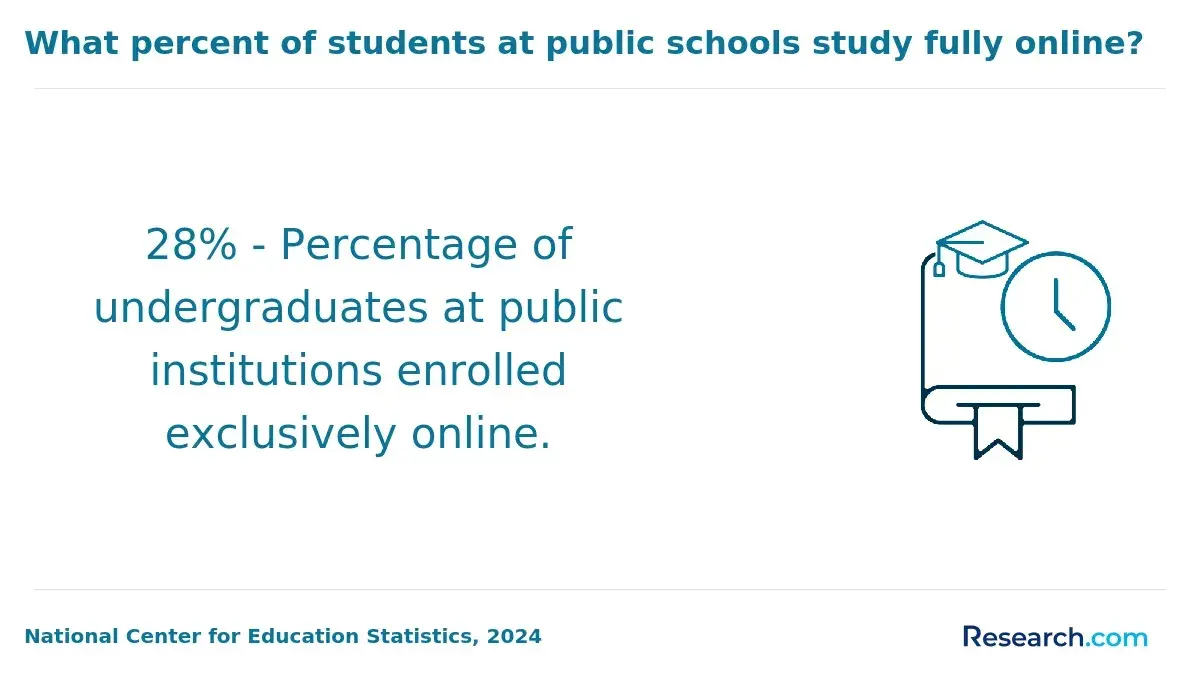
Online enrollment remains a major part of U.S. higher education, and many colleges now offer fully online or mixed-format pathways for adults, transfers, and working students. The benefit is flexibility; the risk is that flexibility can become delay if courses are asynchronous, advising is passive, or students underestimate weekly workload.
The table below compares the formats from an on-time graduation perspective rather than a general convenience perspective.
| Format | On-time advantage | Potential delay risk | Best-fit student |
| Campus-based | More built-in structure, face-to-face advising, labs, activities, and peer accountability | Commute, housing, course conflicts, or limited section times can interfere | Students who learn best with routine and in-person support |
| Online asynchronous | Flexible scheduling for work, caregiving, military service, or commuting constraints | Procrastination and limited real-time contact can slow progress | Self-directed students with reliable weekly study time |
| Online synchronous | Remote access with scheduled class meetings and more structure | Evening or fixed meeting times may conflict with work shifts | Students who need flexibility but still want live interaction |
| Hybrid | Combines in-person experiences with reduced campus time | Poorly coordinated schedules can create travel and time-management problems | Students near campus who want some flexibility without losing in-person support |
| Accelerated online terms | Can help motivated students complete more credits per year | Compressed courses can be difficult if life or work demands spike | Adult learners, transfers, or returning students with a clear plan |
If you already have a bachelor's degree and are thinking ahead to graduate school, 1-year online master's programs can be efficient, but the same principle applies: verify accreditation, course intensity, practicum requirements, and employer or licensure acceptance before prioritizing speed.
For any format, ask for a course rotation plan. Online programs can be excellent for completion, but not if required courses are offered infrequently or if internships, labs, or exams require travel you did not anticipate.
A practical test is to build a weekly schedule before enrolling. Include classes, study time, commuting, work, family obligations, sleep, and recovery time. If the plan only works under perfect conditions, the format may be too fragile for on-time graduation.
What financial aid, tuition, and work commitments impact graduating on schedule?
Financial fit is one of the strongest practical factors in finishing on time. Even academically prepared students can fall behind if they run out of aid, work too many hours, stop out for a term, or choose a college where total cost exceeds the family's realistic budget.
College Board's 2024 pricing data lists average published tuition and fees for public four-year in-state students at $11,610 and private nonprofit four-year students at $43,350. Published price is not the same as net price after grants and scholarships, but the gap shows why extra semesters can change the financial value of a degree.
When comparing colleges, look at total cost of attendance rather than tuition alone. Total cost usually includes tuition, fees, housing, food, books, supplies, transportation, personal expenses, and loan costs. A lower-tuition school can become expensive if housing, commuting, fees, or delayed graduation add up.
Review these financial factors before you enroll. They help you estimate whether you can maintain the credit load needed to graduate on schedule.
- Net price after grants and scholarships, not just the published tuition rate
- Whether scholarships require continuous full-time enrollment, a minimum GPA, or completion of a certain number of credits each year
- How much aid is available for summer courses if you need them to stay on track
- Whether working more than part time would make the recommended course load unrealistic
- Fees for labs, online courses, clinical placements, technology, transportation, parking, or graduation
- Limits on federal aid, state aid, institutional aid, and satisfactory academic progress
Students trying to reduce cost should compare net prices and completion support, not just sticker prices. Lists of cheap online colleges can be a useful starting point, but affordability should include transfer acceptance, course availability, advising, and graduation outcomes.
A common mistake is taking fewer credits to save money in the short term without understanding the long-term effect. If a bachelor's degree requires 120 credits, completing only 12 credits per fall and spring term usually does not reach 120 credits in four years unless you also use summer terms or bring in prior credits. For many students, the best strategy is the credit load they can pass consistently, not the maximum load on paper.
Which admission policies and first-year academic expectations predict timely graduation?
Admission policies and first-year academic expectations shape how smoothly students start. A college that admits you is not automatically a college that places you into a clear degree path on day one. Placement tests, remedial requirements, first-year seminars, math pathways, writing requirements, and major-entry rules can all affect your timeline.
First-year retention is a useful signal here because it shows how many students return after the first year. A high retention rate does not prove every student will graduate on time, but it often reflects a stronger combination of academic fit, financial stability, campus connection, and early support.
Pay close attention to admission-to-major policies. Some universities admit students directly into the major, while others admit students into the institution and require a later competitive application to nursing, business, engineering, education, or other limited-capacity programs. If you are not admitted to the major later, you may need to change programs or extend your timeline.
Before accepting an offer, ask these admissions and first-year questions. They are especially important if your intended major has GPA gates, test requirements, or limited seats.
- Am I admitted directly to my intended major, pre-major, college, or only to the university?
- What first-year courses must I complete to stay on a four-year plan?
- Are placement tests required for math, writing, or foreign language, and can they place me into noncredit or prerequisite courses?
- Do AP, IB, dual-enrollment, CLEP, or military credits count toward specific requirements or only as electives?
- What GPA must I maintain for my major, scholarship, honors program, or athletic eligibility?
- What happens if I do not pass a gateway course on the first attempt?
Developmental or prerequisite coursework is not necessarily bad; it can help students build the foundation they need. The timeline issue is whether those courses carry degree credit and whether the college offers a realistic plan for completing the degree without unnecessary delay.
Strong first-year programs make expectations visible early. Look for required advising before registration, degree audits in the first term, early-alert systems, tutoring tied to gateway courses, and clear communication about what a student must do to remain on track.
How do housing, campus engagement, and student services affect staying on track?
Housing, campus engagement, and student services may seem less academic than credits and advising, but they strongly affect persistence. Students who feel disconnected, commute long distances, struggle with food or housing insecurity, or cannot access mental health and disability support are more likely to reduce credits, withdraw, or stop out.
For traditional-age students, living on or near campus can make it easier to attend class, join study groups, meet advisors, and use tutoring. For adult learners and commuters, the equivalent may be reliable online services, evening support, childcare resources, transportation planning, and flexible office hours.
Evaluate the college's student-life infrastructure through the lens of consistency. You are looking for services that help you keep attending, learning, and registering on time even when life becomes complicated.
- Housing availability for all years, not only the first year
- Reliable transportation, parking, or transit access if you commute
- Mental health counseling, disability services, basic-needs support, and emergency aid
- Student organizations, learning communities, or cohort programs tied to your major or identity
- Career, academic, and financial aid offices with appointment times that match your schedule
- Support for veterans, parents, working adults, first-generation students, and transfer students if relevant
Older students and returning learners should be especially careful not to choose a program designed only around full-time residential students. Programs marketed as degrees for seniors or adult learners can be helpful when they offer flexible pacing, transfer-friendly policies, and accessible support rather than simply online lectures.
A red flag is a college that treats support services as optional extras instead of part of the completion strategy. Students graduate on time more often when advising, tutoring, financial guidance, and engagement are built into the student experience before problems become emergencies.
What career outcomes and return on investment matter for finishing your degree on time?
Graduating on time matters because it affects both cost and career timing. A delayed graduation can mean another year of tuition and living expenses, additional borrowing, and a later start in the labor market. However, the fastest option is not always the best option if it leads to weak career preparation, poor licensure alignment, or a credential employers do not value.
BLS data using 2024 annual averages shows that workers with a bachelor's degree had higher median weekly earnings than workers with only a high school diploma. This does not mean every degree has the same payoff, but it shows why completing a well-matched degree can matter for long-term earnings and employment stability.
To evaluate return on investment, compare what you pay, how long you take, and what the degree helps you access. The table below summarizes the main ROI factors that relate specifically to on-time completion.
| ROI factor | Why it matters | What to ask the college |
| Net price | Determines the realistic cost after grants and scholarships | What is the average net price for students with my financial profile? |
| Time to degree | Extra terms can raise costs and delay full-time employment | What share of students in my major finish in four years? |
| Debt at graduation | Borrowing affects post-graduation flexibility | What is the median debt for graduates in this program? |
| Career alignment | A degree should match the roles, credentials, or graduate programs you want | What jobs, employers, licensure outcomes, or graduate programs do recent graduates pursue? |
| Experiential learning | Internships, clinicals, co-ops, and projects can improve readiness but may add scheduling complexity | Are required experiences built into the four-year plan? |
| Transfer and graduate options | Future mobility matters if your goals change | How well do credits transfer, and where do graduates continue their education? |
Career outcomes should be interpreted carefully. A college may report employment or salary results from surveys with limited response rates, and outcomes vary by major, location, prior experience, internships, and labor market conditions. Use the data as a comparison tool, not as a promise.
The smartest decision is usually the college that offers the best combination of completion probability, affordability, academic fit, and career relevance. If a more expensive school has much stronger support, higher four-year completion in your major, and better access to required experiences, it may be worth considering. If a lower-cost school gives you a clear path with strong advising and transferable credits, it may offer better value.
Before enrolling, create a simple four-part decision file: your degree map, net price estimate, credit evaluation, and career-outcome evidence. If a college cannot provide clear answers in those areas, keep asking questions before you commit.
Other Things You Should Know About
The best sign is a strong four-year graduation rate for students in your intended major, supported by clear degree maps, proactive advising, and reliable course availability. Campus-wide graduation rates are useful, but major-level information is more relevant.
No. Some colleges serve many part-time, transfer, adult, or working students, which can lower four-year rates. Look at outcomes for students like you, then ask how the school helps students maintain progress toward the degree.
For a 120-credit bachelor's degree, students typically need to average about 15 credits per fall and spring semester or use summer, transfer, AP, IB, dual-enrollment, or other accepted credits. The right load is the one you can complete successfully.
It can, especially if the program offers frequent start dates, accelerated terms, generous transfer policies, and year-round courses. It can also slow you down if you lack structure, advising is weak, or required courses are not offered often enough.
References
- Online vs Hybrid vs On-Campus: Which Fits You? https://myaolcc.com/online-vs-hybrid-vs-on-campus-learning/
- Know the Difference Between In-Person, Online, Virtual & Hybrid Classes https://www.pima.edu/news/announcements/general-announcements/types-of-classes.html
- Scripting must be enabled to use this site. https://unm-student.custhelp.com/app/answers/detail/a_id/3416/~/as-an-undergraduate-student%2C-will-graduating-in-fall-affect-my-financial-aid%3F
- How Do You Know If A University Is Accredited? https://www.accreditedschoolsonline.org/accreditation/
- www.degreesight.com: Verifying that you are not a robot... https://www.degreesight.com/news/the-change-college-advising-needs/
- Factors Influencing the Graduation Time Among Undergraduates at University of Khartoum http://article.sapub.org/10.5923.j.edu.20251501.02.html
- 8 Steps to Improve the Student Experience in Higher Ed https://moderncampus.com/blog/importance-of-student-experience.html
- Online and hybrid college programs explained. Flexibility, risk, and the real value equation | CG https://collegegrind.org/posts/online-and-hybrid-college-programs-explained/
- Don't Break the Bank: Here Are 6 Tips for Affording Graduate School https://learn.neumann.edu/neuperspectives/6-tips-on-paying-for-graduate-school-without-breaking-the-bank
- Does College Pay Off? A Comprehensive Return On Investment Analysis - FREOPP https://freopp.org/whitepapers/does-college-pay-off-a-comprehensive-return-on-investment-analysis/