2027 What to Do in Your First Semester of College

Co-Founder and Chief Data Scientist
Your first semester of college is where habits, grades, finances, and support systems start to take shape. NCES reported in 2024 that the 6-year completion rate for first-time, full-time bachelor's students who began in 2016 was 64%, which shows why early decisions matter. This guide is for new college students, transfer students, online learners, and working adults who want a strong start. You will learn how to choose courses, manage time, use campus resources, control costs, explore majors, and build relationships that make college more manageable.
Key Things You Should Know
- Protect your GPA early: first-semester grades affect academic standing, scholarship renewal, eligibility for some majors, and whether you can take prerequisite courses on time.
- Build a realistic budget before classes begin: the 2024-25 maximum Federal Pell Grant is $7,395, but aid timing, housing, books, transportation, and meal costs can still create cash-flow gaps.
- Use support before you feel behind: tutoring, advising, counseling, financial aid offices, disability services, and faculty office hours are designed to prevent small problems from becoming semester-ending problems.
What are the most important academic priorities in your first semester of college?
Your most important academic priority in the first semester is not perfection; it is building a foundation that keeps you eligible, confident, and on track. That means understanding your syllabus, meeting deadlines, attending class consistently, and asking for help early enough for it to matter.
Start by learning the academic rules that affect your immediate future. Your college may have minimum GPA requirements for good standing, major admission, scholarships, honors programs, athletics, financial aid satisfactory academic progress, and selective courses. A first-semester setback is not automatically permanent, but it can reduce options if you ignore it until finals week.
Focus on the academic tasks that create the most leverage. These are the habits that help you avoid the most common first-semester mistakes: missing low-stakes assignments, underestimating exam preparation time, skipping office hours, and treating the syllabus as optional.
- Read every syllabus during the first week and transfer all exam dates, paper deadlines, lab dates, and project milestones into one calendar.
- Identify your highest-risk course by week two, usually the class with unfamiliar content, heavy reading, a lab, or a grading system based mostly on exams.
- Meet with your academic advisor before registration holds, add-drop deadlines, or withdrawal deadlines become urgent.
- Visit tutoring or supplemental instruction before the first major exam if you are confused, not after you have already failed one.
- Track your grade in each course using the syllabus formula instead of relying only on the learning management system, which may not always show weighted grades accurately.
A good first semester also means learning how college grading differs from high school. In many courses, a small number of exams or papers may determine most of your grade. That makes early preparation more valuable than last-minute cramming, especially in math, science, writing-intensive, and gateway major courses.
How should you choose and balance your first-semester course schedule?
Your first-semester schedule should be challenging enough to move you forward but balanced enough to let you adjust to college life. The right schedule depends on your major, work hours, commute, family responsibilities, placement scores, and whether you are studying online or on campus.
For many full-time students, 12 to 15 credits is a manageable starting range, but "full time" does not always mean "balanced." A 12-credit schedule with chemistry lab, calculus, and a writing seminar may be harder than a 15-credit schedule with a broader mix of courses. Look beyond the credit count and evaluate workload, format, prerequisites, and your weekly energy.
The table below compares common first-semester scheduling choices. Use it to understand the trade-offs before you finalize your courses, especially if you are trying to graduate on time while keeping stress and costs under control.
| Schedule choice | Best fit | Main trade-off |
| 12 credits | Students adjusting to college, working many hours, commuting, or managing family responsibilities | May slow progress if used repeatedly without summer or intersession courses |
| 15 credits | Students who want steady progress toward a 4-year graduation plan | Requires consistent weekly study time and fewer schedule disruptions |
| More than 15 credits | Students with strong preparation, few outside obligations, and advisor approval | Higher risk of burnout or lower grades if several courses are demanding |
| Mix of major, general education, and exploratory courses | Students still confirming their major or testing academic interests | Requires careful advising so credits still apply to degree requirements |
| Mostly online or evening courses | Working adults, caregivers, commuters, and students needing flexibility | Requires strong self-management and reliable technology access |
If you work while enrolled, do not build a schedule that assumes unlimited evening and weekend study time. Students who need flexible pacing may want to compare online degree programs for working adults, especially if job responsibilities make traditional daytime scheduling unrealistic.
Before the add-drop deadline, review whether each course supports your degree plan. Dropping a course can be the right move if you are overloaded, but doing so without checking financial aid, housing, athletic eligibility, or scholarship rules can create new problems. Ask your advisor and financial aid office before changing your credit load.
How can you build effective study habits and time management from day one?
Effective study habits are less about motivation and more about systems. In college, you may have fewer class meetings than in high school, but each class usually expects more independent reading, practice, writing, and review outside the classroom.
A practical rule is to schedule study blocks before the semester gets busy. Do not wait until you "find time." Put recurring work sessions on your calendar just like classes, meals, work shifts, and club meetings. The goal is to make studying predictable instead of negotiable.
Use the following system during the first two weeks. It is simple enough to maintain but structured enough to prevent the most common time-management problems.
- Create one master calendar that includes classes, work, commuting, meals, sleep, exams, assignments, financial aid deadlines, advising appointments, and personal commitments.
- Block 60- to 90-minute study sessions for each course, with the hardest course scheduled during your highest-energy time of day.
- Use active study methods such as practice problems, self-quizzing, explaining concepts aloud, outlining papers early, and rewriting notes into questions.
- Review each course for 15 minutes within 24 hours of class so you catch confusion before it becomes a pattern.
- Run a weekly reset every Sunday or Monday to check deadlines, estimate workload, clean up notes, and decide what needs help from a tutor, professor, or classmate.
The biggest mistake is confusing time spent with learning achieved. Re-reading notes for three hours may feel productive, but it often produces weaker results than shorter sessions built around practice questions, retrieval, writing drafts, and feedback. If your exam grades do not match your effort, change the study method rather than simply adding more hours.
AI tools can help with planning, summarizing, brainstorming, and practice questions, but they should not replace learning. Check your college's academic integrity policy before using AI for essays, code, lab reports, take-home exams, or discussion posts. A smart approach is to use AI as a study assistant, not as a substitute for your own work.
What campus and online resources should you use in your first semester?
College resources are not only for students in crisis. The best time to learn where help is located is before you need it. In your first month, identify the offices, platforms, and people who can help you solve academic, financial, health, technology, and career problems quickly.
Use the table below as a map of first-semester resources. It summarizes what each resource is for so you can decide where to go instead of guessing or waiting too long.
| Resource | What it helps with | When to use it |
| Academic advising | Degree plans, course sequencing, major requirements, transfer credits, registration holds | Before add-drop, midterm, and registration for next term |
| Tutoring or learning center | Course content, study strategies, writing support, math help, exam preparation | Before the first major assignment or exam |
| Professor office hours | Clarifying expectations, reviewing feedback, discussing course concepts, asking about research or careers | When you are confused, interested, or preparing for a major assignment |
| Financial aid office | FAFSA issues, aid disbursement, satisfactory academic progress, loans, grants, work-study | Before changing credits, withdrawing, or accepting loans |
| Counseling and health services | Stress, anxiety, depression, sleep, basic medical care, referrals | As soon as symptoms interfere with class, sleep, eating, or relationships |
| Disability services | Documented accommodations, testing support, assistive technology, accessible materials | Before exams or major assignments whenever possible |
| Career center | Major exploration, resumes, student jobs, internships, interview preparation | During the first semester, not just senior year |
If you are a service member, veteran, military spouse, or dependent, ask about credit for military training, GI Bill coordination, deployment policies, and dedicated advising. Comparing a military online college can also help you identify programs designed around mobility, benefits, and adult learner needs.
Online resources matter too. Learn how to use the learning management system, student portal, library databases, degree audit tool, campus email, advising scheduler, and financial aid portal. Many first-semester problems start when students miss messages because they keep checking personal email instead of official college communication channels.
How do you compare online, hybrid, and on-campus course formats for success?
Online, hybrid, and on-campus courses can all lead to strong outcomes, but they require different habits. The best format is not the one that sounds easiest; it is the one that fits your learning style, schedule, technology access, and need for structure.
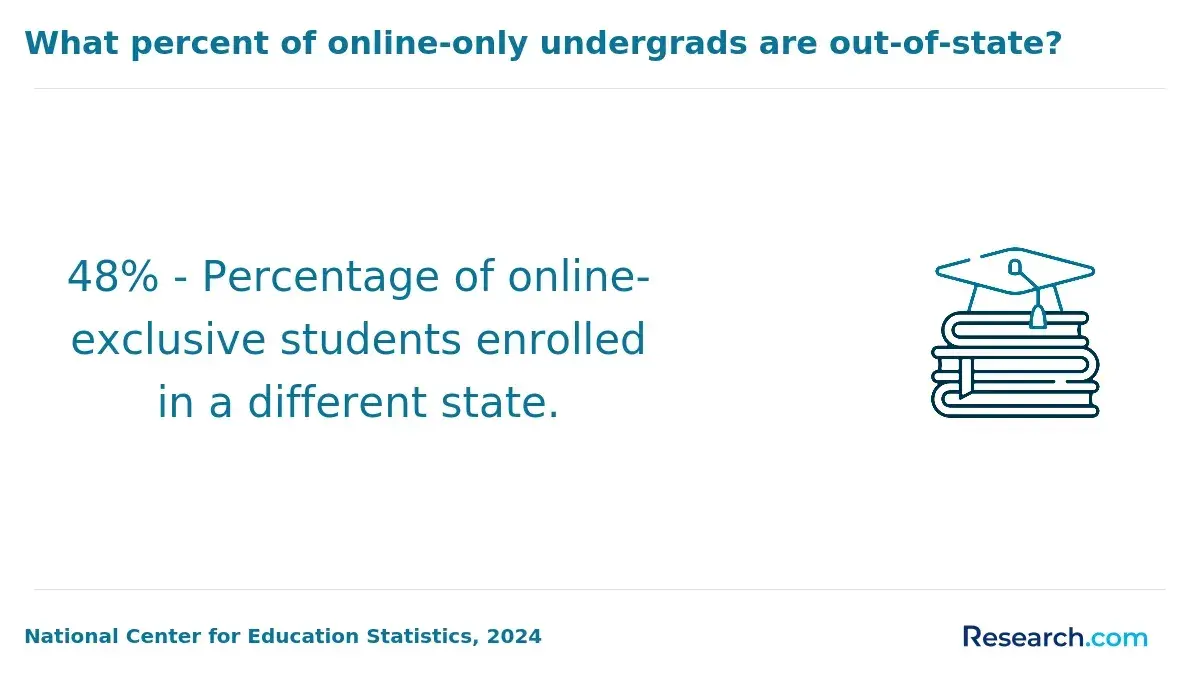
Online education has become a mainstream option, not a backup plan. NCES data released in 2024 shows that distance education remained a major part of US higher education after the pandemic-era shift, which means more students now need to choose formats strategically instead of assuming all courses work the same way.
The table below compares the major course formats first-semester students often consider. Use it to decide which format matches your responsibilities and how much structure you need to succeed.
| Format | Best fit | What to watch for |
| On-campus | Students who learn best through in-person discussion, labs, campus routines, and face-to-face accountability | Commute time, housing costs, fixed class times, and limited section availability |
| Online asynchronous | Students with work shifts, caregiving responsibilities, commuting barriers, or variable schedules | Procrastination, unclear weekly pacing, technology issues, and isolation |
| Online synchronous | Students who need flexibility but still want live instruction and scheduled interaction | Time-zone issues, attendance expectations, and internet reliability |
| Hybrid | Students who want some campus connection with fewer trips to campus | Confusing schedules if online and in-person requirements are not tracked carefully |
Cost should also be part of the format decision. Some online programs reduce commuting or housing expenses, but fees, books, technology, and proctoring costs can still add up. If price is a major factor, compare affordable online colleges by total cost, accreditation, transfer policy, student support, and degree fit rather than tuition alone.
Choose online courses if you are disciplined about calendars, independent reading, and written communication. Choose on-campus courses if you need built-in structure, immediate feedback, labs, studio work, or frequent peer interaction. Choose hybrid courses if you can manage both types of deadlines without losing track of where and when each class meets.
How should you budget, manage financial aid, and control costs your first semester?
Your first-semester budget should answer three questions: what you owe, when you owe it, and how you will cover gaps. Many students focus on tuition first, but the real cost of attendance includes fees, books, housing, food, transportation, technology, health insurance, and personal expenses.
College Board's 2024 Trends in College Pricing reported average published tuition and fees of $11,610 for in-state students at public 4-year colleges in 2024-25. That figure does not include housing, meals, books, or transportation, so your personal budget must use your actual bill and living situation instead of relying on tuition alone.
Use this first-semester money checklist before classes begin and again before the withdrawal deadline. It helps you avoid late fees, surprise balances, and financial aid mistakes that can affect registration for the next term.
- Review your student account and compare charges with your financial aid offer so you know the remaining balance before the due date.
- Confirm when grants, scholarships, loans, work-study, or veteran benefits will disburse, because timing matters for rent, books, and transportation.
- Accept only the loans you need after estimating your semester costs, and remember that dependent first-year undergraduates have an annual federal Direct Loan limit of $5,500.
- Ask whether dropping below full time changes your aid, housing status, athletic eligibility, scholarship renewal, or satisfactory academic progress.
- Create a weekly spending limit for food, rideshares, subscriptions, entertainment, supplies, and emergency expenses.
- Check for lower-cost textbooks, library reserves, open educational resources, used books, rentals, and digital access codes before buying everything new.
If affordability is your main concern, compare cheap online colleges that accept FAFSA with the same care you would use for an on-campus school. Make sure the institution is eligible for federal aid, properly accredited, transparent about fees, and aligned with your degree goal.
A common mistake is treating financial aid as extra spending money after the bill is paid. Refunds may need to cover rent, groceries, transportation, books, and technology for the entire term. If you receive a refund, divide it by the number of weeks in the semester before spending it.
How can you start exploring majors, degree pathways, and career options early?
You do not need to choose your entire career in the first semester, but you should start testing your assumptions. Majors differ in prerequisites, GPA requirements, course sequencing, internship expectations, graduate school pathways, and long-term earnings patterns.
BLS data for 2024 shows that workers with a bachelor's degree had median weekly earnings of $1,543, compared with $930 for workers with a high school diploma. That gap does not mean every major has the same payoff, but it shows why choosing a pathway thoughtfully can affect long-term opportunity.
Start major exploration by looking at fit from several angles: academic strengths, lifestyle preferences, job market demand, licensing requirements, salary context, graduate school expectations, and the kind of work you actually want to do. If you want a practical starting point, review majors that make money and are fun while remembering that "fun" depends on your interests, work style, and tolerance for specific coursework.
The table below shows how to compare academic pathways without reducing the decision to income alone. Use it to ask better questions before declaring or changing a major.
| Decision factor | Why it matters | Question to ask |
| Prerequisite sequence | Some majors require courses in a strict order, and missing one can delay graduation | What course must I complete next to stay on track? |
| Academic fit | Interest alone may not be enough if the required coursework does not match your strengths | Which gateway courses predict success in this major? |
| Career alignment | Some majors lead directly to specific roles, while others require internships, portfolios, or graduate study | What entry-level roles do students commonly pursue? |
| Licensure or certification | Fields such as teaching, nursing, accounting, and counseling may have state-specific requirements | Does this degree meet requirements in the state where I want to work? |
| Cost and time to degree | Extra semesters, lab fees, unpaid clinical hours, or graduate school can affect return on investment | What is the realistic total timeline and cost? |
Good first-semester steps include visiting the career center, taking an interest or strengths assessment, attending major information sessions, interviewing upper-level students, and comparing degree audits. If you are undecided, choose general education courses that satisfy multiple possible pathways rather than random electives.
What steps help you build relationships with professors, advisors, and classmates?
Relationships are part of academic success. Professors, advisors, classmates, tutors, resident assistants, supervisors, and career staff can help you understand expectations, find opportunities, solve problems, and feel less isolated.
Faculty relationships are especially useful because professors can explain course concepts, clarify feedback, recommend research or internships, and later write references if they know your work. You do not need a perfect question to attend office hours. You can ask how to improve, how to study for the next exam, how the field works, or what strong assignments usually include.
Use these steps to build relationships without feeling awkward or transactional. The goal is to become visible, prepared, and reliable.
- Introduce yourself to each professor during the first two weeks, especially in courses connected to your possible major.
- Attend office hours with one specific question, assignment draft, exam problem, or concept you want to understand better.
- Email professionally by using your course name, a clear subject line, a concise question, and your full name.
- Meet your advisor before registration season and bring a tentative course plan instead of asking them to build one from scratch.
- Form a study group with classmates who attend regularly, prepare before meetings, and focus on learning rather than copying answers.
- Follow up after receiving help by saying what you did next, especially if an advisor, professor, or tutor helped solve a problem.
A common mistake is waiting until you are failing to contact people. Early contact makes later help easier because the professor or advisor already has context. Another mistake is treating classmates only as social contacts; strong peer networks can help you learn course norms, share reminders, and stay accountable.
How do you maintain physical and mental health during your first semester?
Health is not separate from academic performance. Sleep, nutrition, movement, stress management, medication routines, safety, and social connection all affect concentration, attendance, memory, and decision-making.
First-semester stress is common because students are adapting to new expectations, environments, finances, and relationships at the same time. The key is to treat health maintenance as part of your schedule rather than something you will handle after everything else is done.
Use the following health plan as a starting point. It focuses on habits and support systems that are realistic for new college students.
- Set a consistent sleep window on most nights, and avoid making all studying dependent on late-night energy.
- Plan simple meals or campus dining routines so skipped meals do not become a daily pattern.
- Move regularly through walking, recreation classes, gym sessions, intramural sports, or short activity breaks between study blocks.
- Learn how to access counseling, crisis support, urgent care, pharmacy services, and after-hours help before you need them.
- If you take medication or receive ongoing care, arrange refills, appointments, insurance details, and local providers before supplies run low.
- Build at least two reliable social supports, such as a classmate, roommate, family member, mentor, club member, or advisor.
Red flags include sleeping through classes repeatedly, stopping meals, missing work or assignments because of anxiety, using alcohol or substances to cope, feeling persistently hopeless, or isolating for long stretches. If any of these appear, contact campus counseling, health services, a resident assistant, an advisor, or a trusted person immediately. If there is immediate danger, use emergency services or your campus crisis protocol.
Protecting health may also mean adjusting expectations. If a course load, job schedule, commute, or club commitment is damaging your well-being, talk with an advisor before the situation becomes academically or financially harder to fix.
How should you get involved in clubs, campus activities, and professional networks?
Getting involved helps you build belonging, leadership experience, friendships, and career direction, but overcommitting is one of the easiest first-semester mistakes to make. The goal is selective involvement, not signing up for everything during the activities fair.
Choose activities that serve at least one purpose: social connection, wellness, identity and belonging, academic exploration, service, leadership, creative expression, or career preparation. You can always add more later after you know how demanding your classes are.
Use this involvement strategy during your first semester. It gives you room to explore without letting activities compete with your academic foundation.
- Attend the activities fair and list five groups that interest you, but commit to no more than one or two recurring activities at first.
- Choose one academic or career-related organization connected to a possible major, such as a business club, engineering society, education association, student media group, pre-health organization, or coding club.
- Choose one community-building activity that supports belonging, such as cultural organizations, faith-based groups, recreation, service clubs, residence hall events, or first-generation student programs.
- Track the time commitment for each group for two weeks before accepting leadership roles or major projects.
- Attend at least one career event, employer panel, alumni talk, undergraduate research session, or internship workshop before the semester ends.
Professional networking starts earlier than many students think. You do not need a polished career plan to attend events. Listening to alumni and employers can help you learn what skills, internships, portfolios, certifications, or graduate degrees may matter in a field before you are close to graduation.
Be cautious about activities that pressure you to miss class, spend money you do not have, or ignore your values. A good college network should expand your options, not make your first semester harder to manage.
Other Things You Should Know About
Many full-time students start with 12 to 15 credits, but the right number depends on your course difficulty, work hours, commute, placement, and financial aid rules. Ask your advisor before going below full time or taking an overload.
Read every syllabus, add deadlines to one calendar, confirm your financial aid and student account balance, find your classrooms or online course shells, introduce yourself to professors, and identify tutoring, advising, health, and technology support.
Yes. Many students need time to adjust to college-level expectations, independence, and workload. The important step is to ask for help early through tutoring, office hours, advising, counseling, or peer support instead of waiting until the end of the term.
You do not always need to declare immediately, but you should start exploring. Meet with an advisor, compare degree requirements, take useful general education courses, visit the career center, and learn which prerequisites matter for majors you may want.
References
- 10 Strategies for Effective Study Habits and Time Management https://reviewnprep.com/blog/10-strategies-for-effective-study-habits-and-time-management/
- Free Campus Resources Every College Student Should Know - Making Waves Academy https://makingwavesacademy.org/free-campus-resources-every-college-student-should-know/
- Single Blog https://illinichabad.com/how-to-get-involved-in-campus-activities-and-make-lasting-friendships-in-college/
- How to Succeed in Your First Year of College: Six Tips for Freshmen - Immaculata University https://www.immaculata.edu/news/how-to-succeed-in-your-first-year-of-college-6-tips-for-freshmen/
- Online, Hybrid, and More: Flexible Learning Options in College - ReUp Education https://reupeducation.com/blog/online-hybrid-and-more-flexible-learning-options-in-college/
- How To Make A Budget As A Student https://lehikeng.org/blog/make-a-budget-as-a-student
- A complete guide to college clubs and student organizations on campus https://www.citizensbank.com/student/articles/college-clubs.aspx
- How to explore career options | IGNITE https://ignitestudentlife.com/how-to-explore-career-options/
- Top 10 Budgeting Tips for Students to Control Expenses https://www.ue-amsterdam.com/blog/top-10-budgeting-tips-for-students-to-control-monthly-expenses
- University Clubs & Organizations: What Else Can I Do Besides Study? https://www.lenovo.com/ie/en/education/planning-college-life/student-organizations/