2027 College Success for Students With Caregiving Responsibilities

Co-Founder and Chief Data Scientist
Caregiving can turn college into a daily scheduling puzzle: classes, assignments, work, appointments, meals, transportation, and emergencies all compete for the same hours. A federal analysis published in 2024 found that roughly one in five undergraduates are parents, and many more support relatives with health, disability, or eldercare needs.
This guide is for students choosing whether, when, and how to enroll while caregiving. You will learn how to compare program formats, costs, aid, accommodations, support services, and career paths so you can choose a realistic college plan instead of simply the most convenient one.
Key Things You Should Know
- Student caregivers should prioritize flexible scheduling, transfer credit, predictable course rotations, and clear re-enrollment policies because caregiving interruptions are common and can extend time to degree.
- Cost planning matters as much as admissions: the maximum federal Pell Grant for 2025-26 is $7,395, but childcare, transportation, lost work hours, technology, and emergency care can determine whether a program is actually affordable.
- Accreditation, licensure alignment, and student support services are non-negotiable; a flexible program is only useful if credits transfer, employers recognize the credential, and the school can support stop-outs, part-time enrollment, and academic accommodations.
How can students balance college coursework with ongoing caregiving responsibilities?
Balancing college and caregiving starts with treating time as a limited resource, not a personal weakness. A student caregiver is any learner who provides unpaid or primary support for a child, spouse, parent, sibling, grandparent, or another dependent who needs regular assistance. The best college plan reduces avoidable friction: fewer commute hours, fewer surprise deadlines, fewer required daytime meetings, and a clear backup plan when care responsibilities change.
The smartest approach is to build a weekly operating system before the term begins. These steps help students identify the real workload behind each course and reduce the risk of falling behind during caregiving emergencies.
- Map fixed obligations first, including care routines, medical appointments, school pickup, work shifts, commute time, and sleep.
- Choose courses around high-energy windows instead of simply choosing the earliest available seats or cheapest format.
- Ask each instructor how deadlines, attendance, labs, exams, and group work are handled before the add-drop deadline.
- Use a two-calendar system: one calendar for immovable obligations and one task list for flexible coursework that can move when caregiving changes.
- Build a backup care plan for exam weeks, clinical placements, presentations, and major assignment deadlines.
- Take fewer credits if necessary; a sustainable part-time plan often beats repeated full-time withdrawals.
A common mistake is assuming that "full time" is always the fastest route. For caregivers, a 12-credit schedule with multiple failures or withdrawals can be slower and more expensive than a consistent 6- to 9-credit schedule. Students should also watch for hidden time costs, such as required synchronous sessions, proctored exams at fixed hours, mandatory advising meetings, and group projects that require real-time coordination.
Technology can help, but it should not replace planning. AI note tools, calendar reminders, learning management system alerts, and speech-to-text drafting can reduce administrative burden, yet students still need to follow academic integrity rules. Before using AI to summarize readings, outline papers, or study for exams, check the syllabus and ask how the instructor defines acceptable use.
What types of degree programs best support students with caregiving duties?
The best degree program for a caregiving student is usually one with flexible pacing, strong advising, generous transfer credit, and a career outcome that justifies the total cost. Students comparing online colleges should look beyond convenience and ask whether the major, schedule, and support model match their caregiving reality.
This table compares common academic paths for student caregivers. Use it to narrow options by timeline, flexibility, and career purpose before speaking with admissions advisors.
| Program type | Typical fit for caregivers | Main advantage | Main caution |
| Associate degree | Students starting college, returning after a stop-out, or seeking lower-cost transfer credits | Usually shorter and often offered at community colleges with flexible schedules | Students need a transfer plan if the goal is a bachelor's degree |
| Bachelor's degree | Students pursuing roles that commonly require a four-year credential | Broader career access and stronger long-term advancement potential in many fields | More credits, more cost, and more risk if the program lacks flexible sequencing |
| Graduate degree | Working caregivers seeking advancement, licensure, or specialization | Can improve access to leadership, clinical, education, or technical roles | Admissions, fieldwork, and workload may be difficult without employer or family support |
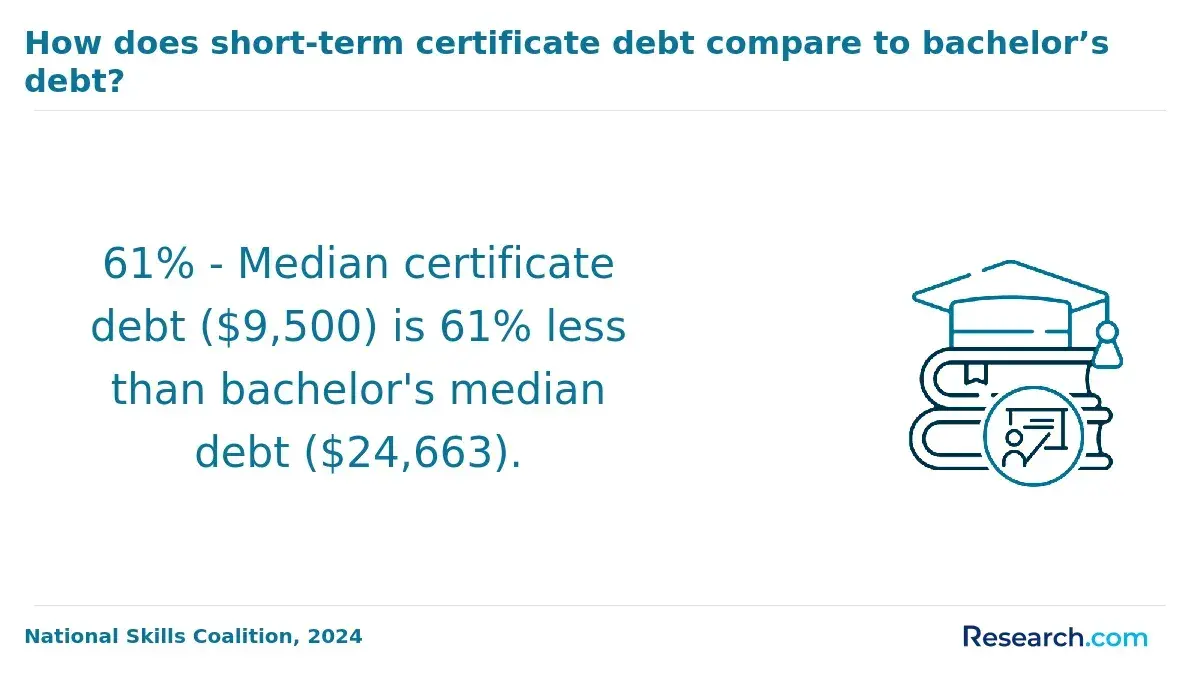
| Certificate | Students who need faster job preparation or a stepping stone before a degree | Shorter timeline and focused skill development | Not all certificates carry the same labor-market value or transfer into degrees |
| Competency-based program | Students with prior learning, work experience, or unpredictable schedules | Progress may be based on demonstrated mastery rather than weekly seat time | Requires self-discipline and may not suit students who need frequent live instruction |
Caregiving students often benefit from majors with predictable course sequences and multiple sections each term. Business administration, information technology, health administration, accounting, education support roles, social services, and applied communications may offer more scheduling flexibility than majors that depend heavily on labs, studios, clinical rotations, or cohort-only progression.
Students should be cautious with programs that advertise speed without explaining workload. Accelerated courses can be useful for motivated caregivers, but a five- or eight-week class may require concentrated weekly study time. If caregiving duties are unpredictable, a standard term, part-time schedule, or competency-based format may be safer.
How do online, hybrid, and campus-based programs compare for student caregivers?
Online, hybrid, and campus-based programs can all work for student caregivers, but each solves a different problem. The best format depends on whether the student needs location flexibility, structured accountability, access to campus services, hands-on training, or a predictable weekly routine. Students who need the most control over pacing may also want to compare online self-paced degrees with traditional term-based programs.
The table below summarizes the most important format trade-offs. It is especially useful for students who are deciding whether flexibility, structure, or hands-on access matters most.
| Format | Best for | Caregiving advantage | Potential drawback |
| Fully online asynchronous | Students with changing care schedules or limited transportation | Coursework can often be completed at night, early morning, or during care gaps | Less real-time support unless advising and tutoring are easy to access |
| Fully online synchronous | Students who want live instruction without commuting | Predictable class meetings can create structure | Fixed meeting times can conflict with caregiving emergencies |
| Hybrid | Students who need some campus access but fewer commutes | Balances flexibility with labs, networking, or in-person support | Campus days may still require transportation and backup care |
| Campus-based | Students who need hands-on facilities, clinical training, or face-to-face support | May provide stronger community, childcare access, and immediate services | Commute time and fixed schedules can raise the risk of absences |
| Low-residency | Graduate or professional students who can travel occasionally | Most work is remote with limited intensive campus sessions | Residency weeks require advance care planning and may add travel costs |
A key trend is the normalization of hybrid learning. Many colleges now offer online advising, virtual tutoring, digital library access, remote office hours, and online student communities. That helps caregivers who cannot stay on campus after class, but students should confirm whether services are available during evenings or weekends.
One red flag is an online program that requires frequent daytime proctoring, mandatory live sessions, or campus visits that are not clearly disclosed. Before enrolling, ask for a sample syllabus and the full list of in-person, synchronous, proctored, lab, fieldwork, or clinical requirements.
What admission policies and academic accommodations exist for college student caregivers?
Admissions policies and academic accommodations vary widely, but student caregivers should look for schools that treat life circumstances as part of student success planning. Caregiving itself is not always a protected disability category, yet related needs may intersect with pregnancy, parenting, disability, military family obligations, employment, financial hardship, or dependent-care emergencies.
Before applying, students should ask how the school handles flexibility in practice. These policies can determine whether a caregiver can stay enrolled when life becomes complicated.
- Part-time enrollment options that still allow access to advising, financial aid guidance, library services, and tutoring.
- Rolling admissions or multiple start dates, which can help students begin after stabilizing care arrangements.
- Transfer credit evaluation before enrollment, so students know how many credits actually count toward the degree.
- Credit for prior learning, military training, professional certifications, or standardized exams when accepted by the institution.
- Leave of absence and re-enrollment policies that explain how long students can pause without reapplying or losing degree requirements.
- Attendance flexibility for documented emergencies, especially in courses where participation policies affect grades.
- Pregnancy, parenting, lactation, disability, and Title IX-related supports when applicable.
Students with disability-related caregiving circumstances should contact the disability services office early. For example, a student who has a documented disability and also provides care may qualify for accommodations related to the student's own condition, such as extended testing time, flexible attendance within course limits, accessible materials, or reduced-distraction testing.
Admissions advisors can explain how to apply, but they are not always the best source for accommodation rules. Students should verify policies with the registrar, financial aid office, disability services office, Title IX office, academic department, and program director when the program includes labs, clinical hours, student teaching, internships, or licensure requirements.
How can caregiving students access financial aid, scholarships, and childcare funding?
Financial planning for caregiving students should include tuition, fees, books, technology, childcare, transportation, food, housing, medical expenses, and emergency backup care. A low-tuition program can still become unaffordable if it requires unpaid daytime fieldwork or frequent commuting. Students comparing cheap online colleges should confirm that the institution participates in federal student aid and that the total cost fits their schedule and care needs.
College Board's 2024 pricing data shows why format and institution type matter: published tuition and fees for 2024-25 averaged $4,050 at public two-year colleges, $11,610 for in-state students at public four-year colleges, and $43,350 at private nonprofit four-year colleges. These are sticker prices, not final net prices, but they show why caregivers should compare community college transfer pathways, public universities, and aid offers before choosing a program.
Caregiving students should build a funding stack rather than relying on one source. The following options are worth checking because eligibility can vary by income, enrollment intensity, dependency status, state, institution, and program type.
- FAFSA-based aid, including Pell Grants, federal loans, and campus-based aid when available.
- State grants for low-income students, adult learners, student parents, or workforce-training programs.
- Institutional scholarships for returning adults, first-generation students, parents, caregivers, or part-time students.
- Child Care Access Means Parents in School, known as CCAMPIS, if the college receives this federal campus childcare grant.
- Workforce Innovation and Opportunity Act funding for eligible career training programs.
- Employer tuition assistance, schedule flexibility, or paid training benefits.
- Public benefits screening through campus basic-needs offices, community agencies, or state portals.
- Emergency grants for housing, food, transportation, medical needs, or temporary childcare disruptions.
The maximum federal Pell Grant for 2025-26 is $7,395. That amount can make a major difference, but it may not cover the full cost of attendance, especially for students with dependents. Caregivers should ask the financial aid office whether childcare or dependent-care costs can be included in the cost of attendance calculation, which may affect aid eligibility.
A common mistake is comparing only tuition per credit. Better questions include: How many credits will transfer? Are there extra online fees? Does the program require unpaid placements? Will part-time enrollment reduce aid? What happens to aid after a withdrawal? The cheapest advertised option is not always the lowest-risk option.
What campus and community support services help caregivers succeed in college?
Support services can determine whether a caregiving student persists through a difficult term. The most useful colleges coordinate academic, financial, mental health, and basic-needs support instead of sending students to separate offices with conflicting instructions.
Students should look for services that solve real caregiving barriers, not just general student-life offerings. These supports are especially important for learners who may need evening access, remote appointments, or emergency help.
- Dedicated student-parent, adult learner, veteran, or caregiver resource centers.
- On-campus childcare, childcare referral services, or partnerships with local providers.
- Evening, weekend, and virtual tutoring for writing, math, science, and major-specific courses.
- Academic coaching that helps students plan weekly workload, not just choose classes.
- Basic-needs support for food, housing, transportation, technology, and emergency grants.
- Mental health counseling with telehealth options or referral networks for ongoing care.
- Lactation rooms, family-friendly study spaces, and policies for children on campus when applicable.
- Career services that offer remote appointments, resume help, internships guidance, and employer connections.
Community support matters too. Local nonprofits, public libraries, family resource centers, workforce boards, faith-based organizations, and county agencies may offer childcare referrals, transportation assistance, food programs, digital access, or emergency support. Students should ask the college whether it has a single basic-needs coordinator who can help identify both campus and community resources.
The strongest sign of a caregiver-friendly school is not a single program but a coordinated response. If staff can clearly explain what happens when a student misses class for a child's illness, loses childcare during finals, needs a leave of absence, or returns after stopping out, the institution is more likely to understand caregiver persistence.
How should student caregivers choose an accredited, reputable college or university?
Accreditation is the first filter when choosing a college. Student caregivers should verify that the institution is accredited by an agency recognized by the U.S. Department of Education and that any program leading to licensure, certification, or professional practice meets the relevant state and industry requirements. Students considering graduate study should also compare affordability carefully, including resources that explain what is the cheapest online master's degree program for their field and goals.
This table highlights the most important quality checks. It can help students avoid programs that are flexible on the surface but risky for transfer, licensure, or employment.
| Quality factor | What to verify | Why it matters for caregivers |
| Institutional accreditation | The school is accredited by a recognized institutional accreditor | Federal aid, transfer credit, employer recognition, and graduate admission may depend on it |
| Programmatic accreditation | The specific program meets standards for fields such as nursing, counseling, education, or social work | Licensure-track students can lose time and money if the program does not qualify |
| State authorization | The school can enroll online students in the student's state | Online access does not always mean the program is authorized everywhere |
| Licensure alignment | The curriculum meets requirements in the state where the student plans to work | Caregivers may not be able to relocate if requirements do not match |
| Transfer policy | Credits are evaluated in writing before enrollment when possible | Accepted transfer credits can reduce cost, time, and scheduling burden |
| Student outcomes | Retention, graduation, licensure pass rates, job placement, and debt data are available | Caregivers need evidence that students complete the program, not just enroll |
Caregiving students should be skeptical of pressure tactics. Red flags include vague accreditation claims, refusal to provide a degree plan, unclear total cost, missing licensure disclosures, no written transfer evaluation, unrealistic promises about salaries, and admissions staff who discourage students from contacting financial aid or academic departments.
A practical decision rule is to choose the reputable program that you can complete consistently. Prestige alone does not compensate for a schedule that repeatedly forces withdrawals, and low cost alone does not compensate for weak accreditation or poor student support.
How do caregiving responsibilities affect time to degree, graduation rates, and re-enrollment?
Caregiving responsibilities can affect time to degree because they increase the likelihood of part-time enrollment, stop-outs, missed deadlines, limited study hours, and financial interruptions. This does not mean caregivers are less capable. It means the standard college model often assumes time flexibility that many caregivers do not have.
The scale of interrupted education is large. National Student Clearinghouse Research Center reporting published in 2024 identified tens of millions of U.S. adults with some college and no credential, showing that re-enrollment is a major pathway rather than an unusual exception. For caregivers, this means a good college plan should assume that life may interrupt enrollment and should make returning straightforward.
The table below explains how common caregiving-related enrollment patterns can affect completion. Use it to identify which risks apply to your situation before choosing course load or format.
| Caregiving-related pattern | Possible academic effect | What to check before enrolling |
| Part-time attendance | Longer time to degree but often better sustainability | Financial aid minimums, course rotation, and maximum completion time |
| Stop-out for family or health needs | Delayed graduation and possible catalog-year changes | Leave policy, re-enrollment process, and whether completed credits expire |
| Frequent schedule changes | Higher risk of missed attendance requirements or late work | Flexibility policies, asynchronous options, and instructor communication norms |
| Unpaid fieldwork or clinical hours | Work-income loss and need for additional care coverage | Placement schedule, travel distance, background checks, and required hours |
| Financial disruption | Registration holds, dropped courses, or reduced enrollment | Payment plans, emergency grants, aid appeals, and basic-needs support |
Students can protect progress by choosing stackable milestones. A certificate that applies to an associate degree, an associate degree that transfers into a bachelor's program, or a bachelor's degree that supports later graduate study can make each stage useful even if the student must pause.
Another practical strategy is to maintain enrollment momentum with one course during high-demand caregiving periods. A single well-chosen course can preserve academic confidence, keep advising relationships active, and move the student forward without creating an unsustainable term.
What career planning strategies work for students juggling caregiving and education?
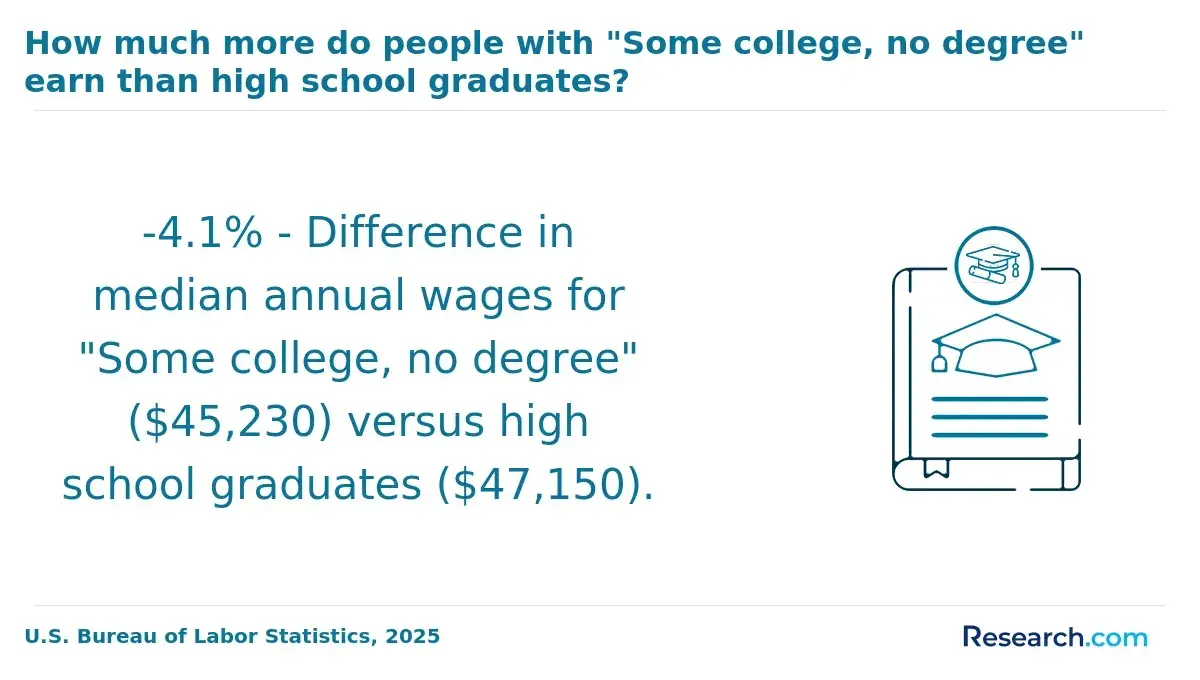
Career planning for caregiving students should focus on both long-term earning potential and near-term schedule reality. A program is more likely to pay off when it leads to roles with predictable hours, remote or hybrid options, clear advancement paths, and wages that justify the cost of attendance. Students who need faster workforce entry may compare degrees with short certificate programs before committing to a longer credential.
BLS May 2024 data placed the median annual wage for all U.S. occupations at $49,500. This benchmark helps students evaluate whether a target career path is likely to improve their financial position, but wages vary by location, employer, experience, credential level, and work schedule.
Student caregivers should use career planning to reduce uncertainty before borrowing or changing work hours. The following steps can help connect education choices to realistic employment outcomes.
- Choose a target role before choosing a major, then confirm the usual education level for that role.
- Review job postings in your region to identify required credentials, software skills, schedule expectations, and remote-work availability.
- Ask the program where students complete internships, clinicals, practicums, or capstones and whether placements offer evening, weekend, or local options.
- Build portable skills such as communication, data analysis, project coordination, digital literacy, budgeting, documentation, and customer or client support.
- Use career services early for resume framing; caregiving can demonstrate organization, problem-solving, advocacy, logistics, and crisis management.
- Consider employer tuition assistance or internal promotion paths if staying employed is necessary during school.
Some fields are naturally more caregiver-compatible than others, but no field is universally flexible. Accounting, IT support, human resources, healthcare administration, medical coding, project coordination, education support, social services administration, and business operations may offer more remote or predictable pathways than roles requiring rotating shifts or extensive unpaid placements. However, students should verify actual local job conditions instead of relying on national averages.
A common mistake is choosing a major because it sounds flexible without checking entry-level jobs. Another mistake is assuming that a degree alone will create a career change. Caregivers should plan for internships, portfolios, certifications, networking, and job-search time as part of the degree timeline.
How can caregiving students protect their mental health and prevent burnout in college?
Caregiving students face a high risk of burnout because school adds deadlines to responsibilities that may already be emotionally and physically demanding. Burnout prevention is not just self-care; it is an academic success strategy. Students who protect sleep, ask for help early, and choose realistic course loads are more likely to persist.
Burnout often appears before a student formally decides to stop out. These warning signs should prompt action, especially if they last more than a week or begin affecting safety, health, or academic performance.
- Feeling constantly behind even after reducing nonessential tasks.
- Skipping meals, sleep, medication, or medical appointments to complete coursework.
- Withdrawing from classmates, instructors, advisors, or support services.
- Missing assignments because opening the course platform feels overwhelming.
- Feeling numb, irritable, hopeless, resentful, or unable to recover between obligations.
- Using caffeine, alcohol, or other substances in ways that create new problems.
Students should respond to burnout with concrete changes, not just motivation. Contact instructors before deadlines pass, ask an advisor about reducing credits, request tutoring before failing an exam, and speak with financial aid before withdrawing. If mental health symptoms are severe, urgent, or involve thoughts of self-harm, students should seek immediate professional or emergency support.
It also helps to define a "minimum viable school week." That means identifying the smallest set of actions that keeps progress alive during a crisis: attend or watch lectures, submit the highest-value assignment, respond to instructor messages, and complete one focused study block. This approach prevents all-or-nothing thinking and makes recovery easier after a difficult caregiving week.
Other Things You Should Know About
Yes, but full-time enrollment is not always the best choice. If caregiving hours are unpredictable, a part-time or hybrid schedule may reduce withdrawals and protect financial aid eligibility. Ask an advisor to compare timelines for 6, 9, and 12 credits before registering.
Some colleges offer caregiver, parent, pregnancy, lactation, basic-needs, or emergency support policies, but rules vary. Caregiving alone may not qualify as a disability accommodation, so students should contact the appropriate office early and get policies in writing.
Online college can be better when commuting and fixed class times are the main barriers. It may not be better if the program has mandatory live sessions, strict proctoring windows, weak advising, or required in-person placements that conflict with care duties.
Ask about transfer credits, part-time aid, leave of absence rules, re-enrollment, childcare support, emergency grants, online tutoring, course rotations, clinical or internship schedules, and licensure requirements. The goal is to know what happens when caregiving disrupts a normal term.
References
- Types of college accommodations and services https://www.understood.org/en/articles/types-of-college-accommodations-and-services
- Caring.com Student-Caregiver Scholarship https://accessscholarships.com/scholarship/caring-com-student-caregiver-bi-annual-scholarship/
- Child Care Financial Assistance Options https://childcare.gov/consumer-education/get-help-paying-for-child-care/child-care-financial-assistance-options
- What can communities do to support caregivers? https://www.agingcare.com/questions/what-can-communities-do-to-support-caregivers-454243.htm
- Student Caregivers Need More Support From Colleges https://www.aarp.org/caregiving/life-balance/student-caregivers-need-support/
- Home https://www.husson.edu/online/blog/2024/06/tips-to-avoid-college-burnout
- Balancing School, Work, and Life: Strategies for Students https://www.providenceready.org/resources/blog/2025/june/balancing-school-work-and-life-strategies-for-st/
- College Student Caregivers More Likely to Stop Classes https://news.gallup.com/opinion/gallup/328970/college-student-caregivers-likely-stop-classes.aspx
- How Colleges Can Support Student Caregivers https://www.crossroadshospice.com/hospice-palliative-care-blog/2021/april/29/how-colleges-can-support-student-caregivers/
- Preventing Burnout in College Students | Caduceus https://cipcourses.com/blog/preventing-burnout-in-college-students/