2027 College Success for Students Returning After Years Away

Co-Founder and Chief Data Scientist
Returning to college after years away often means balancing work, family, money, and confidence all at once. The payoff can be meaningful: the U.S. Bureau of Labor Statistics reported in 2024 that workers with a bachelor's degree had median weekly earnings of $1,543, compared with $930 for workers with only a high school diploma.
This guide is for adults restarting college, finishing an unfinished degree, or changing careers. You'll learn how to choose a program, avoid costly mistakes, compare formats, and make a practical enrollment decision.
Key Things You Should Know
- Start with the job you want, then work backward to the credential, accreditation, licensing rules, and transferable credits required for that path.
- College Board's 2024-25 data shows published tuition and fees averaging $4,050 at public two-year colleges, $11,610 for in-state public four-year colleges, and $43,350 at private nonprofit four-year colleges, so format and institution choice can significantly affect total cost.
- Returning students can often shorten time to completion through transfer credits, prior learning assessment, military credit, employer training, credit-by-exam, or competency-based study, but each school sets its own limits.
What does going back to college after years away involve?
Going back to college after years away usually involves re-entering higher education as an adult learner, transfer student, degree-completion student, or career changer. It may mean finishing credits from a previous institution, starting a new associate or bachelor's degree, earning a certificate, or pursuing graduate study after time in the workforce.
The main difference from starting college right after high school is that returning students often need a program that fits around existing responsibilities. That makes advising, flexible scheduling, transfer policy, financial aid support, and career relevance more important than campus amenities or traditional student life.
Before enrolling, it helps to understand the most common routes back to school. The table below compares the major options returning students typically consider and when each one tends to make sense.
| Path | Best fit | Main advantage | Main trade-off |
| Certificate | Adults seeking a focused skill or quick career update | Shorter and often lower-cost than a degree | May not substitute for a degree in fields that require one |
| Associate degree | Students entering technical fields or planning to transfer later | Lower tuition at many public two-year colleges | Some bachelor's programs may not accept all credits |
| Bachelor's completion program | Adults with prior college credit who need a four-year degree | Can reduce time if credits transfer well | Requires careful review of residency and major requirements |
| Master's degree | Professionals seeking advancement, licensure, or specialization | Can align with management or specialized roles | Higher admissions expectations and potential debt risk |
A smart return plan begins with a transcript review and a career goal. Without those two pieces, it is easy to overpay for credits you do not need or choose a credential that employers in your target field do not value.
How do I choose the right degree for my career goals?
The right degree is the one that connects directly to a realistic career goal, fits your time and budget, and meets any licensing or employer requirements in your field. Avoid choosing a major only because it sounds interesting or because it is familiar; adult students usually get better value when the program has a clear role, industry, or advancement pathway attached to it.
Start by comparing the credential against the job you want. Some fields, such as accounting, nursing, teaching, engineering, social work, and counseling, may require specific coursework or state approval. Other fields, such as business, information technology, communications, and project management, may offer more flexibility in degree choice.
Use this sequence to narrow your options before speaking with admissions offices:
- Identify three target job titles you would actually accept after graduation.
- Review job postings for those roles and note required degrees, preferred majors, certifications, software skills, and experience.
- Check whether the role requires state licensure, supervised hours, clinical placements, or a programmatic accreditation.
- Compare at least three programs by total cost, transfer credit acceptance, course format, graduation requirements, and career support.
- Ask each school for a written degree plan showing how many credits you still need and the estimated time to finish.
If your goal is stronger earnings potential without spending many years in school, compare fields carefully rather than assuming any degree has the same return. For example, adults exploring degrees you can get online that pay well should still verify whether the listed careers require certifications, portfolios, internships, or prior work experience.
Current employer expectations also matter. AI tools, data platforms, cloud software, cybersecurity awareness, and digital communication skills are increasingly relevant across business, healthcare, education, and technical roles. A useful program should teach current tools and applied problem-solving, not just theory.
What should I know about accreditation before enrolling?
Accreditation is one of the most important checks for returning students because it affects financial aid eligibility, transfer credit, graduate school admission, employer recognition, and licensing. Institutional accreditation applies to the college or university as a whole, while programmatic accreditation applies to specific programs such as nursing, social work, education, counseling, engineering, business, or public health.
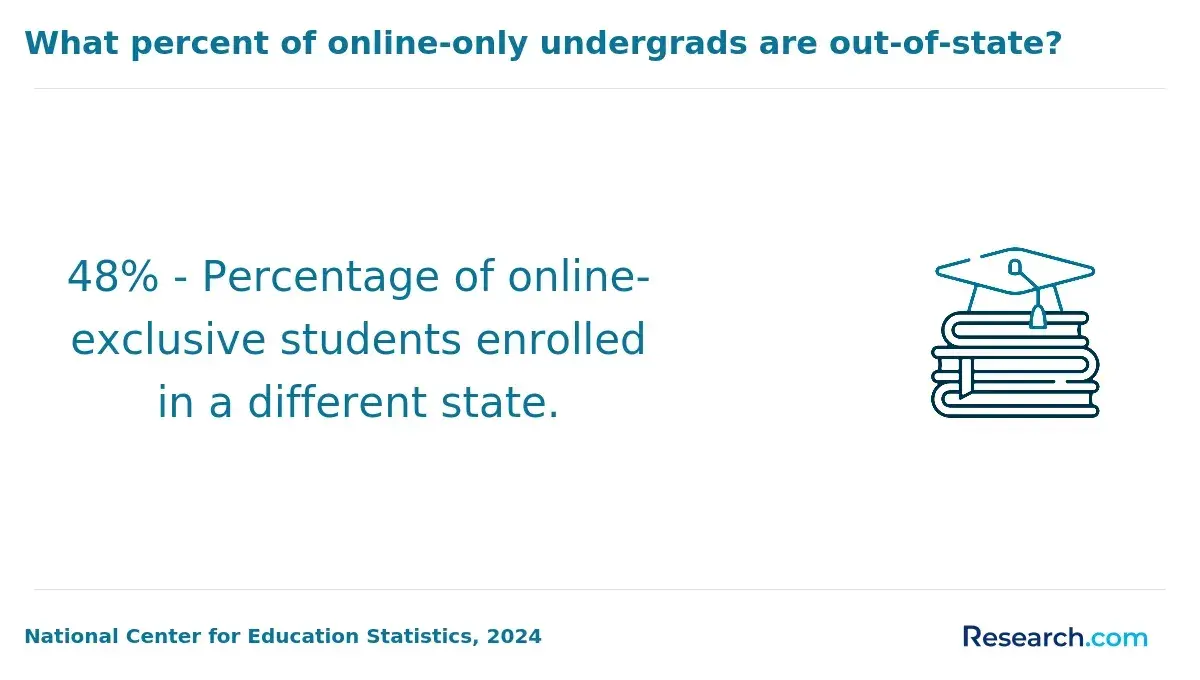
For most students, the safest starting point is an institution recognized by the U.S. Department of Education or the Council for Higher Education Accreditation. If you are considering an online school, a public university, a private nonprofit, or a private for-profit institution, do not rely on marketing language alone. Confirm accreditation directly through official databases and ask whether the specific program meets requirements in your state.
Institution type can influence mission, pricing, governance, and student support, but it does not automatically determine quality or return on investment. If you are comparing online options, reviewing a vetted list of accredited non profit university choices can be useful, but you should still verify program fit, transfer rules, and cost.
Common accreditation red flags include vague claims such as "nationally recognized," pressure to enroll immediately, refusal to provide accreditation details in writing, and programs that do not meet licensure standards in the state where you plan to work. If a school cannot clearly answer accreditation questions, treat that as a serious warning sign.
How do online and campus programs compare for adult learners?
Online and campus programs can both work well for returning students, but they serve different needs. The better choice depends on your schedule, learning style, commute, field requirements, and need for hands-on support.
Online learning is often best for working adults who need flexibility, asynchronous coursework, and fewer commuting barriers. Campus programs may be better for students who need labs, clinical placements, studio work, networking, or in-person accountability. Hybrid programs can offer a middle ground, especially in healthcare, education, and technical fields.
The comparison below highlights practical differences that matter most to adult learners deciding between formats.
| Factor | Online program | Campus program | Best choice when |
| Schedule | Often asynchronous or evening-friendly | Usually tied to class meeting times | Online is better for rotating shifts or caregiving duties |
| Hands-on learning | May require local placements or short residencies | Labs and facilities are usually on site | Campus or hybrid is better for lab-heavy fields |
| Support | Depends heavily on virtual advising and response times | Face-to-face offices may be easier to access | Choose the school with stronger advising, not just the format you prefer |
| Networking | Can be strong when programs include cohorts, projects, and employer events | Often easier through campus clubs, faculty access, and local recruiting | Campus may help if your target industry hires locally |
| Cost | May reduce commuting, housing, and childcare-related expenses | May include more campus-based fees | Compare total cost, not only tuition per credit |
A common mistake is assuming online automatically means easier. Strong online programs still require weekly deadlines, writing, exams, projects, and communication with instructors. Before enrolling, ask for a sample course shell or orientation module so you can judge whether the platform and workload fit your routine.
What admission requirements do returning students usually face?
Admission requirements for returning students vary by school and degree level, but most colleges focus on prior transcripts, academic standing, residency status, and readiness for the program. If you left college years ago with a low GPA, you may still have options through academic renewal, provisional admission, community college pathways, or adult degree-completion programs.
Most returning undergraduates should expect to gather several documents and complete a few placement or advising steps. These requirements help the school decide what credits apply and whether you need prerequisite coursework.
- Official transcripts from every college previously attended, even if credits are old or grades were low.
- High school transcript or GED documentation, especially if you have limited college credit.
- Placement testing or course placement review for math, writing, or science prerequisites.
- Program-specific requirements such as background checks, immunizations, portfolios, entrance exams, or prerequisite grades.
- Financial aid forms, residency documentation, and any military, employer training, or professional certification records you want evaluated.
Graduate programs usually add requirements such as a completed bachelor's degree, minimum GPA, resume, statement of purpose, recommendation letters, and sometimes professional experience. Some programs have dropped standardized test requirements, but you should verify this with each school rather than assuming it applies everywhere.
If your academic record is uneven, be direct with admissions and advising staff. Ask whether the school offers academic forgiveness, probationary admission, success coaching, or a first-term course load designed for returning adults. A realistic re-entry plan is better than an aggressive schedule that risks another stop-out.
How long does it take to finish a degree after returning?
The time it takes to finish depends on your remaining credits, enrollment intensity, transfer policy, course availability, and whether the program requires clinicals, student teaching, internships, or capstone projects. A bachelor's degree usually requires about 120 credits, while an associate degree usually requires about 60 credits, but your actual timeline depends on how many credits count toward your new program.
Adult students often choose part-time enrollment, which can reduce stress but extend the calendar. Full-time study can shorten the timeline, but it may be harder to sustain with work and caregiving. Accelerated terms can help motivated students move faster, but they compress deadlines and may not be ideal if you have been away from school for a long time.
The table below summarizes common timelines. Use it as a planning estimate, not a promise, because every school applies transfer credits differently.
| Credential | Typical credits required | Common returning-student timeline | What can shorten it |
| Certificate | Varies widely | A few months to one year | Industry experience, prior coursework, and focused curriculum |
| Associate degree | About 60 credits | One to three years | Transfer credits, summer courses, and accelerated terms |
| Bachelor's completion | About 120 total credits | One to four years after transfer review | Large block transfer, generous elective policy, and continuous enrollment |
| Master's degree | Often 30 to 60 credits | One to three years | Part-time-friendly sequencing and year-round course availability |
If speed is your main priority, review whether an accelerated associate degree fits your background and schedule. Fast programs can be valuable, but they are not the right choice if you need extensive academic support, developmental coursework, or a slower transition back into studying.
How much does college cost for returning students?
College costs for returning students include more than tuition. You also need to account for fees, books, technology, transportation, childcare, lost work hours, exam fees, background checks, clinical supplies, and interest if you borrow. The right comparison is total out-of-pocket cost after grants, scholarships, employer assistance, transfer credits, and time to completion.
College Board's 2024-25 published price data gives a useful national baseline for tuition and fees before aid. Public two-year colleges averaged $4,050 for in-district students, public four-year colleges averaged $11,610 for in-state students, and private nonprofit four-year colleges averaged $43,350. These figures do not mean every student pays that amount, but they show why institution type, residency, and credit transfer can change affordability dramatically.
The table below shows major cost drivers returning students should compare before enrolling.
| Cost factor | Why it matters | Question to ask |
| Tuition per credit | Part-time students are often charged by credit hour | What is the full tuition cost for my remaining credits? |
| Mandatory fees | Online, technology, graduation, lab, and student service fees can add up | Which fees apply to online or part-time students? |
| Transfer credit acceptance | Lost credits can force you to pay for repeated courses | How many credits apply to my major, not just electives? |
| Course availability | Delayed required courses can extend enrollment and cost | Are required courses offered every term? |
| Financial aid and employer support | Grants and tuition assistance can reduce borrowing | Which aid sources can I combine? |
Graduate students should be especially careful because tuition can vary widely and federal grant aid is more limited than at the undergraduate level. If you are comparing master's options, researching what is the cheapest online master's degree program can help you build a cost benchmark before speaking with schools.
Avoid focusing only on the lowest tuition. A slightly higher-cost program may be a better value if it accepts more transfer credits, offers stronger advising, meets licensure rules, and lets you finish sooner. Conversely, an expensive program may be a poor fit if it does not connect clearly to your target job.
What credits or prior learning can transfer to a new program?
Transfer credit can be the biggest advantage returning students bring to college. Schools may evaluate prior college courses, military training, workplace learning, professional certifications, standardized exams, and portfolio-based prior learning. However, credits do not automatically transfer into your major, and old credits in fast-changing fields may be limited.
The most important distinction is between credits accepted by the institution and credits that apply to your degree plan. A school may accept many credits as electives but still require you to complete major prerequisites, upper-division courses, or residency credits at that institution.
Ask for a written transfer evaluation before committing. The following items are worth reviewing because they often determine whether you save meaningful time and money.
- Maximum number of transfer credits allowed toward the degree.
- Minimum grade required for courses to transfer.
- Whether technical, vocational, military, or professional training credits are accepted.
- Whether older science, technology, accounting, or healthcare credits must be repeated.
- How many upper-division, major, and residency credits must be completed at the new school.
- Whether credit-by-exam, portfolio assessment, or prior learning assessment is available.
Some adult-friendly colleges also offer a competency-based degree, where progress is based on demonstrated mastery rather than traditional seat time. This can work well for students with strong professional experience, but it requires self-discipline and may not be ideal for learners who need frequent live instruction.
A common mistake is enrolling before the transfer evaluation is complete. If a school says it will review your credits later, ask what happens if fewer credits apply than expected and whether you can withdraw without financial penalty.
What jobs and salaries can returning students expect?
Jobs and salaries after returning to college depend on the degree, prior experience, location, industry, certifications, and whether you are entering a new field or advancing in one you already know. A returning student with years of work experience may be able to combine the new credential with management, communication, customer service, military, technical, or healthcare experience in ways that a traditional new graduate cannot.
The U.S. Bureau of Labor Statistics reported May 2024 median annual wages of $81,680 for accountants and auditors, $93,600 for registered nurses, $105,990 for software developers, and $117,960 for medical and health services managers. These figures describe occupations, not guaranteed outcomes for degree holders, but they help show why matching the degree to a specific labor market matters.
The table below connects common adult-learner goals with possible education paths and career directions. Use it to think about fit, then verify requirements in your state and local labor market.
| Goal | Possible credential | Example roles | Important considerations |
| Move into healthcare | Associate, bachelor's, or graduate clinical program | Registered nurse, healthcare administrator, health information specialist | Licensure, clinical placement, background checks, and program approval matter |
| Advance in business | Bachelor's in business, accounting, management, or MBA | Accountant, operations manager, HR specialist, analyst | Experience, software skills, and industry knowledge strongly affect outcomes |
| Enter technology | IT certificate, associate, bachelor's, or applied computing degree | Support specialist, cybersecurity analyst, software developer | Portfolios, certifications, projects, and current tools may matter as much as the degree |
| Change into education or counseling | State-approved bachelor's or graduate program | Teacher, school counselor, social worker, mental health counselor | State licensure and supervised hours are often required |
| Finish a general degree for promotion | Bachelor's completion program | Supervisor, coordinator, public sector role, nonprofit administrator | Best when the employer requires a degree for advancement |
AI and automation are changing job tasks, but they do not eliminate the need for human judgment, communication, ethics, leadership, and field expertise. Returning students should look for programs that build durable skills such as data interpretation, writing, collaboration, project management, and responsible technology use.
The strongest career plan combines the credential with proof of ability. That may include internships, supervised practice, a portfolio, industry certifications, capstone projects, employer tuition partnerships, or internal promotion conversations before graduation.
How do I verify licensing or certification requirements for my field?
Licensing and certification requirements vary by occupation and state, so returning students should verify them before choosing a program. This is especially important for nursing, teaching, counseling, social work, psychology, accounting, law enforcement, real estate, engineering, and many allied health fields.
The safest approach is to confirm requirements with the official state board or licensing agency for the state where you plan to work. School admissions staff can explain their program, but the licensing board determines eligibility.
Use these steps before enrolling in any program tied to licensure or certification:
- Identify the exact license, certification, or credential required for your target role.
- Find the official state licensing board or professional regulator for that occupation.
- Confirm required degree level, approved program status, exams, supervised hours, background checks, and renewal rules.
- Ask the school for written confirmation that the program meets educational requirements in your state.
- If you may move, check whether the credential transfers across states or whether additional requirements apply.
- Save documentation of the program's approval status at the time you enroll.
A major red flag is any program that says licensing is "up to the student" but cannot clearly explain whether its curriculum satisfies educational requirements. That does not always mean the program is low quality, but it does mean you carry more risk if your career goal requires state approval.
Other Things You Should Know About
No. Many colleges have adult learner, transfer, and degree-completion pathways. The key is choosing a program that fits your schedule, accepts useful credits, and connects to a clear career or personal goal.
Finish the old degree if many credits still apply and it supports your goal. Start a new path if the old major no longer fits your career plan, credits are outdated, or a different credential is required for licensure or advancement.
Often, yes. Eligibility depends on factors such as degree level, enrollment status, prior aid use, academic progress, and the school's participation in federal aid programs. Complete the FAFSA and ask about grants, scholarships, employer tuition assistance, and payment plans.
The biggest mistake is enrolling before confirming accreditation, transfer credits, total cost, and career requirements in writing. A short planning phase can prevent repeated courses, unexpected debt, and a credential that does not match the intended job.
References
- How the College Credit Transfer Process Works and How it Can Be Improved | ACE Blog https://ace.edu/blog/how-the-college-credit-transfer-process-works-and-how-it-can-be-improved/
- The Importance of Understanding Transfer Credit Policies https://www.sophia.org/blog/higher-education/understanding-transfer-credit-policies/
- How to Transfer Credits and Maximize What You’ve Already Done - ReUp Education https://reupeducation.com/blog/how-to-transfer-credits-and-maximize-what-youve-already-done/
- Choose the Right Major for Career Success | Professional Guidance | Exeed ECX https://myexeed.com/how-to-choose-the-right-major-for-your-career-goals/
- Verification https://madpl.mylicense.com/Verification/
- How Long Does It Take to Finish College as an Adult? https://abound.college/finishcollege/advice/how-long-does-it-take-to-finish-college/
- College Transfer Pathways & Credit Agreements in Maine | MCCS https://www.mccs.me.edu/guidance-support/path-to-transfer/
- Adults can return to college, finish, and thrive—with a little support https://www.luminafoundation.org/news-and-views/adults-can-return-to-college-finish-and-thrive-with-a-little-support/
- Returning to Education as an Adult: What to Expect When Going Back to College | Innopharma Education https://www.innopharmaeducation.com/blog/returning-to-education-as-an-adult-what-to-expect-when-going-back-to-college
- 5 Tips for Adults Returning to College https://www.cvtc.edu/news-events/blog/5-tips-for-adults-returning-to-college