2027 Best Online Exercise Science Degrees for Jobs

Co-Founder and Chief Data Scientist
The right online exercise science degree should do more than fit your schedule. It should prepare you for real roles in fitness, wellness, rehabilitation support, coaching, health promotion, or graduate study while protecting you from programs with weak accreditation, limited practical training, or poor career value. That decision matters because exercise and fitness occupations are projected by the Bureau of Labor Statistics to grow 16% from 2022 to 2032, but not every degree carries the same weight with employers, certification bodies, or graduate schools.
This guide explains how to judge online exercise science programs by the factors that affect job readiness: accreditation, curriculum quality, hands-on learning, cost, completion time, admissions requirements, salaries, and career paths. It is written for first-time college students, transfer students, working adults, military learners, fitness professionals, and career changers who want a flexible degree without sacrificing credibility or practical preparation.
Key Things to Know About the Best Online Exercise Science Degrees for Jobs
- Accreditation by organizations like CAATE ensures programs meet quality standards-graduates benefit from recognized credentials that enhance employability in competitive health sectors.
- Curriculum rigor-top programs combine biomechanics, physiology, and research methods, preparing students for diverse roles and advanced certifications.
- Cost and return on investment-average annual tuition ranges widely, but graduates typically see employment rates above 85%, validating upfront expenses through solid career prospects.
What Is a Exercise Science Degree, and What Can It Do for Your Career?
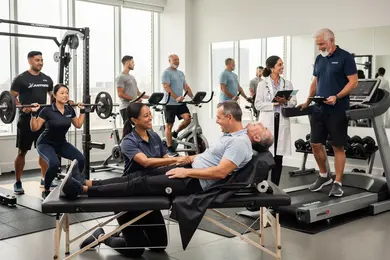
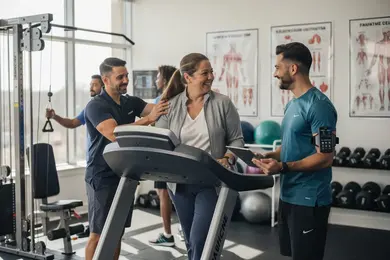
An exercise science degree studies how the human body moves, adapts, performs, and recovers. The field combines anatomy, physiology, kinesiology, biomechanics, nutrition, psychology, and health behavior. Students learn how to assess fitness, design exercise programs, reduce injury risk, support rehabilitation goals, and apply evidence-based strategies to improve health or performance.
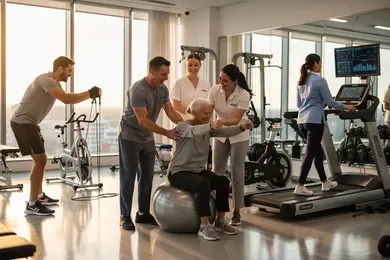
The degree can lead directly to roles in fitness, wellness, coaching, and rehabilitation support. It can also serve as preparation for graduate programs in physical therapy, occupational therapy, athletic training, exercise physiology, public health, or related clinical fields. The best option depends on whether your goal is immediate employment, certification eligibility, graduate school preparation, or advancement in a current health and fitness role.
Core areas you should expect to study
- Human movement and body systems: Anatomy, physiology, kinesiology, and biomechanics explain how muscles, joints, energy systems, and body mechanics work during exercise.
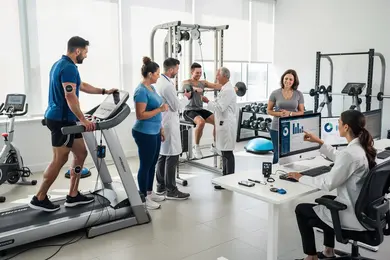
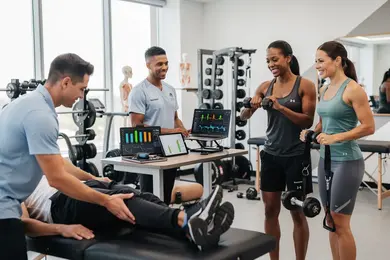
- Exercise testing and prescription: Students learn how to assess fitness levels, interpret basic performance data, and design safe exercise programs for different populations.
- Health, nutrition, and behavior change: Coursework often covers nutrition principles, chronic disease risk, motivation, coaching communication, and behavior-change strategies.
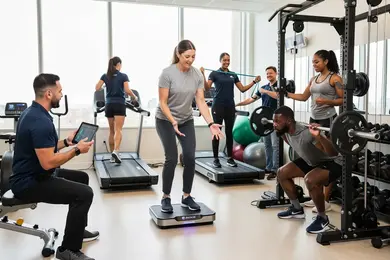
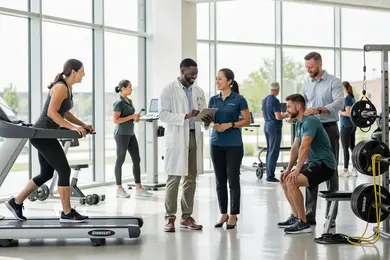
- Applied practice: Strong programs include labs, fieldwork, internships, practicums, case studies, or capstone projects that connect science to workplace decisions.
Common degree levels
| Degree level | Best fit | Typical career or academic use |
| Associate degree | Students seeking a faster, lower-cost entry point | Fitness support roles, transfer into a bachelor's program, exercise technician pathways |
| Bachelor's degree | Students who want broad job readiness and graduate school options | Personal training, coaching, corporate wellness, health promotion, rehabilitation aide roles, preparation for advanced study |
| Master's degree | Professionals seeking specialization or advancement | Clinical exercise physiology, strength and conditioning, wellness leadership, research support, advanced certification preparation |
| Doctoral degree | Students pursuing research, academic, or senior leadership roles | University teaching, research, advanced professional leadership, clinical research pathways |
Online pathways are especially useful for learners who need flexibility, but students should look closely at whether the program includes practical experience, qualified faculty, and recognized accreditation. If you are comparing related flexible programs, an online exercise physiology degree can be useful to review alongside broader exercise science options. Students considering a major career change into healthcare may also find it helpful to compare admission expectations in related fields, such as the easiest nursing program to get into.
How Do Online Exercise Science Degree Programs Compare to Traditional Campus Programs?
Online exercise science programs can be academically comparable to campus programs when they are properly accredited, taught by qualified faculty, and built with meaningful applied learning. The main difference is not always quality; it is how students complete labs, practicums, peer interaction, and faculty support. A strong online program plans for these needs instead of treating them as afterthoughts.
| Factor | Online programs | Campus programs |
| Schedule flexibility | Usually stronger for working adults, caregivers, military learners, and students outside commuting range | Often better for students who can attend fixed class times and use campus resources regularly |
| Curriculum depth | Can match campus rigor when accreditation, syllabi, labs, and assessments are well designed | Often easier to verify through in-person labs, facilities, and established faculty access |
| Hands-on training | May use local placements, virtual labs, short residencies, or supervised fieldwork | Usually offers easier access to labs, equipment, and in-person demonstrations |
| Faculty and peer interaction | Depends heavily on live sessions, advising, discussion quality, response time, and cohort design | More natural informal contact before and after class, in labs, and through campus events |
| Employer perception | Generally strongest when the degree is accredited and includes documented practical experience | Often familiar to local employers, especially if the school has long-standing internship networks |
The biggest risk in an online exercise science program is weak experiential training. Exercise science is applied; students need practice with assessment, programming, coaching communication, and professional judgment. Before enrolling, ask how labs work, where internships are completed, who approves local sites, and whether the school helps secure placements or leaves students to find them alone.
Campus programs may be the better fit for students who learn best through frequent in-person demonstrations or who want access to athletic facilities, labs, and local internship networks. Online programs may be better for students who already work in fitness, healthcare, coaching, military service, or wellness and need a degree that fits around existing responsibilities.
Students comparing healthcare-related online degrees should also examine how each field handles practical training and leadership preparation. For example, a health care administration masters has different applied requirements and career outcomes than an exercise science degree, even though both can support advancement in health-related settings.
What Are the Accreditation Standards That Define a Reputable Online Exercise Science Degree?
Accreditation is one of the first filters students should apply when evaluating an online exercise science degree. It helps confirm that a school meets accepted academic standards and that the degree is more likely to be recognized by employers, graduate programs, financial aid systems, and certification organizations.
Institutional accreditation
Regional accreditation is widely treated as the benchmark for U.S. colleges and universities. It reviews the institution as a whole, including academic quality, faculty credentials, governance, student support, and financial stability. Key regional accreditors include Middle States Commission on Higher Education, New England Commission of Higher Education, Higher Learning Commission, Southern Association of Colleges and Schools Commission on Colleges, and Western Association of Schools and Colleges.
Programmatic accreditation
Programmatic accreditation evaluates a specific academic area. In allied health and exercise-related fields, the Commission on Accreditation of Allied Health Education Programs (CAAHEP) is a major accrediting body. Programmatic accreditation can be especially important when students plan to pursue professional certifications, clinical roles, or graduate study that expects specific coursework or supervised experience.
Why accreditation matters
- Financial aid: Federal financial aid is generally tied to attendance at an eligible accredited institution.
- Credit transfer: Regionally accredited schools are typically more likely to accept transfer credits from other accredited institutions.
- Graduate school: Advanced programs may reject applicants from unaccredited or poorly accredited schools.
- Employer confidence: Accreditation gives employers a clearer signal that the degree met recognized academic standards.
- Certification and licensure planning: Some credentials and state-regulated pathways require specific coursework, supervised hours, or accredited program completion.
Students should verify accreditation directly rather than relying on logos, marketing language, or vague claims on a program website. Use the U.S. Department of Education's Database of Accredited Postsecondary Institutions and Programs and the Council for Higher Education Accreditation (CHEA) directory to search by school or program name. If a school cannot clearly explain its accreditation status, that is a warning sign.
One graduate described accreditation review as the step that made the decision feel safe: “I remember feeling overwhelmed by all the seals and certificates,” he said, “but confirming the program's regional accreditation through the CHEA directory gave me real peace of mind.” His advice was direct: do not choose a program based only on price, convenience, or speed if the accreditation does not support your career goal.
Which Types of Exercise Science Degrees Are Available Online-Bachelor's, Master's, or Doctoral?
Online exercise science degrees are available at several levels, and each serves a different purpose. The right level depends on your current education, desired job title, need for certification preparation, and whether you plan to continue into graduate or professional school.
| Program type | Common length | Typical applicant | Best use |
| Associate's degree | About two years | High school graduates or students seeking a lower-cost start | Entry-level fitness roles, rehabilitation support work, or transfer into a bachelor's degree |
| Bachelor's completion program | 1-2 years | Students with prior credits or an associate degree | Finishing a four-year credential for career advancement or graduate school preparation |
| Master's degree | 1.5 to 3 years | Bachelor's degree holders seeking specialization | Clinical exercise physiology, strength and conditioning, research, administration, or advanced professional roles |
| Doctoral program | 3-6 years | Professionals pursuing research, academic, or senior clinical careers | Dissertation research, teaching, leadership, or advanced applied expertise |
| Post-baccalaureate certificate | Short, specialized format | Bachelor's degree holders who need focused training | Credential upgrades, specialization, or stackable credits toward a master's degree |
Associate's programs can be useful for students who want a faster start, but many professional pathways require at least a bachelor's degree. Bachelor's programs provide the broadest foundation for fitness, wellness, coaching, and graduate school preparation. Bachelor's completion programs are especially practical for transfer students because they may reduce time and cost when prior credits are accepted.
Master's degrees are best for students who already know their specialization. These programs may include online coursework with local practicums, allowing students to advance without relocating. Doctoral programs are more research-intensive and often include dissertation requirements, asynchronous study, and brief on-campus residencies. Students who are comparing doctoral formats in health fields may find similar structural considerations in a nursing PhD.
IPEDS data confirms bachelor's degrees are the most pursued online exercise science degree options, with average completion around four years including transfer credits. Students should still verify whether a program is designed for first-time college students, transfer students, or degree completers, because that distinction affects admissions, course sequencing, financial aid, and graduation timelines.
What Is the Typical Cost of an Online Exercise Science Degree, and How Can You Finance It?
The cost of an online exercise science degree depends on school type, residency status, tuition model, transfer credits, and required in-person components. Public universities are often the lowest-cost option for in-state students, while private and for-profit schools can be substantially more expensive.
| School type or status | Typical annual tuition stated | Cost considerations |
| Public in-state | $4,500 to $10,000 per year | Often the most affordable route if you qualify for resident tuition |
| Public out-of-state | $12,000 to $20,000 annually | May still be competitive if the school offers online tuition rates or reciprocity |
| Private nonprofit | $15,000 and $30,000 per year | Scholarships and institutional aid can change the actual net price |
| For-profit college | Can exceed $30,000 annually | Students should carefully compare accreditation, outcomes, transfer policies, and debt risk |
Costs beyond tuition
- Technology and online platform fees: These may apply per course, term, or program.
- Textbooks and learning materials: Science courses may require lab kits, software, or digital resources.
- Application and graduation fees: These smaller charges can add up across multiple applications and completion steps.
- Residency or practicum costs: Travel, lodging, background checks, immunization records, liability insurance, or site fees may be required for hands-on components.
- Certification exam costs: Some graduates pursue professional certifications after the degree, which may require separate exam and membership fees.
Ways to finance the degree
- Federal financial aid: Eligible students may use Pell Grants, subsidized federal loans, unsubsidized federal loans, or other federal aid options after completing the FAFSA.
- Veterans benefits: Veterans and eligible military-connected students may use GI Bill benefits when the institution and program qualify.
- Scholarships: Colleges, professional organizations, state workforce programs, and local foundations may offer awards for health, fitness, science, or allied health students.
- Employer tuition assistance: Some fitness centers, hospitals, school systems, wellness companies, and public agencies help employees pay for job-related education.
- Transfer credits: Accepted credits from prior college study can reduce total cost more effectively than a small per-credit discount.
Students should compare total program cost, not only per-credit tuition. A low tuition rate can become less attractive if the program accepts few transfer credits, requires expensive travel, or lacks career support. Use each school's net price calculator and ask for a written estimate that includes fees, expected credits, and any required in-person expenses.
One graduate who completed an online exercise science degree said the biggest surprise was not tuition but the smaller expenses: technology fees, occasional travel for hands-on requirements, and certification-related costs. Their advice was to apply early for aid, keep a spreadsheet of deadlines, and build a budget that includes practical training requirements from the beginning.
How Long Does It Take to Complete an Online Exercise Science Degree Program?
Completion time depends on degree level, enrollment status, transfer credits, course availability, and whether the program requires supervised fieldwork. Advertised timelines are useful, but students should ask how long similar online learners actually take to finish.
| Degree level | Typical full-time timeline stated | What can change the timeline |
| Associate degree | About two years | Developmental coursework, part-time enrollment, or transfer planning |
| Bachelor's degree | Around four years | Prior credits, course sequencing, major prerequisites, and practicum requirements |
| Master's program | Two to three years | Thesis or capstone requirements, practicum placement, and work schedule |
| Doctorate | Three to five years | Dissertation pace, research expectations, residency requirements, and advisor availability |
Factors that can shorten completion time
- Transfer credits: Prior college coursework can reduce the number of required credits when accepted by the program.
- Articulation agreements: Community college pathways into four-year universities may make transfer smoother and reduce credit loss.
- Year-round enrollment: Programs with summer or multiple start terms may help students avoid long breaks.
- Accelerated terms: Shorter academic sessions can help motivated students complete courses faster, though the workload can be intense.
- Prior learning assessment: Some schools award credit for documented work, military, or professional learning when it matches academic outcomes.
Factors that can extend completion time
- Part-time study: Many online learners balance school with jobs, family, or military service, which can lengthen the schedule.
- Science prerequisites: Anatomy, physiology, biology, or statistics may need to be completed before advanced courses.
- Practicum availability: Field placements can delay graduation if local sites are limited or approval takes time.
- Course rotation: Some required courses may be offered only in specific terms.
- Financial aid rules: Students must maintain satisfactory academic progress (SAP) and stay within program length limits to remain eligible for aid.
Before enrolling, ask for a personalized degree plan showing accepted transfer credits, required prerequisites, practicum timing, and the earliest realistic graduation date. This is especially important for working adults who can take only one or two courses at a time.
What Core Curriculum and Coursework Should a Quality Online Exercise Science Program Include?
A quality online exercise science program should teach both the science of human movement and the practical skills needed to apply that science responsibly. Strong curricula align with expectations from organizations such as the Commission on Accreditation of Allied Health Education Programs (CAAHEP) and the National Strength and Conditioning Association (NSCA), while also preparing students for the realities of client assessment, program design, communication, and ethical practice.
Core subjects to look for
- Anatomy and physiology: Essential for understanding body systems, movement, adaptation, and injury risk.
- Kinesiology and biomechanics: Focuses on movement mechanics, joint function, force, posture, and performance.
- Exercise physiology: Explains how the body responds and adapts to acute and long-term exercise.
- Exercise testing and prescription: Teaches assessment, goal setting, program planning, monitoring, and progression.
- Nutrition: Provides a foundation for performance, weight management, health behavior, and client education within appropriate scope of practice.
- Motor learning and development: Covers how people acquire movement skills and how programming changes across age groups and ability levels.
- Rehabilitation and injury prevention: Introduces corrective strategies, recovery principles, and collaboration with healthcare professionals.
- Research methods and statistics: Helps students interpret evidence instead of relying on trends, assumptions, or marketing claims.
Applied learning components
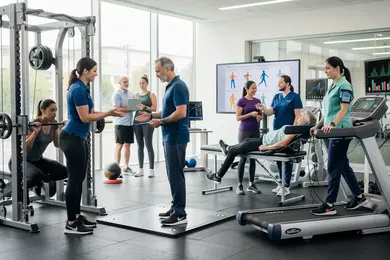
Because exercise science is a hands-on field, online programs should include more than recorded lectures and quizzes. Look for virtual labs, video-based skill demonstrations, case studies, local field experiences, internships, practicums, or capstone projects. These experiences help students connect theory to real decisions, such as modifying an exercise plan for a client with limitations or interpreting basic assessment results responsibly.
Competencies graduates should develop
- Scientific literacy: Ability to read research and apply evidence to fitness, wellness, and rehabilitation-related decisions.
- Technical skill: Understanding of assessment tools, exercise testing procedures, and program design methods.
- Ethical judgment: Awareness of professional boundaries, referral needs, client safety, and data privacy.
- Communication: Ability to explain complex concepts clearly to clients, athletes, patients, families, and interdisciplinary teams.
- Critical thinking: Ability to adjust exercise strategies based on goals, risk factors, progress, and emerging evidence.
Prospective students should request a sample course sequence, detailed syllabi, faculty qualifications, practicum expectations, and an outcomes map showing how courses build toward job or certification readiness. Employment in Exercise Science-related fields is projected to grow by 9% from 2022 to 2032, so programs should prepare students for evolving needs such as remote coaching, data-informed wellness programming, and collaboration across health professions.
Which Online Exercise Science Programs Offer the Best Return on Investment for Working Adults?
The best return on investment for working adults usually comes from accredited programs that combine reasonable cost, strong transfer policies, practical experience, employer recognition, and transparent outcomes. A low tuition price is helpful, but it is not enough if the program lacks career support, accepts few credits, or does not prepare students for the roles they want.
ROI factors working adults should compare
- Total net cost: Include tuition, fees, books, technology charges, travel for residencies, practicum costs, and certification expenses.
- Transfer credit acceptance: A school that accepts more relevant credits may cost less overall than one with lower tuition but stricter transfer limits.
- Schedule design: Flexible asynchronous courses may help working adults stay enrolled, while required live sessions may support accountability and interaction.
- Practical experience: Internships, practicums, and local fieldwork can improve job readiness and employer confidence.
- Career services: Look for resume help, internship coordination, certification guidance, alumni networks, and employer partnerships.
- Graduate earnings: Median salaries measured at six and ten years after enrollment provide useful context when comparing outcomes.
- Loan default rates: Lower default rates may indicate that graduates are managing debt more successfully relative to earnings.
Public universities often offer strong value because they may combine lower tuition, recognized accreditation, broad alumni networks, and established employer relationships. However, the best choice is not automatically the cheapest school. A program with better advising, field placement support, and accepted transfer credits may deliver a stronger outcome even if the listed tuition is higher.
Career changers, military veterans, and professionals already working in fitness or healthcare should ask whether the program awards credit for prior learning, offers flexible pacing, and helps students turn existing experience into stronger employment outcomes. Students comparing affordability and ROI across health-related online programs may also review a health information technology associate degree online to see how cost, credentials, and career pathways differ by field.
What Admissions Requirements Do the Top Online Exercise Science Programs Typically Require?
Admissions requirements vary by degree level and school selectivity. Community college and bachelor's programs may be accessible to first-time students, while master's and doctoral programs often require stronger academic preparation, prerequisite coursework, and relevant experience.
Common undergraduate admissions requirements
- High school diploma or equivalent: Typically required for associate and bachelor's entry.
- Transcripts: Schools review prior high school and college work, especially for transfer students.
- Minimum GPA: Requirements vary, and selective programs may expect stronger academic records.
- Prerequisites: Some programs require or recommend biology, anatomy, physiology, algebra, statistics, or related science courses.
- Placement or readiness assessments: Some institutions may evaluate math, writing, or science readiness before course placement.
Common graduate admissions requirements
- Bachelor's degree: Usually required for master's programs, often from an accredited institution.
- Minimum GPA: Most competitive programs require a minimum undergraduate GPA between 3.0 and 3.5, though some may consider applicants with lower GPAs if other application materials are strong.
- Standardized tests: Graduate-level programs often request GRE scores, but an increasing number have adopted test-optional policies.
- Letters of recommendation: Programs commonly ask for two or three letters from faculty, supervisors, or professionals who can speak to academic readiness and work ethic.
- Personal statement: Applicants usually explain their motivation, relevant background, and career goals.
- Professional experience: Experience in fitness, coaching, healthcare, wellness, research, or related fields may be required or strongly recommended.
- Prerequisite coursework: Applicants without an exercise science background may need anatomy, physiology, biomechanics, nutrition, or related foundational courses.
How to strengthen your application
- Match your goals to the program's strengths instead of applying only because a program is online.
- Complete missing prerequisites before applying when possible.
- Ask recommenders who can provide specific examples of your academic ability, professionalism, or client-facing skills.
- Use the personal statement to connect your experience to a clear career path.
- Confirm current GPA, test, and prerequisite rules directly with admissions because policies change frequently.
Applicants considering related nutrition-focused paths should compare prerequisites carefully, since an online dietician program may have different science, supervised practice, and credentialing expectations than exercise science.
What Career Paths and Job Titles Are Available to Online Exercise Science Degree Graduates?
Online exercise science graduates can pursue roles in fitness, wellness, coaching, rehabilitation support, health promotion, and research support. The degree is flexible, but job options depend heavily on degree level, certifications, practical experience, state rules, and whether the role is clinical or nonclinical.
Common entry-level and early-career roles
- Fitness specialist: Designs and leads exercise programs in gyms, wellness centers, corporate fitness programs, or community settings.
- Personal trainer: Works one-on-one with clients to support strength, conditioning, mobility, weight management, or general fitness goals.
- Group exercise instructor: Leads structured classes for general fitness, strength, conditioning, mobility, or specialized populations when appropriately trained.
- Strength and conditioning assistant: Supports athletic performance programming under experienced coaches or performance staff.
- Rehabilitation aide: Assists physical therapists, occupational therapists, or athletic trainers with basic exercise support and clinic operations.
- Health promotion coordinator: Helps plan wellness initiatives for employers, community organizations, public agencies, or healthcare-related organizations.
- Exercise physiologist (entry-level): Supports assessment and exercise programming in hospitals, rehabilitation clinics, sports medicine settings, or wellness programs where qualifications match employer requirements.
- Research assistant or coordinator: Supports studies related to human movement, performance, health outcomes, or exercise interventions.
Advanced or specialized pathways
- Clinical exercise physiologist: Often requires advanced coursework, supervised experience, and professional certification depending on employer and setting.
- Wellness program manager: Oversees corporate, community, or healthcare-based wellness programs after gaining experience.
- Fitness or facility director: Manages staff, programming, operations, safety procedures, and member services.
- Academic or research roles: Usually require graduate study, especially for independent research, teaching, or leadership positions.
- Preparation for licensed professions: Exercise science can support preparation for physical therapy, occupational therapy, athletic training, and similar graduate pathways, but the degree alone does not grant those licenses.
Many graduates start in direct service roles and move into management, specialization, or graduate study over five to ten years. For example, a fitness trainer may become a wellness program manager, or a rehabilitation aide may use clinical exposure to prepare for graduate school. Career growth is strongest when students combine the degree with internships, certifications, professional networking, and careful attention to scope of practice.
What Is the Salary Outlook for Professionals with an Online Exercise Science Degree?
Salary outcomes for exercise science graduates vary widely by job title, employer, degree level, certification, experience, and location. The phrase “online degree” is usually less important than whether the program is accredited, whether the graduate completed practical experience, and whether the role requires additional credentials.
Exercise physiologists typically see median wages near $50,000 annually. Fitness trainers and instructors have a median salary around $40,000, with higher earnings possible for experienced professionals, specialists, managers, or those working in stronger-paying markets.
Factors that affect earnings
- Degree level: Bachelor's graduates often qualify for entry-level professional roles, while master's degree holders or professionals with specialized certifications may see 15% to 30% higher wages.
- Experience: Pay usually increases as professionals build client outcomes, leadership responsibilities, technical skills, and employer trust.
- Industry sector: Hospitals and healthcare systems often pay differently than fitness centers, schools, community organizations, or private training businesses.
- Geographic market: Urban areas with strong healthcare and wellness demand may offer higher compensation than rural or less populated regions.
- Specialization: Cardiac rehabilitation, strength and conditioning, corrective exercise, corporate wellness, and clinical exercise physiology can improve job competitiveness when supported by appropriate credentials.
- Certification: Credentials such as Certified Exercise Physiologist (CEP), Certified Strength and Conditioning Specialist (CSCS), and American College of Sports Medicine (ACSM) certifications may strengthen salary prospects when they match the job.
Senior positions, including rehabilitation managers or program directors, often exceed $70,000 annually. However, students should treat salary figures as estimates rather than guarantees. Compensation changes with labor markets, local demand, employer budgets, and individual qualifications. Before enrolling, review current Bureau of Labor Statistics data, school outcome reports, job postings in your region, and certification requirements for the roles you want.
What Graduates Say About the Best Online Exercise Science Degrees for Jobs
- Arthur: "Choosing an online exercise science degree with strong accreditation standards made all the difference in how seriously employers considered my qualifications. The rigorous curriculum challenged me intellectually and prepared me well for the realities of the industry-this combination truly set the best programs apart. I wholeheartedly believe that investing in a certified, demanding program offers the best return on investment in the long run."
- Roger: "What stood out most to me was the practical experience requirements embedded within my online exercise science degree. Having hands-on opportunities-even remotely-gave me confidence entering the workforce. Plus, the student support infrastructure was top-notch, ensuring I never felt isolated despite the virtual format. Reflecting back, these elements shaped an enriching and career-focused education experience."
- Miles: "The career outcomes from my online exercise science program exceeded all expectations and motivated me every step of the way. Even though cost was a concern initially, the strong network and job placement assistance made it a worthwhile investment. Reviewing the curriculum rigor before committing helped me feel equipped to meet employer demands and grow professionally."
Other Things You Should Know About Exercise Science Degrees
The best online exercise science programs emphasize developing a strong foundation in human anatomy, physiology, and biomechanics. Graduates also gain skills in exercise testing, prescription, and program design tailored to diverse populations. Additionally, programs focus on critical thinking, data analysis, and communication skills essential for professional collaboration and effective client interaction.
Employers generally regard online exercise science degrees similarly to traditional ones when they come from regionally accredited institutions with rigorous curricula. The acceptance often depends on the program's accreditation and the candidate's practical experience. A strong practicum or internship component can enhance credibility and demonstrate hands-on skills valued by hiring managers.
Online exercise science programs typically require students to complete internships or practicum hours at approved local sites to gain real-world experience. These placements are arranged in consultation with program advisors to meet professional standards and certification eligibility. This hybrid approach ensures that students acquire clinical skills even while studying remotely.
References
- Kinesiology and Exercise Science Careers Guide https://teach.com/online-ed/healthcare-degrees/online-bachelors-kinesiology-exercise-science/career-outlook/
- Online Degree vs. Traditional: Choosing the Right Path https://beal.edu/online-degree-vs-traditional/
- Exercise Science https://online.pennwest.edu/programs/exercise-science/index.php
- Exercise Sciences https://www.caahep.org/committees-on-accreditation/exercise-science
- Exercise science: What exactly is it? https://www.scienceforsport.com/exercise-science/
- Top 20 Careers With a Master’s in Exercise Science | PLNU https://www.pointloma.edu/resources/health-sciences/top-20-careers-masters-exercise-science
- Online Exercise Science Program https://stmary.edu/online-programs/exercise-science.html
- Top 15 Affordable Exercise Science Degree Online Programs https://www.sports-management-degrees.com/affordable-online-bachelors-sports-science/
- What can I do with an Exercise Science degree? Jobs & Career Paths - Concordia University | Student Success Centre - Concordia University https://www.concordia.ca/students/success/career-planning/paths/exercise-science.html
- Exercise Science Degree Programs, Online Included for 2026 https://www.kinesiologydegrees.org/programs/exercise-science