2027 Can You Complete Exercise Science Clinicals Locally?

Co-Founder and Chief Data Scientist
Exercise science students often choose a program based on tuition, online flexibility, or career outcomes, but clinical placement logistics can determine whether the program is actually workable. If you need supervised hours, an internship, practicum, or field experience, the key question is simple: can you complete those requirements near home, or will you need to commute long distances or temporarily relocate?
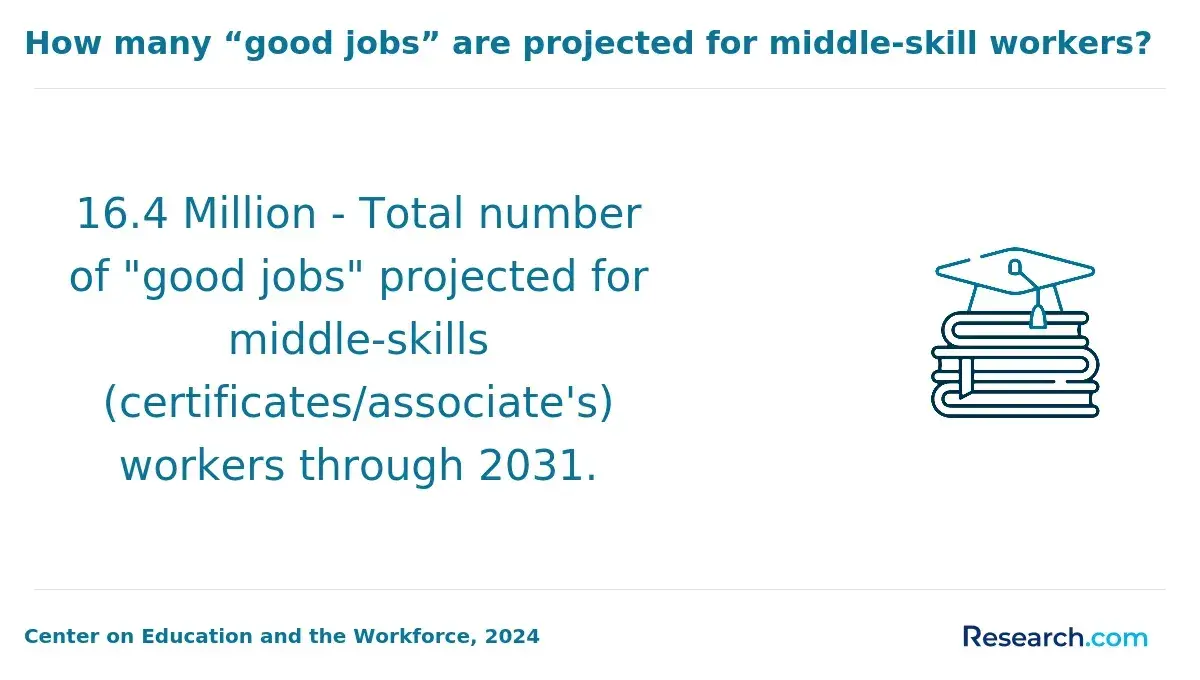
The answer depends on your school’s placement process, approved site network, state authorization rules, local facility capacity, and the kind of experience your degree requires. This matters for students balancing work, caregiving, transportation limits, and clinical schedules that may not follow a standard class timetable. According to the Bureau of Labor Statistics, employment in Exercise Science-related healthcare occupations is projected to grow 10% through 2032, which can increase demand for training sites in some regions.
This guide explains how local exercise science clinicals work, what can limit your options, what costs to expect, and how to evaluate a program before you enroll.
Key Things to Know About Completing Exercise Science Clinicals Locally
- Programs often coordinate with local healthcare facilities to arrange clinical placements, providing students with structured support and guidance throughout their supervised hours.
- Completing clinicals near home offers increased flexibility and convenience, reducing travel time and allowing students to balance work, study, and personal commitments effectively.
- Students must verify state licensure requirements, site availability, and program approval standards beforehand to ensure clinical hours will be recognized and meet accreditation criteria.
Can you complete exercise science clinicals near your home or hometown?
In many cases, yes. Exercise science clinicals, practicums, internships, or supervised field experiences can often be completed near your home or hometown if your program approves the site, the facility has qualified supervision, and state or institutional rules allow the placement. However, “near home” is not guaranteed. Students in areas with fewer hospitals, rehabilitation clinics, wellness centers, or approved preceptors may have to travel farther or accept a less convenient schedule.
Studies indicate that about 60% of healthcare students secure clinical rotations within 50 miles of their residence, which shows that local experiential learning is common but not universal. Your odds improve when you ask placement questions before enrolling rather than waiting until clinical assignments begin.
What determines whether a local placement is possible?
- School affiliation networks: Programs with existing agreements near your area can usually place students faster. If your school already works with nearby clinics, hospitals, fitness facilities, or rehabilitation centers, the approval process is less likely to delay your start date.
- Geographic location: Urban and suburban students often have more options because there are more healthcare and wellness employers. Rural students may still complete clinicals locally, but they may need to be flexible about facility type, schedule, or commute distance.
- State or regional requirements: Some placements must satisfy state authorization, program approval, accreditation, or professional preparation standards. A convenient site is not usable unless it meets those requirements.
- Approved facility availability: A site must offer appropriate learning experiences, safe supervision, and documentation. A general gym, for example, may not qualify if the program requires exposure to clinical exercise testing, rehabilitation, or patient-centered care.
- Placement coordination: Even when a site is nearby, schools may need formal agreements, background checks, orientation steps, and supervisor verification before you can count hours there.
A practical first step is to ask the program for its placement policy in writing. Find out whether the school assigns sites, whether students may propose their own sites, how far students are expected to travel, and what happens if no approved local site is available. Students comparing clinical training options in related healthcare fields may also find it useful to review the fastest way to become a medical assistant to understand how supervised training requirements can vary by program type.
How do exercise science clinical placements work?
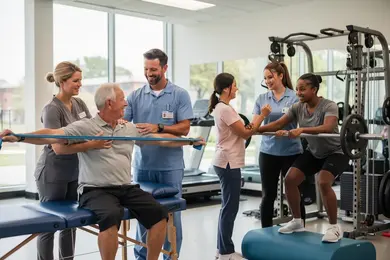
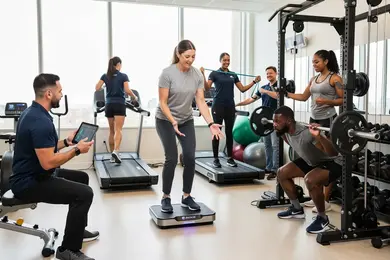
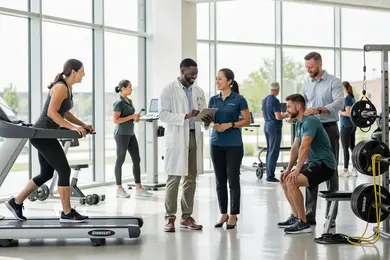
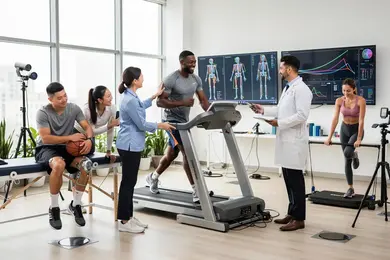
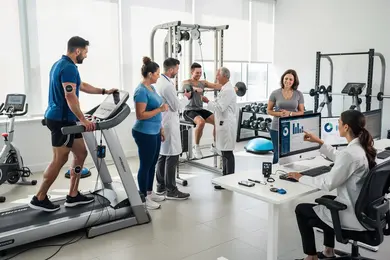
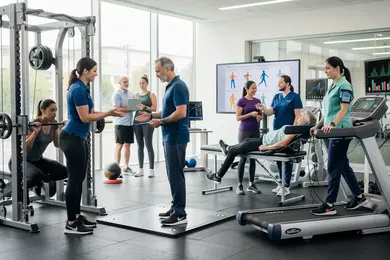
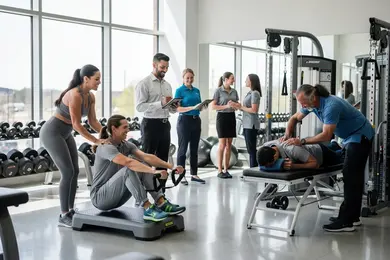
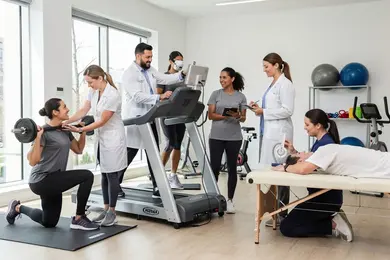
Exercise science clinical placements are structured learning experiences that let students apply coursework in real professional settings. Depending on the program, the experience may be called a clinical, internship, practicum, fieldwork placement, or supervised experience. The purpose is usually the same: to build practical skills under qualified supervision and document that students have met required competencies or hours.
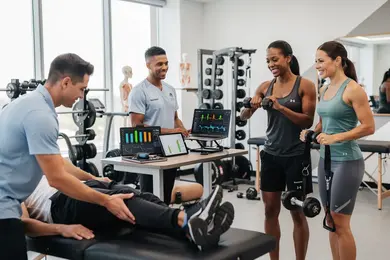
Approximately 70% of students in healthcare-related technical training engage in experiential learning to enhance readiness for future careers. In exercise science, these experiences may involve observing assessments, assisting with exercise programming, supporting rehabilitation activities, working with wellness clients, or learning how professionals document and communicate care plans.
The usual placement process
- The program defines the requirement. The school sets the number of hours, acceptable facility types, learning objectives, documentation rules, and supervision expectations.
- A site is identified. Some schools assign students to established partners. Others allow students to suggest a local site, but the program must still approve it.
- The site and school complete approval steps. This may include an affiliation agreement, preceptor verification, liability review, safety checks, and confirmation that the experience matches program goals.
- The student completes onboarding. Requirements may include immunizations, background checks, drug screening, CPR certification, orientation modules, privacy training, or site-specific paperwork.
- Hours and competencies are tracked. Students typically record attendance, activities, supervisor feedback, and completed learning outcomes.
- The program evaluates completion. A faculty member or clinical coordinator reviews documentation and confirms that the placement satisfies academic requirements.
Why placement structure matters
The biggest difference between programs is who carries responsibility for finding the site. A school-managed model can reduce the burden on students, but may limit location choice. A student-arranged model can make local placement easier for motivated students with community contacts, but it can also create delays if a site is slow to complete paperwork. Students exploring advanced clinical pathways in nursing can compare how programs address placement support by reviewing the cheapest online FNP programs.

What state authorization and licensing rules affect local clinicals?
State authorization and licensing-related rules can affect whether an exercise science student may complete supervised hours in a specific state, even when the student lives there and has a willing site. This is especially important for online students, out-of-state students, and students who live near state borders.
Nearly 40% of healthcare-related students report facing challenges when trying to fulfill clinical hours across state lines. Exercise science requirements vary by program and career goal, so students should avoid assuming that a site is acceptable simply because it is nearby.
Rules that can limit local placement options
- State authorization agreements: A college may need authorization to offer supervised educational experiences in the state where the student will complete the placement. If the school lacks approval, the student may not be allowed to use that local site.
- Professional licensing board requirements: Exercise science itself does not always lead to a single state license, but some programs are designed to support certification, graduate admission, rehabilitation careers, allied health preparation, or licensure-adjacent pathways. Those goals may require specific supervision, documentation, or clinical exposure.
- Interstate placement restrictions: Students who attend a program in one state and want to complete clinicals in another may need additional approval. Border-area students should verify both the school’s policy and the receiving state’s rules.
- School compliance responsibilities: Programs are responsible for ensuring that placements meet institutional, accreditation, insurance, and safety standards. A site cannot be used until the program confirms compliance.
- Documentation and oversight standards: Programs may require supervisor credentials, signed evaluations, hour logs, incident reporting procedures, and regular faculty oversight. Smaller facilities may decline placements if they cannot meet these administrative requirements.
Questions to ask before choosing a program
- Is the program authorized to place students in my state?
- Can I complete clinicals or internships across state lines?
- Does the degree prepare students for any certification, graduate program, or licensure-related requirement that affects site approval?
- Who verifies the preceptor’s credentials?
- How long does approval usually take for a new local site?
One exercise science graduate described the process as stressful because site approval took longer than expected: “I remember waiting weeks just to find out if my clinical site met the state's licensing requirements.” The lesson is straightforward: start the approval conversation early, keep copies of all documents, and communicate regularly with both your academic advisor and the facility supervisor.
Can online exercise science programs arrange local clinical placements?
Yes, many online exercise science programs are designed so students complete coursework remotely and fulfill hands-on requirements at approved facilities near where they live. According to a 2022 survey, nearly 70% of online healthcare education students secure local clinical experiences, reflecting increased acceptance of distance-based training.
Still, online does not automatically mean fully flexible. A program may offer online classes but require students to travel to specific sites, attend campus-based intensives, or locate their own approved placement. Students should confirm the clinical model before enrolling, especially if relocation is not realistic.
How online programs usually handle local placements
- Existing affiliation agreements: Some online programs already have approved partners in multiple regions. This can make placement faster if a partner site is near you.
- Student-proposed sites: Other programs allow students to identify a local clinic, hospital, rehabilitation center, wellness organization, or fitness facility. The school then reviews the site before hours can begin.
- Clinical coordination support: Strong programs give students templates, deadlines, supervisor requirements, and staff support. Weak support can leave students responsible for too much of the approval process.
- State authorization review: Online students must verify that the school can legally support placements in their state. This should be confirmed before admission, not after coursework has started.
- Technology-supported oversight: Programs may use online logs, virtual meetings, supervisor evaluations, and faculty check-ins to monitor local placements from a distance.
When comparing exercise science degrees, look beyond whether classes are online. Ask whether the program guarantees placement assistance, how many students successfully complete local placements, and what backup options exist if a site falls through.
Students considering an accelerated bachelor's degree should be especially careful. Faster timelines can leave less room for site approval delays, onboarding requirements, and schedule conflicts.
What types of facilities can you use for exercise science clinicals?
The right facility depends on your program’s learning objectives. Some exercise science placements emphasize rehabilitation, while others focus on strength and conditioning, community health, wellness programming, clinical exercise testing, or preventive care. Recent studies show that about 70% of students participate in clinical placements at local community-based settings, which reflects the broad range of sites that may support supervised learning.
Common exercise science clinical sites
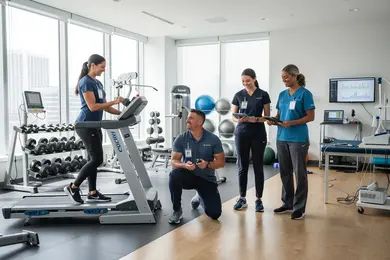
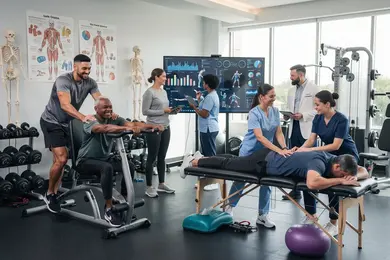
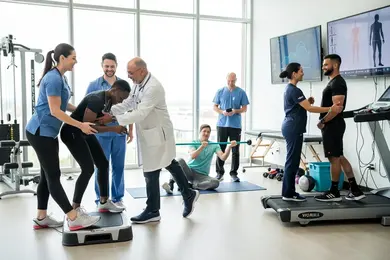
- Hospitals: Hospitals may expose students to cardiac rehabilitation, inpatient rehabilitation, outpatient therapy, wellness education, or multidisciplinary care teams. These placements can be valuable for students interested in clinical populations or healthcare careers.
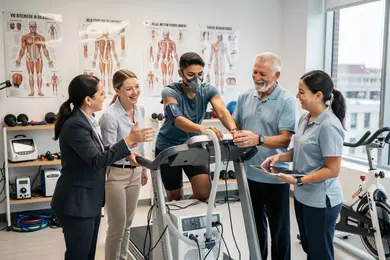
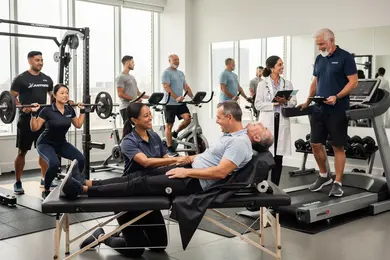
- Outpatient clinics: These sites often focus on rehabilitation, mobility, chronic condition management, injury recovery, or preventive exercise programming. Students may observe assessments and help support individualized plans under supervision.
- Rehabilitation centers: Rehabilitation settings can help students understand recovery after surgery, injury, illness, or functional decline. They are often a strong fit for students considering physical therapy, occupational therapy, athletic training, or related graduate pathways.
- Community health organizations: These placements may involve wellness education, fitness promotion, public health programming, older adult exercise, youth programs, or chronic disease prevention.
- Fitness and performance facilities: Some programs approve strength and conditioning centers, campus recreation programs, sports performance facilities, or medically integrated fitness centers. Approval depends on supervision quality and whether the work matches academic goals.
- Corporate wellness programs: These sites may offer experience with health screenings, employee fitness programs, behavior change support, and wellness coaching.
How to choose the best local site
Do not choose a facility only because it is close. A nearby placement is useful only if it supports your career goal and satisfies program rules. A student interested in rehabilitation may benefit more from a longer commute to a clinical setting than from a convenient placement at a general fitness center. A student aiming for strength and conditioning may need a site with experienced performance professionals rather than a medical clinic.
One graduate explained the trade-off clearly: “Choosing the right facility involved balancing my interests with what was closest to me.” Her community center placement made it easier to stay on schedule while still giving her direct experience adapting exercise programs for different clients.
How flexible are exercise science clinical schedules and locations?
Exercise science clinical schedules can be flexible, but flexibility depends on the site, supervisor availability, program deadlines, and required learning activities. About 60% of healthcare-related education programs now offer hybrid or adaptable clinical models, which can reduce relocation pressure and make supervised hours more manageable for working students.
Even so, students should expect less flexibility during clinical hours than during online coursework. Facilities operate around client appointments, patient care schedules, staff availability, and safety policies. A program may allow local placement but still require daytime hours, specific weekly minimums, or consecutive weeks at one site.
Where flexibility is most common
- Course delivery: Hybrid models may let students complete lectures, discussions, and assignments online while completing only the hands-on portion in person.
- Site location: Programs with broad partner networks or student-proposed site options may allow placements near home, work, or a hometown.
- Shift timing: Some wellness centers, fitness facilities, and outpatient clinics offer early morning, evening, or weekend hours. Hospital and rehabilitation schedules may be less flexible.
- Type of experience: Programs with several approved placement categories may let students choose a site aligned with their career interests.
Where flexibility may be limited
- Required competencies: If your program requires specific experiences, such as clinical assessment or rehabilitation exposure, not every local facility will qualify.
- Preceptor availability: A qualified supervisor must be present during your hours. If the preceptor works limited shifts, your schedule must match theirs.
- Travel expectations: Some programs define a reasonable commute range. Others may expect students to travel if local sites are unavailable.
- Academic deadlines: Clinical hours usually must be completed within a term. Delayed onboarding can compress your schedule.
Before committing to a placement, ask for the expected weekly hours, shift options, attendance policy, make-up hour rules, commute expectations, and whether you may change sites if your schedule changes.
How do preceptors and clinical site approvals work?
Preceptors and site approvals exist to protect students, clients, facilities, and the academic integrity of the program. A local facility may be convenient, but it must still be able to provide appropriate supervision and a meaningful learning environment. Due to a more than 20% increase in healthcare education partnerships, programs carefully vet clinical sites and preceptors to maintain accreditation standards and meet rising demand.
What programs evaluate before approving a site
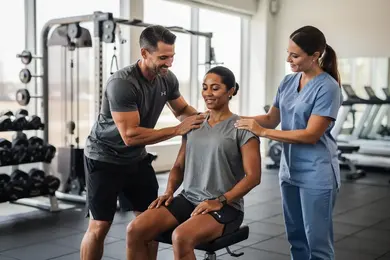
- Preceptor qualifications: The supervisor must have relevant professional credentials, experience, and the ability to evaluate student performance. Requirements vary by program and placement type.
- Learning environment: The site must offer activities that match the course objectives. A placement should provide more than observation; it should support skill development within the student’s permitted role.
- Client or patient population: Programs may look for exposure to specific populations, such as older adults, athletes, rehabilitation clients, chronic disease populations, or general wellness participants.
- Safety and compliance: Sites may need policies for privacy, emergency procedures, infection control, incident reporting, and appropriate student conduct.
- Affiliation agreement: A formal contract often defines supervision, liability, documentation, evaluation, and responsibilities for the school and facility.
- Scheduling capacity: The site must have enough staff time and learning opportunities to support the student for the required hours.
Why approval can take time
Approval is not just a handshake with a local clinic. Legal review, insurance verification, supervisor credential checks, onboarding steps, and schedule coordination can take weeks or longer. Students should begin early and avoid counting on an unofficial promise from a facility until the academic program confirms approval.
Student responsibilities
- Submit site and preceptor information by the program deadline.
- Complete background checks, immunizations, orientation, or training modules as required.
- Keep accurate hour logs and obtain supervisor signatures on time.
- Communicate schedule changes promptly to the site and program coordinator.
- Follow the site’s professional standards, including confidentiality and safety rules.
What costs should you expect when completing exercise science clinicals locally?
Completing exercise science clinicals locally can reduce relocation and housing costs, but it does not make the experience free. Students may still pay for transportation, onboarding, required clothing, screenings, and lost work time. A report from the American Association of Colleges of Nursing indicates that clinical education costs can contribute an additional 10-15% to overall program expenses, which makes advance budgeting important.
Common local clinical costs
- Transportation and fuel: Regular commuting can add up quickly. Depending on distance and frequency, students may spend between $50 and $150 monthly on fuel and vehicle upkeep over several weeks of clinical rotation.
- Parking fees: Urban hospitals and large healthcare facilities may charge for parking. Parking expenses can range from $5 to $15 per day, which becomes significant over a multiweek placement.
- Uniforms and equipment: Sites may require scrubs, lab coats, closed-toe shoes, name badges, or professional attire. Purchasing uniforms and supplies like stethoscopes can cost between $50 and $200.
- Immunizations and background checks: Students often need current vaccinations, background screening, and sometimes drug testing before starting. These can cost anywhere from $100 to $300 depending on local healthcare providers and requirements.
- Onboarding and liability insurance: Some facilities charge orientation or administrative fees, typically $25 to $100. Liability insurance costs between $20 and $50 might be necessary if not provided by the academic program.
- Income trade-offs: Even without relocation, daytime clinical hours may reduce paid work availability. This indirect cost is easy to overlook when comparing programs.
How to reduce unexpected expenses
- Ask whether liability insurance is included in tuition or fees.
- Confirm parking costs before accepting a site.
- Choose a site near public transit if you do not have reliable transportation.
- Complete health screenings early so you have time to use lower-cost providers if allowed.
- Budget for missed work hours, not just direct clinical fees.
Students who want to build on exercise science with nutrition-focused graduate study may also compare the cost structure of a masters degree in nutrition, especially if they are planning additional supervised or experiential training later.
What challenges can students face with local clinical placements?
Local placements can make an exercise science program more manageable, but they also create challenges. The most common problems are limited site availability, slow approvals, scheduling conflicts, and mismatches between what a nearby facility offers and what the program requires. Nearly 40% of clinical sites report difficulty accommodating the increasing number of trainees in healthcare-related fields, which can affect placement accessibility and scheduling.
Common local placement problems
- Limited site availability: Healthcare and wellness facilities may accept only a small number of students at a time. Popular sites can fill months in advance.
- Competition with other programs: Exercise science students may compete for space with nursing, physical therapy, occupational therapy, athletic training, public health, or medical assisting students.
- Geographic restrictions: Rural areas may have fewer approved supervisors or fewer facilities that match program requirements. Students in these areas may need to travel farther or complete hours in concentrated blocks.
- Scheduling conflicts: Clinical hours may overlap with work, family obligations, or other courses. Some sites operate mostly during business hours, leaving few evening or weekend options.
- Administrative delays: Affiliation agreements, background checks, immunization reviews, and facility onboarding can delay the start of clinical hours.
- Site cancellations: A facility may lose staff, change policy, or reduce student capacity. Students should ask their program what backup process exists if a placement becomes unavailable.
How to protect yourself
- Ask for placement deadlines before your clinical term begins.
- Keep a short list of possible backup sites.
- Do not assume a verbal “yes” from a site means approval is complete.
- Save copies of emails, agreements, immunization records, and hour logs.
- Tell your coordinator early if transportation, work, or caregiving obligations limit your availability.
These local factors connect to broader questions about state requirements, clinical oversight, and program flexibility. Students comparing clinical-heavy online health programs can also review MSN programs online to see how different fields structure supervised placement expectations.
Can local exercise science clinicals help you get a job after graduation?
Yes, local exercise science clinicals can support employment after graduation, especially when the placement aligns with the type of role you want. Local experience helps you understand nearby employers, build professional references, and show that you can work effectively in real client or patient-facing environments. Research shows that over 70% of healthcare employers prioritize applicants with clinical experience relevant to their local job market.
A local placement is not a job guarantee, but it can give you practical advantages if you treat it like an extended professional interview.
Career benefits of completing clinicals locally
- Professional networking: Supervisors, clinicians, wellness directors, and rehabilitation staff can become references or alert you to openings.
- Workplace familiarity: You learn local documentation practices, referral patterns, patient populations, scheduling norms, and team communication styles.
- Employer recognition: Strong performance during clinical hours can make you a known candidate before you apply for paid roles.
- Regional market insight: Local placements show you which employers are hiring, what skills they value, and which certifications may strengthen your candidacy.
- Interdisciplinary collaboration: Working with healthcare, rehabilitation, wellness, or performance teams helps develop communication skills that employers expect.
- Practical readiness: Hands-on experience can improve confidence, professionalism, and judgment in client or patient interactions.
How to turn a clinical placement into a career advantage
- Ask for feedback throughout the placement, not only at the end.
- Keep a record of skills practiced, populations served, and projects completed.
- Request permission to list the supervisor as a reference if performance was strong.
- Attend staff meetings or educational sessions when allowed.
- Ask what entry-level roles, certifications, or graduate pathways the site recommends.
What Students Say About Completing Exercise Science Clinicals Locally
- : "Completing my supervised clinical hours in exercise science at healthcare facilities near my home has been incredibly convenient. The local clinics had clear documentation requirements and hour expectations, so I could focus on learning instead of worrying about relocating. Being close to home also made it easier to connect what I was studying with what I saw in practice. — Arthur"
- : "Coordinating local clinical placements was more challenging than I expected. Some nearby hospitals were open to students, but limited slots and competition made timing difficult. Even with those hurdles, the local experience helped me build contacts and understand the kind of exercise science work available in my area. — Roger"
- : "The career benefits of completing my exercise science clinicals close to home were significant. I developed hands-on skills in familiar community healthcare settings while keeping a manageable work-life balance. The placement helped me feel more prepared for professional opportunities after graduation. — Miles"
Other Things You Should Know About Exercise Science Degrees
Yes, students must submit detailed paperwork including liability waivers, health and immunization records, and verification of prior coursework. These documents ensure compliance with the educational program and clinical site's policies. It is important to check early with both the school and the clinical site to verify exact requirements and deadlines.
Local clinical sites vary widely in the types of experiences they provide, which may affect the breadth of knowledge gained. Some sites may focus more on rehabilitation, while others emphasize fitness testing or sports performance. Students should seek out sites that align with their learning goals to maximize practical exposure.
Completion of all required hours at one local site depends on the site's capacity to provide diverse clinical experiences and meet program criteria. Some programs allow students to complete hours at multiple approved local sites. Confirming these details with the academic advisor and clinical coordinator is recommended before committing.
References
- Session 4B | Paper 1 Virtually clinical: placement experience on a virtual platform https://blogs.city.ac.uk/learningatcity/learning-at-city-conference-2021/session-4b-paper-1-virtually-clinical-placement-experience-on-a-virtual-platform/
- Authorisation and licensing of health personnel https://www.helsedirektoratet.no/english/authorisation-and-license-for-health-personnel
- Building flexibility into the schedule - Today's Hospitalist https://todayshospitalist.com/building-flexibility-schedule/
- How to Overcome Local Hiring Limitations and Grow Globally | Fronted | Fronted https://fronted.com/articles/how-to-overcome-local-hiring-limitations-and-unlock-business-growth
- Clinical Trial Costing: Phase-By-Phase Budget Guide | Abacum https://www.abacum.ai/blog/clinical-trial-costing
- State Authorization | CIIS https://www.ciis.edu/admissions-and-financial-aid/student-location/state-authorization
- The Biggest Challenges Of Localisation Project Management | International Achievers Group https://internationalachieversgroup.com/localisation/the-biggest-challenges-of-localisation-project-management/
- Exercise Science Keeps Student on Pre-Med Track https://today.charleston.edu/2026/01/20/exercise-science-keeps-emily-boyd-on-pre-med-track/
- Flexible Work Schedule: Why It Matters in Healthcare https://clinishift.com/flexible-work-schedule/
- Sport and Exercise Science / Clinical Exercise Physiology - Placement https://www.unisc.edu.au/current-students/work-integrated-learning-wil/sport-and-exercise-science-clinical-exercise-physiology-placement