2027 How to Compare College Cost vs Career Outcomes

Co-Founder and Chief Data Scientist
Choosing a college now means comparing a price tag with a career plan. College Board reported average published tuition and fees of $11,610 for in-state public four-year colleges and $43,350 for private nonprofit four-year colleges in 2024-25, before housing and other costs.
This guide is for students, parents, transfer students, working adults, and career changers who want to judge whether a degree is financially sensible. You will learn how to estimate ROI, compare schools, check outcomes data, reduce costs, and avoid programs that do not match your career goal.
Key Things You Should Know
- Start with total net cost, not sticker tuition: College Board's 2024-25 published tuition and fees ranged from about $4,050 at public two-year colleges to $43,350 at private nonprofit four-year colleges.
- Compare debt against realistic early-career earnings, not best-case salaries; BLS reported a $49,500 median annual wage for all U.S. occupations in May 2024, while high-demand fields can sit well above or below that benchmark.
- The strongest ROI usually comes from matching an accredited program, affordable financing, transferable credits, licensure eligibility, and labor-market demand to one specific career path.
How can you estimate the real return on investment of different college degrees?
College ROI is the relationship between what you pay for a program and the economic value it may help you gain over time. The "real" ROI is not simply graduate salary minus tuition. It includes grants, living costs, interest, time out of the workforce, completion risk, licensure requirements, and whether the degree actually qualifies you for the job you want.
A practical ROI estimate starts with a conservative model. Use the lowest-cost credible path that can get you to the same career outcome as your baseline, then compare alternatives against it. This helps you avoid paying extra for prestige, convenience, or speed unless those features improve completion or career access.
Use this sequence to estimate ROI before you enroll:
- Identify the target role first, such as registered nurse, accountant, software developer, teacher, dental hygienist, social worker, or operations manager.
- Confirm the minimum credential required for that role, including degree level, major, accreditation, state license, certification, supervised hours, or graduate school prerequisites.
- Calculate total net cost, including tuition, fees, books, technology, housing, transportation, childcare, lost wages, and loan interest.
- Estimate realistic earnings using federal and state labor data, school outcome data, internship access, location, and your likely entry point after graduation.
- Compare the payback period by dividing total net cost by the estimated annual earnings increase after graduation.
- Stress-test the plan by asking what happens if you graduate one year late, earn less than expected, lose part of your aid, or need additional licensure preparation.
The most useful ROI number is often the payback period. If a $30,000 net-cost degree is likely to raise your annual earnings by $10,000 compared with your current path, the simple payback period is about three working years before taxes and loan interest. That does not capture every benefit of education, but it gives you a disciplined way to compare options.
This table summarizes the main ROI variables you should separate before comparing colleges. Keeping them separate prevents one attractive number, such as tuition, from hiding a major cost elsewhere.
| ROI factor | What it means | Why it changes the decision |
| Sticker price | Published tuition and required fees before aid | Useful for comparison, but rarely the final amount paid |
| Net price | Cost after grants and scholarships, before loans | The best starting point for affordability comparisons |
| Total cost of attendance | Tuition, fees, books, housing, food, transportation, and personal expenses | Shows how much cash or borrowing may be needed each year |
| Opportunity cost | Income or work experience you give up while studying | Important for adults deciding between full-time and part-time study |
| Earnings lift | Likely income increase compared with your next-best alternative | Connects the degree to a specific career outcome |
| Completion risk | Chance that time, finances, transfer issues, or academics delay graduation | A low advertised price may lose value if many students do not finish on time |
The key is to compare degrees as investments with uncertainty, not as guaranteed income products. A degree can improve access to better jobs, but outcomes still depend on the field, location, experience, internships, networking, licensing, and economic conditions.
What data should you use to compare college costs with expected career earnings?
The best college cost-career comparison uses data from multiple sources because no single dataset tells the full story. School websites may highlight success stories, while federal data may lag by a few years or combine students with very different backgrounds. Cross-checking helps you separate marketing claims from measurable outcomes.
Start with public data, then ask each school to explain anything that looks unclear. If you are comparing online programs and need federal aid eligibility, lists of the cheapest online colleges that accept FAFSA near me can help you narrow your search before you request net price estimates from individual institutions.
Use these data sources when comparing programs:
- College Scorecard for median earnings, typical debt, graduation rates, retention rates, program-level earnings where available, and federal loan repayment indicators.
- Net price calculators on school websites for estimated out-of-pocket cost after grants and scholarships based on your household situation.
- Bureau of Labor Statistics data for occupation-level wages, education requirements, and job outlook by field.
- State labor market information for regional wage and employment trends, especially if you plan to work in the same state after graduation.
- Accreditor and licensing board websites for program approval, exam pass rates, supervised practice rules, and state eligibility requirements.
- School career services reports for internship participation, employer partnerships, placement definitions, and response rates.
College Scorecard and BLS data are especially useful because they help you compare a school's reported outcomes with the broader labor market. If a program's graduates take on high debt but enter an occupation with modest entry-level wages, the degree may still be worthwhile for mission, mobility, or long-term advancement, but it deserves a closer look before you borrow heavily.
This table shows which data points are most useful for different decisions. The goal is not to find perfect data, but to identify whether the program's cost is reasonable for the outcome you are trying to reach.
| Decision question | Most useful data | What to watch for |
| Can I afford this school? | Net price, aid offer, total cost of attendance, loan estimate | Aid that is renewable for only one year or requires a high GPA |
| Will this program lead to my target career? | Major-specific outcomes, licensure eligibility, employer partnerships | Placement rates that count unrelated jobs or exclude nonrespondents |
| How risky is borrowing? | Median debt, starting wage range, repayment indicators | Debt that exceeds likely first-year earnings in the field |
| Will I finish on time? | Graduation rate, credit transfer policy, course availability | Required courses offered infrequently or only during work hours |
| Is the salary claim realistic? | BLS wage percentiles, regional wages, alumni outcome reports | Marketing that uses senior-level salaries for entry-level graduates |
A common mistake is comparing one school's tuition to another school's graduate salary claim. Instead, compare net cost to likely earnings for the same occupation, same region, and same degree level. That makes the comparison more honest and more useful.
How do program type and institution (public, private, for-profit) change financial outcomes?
Program type and institution type can influence cost, flexibility, support, debt, and career access, but they do not determine ROI by themselves. A public university can be expensive for out-of-state students, a private nonprofit college can be affordable after scholarships, and a for-profit program can be convenient but still require careful review of cost, debt, accreditation, and completion outcomes.
Institution type matters most when it affects net price, transferability, licensing eligibility, employer recognition, or the probability that you finish. For some students, starting with community college, transfer credits, or accelerated credentials can improve ROI substantially.
If your goal is a faster credential before transferring or entering the workforce, compare options such as 1-year associate degree programs only after confirming accreditation, credit load, transfer rules, and whether the timeline is realistic for your schedule.
College Board's 2024-25 data show why institution type affects the starting point for cost comparisons: average published tuition and fees were about $4,050 at public two-year colleges, $11,610 for in-state students at public four-year colleges, and $43,350 at private nonprofit four-year colleges. Those are not final prices, but they show why the same bachelor's degree can carry very different financial risk depending on the path.
This comparison highlights how different institution categories often affect the cost-outcome equation. Use it as a screening tool, not as a substitute for program-specific research.
| Option | Potential ROI advantage | Main caution | Best fit |
| Public two-year college | Low tuition and strong transfer value | Credits may not all apply to the intended bachelor's major | Students seeking lower-cost general education, associate degrees, or transfer pathways |
| Public four-year university | Often strong value for in-state students | Out-of-state tuition can reduce affordability | Students who want broad majors, research access, and regional employer networks |
| Private nonprofit college | Scholarships may reduce net price significantly | Sticker price can be high before aid | Students who receive strong grants, need smaller class environments, or want a specialized mission |
| For-profit institution | May offer flexible scheduling and career-focused formats | Requires close review of debt, completion, accreditation, and employer acceptance | Working adults who need flexibility and have verified the program's outcomes and recognition |
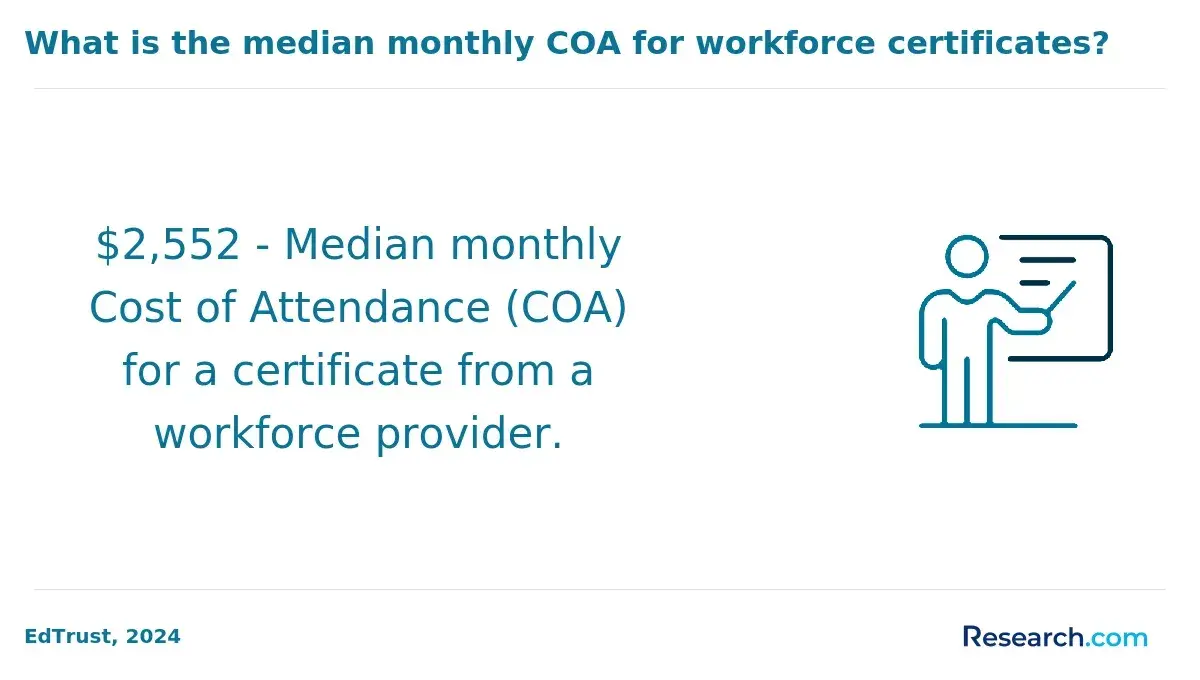
| Certificate or bootcamp | Shorter and sometimes cheaper than a degree | May not satisfy degree, license, or promotion requirements | Learners adding a specific skill where employers value portfolios or certifications |
Do not assume that private means bad, public means best, or short means cheap. The better question is whether the program is the lowest-risk credible route to the career outcome you want.
How does choosing a major affect salary potential and long-term career stability?
Your major strongly affects the career options available immediately after graduation, but it is not the only factor that matters. Internship experience, technical skills, communication ability, location, certifications, and the strength of your professional network can change outcomes within the same major.
A useful way to evaluate a major is to separate salary potential from career stability. Some majors lead to high starting wages but require constant skill updates. Others begin with modest pay but offer stable demand, licensure pathways, or clear advancement through graduate study.
BLS May 2024 wage data show how much fields can differ: the median annual wage for computer and mathematical occupations was $105,990, compared with $49,500 for all occupations. That does not mean every computer science graduate will earn that amount, but it shows why technical labor markets can support a higher education investment when the student completes the program and builds job-ready skills.
Use the following major categories as a starting point for comparing salary potential and stability. The right choice depends on your strengths, tolerance for math or science requirements, willingness to pursue licensure, and the type of work you want to do every week.
| Major area | Typical career direction | Salary potential | Stability factors |
| Computer science and information technology | Software, cybersecurity, data, systems, cloud support | Often high in technical roles | Strong demand, but skills can become outdated quickly |
| Engineering | Civil, mechanical, electrical, industrial, environmental roles | Often high for licensed or specialized roles | Accreditation and internships matter significantly |
| Health professions | Nursing, allied health, clinical support, healthcare administration | Varies by license and degree level | Licensure can improve portability and employer recognition |
| Business | Accounting, finance, operations, analytics, marketing, management | Wide range depending on specialization | Experience, internships, and quantitative skills often drive outcomes |
| Education and public service | Teaching, nonprofit, government, human services | Often more modest at entry level | Demand varies by state, subject area, funding, and certification |
| Liberal arts and humanities | Communications, policy, research, writing, law preparation, management paths | Varies widely by skills and graduate plans | Best ROI when paired with internships, writing samples, data skills, or a defined career plan |
The common mistake is choosing a major based only on average salary. A high-paying field can be a poor investment if you are unlikely to complete the prerequisites, dislike the daily work, or need graduate school you cannot afford. A lower-paying field can still be rational if the debt is low, the work is stable, and it fits your goals.
What tools and methods can you use to project lifetime earnings by degree?
You can project lifetime earnings by combining occupation data, education requirements, debt estimates, and conservative assumptions about career progression. The projection will never be perfect, but it can reveal whether one option is clearly too expensive or whether a higher-cost program has a reasonable payoff because it leads to licensure, stronger placement, or faster completion.
The simplest method is to compare your expected earnings with the degree against your most likely earnings without it. This difference matters more than the headline salary of the career. If you already earn a strong wage, the ROI threshold for leaving work full time is higher. If you are entering a licensed healthcare or technical field from a low-wage job, the payoff may arrive sooner.
Build a conservative earnings model using these steps:
- Choose one target occupation and one fallback occupation instead of modeling a vague field.
- Use BLS median wage data as a midpoint, then review lower wage percentiles to estimate early-career earnings.
- Check state wage data if you plan to work in a specific region, because pay can vary substantially by location.
- Subtract taxes, loan payments, commuting costs, relocation costs, and unpaid training requirements from your estimate.
- Compare full-time, part-time, and transfer pathways to see how timelines affect income and debt.
- Run a downside case where graduation takes longer, the first job pays less, or you need additional certification.
For lifetime earnings, avoid using a single big number as proof that college is worth it. A lifetime estimate depends on assumptions about employment continuity, career changes, graduate school, caregiving breaks, layoffs, inflation, and regional mobility. It is better to use ranges and decision thresholds: "This path is reasonable if I can keep borrowing below X and enter roles paying near Y."
These tools are especially helpful when used together. Each answers a different part of the cost-career question.
| Tool or method | Best use | Limitation |
| Net price calculator | Estimating school-specific cost after grants | Results can change after official aid review |
| College Scorecard | Comparing debt, completion, and earnings indicators | Program-level data may be incomplete for some fields |
| BLS Occupational Outlook Handbook | Checking job duties, education requirements, pay, and outlook | National data may not reflect your local market |
| State labor market dashboards | Estimating regional wages and hiring demand | Occupation categories may be broad |
| Loan repayment simulator | Estimating monthly payments under different borrowing levels | Does not solve affordability if the underlying debt is too high |
| Alumni and employer conversations | Testing whether the degree is respected in the field | Anecdotes should not replace broader data |
A good projection should make your decision clearer, not more complicated. If the model only works under perfect assumptions, the program may be too risky for your situation.
How do online, hybrid, and campus programs differ in cost, support, and outcomes?
Online, hybrid, and campus programs can lead to similar credentials, but the student experience and true cost can differ. The best format depends on your schedule, learning style, need for hands-on training, access to internships, and whether the program meets accreditation or licensing rules in your state.
Online programs can reduce relocation and commuting costs, which is valuable for working adults, caregivers, military-connected students, and rural learners. Students with service obligations or veteran benefits should compare support services carefully; lists of military friendly online colleges can be a useful starting point for identifying schools with dedicated advising, transfer support, and benefit coordination.
Online learning is not automatically cheaper. Some schools charge technology fees, out-of-state online rates, proctoring fees, or clinical placement fees. Hybrid programs can also require travel for labs, intensives, student teaching, or clinical rotations, so the schedule must match your work and family responsibilities.
This table compares the major trade-offs by format. Use it to decide which structure supports completion, not just which one looks most convenient.
| Format | Cost considerations | Support considerations | Outcome considerations |
| Fully online | May reduce commuting and relocation costs | Requires strong advising, tutoring, tech support, and self-discipline | Works best when the field accepts online credentials and hands-on requirements are planned |
| Hybrid | May include travel, lab, or residency expenses | Offers some face-to-face support while preserving flexibility | Useful for healthcare, education, counseling, and technical programs with applied components |
| Campus-based | May increase housing, transportation, and time costs | Provides easier access to labs, faculty, clubs, recruiters, and peer networks | Often valuable for students who need structure, research access, or intensive career networking |
Before choosing online or hybrid study, ask whether the program helps students find internships, clinical sites, practicum placements, and entry-level roles in your area. A flexible format loses value if it delays required field experience or leaves you to arrange placements alone.
How do accreditation and licensing requirements influence career options and earning power?
Accreditation and licensing can determine whether a degree actually opens the career doors you expect. Institutional accreditation affects federal aid eligibility, credit transfer, graduate school admissions, and employer recognition. Programmatic accreditation matters in fields where the profession or licensing board expects a specific approved curriculum.
Licensing requirements are especially important in healthcare, education, counseling, social work, engineering, public accounting, aviation, and some legal support roles. Requirements vary by state, so a program that is acceptable in one state may not automatically qualify you in another. This is one of the most expensive mistakes a student can make because the problem may not appear until graduation.
Check accreditation and licensure before enrollment using this process:
- Verify institutional accreditation through the school's accreditor and the U.S. Department of Education's recognized accreditor database.
- For regulated fields, confirm programmatic accreditation with the professional accreditor, not only the school's admissions office.
- Look up your state licensing board and confirm that graduates of the program meet education requirements for the credential you want.
- Ask whether online, hybrid, out-of-state, or accelerated formats meet the same requirements as the campus program.
- Request exam pass rates, placement support details, and any disclosures about states where the program does not meet licensing requirements.
- Get transfer and prerequisite rules in writing if you plan to move from a certificate to an associate degree or from community college to a bachelor's degree.
Accreditation is not a guarantee of job placement, but it is a quality and eligibility checkpoint. If a school is vague about accreditation, avoids state licensure questions, or pressures you to enroll before you verify requirements, treat that as a red flag.
The strongest earning power often comes when the credential is both recognized and necessary. For example, a nursing, teaching, counseling, engineering, or accounting pathway may depend on passing a state exam or meeting supervised experience rules. In those fields, choosing the wrong program can reduce ROI even if tuition is low.
Which financial aid, scholarships, and employer benefits most improve college ROI?
Financial aid improves ROI when it reduces the amount you must repay, shortens the time to completion, or lets you keep working while studying. The most valuable aid is usually grant aid, scholarships, tuition assistance, employer reimbursement, veteran or military education benefits, and transfer credit that replaces paid coursework.
Federal Student Aid lists a maximum Pell Grant of $7,395 for the 2024-25 award year. For eligible students, that kind of grant can materially change the ROI calculation because it lowers net cost without adding repayment obligations. Loans can still be useful, but they should be sized around realistic earnings and completion risk.
Prioritize aid sources in this order when possible:
- Complete the FAFSA early so the school can determine federal, state, and institutional aid eligibility.
- Choose grants and scholarships first because they generally do not require repayment if you meet the conditions.
- Use employer tuition assistance or reimbursement if the program aligns with your current or next role.
- Apply military, veteran, or public service benefits carefully, making sure the school's office can explain certification timelines and covered charges.
- Compare federal loans before private loans because federal loans usually offer more repayment protections.
- Reduce paid credits through transfer credit, prior learning assessment, CLEP exams, dual enrollment, or articulation agreements where appropriate.
Working adults should also compare graduate programs by net price and employer support, not just prestige. If you are considering graduate school while employed, researching online affordable master's programs can help you identify options where flexibility and lower tuition may preserve ROI.
Federal undergraduate loan limits create a built-in warning signal. For dependent undergraduate students, annual Direct Loan limits in 2024-25 were $5,500 for first-year students, $6,500 for second-year students, and $7,500 for third-year and later students, with an aggregate limit of $31,000.
If a school's cost requires borrowing far beyond federal limits, compare whether the expected career earnings justify the added private or parent debt risk.
Common financial aid mistakes include assuming the first-year aid offer will repeat unchanged, ignoring GPA renewal rules, treating parent loans as "free" family help, and borrowing for living expenses without a monthly repayment estimate. A better approach is to calculate the four-year net cost before enrollment and re-check it every term.
How can you factor in job outlook, industry demand, and automation risk when deciding?
Job outlook should influence your college decision because a degree with strong historical earnings may be less valuable if the field is shrinking, unstable, regionally limited, or vulnerable to automation. At the same time, automation risk does not mean avoiding technology-heavy fields. It often means choosing programs that teach adaptable skills, applied problem-solving, and tools used by employers.
BLS 2024-2034 projections continue to show strong demand in areas tied to healthcare, data, software, information security, skilled technical services, and aging-population needs. Use that trend as a directional signal, not a promise. Local employer demand, internship access, licensure, and your ability to build experience still matter.
AI is changing how employers evaluate graduates. In many fields, the advantage is shifting toward people who can use AI tools responsibly, interpret data, communicate with nontechnical audiences, and make decisions where judgment, ethics, regulation, or human interaction matters.
If flexibility is important, comparing the best degrees for remote work can help you identify fields where digital collaboration and location-independent roles are more common.
When evaluating labor-market risk, consider these factors together:
- Demand trend: Whether the occupation is projected to grow, stay flat, or decline nationally and in your region.
- Entry barriers: Whether licensure, clinical hours, security clearance, portfolios, internships, or certifications are required.
- Automation exposure: Whether the work is routine and rules-based or requires judgment, human trust, fieldwork, creativity, or accountability.
- Career mobility: Whether the major leads to several related roles or only one narrow job title.
- Skill freshness: Whether the program teaches current tools and requires applied projects, labs, simulations, or employer-reviewed work.
- Economic sensitivity: Whether hiring depends heavily on interest rates, government funding, consumer spending, or tech investment cycles.
A smart choice balances opportunity with resilience. For example, a technology degree may have strong pay potential, but students should look for programs with projects, internships, cybersecurity or data exposure, and career coaching. A healthcare degree may offer durable demand, but students must confirm clinical placement capacity and licensing eligibility.
What step-by-step framework can you use to compare schools on cost and career outcomes?
The best way to compare college costs vs. career outcomes is to use the same framework for every school. This prevents emotional decisions based on brand names, rankings, campus tours, or a single scholarship offer.
Follow this step-by-step process before committing:
- Write down one primary career goal and one backup goal, including the occupation title, industry, and preferred state or region.
- Identify the minimum acceptable credential for that goal, including degree level, major, accreditation, license, certification, internship, or graduate school requirement.
- Create a shortlist of schools that meet the academic and credential requirements before comparing price.
- Use each school's net price calculator and official aid estimate to calculate annual net cost and total completion cost.
- Estimate borrowing for each year and convert it into a likely monthly payment before accepting loans.
- Compare completion indicators, transfer policies, course availability, advising access, and support for working students.
- Review career outcomes by program, not only schoolwide averages, and ask how employment rates are calculated.
- Check BLS and state wage data for the target occupation, using early-career wage ranges rather than only median or senior-level pay.
- Ask admissions, financial aid, and department staff targeted questions, then keep written answers for anything related to cost, transfer, licensure, or placement.
- Choose the option with the best combination of affordable net cost, credible outcomes, manageable debt, realistic timeline, and fit with your life.
Use the following comparison categories when you build your own spreadsheet. The most important column is not the cheapest price; it is whether the program is affordable enough for the career outcome it supports.
| Category | Question to answer | Red flag |
| Credential fit | Does this program qualify me for the career I want? | The school cannot clearly explain licensure or employer requirements |
| Net cost | What will I pay after grants and scholarships? | The school emphasizes sticker discounts without showing total cost |
| Debt risk | How much will I owe at graduation? | Estimated debt is high compared with likely first-year earnings |
| Completion path | Can I finish on time with my schedule? | Required courses, labs, or placements conflict with work or family obligations |
| Career support | Will I get help with internships, portfolios, interviews, or clinical placement? | Career outcomes are vague or not program-specific |
| Transfer value | Will my credits apply if I change schools or continue later? | Credits are unlikely to transfer or apply to the intended major |
| Flexibility | Does the format support my ability to persist? | Online or accelerated delivery lacks advising, tutoring, or placement help |
After comparing schools, choose the one that leaves you with the most future options. A good decision is not always the cheapest or most prestigious choice. It is the program that credibly connects your goal, budget, learning needs, and labor-market reality.
Other Things You Should Know About
College can still be worth it when the net cost is reasonable, the program is accredited, the credential matches a real career requirement, and expected debt is manageable compared with likely earnings. It is less likely to pay off when students borrow heavily for a program with unclear outcomes or weak completion support.
A practical rule is to keep total borrowing below what you realistically expect to earn in your first year after graduation. This is not a guarantee of affordability, but it helps prevent monthly payments from overwhelming an entry-level budget.
Not always. The cheapest option is best only if it meets accreditation, transfer, licensure, support, and career outcome requirements. A slightly more expensive program may be the better value if it improves completion, provides required clinical or internship access, or reduces time to graduation.
The biggest mistake is comparing tuition alone instead of total net cost and career fit. Students should also verify accreditation, program-level outcomes, transfer rules, licensing eligibility, and realistic early-career wages before enrolling.
References
- Bridging Education and Opportunity: Exploring the ROI of Higher Education and Workforce Development — HCM Strategists https://hcmstrategists.com/resources/ucmfwg7ha7zzeug6nb3dlawh3poziz
- Hybrid Programs- Which Students Want Them? https://encoura.org/resources/wake-up-call/hybrid-programs-which-students-want-them/
- How Occupational Licensing Requirements Affect Access to Middle-Skills Pathways - R Street Institute https://www.rstreet.org/
- Top 10 Benefits of Professional Certification - Identity Management Institute® https://identitymanagementinstitute.org/top-10-benefits-of-professional-certification/
- Job Stability vs Career Growth: Striking the Right Balance in Your Career | Breagh Recruitment https://www.breaghrecruitment.com/blogs/job-stability-vs-career-growth
- Research Summary: Education and Lifetime Earnings https://www.ssa.gov/policy/docs/research-summaries/education-earnings.html
- What To Look for When Comparing Colleges in 2026 https://www.credible.com/student-loans/how-to-compare-colleges
- Major decisions: What graduates earn over their lifetimes | Brookings https://www.brookings.edu/articles/major-decisions-what-graduates-earn-over-their-lifetimes/
- Career earnings by college major - The Hamilton Project https://www.hamiltonproject.org/data/career-earnings-by-college-major/
- How Certification Can Change Your Career in 2026 https://ieatraining.org/how-certification-can-change-your-career-2026