2027 Best Accredited Online Oceanography Degree Programs: Compare Tuition, Admissions, and Career Outcomes

Co-Founder and Chief Data Scientist
Choosing an online oceanography degree is harder than comparing tuition because true fully online oceanography programs are uncommon, and many strong options use related names such as marine science, ocean and earth science, or fisheries science. The stakes are real: the U.S. Bureau of Labor Statistics reported a May 2024 median wage of $95,750 for geoscientists, a common occupational category for oceanography-related careers. This guide helps prospective undergraduates, transfer students, and working adults compare accredited programs by cost, flexibility, admissions, and outcomes before enrolling.
Key Things You Should Know
- Fully online degrees titled "oceanography" are limited, so the best accredited choices often include online or hybrid ocean and earth science, marine science, geoscience, fisheries, or aquatic science programs with relevant oceanography coursework.
- Use total cost, not tuition alone: College Board's 2024 pricing data shows average published tuition and fees at $11,610 for in-state public four-year colleges, $30,780 for out-of-state public colleges, and $43,350 for private nonprofit colleges.
- Career value depends on credential level: technician and entry-level environmental roles may accept a bachelor's degree, while research oceanographer, marine geoscientist, and many federal science roles often prefer or require graduate training.
Which Accredited Online Oceanography Degree Programs Offer the Best Overall Value?
The best overall value in online oceanography education usually comes from accredited programs that combine low net cost, credible science coursework, access to lab or field experiences, and a format that lets students finish without pausing work. Because the online market is small, students should compare both exact oceanography programs and closely aligned degrees that support ocean science careers.
A practical "best value" comparison should not treat every ocean-related degree as interchangeable. Oceanography focuses on the physical, chemical, geological, and biological processes of the ocean, while marine biology focuses more heavily on organisms and ecosystems. Geoscience programs may fit students interested in seafloor mapping, climate records, coastal hazards, or environmental consulting.
The table below summarizes common accredited online or hybrid pathways that can lead toward oceanography-related careers. It is designed to help students compare fit, not to imply that every option has the same curriculum or career outcome.
| Program pathway | Best fit | Typical value advantage | Important trade-off |
| Online or hybrid B.S. in Ocean and Earth Sciences | Transfer students seeking an oceanography-adjacent bachelor's degree | Strong alignment with geology, marine systems, coastal processes, and environmental science | May require lab science, fieldwork, or local proctoring arrangements |
| Online B.S. in Marine Biology or Marine Science | Students interested in marine ecosystems, conservation, aquaculture, or biological oceanography | Often more available online than a degree specifically titled oceanography | May include less physical oceanography, math, or geophysics than research-focused oceanography programs |
| Online M.S. in Fisheries, Aquatic Sciences, or Marine Resource Management | Working professionals seeking advancement in conservation, agencies, or applied aquatic science | Can build specialized credentials without relocating | May prepare students for applied science more than academic oceanography research |
| Online M.S. in Geoscience with ocean, coastal, or environmental electives | Students aiming for coastal geology, environmental consulting, GIS, or earth systems careers | Often useful for teachers, consultants, and technical professionals | Students must confirm whether oceanography-specific coursework is deep enough for their goals |
For most students, the best value is not the cheapest program; it is the program that gets them to the right scientific skill level with the least unnecessary debt. A low-cost program can be a poor investment if it lacks calculus, chemistry, statistics, GIS, programming, field methods, or faculty expertise in ocean science. A higher-priced program may be worth considering when it offers stronger research access, transfer credit acceptance, employer partnerships, or a clear path into graduate school.
Students comparing broad online affordability can use resources on the best affordable online colleges as a starting point, but oceanography students should add extra filters for lab science quality, field experience, and graduate school preparation.
Use this value framework before applying:
- Confirm the institution is accredited by a U.S. Department of Education-recognized accreditor.
- Map required courses against your goal, such as biological oceanography, physical oceanography, coastal geology, GIS, or marine policy.
- Ask whether labs are online, campus-based, locally arranged, or completed through short residencies.
- Compare net price after grants and scholarships, not just published tuition.
- Review graduate school placement, internship access, faculty expertise, and career services for science students.
What Accreditation Should Students Look for in an Online Oceanography Degree Program?
Accreditation is the first quality checkpoint for any online oceanography degree. In the United States, students should prioritize institutional accreditation from an agency recognized by the U.S. Department of Education or the Council for Higher Education Accreditation. This matters because federal financial aid, credit transfer, employer recognition, and graduate school eligibility often depend on it.
Oceanography usually does not have one universal programmatic accreditor in the same way that nursing, engineering, or counseling programs may. That makes institutional accreditation, curriculum depth, faculty qualifications, lab science expectations, and research opportunities especially important. If a program is engineering-oriented, such as ocean engineering, students should ask whether ABET accreditation is relevant to their career goals, but ABET is not normally required for a general oceanography or marine science degree.
The table below shows the accreditation checks students should make before committing to an online oceanography-related program.
| Accreditation or quality factor | What to verify | Why it matters |
| Institutional accreditation | The college or university appears in recognized accreditation databases | Supports federal aid eligibility, transferability, and employer acceptance |
| Programmatic accreditation | Whether the specific discipline has a relevant accreditor, such as ABET for some engineering programs | May matter for engineering licensure or technical roles, but not all ocean science pathways require it |
| Science curriculum quality | Courses include chemistry, physics, calculus, statistics, GIS, field methods, or programming when relevant | Oceanography is quantitative, and weak science preparation can limit graduate school options |
| Faculty expertise | Faculty publish or work in marine science, geoscience, coastal systems, climate, fisheries, or ocean data | Faculty specialization affects advising, research exposure, and recommendation letters |
| Lab and field requirements | How required labs, cruises, field camps, internships, or residencies are completed | Employers and graduate programs often value hands-on science experience |
A common mistake is assuming that "online" and "accredited" are enough. Accreditation confirms baseline institutional legitimacy; it does not prove that a program is strong in oceanography specifically. Students should also review syllabi, lab requirements, elective availability, internship options, and whether the degree title will be understood by employers in their target field.
Red flags include unclear accreditation language, promises of unusually fast science degrees with minimal lab work, no named faculty in ocean-related fields, vague career claims, or refusal to explain transfer credit policies in writing. If a school cannot clearly explain how online students complete scientific training, treat that as a serious warning sign.
How Do Tuition Costs Compare Across Accredited Online Oceanography Degree Programs?
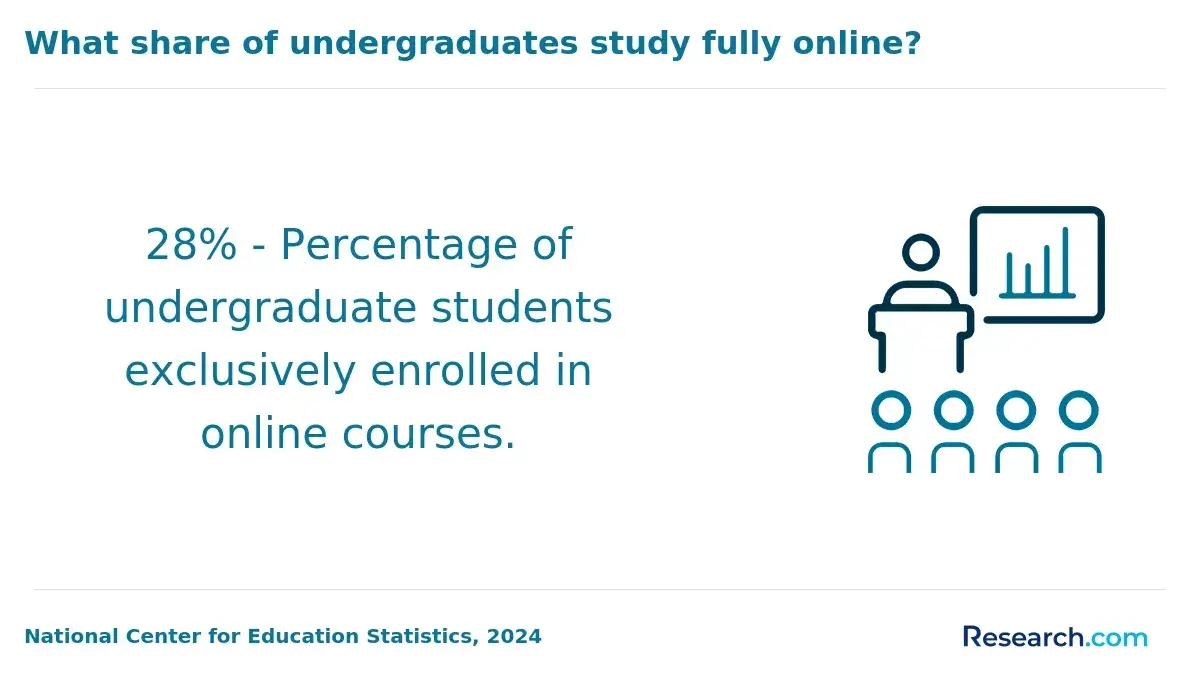
Tuition for accredited online oceanography-related programs varies widely because students may enroll in public universities, private nonprofit universities, or private online institutions. Published tuition is only one part of the price; science courses can also require lab kits, field travel, software, textbooks, proctoring, technology fees, and residency expenses.
College Board's 2024 pricing data reported average published tuition and fees of $11,610 for in-state public four-year students, $30,780 for out-of-state public four-year students, and $43,350 for private nonprofit four-year students. Those figures are not oceanography-specific, but they provide a useful benchmark when deciding whether an online program's price is reasonable.
The table below helps compare the cost structure students are likely to encounter across accredited online oceanography and adjacent science programs.
| Cost category | What it usually includes | How to compare it |
| Tuition | Per-credit or per-term academic charges | Multiply by required credits and check whether online students pay in-state, out-of-state, or flat online rates |
| Mandatory fees | Technology, distance learning, student services, registration, or course fees | Ask for the full fee schedule, not just the tuition page |
| Science expenses | Lab kits, field equipment, GIS software, data tools, or safety materials | Confirm which expenses are required and which are optional |
| Residency or field costs | Travel, lodging, meals, field station fees, or short campus intensives | Estimate total travel cost before enrolling in a hybrid program |
| Opportunity cost | Reduced work hours or delayed full-time employment | Compare asynchronous, part-time, and accelerated formats against your income needs |
Lower tuition matters most when programs offer comparable accreditation, course rigor, transfer credit, and student support. Paying more may make sense if the program provides stronger research access, a recognized science faculty, better internship connections, or an efficient pathway into a graduate degree. However, high tuition alone is not proof of quality.
Students should request a written cost estimate before applying. That estimate should include:
- Total credits required after transfer evaluation
- Tuition rate for online students and whether it changes by residency
- Mandatory fees by term or credit
- Estimated lab, field, proctoring, and technology costs
- Scholarships, grants, assistantships, employer benefits, and loan eligibility
- Expected time to completion for full-time and part-time enrollment
The biggest cost mistake is comparing only per-credit tuition. A program with a slightly higher tuition rate may be cheaper overall if it accepts more transfer credits, has fewer hidden fees, or allows year-round enrollment that shortens time to graduation.
Admission to accredited online oceanography-related programs ranges from open or transfer-friendly to selective, depending on the institution and degree level. Bachelor's programs may admit first-year students, but many online science degrees are designed for transfer students who have already completed general education and introductory lab science courses.
Graduate admission is usually more competitive because oceanography and marine science are research-heavy fields. Master's programs may require a bachelor's degree in science, prior coursework in biology, chemistry, physics, calculus, statistics, or geology, and sometimes professional experience or a faculty match. GRE requirements have become less common at many universities, but students should verify each program's current policy.
The table below compares typical admissions expectations by degree level so students can identify where they may need prerequisites before applying.
| Degree level | Typical admissions requirements | Best applicant profile | Common barrier |
| Online associate or transfer pathway | High school diploma or equivalent, placement tests, basic math and science readiness | Students building a low-cost foundation before transferring | Limited oceanography specialization at this level |
| Online bachelor's completion program | Prior college credits, minimum GPA, general education, introductory science courses | Transfer students with lab science and math credits | Missing chemistry, physics, calculus, or lab prerequisites |
| Online bachelor's for first-year students | High school transcript, GPA, possible test scores, college-prep coursework | Students who want a full online pathway from the start | Fewer fully online options with deep oceanography coursework |
| Online master's degree | Bachelor's degree, transcripts, statement of purpose, recommendations, science prerequisites | Students with strong science preparation or relevant work experience | Insufficient quantitative background or lack of faculty fit |
| Graduate certificate | Bachelor's degree or professional experience, depending on the school | Working professionals adding marine, GIS, coastal, or environmental expertise | Credits may not fully transfer into a later degree |
Admissions flexibility should not automatically be viewed as lower quality. Some online programs are built for adult learners and use support systems, prerequisite modules, or transfer pathways to widen access. The key question is whether the program still requires the scientific preparation needed for your career goal.
Applicants who are not ready for calculus-heavy science should consider a staged approach. For example, a community college or online transfer route can help students complete math, chemistry, and biology affordably before entering a bachelor's program; students exploring shorter starting points can also compare options such as the quickest associates degree while keeping in mind that oceanography careers usually require more advanced science training.
Before applying, students should take these steps:
- Ask for a prerequisite review before paying an application fee.
- Request a transfer credit estimate in writing.
- Confirm whether online students can access the same major courses as campus students.
- Ask whether missing prerequisites can be completed at a community college.
- Identify whether the program is designed for employment, graduate school, teaching, or professional advancement.
The most flexible online oceanography-related programs are usually asynchronous, part-time friendly, and clear about how labs and field requirements work. Flexibility matters because many students interested in online science degrees are working adults, military-affiliated students, parents, or transfer students who cannot relocate to a coastal campus.
However, oceanography is not a purely lecture-based subject. Students may need lab science, data analysis, field observation, mapping, sampling methods, or internships. A program that is fully online but offers no meaningful hands-on or data-based scientific work may be convenient but less useful for long-term goals.
The table below compares common online learning formats and what they mean for students balancing science training with work and family responsibilities.
| Learning format | Flexibility level | Best for | Watch for |
| Asynchronous online | Highest | Working adults, students in different time zones, military learners | Requires strong self-management and may limit live faculty interaction |
| Synchronous online | Moderate | Students who want live discussion and structured deadlines | Class times may conflict with work schedules |
| Hybrid online with short residencies | Moderate | Students who need hands-on labs, fieldwork, or networking | Travel and lodging can add significant cost |
| Online degree completion | High for transfer students | Students who already completed lower-division coursework | Not ideal for students with few prior credits |
| Online graduate certificate | High | Professionals adding coastal, GIS, fisheries, or environmental credentials | May not replace a full degree for research or faculty roles |
Fully online formats make the most sense for students targeting applied environmental roles, data-heavy ocean science, GIS, marine policy, teaching enhancement, or graduate preparation that does not require daily lab access. Hybrid formats may be better for students who want field sampling, marine station experience, research mentorship, or preparation for thesis-based graduate study.
Students should avoid choosing a format based only on convenience. Instead, ask how the program builds the skills that ocean employers and graduate programs value: scientific writing, data analysis, GIS, statistics, coding, field protocols, remote sensing, and teamwork. If those experiences are missing, the program may not deliver the professional value its title suggests.
Student support services are especially important in online oceanography programs because students must complete demanding science coursework without the daily structure of a campus lab or cohort. Strong support can improve persistence, help students choose the right prerequisites, and connect online learners to internships, research experiences, and graduate school planning.
The most valuable support services are not generic online help desks. Oceanography students need advising that understands science sequencing, transfer credits, fieldwork, graduate school expectations, and career pathways in government, consulting, education, and research.
The table below identifies support services that can materially affect student success in an accredited online oceanography-related program.
| Support service | Why it matters for oceanography students | Question to ask before enrolling |
| Science-specific academic advising | Prevents students from taking courses out of sequence or missing graduate prerequisites | Will an advisor review my math and lab science plan before I register? |
| Transfer credit evaluation | Can reduce total cost and time to degree | Which credits apply to the major, not just electives? |
| Online tutoring | Supports difficult courses such as chemistry, physics, calculus, statistics, and programming | Is tutoring available outside standard business hours? |
| Career services for science students | Helps with federal resumes, internships, consulting roles, and graduate applications | Do career advisors work with environmental and marine science employers? |
| Research or internship coordination | Builds experience that online students may otherwise miss | Can online students access faculty projects, local internships, or approved field placements? |
| Library and data resources | Supports scientific literature review, mapping, and data-based projects | Do online students receive remote access to journals, GIS tools, and datasets? |
A strong program should be able to explain how online students build a professional portfolio. That portfolio might include GIS maps, data analysis projects, literature reviews, coastal hazard assessments, species monitoring work, remote sensing projects, or an internship report. These artifacts can help students demonstrate competence when a degree was completed online.
Common mistakes include waiting until senior year to look for internships, assuming career services understand ocean science, and failing to ask whether online students can participate in research. Students should contact faculty or program coordinators early and ask what recent online students have done for capstones, field projects, internships, or graduate school preparation.
Accredited online oceanography degree students may qualify for many of the same financial aid options as campus students, including federal grants, federal student loans, institutional scholarships, state aid, employer tuition benefits, military education benefits, and private scholarships. Eligibility depends on accreditation, enrollment status, citizenship or eligible noncitizen status, satisfactory academic progress, and program rules.
Federal loan costs should be part of the ROI calculation. For the 2024-25 academic year, federal Direct Loans carried fixed interest rates of $6.53% for undergraduate borrowers, $8.08% for graduate borrowers, and $9.08% for Direct PLUS borrowers. Those rates mean that borrowing for a higher-priced program can significantly increase total repayment cost, especially for students entering early-career roles that may not immediately pay at the geoscientist median.
The table below summarizes common financial aid sources and how oceanography students should evaluate them.
| Aid option | Who may qualify | How to evaluate it |
| Federal Pell Grant | Eligible undergraduate students with financial need | Does not need repayment, making it especially valuable for bachelor's students |
| Federal Direct Loans | Eligible undergraduate and graduate students | Compare interest rates, borrowing limits, and repayment obligations |
| Institutional scholarships | Students meeting school-specific academic, need-based, or program criteria | Ask whether online students receive equal consideration |
| State grants | Residents meeting state and school eligibility rules | Check whether online or out-of-state enrollment affects eligibility |
| Employer tuition assistance | Working adults whose employers support education benefits | Confirm reimbursement caps, grade requirements, and service commitments |
| Military and veteran benefits | Eligible service members, veterans, and dependents | Confirm online tuition coverage, housing allowance rules, and approved program status |
| Research or teaching assistantships | More common in graduate programs, especially campus or hybrid formats | Ask whether online graduate students are eligible or excluded |
Financial aid comparison is similar across many online graduate and professional pathways, whether students are evaluating ocean science or specialized programs such as BCBA masters programs online. The main difference is that oceanography students should also budget for field, lab, software, and travel expenses that may not appear in the first tuition estimate.
To compare aid offers fairly, students should use this process:
- File the FAFSA as early as possible if seeking federal, state, or school-based aid.
- Request a full cost of attendance estimate from each school.
- Separate gift aid from loans and work obligations.
- Ask whether scholarships renew automatically or require a minimum GPA.
- Calculate remaining out-of-pocket cost after transfer credits and aid.
- Estimate monthly loan repayment before accepting the full loan amount.
The most common financial aid mistake is accepting the largest aid package without separating grants from loans. A school that offers more total aid may still cost more if the package is loan-heavy and the lower-priced school offers fewer credits to complete.
Career outcomes for accredited online oceanography degree graduates depend heavily on degree level, specialization, location, field experience, and technical skills. Oceanography-related careers may be found in environmental consulting, federal and state agencies, coastal planning, marine conservation, fisheries management, climate research, education, GIS, data analysis, and private-sector environmental services.
The U.S. Bureau of Labor Statistics reported a May 2024 median wage of $95,750 for geoscientists. This figure is useful for context, but it should not be read as a guaranteed outcome for every oceanography graduate because roles, credentials, employers, and experience levels vary widely. Entry-level technicians, educators, and conservation workers may earn less, while experienced geoscientists, data specialists, and federal scientists may follow different pay scales.
The table below connects common oceanography-related career paths with the education level and skills that may support them.
| Career path | Typical education fit | Useful skills | Notes for online students |
| Marine science technician | Associate or bachelor's degree plus field or lab experience | Sampling, data entry, lab safety, equipment handling, GIS basics | Internships and local field placements can be important |
| Environmental consultant | Bachelor's degree in geoscience, marine science, environmental science, or related field | Regulatory writing, GIS, statistics, site assessment, water quality | Choose programs with applied projects and technical writing |
| Coastal or marine GIS analyst | Bachelor's degree plus GIS coursework or certificate | Mapping, remote sensing, spatial analysis, Python or R | Online programs can work well if they include strong data tools |
| Fisheries or aquatic resource specialist | Bachelor's or master's degree in fisheries, aquatic science, biology, or marine science | Population analysis, ecology, field surveys, statistics | Applied online graduate programs can fit working professionals |
| Research oceanographer | Master's or doctoral degree, often research-based | Advanced math, modeling, instrumentation, scientific publishing | A fully online bachelor's may be a starting point, but research graduate training is usually needed |
| Science educator or outreach specialist | Bachelor's or master's degree, plus teaching credentials when required | Communication, curriculum design, marine science knowledge | State teaching licensure rules vary and should be checked separately |
Employers increasingly value data skills in ocean-related work. Students who combine ocean science with GIS, statistics, coding, remote sensing, database tools, or environmental compliance writing may be better positioned than students who complete only broad survey courses. Artificial intelligence and automation are also changing how environmental data is processed, but they do not replace the need to understand sampling limits, physical systems, uncertainty, and scientific interpretation.
ROI should be compared against realistic alternatives. A student choosing between oceanography and a more direct business pathway such as a degree in finance should recognize that ocean science careers may require graduate study, field experience, and geographic flexibility, while finance may offer a different labor market and skill profile. The better investment depends on interests, tolerance for science prerequisites, target employers, and willingness to pursue advanced training.
Students should ask programs for outcome evidence, including internship participation, graduate school admission examples, employer partnerships, alumni job titles, and capstone projects. Avoid programs that advertise broad environmental careers without showing how students build the technical experience those careers require.
Online and campus-based oceanography programs can both be worthwhile, but they serve different students. Online programs are strongest for learners who need flexibility, already have access to local field opportunities, or want an applied science credential without relocating. Campus programs are often stronger for students who need daily lab access, research cruises, faculty mentorship, marine station facilities, and peer networking.
The table below compares the major decision factors for students choosing between online and campus-based oceanography education.
| Factor | Online program | Campus-based program | Best choice depends on |
| Schedule flexibility | Usually stronger, especially asynchronous formats | More fixed class and lab schedules | Work, family, military, or relocation constraints |
| Lab access | May use virtual labs, local labs, kits, or short residencies | Usually easier access to campus labs and equipment | How hands-on the target career or graduate path is |
| Field experience | Can be limited unless internships or residencies are built in | Often stronger through field trips, stations, and research cruises | Need for sampling, boating, coastal mapping, or field methods |
| Research mentorship | Available in some programs but may require extra initiative | Often easier to develop through labs and faculty groups | Whether the student wants thesis-based graduate study |
| Cost control | Can reduce relocation and commuting costs | May offer assistantships, campus jobs, or in-state rates | Net price after aid, not delivery mode alone |
| Networking | Depends on program design, virtual events, and internships | Often stronger through cohorts, seminars, and field experiences | Student initiative and program connections |
Online programs may be the better fit for working adults, transfer students, educators adding science credentials, military-affiliated learners, and students targeting applied environmental or data-focused roles. Campus programs may be better for first-time students who want immersive undergraduate research, students seeking competitive doctoral programs, or those who need extensive field and lab training.
The wrong assumption is that one format is always superior. A well-designed online program with rigorous science, strong advising, and field options can be more useful than a weak campus program. But for students seeking research-intensive oceanography careers, the lack of hands-on lab and field access can be a real limitation that must be addressed through internships, summer programs, local agencies, or hybrid residencies.
How Should Students Choose the Best Accredited Online Oceanography Degree Program?
Students should choose the best accredited online oceanography degree program by matching the program to a specific goal, then testing whether the curriculum, cost, support services, and format make that goal realistic. The strongest choice is rarely the same for every student.
Use the following decision sequence to narrow your options:
- Define your target outcome, such as environmental consulting, marine conservation, coastal GIS, fisheries, teaching, graduate school, or research oceanography.
- Choose the correct degree level: associate or transfer pathway, bachelor's, graduate certificate, master's, or doctoral preparation.
- Verify institutional accreditation through recognized accreditation databases.
- Review required coursework for math, chemistry, physics, biology, geology, statistics, GIS, programming, and field methods.
- Ask how online students complete labs, fieldwork, internships, and capstones.
- Compare total net cost after transfer credits, grants, scholarships, fees, and travel.
- Request outcome evidence, including alumni roles, internship examples, graduate school placement, or employer partnerships.
- Evaluate whether the schedule is realistic for your work and family obligations.
- Speak with an advisor or faculty member before applying.
- Keep a backup pathway if missing prerequisites or cost make your first-choice program impractical.
Different students should prioritize different factors. Working adults may need asynchronous classes and generous transfer credit. First-time college students may need stronger advising and structured science sequencing. Transfer students should prioritize credit evaluation and remaining time to degree. Students aiming for research careers should prioritize faculty expertise, quantitative rigor, and pathways into graduate research.
The table below matches common student profiles with the program features that should matter most.
| Student profile | Best-fit program features | Features to avoid |
| Working adult | Asynchronous courses, part-time pacing, clear advising, no frequent campus travel | Rigid live class schedules or unexplained residency requirements |
| Transfer student | Degree completion format, generous transfer policy, major-specific credit review | Programs that accept credits only as electives |
| Graduate-school-bound student | Calculus, physics, chemistry, research methods, faculty mentorship, strong recommendations | Programs with broad survey courses but limited quantitative depth |
| Career changer | Prerequisite bridge options, career advising, applied projects, internship support | Programs that assume prior science experience without support |
| Marine conservation student | Ecology, policy, GIS, field experience, nonprofit or agency connections | Programs focused only on general environmental studies |
| Data-focused student | Statistics, GIS, remote sensing, programming, ocean data projects | Programs with little technical or analytical coursework |
Program fit also matters in fields outside ocean science; students comparing niche graduate and professional pathways, including art therapy graduate programs, will find that accreditation, supervised experience, and career alignment can matter as much as the program name. The same principle applies here: choose the program that prepares you for the specific next step you want.
The final test is simple: if a program cannot clearly explain accreditation, total cost, course sequencing, online lab completion, field experience, transfer credits, and career support, keep looking. A good accredited online oceanography-related program should make it easy for you to understand what you will study, what it will cost, how long it will take, and what opportunities it can reasonably support.
Other Things You Should Know About Oceanography
Oceanography is interdisciplinary. Biological oceanography studies marine life and ecosystems, chemical oceanography studies seawater composition and cycles, physical oceanography studies currents and waves, and geological oceanography studies seafloor and coastal processes.
Yes, especially for physical oceanography, climate science, modeling, geophysics, and data analysis. Students should expect at least college algebra and statistics, and many research-oriented paths require calculus, physics, and programming.
Usually no. Scuba can be useful for some marine biology, diving safety, or field research roles, but many oceanography careers rely more on ships, sensors, satellites, lab analysis, computer models, and data tools.
Yes. Oceanography is closely connected to climate because oceans store heat, move carbon, shape weather patterns, and influence sea-level rise. Students interested in climate work should look for coursework in physical oceanography, climate systems, statistics, remote sensing, and modeling.
- Cost & Financial Aid https://www.semesteratsea.org/financial-aid/
- An Innovative Curriculum https://samos-edu.eu/an-innovative-curriculum/
- Oceanographer - Salary, How to Become, Job Description & Best Schools https://www.onlinedegree.com/careers/life-physical-science/oceanographer/
- Career Services | University of Manitoba - Explore occupations: Oceanographer https://umanitoba.ca/career-services/career-planning/explore-occupations/oceanographer
- 2025 Most Affordable Online Colleges & Degrees https://www.onlineu.com/most-affordable-colleges
- UAlg promote advanced training in Oceanography through international course - SEA-EU https://sea-eu.org/sea-eu-and-ccmar-promote-advanced-training-in-oceanography-through-international-course/
- How to become an oceanographer | Conservation Careers https://www.conservation-careers.com/how-to-become-an-oceanographer/
- Marine Biology Field Research Training Course - Oceans Research https://www.oceans-research.com/oceans-field-research-program/
- Cost of an Online Degree: Calculate the Cost of Your Higher Education https://www.edumed.org/articles/cost-of-an-online-degree/
- Planit : Job Profiles https://www.planitplus.net/JobProfiles/View/560/10