2027 Accredited Online Oceanography Degree Programs With No GRE or GMAT Requirements

Co-Founder and Chief Data Scientist
Finding an online oceanography degree that does not require the GRE or GMAT is possible, but the choices are narrower than in business or education. NOAA reported that the U. S. ocean economy supported 2.4 million jobs and contributed $476 billion to GDP in its latest ocean economy release, making marine science, coastal resilience, and ocean data skills increasingly valuable.
This guide is for students comparing accredited online programs, test-free admissions, costs, and career value. You will learn which options fit ocean-focused goals and how to apply competitively without standardized test scores.
Key Things You Should Know
- Fully online degrees specifically titled "oceanography" are uncommon; most no-GRE/no-GMAT options appear under ocean and earth science, marine science, geoscience, environmental science, or marine biology.
- The absence of a GRE or GMAT requirement does not remove academic screening; GPA, science prerequisites, quantitative coursework, recommendations, statements of purpose, and relevant work or research experience usually matter more.
- Career value depends on fit, not test policy: the BLS reported a 2024 median annual wage of $95,080 for geoscientists, but ocean-focused roles vary by sector, degree level, field experience, and data skills.
Which Accredited Online Oceanography Degree Programs Do Not Require the GRE or GMAT?
The direct answer is that accredited, fully online programs with "oceanography" in the degree title and no GRE or GMAT requirement are limited in the U.S. Most students should broaden the search to accredited online ocean and earth science, marine science, marine biology, geoscience, and environmental science programs that can support oceanography-related goals.
The table below separates stronger ocean-focused online options from broader substitutes. Always confirm the current test policy with the admissions office before applying because schools can change requirements by term, concentration, or applicant category.
| Program or pathway | Institution type and accreditation context | Online fit for oceanography goals | GRE or GMAT status to verify | Best-fit student |
| Online B.S. in Ocean and Earth Sciences | Regionally accredited public university pathway | Strong fit for students seeking an undergraduate foundation in ocean, earth, coastal, and environmental systems | GRE and GMAT are not used for undergraduate admission | Transfer students, working adults, and first-degree students who want a science-based online bachelor's route |
| Online B.S. in Marine Biology and Sustainable Aquaculture | Regionally accredited environmental university pathway | Strong fit for marine life, aquaculture, coastal ecosystems, and applied marine biology interests | GRE and GMAT are not used for undergraduate admission | Students interested in marine biology, aquaculture operations, conservation, or graduate preparation |
| Online master's in geoscience or earth science | Regionally accredited graduate pathway | Moderate fit when coursework includes coastal processes, ocean data, climate, GIS, sediments, or earth systems | Many programs are no-GRE or test-optional, but policies vary by department | Teachers, environmental professionals, GIS users, and science graduates who need graduate-level earth systems training |
| Online master's in environmental science, natural resources, or sustainability with marine electives | Regionally accredited graduate pathway | Moderate fit for coastal management, water quality, marine policy, or climate adaptation, but not a pure oceanography degree | Often no-GRE, test-optional, or waiver-based; GMAT is generally irrelevant unless the program is business-focused | Professionals seeking applied environmental, policy, or management roles connected to coastal and ocean systems |
| Hybrid marine science or oceanography master's | Regionally accredited university pathway with campus or field components | Strong academic fit, but less flexible than fully online programs because marine science often requires labs, cruises, or fieldwork | Some programs have removed the GRE, while others keep it optional or required | Students who can travel for field intensives, thesis research, or lab-based marine science training |
A key distinction is test-free versus test-optional. Test-free means the school does not use GRE or GMAT scores for that program. Test-optional means you may submit scores, but they are not required. Waiver-based admissions usually mean the test is required unless you meet conditions such as a minimum GPA, graduate degree, professional experience, or prior quantitative coursework.
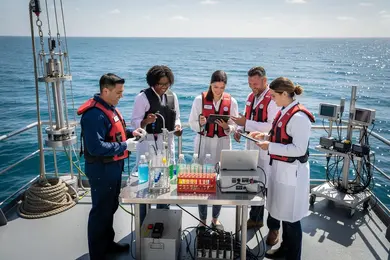
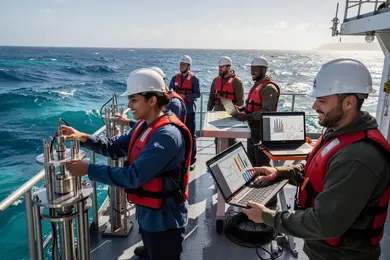
If your goal is to become a research oceanographer, a fully online bachelor's or professional master's may be only one step. Research-heavy oceanography careers often require in-person lab work, shipboard experience, thesis research, or eventually a Ph.D. If your goal is coastal planning, marine conservation support, environmental consulting, GIS, data analysis, or aquaculture, online programs can be more practical.
Why Have Accredited Online Oceanography Degree Programs Eliminated GRE and GMAT Requirements?
Many science departments have reduced standardized testing requirements because the GRE is expensive, time-consuming, and not always the best predictor of graduate success. Oceanography and marine science programs also need applicants with field readiness, quantitative ability, scientific writing skills, and persistence-qualities that a single exam may not show clearly.
This shift is not limited to marine science. Test-optional graduate admissions have expanded across applied professional fields, including health, education, behavior analysis, and environmental programs; for example, students comparing BCBA master's programs online will often see the same emphasis on GPA, experience, and recommendations over standardized tests.
For oceanography-related programs, the GMAT is especially uncommon because it is designed for business school admissions. The GRE may still appear in research-focused science programs, but many online and professional programs now prioritize evidence that is closer to the work students will actually do.
Schools commonly remove or reduce test requirements for several practical reasons:
- Access: Removing the test can help working adults, military learners, rural students, and career changers apply without paying for prep courses or exam fees.
- Holistic review: Admissions committees can weigh transcripts, prerequisite performance, lab experience, GIS skills, coding experience, recommendations, and career goals.
- Workforce demand: Coastal resilience, water quality, climate adaptation, aquaculture, and ocean data roles need trained professionals, not only traditional full-time research students.
- Online program design: Professional online degrees often serve students who already have work experience, making a résumé and statement of purpose more useful than a general aptitude exam.
Students should not interpret this trend as lower standards. It means the burden of proof moves from a test score to the rest of the application.
What Admissions Criteria Matter Most Without GRE or GMAT Scores?
Without GRE or GMAT scores, admissions committees look harder at whether you can handle scientific coursework and complete the program. For oceanography-related degrees, the strongest applications usually show a blend of science preparation, quantitative readiness, writing ability, and clear career direction.
The table below shows the admissions factors that usually carry the most weight when standardized tests are not required. Use it to identify weak spots before you submit applications.
| Admissions factor | Why it matters in oceanography-related programs | How to strengthen it without test scores |
| Undergraduate GPA | Shows consistency and academic readiness, especially in science and math courses | Explain upward trends, retake missing prerequisites when appropriate, or complete recent graded coursework |
| Science prerequisites | Oceanography draws from biology, chemistry, physics, geology, statistics, and environmental science | Complete required courses before applying or ask whether conditional admission is available |
| Quantitative preparation | Ocean data work often involves statistics, modeling, GIS, remote sensing, or coding | Document coursework or certificates in statistics, Python, R, GIS, calculus, or data analysis |
| Statement of purpose | Shows whether your goals match the program's curriculum and faculty or professional focus | Name the specific concentration, skills, and outcomes you want rather than writing a generic essay |
| Recommendations | Provides evidence of research ability, field reliability, writing, teamwork, and professionalism | Choose recommenders who can discuss specific academic or professional performance |
| Résumé or CV | Highlights fieldwork, environmental projects, lab work, teaching, agency experience, or technical skills | Quantify responsibilities where possible and emphasize relevant tools, field methods, and reports |
If you are missing prerequisites, do not assume you are disqualified. Some programs allow conditional admission, prerequisite completion before matriculation, or leveling courses. Others are stricter, especially if the curriculum begins with advanced physical oceanography, marine chemistry, geospatial analysis, or research methods.
Applicants who are still building academic confidence can compare related entry points before committing to a graduate program. For example, students exploring lower-cost foundations may also research the quickest associate's degree options before transferring into a bachelor's program with stronger science preparation.
No-GRE and no-GMAT programs are not automatically easier. They are easier in one narrow sense: you do not need to schedule, pay for, prepare for, or submit a standardized test. But admissions can still be competitive if the program has limited seats, requires science prerequisites, or expects applicants to show strong technical readiness.
The real difference is how the program measures readiness. In a test-required program, a high GRE quantitative score might offset a weaker transcript. In a no-test program, you usually need to prove readiness through grades, recent coursework, work experience, recommendations, and writing.
Use the following decision rule when deciding whether a no-test program is a safer admissions path:
- If your transcript shows strong science and math performance, a no-GRE program may help you avoid an unnecessary application barrier.
- If your GPA is uneven but your recent coursework, field experience, or technical skills are strong, a holistic no-GRE review may give you more room to explain your preparation.
- If your GPA and prerequisites are both weak, skipping the GRE will not fix the core problem; you may need additional coursework before applying.
- If a program is test-optional and you have excellent GRE scores, submitting them may help, especially for quantitative or research-heavy tracks.
The best admissions strategy is not simply to choose the program with the fewest requirements. It is to choose the program where your strongest evidence aligns with what the admissions committee values.
Skipping the GRE or GMAT does not determine academic quality. Accreditation, faculty qualifications, curriculum design, student support, research or field opportunities, and employer relevance matter far more than whether a standardized test is required.
For U.S. students, the most important baseline is institutional accreditation from an accreditor recognized by the U.S. Department of Education or the Council for Higher Education Accreditation. Oceanography itself does not have a single universal programmatic accreditor like some licensed health professions, so students should evaluate institutional accreditation and program substance together.
The table below explains what to check before treating a no-GRE or no-GMAT program as credible.
| Quality signal | What it tells you | Why it matters |
| Institutional accreditation | The college or university meets recognized academic and administrative standards | Important for federal financial aid, transfer credit, employer recognition, and graduate study |
| Curriculum alignment | Courses match your goal, such as marine ecology, physical oceanography, GIS, climate, coastal processes, or data science | Prevents enrolling in a broad environmental program that does not actually support ocean-focused careers |
| Faculty expertise | Instructors have relevant academic, agency, research, or industry backgrounds | Stronger faculty fit can improve advising, projects, and career direction |
| Experiential learning | The program includes labs, fieldwork, capstones, internships, or applied projects where possible | Marine science employers often value evidence of applied skills, not only completed coursework |
| Student outcomes | The school reports graduation, retention, placement, or alumni information | Outcomes data helps you judge value beyond marketing claims |
Employers generally do not ask whether you submitted GRE or GMAT scores. They are more likely to care about the degree-granting institution, your technical skills, field or lab experience, software knowledge, communication ability, and whether your training fits the job.
No-GRE and no-GMAT online oceanography-related programs are most useful for students who have strong real-world or academic evidence but do not want a standardized test to slow down the application process. They can also help students who are returning to school after several years away from formal testing.
The best-fit students usually fall into several groups:
- Working environmental professionals: People in water quality, coastal planning, environmental consulting, fisheries, GIS, education, or agency roles who want ocean-focused credentials without leaving their jobs.
- Military and Coast Guard learners: Students with marine operations, mapping, logistics, emergency management, or technical experience who need flexible online coursework.
- Career changers with science backgrounds: Applicants from biology, geology, chemistry, engineering, data analysis, or environmental science who want to move toward marine systems.
- Transfer and adult undergraduate students: Learners who want a bachelor's-level path into ocean and earth science without graduate admissions testing.
- Students targeting applied roles: Applicants interested in coastal resilience, aquaculture, conservation support, environmental monitoring, or marine data rather than traditional academic research careers.
These programs may be a weaker fit for students who want a thesis-intensive, lab-heavy, or ship-based research pathway immediately. Those students should compare hybrid or campus-based oceanography programs, especially if they plan to pursue a Ph.D. or research assistantship.
Students who are choosing between science and non-science career directions should also consider whether an ocean-focused degree is necessary for their goals. For example, someone drawn to coastal insurance, port finance, renewable energy investment, or ocean-economy analytics may find that a degree in finance better supports business-facing roles tied to marine industries.
No-GRE admissions can reduce application-related costs, but it does not automatically make a program affordable. The most important cost comparison is total program price after tuition, mandatory fees, books, technology fees, travel for field components, and financial aid.
One concrete savings point is the exam itself. The GRE General Test has recently cost about $220 in the U.S., and GMAT testing has commonly cost more than that before score reports or prep materials. Avoiding the test can save money and time, but those savings are small compared with tuition, so they should not drive the whole decision.
The table below shows the cost factors that matter most when comparing online oceanography-related programs without GRE or GMAT requirements.
| Cost factor | What to compare | Why it affects value |
| Per-credit tuition | In-state, out-of-state, online, and graduate rates | Online programs sometimes charge a flat rate, but some still separate resident and nonresident tuition |
| Total credits required | Credits for the major, concentration, prerequisites, capstone, or thesis | A lower per-credit rate can be offset by a higher credit requirement |
| Field or lab requirements | Travel, lodging, equipment, local field placements, or summer intensives | Marine science can include costs that general online programs do not have |
| Transfer credit | Accepted associate, bachelor's, military, or prior graduate credits | Generous transfer policies can reduce both cost and completion time |
| Financial aid eligibility | Federal aid, employer tuition assistance, veterans benefits, scholarships, and assistantships | Institutional accreditation is essential for many forms of aid |
| Opportunity cost | Whether the format lets you keep working while enrolled | A flexible online program may be financially better even if tuition is not the lowest |
Before applying, request a full cost estimate from each school. Ask whether online students pay campus fees, whether field courses require travel, whether textbooks or software licenses are included, and whether prerequisite courses are billed separately.
If price is your main constraint, compare ocean-focused programs with broader low-cost online options before deciding. A guide to the best affordable online colleges can help you benchmark tuition and avoid choosing a program based only on admissions convenience.
Career outcomes depend on the degree level, curriculum, experience, location, and whether the program includes fieldwork or applied projects. A no-GRE or no-GMAT policy does not appear on your diploma and usually does not shape employer perceptions. Employers evaluate what you can do.
The BLS reported a 2024 median annual wage of $95,080 for geoscientists. That figure is useful context for oceanography-related career planning, but it should not be treated as a guaranteed salary for online degree graduates because many marine roles fall under different occupational categories, including environmental science, hydrology, conservation science, biological science, GIS, and education.
Common career directions for oceanography-related graduates include:
- Marine or environmental technician: Supports sampling, monitoring, mapping, water quality testing, equipment maintenance, and field data collection.
- Environmental scientist or specialist: Assesses environmental impacts, prepares reports, analyzes regulatory compliance, and supports restoration or mitigation projects.
- Coastal resilience or climate adaptation analyst: Uses environmental data to support planning for sea-level rise, flooding, erosion, and infrastructure risk.
- GIS or remote sensing analyst: Maps coastal features, habitats, bathymetry, land use, hazards, or marine spatial planning data.
- Aquaculture or marine resource professional: Works with sustainable seafood systems, hatcheries, stock health, water quality, and production operations.
- Science educator or outreach specialist: Translates marine and ocean science for schools, museums, nonprofits, agencies, or public engagement programs.
Research oceanographer roles are more likely to require graduate research training, field experience, and sometimes a doctorate. If that is your target, prioritize programs that offer research mentorship, thesis options, faculty alignment, and pathways into doctoral study rather than choosing only for online convenience.
The biggest mistake is assuming that "no GRE" means "low effort." When a program removes standardized testing, every other part of the application becomes more important. A rushed statement, vague résumé, or missing prerequisite can hurt more than the absence of a test score.
Watch for these common mistakes before submitting applications:
- Choosing a program only because it is no-GRE: Admissions flexibility is useful, but curriculum, accreditation, faculty, cost, and outcomes matter more.
- Ignoring prerequisites: Oceanography-related programs may expect biology, chemistry, geology, physics, statistics, calculus, GIS, or environmental science coursework.
- Submitting a generic statement: A strong essay explains why the specific program fits your ocean, coastal, marine biology, or geoscience goals.
- Using weak recommendations: Choose recommenders who can describe your scientific ability, technical skills, field reliability, writing, or professional judgment.
- Overlooking online format details: Some programs labeled online may still require field intensives, synchronous sessions, internships, or proctored assessments.
- Failing to verify accreditation: Do not rely on marketing language; confirm institutional accreditation and whether credits will transfer or support graduate study.
- Assuming test policies are permanent: A department may change from waiver-based to test-optional or test-free by admission cycle.
A stronger approach is to build an application checklist for each school. Include test policy, prerequisites, GPA expectations, deadlines, recommendation rules, transcript requirements, transfer credit policy, and whether the program requires field or campus attendance.
How Should Students Compare Accredited Online Oceanography Degree Programs Without GRE or GMAT Requirements?
The best program is not simply the one with the easiest application. It is the accredited program that matches your career goal, academic background, budget, schedule, and need for field or research experience.
Use this step-by-step comparison process before applying:
- Define the outcome first: Decide whether you want marine biology, physical oceanography, coastal management, GIS, aquaculture, environmental consulting, teaching, or research preparation.
- Check accreditation: Confirm recognized institutional accreditation and ask whether credits are transferable to graduate programs if you may continue later.
- Match the curriculum to your goal: Look beyond the program title and read course descriptions for ocean systems, coastal processes, marine ecology, GIS, statistics, climate, or data analysis.
- Verify the test policy in writing: Ask whether the program is test-free, test-optional, or waiver-based for your specific entry term.
- Compare total cost: Include tuition, fees, field travel, software, transfer credit, employer benefits, veterans benefits, and financial aid.
- Evaluate applied learning: Prioritize programs with capstones, internships, field experiences, research projects, GIS portfolios, or employer-connected assignments.
- Ask about student support: Online science students benefit from advising, tutoring, library access, career services, faculty office hours, and technical support.
- Review outcomes carefully: Ask where graduates work, whether alumni enter graduate school, and what kinds of projects students complete before graduation.
This comparison framework also applies beyond oceanography. Students evaluating specialized programs in very different fields, such as art therapy graduate programs, should use the same core questions: accreditation, curriculum fit, cost, supervised experience, and career alignment.
For most students, the smartest shortlist includes three categories: one strong ocean-focused option, one broader environmental or geoscience option with marine-relevant electives, and one lower-cost safety option that still supports the intended career path.
Other Things You Should Know About Oceanography
An online degree can help you build relevant knowledge, especially at the bachelor's or professional master's level. However, research oceanographer roles often require in-person fieldwork, lab experience, thesis research, and sometimes a Ph.D., so you should choose programs with applied projects or pathways to research training.
Oceanography is interdisciplinary. Biological oceanography studies marine life, chemical oceanography examines seawater chemistry, physical oceanography focuses on currents and ocean circulation, and geological oceanography studies seafloor and coastal processes.
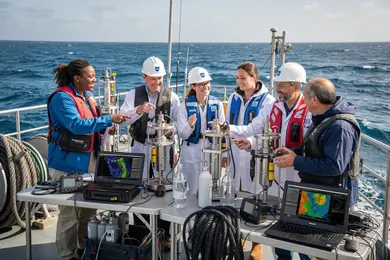
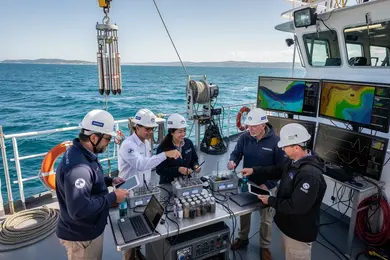
Field experience is highly valuable, even when not required. Sampling, mapping, lab methods, boat safety, GIS projects, internships, or local environmental monitoring can make an online degree more practical for marine and coastal employers.
Useful skills include statistics, GIS, remote sensing, Python or R, scientific writing, data visualization, water quality methods, environmental regulations, and project management. These skills can broaden your options across research, consulting, agencies, nonprofits, and coastal planning.
- How to become an oceanographer | Conservation Careers https://www.conservation-careers.com/how-to-become-an-oceanographer/
- Marine Biology Degree Programs in the U.S. | MarineBio Conservation Society https://www.marinebio.org/careers/us-schools/
- Oceanographer - Salary, How to Become, Job Description & Best Schools https://www.onlinedegree.com/careers/life-physical-science/oceanographer/
- Affordable Accredited Online Colleges https://www.onlineu.com/online-schools/low-tuition