2027 Online Oceanography Degree Programs With No Letters of Recommendation Required

Co-Founder and Chief Data Scientist
Applicants interested in ocean science may want an online degree without tracking down academic or workplace references. "No letters of recommendation required" can make applying more practical for working adults, career changers, and students whose prior instructors are hard to contact.
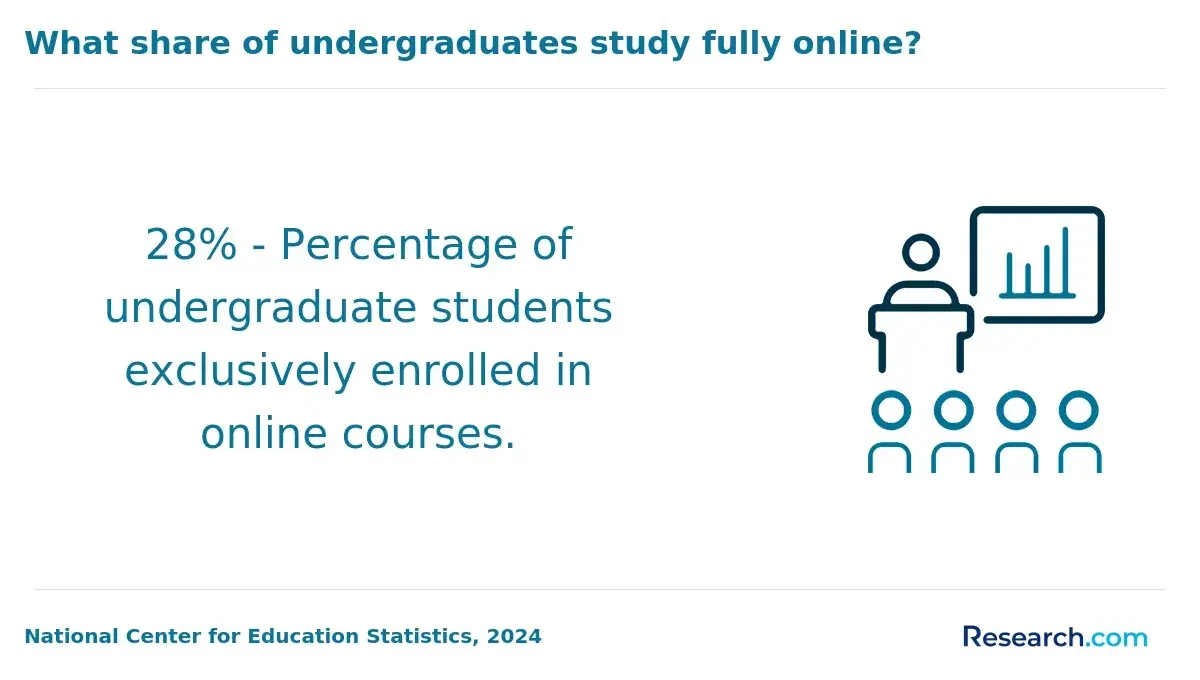
This guide explains how to identify genuinely no-recommendation oceanography options, evaluate what schools review instead, and avoid misleading admissions claims. The National Center for Education Statistics reported that 53.5% of U.S. postsecondary students took at least one distance-education course in fall 2022, underscoring why flexible degree pathways remain important.
Key Things You Should Know
- No letters required means recommendation letters are not part of the application for the specific program and applicant type; it does not mean transcripts, prerequisite science courses, minimum GPA, an essay, or a resume are waived.
- Fully online degrees titled "oceanography" are uncommon in the U.S.; applicants often compare online marine science, environmental science, geoscience, earth science, or ocean studies programs with substantial ocean-focused coursework.
- Program quality matters more than streamlined admissions: verify institutional accreditation, field and lab requirements, total cost, faculty expertise, and career relevance before applying.
Which Online Oceanography Degree Programs Require No Letters of Recommendation?
There is not a large, stable national market of fully online, standalone oceanography degrees with universally published no-recommendation policies. Many oceanography programs are research-intensive and include lab, vessel, coastal-field, or thesis components, particularly at the graduate level. Admissions rules also change by degree level, term, residency status, and whether an applicant seeks regular or nondegree enrollment.
The most realistic search includes online bachelor's completion programs and interdisciplinary degrees in marine science, environmental science, geoscience, earth science, or environmental studies that allow oceanography concentrations or electives. A school may advertise "no recommendations" for undergraduate admission while requiring them for its marine-science graduate program, so applicants should confirm the requirement on the exact program's application checklist.
This comparison shows the types of options students are likely to encounter. It is a screening tool rather than a guarantee of a school's current policy.
| Program type | Availability fully online | Likelihood of no-letter admissions | Important limitation |
| Associate degree with ocean science coursework | Sometimes available through community colleges | Often more likely for open-access admission | Usually provides foundations, not preparation for research oceanographer roles |
| Bachelor's in environmental science or geoscience with marine electives | More common than a named oceanography degree | May be possible, especially for transfer or adult applicants | Check whether labs, fieldwork, and upper-level ocean courses are available online |
| Bachelor's completion program in marine or environmental studies | Available at some institutions | Varies by transfer status and prior credits | May require a prior associate degree or substantial transferable coursework |
| Master's in oceanography or marine science | Uncommon as a fully online research degree | Less common because faculty assess research readiness | Thesis, laboratory, field, and advisor-match requirements may apply |
| Graduate certificate in ocean, climate, or environmental science | Sometimes available online | Can have simpler admissions than a master's program | Does not substitute for a full degree where an employer requires one |
Students beginning with lower-division coursework can also compare a quickest associates degree pathway, but should ensure that it includes transferable calculus, chemistry, physics, biology, and earth-science courses if a later oceanography bachelor's degree is the goal.
To find a genuinely eligible option, first search the institution's catalog for "oceanography," "marine science," "coastal," and "geoscience." Then open the admissions page for the exact online degree, select the intended term, and read the application checklist. If the wording says letters are "optional," "encouraged," "recommended," or "required for competitive consideration," treat that differently from "not required."
What Are the Admission Requirements for Online Oceanography Degree Programs With No Recommendation Letters?
Online undergraduate programs without recommendation letters commonly use a document-based review. Applicants generally submit an application, official or unofficial transcripts for initial review, and proof of high school completion or prior college credit. Transfer applicants may also need course descriptions or syllabi when requesting credit for science and math coursework.
Graduate-level ocean and marine science programs usually have more subject-specific expectations, even if references are not required. A school may expect a bachelor's degree and prior coursework in mathematics, chemistry, physics, biology, geology, or statistics. Some programs use a GPA threshold, while others assess the full academic record.
The following materials commonly replace or accompany recommendation letters. Requirements should be confirmed directly with admissions because a university-wide application policy may differ from a department's policy.
| Application material | What admissions staff may assess | How applicants can strengthen it |
| Academic transcripts | Preparation in quantitative and laboratory-based coursework, grades, and progression | Highlight completed prerequisites and explain major grade trends when relevant |
| Personal statement | Career direction, interest in ocean science, and readiness for online study | Connect prior coursework or experience to a specific academic goal |
| Resume or curriculum vitae | Work history, technical skills, volunteer experience, and professional maturity | Include data, GIS, laboratory, boating safety, environmental monitoring, or fieldwork experience accurately |
| Prerequisite review | Whether the applicant can succeed in advanced science courses | Ask whether missing courses can be completed before or during enrollment |
| Writing sample or supplemental questions | Communication, analytical thinking, and fit with program expectations | Answer directly and use concrete examples rather than broad environmental interests |
Do not assume standardized tests are automatically waived. Many institutions have reduced or eliminated general test requirements, but a particular graduate department can still request GRE scores, English-language proficiency documentation for eligible applicants, or additional evidence of quantitative preparation.
Are Online Oceanography Programs With No Letters of Recommendation Easier to Get Into?
No-recommendation admissions are not automatically easier or less rigorous. They are simply structured to assess readiness through materials the applicant controls directly, such as grades, completed prerequisites, an essay, and relevant experience. This approach can be especially helpful for adults returning to school after years away from a classroom or applicants whose supervisors cannot provide detailed academic references.
Admission can still be competitive when seats, laboratory placements, faculty supervision, or field experiences are limited. At the graduate level, a program may require applicants to demonstrate research fit or secure an advisor before admission; removing letters does not remove those academic constraints.
Applicants should be cautious about three common assumptions:
- Do not interpret "no recommendations" as open admission or guaranteed acceptance.
- Do not overlook science and math prerequisites because they can affect both admission and later course sequencing.
- Do not choose a program solely for a shorter application if its curriculum lacks the ocean, coastal, laboratory, or data-analysis training needed for your goal.
A simpler process may be a good fit for students with a solid transcript, relevant experience, or clearly documented transfer credit. Applicants with weak prerequisite grades, limited science preparation, or ambitions for research-intensive graduate study may benefit from programs that offer advising, bridge coursework, tutoring, or a structured pathway into advanced science.
Without recommendation letters, an admissions team has less third-party commentary about an applicant's persistence, technical ability, and collaboration. Schools commonly compensate by reviewing evidence already contained in academic and professional records. For oceanography-related study, quantitative readiness and prior laboratory science can be more informative than a generic reference.
A strong application creates a clear connection between past preparation and the program's curriculum. For example, an applicant moving from environmental compliance, fisheries support, mapping, data analysis, teaching, or public-sector work can explain how those experiences support a future focus in coastal management, ocean data, marine conservation, or climate science.
Applicants can take these steps before submitting a no-recommendation application:
- Match each prerequisite on the program page with a completed course on your transcript.
- Request an unofficial transcript early and resolve name, grade, or transfer-record discrepancies before deadlines.
- Use the personal statement to describe a specific educational and career objective, not only a general interest in oceans.
- List technical tools honestly, including spreadsheets, statistics software, GIS, programming, laboratory methods, or field-data experience.
- Ask admissions whether an optional resume, statement, or portfolio can provide context even when letters are not accepted.
Career outcomes vary substantially by degree level. The U.S. Bureau of Labor Statistics reported a May 2024 median annual wage of $99,240 for geoscientists, a broad occupation that can include professionals working with marine and earth systems. That figure is not an oceanography-degree salary guarantee: job duties, geographic location, employer, advanced degree requirements, and specialized technical skills all affect opportunities.
Students considering a broader quantitative career backup may also explore an online degree in finance, although finance programs do not replace the science preparation needed for oceanography or marine research roles.
Legitimate online degrees are awarded by institutions recognized by a U.S. institutional accreditor. Institutional accreditation is particularly important because it affects credit transfer, eligibility for federal student aid, graduate-school recognition, and employer confidence. Oceanography itself does not have one universal programmatic accreditor comparable to some licensed professions, so curriculum quality and institutional oversight deserve close review.
Use the U.S. Department of Education's Database of Accredited Postsecondary Institutions and Programs to verify an institution's current status. Then confirm that the accrediting organization is recognized by the Department of Education or the Council for Higher Education Accreditation. A school's own website is useful, but it should not be the only source used for verification.
Before paying an application fee or deposit, review these legitimacy checks:
- Confirm that the institution, not merely an affiliated learning platform, holds recognized institutional accreditation.
- Read the catalog for required credits, courses, grading rules, faculty qualifications, and graduation requirements.
- Identify which courses include hands-on laboratories, simulations, local field activities, residencies, or equipment requirements.
- Check whether the degree title, transcript, and diploma are the same as those awarded to campus students when that matters to you.
- Request a written explanation of tuition, mandatory fees, technology charges, and any travel or fieldwork costs.
- Be wary of vague claims about "accreditation," guaranteed jobs, unusually short completion promises, or pressure to enroll before receiving a complete cost estimate.
Employers generally evaluate the degree's institution, curriculum, skills, and relevant experience rather than treating online delivery alone as disqualifying. For research, technical, or field-based roles, ask whether the program provides credible opportunities to practice data collection, scientific writing, coding, GIS, laboratory methods, and collaborative project work.
Applicants comparing the institutional quality and price of online bachelor's options can use resources on best affordable online colleges alongside program-specific ocean and environmental science requirements.
Cost depends more on institution type, residency rules, transfer credit, and required science experiences than on whether recommendation letters are requested. Tuition can be charged per credit, per term, or as a flat program rate. Online learners should also budget for course materials, proctoring, software, laboratory kits, travel, optional or required fieldwork, and graduation fees.
For context, College Board reported average published tuition and fees of $11,610 for in-state students at public four-year institutions in the 2024-25 academic year. This national benchmark is not the price of a specific online oceanography degree, and it excludes housing, transportation, course fees, and other expenses. Use it only as a broad starting point when comparing a public option with private or out-of-state tuition.
Ask every school for a program-specific estimate based on the credits you still need. The table identifies the cost factors most likely to change the total.
| Cost factor | Why it changes total cost | What to confirm |
| Transfer credits | Accepted credits can reduce the number of courses purchased from the new institution | Maximum transfer limit, age of science credits, and equivalency decisions |
| Residency classification | Public institutions may charge different rates by residency or online enrollment category | Whether online students receive in-state, distance-learning, or nonresident pricing |
| Laboratory and field requirements | Science courses may have supplies, kits, travel, or site-based costs | Required in-person sessions, local field placements, and estimated out-of-pocket expenses |
| Course load | Part-time enrollment can spread payments but may extend time to graduation | Per-credit rate, term fees, and whether tuition changes at full-time enrollment |
| Prior learning policies | Some schools award credit for approved exams or evaluated learning | Eligible exams, portfolio fees, and whether credits satisfy major requirements |
Do not use admissions simplicity as a value measure. A lower-priced accredited program that meets your prerequisite, skills, and career needs may offer better value than a more expensive option with a faster application process.
Streamlined admissions do not prevent a student from seeking financial aid. Eligible students enrolled in an accredited degree program can generally submit the Free Application for Federal Student Aid (FAFSA) for federal grants, loans, and work-study consideration. Eligibility depends on citizenship or eligible noncitizen status, enrollment, satisfactory academic progress, and other federal requirements - not on whether recommendation letters were part of admission.
Financial aid can differ for certificates, nondegree study, and programs offered through third-party platforms. Before enrolling, confirm the program's federal aid eligibility, the school code needed for FAFSA, and whether the online program uses the same aid rules as its campus equivalent.
Students should compare aid offers on net cost rather than scholarship headlines. A practical review includes:
- Separate grants and scholarships, which generally do not require repayment, from federal and private loans.
- Confirm whether scholarships are renewable and what GPA or enrollment level is required to keep them.
- Ask whether required lab, fieldwork, equipment, and travel charges can be covered by aid.
- Review the academic calendar because accelerated terms can change disbursement timing and course-load planning.
- Use the institution's net price calculator and speak with financial aid staff before accepting private borrowing.
Working professionals who are comparing graduate pathways in other fields may find examples of tuition comparison approaches in guides to BCBA masters programs online, but oceanography applicants should rely on the cost sheet and aid rules for their own institution and degree level.
Completion time depends on degree level, transferred credits, prerequisite gaps, course sequencing, and whether field or laboratory components are offered every term. A traditional bachelor's degree commonly requires about 120 credits, while a master's degree often requires roughly 30 to 36 credits; the actual timeline can be longer when students need foundational math and science courses or complete a capstone, thesis, internship, or field requirement.
Online delivery can help students fit coursework around work and family obligations, but it does not automatically shorten scientific training. Sequential courses such as calculus, physics, chemistry, statistics, programming, and upper-division ocean science can limit how quickly a student progresses.
This timeline framework can help applicants set realistic expectations.
| Pathway | Typical pacing pattern | Timeline considerations |
| Associate or early-transfer route | Lower-division general education and science foundations | Time varies with math placement and the number of transferable laboratory courses |
| Bachelor's completion route | Upper-division major courses after transfer credit review | May be shorter for students entering with an approved associate degree or substantial credit |
| Full bachelor's degree | General education, prerequisites, major courses, and capstone work | Often requires careful planning around science sequences and any in-person components |
| Graduate degree or certificate | Advanced coursework, applied project, and sometimes research | May require prior discipline-specific coursework before enrollment or before advanced classes |
Ask for a term-by-term degree map before enrolling. Specifically confirm whether needed courses run every term, whether summer enrollment is available, and whether a required field experience could delay graduation.
Yes, many online programs accept transfer credits, but acceptance is never automatic. Institutions typically evaluate the source school's accreditation, course content, grade earned, credit age, and alignment with their own degree requirements. General education courses may transfer more easily than specialized marine, geology, chemistry, calculus, or laboratory science courses.
For oceanography-related study, transfer evaluation is especially important because missing one prerequisite can delay multiple later courses. Obtain an official written transfer evaluation before relying on an estimated completion date or total tuition figure.
Applicants can reduce avoidable transfer problems by following a deliberate process:
- Send transcripts from every previously attended college, including institutions where no degree was completed.
- Save course descriptions, syllabi, lab outlines, and textbook information for science and math classes that may need departmental review.
- Ask which transferred credits apply specifically to the major, not just to total elective credit.
- Confirm minimum grade requirements for transferred prerequisite courses and any time limits on older science coursework.
- Request a revised degree plan showing remaining credits, required sequencing, and projected field or laboratory obligations.
Students exploring alternative graduate disciplines should not assume coursework transfers across unrelated fields; for example, art therapy graduate programs have distinct prerequisite and professional preparation expectations from oceanography and environmental science programs.
How Should You Compare Online Oceanography Degree Programs That Do Not Require Letters of Recommendation?
The best choice is not necessarily the program with the fewest application documents. Compare each option against your intended outcome: preparation for environmental work, advancement in a related job, transfer to a bachelor's degree, graduate-school preparation, coastal-policy work, technical data roles, or personal academic interest.
Use the same comparison criteria for every school so that a polished website or quick response from admissions does not overshadow essential academic details.
| Comparison category | What to examine | Why it matters |
| Admissions policy | Exact program, degree level, start term, and applicant category | Confirms that letters are truly not required rather than merely optional or waived selectively |
| Curriculum | Oceanography, marine science, climate, coastal systems, GIS, statistics, coding, laboratory, and field coursework | Shows whether the degree supports your intended role or later graduate study |
| Delivery format | Asynchronous classes, live sessions, residencies, local fieldwork, and proctored exams | Determines whether the program fits work, family, travel, and location constraints |
| Academic support | Tutoring, library access, faculty office hours, career support, and disability services | Can affect persistence in demanding quantitative and science courses |
| Quality signals | Institutional accreditation, transparent faculty information, catalog requirements, and published policies | Helps distinguish a credible degree from a weak or opaque offering |
| Total cost | Tuition, fees, transfer policy, aid, lab expenses, and travel | Provides a more useful affordability measure than advertised per-credit tuition alone |
Before applying, contact admissions with a short written list of questions and keep the response. Ask whether recommendation letters are required for your exact application, what materials replace them, whether any course requires in-person attendance, how transfer credits apply to the major, and what all mandatory costs are. Written confirmation is valuable if website language later changes.
A no-recommendation online oceanography-related degree is most suitable for applicants who want accessible admissions but are still ready to demonstrate academic preparation. It is a weaker fit for students who need intensive, hands-on marine research training but cannot attend any field, laboratory, or residency component. In that case, a hybrid program or campus-based marine science pathway may better align with the goal.
Other Things You Should Know About Oceanography
Often, yes. No-recommendation admissions can be helpful when former instructors are difficult to contact. You may still need transcripts, evidence of prerequisite coursework, a personal statement, and possibly a resume showing work or technical experience.
Optional is not the same as not required. Read whether optional letters can influence scholarship decisions, competitive admission, research placement, or graduate assistantships. Ask admissions whether submitting no letters will affect review of your application.
It can support relevant knowledge and skills, especially in environmental science, GIS, data analysis, climate, conservation, or coastal management. Research-intensive oceanographer roles may require substantial laboratory or field experience and often a graduate degree, so compare the curriculum with the requirements of your target jobs.
Check the program page when you begin researching, again before submitting an application, and once more before paying a deposit. Requirements can change by term, department, degree level, or applicant type, so request written confirmation for the specific program you intend to enter.
- How to become a marine biologist? | Conservation Careers https://www.conservation-careers.com/how-to-become-a-marine-biologist/
- Onsite Internships - BDRI https://www.thebdri.com/onsite-internships/
- About BOS | Discover Marine Conservation Today - Blue Ocean Society for Marine Conservation https://www.blueoceansociety.org/internships
- MSU TCTO Makes History with the Philippines' First Undergraduate BS Oceanography Program | MSU TCTO https://msutcto.edu.ph/PhF1stUBSOP
- Cost & Financial Aid https://www.semesteratsea.org/financial-aid/
- SEA Summer Programs for High School Students: Cost & Application Guide https://pioneeracademics.com/news/sea-summer-programs-for-high-school-students-how-to-apply-cost-and-is-it-worth-it/
- Marine Biology Internships Abroad | Go Overseas https://www.gooverseas.com/internships-abroad/marine-biology
- AQUARIUS Training Opportunities for Early Career Scientists in Marine and Freshwater Domains https://aquarius-ri.eu/news/aquarius-training-opportunities-for-early-career-scientists-in-marine-and-freshwater-domains/
- Resources https://www.marinecareers.net/resources
- MRes Tropical Biological Oceanography https://www.britishcouncil.ph/tne/joint-dual-post-degrees/msc-tropical-biological-oceanography