2027 Is Oceanography a Hard Major? What Students Should Know

Co-Founder and Chief Data Scientist
Oceanography is often perceived as a challenging major due to its demanding blend of natural science, math, and fieldwork. In the U.S., only about 3% of earth science degrees focus on oceanography, reflecting its specialized and rigorous nature. This exclusivity highlights both the appeal and the intensity of the curriculum students face in this field.
This article explores the rigor of oceanography courses, the heavy workload students can expect, essential skills such as data analysis and lab work, and factors like personal interest and academic background that shape the perceived difficulty for different learners.
Key Benefits of Oceanography as a Major
- Oceanography develops analytical and technical skills valuable for diverse careers, supporting career changers seeking practical expertise applicable to environmental and marine science roles.
- Flexible course structures and online options accommodate full-time workers returning to school, enabling gradual mastery of complex topics alongside professional commitments.
- Traditional undergraduates gain hands-on research experience and critical thinking abilities, fostering confidence to tackle challenging scientific problems and advance academic growth.
Where Does Oceanography Rank Among the Hardest College Majors?
Oceanography is generally considered a moderately challenging major based on national difficulty rankings that assess factors such as workload intensity, analytical or quantitative skill requirements, and the extent of lab or fieldwork involvement.
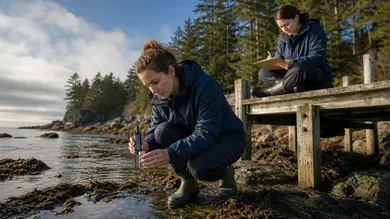
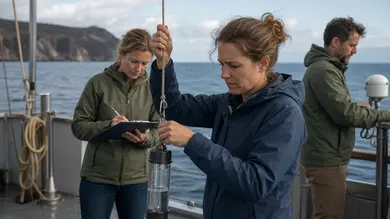
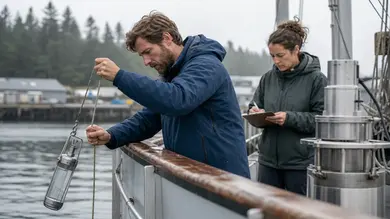
Students in oceanography often balance classroom studies with practical experiences, including lab sessions and outdoor data collection, sometimes aboard research vessels.
Compared to highly demanding majors like chemical engineering and physics, which often require over 18-20 hours of weekly study, oceanography students typically dedicate around 15-17 hours per week, reflecting a solid but less intense workload than top-tier STEM fields.
The difficulty of oceanography can vary significantly depending on the institution and a student's prior preparation. Schools with rigorous research programs, such as MIT or UC San Diego, may present tougher coursework and higher expectations.
Comparing oceanography to other majors, it usually ranks below harder disciplines like chemical engineering, physics, and biochemistry, but alongside fields such as geology, environmental science, and biology, and above easier majors like communications or business administration.
Ultimately, how difficult oceanography feels depends largely on an individual's comfort with math, science, and field-based work, as well as their academic background and personal strengths.
What Factors Make Oceanography a Hard Major?
The major oceanography can be particularly challenging due to its demanding academic requirements and the extensive skill set it necessitates. Students must navigate rigorous coursework and hands-on fieldwork that require strong technical and analytical abilities.
- Academic Requirements for Oceanography Majors: Students need a solid foundation in STEM subjects, including advanced mathematics such as calculus, chemistry, physics, and biology. Graduate programs expect a cumulative GPA of 3.0 or higher, with no grades lower than a B in core classes.
- Oceanography Course Workload and Difficulty: The workload involves substantial lecture hours, laboratory research, and complex data analysis. These elements develop critical skills for interpreting marine phenomena but demand significant time and intellectual effort.
- Time Commitment: Full-time students are generally expected to complete degree requirements within two years, managing long hours spent in labs and extensive field assignments. Fieldwork is mandatory, often requiring students to spend significant time at sea regardless of their focus area.
- Technical and Analytical Complexity: Success in oceanography requires proficiency in statistical methods and original research development. Students must prepare for challenging qualifying exams and research proposal defenses that demand high analytical and critical thinking capabilities.
For students balancing other responsibilities, the intensity of this major can be considerable. Those interested in flexible education options might explore the quickest online degree for working adults to accommodate their schedules while meeting these academic demands.
Who Is a Good Fit for a Oceanography Major?
Identifying the right student profile is crucial for succeeding in an oceanography major due to its rigorous and interdisciplinary nature. Oceanography demands strong scientific foundations and the ability to engage in both theoretical and hands-on work.
- Strong Science Foundation: Students with a solid background in biology, chemistry, geology, physics, and mathematics are better equipped for the coursework. Mastery in at least one core science enhances understanding and success in complex topics.
- Curious and Interdisciplinary Learners: A natural curiosity about the ocean and openness to multiple scientific fields helps students integrate diverse knowledge, which is essential for tackling marine problems.
- Hands-On Researchers: Those who enjoy collecting data outdoors and conducting laboratory analysis thrive due to the major's emphasis on practical research and fieldwork.
- Analytical Thinkers and Problem Solvers: The skills needed for oceanography degree programs include strong analytical thinking and adaptability, which aid in managing theoretical concepts and dynamic environmental conditions.
- Effective Collaborators: Since oceanography often involves teamwork and communication, students who excel at collaboration improve project outcomes and develop what makes a successful oceanographer.
Students interested in understanding the challenges of such fields can explore more about easy bachelors degree options for comparison and planning.
Students often find oceanography challenging due to its interdisciplinary scope, blending biology, chemistry, physics, and geology. However, adopting targeted strategies can significantly reduce the difficulty and improve overall mastery of the subject.
- Build a Strong Foundation: Strengthen your understanding of essential prerequisite subjects like general biology, chemistry, and earth science before tackling specialized oceanography topics to ease progression through complex material.
- Group Related Topics: Organize oceanography concepts into broader themes such as ocean currents or nutrient cycles, which helps create meaningful connections and enhances memory retention.
- Prioritize Hands-On Learning: Actively engage in fieldwork and laboratory experiences to transform theoretical concepts into practical understanding and boost engagement.
- Practice Verbalizing Knowledge: Regularly explain concepts aloud to peers or mentors to deepen comprehension and improve communication skills critical for exams and professional settings.
- Seek Faculty Support Early: Approach instructors and advisors proactively with questions to clarify confusing topics before gaps in understanding widen.
A graduate who majored in oceanography shared how initially feeling overwhelmed by the breadth of topics almost led her to reconsider the field. She recalls, "I realized I couldn't just rely on lecture notes; diving deeper into foundational sciences early on became my anchor."
She credits the shift to grouping concepts systematically and consistent participation in lab work for transforming her study approach. "Talking through tough materials with classmates and professors wasn't just helpful-it was vital," she reflected.
Her experience shows that embracing a mix of structured study habits and active resource use can turn a seemingly daunting major into an achievable, rewarding academic journey.
Admissions to undergraduate oceanography programs are generally not very competitive, mainly due to smaller applicant pools compared to broader STEM fields. Most schools accept between 40% and 80% of applicants, reflecting moderate demand for this specialized major.
However, some elite universities, like the University of California, Los Angeles, or Boston University, have more rigorous admissions where acceptance may fall below 20%, driven by their reputation and research opportunities.
Selectivity often hinges on academic preparation and specific prerequisites. Competitive programs usually look for applicants with GPAs at or above 3.5 and require foundational courses in math, biology, chemistry, and sometimes physics.
Many programs value practical experience, encouraging internships or research participation. While growing environmental awareness is boosting interest in marine sciences, overall applicant numbers remain moderate, resulting in less intense competition than many other STEM disciplines.
When I asked a professional oceanography major about his admissions experience, he reflected on the process with positivity despite its challenges. "The toughest part wasn't just meeting GPA requirements but proving my passion through hands-on projects and internships," he explained.
He recalled the stress of waiting for decisions but appreciated how the application process encouraged him to develop a clear focus on his goals. "It felt competitive at times, especially with top programs, but my genuine interest and practical experience really helped me stand out," he added thoughtfully.
Current research shows that online oceanography degree difficulty is comparable to traditional on-campus programs. The overall challenges vary depending on individual learning styles and self-motivation rather than the delivery format.
Here is a comparison of key differences between online and on-campus oceanography majors:
- Academic Expectations: Both formats require mastery of identical concepts, assignments, and assessments, maintaining consistent academic rigor.
- Workload and Pacing: Online programs typically offer more flexible pacing but demand greater self-discipline and effective time management.
- Interaction and Support: On-campus students benefit from face-to-face access to instructors and peers, facilitating immediate feedback; online students rely on digital forums and must be proactive in seeking help to avoid isolation.
- Learning Environment: The physical presence in laboratories and fieldwork offers hands-on experience on-campus, whereas online learners depend on simulations and virtual resources.
- Unique Challenges: Online students may find complex lab or field topics more demanding without direct, in-person instruction and interaction.
Studies comparing student outcomes indicate that online oceanography students perform similarly to their on-campus counterparts when given the same exams and materials. This balance suggests that neither pathway is inherently easier or harder.
However, understanding your personal preferences and ability to adapt to independent learning plays a significant role in success. Those considering this major might also explore what the best majors in college to make money are, helping align academic and career goals.
Accelerated oceanography programs are generally harder than traditional formats due to condensed timelines, faster pacing, and increased workload intensity. Students face a significantly higher content density per week, demanding quicker comprehension of complex scientific concepts and methodologies.
This difference can be better understood by comparing key aspects of accelerated oceanography vs traditional programs:
- Course Pacing and Content Density: Accelerated programs compress the same coursework into a shorter time, increasing weekly study demands compared to the more spread-out traditional semesters.
- Workload Management: Accelerated tracks require handling multiple advanced courses, labs, and research simultaneously, suiting highly self-motivated students but challenging those less disciplined.
- Academic Expectations and Skill Demands: Higher discipline, resilience, and adaptability are essential in accelerated formats, where hands-on skill development opportunities are fewer.
- Learning Retention and Stress Levels: Rapid progression leaves little room for review, often increasing stress and reducing long-term retention compared to traditional pacing.
- Flexibility and Day-to-Day Scheduling: Traditional programs offer more breathing room between assignments, while accelerated ones maintain rigid, packed calendars that can complicate balancing academics with other commitments.
For students considering their options, evaluating these factors is critical to determining which format aligns better with their learning styles and life obligations. Many seek guidance from rankings of top schools for college to find programs matching their needs.
Many students can juggle a part-time job while majoring in oceanography, but success largely depends on workload intensity, schedule flexibility, and individual study habits.
Oceanography involves demanding lab work, field activities, and technical assignments that require significant weekly time commitments. Those with strong time management skills who secure flexible work hours are better positioned to balance both responsibilities effectively.
Students often manage this balance by carefully choosing their credit load each semester and opting for part-time positions that adapt to fluctuating academic demands, such as campus jobs or research assistant roles.
The nature of oceanography-with its combination of lectures, lab sessions, field trips, and project cycles-means workload can vary, sometimes intensifying unexpectedly. Utilizing academic resources like tutoring and online tools helps maintain performance during busy periods.
Despite these supports, some students find coordinating work and study difficult during peak lab or project times, highlighting the need for constant adjustment and personal organization.
Career paths for oceanography majors vary widely in difficulty, responsibility, and required skills. While some jobs reflect the rigorous academic and technical demands of the degree, others may be less demanding or challenging in different ways.
- Marine Biologist: These professionals study marine organisms and ecosystems, often involving fieldwork and lab analysis. This role generally matches the oceanography job difficulty compared to degree due to the strong scientific research and data interpretation skills needed.
- Marine Technician: Supporting research by maintaining equipment and collecting samples, marine technicians focus more on practical, hands-on tasks. Their role is typically less demanding academically than the degree, emphasizing technical troubleshooting over theoretical knowledge.
- Marine Researcher: Marine researchers lead studies on ocean processes and frequently manage field expeditions and publish results. This position can be as or more demanding than the degree itself, requiring advanced data analysis, project management, and often graduate-level education.
- Marine Chemist: By analyzing ocean water chemistry to study pollution and environmental health, marine chemists face complex lab procedures. Their work is comparably challenging to the major, especially in research or regulatory contexts.
- Marine Policy Analyst: These analysts interpret scientific data to guide ocean policy and conservation efforts. The role demands a different skill set focused on communication and legal frameworks, making it challenging in another dimension than the typical scientific roles.
Career demands reflect the rigorous interdisciplinary skills required of oceanography majors, who often face higher workloads and credit hour requirements than other science majors.
For those exploring what are trade school jobs alongside oceanography career options, understanding these varied demands is essential to aligning job expectations with educational background.
There is no clear evidence that oceanography graduates earn more solely because the major is more difficult. While oceanography demands a strong background in math, physics, chemistry, and hands-on research, salary levels tend to reflect the specific skills gained and the current market demand for those skills.
Academic challenge can build valuable analytical and technical abilities, but higher pay is more closely linked to how these skills meet employer needs in sectors like environmental consulting, research, or government work. Ultimately, the major's rigor itself does not directly drive earnings.
Several factors influence salary outcomes for oceanography graduates. Industry demand plays a significant role, with jobs in government agencies, private research firms, and energy companies usually offering higher pay than nonprofit or academic positions.
For instance, research scientists with a bachelor's in oceanography earn about $59,954 annually on average, while marine researchers make around $81,237.
Location matters, too; coastal states such as California tend to offer better salaries due to higher living costs and funding. Experience and advanced degrees can boost salaries from entry-level figures near $35,437 to median earnings above $64,000.
What Graduates Say About Oceanography as Their Major
- Denise: "Pursuing oceanography was definitely challenging, especially with the intense coursework and lab time, but it was incredibly rewarding. The hands-on research opportunities gave me a deep appreciation for marine ecosystems and provided a clear path to my career in environmental consulting. Although the average cost of attendance was steep, I believe the investment was worth it for the knowledge and connections I gained. "
- Charlie: "Studying oceanography was harder than I initially expected due to the blend of complex sciences involved, from chemistry to geology. However, this major profoundly shaped my perspective on climate change and drove me to participate in meaningful conservation projects. The financial burden was real, given the cost of specialized equipment and field trips, but it was a valuable journey overall. "
- Milo: "As someone who approached oceanography with a practical mindset, I viewed it as a demanding major that required consistent dedication and technical skills. The experience has been transformative professionally, allowing me to contribute to important marine research and policy advising. While the tuition fees and research-related expenses were considerable, they reflected the comprehensive education I received. "
Other Things You Should Know About Oceanography Degrees
Most oceanography programs require two to four semesters of calculus, one or two semesters of general physics, and introductory chemistry. Many also expect statistics or data analysis because students work with measurements, ocean models, and research data. Advanced physical oceanography often uses differential equations.
Fieldwork experience is crucial for Oceanography majors as it allows students to apply theoretical knowledge to real-world settings. It fosters practical skills such as data collection and analysis, and understanding marine environments firsthand, all of which are essential for a comprehensive understanding of the field.
Programming skills are increasingly vital for oceanography students in 2027. Many oceanographic studies rely on data analysis and computational modeling, making programming crucial for understanding large data sets and simulations. Familiarity with languages like Python and R can greatly enhance a student's ability to conduct research and contribute to scientific advancements.
- Reasons to Major in Marine Biology https://www.seamester.com/blog/8-reasons-to-major-in-marine-biology/
- Exploring trends and emerging topics in oceanography (1992–2021) using deep learning-based topic modeling and cluster analysis - npj Ocean Sustainability https://www.nature.com/articles/s44183-024-00097-z
- Oceanography College Class Pros and Cons https://scubaboard.com/community/threads/oceanography-college-class-pros-and-cons.66617/
- A New Way of Learning https://tos.org/oceanography/article/a-new-way-of-learning
- Deep Dive into Oceanography https://education.nationalgeographic.org/resource/deep-dive-oceanography/
- Applying - MIT-WHOI Joint Program https://mit.whoi.edu/admissions/apply/