2027 Online vs On-Campus Oceanography Degree Programs: Pros & Cons

Co-Founder and Chief Data Scientist
The popularity of online oceanography degrees has surged, with recent data showing that over 40% of U.S. college students enrolled in at least one online course in 2023. This growth reflects increasing demand for flexible learning options in specialized fields like oceanography. Evaluating the benefits and challenges of online versus on-campus programs is essential for prospective students. Key factors include flexibility, cost, the quality of the learning experience, and potential career outcomes. This article offers a detailed comparison to help individuals make informed decisions aligned with their academic goals and professional aspirations in ocean sciences.
Key Benefits of Online vs On-Campus Oceanography Degrees
- Online oceanography programs offer flexibility that allows students to balance studies with work or family commitments, with 68% of online learners reporting improved time management compared to traditional settings.
- Many online courses provide access to virtual labs and interactive simulations, enabling students to engage deeply with oceanographic data despite geographical constraints.
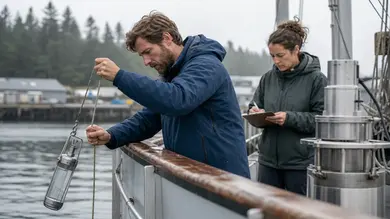
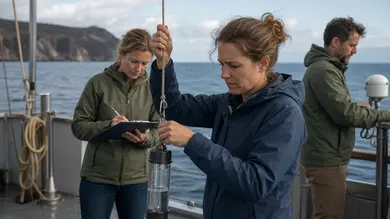
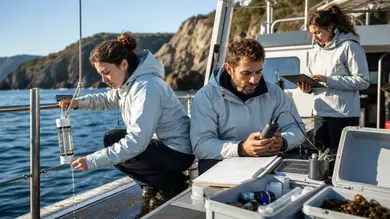
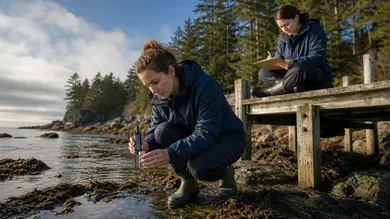
- On-campus oceanography degrees provide invaluable hands-on fieldwork opportunities, with access to research vessels and laboratories which are critical for practical experience and networking in the field.
Are Online vs. On-Campus Oceanography Programs Structured the Same Way?
The structure of online and on-campus oceanography degree programs differs primarily in course delivery methods, scheduling flexibility, and student interaction. Both formats aim to meet similar academic standards but create distinct learning experiences shaped by their unique setups.
The following points compare key structural elements of online and on-campus oceanography programs, highlighting how these differences influence student engagement and accessibility.
- Course Delivery: Online programs utilize video or audio lectures, interactive discussion boards, and digital assignments, allowing students to study remotely and often at a self-paced rhythm. On-campus programs provide in-person lectures, complemented by hands-on laboratory and fieldwork sessions that require physical attendance, offering direct experiential learning.
- Class Schedules: Students in online oceanography programs benefit from greater scheduling flexibility, accessing materials and completing coursework at times that fit their personal and professional lives while still adhering to deadlines. Conversely, on-campus students follow fixed class times and campus schedules, which demand consistent attendance and may limit flexibility for those with other commitments.
- Interaction and Collaboration: Online learners connect with instructors and classmates primarily through virtual discussion boards, web chats, and emails, which can reduce opportunities for spontaneous interaction and require strong self-motivation. On-campus students experience face-to-face engagement, group projects, and in-person discussions, fostering a more traditional academic community atmosphere.
- Experiential Learning: While online students sometimes access virtual labs or participate in limited in-person field sessions, fully replicating hands-on experiments remotely is challenging. On-campus programs regularly integrate laboratory work and field experiences into the curriculum, providing immediate, practical exposure crucial for oceanography studies.
Are Admission Requirements the Same for Online vs On-Campus Oceanography Degree Programs?
Colleges and universities maintain consistent academic standards for both online and on-campus oceanography degree programs to ensure graduates have comparable knowledge and skills. However, they may differ in how they assess an applicant's readiness for the demands of online learning.
The following comparison outlines key admission requirements that illustrate similarities and distinctions between online and on-campus oceanography program entry criteria.
- Academic Qualifications: Both online oceanography degree admission requirements and on-campus programs typically demand a bachelor's degree in natural sciences, engineering, mathematics, or related fields with a minimum GPA around 3.0. Required prerequisite coursework usually includes calculus, physics, chemistry, and biology; on-campus programs may require additional specialized courses like organic chemistry for biological oceanography.
- Work Experience: Online programs often cater to working professionals and may value or require relevant experience in ocean science or related areas, whereas on-campus programs generally focus on academic preparation without emphasizing prior professional experience.
- Application Materials: Both program types require transcripts, letters of recommendation, and personal statements. Online applications may emphasize an applicant's motivation for remote learning and ability to manage study alongside employment, sometimes including an online interview to evaluate distance learning readiness. On-campus programs tend to prioritize academic fit and research potential.
- Standardized Tests: GRE scores are increasingly optional across the board, though some on-campus, research-intensive programs may still request subject GREs. This flexibility reflects evolving admissions trends for both formats.
- Language Proficiency: International students applying to either format must provide TOEFL or IELTS scores meeting comparable minimum thresholds.
- Visa and Residency: Only on-campus programs qualify international students for F-1 visas, while online learners can study remotely without needing visa sponsorship or relocation.
Overall, aligning admission requirements preserves academic parity between delivery modes, but online programs may include additional evaluation steps for assessing readiness that benefit working adults aiming to advance careers without pausing employment.
Those seeking more hands-on lab and field experience might find traditional on-campus options preferable. For applicants interested in fast-tracking their education, some institutions offer fast paced online degrees combining rigor with flexibility.
Do Online Oceanography Students Receive the Same Academic Support as On-Campus Students?
Universities have significantly enhanced their academic support systems to ensure that online oceanography students receive resources and assistance comparable to those provided to their on-campus peers. These improvements focus on leveraging technology and training staff to create equitable learning environments across both formats.
To highlight the similarities and differences in academic support, here is a comparison of the main services typically available to oceanography students in online and on-campus settings.
- Tutoring Services: Online students access tutoring through virtual platforms such as scheduled video sessions and chat-based help, while on-campus students can attend in-person sessions and drop-in centers. Both approaches aim to deliver timely academic support that contributes to comparable learning outcomes.
- Career Counseling: Dedicated career services offer online students virtual workshops, resume reviews, and job-search strategies, whereas on-campus students may participate in live seminars and networking events. Employer acceptance of online oceanography degrees continues to improve, particularly from accredited institutions.
- Library Access: Digital libraries provide online students with extensive journal databases, e-books, and research guides, mirroring the physical and digital resources available to on-campus students. Many schools offer 24/7 digital access and live librarian chat services to assist all learners.
- Faculty Interaction: Online students connect with faculty via email, discussion boards, and video conferencing to receive regular feedback and mentorship. On-campus students benefit from face-to-face meetings and immediate classroom interaction, with studies showing comparable student satisfaction and academic performance between both formats.
The time it takes to complete an oceanography degree varies widely depending on whether the program is online or on campus, the student's pace, and how flexible the scheduling is. These factors can significantly influence how quickly a student can finish their studies.
Here is a comparison of average completion times and key differences between online and on-campus oceanography degree programs:
- Online Oceanography Degree: Typically, online bachelor's programs require about 120 credit hours and are designed for completion in four years full-time, but greater flexibility allows students to accelerate or extend their pace. For example, some students finish faster by taking heavier course loads or transferring credits, while part-time study options suit those balancing work or family commitments. Online master's programs usually take 18-24 months full-time, with up to six years allowed to accommodate varying schedules and obligations.
- On-Campus Oceanography Degree: Traditional on-campus bachelor's programs generally take four years full-time, and master's degrees take about two years, following standard academic calendars and fixed schedules. The structure is less flexible, often requiring attendance during set times and limited evening or weekend classes, which can make part-time study more challenging and extend degree completion times. Campus programs may accept transfer credits but typically require residency for core classes, supporting students who prefer face-to-face learning environments.
Online oceanography programs often have lower tuition and fees compared to their on-campus counterparts, primarily because they don't include many campus-based costs. Additionally, other expenses such as living and commuting can significantly influence the overall affordability between the two learning formats.
Here is a breakdown of the main cost factors affecting total program costs for online versus on-campus oceanography degrees:
- Tuition and Fees: Online oceanography programs generally offer reduced tuition rates, with annual tuition ranging from $11,760 to $16,200 for accredited environmental science-related online degrees. In contrast, on-campus programs at public universities average $11,105 for in-state students and $31,992 for out-of-state students annually, often with additional campus fees.
- Living Expenses: On-campus students usually face higher living costs, including room and board which can add $10,000-$15,000 per year. Online students can save by living at home or in lower-cost housing markets, making this one of the largest cost-saving areas.
- Commuting and Relocation Costs: Commuting or relocating to campus can add significant expenses for students attending in person, especially in urban areas. Online learners avoid these costs entirely, increasing overall savings.
- Technology Costs: Although most online students already have necessary computers and internet access, some programs require specialized software or equipment for scientific work, which can slightly increase costs but typically remain lower than on-campus fees.
- Fieldwork and Laboratory Requirements: Both online and on-campus oceanography programs may require hands-on fieldwork. Online formats sometimes offer local or short-term residencies, potentially adding travel costs, but these are often less frequent and shorter in duration than on-campus lab sessions.
- Financial Aid Availability: While federal aid and scholarships are accessible to both formats, some institutional financial aid and work-study options are more readily available for on-campus students, which may affect net costs.
For those seeking more affordable education options in science fields, exploring fast certificate programs that pay well can also be beneficial alongside considering online oceanography degree tuition comparison.
Both online and on-campus students pursuing oceanography degrees in the U.S. may qualify for a variety of financial aid options, though eligibility and access can differ depending on the program's delivery format and institutional policies. Understanding these distinctions is important for maximizing financial support while balancing cost, flexibility, and available resources.
Below is an outline comparing the primary financial aid options available to both online and on-campus oceanography students, highlighting how accessibility and eligibility may vary by format.
- Federal Aid: Most accredited programs allow students to apply for federal financial aid, such as Pell Grants and federal student loans, through the FAFSA. However, some fully online oceanography programs without proper accreditation might not qualify for all federal aid types, making it essential to verify institutional eligibility before applying.
- State Aid: State grants and scholarships usually target in-state residents at public universities. Many states restrict aid to students enrolled in on-campus programs, meaning online students attending out-of-state institutions could be ineligible for state-based support from their home state.
- Scholarships and Grants: Institutional and external scholarships are offered to both online and on-campus students, often based on academic merit or financial need. While some scholarships specifically benefit on-campus students-especially those involved in research or fieldwork-others are designed to support online learners, particularly those balancing education with work or family commitments. This distinction is important for students exploring scholarships and grants for on-campus oceanography students versus their online counterparts.
- Employer Tuition Reimbursement: Online programs frequently attract working professionals who may qualify for employer tuition reimbursement programs. Although on-campus students can also benefit, the flexibility of online learning often makes it easier to maintain full-time employment while pursuing a degree.
- Private Student Loans: Available to all students regardless of program format, private loans can help cover costs not met by other aid. Loan eligibility and terms usually do not differ between online and on-campus students, though it's important to compare interest rates and repayment options carefully.
When considering the total investment, online oceanography degrees often have lower tuition and reduced indirect costs like housing or commuting, but on-campus programs may offer more campus-based scholarships, academic support, and networking opportunities that can impact career prospects.
For those curious about career outcomes, exploring what bachelor's degrees make the most money may provide additional insight into how an oceanography degree fits within high-paying fields.
Accreditation, faculty qualifications, and curriculum standards play a crucial role in establishing the credibility of both online and on-campus oceanography programs. Leading universities, such as the University of Rhode Island and Oregon State University, offer regionally accredited online degrees that maintain the same academic rigor as their traditional counterparts.
Faculty members teaching online courses typically hold advanced degrees and actively engage in research, mirroring the expertise found in on-campus instruction. The curriculum across both formats includes core courses in physical, chemical, geological, and biological oceanography with standardized syllabi and assessments ensuring consistent learning outcomes. Accreditation from recognized agencies like the New England Commission of Higher Education (NECHE) provides an impartial review process that guarantees quality and accountability regardless of delivery mode.
Perceptions of online oceanography degrees among employers and academic institutions have shifted positively over recent years, influenced by advancements in technology and evolving workforce needs. Surveys from the Society for Human Resource Management show that nearly 60% of employers now regard online degrees from accredited institutions as equally credible to traditional degrees, assuming program content and reputation align.
Graduates from accredited online programs report success in securing roles across research, industry, and government sectors. The integration of virtual labs, remote fieldwork, and industry partnerships in online curricula narrows the hands-on learning gap, enhancing program value. Innovations in course delivery, combined with flexible scheduling and often lower tuition, continue to boost the appeal and acceptance of online oceanography education for US-based students seeking career advancement.
Employer attitudes toward online versus on-campus oceanography degrees have significantly converged in recent years. Most employers now regard online degrees from accredited and reputable universities as equivalent to traditional on-campus degrees, with surveys indicating no meaningful difference in starting salaries or initial hiring preferences. Nevertheless, some employers still perceive on-campus graduates as having a slight advantage in leadership and communication skills, a preference that has subtly persisted as pandemic-era remote work norms normalize.
Factors like university reputation, program accreditation, and demonstrable technical skills weigh more heavily in hiring decisions than the degree format itself. For instance, research highlights that over 70% of organizations have hired candidates with online degrees within the past year, illustrating broad acceptance within the professional landscape.
Key drivers of employer preference include whether the degree is conferred by a recognized accredited institution and the graduate's demonstrated expertise relevant to oceanography, such as fieldwork or laboratory experience. The widespread adoption of remote and hybrid work has further shaped employer perceptions, with many human resource leaders rating online education's quality as equal or superior to conventional learning environments.
This shift reflects growing confidence in online programs' ability to cultivate critical skills and adapt to technological collaboration demands common in oceanographic research. Consequently, employers now tend to prioritize a candidate's skills, adaptability, and institutional quality over whether their degree was earned online or on-campus.
Salary comparisons between online and on-campus oceanography graduates are increasingly shaped by factors such as academic background, work experience, and employer perceptions rather than the format of study itself. As the reputation of online education grows, the gap in earnings between these two groups continues to shrink.
The following points outline the main salary trends and factors influencing pay for graduates from online versus on-campus oceanography programs.
- Employer Perception and Accreditation: Employers generally focus on whether a degree comes from an accredited institution rather than whether it was earned online or on campus. Graduates of accredited online programs typically face no significant salary disadvantage compared to their on-campus counterparts in the oceanography field.
- Field Experience and Hands-On Training: Practical experience remains crucial since oceanography careers often demand substantial fieldwork and lab research. While on-campus programs may offer easier access to hands-on training, graduates with strong practical skills-whether online or in-person-tend to be more competitive for higher-paying jobs.
- Cost and Scheduling Flexibility: Online degrees often provide lower tuition and allow students to work while studying, reducing student debt and enabling earlier entry into the workforce. However, these savings rarely lead to higher starting salaries, which are more closely tied to qualifications and relevant experience.
- Academic Support and Networking: On-campus programs may offer better access to mentorship, research collaboration, and professional networking, factors that can influence salary growth. Although online students sometimes face challenges in these areas, many accredited programs now enhance virtual support and networking opportunities.
- Degree Level and Specialization: Salary potential in oceanography heavily depends on degree level and specialization, with master's and doctoral graduates earning significantly more than bachelor's holders. This trend holds true across online and on-campus programs, highlighting the importance of advanced education for increased earning power.
For those evaluating oceanography degree salary comparison data, the national average salary is about $105,720 annually, with entry-level positions starting near $62,030. Prospective students interested in degrees that pay well may consider how these factors intersect with their career goals and educational format preferences.
Choosing between an online and on-campus oceanography program depends on your personal learning preferences, lifestyle, and professional goals. Both formats offer distinct advantages, so it's important to evaluate which environment best supports your academic success and career aspirations.
To help you decide, consider these key factors when comparing on-campus and online oceanography degrees.
- Learning Style: Online oceanography degree programs in the US often suit students who thrive in self-paced environments and can work independently. If you prefer face-to-face interaction, hands-on labs, and immediate feedback, on-campus programs provide direct engagement that supports these learning needs.
- Flexibility Needs: Online programs offer asynchronous coursework, making them ideal for students balancing work, family, or other commitments. In contrast, on-campus formats require attendance at fixed class times and physical presence, which may be challenging if you have an unpredictable schedule.
- Budget: While tuition may be similar for both options, online degrees often reduce costs associated with commuting, housing, and campus fees. It is useful to weigh these expenses against potential financial investments; for insight into career outcomes, exploring careers you can purse via trade schools may provide additional perspective.
- Networking Opportunities: On-campus students typically have greater access to faculty, peers, and alumni, facilitating internships and job placements important in oceanography. Online students might have virtual networking, but it may not fully replicate in-person connections vital for professional growth.
- Access to Campus Resources: Oceanography relies heavily on laboratory work, research vessels, and field experiences, which are more accessible on campus. Although some online programs offer virtual labs or occasional in-person sessions, hands-on opportunities generally remain stronger in on-campus settings.
Here's What Graduates of Online vs On-Campus Oceanography Programs Have to Say About Their Degree
- Fatima: "Completing my oceanography degree online allowed me to balance my family commitments with my education, which was essential for my success. The flexible schedule meant I could dive deep into the scientific material while managing my busy life. Starting my career remotely with a well-respected degree enabled me to connect with diverse research teams across the globe, broadening my professional network and opportunities. The online format also sharpened my self-discipline and time-management skills, which are invaluable in the fieldwork-based projects I now lead. I truly feel empowered by how this degree option suited both my lifestyle and career ambitions."
- Elyricon: "Studying oceanography on campus was an immersive and transformative experience that connected me directly to professors and peers passionate about marine science. The hands-on labs and immediate access to coastal fieldwork gave me a profound understanding of ocean ecosystems that textbooks alone couldn't offer. After graduation, the network I built on campus played a crucial role in landing my position at a marine conservation agency, where team collaboration and communication skills are vital. Reflecting on my journey, I'm grateful for the friendships and practical knowledge that continue to inspire my work protecting ocean health."
- Kynlea: "The hybrid oceanography program uniquely combined the best of both worlds: flexible online lectures matched with in-person labs that anchored my theoretical knowledge to tangible marine environments. This format helped me develop independence while also benefiting from direct mentorship during intensive field sessions. Professionally, it positioned me well for a dynamic career where I often juggle remote data analysis with on-site research expeditions. Personally, it enhanced my adaptability and problem-solving abilities, which are crucial as our oceans face evolving challenges. This degree built a strong foundation for my growth as a resilient and resourceful scientist."
Other Things You Should Know About Online & On-Campus Oceanography Degree Programs
Online oceanography degrees usually require at least one in-person lab or field component, such as a summer field station, local sampling assignment, or campus lab intensive. Programs tied to coastal research often set 3 to 6 credit hours of practical work before graduation and may require supervisor-approved site reports.
Online oceanography programs utilize virtual labs, video demonstrations, and simulation software to teach practical skills. While not identical to hands-on experience, these methods can effectively replicate real-world scenarios, though on-campus programs typically offer more direct access to fieldwork and physical labs.
In 2027, the recognition of online oceanography degrees by employers depends on factors like accreditation, reputation of the institution, and program quality. While many employers accept online degrees, the level of acceptance may vary. Institutions striving for strong industry connections and hands-on experiences in their curricula enhance recognition.
- Online degree costs vs traditional degrees: which is more affordable? https://collegeonline.io/blogs/online-degree-costs-vs-traditional-degrees
- Online vs. On-Campus Study: Which is Better for You? https://www.upgrad.com/study-abroad/articles/online-vs-on-campus-degree/
- Network Oceanography, Moving Hands On Pedagogy to the Internet https://pure.psu.edu/en/projects/network-oceanography-moving-hands-on-pedagogy-to-the-internet/
- Discover Best Universities in Bangladesh for Higher Education https://www.collegevorti.com/blog/online-vs-on-campus-education-key-pros-and-cons-explained
- MSc Oceanography 4906 (1 year) | University of Southampton https://www.southampton.ac.uk/courses/oceanography-masters-msc
- Frequently Asked Questions https://www.dal.ca/faculty/science/oceanography/GraduatePrograms1/FAQs.html
- Handbook https://www.handbook.unsw.edu.au/undergraduate/courses/2025/ZPEM1402
- Oceanography Degrees https://web.uri.edu/gso/academics/oceanography/
- Oceanography (OC) https://catalog.oregonstate.edu/courses/oc/
- A Viral Shift in Higher Education? https://tos.org/oceanography/article/a-viral-shift-in-higher-education