2027 Does an Oceanography Degree Require Internships or Clinical Hours?

Co-Founder and Chief Data Scientist
Students pursuing an oceanography degree often wonder if internships or clinical hours are mandatory components of their education. This uncertainty can delay program planning and career progression, as practical experience is crucial in this field. According to the National Oceanographic Workforce Survey, approximately 68% of entry-level oceanographers reported having completed at least one internship, highlighting its prominence in employment readiness. However, requirements vary significantly by institution and specialization. This article clarifies whether internships or clinical placements are required in oceanography programs, examining their impact on curriculum design, time commitment, and career outcomes to help students make informed decisions.
Key Things to Know About Oceanography Degree Internships or Clinical Hours
- Most oceanography degrees require hands-on internships or lab hours for graduation, typically involving 200-400 practical hours depending on program depth.
- Online programs often arrange local internships, while campus-based courses integrate on-site labs and fieldwork, affecting scheduling flexibility and resources.
- Practical requirements increase time commitments but significantly improve career readiness, with 70% of graduates reporting faster job placements in related oceanography roles.
Does a Oceanography Degree Require Internships or Clinical Hours?
Whether an oceanography degree requires internships or clinical hours depends on the specific program. Clinical hours, as typically seen in medical or health-related degrees, are generally not required in oceanography programs. However, internships are commonly encouraged and sometimes mandated to provide practical field experience.
These opportunities help students apply theoretical knowledge to real-world marine environments, enhancing their understanding of research methods and ecosystem dynamics, making oceanography degree internship requirements an important consideration.
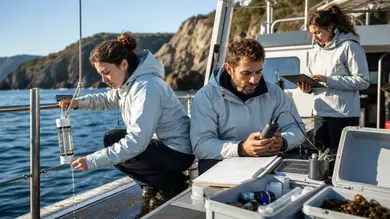
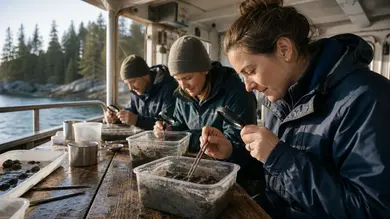
Internships in oceanography usually take place during the junior or senior year and can last from a few weeks to an entire semester. They are often credit-bearing and take place at research institutions, government agencies like NOAA, or environmental organizations, allowing students to develop key skills in data collection, lab analysis, and using oceanographic instruments. These programs support career readiness by building professional networks and offering interdisciplinary collaboration experience.
Prospective students should carefully review clinical hours in oceanography programs and internship options to align with their educational goals. For those interested in comparable STEM fields, exploring AI degrees can offer additional insights into practical training requirements.
Are Internships Paid or Unpaid in Oceanography Programs?
Internships in oceanography programs vary significantly in compensation, with many opportunities being unpaid but a substantial portion offering payment. This variation is important for students to consider when planning program costs and future career steps, as paid internships can alleviate financial burdens while unpaid ones still build valuable experience. About 40% of oceanography-related internships provide some form of payment, highlighting the mixed landscape students face.
Below are key points that clarify the nature of paid internships in oceanography programs and unpaid internship opportunities for oceanography students:
- Payment Structures: Paid internships commonly offer hourly wages or stipends that help offset living expenses, making these positions more accessible to a diverse student population. This compensation supports students during their hands-on learning phases.
- Influencing Factors: Whether an internship is paid often depends on the funding source, size of the hosting organization, and geographic location. Government agencies and private companies are more likely to provide pay, while nonprofits and academic research projects frequently remain unpaid.
- Value of Unpaid Internships: Despite lacking financial compensation, unpaid internships frequently offer academic credit and invaluable mentorship, networking opportunities, and real-world experience within the marine sciences community. These benefits can boost employment prospects after graduation.
Students aiming to balance costs and career development may also explore flexible degree options to optimize their timelines and opportunities, such as 1 year MSW programs online no BSW, which illustrate how accelerated paths can align with internship schedules.
What Is the Difference Between Internships or Clinical Hours in Oceanography Degree Levels?
Students planning their academic and career paths in oceanography must recognize how internship requirements vary by degree level, as these experiences shape professional development differently. Knowing these distinctions helps set realistic expectations for time commitment, learning outcomes, and skill acquisition.
Below is a summary of internship and clinical hours expectations across common oceanography degree levels, highlighting their purpose and structure.
- Associate degrees: Internships tend to be brief and introductory, focusing on basic field or lab skills. They offer foundational exposure but involve limited supervision and complexity compared to higher levels.
- Bachelor's degrees: Oceanography internship requirements by degree level emphasize practical experience through moderate-length placements. Students gain hands-on knowledge in research environments, with supervision designed to build professional networks and clarify career interests.
- Master's degrees: Clinical hours vs internships in oceanography programs become more specialized, involving longer, supervised projects that develop advanced research competencies. These clinical experiences prepare students for technical roles by focusing on intensive skill-building.
- Doctoral degrees: Clinical hours are typically extensive, structured, and supervised by experienced scientists. They push students toward expert-level proficiency and contributions to original research, often within government or institutional settings.
For those exploring related disciplines or considering online options, you might find affordable online MFT programs helpful in understanding how practical experience requirements differ across fields.
Breakdown of Public Fully Online Title IV Institutions

Accelerated oceanography programs incorporate internships or clinical hours by embedding them into an intensified academic schedule that condenses traditional coursework into fewer semesters. These programs often design flexible, part-time internship options to fit around academic commitments, utilizing summer sessions or short breaks to offer focused field experiences. Partnerships with research centers and environmental organizations help provide accessible, meaningful placements that comply with the compressed timeline.
Academic criteria prioritize depth and relevance of hands-on training, ensuring students meet professional standards despite the fast pace. To help students juggle practical experience alongside rigorous study, programs implement strategies such as structured internship goals, hybrid learning formats, and dedicated faculty support tailored to accelerated timelines. Internships often connect directly to capstone projects or research activities, enhancing both practical skills and academic outcomes.
Approximately 30% of students in accelerated oceanography tracks engage in internships, reflecting the increasing emphasis on experiential learning within these condensed programs. This balance is critical for maintaining preparedness for licensure and employment in oceanographic fields.
Internship and clinical hour requirements for online and on-campus oceanography degrees are largely equivalent, reflecting uniform standards for skill development and professional readiness. Both formats emphasize hands-on experiential learning that fosters competencies in data collection and marine ecosystem analysis.
Recent data show a more than 30% increase in enrollment for online science programs in the past five years, illustrating growing trust in remote education for research-driven fields. Accreditation and industry benchmarks ensure students in either format meet consistent expectations for practical experience and career preparedness.
While core requirements align, the logistics of internships differ between delivery modes. Online students often enjoy greater flexibility in selecting placements closer to home, reducing travel and relocation challenges. Scheduling can be tailored to accommodate work and personal commitments, with supervision typically managed through local mentors or virtual check-ins with program staff. These adaptations maintain evaluation standards while supporting diverse student circumstances and geographic locations.
Specialization choices within an oceanography degree significantly influence the internship or clinical hour requirements students must complete. Different subfields-such as physical oceanography, marine biology, chemical oceanography, or geological oceanography-demand varied practical experiences that align with their distinct research and work environments. Studies indicate that approximately 70% of oceanography students participate in internships, underscoring their importance for gaining specialized skills and improving career readiness.
For instance, physical oceanography students may require internships focused on data collection related to ocean currents or climate models, often taking place on research vessels or in laboratories, while marine biology students typically engage in hands-on work with marine organisms in aquariums or conservation projects, reflecting how internship length variations by oceanography degree focus shape training.
These specialization differences also affect scheduling and workload, with practical experiences tailored to the nature of the field. Fieldwork internships common to geological oceanography, involving sediment analysis or underwater mapping, can be seasonal and time-intensive, typically planned for summer months. Conversely, laboratory-based or data-analysis internships often allow more flexible scheduling, enabling students to balance coursework with hands-on training more effectively.
Such variations in internship settings and duration directly impact how students prepare for careers in ocean sciences, making it essential to consider these factors when selecting a focus within the degree. Prospective students seeking flexible options might also explore the most affordable online colleges offering oceanography programs to find pathways that best suit their academic and professional goals.
Work experience can sometimes substitute for internship requirements in oceanography degree programs, but this depends on several critical factors. Many working students explore this possibility to better manage their academic and professional responsibilities. Acceptance typically hinges on the relevance and duration of the work experience, with preference given to roles closely tied to oceanographic research or applied environmental science.
Programs usually require formal verification from employers detailing job responsibilities and time invested, while accreditation rules may restrict substitution options, especially for credentials requiring hands-on academic training.
For instance, mid-career professionals with extensive relevant experience are more likely to have internships waived, particularly in practice-focused tracks like marine resource management. Conversely, degrees emphasizing foundational research skills often mandate formal internships to ensure supervised practical exposure. Because policies vary by school and program level, students should consult advisors to clarify if and how their work experience might fulfill internship criteria.
The length of internships or clinical rotations in an oceanography degree significantly affects students' opportunity to build practical skills while managing academic responsibilities. Industry data shows the average internship duration is about 12 weeks, striking a balance between gaining meaningful experience and maintaining progress toward graduation.
Below are common timelines found in oceanography programs:
- Short-term internships: Typically lasting 6 to 8 weeks, these are popular during summer breaks and provide focused exposure to fieldwork or laboratory environments. They offer a condensed experience suited for students seeking practical insight without a long-term commitment.
- Semester-long internships: Spanning approximately 12 to 16 weeks, these internships align with academic semesters and often count toward course credit. They allow deeper involvement in projects and hands-on research, helping students develop critical competencies related to their specialization.
- Extended rotations: These may extend across several semesters and are common in research-intensive tracks or specialized areas such as marine biology or environmental monitoring. Extended formats accommodate complex projects and often comply with accreditation and funding requirements that influence scheduling flexibility.
Program structures vary widely, with some offering adaptable timelines to fit seasonal research cycles, while others follow fixed durations enforced by institutional policies. The chosen internship length directly reflects the program's academic framework and the student's focus within oceanography disciplines.
Job placement outcomes are a top concern for prospective students pursuing an oceanography degree, as they want to ensure their education leads to viable employment. A survey by the National Association of Colleges and Employers found that 60% of employers prefer candidates with relevant internship experience, underscoring the impact of hands-on learning.
Below are key factors showing how internships enhance post-graduation success.
- Employer preferences: Many employers prioritize applicants who have proven practical skills in real-world work environments. This preference makes internships a valuable asset for job seekers in competitive fields like oceanography.
- Professional networking: Internships facilitate connections with industry professionals, increasing opportunities for job referrals and mentorship. Building a professional network can significantly improve employment prospects.
- Skill development: Internships offer essential chances to develop both technical expertise and soft skills such as communication and teamwork, which are difficult to acquire solely through classroom study.
- Job offers: Some internships serve as a direct pathway to full-time employment, easing the transition from student to professional. This is particularly important given the competitive nature of oceanography-related roles.
Although not all oceanography degree programs mandate internships or clinical hours, completing them can make graduates more competitive and clarify their career goals. For students exploring options, understanding the oceanography degree internship impact on employment can guide important decisions about program selection and time commitment.
For those also considering other fields, looking into the easiest online degrees that pay well might provide useful comparative insight.
Practical experience such as internships or clinical rotations can significantly impact starting salaries for oceanography graduates. A 2022 study revealed that those with at least one internship tend to earn 8-12% more during their first year than peers without such experience.
Several factors explain why hands-on learning often results in higher pay. Consider the following key points:
- Employer valuation of experience: Hiring managers often favor candidates with real-world skills since they require less training and contribute more quickly. Practical experience demonstrates readiness to handle job demands effectively from day one.
- Negotiation leverage: Graduates with internships or clinical hours usually have stronger positions when discussing compensation. Proven capabilities and industry familiarity provide persuasive evidence for higher pay.
- Industry-specific standards: Certain oceanography fields such as marine environmental consulting or field research commonly expect hands-on experience as a baseline. These roles typically offer larger pay premiums for candidates who meet this requirement, unlike positions focused primarily on theoretical or analytical work.
- Program format and specialization differences: Programs incorporating structured clinical rotations or extensive fieldwork tend to boost job placement and salary outcomes. In contrast, online or hybrid programs without embedded practical components may require students to actively pursue internships independently, which can influence earning potential.
What Graduates Say About Their Oceanography Degree Internships or Clinical Hours
- Xiren: "Completing the internship for my online oceanography degree was an eye-opening experience that truly brought classroom theory to life. Despite the internship fee being moderate compared to other programs, the hands-on exposure and real-world skills I gained were priceless, significantly boosting my confidence and employability in marine research. I highly recommend embracing the internship opportunity for anyone serious about diving into this field."
- Ramsey: "The internship requirement in my online oceanography program was a thoughtful balance between affordability and invaluable professional experience. While the cost was a concern initially, the practical knowledge and networking opportunities proved essential, shaping my career direction and helping me secure a role within a respected environmental agency. Reflecting back, it was an integral step in my journey."
- Lir: "From a professional standpoint, fulfilling the internship requirement alongside my online oceanography studies was an efficient and cost-effective way to gain critical industry insights. Although the internship added to my overall expenses, the strategic experience directly enhanced my resume and opened doors to advanced positions in oceanographic analysis. It was a worthwhile investment in my career development."
Other Things You Should Know About Oceanography Degrees
In the United States, oceanography programs are usually accredited by the institution’s regional accreditor, while specific science departments may also follow standards from the American Geosciences Institute or professional society guidelines. Employers and graduate schools often verify accreditation through CHEA-recognized accrediting agencies.
In 2027, many oceanography programs encourage internships but do not mandate clinical hours. These experiences provide practical exposure to marine environments and enhance employability. Requirements vary by university, so check specific program details.
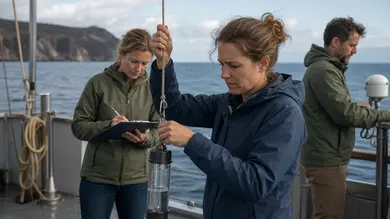
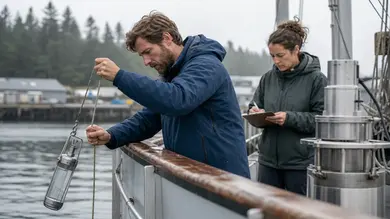
Oceanography degree programs often offer fieldwork opportunities like ocean expeditions, studying marine life, and monitoring ocean currents. These hands-on experiences are crucial for understanding practical aspects of oceanography and are typically integrated into the curriculum to prepare students for future careers.
While there are generally no universal certifications required to work as an oceanographer, some specialized roles may require specific credentials. For example, those working in marine safety or environmental regulation might need certifications related to diving or vessel operation. Students should research career goals and relevant professional organizations for guidance on additional qualifications.
- 15 Marine Biology Internships for Undergraduates https://www.lumiere-education.com/post/marine-biology-internships-for-undergraduates
- Exploring Oceanography as a Career Path https://www.oceanologyinternational.com/london/en-gb/blog/articles/career-guide-oceanographer.html
- Summer Student Fellowship 2026 at the Woods Hole Oceanographic Institution (WHOI) - Opportunities for Youth https://opportunitiesforyouth.org/2025/12/09/summer-student-fellowship-2026-at-the-woods-hole-oceanographic-institution-whoi/
- Master of Oceanography https://web.uri.edu/online/programs/graduate/master-of-oceanography/
- Interns https://angari.org/interns/
- Internships | The Florida Aquarium https://www.flaquarium.org/careers/internships/
- Marine Sciences & Oceanography: Directory of Internships, Research Opportunities, Scholarships & Fellowships https://www.pathwaystoscience.org/Discipline.aspx
- Oceanographer | Explore Careers | National Careers Service https://nationalcareers.service.gov.uk/job-profiles/oceanographer
- Making Waves: How to Gain Valuable Experience Whilst Studying Marine Science https://wiseoceans.com/how-to-gain-valuable-experience-whilst-studying-marine-science/
- Ifremer (PMS) 2026 Environmental Studies Internship - International Seabed Authority https://isa.org.jm/ifremer-pms-2026-environmental-studies-internship/