2027 Online Oceanography Degree Programs With No Personal Statement or Admissions Essay Required

Co-Founder and Chief Data Scientist
A no-essay application can save time, but it does not remove the need to find an academically sound online oceanography program. "No personal statement or admissions essay required" usually means the standard application does not ask for narrative writing. Transcripts, GPA, prerequisite science courses, and other materials may still matter.
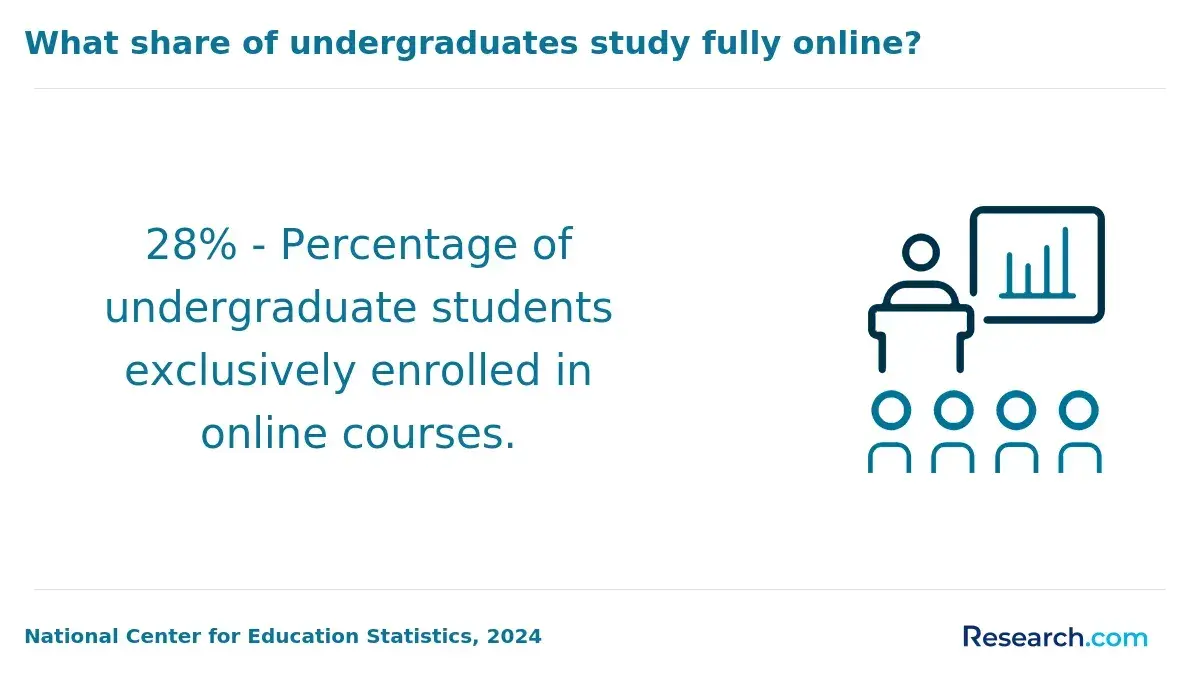
NCES data published in 2024 show that more than half of U.S. postsecondary students took at least one distance education course in fall 2022. This guide helps prospective and transfer students verify policies, compare program quality, estimate costs, and apply without mistaking simpler paperwork for automatic admission.
Key Things You Should Know
- A true no-essay policy removes a required personal statement from the standard application, but colleges may still review transcripts, GPA, math and science preparation, residency, and prerequisite coursework. It is not the same as open admission or guaranteed acceptance.
- Essay-optional means an applicant may submit writing, while essay-waived usually means a school has temporarily or conditionally removed an essay requirement. Honors programs, scholarships, and competitive research opportunities can still request written materials.
- For career context, the U.S. Bureau of Labor Statistics reported a $99,240 median annual wage for geoscientists in May 2023, published in 2024. Oceanography-related outcomes depend heavily on specialization, graduate study, field experience, location, and employer.
What Does No Personal Statement or Admissions Essay Required Mean for Online Oceanography Degree Programs?
For an online oceanography, marine science, or closely related geoscience program, "no personal statement required" means the institution does not require an applicant to write about goals, experiences, or readiness as part of its regular admission file. A true no-essay policy should appear in the admissions checklist for the applicant type, such as first-year, transfer, returning, or graduate student.
Oceanography is often offered as a concentration within marine science, environmental science, geology, geoscience, or interdisciplinary studies rather than as a fully online standalone bachelor's degree.
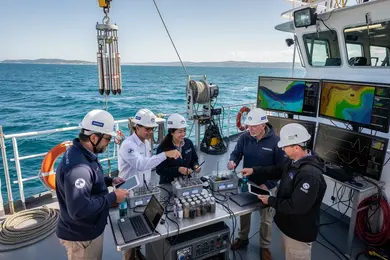
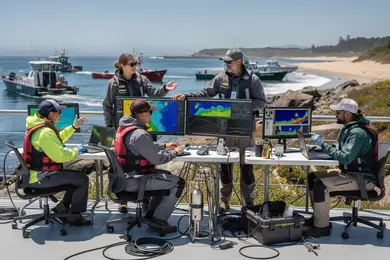
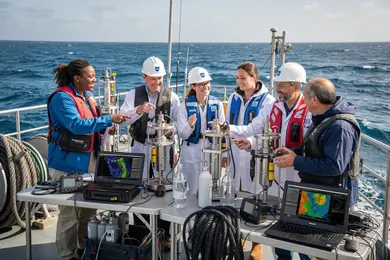
Because laboratory science and fieldwork are central to the discipline, a program may be online for lecture-based courses while requiring in-person labs, intensive field sessions, proctored exams, or partner-site experiences.
The policy does not mean the school will ignore evidence of academic preparation. Admissions offices may use a transcript-based review instead of an essay, particularly when applicants need college algebra, statistics, chemistry, physics, biology, or earth science before upper-division marine coursework.
What Admissions Requirements Do Online Oceanography Degree Programs Use Instead of an Essay?
Schools replace the essay with documents that are easier to verify and compare. Requirements vary by degree level and applicant category, so students should use the program's official checklist rather than relying on a general online-admissions page.
The following comparison shows common evidence schools may review when no admissions essay is required.
| Applicant type | Common non-essay requirements | Oceanography-specific consideration |
| First-year undergraduate | Application, high school transcript, graduation credential, and possible placement information | Completion or placement in math and laboratory science can affect course sequencing |
| Transfer undergraduate | Official college transcripts, transferable-credit review, cumulative GPA, and good-standing documentation | Equivalencies for calculus, chemistry, physics, and lab sciences may determine time to degree |
| Graduate applicant | Bachelor's transcript, prerequisite courses, résumé, and sometimes recommendations | Research-focused marine science programs may require a statement even when general graduate admission does not |
| International applicant | Credential evaluation, English proficiency evidence, financial documentation, and transcripts | Laboratory prerequisite equivalencies may require additional review |
Test-optional is separate from no-essay admission. A test-optional college may not require SAT or ACT scores but can still require an essay. Similarly, a no-essay college may still ask for scores, although many institutions have reduced their use. Ask whether scores are required, considered, or used only for placement.
Before applying, gather the materials most likely to delay a review:
- Read the requirements for your exact degree, term, and applicant category.
- Request official transcripts early, including dual-enrollment or prior college records.
- Check whether science prerequisites need a lab component and a minimum grade.
- Confirm whether the application, departmental review, scholarships, or honors programs have separate writing requirements.
- Save a dated copy or screenshot of the published no-essay policy before submitting.
Who Is a Good Fit for Online Oceanography Degree Programs With No Admissions Essay?
A no-essay route can suit organized applicants whose transcripts already demonstrate readiness and who want a faster, less writing-intensive application. It can be particularly useful for working adults, military-affiliated students, transfer students with substantial coursework, and applicants returning after a break who prefer evaluation based on completed academics.
It may be a weaker fit for applicants whose record needs context. An essay can help explain a sharp GPA change, unusual educational interruptions, research interests, relevant coastal or environmental work, or a transition from another major. If a program is essay-optional, submitting a concise, relevant statement may strengthen an application when it adds information the transcript cannot show.
Students still exploring a short, workforce-oriented academic route may compare the quickest associates degree with a transfer pathway. That option is not a substitute for oceanography preparation, but it can help a student decide whether to build foundational credits before entering a bachelor's program.
A practical fit also depends on learning format. Students should be comfortable with quantitative work, interpreting environmental data, scientific writing within courses, and completing any required in-person laboratory or field experiences. Eliminating an admissions essay does not eliminate writing or research communication in the degree itself.
These labels describe different policies and should not be treated as interchangeable. The wording on an institution's application portal, not a third-party listing, controls what must be submitted.
This table distinguishes the policies and shows where additional writing can still appear.
| Policy | What it means for the standard application | When writing may still be needed |
| No essay required | No personal statement or admissions essay is requested for the stated applicant group | Scholarships, honors admission, research programs, appeals, or departmental applications may have separate prompts |
| Essay-optional | The applicant may submit an essay but is not required to do so | Applicants may use writing to explain context, academic goals, or preparation not reflected in transcripts |
| Essay-waived | An essay requirement has been removed for a specific term, pathway, partner school, or applicant group | The waiver can expire or exclude graduate, transfer, international, or special-program applicants |
A waiver is the policy most likely to change, so confirm it in writing if the application page and a recruiter's statement differ. The same caution applies when comparing another field, such as an accelerated degree in finance. Application simplicity is useful, but program-level requirements and outcomes remain the deciding factors.
Removing an essay reduces one application task; it does not automatically lower academic standards, increase available seats, or create open admission. A selective program can review grades, course rigor, prerequisite performance, transfer-credit fit, and capacity in laboratories or field components without reading an essay.
For oceanography-related study, the most important question is often whether an applicant is prepared for the curriculum rather than whether an essay is requested. A student with strong grades in calculus and laboratory science may have a straightforward transcript-based review. A student missing those courses might be admitted conditionally, directed to complete prerequisites, or asked to choose a broader environmental studies pathway first.
Do not use acceptance rate alone to judge access or quality. Institution-wide rates may include programs with very different capacities and standards, and online completion may require separate course registration after admission. Ask the admissions office whether the program has additional departmental review, prerequisite gates, or limits on enrollment in lab sections.

Start with institutional accreditation. In the United States, a recognized institutional accreditor supports eligibility for federal student aid and signals that the college undergoes external quality review. Oceanography does not usually have one universal programmatic accreditor comparable to those used in some licensed professions, so curriculum evidence matters greatly.
Evaluate the degree rather than the marketing phrase "fully online." A credible program should clearly identify the degree-awarding institution, learning outcomes, faculty expertise, credit requirements, laboratory arrangements, fieldwork expectations, and whether the transcript names the same degree earned by campus students.
Use the following checks before paying an application fee or enrollment deposit:
- Verify the institution's accreditation status through the U.S. Department of Education database or the accreditor named by the school.
- Review the course list for quantitative methods, physical oceanography, marine chemistry, marine biology, geology, data analysis, and appropriate laboratory experiences.
- Confirm how hands-on requirements work, including travel, equipment, supervision, safety training, and costs not included in tuition.
- Check whether faculty publish relevant expertise in marine, coastal, climate, environmental, or geospatial science.
- Ask for retention, graduation, and program-outcome information when available, and distinguish program data from institution-wide data.
Red flags include vague accreditation claims, no named faculty, unclear ownership of online courses, promises of a completely online lab science degree with no explanation of practical work, and pressure to enroll before receiving a written cost estimate. A no-essay policy should make the application clearer, not make verification less thorough.
The process is usually document-driven. Applicants create an account, select the correct online program and start term, submit biographical and academic information, arrange transcripts, and monitor a portal for missing items. Some colleges issue an admission decision centrally, while others first admit a student to the institution and then review eligibility for the major.
Applicants should treat "no essay" as a checkpoint, not an assumption. Read each question in the application because short-answer explanations, disciplinary-history disclosures, residency questions, and optional statements are different from a formal personal statement but may still require written responses.
To avoid an incomplete application, follow this sequence:
- Confirm that the program is available online in your state and that the stated no-essay policy applies to your applicant type.
- Compare the program's prerequisite list with every transcript before choosing a start term.
- Submit official documents through the method the institution specifies; unofficial copies may be sufficient only for an initial review.
- Check the portal until all items show as received, including any transfer evaluation or placement requirement.
- After admission, verify major acceptance, lab or field residency requirements, registration access, and total charges before committing.
A school can request additional documentation when records conflict, credits need evaluation, or an applicant seeks an exception. That request does not necessarily contradict a no-essay policy; it may be part of an individualized academic review.
Many transfer and adult applicants can apply without a personal statement when the institution's transfer checklist does not include one. However, transfer admission and transfer credit are separate decisions. Being admitted does not guarantee that prior coursework will meet marine science, mathematics, or laboratory prerequisites.
Adult learners should ask whether older science courses remain valid, whether professional experience can earn credit, and whether a required lab can be completed near home. Prior-learning credit may reduce general education requirements, but it rarely replaces advanced laboratory science or field-based competencies without documented equivalency.
Students comparing several adult-focused professional pathways may also encounter BCBA masters programs online. Although that is a different discipline, the comparison reinforces a useful rule: graduate and licensure-oriented programs often impose additional prerequisites or supervised-experience requirements even when general admission paperwork is streamlined.
Transfer applicants should obtain a preliminary degree plan in writing whenever possible. The most costly mistake is choosing a no-essay option based on quick admission, then discovering that nontransferable science credits extend completion time.
No-essay admission itself does not determine tuition, federal aid eligibility, or scholarship value. Tuition depends on the institution, residency classification, delivery format, credit load, and required course fees.
College Board's 2024-25 published tuition and fee estimate for in-state students at public four-year institutions was $11,610, but that broad benchmark does not include all online, laboratory, technology, travel, or housing costs and should not be used as a program quote.
Complete the FAFSA and compare each school's net price, not just its advertised per-credit tuition. Federal aid generally depends on eligibility and enrollment, while institutional aid can have separate deadlines and application steps. Scholarships frequently require essays, even when admission does not.
These cost questions reveal whether a seemingly simple application is financially workable:
- What is the total tuition and mandatory fee estimate for the credits required after transfer evaluation?
- Are online learners charged separate distance-learning, laboratory, proctoring, software, field-course, or travel fees?
- Does the no-essay policy apply only to admission, while merit scholarships require a separate application or statement?
- Will part-time enrollment change eligibility for grants, employer assistance, or institutional scholarships?
- Can the college provide a written estimate that distinguishes direct charges from books, equipment, and travel?
For a broader tuition comparison, reviewing the best affordable online colleges can help students identify cost questions to bring back to a marine or geoscience program. Affordability should be assessed alongside laboratory access, transfer efficiency, and the degree's fit with career goals.
How Should You Compare Online Oceanography Degree Programs With No Admissions Essay?
Compare programs in the order that affects your outcome: degree fit, academic quality, practical requirements, transferability, total cost, and admissions convenience. An essay-free application is a benefit only after the program can support the specialization and learning format you need.
The following comparison framework helps separate a convenient application from a strong educational match.
| Comparison factor | What to verify | Why it matters |
| Degree and specialization | Whether the credential is oceanography, marine science, geoscience, environmental science, or a concentration | Course depth and career preparation can differ substantially |
| Online design | Live sessions, lab kits, proctoring, field intensives, campus visits, and state availability | "Online" may not mean fully remote or self-paced |
| Academic preparation | Minimum GPA, prerequisite grades, placement rules, and conditional-admission options | These requirements often determine admission more than an essay does |
| Career alignment | Research opportunities, GIS or data skills, internships, advising, and graduate-school preparation | Many science roles value applied experience and may prefer advanced study |
| Cost and aid | Net price, transfer-credit count, required fees, and scholarship conditions | A lower application burden does not reduce the full cost of attendance |
Oceanography can lead toward research, coastal resource management, environmental consulting, education, GIS, data support, marine operations, or graduate study. The BLS geoscientist category includes related work but does not represent every oceanography role, so use occupational data as general context rather than a salary forecast for one program.
Ask admissions and program staff direct questions:
- Is the essay requirement absent for my exact application type?
- Are there program-level prerequisites after university admission?
- Where are labs and field activities completed?
- Which credits will transfer?
- What additional materials are needed for scholarships or research placements?
Students considering a different science-adjacent career direction can also compare the admissions structure of art therapy graduate programs, where professional requirements and program fit similarly matter more than application length.
Other Things You Should Know About Oceanography Programs
Yes. A college may request a short explanation, academic-history clarification, transfer-credit documentation, or an appeal statement during an individual review. Scholarships, honors programs, and research opportunities may also use separate essay prompts. Confirm what applies to your specific application and award applications.
Not always. A policy may apply only to first-year, transfer, domestic, online, or undergraduate applicants. Graduate applicants, international students, students seeking readmission, and applicants to specialized marine science tracks can have different requirements.
Some programs deliver substantial coursework online, but laboratory and field learning may require campus visits, scheduled intensives, local partner sites, or travel. Verify the exact location, frequency, supervision, safety requirements, and added cost before enrolling.
Not for every role. A bachelor's degree may support entry-level environmental, technical, GIS, education, or field-support work, while independent research and many advanced scientific positions commonly expect a master's degree or doctorate. Review the education level associated with the specific role you want.
- 64 Great Colleges That Don't Require Essays to Apply · PrepScholar https://blog.prepscholar.com/colleges-that-dont-require-essays
- Funding Your Future https://www.broward.edu/admissions/tuition-costs/
- SEA Summer Programs for High School Students: Cost & Application Guide https://pioneeracademics.com/news/sea-summer-programs-for-high-school-students-how-to-apply-cost-and-is-it-worth-it/
- Paying for College Tuition | University of Arkansas Grantham https://www.uagrantham.edu/online-college-tuition/
- How to become an oceanographer | Conservation Careers https://www.conservation-careers.com/how-to-become-an-oceanographer/