2027 Online General Studies Degrees With Strong Professional Identity Development

Co-Founder and Chief Data Scientist
Choosing a flexible degree can feel risky if you are not sure how it will translate into a clear career identity. An online general studies degree can help working adults, transfer students, military learners, and career changers turn scattered credits and varied interests into a coherent bachelor's pathway.
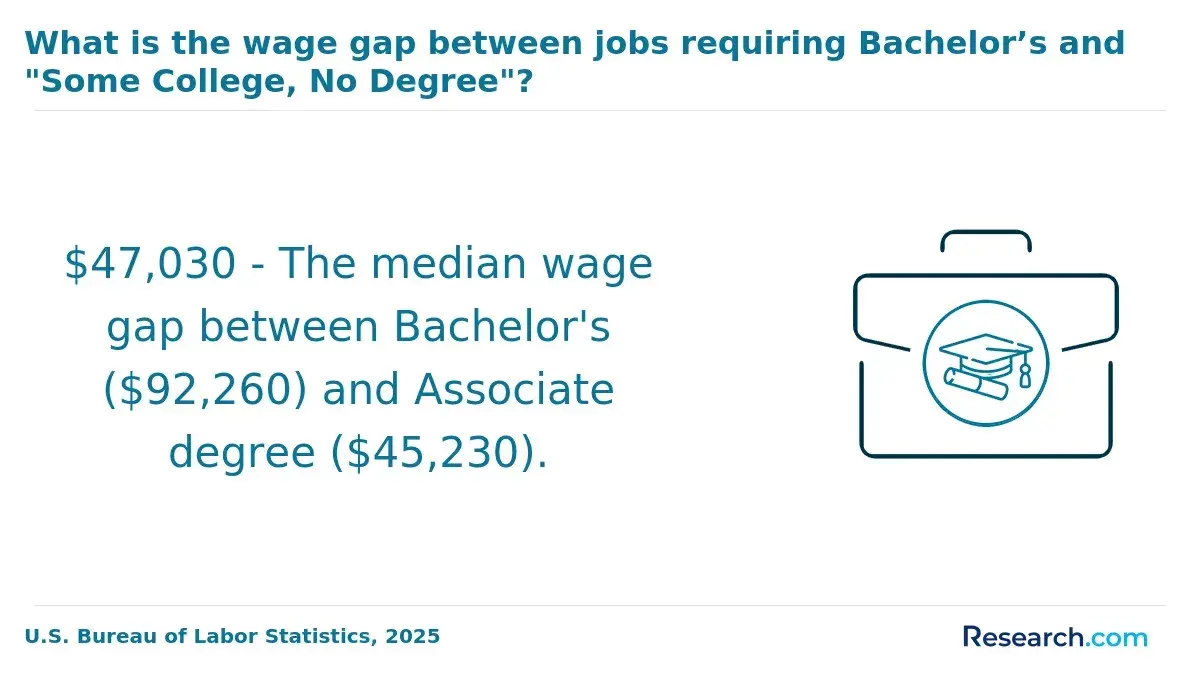
Recent BLS Education Pays data show workers with a bachelor's degree have substantially higher median weekly earnings than those with only a high school diploma, but outcomes depend on focus. This guide explains how to choose, customize, and use the degree strategically.
Key Things You Should Know
- Most bachelor's-level online general studies programs require about 120 credits, but generous transfer and prior learning policies can shorten the path for students with previous college, military, workplace, or certification-based learning.
- College Board's 2024 Trends in College Pricing reported average published tuition and fees of $11,610 for in-state public four-year students and $43,350 at private nonprofit four-year institutions, making total cost comparison essential before enrolling.
- General studies is strongest when paired with a career theme, such as business operations, public service, communication, technology support, healthcare administration, or nonprofit leadership, rather than treated as an unfocused "any credits" degree.
What is an online general studies degree and how does it support professional identity development?
An online general studies degree is an associate or bachelor's program that lets students build a broad, interdisciplinary curriculum instead of majoring in one narrow field. At the bachelor's level, it usually combines general education, upper-division electives, a concentration or theme, and a capstone project that asks students to connect their academic work to career goals.
The phrase professional identity development means learning to describe who you are as a worker, what problems you can solve, which skills you can prove, and where you fit in the labor market. This matters because many general studies students arrive with credits from multiple schools, work experience across industries, or a career goal that does not fit neatly into one traditional major.
The degree works best when students use its flexibility to create a recognizable professional profile. A student interested in operations, for example, might combine courses in communication, data literacy, management, and project coordination. A student moving toward community services might combine sociology, public administration, writing, and nonprofit leadership.
The table below summarizes common versions of general studies programs and the type of student each one tends to serve. Use it to decide whether the degree structure matches your academic history and career direction.
| Program type | Typical level | Best fit | Professional identity advantage |
| Associate in General Studies | Two-year | Students seeking transfer, promotion eligibility, or a lower-cost start | Builds foundational college credentials and clarifies the next academic step |
| Bachelor of General Studies | Four-year | Adults with transfer credits or broad career goals | Turns varied coursework into a completed bachelor's degree with an intentional theme |
| Bachelor of Interdisciplinary Studies | Four-year | Students combining two or more academic fields | Creates a stronger narrative around cross-functional roles and hybrid skills |
| Applied General Studies | Four-year | Students with technical, military, or career training | Connects workplace learning with academic credit and leadership preparation |
A general studies degree may not be the right choice for careers that require a specific accredited major, such as nursing, engineering licensure, accounting licensure in some states, or teacher certification. It is better suited to roles where employers value a completed bachelor's degree, communication skills, adaptable thinking, leadership potential, and evidence of job-ready experience.
How do online general studies programs compare to campus-based options for working adults?
For working adults, the biggest difference is not academic quality by itself; it is scheduling design. Online programs often serve students who need asynchronous coursework, year-round terms, transfer-friendly policies, and advising that understands adult learners. Campus programs may offer stronger in-person networking, student organizations, and local internship access, but they can be harder to fit around work and caregiving.
The table below compares the formats through the lens of a working adult who needs both flexibility and career momentum. The best option is the one you can complete consistently while still building proof of skills.
| Factor | Online general studies | Campus-based general studies | Decision point |
| Schedule | Often asynchronous or evening-friendly | Usually tied to fixed class times | Choose online if work hours change or commuting is a barrier |
| Networking | Depends on virtual advising, discussion boards, alumni events, and career platforms | Often easier through campus activities and local employer events | Choose campus if in-person connections are central to your plan |
| Transfer credit | Frequently designed for returning adults with mixed credits | Can be flexible, but policies vary widely | Compare written transfer evaluations before committing |
| Learning style | Requires self-direction, time blocking, and comfort with digital tools | Provides more physical structure and face-to-face accountability | Choose the format that matches how you actually study, not how you wish you studied |
| Career services | May include virtual coaching, resume reviews, and online job boards | May include on-campus fairs and local employer pipelines | Ask whether services are available to online students equally |
Online learning can be especially practical for adults who already have some career direction and want a degree completion pathway. Campus study may be better for students who need frequent in-person support, lab-based experiences, or a stronger local peer community. Neither format is automatically more respected; accreditation, curriculum quality, faculty engagement, and student outcomes matter more.
Which accreditation standards should online general studies degrees meet in the United States?
In the United States, a reputable online general studies degree should come from an institution accredited by an agency recognized by the U.S. Department of Education or the Council for Higher Education Accreditation. For most students, institutional accreditation is the key standard because general studies programs usually do not have a separate programmatic accreditor.
Accreditation matters because it affects federal financial aid eligibility, transfer credit acceptance, graduate school admissions, and employer confidence. It does not guarantee that every program is affordable or career-aligned, but it is a basic quality-control requirement.
Before applying, confirm these accreditation and compliance points with the school directly. This checklist helps you avoid programs that look convenient but may create transfer, aid, or recognition problems later.
- Verify the institution's accreditor through official federal or recognized accreditation databases, not only through a school marketing page.
- Confirm that online students are enrolled through the same accredited institution that appears on the diploma or transcript.
- Ask whether the program has state authorization to serve students in your state, especially if you live outside the school's home state.
- Check whether your intended career requires a specific major, licensure pathway, certification, or supervised field experience that general studies may not provide.
- Request written confirmation of how transfer credits, military credits, and prior learning credits will appear on your degree plan.
A common mistake is assuming that "online" is the accreditation category. It is not. Online delivery is a format; accreditation belongs to the institution and, in some fields, to a specific program. If a school is vague about accreditation, pressures you to enroll immediately, or will not provide a degree audit before enrollment, treat that as a serious red flag.
What admission requirements and prior learning credits are typical for online general studies majors?
Admissions requirements vary by institution and degree level, but online general studies programs are often built for transfer students and adult learners. Many require a high school diploma or GED for first-year admission, while bachelor's completion programs may expect prior college credits, a minimum GPA, or completion of certain general education courses.
Prior learning credit is one of the most important features to compare because it can reduce both time and cost. Students returning after a long break, including those researching the best degrees for older adults, should pay close attention to how schools evaluate older credits and nontraditional learning.
Schools may review several types of previous learning. Understanding these categories helps you ask sharper questions before you pay an application fee.
- Transfer credit from regionally or institutionally accredited colleges, including community colleges and previous four-year institutions.
- Military training evaluated through recognized military credit recommendations and official service transcripts.
- Standardized exams such as CLEP, DSST, or Advanced Placement, if accepted by the institution.
- Professional certifications, licenses, apprenticeships, or corporate training evaluated under school policy.
- Portfolio-based prior learning assessment, where students document college-level learning gained through work or community experience.
Prospective students should not assume that all prior credits will apply to the major. A school may accept credits as electives but still require upper-division coursework, residency credits, or a capstone. The smartest move is to request a written preliminary transfer evaluation that shows exactly how many credits apply to graduation, not merely how many are accepted by the university.
Use this sequence when comparing admissions and credit policies. It keeps the conversation focused on completion rather than enrollment alone.
- Collect unofficial transcripts, military records, certificates, and exam scores before contacting schools.
- Ask each program for a degree audit showing remaining credits, required courses, and estimated completion time.
- Compare residency requirements, upper-division credit rules, and maximum transfer credit limits.
- Ask whether prior learning credits affect financial aid status, academic standing, or eligibility for honors.
- Get all credit decisions in writing before making a final enrollment decision.
What core curriculum and concentration options shape professional identity in general studies?
The core curriculum in an online general studies degree usually includes writing, quantitative reasoning, social science, humanities, natural science, and information literacy. At the upper-division level, students often choose electives or concentrations that create a career theme. This is where professional identity development becomes concrete.
A strong program should help students answer three questions: What skills am I building? Which professional problems can I solve? What evidence can I show an employer or graduate program? Without that structure, the degree can become a collection of unrelated courses.
Common concentration areas include business, communication, social sciences, public service, leadership, healthcare administration, technology, and liberal arts. Students interested in management, entrepreneurship, or operations may also compare general studies with online business degrees, because a business major may offer a clearer route to accounting, finance, marketing, or management roles.
The table below shows how different course clusters can create distinct professional identities. Use it to think beyond course titles and focus on the story your transcript and portfolio will tell.
| Course cluster | Skills developed | Possible identity statement | Good fit for |
| Business, communication, and data literacy | Coordination, reporting, stakeholder communication, basic analysis | Operations-focused generalist who can organize people, information, and processes | Administrative coordination, project support, customer success, small business roles |
| Psychology, sociology, and public service | Human behavior, community needs assessment, cultural awareness | People-centered professional prepared for service, advocacy, and program support | Human services, nonprofit work, community programs, case support |
| Writing, media, and organizational communication | Professional writing, presentation, messaging, audience analysis | Communication generalist who can translate ideas for internal and external audiences | Marketing support, training support, public relations assistance, internal communications |
| Technology, information systems, and project management | Digital tools, workflow improvement, documentation, problem solving | Tech-adjacent professional who connects users, systems, and business needs | IT coordination, business analysis support, operations technology roles |
Students should look for programs with a required capstone, career seminar, internship option, or portfolio course. These experiences force the degree to become more than broad education; they help students explain their value in a job interview, graduate application, or promotion conversation.
How long do online general studies programs usually take and what do they cost to complete?
A bachelor's degree in general studies usually requires about 120 credits. First-time students studying full time may finish in around four years, while transfer students may finish faster depending on how many credits apply. Part-time students often take longer, but the flexibility can make completion more realistic for those balancing work, family, and military obligations.
Cost depends on tuition, fees, transfer credit, residency rules, books, technology charges, and whether the school charges online students in-state or separate distance-learning tuition. College Board's 2024 Trends in College Pricing reported these national published tuition and fee benchmarks for full-time undergraduates:
- $11,610 for in-state students at public four-year institutions
- $30,780 for out-of-state students at public four-year institutions
- $43,350 for students at private nonprofit four-year institutions
These figures are not online-program price quotes, but they provide a useful baseline. A student with 60 accepted transfer credits may pay far less than a first-time student, while a student whose credits do not apply to degree requirements may face more remaining coursework than expected.
The table below breaks down the major cost drivers that affect total price. This is more useful than comparing tuition alone because two programs with similar per-credit rates can produce very different final bills.
| Cost factor | Why it matters | What to ask |
| Per-credit tuition | Determines the base academic cost | Is tuition different for online, in-state, out-of-state, or military students? |
| Transfer credit acceptance | Can reduce remaining credits substantially | How many credits apply directly to the degree plan? |
| Residency requirement | Sets the minimum credits you must take at the school | How many credits must be completed through this institution? |
| Fees | Technology, distance learning, graduation, and course fees can add up | What is the total estimated cost to graduate, including fees? |
| Course materials | Open educational resources can reduce costs | Are textbooks included, low-cost, or billed separately? |
Students comparing affordability should review institutional scholarships, employer tuition assistance, military benefits, transfer pathways, and federal aid eligibility. A guide to online interdisciplinary studies degree financial aid can also help students understand how broad, flexible degree programs may be funded.
Do not choose the fastest program automatically. Accelerated terms can be useful for motivated adults, but they can also increase weekly workload. A slower part-time plan may produce a better return if it prevents course withdrawals, protects your GPA, and allows time for internships, certifications, or portfolio work.
What careers and job roles are common for graduates of online general studies degrees?
General studies graduates often move into roles where a bachelor's degree, communication ability, organizational skill, and adaptable problem solving are valued more than a single technical major. The degree is especially useful for students who already have experience and need a credential to qualify for advancement.
Career outcomes vary because the major is broad. Employers will usually look for a coherent combination of coursework, experience, tools, internships, and achievements. The table below shows common career directions and the type of evidence that can make a general studies graduate more competitive.
| Career direction | Common roles | Relevant preparation | What strengthens the application |
| Business operations | Operations coordinator, project assistant, administrative specialist | Business writing, spreadsheets, process improvement, project management basics | Portfolio examples of reports, dashboards, workflow maps, or completed projects |
| Human resources and training | HR assistant, recruiting coordinator, training coordinator | Communication, psychology, employment law basics, adult learning | Internship, SHRM-aligned coursework, training materials, onboarding projects |
| Public service and nonprofit work | Program assistant, community outreach coordinator, case support worker | Sociology, public administration, grant writing, intercultural communication | Volunteer leadership, service-learning, grant samples, community project outcomes |
| Sales and customer success | Account coordinator, customer success associate, client services specialist | Communication, data tracking, persuasion, relationship management | CRM familiarity, presentation samples, measurable customer or sales achievements |
| Technology-adjacent roles | IT project coordinator, business support analyst, systems support specialist | Information systems, documentation, data literacy, user support | Microcredentials, software projects, help desk experience, process documentation |
Students aiming for highly regulated or technical careers should compare alternatives carefully. For example, a general studies degree may support healthcare administration, but it will not replace a nursing degree for registered nursing licensure. It may support school administration later, but it usually will not satisfy teacher licensure requirements without a state-approved educator preparation pathway.
What salary ranges and advancement opportunities can general studies graduates realistically expect?
Salary outcomes for general studies graduates depend heavily on industry, location, experience, internships, technical tools, and the student's chosen concentration. The degree itself is a foundation; earnings typically rise when graduates pair it with specialized experience, supervisory responsibility, measurable results, or industry-recognized credentials.
BLS May 2024 wage data show that several common career targets for broad bachelor's graduates fall in middle-income to higher-income ranges, but these figures represent occupations, not guaranteed outcomes for any major. They are best used as labor-market context while comparing possible pathways.
| Occupation | BLS May 2024 median annual wage | How a general studies graduate might prepare |
| Training and development specialist | $64,340 | Choose courses in communication, adult learning, HR, and instructional technology |
| Human resources specialist | $72,910 | Build experience in recruiting, employee relations support, HR systems, or workplace policy |
| Market research analyst | $76,950 | Add statistics, consumer behavior, spreadsheets, visualization tools, and research projects |
| Social and community service manager | $78,240 | Combine public service coursework with nonprofit experience and program evaluation skills |
Advancement usually comes from moving from coordinator or specialist work into management, analysis, training leadership, operations leadership, or graduate study. Students who want to compare broader bachelor's degree earnings potential can review career-focused resources on highest paying jobs, but they should remember that pay is shaped by field, credentials, geography, and experience rather than degree title alone.
For realistic return on investment, compare the remaining cost of the degree against the specific roles you are targeting. A general studies degree can be worth it when it helps you finish a bachelor's efficiently, qualify for promotion, pivot into a clearer career cluster, or meet a degree requirement for roles you are already close to obtaining. It is less compelling if you need a specialized credential and would have to complete another degree soon after graduation.
How can students use internships, microcredentials, and portfolios to build a strong professional identity?
Because general studies is broad, students need visible proof of direction. Internships, microcredentials, and portfolios help translate flexibility into employability. They show employers not only what you studied, but what you can do.
A strong professional identity should connect your coursework, experience, and career evidence into one story. The following steps help students make that story concrete before graduation.
- Choose a career theme early, such as operations, HR, nonprofit leadership, communication, public service, or technology support.
- Select electives that reinforce that theme instead of filling requirements randomly.
- Complete at least one applied experience, such as an internship, service-learning project, employer-sponsored project, or supervised practicum.
- Add one or two microcredentials that match your target role, such as project management, data analytics basics, HR fundamentals, digital marketing, or software tools.
- Create a portfolio with writing samples, presentations, project plans, data visuals, training materials, research summaries, or community project outcomes.
- Write a short professional summary that explains your concentration, transferable skills, and target roles in plain language.
AI and automation make this even more important. Employers increasingly expect graduates to use digital tools, evaluate information, communicate clearly, and adapt to changing workflows. General studies students should not avoid AI-related learning; they should learn ethical tool use, data privacy basics, prompt evaluation, and human judgment so they can work effectively in AI-supported environments.
One common mistake is treating microcredentials as decorations. A certificate only helps when it supports your career theme and gives you usable skills. A student targeting HR, for example, is better served by HR systems, employment law basics, and training design than by unrelated badges that do not connect to the desired role.
How should prospective students evaluate and choose a reputable online general studies program?
The best online general studies program is not simply the cheapest, fastest, or most heavily advertised. It is the program that helps you complete the degree with acceptable cost, recognized accreditation, strong transfer credit use, relevant coursework, and a clear professional identity.
Use these questions when speaking with admissions, advising, financial aid, and career services. They are designed to reveal whether the program supports completion and career planning, not just enrollment.
- Is the institution accredited by a recognized accreditor, and will the diploma identify the same institution as campus-based programs?
- How many of my prior credits apply to graduation requirements, and can I see that in a written degree audit?
- What concentrations, minors, certificates, or elective clusters can help me build a clear career theme?
- Are online students eligible for the same advising, library, tutoring, internship support, and career services as campus students?
- What is the estimated total cost to finish, including tuition, fees, books, and required technology?
- Does the program publish retention, graduation, transfer, or career outcomes for online adult learners?
- Can I complete a capstone, internship, portfolio, or applied project tied to my target career?
The table below highlights common mistakes and better alternatives. Reviewing these before enrollment can prevent wasted credits, unexpected costs, and weak career positioning.
| Common mistake | Why it creates risk | Better alternative |
| Choosing based only on per-credit tuition | Fees, transfer limits, and extra required credits may raise total cost | Compare total cost to graduate after the transfer evaluation |
| Assuming all credits will count | Accepted credits may not satisfy major, upper-division, or residency requirements | Request a written degree plan before enrolling |
| Building an unfocused elective mix | Employers may struggle to understand your professional direction | Create a concentration theme and portfolio evidence |
| Ignoring career services | Online students may need extra support finding remote-friendly internships and job leads | Confirm access to coaching, resume review, employer events, and alumni networks |
| Using rankings as the only filter | Rankings may not reflect your transfer credits, budget, schedule, or career goals | Compare accreditation, fit, completion plan, cost, and outcomes together |
A reputable program should be transparent, willing to answer detailed questions, and able to show how your academic plan supports your career direction. If a school avoids written answers, guarantees employment, pressures quick enrollment, or minimizes accreditation questions, keep looking.
Other Things You Should Know About General Studies
Yes, many graduate schools accept applicants with general studies degrees if they meet GPA, prerequisite, test, experience, and application requirements. Check each graduate program's prerequisite courses before choosing electives.
When selecting an online general studies degree in 2027, consider accreditation status, curriculum relevance, faculty expertise, and career services offered. Look for programs with strong industry connections and internships to bolster professional identity development, equipping you with the skills and networks necessary for your desired career.
Many 2027 online general studies programs use a capstone of 3 to 6 credit hours, often tied to a portfolio, internship reflection, or applied research project. The capstone is usually completed in the final term and assessed by faculty on communication, problem-solving, and career-focused self-assessment.
It can help if the program includes advising, career exploration, and flexible electives. However, students should narrow their direction before the final year so their coursework and portfolio support a clear next step.
References
- What are General Education Courses? Its Purpose and Benefits https://www.edvisorly.com/student-guides/general-education-courses-overview
- General Studies Degree Jobs: 10 Careers + Salaries (2026) | Extern https://www.extern.com/post/general-studies-degree-jobs-career-guide
- Expert Advice: How to Find, Succeed in Online Degree Programs - OnlineEducation.com https://www.onlineeducation.com/guide/expert-advice
- Online General Studies Degree | Programs & Career Options https://www.learnhowtobecome.org/best-online-bachelors-in-general-studies-degree-programs/
- Best Online Colleges for Working Adults [2026] https://www.straighterline.com/blog/degree-completion-best-online-colleges-for-working-adults
- Catalyzing the Transition to Micro-credentials + Skills-based Hiring Archives - Page 4 of 10 - Education Design Lab https://eddesignlab.org/areas_of_work/microcredentials-skills-based-hiring/page/4/
- Online Bachelor's Degree: General Studies https://www.umgc.edu/online-degrees/bachelors/general-studies
- Are Online Degrees Accredited? How to Identify Quality Distance Learning Programs https://www.umassglobal.edu/blog-news/online-degrees-accredited-identify-quality-distance-learning-programs
- How to Build a Strong Portfolio For The Dream Job? https://www.cservetech.com/news/how-to-build-a-strong-portfolio-as-an-it-student/