2027 Psychology Degree Program Availability Report: Which States and Schools Offer the Most Options

Co-Founder and Chief Data Scientist
The concentration of psychology degree programs reflects deeper trends in how educational institutions respond to regional workforce demands and resource allocation within behavioral sciences. States with expansive program offerings often align with higher local employment rates in mental health services, driven by a 7% projected increase in clinical and counseling roles through 2028 per the U. S. Bureau of Labor Statistics.
Program diversity may also indicate institutional prioritization of interdisciplinary training, addressing emerging subfields such as neuropsychology or health psychology. Exploring availability patterns reveals not only educational access disparities but also how schools position themselves to meet evolving labor market needs and student career trajectories in psychology.
Key Benefits of States and Schools That Offer the Most Psychology Degree Program Options
- States with diverse psychology degree tracks offer specialization depth, but navigating numerous program structures can delay graduation and complicate credit transfers, affecting timely workforce entry.
- Employers increasingly value graduates from varied psychology curricula, reflecting a 2024 trend toward interdisciplinary skills, which enhances job market adaptability and signals evolving professional expectations.
- Broader program availability often correlates with increased financial and geographic access, yet potential resource dilution means prospective students must assess each program's reputational and practical impact carefully.
- Key Benefits of States and Schools That Offer the Most Psychology Degree Program Options Key Benefits
- Which States Offer the Most Psychology Degree Programs? Top States
- Why Do Some States Have More Psychology Programs Than Others? Program Availability
- Which Colleges Offer the Largest Number of Psychology Degree Options? Top Schools
- How Do Online Programs Improve Access in States With Limited Options? Online Program Access
- How Much Does Psychology Program Tuition Vary by State? Tuition by State
- How Does Psychology Program Demand Affect Admissions Decisions? Program Demand
- How Do Psychology Specialization Options Vary by Region? Specialization Options
- How Does Regional Employer Demand Affect Career Outcomes? Employer Demand
- What Factors Matter Most When Comparing Psychology Programs Across States? Key Comparison Factors
- Which Regions May See the Fastest Growth in Psychology Education? Fastest Growing Region
Which States Offer the Most Psychology Degree Programs?
Geographic disparities in psychology degree program availability largely stem from variations in state population size, higher education infrastructure, and regional labor market demands. Areas with large urban centers and comprehensive university systems typically offer a wider range of programs, reflecting both academic breadth and local industry needs.
Program concentration often aligns with the presence of research hubs and healthcare sectors that shape student opportunities in applied and research-focused psychology fields. Understanding these structural drivers offers valuable insight into which states provide the most psychology degree programs and why.
- California: California offers a wide spectrum of psychology degree programs across a robust mix of public universities, private institutions, and community colleges. The state's sizable economy and diverse industries fuel demand for applied psychology expertise in clinical, organizational, and educational contexts. Students benefit from access to specialized tracks and research-intensive settings, supported by numerous flagship research universities and professional networks concentrated in metropolitan areas like Los Angeles and the Bay Area.
- New York: New York's psychology programs cluster predominantly around New York City and nearby urban centers, where academic institutions and healthcare facilities intersect extensively. This concentration facilitates access to interdisciplinary programs and advanced research training, particularly in clinical and neuropsychology specialties. The state's dense program landscape supports strong integration between academic preparation and employment pathways in counseling and applied research.
- Texas: Texas is experiencing rapid growth in the availability of psychology degree programs, driven by expanding public and private universities as well as community colleges across its urban and suburban areas. The state's psychology curricula often emphasize practical skills aligned with regional workforce needs, such as counseling and educational psychology. This expanding infrastructure enables students to pursue credentials that balance academic rigor with local labor market relevance.
States like California, New York, and Texas exemplify how population scale, educational infrastructure, and regional industry shape the distribution of psychology programs. For instance, California alone hosts several hundred accredited psychology programs, according to the American Psychological Association's recent data, reflecting its role as a national leader in psychology education. Meanwhile, students from these states typically encounter more specialization options and potential employer connections compared to smaller or less densely populated regions.
Beyond program counts, prospective psychology students must weigh the practical considerations of program type and market alignment. States with abundant options often pose a tradeoff between research-intensive tracks and applied, workforce-focused training. For those interested in faster credential completion and practical outcomes, exploring pathways like online MSW programs may also complement psychology-oriented career planning in relevant social and behavioral services sectors.
Why Do Some States Have More Psychology Programs Than Others?
Variations in psychology degree program concentration by state largely reflect differences in higher education infrastructure and the regional demand for graduates. States with dense institutional ecosystems naturally offer a broader array of programs due to economies of scale and diversified educational resources. Larger populations create sustained student demand that justifies investment in varied psychology specializations, aligning academic offerings with local workforce needs.
A 2024 report by the National Center for Education Statistics highlights that states with populations exceeding 10 million have nearly three times as many psychology degree programs as those with fewer than 5 million residents, underscoring demographic influence on program availability. Key drivers behind these geographic disparities include state funding priorities, university research capacity, and the concentration of related industry clusters that demand psychology expertise.
States allocating substantial public and private resources to higher education underpin program development and specialization, especially where research universities drive innovation and advanced clinical training. Employer demand in healthcare, education, and social services sectors incentivizes institutions to tailor curricula toward applied skills and local licensure standards. Such alignment between institutional capacity and regional labor markets shapes the diversity and robustness of psychology education availability, reflecting both workforce needs and policy frameworks.
These structural and economic factors create tangible consequences for students and regional workforce development, influencing access to programs and the growth of alternative delivery modes such as online bachelor degree pathways. Understanding these systemic education distribution patterns is essential for prospective students navigating program choices and for policymakers aiming to balance supply and demand in psychology education across states.
Which Colleges Offer the Largest Number of Psychology Degree Options?
The breadth of psychology degree options available at a given institution closely correlates with its size, research intensity, and academic infrastructure rather than geographic factors alone. Larger universities with substantial funding and established research programs typically offer a wider array of specialized psychology tracks and degree levels, including bachelor's, master's, and doctoral paths.
These institutions leverage their diverse faculty expertise and interdisciplinary connections to expand program formats and subfields, meeting varied student and workforce needs more effectively.
- Large Public Research Universities: Institutions such as major state university systems often provide multiple specialized psychology programs ranging from clinical and developmental psychology to neuropsychology and forensic psychology. Their significant public funding supports extensive faculty and research resources, enabling them to maintain numerous degree pathways and practical training opportunities aligned with industry demands.
- Comprehensive Private Universities with Research Focus: Schools with strong endowments and active research agendas, including some Ivy League institutions, tend to offer a broad spectrum of psychology degrees emphasizing interdisciplinary approaches. By integrating psychology with neuroscience, education, or business disciplines, they cultivate diverse career options, although higher tuition and smaller class sizes often characterize these environments.
- Technical Institutes and Specialized Graduate Schools: Some technical universities and graduate-focused schools that prioritize applied psychology or behavioral health fields also diversify offerings to cover emerging specializations like industrial-organizational psychology or health psychology. Their program development often responds directly to labor market trends and employer needs, creating flexible delivery modes such as online or hybrid formats.
- Smaller Liberal Arts Colleges and Community Colleges: While these institutions generally offer fewer psychology degree options, typically capped at bachelor's or associate levels, they play a crucial role in foundational education and transfer preparation. Their limited program diversification reflects more constrained faculty resources and less capacity to sustain specialized graduate tracks essential for advanced licensure or research roles.
According to 2024 data from the National Center for Education Statistics and analyses by the American Psychological Association, institutions with expansive psychology offerings constitute a minority nationwide but disproportionately impact workforce readiness through specialized training and licensure pathways. This dynamic underscores the practical advantage of targeting institutions with robust academic ecosystems when seeking the widest psychology program array.
How Do Online Programs Improve Access in States With Limited Options?
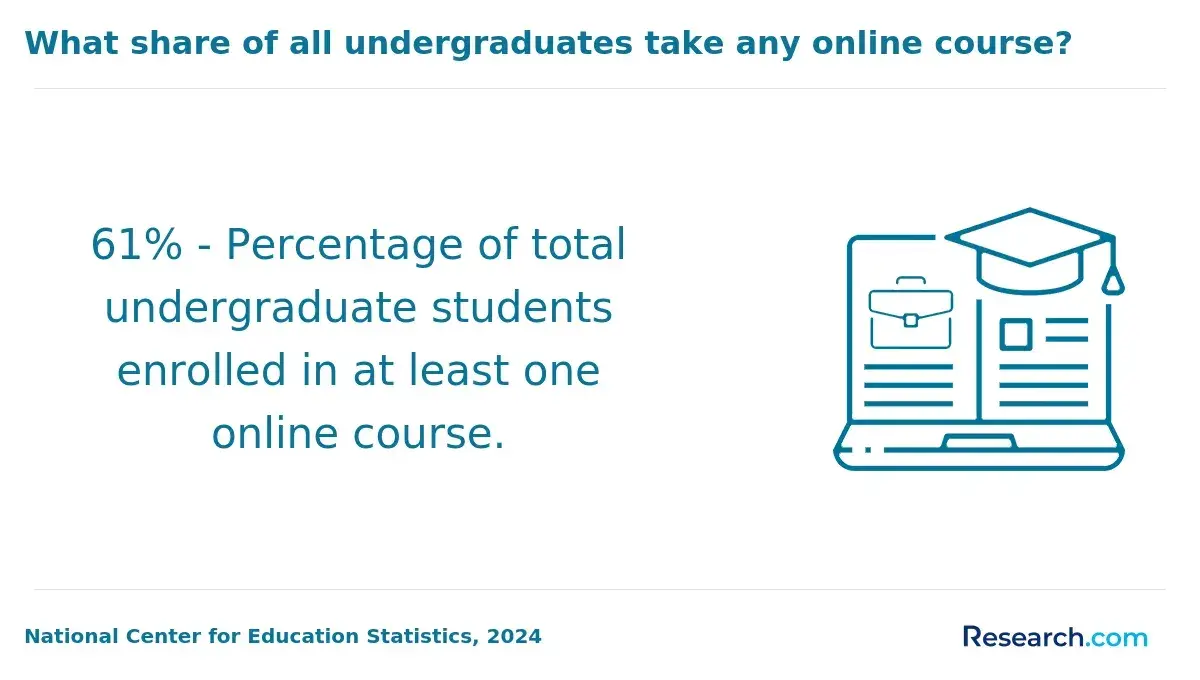
In states where physical psychology programs are sparse, online degree options allow students to bypass geographic and logistical barriers that historically limited access. This expansion is particularly impactful in rural areas, where a 2024 National Center for Education Statistics report indicates over 45% of students now enroll in online programs, signaling a shift in how learners engage with higher education.
Students no longer need to relocate or endure lengthy commutes to pursue accredited psychology degrees, enabling wider participation from populations previously underserved by brick-and-mortar institutions. This shift reshapes the educational landscape, making the pursuit of psychology credentials more feasible for working adults, caregivers, and individuals with mobility limitations.
The primary mechanisms enabling this expanded access include asynchronous course delivery, which accommodates diverse schedules and time zones, and the ability for institutions to enroll students across state boundaries without being confined to local demand. By removing the dependency on physical campuses, programs can scale their reach to national or even multi-state audiences, diversifying and expanding their applicant pools.
This institutional scaling moderates enrollment fluctuations tied to regional demographics, while also fostering more equitable access to specialized psychology tracks often unavailable in smaller states or rural settings. The integration of virtual tools for interactive and experiential learning further compensates for in-person limitations, strengthening program quality despite the digital format.
These developments have broader implications for regional workforce dynamics and inter-institutional competition. As students from traditionally underserved states access out-of-state online programs, local education providers must adapt to remain competitive, potentially driving program innovation and collaboration.
At the same time, increased access to psychology education through online platforms supports workforce development in areas facing practitioner shortages, helping to align educational opportunity with evolving healthcare and social service demands. This cross-border enrollment fluidity challenges long-standing state-centric models of higher education allocation and resource distribution, reconfiguring how educational equity is operationalized in psychology fields.
How Much Does Psychology Program Tuition Vary by State?
Tuition for psychology programs varies widely across the United States, largely tied to the funding models of public institutions, residency-based pricing, and the distinction between public and private schools. Public universities typically offer significantly lower tuition rates for in-state residents, reflecting state investment in higher education. Out-of-state students face higher costs to compensate for reduced state subsidies. Private institutions operate under different financial structures, often setting uniform tuition regardless of residency, which contributes to elevated sticker prices that can exceed those of most public universities.
This structural interplay among funding sources and state policies creates large disparities in how much students pay to pursue psychology degrees in different states, a crucial factor for those assessing program availability and affordability. Data from the National Center for Education Statistics and the U.S. Department of Education College Scorecard shows that, for psychology bachelor's programs, in-state tuition at public universities ranges from under $5,000 annually in states such as Wyoming and Florida to more than $15,000 in states like California and New York. Out-of-state tuition can double or triple these amounts, especially in states with large flagship universities that rely heavily on non-resident fees to balance budgets.
Private institutions commonly charge over $30,000 per year, a figure often softened by financial aid but representing a distinct tier in cost variation. These wide discrepancies in psychology degree tuition differences by state mirror broader funding strategies and regional cost pressures rather than arbitrary pricing insignias. Such cost variation has practical consequences for prospective students and researchers examining program diversity and accessibility. Disparities in tuition can constrain student mobility or pressure learners to choose programs based on affordability rather than academic or career alignment.
Conversely, high tuition states may have robust job markets post-graduation, affecting long-term return on investment considerations. These complex financial and policy dynamics underscore why tuition pricing for psychology programs should be evaluated in tandem with employment outlooks and institutional funding contexts. Students exploring related fields might also consider alternative academic pathways demonstrated by programs such as those focused on construction management degree online accredited, which similarly reflect structural educational costs within their sectors.
How Does Psychology Program Demand Affect Admissions Decisions?
Rising demand for psychology programs intensifies admissions competition by narrowing acceptance rates and raising the bar for applicant qualifications. Programs facing surges in applications often tighten enrollment quotas, leading to more comprehensive evaluations beyond academic metrics-incorporating research alignment, relevant experience, and personal statements into admissions decisions. This creates a selective landscape where merely meeting baseline requirements is insufficient, especially at institutions constrained by limited faculty resources or state-mandated capacity caps.
The interplay between program capacity and applicant volume is further influenced by accreditation standards and labor market needs for psychology-related expertise. Institutions balance maintaining educational quality with workforce responsiveness, restricting class sizes to manageable levels that align with faculty availability, clinical placement options, and resource allocation. Consequently, admissions panels weigh not only academic credentials but also the likelihood of candidate success and contribution to program research priorities in an environment where supply cannot readily expand despite growing demand.
These dynamics affect applicant strategies and long-term program accessibility. Prospective students may invest more effort in tailoring applications and gaining relevant experience to stand out in competitive pools, while programs risk becoming less accessible due to limited seats. Over time, this may consolidate prestige among fewer programs offering robust research or employer linkages, while others might maintain higher acceptance rates but face scrutiny on outcome efficacy and graduate employability.
How Do Psychology Specialization Options Vary by Region?
Psychology specialization offerings in academic programs closely mirror the economic priorities and dominant industries within each region, shaping the educational landscape accordingly. States with expansive research universities and diverse economies-such as California, New York, and Texas-present a wider array of specialized tracks, including clinical, neuropsychology, forensic, and industrial-organizational psychology, reflecting the demand for expertise aligned with local sectors like healthcare, technology, and legal services.
In contrast, smaller or more rural states tend to concentrate on traditional areas such as counseling and general psychology, where institutional resources align with community-based mental health needs and regional workforce demands. According to a 2024 survey by the American Psychological Association, while clinical and counseling specializations are available in nearly 70% of U.S. programs, applied areas like sports or occupational psychology are much less prevalent nationally, underscoring regional disparities in specialization breadth.
The distribution of Psychology specializations is heavily influenced by the intersection of university research strengths, employer collaborations, and state-level workforce requirements. Institutions in the Northeast and West are more inclined to develop programs in forensic and health psychology, partly due to established partnerships with healthcare systems and law enforcement agencies that emphasize applied research and practical training. Meanwhile, Midwestern programs often emphasize applied fields connected to education and industry, aligning with the region's economic activities and state educational priorities.
These variations highlight how academic curricula adapt to regional labor markets, signaling to employers the readiness of graduates for specific roles in local economies. Regional differences in specialization availability carry significant implications for students' educational and career strategies. Limited specialization options in a student's home state may restrict access to emerging subfields and reduce exposure to niche professional networks, potentially necessitating relocation to more specialized programs to remain competitive.
Conversely, enrolling in programs that align with dominant local specializations can enhance immediate employability but might constrain flexibility for mobility across regions with different labor market demands. Navigating these tradeoffs requires a strategic approach, as educational choices are integrally tied to the regional ecosystem's economic structure, institutional resources, and workforce demands in Psychology fields.
How Does Regional Employer Demand Affect Career Outcomes?
Regional employer demand for psychology graduates directly shapes job availability and early career outcomes by influencing the number and variety of entry-level roles within local markets. Areas with a strong presence of healthcare systems, educational institutions, or government agencies typically offer more frequent openings for clinical psychologists, counselors, and behavioral specialists. These job markets often provide higher starting salaries and clearer advancement pathways, reflecting the concentration of institutional employers who value psychology skills.
For students and researchers comparing program availability, understanding how state job markets impact psychology careers is essential, as geographic disparities can create vastly different employment landscapes. The relationship between regional demand and career outcomes stems from several mechanisms, including industry specialization clusters and partnerships between employers and universities. Regions with dense networks of mental health providers and social services tend to develop ecosystems that support practical training, internships, and ongoing professional development tailored to psychology fields.
Wage competition within these clusters is generally stronger, leading to higher median salaries; for example, data from the U.S. Bureau of Labor Statistics shows that states in the top quartile for psychology-related job openings have median wages roughly 18% higher than lower-demand areas. Such ecosystems create a feedback loop that sustains both employer hiring and graduate placement effectively. Long-term career trajectories for psychology graduates are also shaped by these geographic dynamics, influencing decisions around relocation, specialization, and even the viability of remote work in certain urban versus rural settings.
Graduates in low-demand regions may face limited opportunities and slower wage growth, prompting some to seek employment in states with more robust demand. Access to programs that integrate practical experience with local employer needs, such as those emphasized in fields like the online bachelor of architecture in other sectors, highlights the importance of aligning educational pathways with regional labor market realities.
What Factors Matter Most When Comparing Psychology Programs Across States?
Comparing psychology programs across states requires looking beyond mere program availability. State-level variations significantly influence educational access, cost structures, specialization options, and post-graduation outcomes. These differences affect the practical value of degrees when weighed against local workforce demands and regional educational infrastructure. Understanding these factors helps students and researchers evaluate the true comparative worth of offered programs.
- Program Accreditation and Licensure Alignment: Accreditation by recognized bodies such as the American Psychological Association (APA) is crucial. States with programs aligned to licensure requirements ensure students are better positioned for clinical or counseling careers. Graduates from accredited programs have a 20% higher pass rate on licensure exams, highlighting the impact on long-term professional qualification.
- Specialization and Degree Level Diversity: States offering a broad spectrum of specializations-clinical, cognitive, developmental-and degree levels from bachelor's to doctoral provide tailored academic pathways. This diversity aligns with employer demand for specialized expertise beyond general psychology knowledge, affecting employability and career trajectories.
- Regional Tuition and Financial Aid: Public institutions with in-state tuition options can substantially lower debt burdens. However, cost must be weighed against program quality and graduate outcomes. Balancing affordability with access to strong academic resources and research opportunities is essential when comparing psychology degree program availability by state.
- Program Outcomes and Workforce Integration: Graduation rates, internships, and research emphasis vary by state and institution. Programs that stress applied research and practical internships correspond to a 15% higher employment rate within one year post-graduation. Such outcomes reflect how well education aligns with regional employer needs and labor market realities.
In evaluating these factors, prospective psychology students should also consider alternative pathways, such as programs facilitating credit transfer. For example, exploring options akin to an online MBA with transfer credits accepted can reduce time-to-degree and cost. This strategic approach becomes vital when navigating state-by-state differences in specialization options, tuition, and degree flexibility.
Which Regions May See the Fastest Growth in Psychology Education?
Growth in psychology education primarily aligns with regions where employer demand, demographic expansion, and higher education investment intersect. Future increases in program availability typically reflect broader economic activity, workforce shortages, and institutional capacity to expand academic offerings. Understanding these interconnected factors is crucial for predicting where psychology education will most rapidly evolve in the coming years.
- Southeast: This region leads in projected growth due to significant population increases and expanding healthcare sectors, especially in mental health and counseling. State funding boosts and university partnerships with health systems drive the creation of new psychology programs, offering students enhanced clinical training opportunities aligned with local employer needs.
- Southwest: Rapid urbanization and workforce demands for licensed psychologists in states like Texas and Arizona are pushing universities to diversify psychology specializations. Growth in applied fields related to healthcare and social services supports sustained program expansion.
- Mountain West: Though smaller in scale, this region shows emerging growth linked to investments in rural mental health infrastructure and university outreach, creating niche psychology programs focused on community and clinical services.
- Midwest: Growth rates here remain moderate due to more saturated educational markets and slower demographic change, but established institutions continue incremental program development primarily tied to workforce alignment in healthcare and education sectors.
- Northeast: While long-standing programs exist, expansion is limited by mature academic systems and stable population trends, resulting in cautious growth focused on specialized and research-oriented psychology tracks.
Overall, regions that synchronize demographic trends with higher education and workforce demands offer the most robust and diverse psychology education growth, reflecting evolving professional and economic landscapes.
References:
- 8 Best Countries to Study Psychology: Top Universities, Fees, & Starting Salaries https://www.instarem.com/blog/8-best-countries-to-study-psychology/
- Home https://www.psychologydegree411.com/
- What are the Fastest Growing Fields in Psychology? https://www.bestpsychologydegrees.com/faq/what-are-the-fastest-growing-fields-in-psychology/
- Choosing A Psychology Specialization | Psychology.org https://www.psychology.org/resources/choosing-a-specialization/
- Do online courses increase access to education? | PBS News https://www.pbs.org/newshour/economy/online-courses-increase-access-education
- Government announces a long term commitment to growing the EP workforce https://www.aep.org.uk/articles/government-announces-long-term-commitment-growing-ep-workforce
- Online learning programs increase student access, engagement https://www.eschoolnews.com/digital-learning/2024/10/14/student-success-online-learning-programs/
- How Online Learning Has Changed Education | ACE Blog https://ace.edu/blog/how-online-learning-has-changed-education/
- Benefits of Pursuing a Psychology Degree https://shooliniuniversity.com/blog/benefits-of-pursuing-a-psychology-degree/
- Social Psychology Network https://www.socialpsychology.org/ranking.htm
Other Things You Should Know About Psychology
Program variety can enrich psychology training by offering diverse methodologies and specializations, potentially increasing interdisciplinary opportunities. However, the depth of training may vary based on faculty expertise and available resources. States with extensive program options might present students with a wide array of focus areas but quality assurance depends on individual schools.
One key tradeoff involves competition for internships and practicum placements, which can be more intense in states with many graduates. This environment may lengthen time to licensure and create bottlenecks in career progression. Additionally, programs may vary significantly in clinical exposure and workload; students should carefully review these elements rather than assume all options are equal in preparing for professional practice.
While larger schools with numerous psychology options can offer extensive networking and diverse courses, this advantage may come with larger class sizes and less individualized attention. Smaller schools with fewer programs might provide a more personalized learning environment but potentially at the expense of fewer specialization choices. For students aiming for clinical licensure or research careers, prioritizing program reputation and faculty expertise over sheer program count is generally more strategic for long-term outcomes.
Graduating from programs in states with many psychology options may signal strong training but can also mean increased local competition for jobs. Employers outside these states may not differentiate much between multiple similar programs, focusing instead on licensure credentials and practical experience. Therefore, students should focus on gaining competitive internships and licensure preparation rather than relying solely on program reputation to secure out-of-state employment opportunities.