2027 Common Mistakes to Avoid When Applying to SLP Programs

Co-Founder and Chief Data Scientist

Reviewed by Rhea Paul, PhD
SLP Education & Research Expert
Applying to a Speech-Language Pathology (SLP) program is no longer just a matter of meeting minimum GPA and submitting transcripts on time. Applicants are entering a more selective environment, with many programs weighing academic readiness, clinical exposure, communication skills, recommendation quality, and evidence that the applicant understands the realities of the profession.
This guide is for prospective SLP students who want to avoid common application mistakes and make stronger decisions before applying. It explains why admissions are competitive, how to evaluate programs, which requirements are easy to miss, and how to improve personal statements, interviews, clinical experience, letters of recommendation, and academic preparation. With an 17% projected job growth for SLPs by 2035, the field remains attractive—but strong career demand does not make graduate admission automatic.
What are the benefits of getting a Speech-Language Pathology (SLP) degree?
- A degree in Speech-Language Pathology opens doors to roles in hospitals, schools, rehabilitation centers, and private practice, allowing you to make a meaningful impact on individuals' lives.
- The median annual wage for speech-language pathologists was $80,480 in 2023, with top earners making over $100,000.
- Online SLP programs offer flexibility, enabling you to balance studies with personal commitments.
Why are SLP program admissions becoming more competitive in 2025?
SLP program admissions are becoming more competitive in 2025 because demand for speech-language pathologists is rising while graduate program capacity remains limited. Many programs can only admit a fixed number of students because clinical placements, faculty supervision, practicum sites, and accreditation expectations limit cohort size.
The applicant pool has also become stronger. More students are drawn to SLP because the profession combines healthcare, education, rehabilitation, communication science, and long-term career stability. At the same time, admissions committees are looking beyond GPA. They want evidence that applicants can succeed in rigorous coursework, work professionally with clients, and handle supervised clinical training.
What admissions committees are weighing more carefully
- Academic readiness: Programs review GPA, prerequisite grades, transcript patterns, and whether applicants have completed core communication sciences coursework.
- Clinical exposure: Shadowing, observation hours, volunteer work, and related experience help show that the applicant understands the day-to-day role of an SLP.
- Communication and professionalism: Personal statements, interviews, and recommendations are used to assess maturity, clarity, empathy, and judgment.
- Program fit: Applicants who can explain why a specific program matches their goals often stand out from those who submit generic materials.
- Limited seats: Even qualified applicants may be denied when programs receive more strong applications than they can support clinically.
For applicants comparing flexible options, speech pathology online programs may offer another route, but they still require careful review of clinical placement expectations, accreditation status, prerequisites, and state licensure alignment.
The main takeaway: competitiveness is not only about having high grades. Applicants need a complete, organized, program-specific application that shows preparation for both graduate study and clinical practice.
How can you choose the right SLP program for your goals?
The right SLP program is the one that fits your career goals, learning needs, clinical training requirements, budget, and licensure plans. A program may be well known but still be a poor fit if it does not offer the populations, placements, support services, or format you need.
Start by identifying where you want the degree to take you. Some students want school-based practice with children. Others are interested in adult neurogenic disorders, dysphagia, voice, fluency, bilingual services, medical settings, research, or private practice. Your goals should shape which programs you target.
Factors to compare before applying
- Accreditation and licensure alignment: Confirm that the program can support the credentialing and licensure pathway for the state where you plan to work.
- Clinical placements: Look for access to settings such as schools, hospitals, rehabilitation facilities, outpatient clinics, university clinics, private practices, and telepractice environments.
- Faculty expertise: Review faculty clinical interests, research areas, and publications if you want mentorship in a specific area.
- Population focus: Compare opportunities involving pediatric, adult, geriatric, multilingual, neurogenic, voice, swallowing, fluency, or augmentative and alternative communication populations.
- Format and schedule: Decide whether on-campus, hybrid, or online study fits your learning style, work obligations, and access to clinical sites.
- Cost and financial aid: Compare tuition, fees, travel, technology costs, relocation, lost wages, assistantships, and scholarship options.
- Student support: Ask about advising, remediation policies, Praxis preparation, clinical placement support, and career services.
Questions to ask programs
- How are clinical placements assigned, and can students request certain settings?
- What happens if a student has difficulty securing a placement?
- What are the program’s prerequisite expectations?
- How does the program support students preparing for licensure and certification?
- What types of clients do students typically work with before graduation?
- How much flexibility is available for working students?
Students who want a shorter path may compare fast track speech pathology programs, but speed should not be the only criterion. An accelerated format can be demanding, and applicants should confirm that the program still provides adequate clinical preparation, faculty access, and licensure support.
Before committing, attend an information session, speak with current students or alumni, and review program outcomes when available. The strongest choice is not always the most selective program; it is the program that prepares you for the type of SLP work you actually want to do.
What application requirements do students commonly overlook?
Students often lose time—or weaken an otherwise strong application—because they miss small but important requirements. SLP admissions can involve multiple systems, deadlines, transcripts, prerequisite audits, observation documentation, recommendation portals, and program-specific essays. A single missing item can delay review or make an application incomplete.
Requirements applicants commonly miss
- Observation hours: Many programs require 25–50 documented hours in clinical settings. Applicants should confirm whether hours must be supervised by a licensed or certified SLP and whether specific documentation forms are required.
- Prerequisite verification: Courses such as anatomy, phonetics, linguistics, speech and hearing science, language development, or statistics may need to be completed before admission or before enrollment.
- GRE or other standardized testing: Some schools still require GRE scores or section minimums. Do not assume test-optional policies apply to every program.
- Official transcripts: Applicants may need transcripts from every institution attended, including community colleges, dual-enrollment coursework, study abroad programs, or post-baccalaureate classes.
- Recommendation instructions: Some programs require letters from academic faculty, clinical supervisors, or professionals who can evaluate communication and interpersonal skills.
- Program-specific essays: A central application essay may not replace supplemental essays required by individual schools.
- Background checks and health documentation: These may be required before clinical placements and can affect enrollment timelines.
- International or out-of-state requirements: Applicants may need transcript evaluations, English proficiency scores, or additional licensure planning.
Applicants comparing flexible options such as online speech pathology programs should still review each program’s admissions checklist carefully. Easier access or clearer requirements does not mean the program has lower clinical expectations.
How to avoid administrative mistakes
- Create a separate checklist for each program rather than relying on one generic list.
- Record each deadline, including priority, final, scholarship, and document-receipt deadlines.
- Request transcripts and recommendation letters early.
- Save proof of observation hours and prerequisite syllabi in case a program asks for verification.
- Review every application portal before the deadline to confirm all materials were received.
In SLP admissions, organization is part of competitiveness. A polished application can still fail if it is incomplete.
The personal statement is one of the few parts of the SLP application where admissions committees hear directly from you. It should explain why you are pursuing speech-language pathology, what experiences shaped that decision, how you understand the profession, and why the program fits your goals.
A strong statement is not a life story, a résumé in paragraph form, or a generic expression of wanting to help people. It connects your experiences to the skills and responsibilities of an SLP: assessment, therapy planning, collaboration, cultural responsiveness, ethical practice, documentation, and communication with clients and families.
Common personal statement mistakes
- Being too vague: Statements that only say the applicant is passionate about helping others do not show readiness for graduate-level clinical training.
- Retelling the résumé: Listing activities without reflection makes the essay feel flat. Explain what you learned and how it shaped your goals.
- Using a generic essay for every school: Programs want to see that you understand their clinical model, faculty strengths, placements, or mission.
- Overemphasizing personal hardship without connection to SLP: Personal experiences can be powerful, but they should support—not replace—professional reflection.
- Making claims without examples: If you say you are resilient, collaborative, or culturally aware, include a specific situation that demonstrates it.
- Ignoring writing quality: Typos, unclear structure, repetition, and inflated language can hurt an application to a communication-focused field.
What a stronger statement should do
- Open with a specific, relevant reason for pursuing SLP.
- Use one or two meaningful examples from observation, work, research, caregiving, tutoring, volunteering, or coursework.
- Show that you understand the populations and settings SLPs serve.
- Connect your goals to the program’s training opportunities.
- End with a clear statement of readiness and direction.
Before submitting, ask at least one person familiar with graduate admissions or communication sciences to review the statement. The final version should sound like a thoughtful future clinician, not a template.
Yes. Many applicants treat clinical experience and shadowing as a box to check, when admissions committees often use these experiences to judge whether the applicant understands the profession. Strong exposure helps you write a better personal statement, answer interview questions more convincingly, and confirm that SLP is the right path.
Clinical exposure does not always mean paid clinical work. It can include observation, volunteering, school support roles, rehabilitation settings, research labs, early childhood programs, disability services, literacy tutoring, caregiver support, or work with multilingual communities. What matters is whether the experience helps you understand communication, swallowing, language, cognition, voice, fluency, or client-centered care.
How to make shadowing more useful
- Observe across settings: Try to see differences between schools, hospitals, private clinics, outpatient care, skilled nursing facilities, and telepractice when possible.
- Track details carefully: Record dates, hours, setting, supervisor name, credentials, population served, and general observations.
- Reflect after each experience: Note what surprised you, what skills the clinician used, and what questions you still have.
- Respect privacy: Do not include identifying client details in essays or interviews.
- Ask thoughtful questions: Focus on clinical decision-making, collaboration, documentation, family involvement, and ethical challenges.
What admissions committees may infer from limited experience
- You may not fully understand the demands of the field.
- Your career goals may be less developed.
- Your personal statement may rely on general claims rather than concrete insight.
- You may struggle to explain why SLP is the right profession for you.
Applicants do not need every possible type of clinical exposure before applying, but they should be able to describe what they have seen, what they learned, and how those experiences shaped their readiness for graduate study.
Poor letters of recommendation can weaken an application because they give admissions committees little evidence beyond grades and self-reported experience. A vague, late, or mismatched letter may not disqualify an applicant by itself, but it can make the file less persuasive in a competitive pool.
What makes a recommendation weak
- Generic praise: A letter that only says the applicant is hardworking or pleasant does not help the committee evaluate clinical potential.
- Limited relationship: A recommender who barely knows the applicant cannot provide meaningful examples.
- No relevance to SLP: Letters should ideally speak to communication, empathy, academic ability, professionalism, problem-solving, teamwork, or work with clients, students, or patients.
- Missed deadlines: Late letters can delay review or leave the application incomplete.
- Unbalanced content: A letter that focuses only on personality without academic or professional evidence may not carry much weight.
How to secure stronger letters
- Choose recommenders who know your work well, not only people with impressive titles.
- Ask early and confirm the deadline, submission method, and program names.
- Provide a résumé, transcript, draft personal statement, and short summary of your goals.
- Remind the recommender of specific projects, courses, research, clinical exposure, or work responsibilities.
- Use recommenders who can address different strengths, such as academic performance, clinical readiness, communication skills, or leadership.
A strong recommendation adds credibility to the rest of the application. It should help the committee see how you perform in real academic, professional, or service environments.
SLP interviews are designed to assess more than whether you can answer questions. Programs are evaluating communication style, professionalism, self-awareness, ethical judgment, and your understanding of the field. Because SLP is a communication-centered profession, unclear or unprepared answers can carry extra weight.
Common interview mistakes
- Not researching the program: Applicants should know the program’s format, clinical model, faculty interests, and major training opportunities.
- Giving memorized answers: Over-rehearsed responses can sound impersonal. Practice key points, but speak naturally.
- Being too general: Answers such as “I want to help people” should be supported by specific experiences and goals.
- Failing to explain clinical exposure: If you observed or worked in a related setting, be ready to discuss what you learned.
- Ignoring ethical and cultural considerations: SLPs work with diverse clients and families, so cultural responsiveness and professional boundaries matter.
- Asking no questions: Thoughtful questions show that you are making a serious, informed decision.
- Poor virtual interview etiquette: For online interviews, test technology, choose a quiet location, maintain eye contact with the camera, and reduce distractions.
Questions you should be ready to answer
- Why do you want to become a speech-language pathologist?
- What experiences have prepared you for graduate clinical training?
- How do you respond to feedback?
- Describe a time you worked with someone from a different background.
- What area of SLP interests you, and why?
- Why are you interested in this program specifically?
Prepare examples before the interview using coursework, work experience, research, volunteering, observation, leadership, or service. The goal is not to deliver perfect answers; it is to show maturity, readiness, and fit.
You can strengthen your academic profile by addressing weak areas directly, completing missing prerequisites, and showing that your recent work reflects graduate-level readiness. Admissions committees often look at more than cumulative GPA; they may review prerequisite grades, upper-division coursework, grade trends, and performance in communication sciences courses.
Ways to improve your academic competitiveness
- Retake key prerequisites when appropriate: If a required course grade is low, retaking it can show mastery, especially in subjects central to SLP training.
- Complete missing coursework early: Do not wait until the application deadline to discover that a program requires anatomy, phonetics, linguistics, statistics, or speech and hearing science.
- Take post-baccalaureate courses: Applicants without a communication sciences background may need leveling or prerequisite coursework before entering a graduate program.
- Show an upward trend: Strong recent grades can help demonstrate improved discipline and readiness.
- Gain research experience: Assisting with communication sciences research, data collection, literature reviews, or presentations can strengthen your academic profile.
- Develop related skills: Coursework or training in bilingual education, disability studies, child development, neuroscience, counseling, or healthcare communication may support your goals.
- Earn relevant certifications: CPR, autism support, or related training can be useful, though these should supplement—not replace—academic preparation.
If you are deciding whether the investment is worth it, review career outcomes and compensation context, including information on speech language pathologist salary. Salary should not be the only reason to pursue SLP, but understanding the financial picture can help you compare tuition, debt, time to licensure, and long-term career goals.
Applicants with a weaker GPA should not rely on one improvement strategy. A better approach is to combine stronger recent coursework, targeted experience, excellent recommendations, and a well-written explanation of readiness.
Graduates of SLP programs can work in healthcare, education, private practice, research, and community-based settings. The right path depends on clinical interests, preferred population, licensure requirements, schedule preferences, and tolerance for documentation, caseload size, and interdisciplinary collaboration.
Common SLP career settings
- Clinical and medical settings: Hospitals, rehabilitation centres, skilled nursing facilities, outpatient clinics, home-health services, and specialty clinics may involve swallowing, cognition, voice, speech, language, or neurological conditions.
- Educational settings: Public and private schools, early intervention, language-development programmes, and bilingual service initiatives often focus on children’s communication, language, articulation, fluency, literacy-related needs, and individualized education plans.
- Private practice: Independent clinics, telepractice services, and consulting work can involve speech, language, feeding, voice, fluency, social communication, or family-centered therapy.
- Research and academia: University clinics, clinical research teams, doctoral pathways, and intervention programme development may appeal to graduates interested in evidence-based practice and teaching.
- Specialized service areas: Pediatric feeding/swallowing, dysphagia in adults, voice disorders, fluency, augmentative and alternative communication, bilingual/multicultural populations, and neurogenic communication disorders can support advanced roles or niche practice areas.
How to think about career fit
- If you prefer children and school calendars: School-based practice may be attractive, though caseload size and documentation demands vary.
- If you prefer medical complexity: Hospitals or rehabilitation settings may offer exposure to dysphagia, brain injury, stroke, and interdisciplinary care.
- If you want autonomy: Private practice may offer flexibility, but it also requires business, billing, compliance, and referral management skills.
- If you enjoy evidence and teaching: Research or academia may be a long-term path, often requiring additional graduate training.
Specialisation can create leadership opportunities, but early-career SLPs should first build strong general clinical foundations. The best graduate program for you is one that gives enough breadth to qualify for practice and enough depth to explore your preferred area.
What is the job market for graduates of a Speech-Language Pathology program?
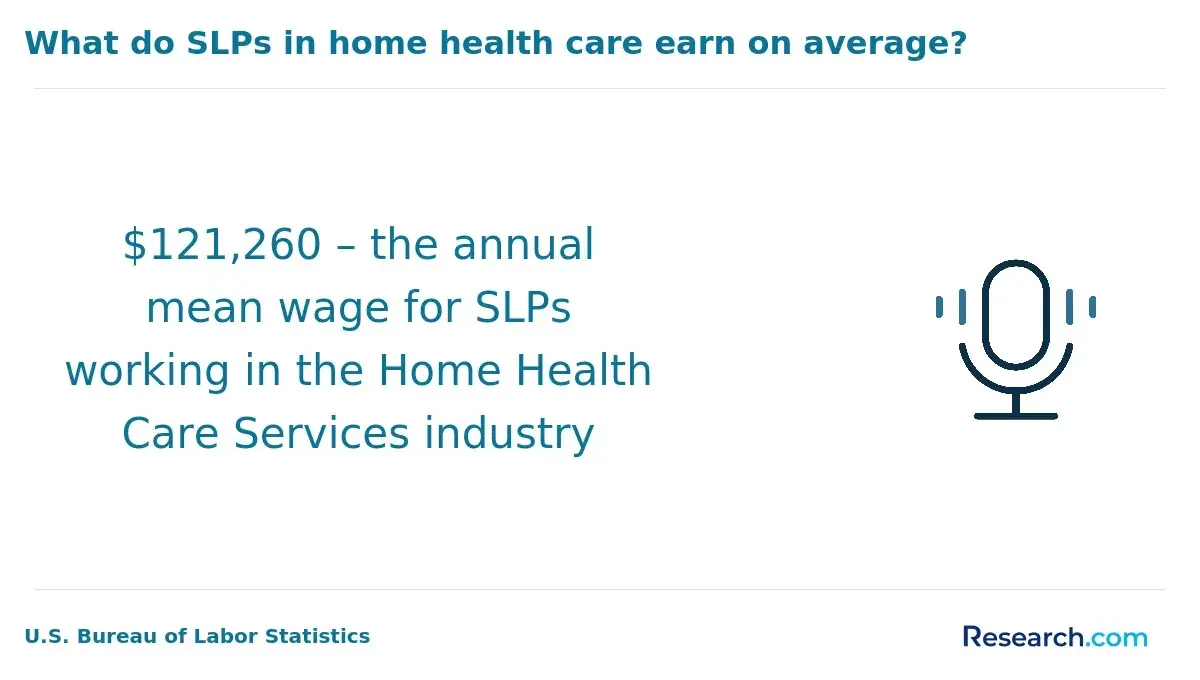
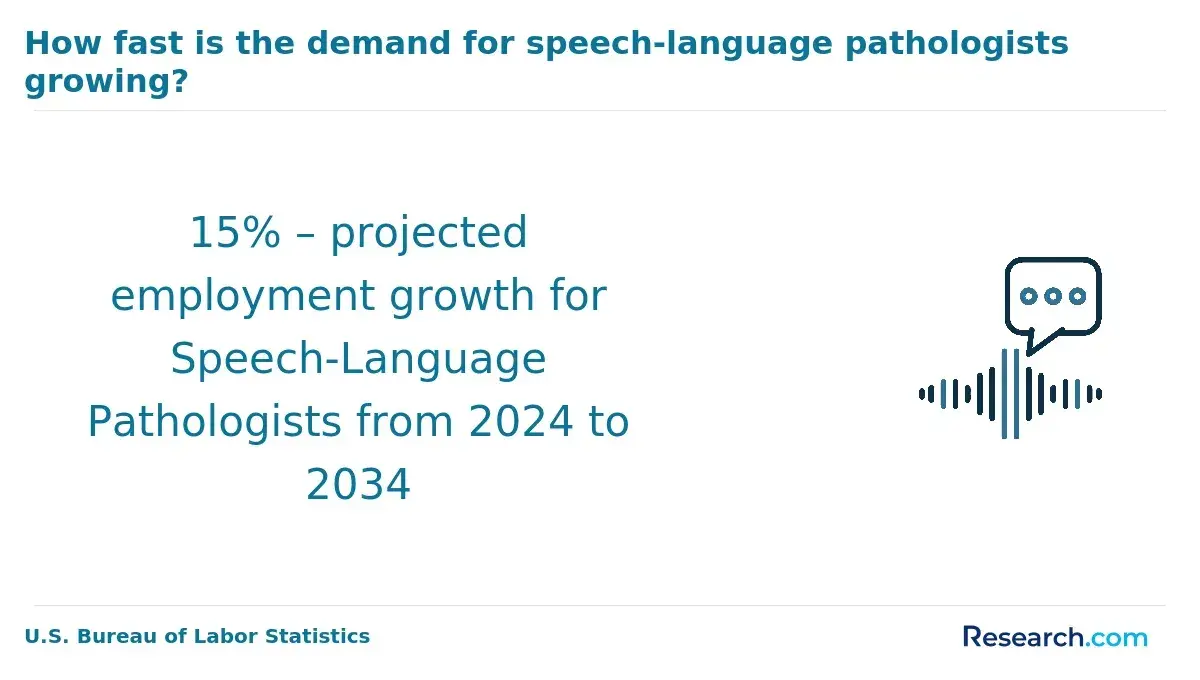
The job market for speech-language pathologists remains strong. The U.S. Bureau of Labor Statistics projects employment of speech-language pathologists will grow 17% from 2025 to 2035—much faster than the average for all occupations. The median annual wage was $95,410 in May 2024.
Demand is shaped by several forces: an aging population, greater recognition of communication and swallowing disorders, continued needs in schools, and broader use of telepractice. However, job availability and salary can vary by location, employer type, caseload, setting, specialization, and experience.
What applicants should understand about the market
- Schools and healthcare settings differ: School roles may offer academic-year schedules, while medical roles may involve more acute or complex clinical needs.
- Geography matters: Opportunities and compensation can vary substantially by state, region, and local workforce demand.
- Licensure planning is essential: Students should confirm that their program supports the requirements for the state where they intend to practice.
- Clinical versatility helps: Graduates with broad placement experience may be better prepared to pursue multiple settings.
- Professionalism still matters: A strong labor market does not replace the need for strong clinical judgment, documentation skills, communication, and ethical practice.
For applicants, the employment outlook makes SLP a viable career choice, but the best outcomes still depend on choosing the right program, completing strong clinical training, meeting licensure requirements, and building a record of reliable professional practice.
Other Things You Need To Know About the SLP Programs
Yes. CAA accreditation is critical because many states require graduation from a CAA-accredited program for licensure and clinical fellowship eligibility. The Council on Academic Accreditation in Audiology and Speech-Language Pathology sets this standard, so applicants should confirm current status before submitting materials.
In 2027, applicants often overlook aligning their personal statements with specific program goals, neglecting to tailor their essays. Additionally, some fail to proofread thoroughly, which can lead to grammatical errors. Networking with alumni before applying is also often missed but can provide valuable insights and strengthen applications.
Applicants should ensure they meet all requirements, including GRE scores (if required), prerequisite coursework in relevant fields, and obtaining strong letters of recommendation. Tailoring each application to reflect personal experiences and motivations for pursuing a career in speech-language pathology is also essential.
- U.S. Bureau of Labor Statistics - Speech-Language Pathologists https://www.bls.gov/ooh/healthcare/speech-language-pathologists.htm
- ASHA EdFind - Accredited Speech-Language Pathology Programs https://find.asha.org/ed/
- Audiology and Speech-Language Pathology Interstate Compact https://aslpcompact.com/compact-map/
- James Madison University - Master of Science (M.S.) in Speech-Language Pathology (Distance Education / Online) https://www.jmu.edu/chbs/csd/online_ms/index.shtml
- Auburn University, Montgomery - Master of Science in Speech-Language Pathology https://www.aum.edu/degree/ms-speech-language-pathology/
- New York University - Online MS, Communicative Sciences and Disorders (Speech@NYU) https://steinhardt.nyu.edu/degree/online-ms-communicative-sciences-and-disorders
- Delaware Valley University - Master of Science in Speech-Language Pathology (M.S.) https://delval.edu/programs/graduate-programs/speech-language-pathology
- Abilene Christian University - Master of Science in Speech-Language Pathology (Online) https://acu.edu/academics/graduate/master-of-science-in-speech-language-pathology/