2027 Paying for College After a Financial Setback

Co-Founder and Chief Data Scientist
A financial setback can turn next semester's bill into an urgent decision. College Board reported that the average published tuition and fees for in-state students at public four-year colleges reached $11,610 in 2024-25, before housing, food, books, and transportation. This guide is for students and parents dealing with income loss, medical debt, job changes, divorce, or another sudden budget shock. You'll learn how to appeal aid, find emergency funding, compare lower-cost programs, borrow carefully, and choose an affordable path without weakening your long-term career options.
Key Things You Should Know
- A recent income loss can justify a financial aid appeal, often called a professional judgment review, because the FAFSA may not reflect your current ability to pay.
- Federal student loans for 2025-26 carry fixed interest rates of 6.39% for undergraduate Direct Loans, 7.94% for graduate Direct Unsubsidized Loans, and 8.94% for PLUS Loans, so borrowing should be compared against lower-cost aid first.
- Lower-cost pathways can sharply reduce risk: College Board reported 2024-25 average published tuition and fees of $4,050 at public two-year colleges versus $11,610 for in-state public four-year colleges.
How does a recent financial setback change your options for paying for college?
A financial setback changes your college payment strategy because your original aid package, school choice, housing plan, and timeline may no longer match your current cash flow. The most important shift is that you should stop treating the first tuition bill as final and start treating your plan as negotiable.
In financial aid language, a setback may create a "special circumstance." This can include job loss, reduced hours, divorce or separation, death of a parent or spouse, unusually high medical expenses, loss of child support, or a one-time income event that made your FAFSA look stronger than your actual situation. Schools cannot change federal aid rules, but they may adjust the income information used to calculate eligibility.
The table below shows how common setbacks can affect your practical options. Use it to identify which office to contact first and what type of help is most likely to matter.
| Setback | What it may change | Most relevant college office | Likely options to ask about |
| Parent or student job loss | Income used for aid eligibility | Financial aid office | Professional judgment appeal, Pell Grant review, subsidized loan eligibility |
| Medical bills or family emergency | Ability to pay out of pocket | Financial aid office and student support office | Emergency grant, payment plan, short-term hardship fund |
| Housing instability | Cost of attendance and living budget | Student affairs or basic needs office | Housing support, food assistance, transportation help |
| Need to work more hours | Course load and time to graduation | Academic advising | Part-time enrollment, online courses, schedule change |
| Cannot afford current institution | Total program cost | Registrar, transfer office, admissions | Transfer plan, leave of absence, lower-cost school comparison |
The best option depends on whether your setback is temporary or long-term. A temporary cash-flow problem may be solved with an aid appeal, emergency grant, or payment plan; a lasting income change may require a lower-cost school, fewer credits per term, commuting, or a different credential path.
What emergency steps can you take if you suddenly can't afford next semester's tuition?
If you suddenly cannot afford next semester, move quickly and communicate before payment deadlines pass. Schools often have more flexibility before you are dropped from classes, charged late fees, or sent to collections.
Use the following sequence to stabilize your enrollment and avoid expensive mistakes. These steps are meant to protect your options while you gather documents and compare alternatives.
- Contact the financial aid office and say clearly that your financial circumstances have changed and you need to ask about an emergency aid review.
- Ask the bursar or student accounts office whether a payment plan, short-term extension, late-fee waiver, or temporary hold removal is available.
- Request a written list of documents needed for a special circumstance appeal, such as termination letters, recent pay stubs, unemployment benefits, medical bills, or tax documents.
- Meet with an academic advisor before dropping classes because withdrawing can affect aid eligibility, satisfactory academic progress, housing, and graduation timing.
- Check whether your school has emergency grants, food pantry support, transportation assistance, laptop loans, housing help, or completion grants for students near graduation.
- Compare the cost of staying enrolled part time, taking a leave of absence, transferring credits, or completing general education courses at a community college.
Be careful with last-minute private loans, credit cards, or payday-style borrowing. They may solve the immediate bill but create higher monthly payments than your future student budget can support.
How can you appeal your financial aid package after an income loss or job change?
A financial aid appeal is a formal request for the school to reconsider your aid eligibility because the FAFSA does not reflect your current financial reality. Federal rules allow financial aid administrators to use professional judgment, but each school sets its own documentation process and timeline.
Before you submit the appeal, make your request specific. "We need more money" is less effective than showing what changed, when it changed, how much income was lost, and what amount you still cannot cover after grants, scholarships, work, savings, and reasonable loans.
A strong appeal package usually includes these items:
- A short letter explaining the financial setback, the date it happened, and whether it is temporary or ongoing.
- Proof of income loss, such as a layoff notice, unemployment benefit statement, reduced-hours letter, recent pay stubs, or business closure documentation.
- Evidence of unusual expenses, such as unreimbursed medical bills, dependent care costs, disaster-related costs, or legal documentation tied to separation or divorce.
- An updated household budget showing what the family can realistically pay each month without relying on high-interest debt.
- A clear request, such as reconsideration for need-based grants, federal work-study, subsidized loans, or a revised cost of attendance.
Appeals are not guaranteed, and schools with limited institutional grant budgets may not be able to replace all lost income. Still, an appeal can unlock need-based aid that was unavailable under the original FAFSA calculation, especially when the prior tax year no longer represents your current household finances.
What scholarships, grants, and special programs help students after a financial setback?
After a setback, prioritize money that does not have to be repaid. Scholarships and grants may come from the federal government, the state, your college, local foundations, employers, unions, professional associations, or emergency student support programs.
The maximum Federal Pell Grant remained $7,395 for 2025-26. That figure matters because Pell eligibility can anchor the rest of a student's aid package, but the exact award depends on financial need, enrollment intensity, cost of attendance, and remaining lifetime eligibility.
Look for aid in several categories, because each one solves a different problem:
- Need-based grants: Ask whether your appeal could affect Pell Grant eligibility, state grants, or institutional need-based aid.
- Emergency grants: These are often designed for one-time crises such as medical bills, housing instability, transportation problems, technology needs, or food insecurity.
- Completion grants: Some colleges use small grants to help students close a balance when they are close to finishing a degree.
- Department scholarships: Academic departments may have smaller awards that are not always visible on general scholarship pages.
- Employer and workforce funding: If you or a parent recently changed jobs, ask about tuition assistance, reskilling benefits, union scholarships, or workforce board funding.
- State and local programs: Community foundations, county programs, and state agencies may offer aid for displaced workers, adult learners, foster youth, veterans, or students entering high-need fields.
Apply even if the award looks small. A $500 emergency grant or local scholarship can prevent a late fee, reduce borrowing, or cover the books and transportation costs that make the difference between staying enrolled and stopping out.
How do costs, financial aid, and flexibility compare for online versus campus programs?
Online programs can reduce some costs, but they are not automatically cheaper. The right comparison is total cost: tuition, fees, housing, commuting, technology, books, childcare, lost work hours, and the number of terms needed to finish.
Students facing a setback often value flexibility as much as price. If you need to keep working, care for family, or avoid relocation, comparing the most affordable online colleges can help you identify programs where tuition and scheduling fit your revised budget.
The table below compares common cost and flexibility factors. Use it to decide whether online, campus, or hybrid enrollment is more realistic after your financial change.
| Factor | Online programs | Campus programs | Decision point |
| Housing and commuting | May reduce relocation, parking, and commuting costs | May require housing, transportation, or campus fees | Online can help if living at home is the cheapest option |
| Scheduling | Often better for work or caregiving schedules | May offer more fixed class times and in-person requirements | Working students should check synchronous meeting times |
| Student support | Varies widely by school and platform | May provide easier access to labs, advising, tutoring, and campus services | Support quality matters more if you are under financial stress |
| Program requirements | Some fields still require in-person labs, clinicals, practicums, or exams | Hands-on requirements may be easier to coordinate | Licensure-track students must verify state and placement rules |
| Fees and materials | May include technology, proctoring, or online course fees | May include campus, activity, parking, or facility fees | Ask for a full fee schedule, not just tuition |
Online study is strongest when you are self-directed, have reliable internet, and need to protect work income. Campus study may be better if your program requires labs or clinical placements, or if you need structured support to stay on track.
How can choosing community college, certificate programs, or shorter degrees reduce costs?
Community college, certificate programs, and shorter degrees can lower your upfront cost and reduce the amount you need to borrow. They can also help you pause a more expensive plan without pausing your progress entirely.
College Board's 2024-25 tuition and fee averages show why this path deserves attention: public two-year colleges averaged $4,050 for in-district students, compared with $11,610 for in-state students at public four-year colleges. The gap does not include housing or commuting, so the real savings can be larger if you live at home.
The table below summarizes lower-cost academic pathways and when they tend to make sense.
| Pathway | Typical fit | Cost advantage | Trade-off |
| Community college transfer | Students who need lower-cost general education credits before a bachelor's degree | Lower tuition for the first one to two years | Transfer rules must be checked carefully to avoid lost credits |
| Associate degree | Students seeking faster entry into fields such as health care support, business support, IT support, or skilled technical roles | Shorter timeline and lower tuition than many bachelor's programs | Some career paths still require a bachelor's degree for advancement |
| Certificate program | Students who need job-focused training in months rather than years | Lower total cost if the credential is recognized by employers | Value depends heavily on accreditation, employer demand, and licensing rules |
| Part-time bachelor's completion | Working students who must protect income while continuing school | Spreads payments over time | Longer completion time can increase total fees and delay earnings gains |
If you are unsure where to start, reviewing what is the easiest associate degree to get can help you understand which programs may be more manageable, but "easy" should never be the only criterion. The better question is whether the credential transfers, fits your strengths, and connects to a real job market.
Employer Confidence in Online vs. In-Person Degree Skills, Global 2024

What should you know about federal, parent, and private student loan options now?
Loans can help you stay enrolled after a setback, but they should usually come after grants, scholarships, payment plans, employer aid, and lower-cost program options. The goal is not to avoid all borrowing at any cost; it is to borrow the smallest amount needed for a credential that supports realistic earnings.
Federal loans are generally the first borrowing option to review because they have fixed rates, federal repayment protections, deferment options, and access to income-driven repayment plans. For 2025-26, undergraduate Direct Loans have a 6.39% fixed interest rate, while PLUS Loans for parents and graduate students have an 8.94% fixed rate. Those rates make it important to compare the monthly payment impact before accepting the full loan amount offered.
Here is how the main loan categories differ:
- Direct Subsidized Loans: Available to eligible undergraduates with financial need; the government pays interest during certain in-school and deferment periods.
- Direct Unsubsidized Loans: Available to eligible undergraduate, graduate, and professional students; interest begins accruing when the loan is disbursed.
- Parent PLUS Loans: Credit-based federal loans parents can use for dependent undergraduate students; they often carry higher rates and fees than undergraduate loans.
- Graduate PLUS Loans: Credit-based federal loans for graduate or professional students after Direct Unsubsidized Loan eligibility is used.
- Private student loans: Offered by banks, credit unions, and online lenders; rates, cosigner rules, repayment protections, and hardship options vary by lender.
A common mistake is using a private loan to cover a balance before asking the school about an appeal or payment plan. Another is having a parent borrow PLUS Loans without a family agreement about who will repay them. If your setback is still unfolding, avoid debt that depends on income you do not yet know you will have.
How can you estimate total college costs and build a realistic post-setback budget?
A post-setback college budget should estimate the full cost of attendance, not just tuition. Cost of attendance usually includes tuition, required fees, books and supplies, housing, food, transportation, personal expenses, loan fees, and sometimes childcare or professional equipment.
Start with the school's official cost of attendance, then replace broad estimates with your actual numbers. If finishing faster would reduce rent, childcare, or time away from full-time work, compare accelerated programs carefully; the shorter timeline can help some students, but the course load may be too intense during a financial crisis.
Use this budgeting process to decide whether the plan is affordable before you commit:
- List direct school charges, including tuition, mandatory fees, housing, meal plan, and course-specific fees.
- Estimate indirect costs, including rent, food, transportation, books, technology, childcare, health insurance, and emergency savings.
- Subtract grants, scholarships, tuition assistance, and realistic family contribution before counting loans.
- Estimate work income conservatively, using after-tax take-home pay and a schedule that still leaves enough time to pass classes.
- Calculate the remaining gap per term and decide whether it can be covered through a payment plan, savings, federal loans, or a lower-cost school.
- Run a "bad month" test by asking what happens if hours are cut, a car repair happens, or a medical bill arrives during the term.
The "bad month" test is especially important after a setback. A plan that only works when every assumption goes perfectly is not a stable college financing plan.
How do you evaluate accredited schools and programs when you need a more affordable option?
When you need a more affordable option, do not choose solely by sticker price. A low-cost program can become expensive if credits do not transfer, accreditation is weak, graduation support is poor, or the program does not meet licensing or employer requirements.
Accreditation is the first filter. For most students, institutional accreditation from an agency recognized by the U.S. Department of Education is essential for federal financial aid eligibility and transfer credibility. Some fields also require programmatic accreditation, such as nursing, counseling, education, social work, engineering, or certain health programs.
Ask schools these questions before enrolling or transferring:
- Is the institution accredited by a recognized accrediting agency, and does my specific program need separate programmatic accreditation?
- How many of my existing credits will apply to the degree, and will they count toward requirements or only as electives?
- What is the total cost to finish, including fees, books, technology, clinical costs, background checks, exams, and graduation fees?
- What happens to my financial aid if I enroll part time, stop out for a term, or repeat a course?
- Does the program meet licensure or certification requirements in my state?
- What academic support, tutoring, career services, emergency aid, and basic needs resources are available to online and transfer students?
If you already have a bachelor's degree and are deciding whether graduate school is still realistic after a setback, compare the length, tuition, employer reimbursement potential, and career payoff of an online master degree against slower or more expensive alternatives. A shorter graduate program may reduce time away from work, but only if the credential is aligned with your target role.
How will your college financing choices affect future career options, salary, and debt?
Your financing choices affect more than the next bill. They can influence whether you finish, how quickly you enter the workforce, how much flexibility you have after graduation, and whether your monthly loan payment fits your starting salary.
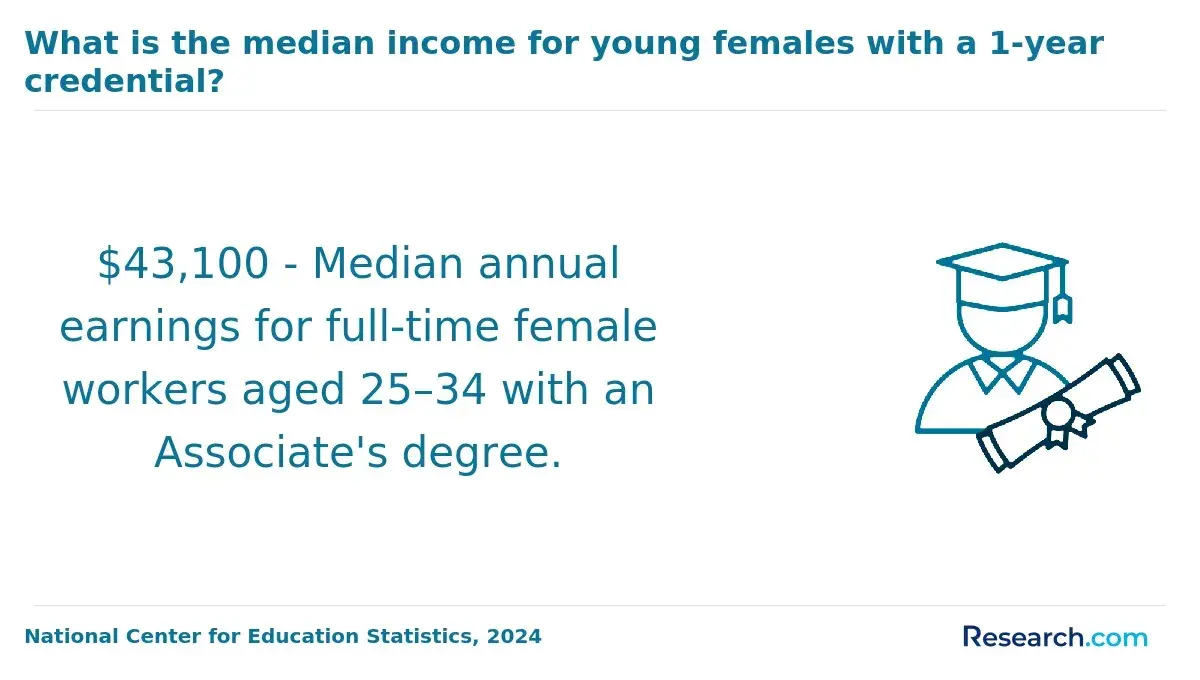
BLS 2024 earnings data show that workers age 25 and older with a bachelor's degree had median weekly earnings of $1,543, while those with an associate degree had median weekly earnings of $1,099. This does not mean a bachelor's degree is always the right choice; it means the credential decision should be evaluated against field, cost, completion likelihood, transfer credits, and debt.
Use the table below to compare how financing decisions can shape career flexibility. The goal is to avoid choosing the cheapest option if it blocks your goal, while also avoiding expensive borrowing for a credential with uncertain payoff.
| Choice | Potential career benefit | Financial risk to watch | Best fit |
| Stay at current school with more aid | Preserves momentum, relationships, and degree plan | May still require high borrowing if the aid gap remains large | Students close to graduation or in a strong program with good support |
| Transfer to lower-cost school | Can reduce debt while keeping bachelor's goal alive | Lost credits can delay graduation and reduce savings | Students with transferable credits and a clear degree map |
| Switch to associate or certificate | May lead to faster employment and lower upfront cost | May limit advancement in fields that require a bachelor's degree | Students needing near-term earnings or a stackable credential |
| Borrow to finish | Can prevent stopping out when the degree is near completion | Payments may be difficult if salary is uncertain or the field is low-paying | Students with a short time to completion and a realistic repayment plan |
Also consider your work style and career fit. For example, students who prefer independent, focused work may want to research high paying jobs for introverts before choosing a major, because the best financial plan is tied to a career path you can realistically sustain.
Common red flags include borrowing without knowing expected monthly payments, choosing a school because it approved you quickly, ignoring accreditation, assuming all credits will transfer, or picking a major without checking entry-level job requirements. A safer approach is to connect every borrowing decision to a specific credential, timeline, and career outcome.
Other Things You Should Know About
Possibly. Contact the financial aid office and ask about a special circumstance or professional judgment appeal. You will usually need documentation such as a layoff notice, unemployment statement, or recent pay stubs showing reduced income.
Do not drop classes before speaking with financial aid and academic advising. Withdrawing can affect aid eligibility, loan repayment timing, housing, and academic progress. Ask about emergency grants, payment plans, part-time enrollment, or a leave of absence first.
They can fill a gap, but they should usually be a last resort after federal loans, grants, scholarships, and school payment options. Private loans vary widely and may offer fewer hardship protections than federal loans.
No. It can be a smart cost-control strategy if your credits transfer cleanly and the courses fit your long-term degree plan. Before transferring, get written confirmation of how credits will apply at your future school.
References
- How to choose the best college: one that you can actually afford https://www.vsac.org/blog/how-to-choose-the-best-college-one-you-can-actually-afford
- Understanding School Accreditation: What Families Should Know When Choosing an Online School https://wellspringglobalacademy.org/blog/understanding-school-accreditation-what-families-should-know-when-choosing-an-online-school
- How To Appeal for More Financial Aid for College https://www.savingforcollege.com/article/how-to-appeal-for-more-financial-aid-for-college
- Private Parent Loans vs. Parent PLUS Loans | Ascent Funding https://www.ascentfunding.com/blog/parent-plus-loans-vs-private-parent-loans/
- Emergency Student Aid (ESA) - UNCF https://uncf.org/pages/cesa
- Estimate your college cost | USAGov https://www.usa.gov/estimate-college-cost
- Students are increasingly choosing community college or certificates over four-year degrees https://www.cnbc.com/2026/01/15/four-year-college-loses-ground-community-college-gains-steam.html
- Does Debt Affect Career Choice? | HESA https://higheredstrategy.com/does-debt-affect-career-choice/
- Study Abroad Budget Calculator - Calculate Total Cost https://www.drshrutimehta.com/study-abroad-budget-calculator
- Financial supports for students https://www.citizensinformation.ie/en/education/third-level-education/fees-and-supports-for-third-level-education/financial-supports-for-students/