2027 Is College Worth the Cost?

Co-Founder and Chief Data Scientist
College is worth the cost only when the credential, school price, debt level, and career goal work together. The decision matters because BLS data published in 2024 shows bachelor's degree holders had median weekly earnings of $1,493, compared with $899 for high school graduates. That gap is meaningful, but it does not erase high tuition, lost work time, or weak program outcomes.
This guide helps students, parents, career changers, and working adults compare costs, earnings, alternatives, and red flags before committing to a degree.
Key Things You Should Know
- College can be financially worth it when total borrowing stays manageable and the target career typically requires or strongly rewards a degree; BLS data published in 2024 shows a median weekly earnings gap of $594 between bachelor's degree holders and high school graduates.
- The sticker price varies widely: College Board data for 2024-25 lists average published tuition and fees at $11,610 for in-state public four-year colleges and $43,350 for private nonprofit four-year colleges.
- Major, completion time, accreditation, and debt matter as much as school type; a lower-cost program with strong completion and job-placement outcomes can outperform a higher-priced degree with uncertain career value.
How can you decide if college is financially worth it for your career goals?
College is financially worth it when the expected career payoff is likely to exceed the full cost of attendance, including tuition, fees, living expenses, debt interest, and income you give up while studying. The right question is not simply "Is college worth it?" but "Is this specific program worth it for this specific career goal?"
A practical college ROI review should connect the degree directly to the work you want. If your target career requires a bachelor's degree, professional licensure, or graduate school eligibility, college may be the necessary foundation. If your goal is faster workforce entry, lower debt, or a skills-based role, alternatives such as certificates, apprenticeships, associate degrees, or quick degree programs may be a better first step.
Use this decision sequence before enrolling. It keeps the focus on measurable fit instead of prestige, marketing, or family pressure.
- Identify the exact job titles you want, then confirm whether employers usually require a degree, prefer one, or accept equivalent experience.
- Compare the school's net price after grants and scholarships, not only the published tuition.
- Estimate total borrowing and monthly payments before accepting loans.
- Check median pay for the target occupation, but treat it as a benchmark rather than a guaranteed outcome.
- Review completion rates, transfer policies, internship access, licensing exam pass rates, and career services.
- Choose the lowest-cost accredited path that realistically gets you to the same career outcome.
The strongest financial cases for college often involve careers where the degree is a gatekeeper, such as engineering, accounting, nursing, teaching, social work, computer science, architecture, and many management-track roles.
The weakest cases often involve expensive programs with unclear employment outcomes, poor completion rates, limited transferability, or career paths where employers value portfolios, certifications, apprenticeships, or experience more than a four-year credential.
This comparison shows how different goals change the college-worth-it answer. It is not a ranking of paths; it is a way to match the credential to the outcome you actually need.
| Career goal | Degree value | Best-fit path | Main risk to check |
| Licensed professions such as teaching, nursing, accounting, or engineering | High when the program meets licensing or employer requirements | Accredited degree aligned with state or professional rules | Program does not meet licensure requirements in your state |
| Business, management, marketing, or communications | Moderate to high when paired with internships and measurable skills | Affordable bachelor's degree plus work experience | Graduating without internships, projects, or employer-ready skills |
| Skilled trade, technical support, or applied technology | Depends on occupation | Certificate, apprenticeship, associate degree, or employer training | Overpaying for a credential that employers do not require |
| Career change into a field requiring a credential | High if the new field has clear hiring demand | Transfer-friendly, accelerated, or online completion program | Losing credits or repeating coursework unnecessarily |
| Undecided career direction | Uncertain | Community college, career exploration, or lower-cost general education | Taking on large debt before choosing a direction |
What is the true cost of a bachelor's degree, including tuition, fees, and opportunity cost?
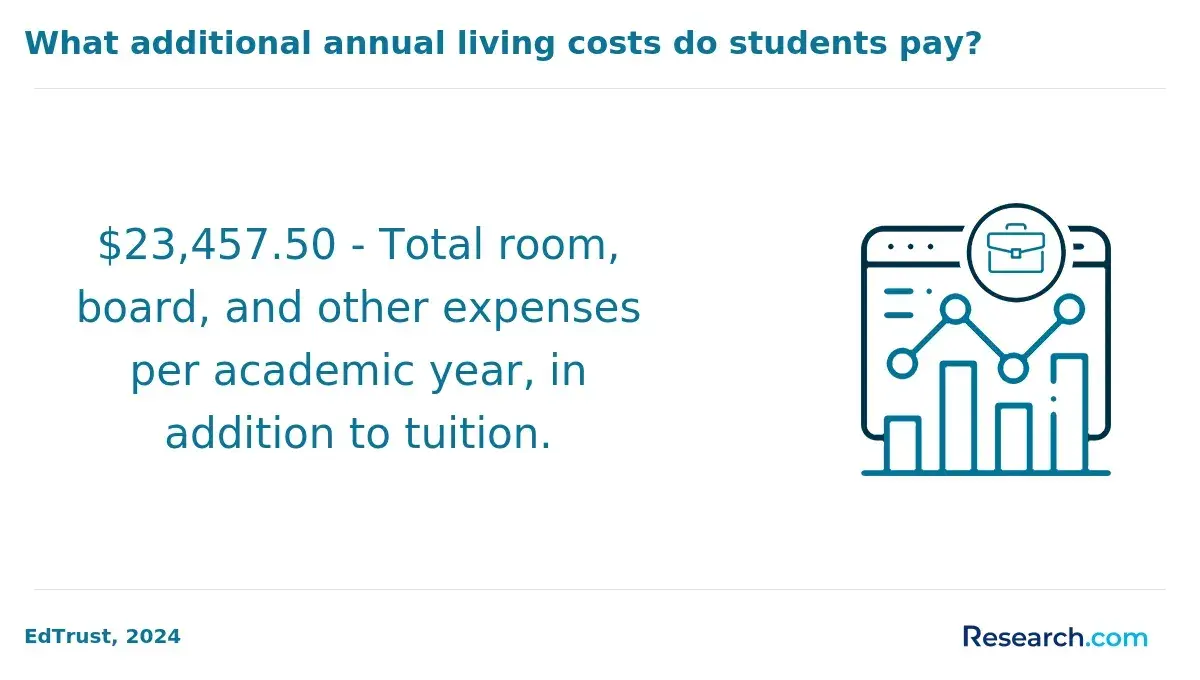
The true cost of a bachelor's degree includes more than tuition. Students also pay mandatory fees, books and supplies, housing, food, transportation, technology costs, loan interest, and sometimes childcare or reduced work hours. For many students, the largest hidden cost is opportunity cost: income they could have earned if they worked full time instead of attending school.
College Board's 2024-25 figures show why net price matters. Average published tuition and fees were $11,610 for in-state students at public four-year colleges and $43,350 at private nonprofit four-year colleges. However, published prices are not always what students pay after grants and scholarships, so families should compare aid offers carefully before assuming one school is unaffordable or another is cheap.
The following table summarizes the major cost categories students should include in a realistic budget. It helps reveal whether a lower-tuition school is truly lower cost after living expenses, commuting, course materials, and time to completion are considered.
| Cost category | What it includes | Why it affects ROI |
| Tuition and required fees | Instructional charges, activity fees, technology fees, lab fees, and other mandatory charges | This is the most visible cost, but it may be reduced by grants, scholarships, or employer aid |
| Living expenses | Housing, food, utilities, transportation, and personal expenses | A low-tuition school can become expensive if housing or commuting costs are high |
| Books, supplies, and technology | Textbooks, software, equipment, internet, laptops, and program-specific materials | Some majors have higher required materials or equipment costs |
| Opportunity cost | Income lost while studying full-time or reducing work hours | Longer programs can delay earnings and reduce short-term financial flexibility |
| Loan interest | Interest that accumulates during school, grace periods, deferment, or repayment | Debt can raise the real cost of college beyond the amount originally borrowed |
| Delayed completion costs | Extra semesters caused by changing majors, unavailable courses, failed classes, or lost transfer credits | Each added term can increase cost and delay entry into the workforce |
To estimate your personal cost, start with each school's net price calculator, then subtract grants and scholarships you do not have to repay. Next, add likely borrowing, work income, transportation, housing, and a realistic timeline. A degree that takes five or six years instead of four can still be worthwhile, but the extra time should be part of the ROI calculation.
How much more do college graduates earn compared with high school graduates over a lifetime?
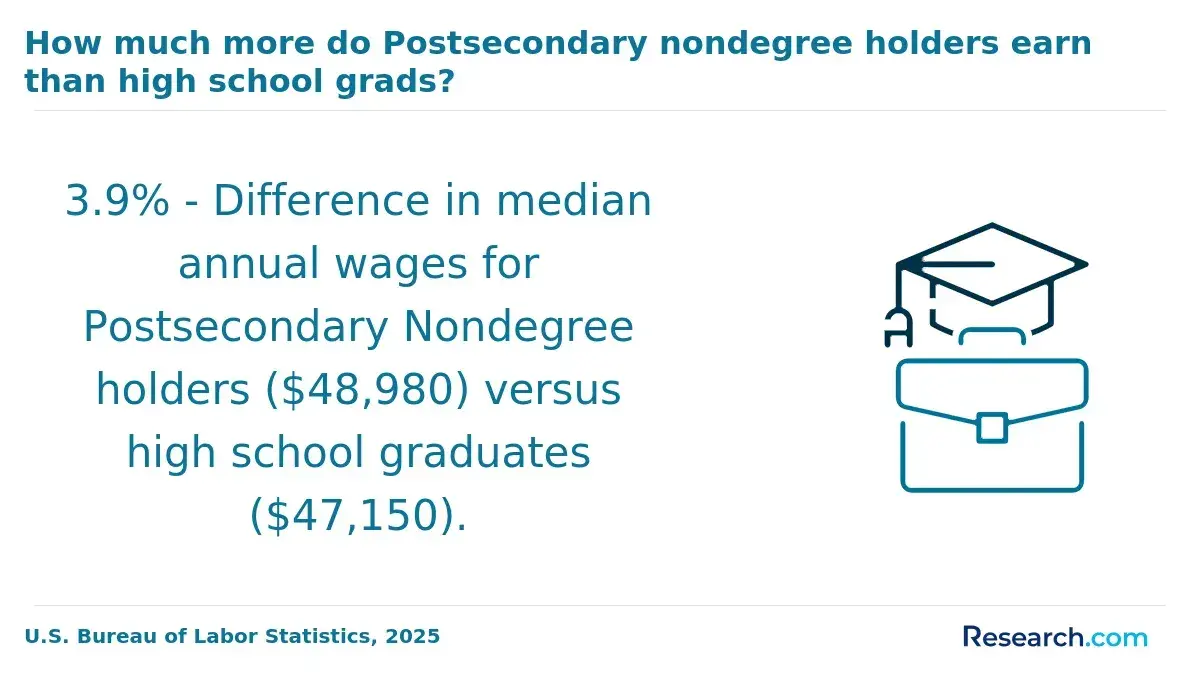
On average, college graduates earn more than workers whose highest credential is a high school diploma, but the earnings premium varies by field, region, occupation, experience, and school outcomes. BLS data published in 2024 reported median weekly earnings of $1,493 for workers with a bachelor's degree and $899 for workers with a high school diploma. Annualized, that median gap is about $30,888 before taxes, but it should be treated as a population-level benchmark, not a promise for any individual graduate.
The earnings advantage matters because it can compound over decades. A higher starting salary may also improve retirement contributions, home-buying power, health insurance access, and resilience during unemployment. Still, the payoff can shrink if a student overborrows, takes much longer than expected to graduate, chooses a low-paying field without a realistic plan, or attends a program with weak employer connections.
This table shows how education level can influence earnings and unemployment risk. The figures are useful for broad comparison, but they do not replace occupation-specific salary research.
| Education level | Median weekly earnings in BLS data published in 2024 | How to interpret the figure |
| High school diploma | $899 | A baseline for comparing the earnings premium of additional education |
| Some college, no degree | $1,012 | Coursework may help, but stopping short of a credential can reduce labor-market value |
| Associate degree | $1,058 | Often valuable for technical, health, business, and transfer pathways |
| Bachelor's degree | $1,493 | Often required for professional, analytical, management-track, and licensed roles |
| Master's degree | $1,737 | Most valuable when tied to advancement, licensure, specialization, or career switching |
For an individual student, the best use of lifetime earnings data is not to assume "more education is always better." Instead, compare the expected salary range in your target occupation with the total price of the credential. A lower-cost bachelor's degree in a strong field may produce better ROI than a prestigious but expensive degree in a field with limited entry-level pay.
How do majors and fields of study affect salary potential and job security?
Major choice is one of the biggest drivers of college ROI because degrees lead to different labor markets. A bachelor's degree in engineering, computer science, nursing, accounting, data analytics, or certain health fields often connects to clearer job titles and stronger starting pay than a broad major with no internship, portfolio, or technical specialization.
That does not mean liberal arts or humanities degrees lack value; it means students should be intentional about skills, work experience, and career translation.
Job security also varies by field. Health care, education, accounting, engineering, cybersecurity, logistics, and data-related roles often have employer demand that is harder to replace with automation alone. At the same time, AI is changing entry-level work in writing, coding, research, customer support, marketing, and administrative analysis.
Students in almost any major should build AI literacy, data interpretation, communication, project management, and ethical judgment because employers increasingly expect workers to use technology productively rather than avoid it.
The table below compares common fields by typical ROI pattern. Use it to identify the questions you should ask about a major before committing to it.
| Field of study | Typical salary potential pattern | Job-security considerations | Best ROI strategy |
| Engineering and computer science | Often strong when graduates build applied technical experience | Demand can be high, but skills must stay current as tools change | Prioritize internships, projects, coding or design portfolios, and employer-recognized tools |
| Health professions | Often strong for licensed roles with clear staffing demand | Licensure, clinical placement quality, and state rules are critical | Verify accreditation, exam pass rates, clinical access, and state eligibility |
| Business, accounting, and finance | Varies widely by school, internships, quantitative skills, and certifications | Analytical and compliance roles may be more resilient than generic entry-level roles | Add Excel, analytics, accounting systems, internships, and professional networking |
| Education and social services | Often more modest, but degree or licensure may be required | Demand depends on region, funding, specialization, and licensure area | Compare debt carefully with expected public-sector or nonprofit salaries |
| Humanities, arts, and social sciences | Can be strong when paired with writing, research, data, policy, design, or communication skills | Career paths may be less linear, requiring stronger portfolio and networking effort | Build internships, a portfolio, technical tools, and a clear employer-facing story |
A common mistake is choosing a major only because it sounds interesting or only because it sounds practical. The better approach is to connect interest, ability, labor-market demand, and cost. If you love a lower-paying field, the degree may still be worth it if you choose an affordable school, minimize debt, gain relevant experience, and understand the likely salary range before enrolling.
How do online degree programs compare to campus-based programs in cost and outcomes?
Online degree programs can be worth it when they are accredited, affordable, well supported, and aligned with the same career outcomes as a campus-based program. They are especially useful for working adults, parents, military-connected students, rural students, and career changers who need scheduling flexibility. However, online is not automatically cheaper or easier, and some fields still require in-person labs, clinicals, student teaching, residencies, or supervised practice.
NCES data published in 2024 shows that distance education has become a mainstream part of U.S. higher education, not a niche format. That matters because more employers and colleges are accustomed to online learning, but students still need to verify quality, accreditation, student support, and whether the transcript or credential is treated the same as the campus version.
For students trying to finish faster, flexible schedules can help, but compressed coursework can be demanding. Before choosing accelerated programs, confirm that the pace fits your work hours, family responsibilities, and prior academic preparation.
This comparison shows when online and campus formats tend to make sense. The best choice depends on your learning style, career field, schedule, and access to hands-on opportunities.
| Factor | Online degree programs | Campus-based programs |
| Schedule flexibility | Often stronger for working adults and students with caregiving responsibilities | Usually better for students who can attend scheduled classes consistently |
| Total cost | May reduce commuting or relocation costs, but tuition varies widely | May offer campus jobs, local networking, housing options, and in-person services |
| Hands-on requirements | Works best when fieldwork can be arranged locally or completed through approved partners | Often stronger for labs, studios, clinicals, and direct faculty interaction |
| Networking | Requires more intentional effort through virtual events, internships, and professional groups | May provide easier access to clubs, recruiters, alumni events, and peer networks |
| Learning fit | Best for self-directed students who can manage deadlines independently | Best for students who benefit from in-person structure and immediate support |
Before enrolling online, ask whether courses are asynchronous or live, how advising works, what technology is required, how exams are proctored, whether credits transfer, and whether the program meets licensure rules where you live. Avoid any school that pressures you to enroll quickly, refuses to provide graduation or cost information, or makes vague promises about jobs.
What role do accreditation and college quality play in the value of a degree?
Accreditation is one of the most important quality checks in higher education. Institutional accreditation signals that a college has been reviewed by an accrediting agency recognized by the U.S. Department of Education or the Council for Higher Education Accreditation. Programmatic accreditation applies to specific fields, such as nursing, engineering, business, counseling, education, social work, and allied health.
Accreditation affects value because it can influence federal financial aid eligibility, credit transfer, graduate school admission, licensure eligibility, and employer acceptance. A cheap program can become expensive if its credits do not transfer or if graduates are not eligible for the license or certification required in their target field.
Use this quality checklist before applying. It helps separate legitimate affordability from risky shortcuts.
- Confirm institutional accreditation through official accreditation databases rather than relying only on the school's website.
- Check whether your specific program needs programmatic accreditation for licensure, certification, or graduate study.
- Ask for graduation rates, retention rates, transfer-out data, job-placement information, and licensing exam pass rates when relevant.
- Review faculty qualifications, student support services, internship access, academic advising, and career services.
- Read the transfer credit policy before enrolling, especially if you may move from community college to a four-year institution.
- Be cautious of schools that advertise unrealistic completion times, guaranteed jobs, or unusually aggressive enrollment deadlines.
College quality is not the same as brand prestige. A regional public university, nonprofit private college, community college transfer pathway, or accredited online program can offer strong value when it has credible outcomes and manageable costs. Conversely, a well-known school may be a poor investment if the net price is too high for the expected career path.
How does student debt influence whether college is a good investment?
Student debt can turn a useful degree into a stressful investment if monthly payments are too high relative to early-career income. Federal Student Aid portfolio data in 2024 showed more than $1.6 trillion in outstanding federal student loans. That scale does not mean every borrower made a bad choice, but it does show why students should plan repayment before signing a loan agreement.
A good rule of thumb is to borrow as little as possible and avoid letting total debt exceed what you reasonably expect to earn in your first year after graduation. This rule is imperfect because salaries vary by region and field, but it gives families a simple warning signal. If a program requires heavy borrowing for a career with modest starting pay, look for a cheaper path, more aid, employer tuition support, community college transfer, part-time enrollment, or a different credential.
Debt affects ROI in several ways: it raises the true price of the degree through interest, reduces cash flow after graduation, limits geographic flexibility, and may delay saving for emergencies, retirement, housing, or graduate school. Parent PLUS loans can also shift risk to families, so parents should evaluate their own retirement and debt situation before borrowing.
To reduce debt risk, take these steps before enrollment and repeat them each year. Aid offers can change, and so can your academic plan.
- Compare net price across at least three schools using grant and scholarship amounts, not only tuition.
- Accept grants, scholarships, work-study, and lower-cost federal student loans before considering private loans.
- Estimate your monthly payment under standard and income-driven repayment options.
- Choose housing, meal plans, transportation, and course materials with the same care you use for tuition.
- Meet with an advisor before changing majors so you understand whether the switch adds semesters.
- Reapply for scholarships each year instead of assuming first-year aid is the only aid available.
The biggest debt red flags are borrowing without knowing the total cost, using loans for a program with low completion rates, assuming future salary will be high without occupation-specific evidence, or attending a school that will not clearly explain financial aid terms. Debt is not automatically bad, but it should be tied to a realistic academic and career plan.
What are the typical program length and completion rates, and why do they matter for ROI?
Program length matters because every extra term adds direct cost and can delay full-time earnings. A bachelor's degree is commonly described as a four-year credential, but many students take longer because of part-time enrollment, transfer credit loss, changing majors, unavailable required courses, financial interruptions, or work and family responsibilities.
Recent NCES completion data published in 2024 indicates that roughly two-thirds of first-time, full-time students at four-year institutions complete a bachelor's degree within six years. For ROI, that means students should not base their budget only on the ideal four-year timeline. They should ask what the school does to help students get required courses, stay on track, and graduate without unnecessary credits.
Completion rates are not destiny, but they are a useful quality signal. A low completion rate may reflect student demographics, part-time enrollment, transfer patterns, affordability challenges, or weak advising, so ask follow-up questions rather than judging from one number alone.
This table shows how timeline changes can affect the financial value of a degree. It is designed to help you think through cost and delay, not to predict one exact outcome.
| Path | Typical timeline | ROI advantage | ROI risk |
| Full-time bachelor's degree | About four years when students stay on track | Faster entry into degree-required roles | Higher short-term opportunity cost if the student cannot work much |
| Part-time bachelor's degree | Often longer than four years | Allows continued income and lower annual borrowing | Delayed completion can reduce momentum and postpone salary gains |
| Community college transfer | Often two years plus two or more years after transfer | Can reduce tuition cost substantially | Credits may not transfer cleanly without a formal pathway |
| Accelerated bachelor's completion | Varies by credits accepted and course pace | Can shorten time to credential for prepared students | Intensive workload can be difficult with full-time work |
| Graduate acceleration | Varies by program and field | Can help professionals advance faster when a master's is required | Not worth it if the credential is not needed for advancement |
Students considering graduate school should be especially careful about speed claims. The fastest masters degree option may be useful for experienced professionals with clear advancement goals, but speed should never replace accreditation, employer acceptance, workload fit, or program quality.
To improve completion odds, map every required course by term, confirm prerequisites, ask how often required classes are offered, and meet with an advisor before dropping courses. If you transfer, get a written degree plan showing exactly which credits apply to your major, not just to general electives.
How do associate degrees, certificates, and trade programs compare to four-year degrees?
Associate degrees, certificates, apprenticeships, and trade programs can be excellent alternatives to four-year degrees when they match the occupation. They often cost less, take less time, and connect more directly to applied roles. However, they may also limit advancement in fields where a bachelor's degree is expected for management, licensure, or long-term mobility.
College Board's 2024-25 data lists average published tuition and fees at $4,050 for public two-year in-district colleges. That lower tuition can make community college a strong starting point, especially for students who want to explore majors, complete general education, train for technical roles, or transfer into a bachelor's program with less debt.
Shorter credentials work best when employers recognize them and when they build job-ready skills. For students comparing skills-based options, online certification programs may make sense when they are tied to a specific tool, platform, license, or occupation rather than a vague promise of career change.
The table below compares common non-bachelor's and bachelor's pathways. Use it to decide whether you need a four-year degree now, later, or not at all.
| Credential | Typical fit | Strength | Limitation |
| Certificate | Technical skills, career entry, career change, or upskilling | Shorter and often cheaper than a degree | May have limited value if employers do not recognize it |
| Apprenticeship or trade program | Skilled trades, manufacturing, construction, utilities, and technical services | Can combine paid work with training | Career path may be physically demanding or location-dependent |
| Associate degree | Health care, IT, business support, criminal justice, early childhood education, and transfer pathways | Lower cost and faster workforce entry than many bachelor's programs | Some advancement paths may still require a bachelor's degree |
| Bachelor's degree | Professional, analytical, licensed, and management-track roles | Broader career mobility and access to graduate school | Higher cost and longer time commitment |
| Stackable pathway | Students who want to work while building credentials over time | Can reduce risk by earning credentials in stages | Requires careful planning so credits and credentials build toward a goal |
A smart alternative path is not a "lesser" path. It is a better fit when the credential is aligned with the job, the cost is reasonable, and the student can enter the labor market without unnecessary debt. The key is to avoid dead-end credentials that do not transfer, do not meet licensing rules, or do not lead to roles employers are actually hiring for.
How can prospective students choose a reputable college that maximizes career and salary outcomes?
Choosing a reputable college means evaluating cost, quality, student support, and career outcomes together. Rankings can be useful starting points, but they should not replace program-level research. The best-value school for one student may be a local public university, an online completion program, a community college transfer pathway, a private nonprofit college with strong aid, or a specialized program with excellent employer connections.
Prospective students should also consider personal circumstances that affect access and outcomes. For example, applicants with criminal records may need to confirm admissions policies, clinical placement rules, background check requirements, and licensing restrictions before enrolling; resources on what is the best degree for a convicted felon can help frame those questions before committing to a program.
Use these questions when speaking with admissions, financial aid, academic advising, and program faculty. Strong schools should be able to answer clearly and in writing.
- Is the institution accredited, and does my specific program need separate programmatic accreditation?
- What is the total net price after grants and scholarships for a student like me?
- How much debt do students in this program typically take on, and what repayment support is available?
- What percentage of students in this program graduate, transfer, or stop out?
- How many credits will transfer into my major, and can I get the evaluation before enrolling?
- What internships, clinical placements, apprenticeships, research opportunities, or employer partnerships are available?
- What are recent graduates doing, and how is that information collected?
- Does the program meet licensure or certification requirements in the state where I plan to work?
- How often are required courses offered, and what happens if I fail or withdraw from a prerequisite?
- What academic, career, disability, mental health, and tutoring services are available to online and campus students?
Watch for red flags: pressure to enroll immediately, unclear accreditation claims, refusal to provide cost details, guaranteed salary claims, poor transfer transparency, weak student support, or programs that do not publish licensing outcomes when licensing is central to the career. A reputable college should help you understand risk, not hide it.
The final decision should balance affordability, completion likelihood, career alignment, and personal fit. College is most worth the cost when you can explain exactly why the credential is needed, what it will cost, how you will finish, and how it connects to a realistic next job.
Other Things You Should Know About
It can be, but only if the debt is reasonable for the career you are pursuing. Compare total borrowing with expected early-career pay, choose federal loans before private loans, and avoid borrowing heavily for a program with unclear job outcomes.
Degrees tied to clear labor-market demand, licensure, or specialized skills often have stronger ROI. Examples may include engineering, nursing, accounting, computer science, data-focused business fields, and certain allied health programs, but the best choice depends on cost, school quality, and your abilities.
Yes, if credits transfer cleanly into the intended major. The safest approach is to use an official transfer agreement, get advising from both schools, and confirm which courses count toward major requirements before enrolling.
Choose the credential that matches the job. A bachelor's degree makes sense for careers that require it or reward it strongly, while certificates and trade programs may be better for faster entry into technical or skills-based roles with lower upfront cost.
References
- The perfect survey length: Do you know what it is? https://aytm.com/post/the-perfect-survey-length
- Students Choose College with Future Jobs in Mind https://www.ppic.org/blog/students-choose-college-with-future-jobs-in-mind/
- College is still worth it, even with student debt, but we can do better | Brookings https://www.brookings.edu/articles/college-is-still-worth-it-even-with-student-debt-but-we-can-do-better/
- Understanding Response Rate vs. Completion Rate: What’s the Difference? https://soundrocket.com/response-rate-vs-completion-rate/
- Picking a College that Meets Your Financial & Career Goals - EDCAPNY.org https://www.edcapny.org/resources-for-future-students/picking-a-college/
- How does a college degree improve graduates’ employment and earnings potential? - APLU https://www.aplu.org/our-work/4-policy-and-advocacy/publicuvalues/employment-earnings/
- Why Accreditation Matters: Ensuring Quality in Higher Education https://ukeducationbridge.co.uk/why-accreditation-matters-ensuring-quality-in-higher-education/
- Trade School vs College: What You Need to Know - Tlingit & Haida https://tlingitandhaida.gov/news/trade-school-vs-college-what-you-need-to-know/
- Trade School vs. College: Which Path Is Right for You? - NETTTS https://nettts.com/blog/student-learning/trade-school-vs-college/
- How Much More High School Graduates Earn Than Non-Graduates in Every State | U.S. Career Institute https://www.uscareerinstitute.edu/blog/how-much-more-high-school-graduates-earn-than-non-graduates