2027 How to Think About ROI Before You Enroll

Co-Founder and Chief Data Scientist
Before you enroll, the real question is not just whether a program sounds interesting; it is whether the cost, time, and credential can reasonably support your career goal. College Board's 2024 pricing data shows published tuition and fees of $11,610 for in-state public four-year colleges and $43,350 for private nonprofit four-year colleges, making ROI a practical necessity.
This guide is for students, career changers, and families comparing programs. You will learn how to weigh cost, debt, salary, job outlook, format, accreditation, and program length before committing.
Key Things You Should Know
- College ROI is strongest when the credential is required or clearly rewarded in the target field, the total cost is controlled, and completion time is realistic.
- Published tuition varies widely: College Board's 2024 data lists $4,050 for public two-year in-district tuition and fees, $11,610 for public four-year in-state, and $43,350 for private nonprofit four-year institutions.
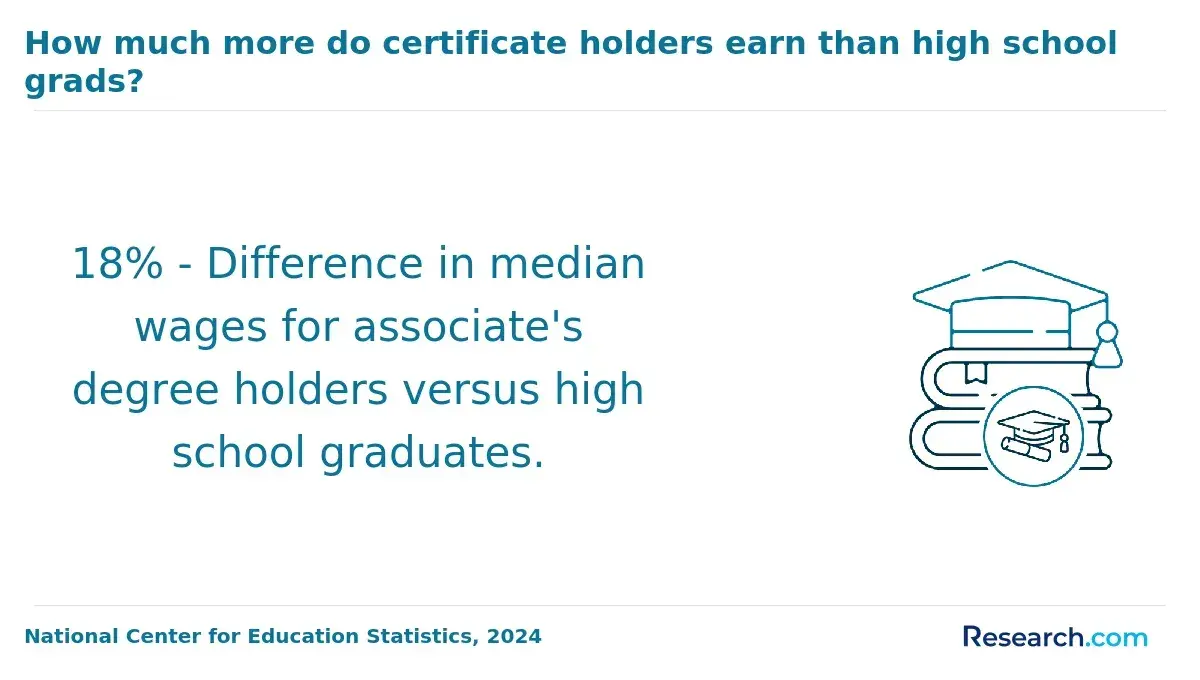
- BLS 2024 earnings data shows a bachelor's degree median weekly wage of $1,543 versus $930 for a high school diploma, but the payoff depends heavily on major, school cost, debt, and local labor demand.
What is college ROI and how is it calculated?
College ROI, or return on investment, measures whether the long-term financial value of a degree or credential is likely to outweigh what you spend to earn it. It is not just a salary number. A realistic ROI estimate includes tuition, fees, books, living costs, interest on loans, time out of the workforce, graduation odds, and the wages typically associated with your target career.
A simple way to think about ROI is to compare the added earnings you can reasonably expect from the credential with the total net cost of getting it. "Net cost" matters because grants, employer tuition assistance, scholarships, transfer credits, and living at home can change the equation dramatically.
The table below breaks the ROI calculation into the major pieces you should review before enrolling. Use it to avoid comparing programs only by sticker price.
| ROI factor | What it means | Why it matters before enrollment |
| Total net cost | Tuition, fees, supplies, living expenses, and loan interest after aid | A lower sticker price does not always mean a lower total cost if fees, housing, or lost wages are high |
| Completion time | How long it will realistically take to finish | Extra semesters can add tuition and delay full-time earnings |
| Credential value | Whether employers or licensing boards require or prefer the degree | ROI is weaker when the credential is not tied to a clear job requirement or promotion pathway |
| Expected earnings | Median wages for roles connected to the program | Salary should be compared with debt, not viewed as a guarantee |
| Job outlook | Projected demand for the target occupation | Strong demand can improve payoff, while shrinking fields can make repayment harder |
| Transfer and credit policies | How prior credits, exams, military training, or work experience apply | Accepted credits can shorten the program and improve ROI |
For most students, the best ROI estimate is a range rather than a single number. Build a conservative case using median wages, not the highest advertised alumni salaries, and include the possibility that you may need longer than the catalog timeline to graduate.
Which degree programs have the highest ROI?
The highest-ROI degree programs usually share three traits: they connect to occupations with clear demand, they teach skills employers can verify, and they have a direct path from credential to job. This does not mean every student should choose the highest-paying major; it means your program should have a realistic labor-market use.
BLS May 2024 wage data places software developers at a median annual wage of $133,080, which explains why computer science and software-focused programs often appear strong on ROI lists. The important caveat is that technical roles also require demonstrable skills, portfolios, internships, or experience, so the degree alone may not be enough.
The table below compares common program areas by ROI logic. It is not a guarantee of outcomes, but it shows why some fields tend to pay back education costs faster than others.
| Program area | Typical credential path | ROI strengths | Main caution |
| Computer science and software development | Bachelor's degree, bootcamp, certificate, or portfolio-supported pathway | High wage potential and broad employer demand across industries | Hiring can be competitive, and skills testing is common |
| Nursing and allied health | Associate, bachelor's, certificate, or licensure-focused program | Credential-to-license pathway is often clear | Programs must meet state licensure and clinical requirements |
| Engineering | Bachelor's degree, often from an ABET-accredited program | Strong technical wage potential and defined professional tracks | Course rigor and time to completion can affect cost |
| Accounting and finance | Bachelor's or master's degree, sometimes CPA preparation | Clear business career ladder and employer-recognized skills | CPA rules vary by state and may require additional credits |
| Skilled trades and applied technology | Certificate, associate degree, apprenticeship, or license | Shorter training and faster entry into paid work | Physical demands, licensing, and local demand vary |
| Education and social services | Bachelor's or master's degree, often with state certification | Stable mission-driven career paths | Payoff depends heavily on state pay scales and required credentials |
Certificates can also produce strong ROI when they are targeted, short, and connected to a specific skill gap. If you are comparing lower-cost credentials before committing to a full degree, reviewing the best online certificate programs can help you identify options that may lead to faster workforce entry or stack up to a later degree.
How do tuition, debt, and earnings affect ROI?
Tuition affects ROI, but debt often affects your life more directly. A program can be worth the academic effort but still be a poor financial fit if monthly loan payments crowd out housing, transportation, childcare, or the ability to take lower-paid entry-level roles that lead to advancement.
College Board's 2024 data shows public two-year in-district tuition and fees at $4,050, far below many four-year options. That difference matters because completing general education or career-focused coursework at a lower-cost institution can reduce borrowing before transferring or entering the workforce.
When estimating affordability, look beyond the tuition line. The most useful pre-enrollment budget includes these cost categories because each can change your ROI:
- Direct school charges, including tuition, mandatory fees, technology fees, lab fees, and program-specific charges
- Living costs, including housing, food, commuting, parking, childcare, and health insurance
- Financing costs, including loan origination fees, interest, and the effect of borrowing more than you need
- Opportunity costs, including reduced work hours, delayed promotions, or unpaid clinical and internship time
- Completion risks, including repeated courses, lost transfer credits, or switching majors late
One practical strategy is to compare your expected first-year post-program earnings with total debt at graduation. If debt would exceed a realistic annual starting salary in your target field, consider lower-cost schools, transfer pathways, employer-paid education, part-time enrollment, or cheap online degrees that meet accreditation and career requirements.
How do accredited schools compare on ROI?
Accreditation is one of the most important ROI filters because it affects credit transfer, financial aid eligibility, licensure, employer recognition, and graduate school admission. A low-cost program can become expensive if its credits do not transfer or if it does not meet professional requirements for your field.
Accredited schools do not all produce the same ROI. Institution type, program design, advising quality, graduation rates, employer connections, regional labor demand, and student support all matter. Public, private nonprofit, and private for-profit schools can each have strong or weak outcomes depending on the specific program and student goal.
Before comparing ROI across accredited schools, use a consistent checklist. These steps help you separate legitimate savings from risky shortcuts:
- Confirm institutional accreditation through the U.S. Department of Education or the Council for Higher Education Accreditation database.
- Check whether the specific program has specialized accreditation when the field expects it, such as nursing, counseling, engineering, business, or education.
- Ask whether the program meets licensing requirements in the state where you plan to work.
- Review transfer-credit rules before enrolling, not after you complete courses.
- Compare graduation, retention, debt, and earnings information using federal College Scorecard data when available.
- Ask employers, licensing boards, or graduate programs whether they recognize the credential.
A common mistake is assuming that "accredited" automatically means "worth it." Accreditation is the baseline; ROI depends on whether the program leads efficiently to the career, license, promotion, or graduate pathway you actually want.
Is online college cheaper or better for ROI?
Online college can improve ROI when it reduces commuting, relocation, housing, and schedule-related costs. It can also help working adults keep earning while studying. But online is not automatically cheaper, and it is not always the best format for programs that require labs, clinical practice, studios, fieldwork, or supervised teaching.
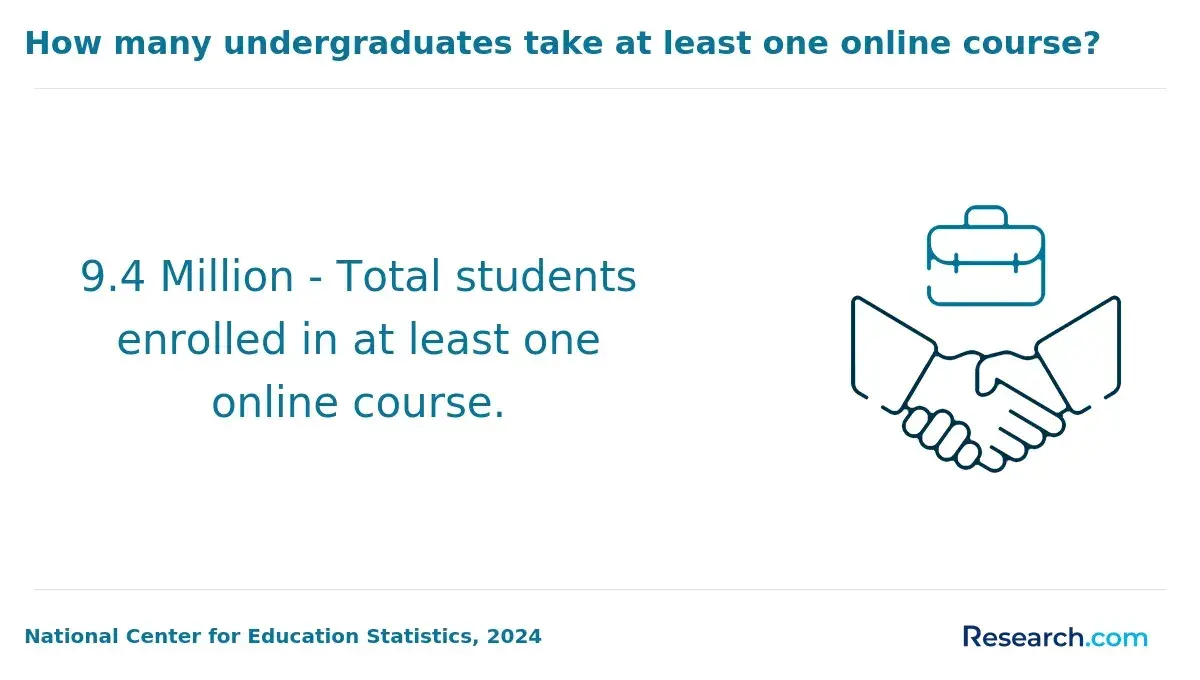
NCES reported in 2024 that distance education remains a major part of U.S. higher education, especially for adult and part-time learners. For ROI, that means students have more flexible options, but they need to check quality and support carefully rather than choosing online programs only for convenience.
The table below compares online and campus formats through an ROI lens. The better option depends on your schedule, learning style, field, and total cost after aid.
| Factor | Online program | Campus program | ROI takeaway |
| Schedule | Often better for working adults and caregivers | Often better for students who need structured in-person routines | Keeping income while enrolled can improve ROI |
| Cost | May reduce commuting or relocation costs | May offer local scholarships, campus jobs, or lower in-state tuition | Compare total net price, not format labels |
| Hands-on learning | Works well for many business, IT, healthcare administration, and general education courses | Often stronger for labs, clinicals, studios, trades, and performance-based programs | The format should match skill requirements |
| Networking | Depends on virtual career services, cohorts, and employer partnerships | May provide easier access to campus recruiting and faculty interaction | Weak career support can reduce payoff in either format |
| Licensure | Must be checked state by state | Usually clearer when tied to local licensing pipelines | Never assume an online program qualifies you for licensure everywhere |
Online can be especially practical at the associate level because students may complete lower-division coursework at a lower cost and then transfer or enter a technical role. If that path fits your goal, compare online associate degrees by accreditation, transfer agreements, advising, and career placement support.
What program length gives the best ROI?
Program length affects ROI in two directions. Shorter programs can reduce cost and speed up entry into the workforce, while longer programs can pay off when they are required for licensure, advanced practice, leadership, research, or higher-paying specialized roles.
The BLS 2024 education-pay data shows a median weekly wage of $1,840 for master's degree holders and $1,543 for bachelor's degree holders. That wage gap can support graduate study in some fields, but it does not automatically justify a longer program if the target job does not require the credential.
Use the following decision sequence to evaluate program length before you enroll. It will help you avoid paying for more education than your career goal requires:
- Identify the exact job title or promotion you want within the next three to five years.
- Check job postings and licensing rules to see the minimum required credential.
- Compare the shortest credible path with the most prestigious path and note the cost difference.
- Ask whether the credential stacks, such as certificate to associate degree to bachelor's degree.
- Estimate the income you may lose if you study full time instead of working.
- Choose the longer program only if it creates access to roles, licenses, or earnings that the shorter option cannot realistically provide.
Doctoral programs require extra scrutiny because they can be valuable for faculty, research, clinical, or senior leadership roles but unnecessary for many applied careers. Students comparing accelerated doctoral routes should examine accreditation, dissertation or capstone expectations, residency requirements, and employer recognition, even when researching the shortest PhD programs.
What admission factors affect your payoff?
Admission factors affect ROI because they influence where you can enroll, how much aid you receive, how long completion takes, and whether you enter a program that matches your preparation. The best financial decision is not always the most selective school; it is the school where you are likely to complete a recognized credential at a sustainable cost.
Common admission variables include GPA, standardized test policies, prerequisites, essays, interviews, portfolios, work experience, placement tests, background checks, and prior college credit. In healthcare, education, criminal justice, and some field-placement programs, background checks can also affect clinical or internship eligibility.
Applicants with complex records, including prior justice involvement, should ask direct questions before enrolling because program admission and career eligibility are not always the same. Resources on the best associate degrees for felons can be useful starting points, but students should still verify licensing, internship, and employer restrictions in their state and field.
To protect ROI during admissions, gather specific answers before submitting deposits. These questions are especially important if you are transferring credits, changing careers, or applying to a licensure-track program:
- How many of my credits will apply to the degree, and can I get that evaluation in writing?
- Are there prerequisite courses that could extend my timeline?
- What GPA is required to stay in the major, clinical sequence, scholarship, or honors track?
- Does admission to the college also mean admission to the professional program?
- Are background checks, drug screens, immunizations, portfolios, or placement exams required?
- What percentage of students in this program complete on time, and what support is available if I fall behind?
A major red flag is pressure to enroll before you receive clear answers about transfer credits, aid, program admission, or licensing requirements. Uncertainty in those areas can turn a seemingly affordable program into a costly detour.
Which careers pay back education costs fastest?
Careers that pay back education costs fastest usually combine moderate training time, clear credential requirements, strong demand, and wages that can support loan repayment. Fast payoff does not always mean the highest lifetime income; it means the education cost is proportionate to early-career earnings.
BLS May 2024 data lists registered nurses at a median annual wage of $93,600, which helps explain why nursing can offer strong ROI for students who complete an approved program and pass licensure. However, clinical availability, state rules, schedule demands, and program competitiveness can affect the actual path.
The table below summarizes career paths that often deserve ROI consideration because their education requirements are relatively clear. Always confirm local wage ranges and licensing rules before choosing a program.
| Career path | Common education route | Why payoff can be relatively fast | What to verify first |
| Registered nurse | Approved associate or bachelor's nursing program plus NCLEX-RN | Clear licensure path and broad healthcare demand | State approval, clinical placements, pass rates, and schedule intensity |
| Dental hygienist | Accredited associate degree and state licensure | Specialized credential with direct patient-care role | Program accreditation, board requirements, and local job openings |
| Software developer | Bachelor's degree, certificate, bootcamp, or portfolio-supported route | High wage potential when skills match employer needs | Portfolio expectations, internship access, and market competition |
| Electrician | Apprenticeship, trade school, and state or local licensing | Earn-while-training models can reduce debt | Apprenticeship availability and licensing rules |
| Accounting professional | Bachelor's degree, with possible CPA preparation | Stable business demand and advancement pathways | State CPA credit rules and employer expectations |
| Medical and health services manager | Bachelor's or master's degree plus healthcare experience | Leadership roles can reward education and experience together | Whether you need clinical background, graduate study, or management experience |
Fast-payback careers are not always easy careers. Many involve licensure exams, shift work, technical skill tests, physical demands, or high responsibility. The smartest choice is the one that fits both your financial goals and your tolerance for the day-to-day work.
How do salary and job outlook shape ROI?
Salary and job outlook shape ROI because they affect how quickly you can recover education costs and how much risk you take on by borrowing. A high salary in a shrinking or highly competitive field may be less reliable than a moderate salary in a field with steady demand and clear entry requirements.
BLS employment projections published in 2024 identify information security analysts as a fast-growing occupation, with projected growth of 33% from 2023 to 2033. For students, that signals strong demand for cybersecurity skills, but it does not remove the need for hands-on practice, certifications, internships, or entry-level IT experience.
When you interpret salary and outlook data, use conservative assumptions. Median wage is usually more useful than top-earner wage because it better reflects typical labor market conditions. Job growth should be considered alongside the number of openings, regional demand, automation risk, and whether employers hire entry-level candidates with your planned credential.
AI and automation are also changing ROI calculations. Fields that use AI as a productivity tool, such as data analysis, marketing analytics, accounting technology, software development, cybersecurity, and healthcare administration, may reward students who combine domain knowledge with technical fluency. Programs that ignore current tools, employer software, data literacy, or applied projects may produce weaker outcomes even if the degree title sounds relevant.
Before enrolling, compare salary and outlook through these practical filters:
- Use BLS median wage data for the occupation, then compare it with total expected debt.
- Check state and metro-level wages because national medians may not reflect your local market.
- Read current job postings to see whether employers ask for a degree, license, certification, portfolio, or experience.
- Look for evidence of internships, clinical placements, apprenticeships, co-ops, or employer partnerships.
- Ask whether graduates enter the target occupation or simply work in loosely related jobs.
The goal is not to predict your future perfectly. It is to avoid enrolling in a program where the cost, credential, and labor market do not line up.
What should you check before choosing a program?
Before choosing a program, make a written ROI file with the same information for every school on your shortlist. This keeps you from being swayed by branding, rankings, campus appearance, or admissions pressure before you understand the financial and career trade-offs.
Use the checklist below as a final pre-enrollment screen. If a school cannot answer these questions clearly, treat that as a reason to pause rather than a minor inconvenience:
- Accreditation: Is the institution accredited, and does the program have specialized accreditation if the field requires it?
- Total price: What is the full cost after grants, scholarships, fees, books, housing, transportation, and estimated loan interest?
- Completion time: How long do students like me usually take to finish, not just the advertised timeline?
- Transfer credits: Which credits count toward my major, and which only count as electives?
- Licensure: Does the program meet requirements in the state where I plan to work?
- Career outcomes: What roles do recent completers enter, and how is that information collected?
- Work-based learning: Are internships, clinicals, apprenticeships, student teaching, practicums, or capstones built into the program?
- Support: What tutoring, advising, career coaching, disability services, and emergency aid are available?
- Flexibility: Can I slow down, stop, or switch formats without losing major progress?
- Exit options: If I do not complete the full degree, will I leave with a certificate, credits, license eligibility, or nothing marketable?
The most common ROI mistakes are focusing only on tuition, ignoring debt, choosing a program without checking accreditation, assuming online programs automatically meet licensure rules, relying only on rankings, and treating advertised salaries as promises. A better approach is to choose the lowest-risk path that still meets the credential standard for your target career.
If two programs both meet your career requirements, the better ROI usually comes from the one with lower net cost, stronger completion support, better transfer policies, credible career services, and a schedule you can realistically sustain.
Other Things You Should Know About
No. Salary is important, but ROI also includes total cost, debt, completion time, job stability, benefits, licensure value, promotion access, and whether the credential fits your long-term goals.
A practical rule is to keep total debt below a conservative estimate of your first-year salary in the target field. If projected debt is higher, compare lower-cost schools, transfer options, employer aid, or shorter credentials.
Many employers accept online degrees from properly accredited institutions, especially when the program is academically equivalent and relevant to the job. For licensed fields, confirm state approval and required in-person components before enrolling.
Choose the shortest credible credential that qualifies you for your goal. A certificate may be enough for a specific skill, an associate degree can support technical or transfer pathways, a bachelor's degree is required for many professional roles, and graduate study makes sense when it is required for licensure, advancement, or specialization.
References
- How Colleges Can Balance Costs and Outcomes to Deliver a ... https://www.higheredvaluemetrics.org/blog/how-colleges-can-balance-costs-and-outcomes-to-deliver-a-strong-roi
- Best Value Colleges Methodology https://www.princetonreview.com/college-rankings/best-value-colleges/methodology
- ROI Data by Schools and Majors https://talk.collegeconfidential.com/t/roi-data-by-schools-and-majors/3605539
- Aligning Higher Education’s Cost to its Value - FREOPP https://freopp.org/whitepapers/aligning-higher-educations-cost-to-its-value/
- What should I consider when choosing a course? https://www.pfh.de/en/blog/what-should-i-consider-when-choosing-course
- 7 Tips on Choosing The Right Program of Study for You | ALU.edu Blog https://alu.edu/alublog/7-tips-to-decide-what-program-is-right-for-you/
- The future of compensation data https://www.imercer.com/knowledge-center/category/united-states
- Payoff-based College Admissions | National Affairs https://www.nationalaffairs.com/publications/detail/payoff-based-college-admissions
- Online College Tuition Comparison: Online vs. In-Person https://www.uagrantham.edu/blog/online-college-tuition-comparison-online-vs-in-person/
- Career Rankings by ROI and salary https://truecostblog.com/2008/12/28/career-rankings-by-roi-and-salary/