2027 Best College Programs for Military Spouses

Co-Founder and Chief Data Scientist
A permanent change of station can disrupt a degree plan just as easily as a job. Military spouses need college programs that remain workable after a move, fit their budget, and lead toward careers available in more than one location. Cost matters: College Board reported average published in-state tuition and fees of $11,610 at public four-year colleges for 2024-25, before books or living expenses. This guide compares program families by career goal and mobility, then explains funding, accreditation, licensing, and the questions to ask before enrolling.
Key Things You Should Know
- For maximum geographic flexibility, compare business, information technology, and computer science programs first; check whether required internships or live classes limit that flexibility.
- For licensed careers such as nursing, teaching, and social work, confirm that the specific program meets requirements in the state where you expect to work. An online degree alone does not establish license eligibility.
- My Career Advancement Account (MyCAA) funding can provide up to $4,000 to eligible spouses for approved credentials, but it does not fund every degree or applicant; verify eligibility and approval before enrolling.
Top 10 Best College Programs for Military Spouses
Business Programs
A business administration, accounting, or human resources bachelor's program can support work across industries and duty stations. A master of business administration (MBA) is generally better suited to spouses who already have a bachelor's degree and relevant experience; it is not necessary for every entry-level business role.
Compare accounting coursework if you may pursue CPA licensure, which has state-specific education rules. Online classes can travel with you, but scheduled group projects and internships may not. Choose a concentration tied to actual job postings rather than assuming a general business credential will qualify you for management.
Healthcare Programs
Healthcare administration and health information programs can suit spouses seeking healthcare work without bedside care. Bachelor's programs may prepare students for coordinator or analyst roles, while a master's in healthcare administration usually targets advancement and may favor applicants with experience.
Medical assisting certificates offer a different, more hands-on entry route. Check whether a health information program prepares you for a certification you want and whether internships can be completed near a future duty station. Healthcare jobs exist nationwide, but employer systems and local hiring requirements can complicate moves.
Information Technology Programs
Information technology (IT) certificates, associate degrees, and bachelor's programs commonly cover networking, systems administration, cloud services, and cybersecurity. A certificate plus hands-on experience may be a sensible starting point for technical support; a bachelor's can offer broader preparation.
Cybersecurity roles often require experience, and some defense jobs require a security clearance. Ask whether labs run remotely, whether exam fees are included, and which industry certifications the coursework supports.
Choose IT if you prefer operating and securing systems; choose computer science if you want deeper programming and mathematical foundations.
Computer Science Programs
A computer science bachelor's typically emphasizes programming, algorithms, data structures, and mathematics. It is a strong option for spouses interested in software development, provided they can accommodate sequential courses and build a project portfolio.
A master's may suit applicants with a computing background or a documented bridge pathway; prerequisite courses can lengthen a career change. Online delivery may allow you to continue after a move, but check group-project schedules and exam rules. A coding certificate is shorter, though it does not replace a degree where employers expect one.
Nursing Programs
An associate degree in nursing or bachelor of science in nursing can lead toward registered nurse licensure after approved education and the required exam. An RN-to-BSN program serves already licensed nurses; it is not an initial licensure route.
Nursing offers a well-defined occupation, but clinical placements and state board approval make it less move-proof than its online coursework may suggest.
Before applying, confirm clinical placement arrangements, eligibility for licensure in your intended state, and what happens if you relocate mid-program. Admission to a college does not necessarily mean admission to its nursing cohort.
Psychology Programs
A psychology bachelor's builds research and behavioral-science skills but does not, by itself, qualify someone to practice as a psychologist or licensed counselor. A master's in clinical mental health counseling is a distinct, licensure-oriented route with supervised training; psychologist licensure generally requires doctoral education and additional state requirements.
Spouses considering either path should verify program accreditation, placement support, and the licensing rules of possible destination states. If your immediate goal is a portable entry-level job, compare the time and cost of psychology with more occupationally specific programs.
Education Programs
A teacher-preparation bachelor's or qualifying master's can lead toward classroom teaching, but student teaching and state certification requirements affect portability. A master's in curriculum and instruction may instead serve experienced educators and may not confer an initial teaching license.
Ask whether the program is approved for certification where you plan to work and how it handles placements if you receive relocation orders. Spouses who need fewer location-specific requirements might consider instructional design or corporate training, while recognizing that employers may expect relevant projects or experience.
Criminal Justice Programs
Criminal justice associate and bachelor's programs examine law, corrections, and public safety; master's programs often emphasize administration or policy. The degree can support applications for relevant roles, but it does not substitute for police academy training, agency screening, or other hiring requirements.
A federal career may be more transferable than a position tied to one municipality, although eligibility and competition vary. Compare programs with your target employer's requirements before paying for a degree: some roles accept multiple majors, and some value experience or specialized technical skills more.
Engineering Programs
Engineering bachelor's programs suit spouses who want technical design work and can manage substantial mathematics, laboratories, and course sequencing. An online label may still involve in-person labs or proctored work.
An ABET-accredited program is particularly important to investigate if professional engineer licensure is a goal; licensing also requires experience and examinations.
A master's can support specialization but is not the standard starting credential for many engineering jobs. Because moving can interrupt lab sequences, obtain a written plan for course availability and transfer evaluation before choosing this path.
Social Work Programs
A bachelor of social work (BSW) can prepare students for entry-level social service work; a master of social work (MSW) is generally needed for clinical social work licensure, along with supervised experience and other state requirements. A qualifying BSW may allow admission to an advanced-standing MSW, but eligibility and completion time vary.
Look for Council on Social Work Education accreditation when comparing licensure-oriented programs. Field placements are essential and location-dependent, so ask how the school supports students who move before choosing an online option.
What college programs offer the best career opportunities for military spouses?
Best depends on the work you want and how often you may move. Business, IT, and computer science are worth comparing first when geographic flexibility is the priority. Nursing, education, and social work offer clearer licensed-career pathways but require more planning around placements and state rules.
Healthcare administration can be a middle ground for spouses interested in healthcare without clinical training. Match the credential to the job rather than buying the most advanced degree available.
For example, a spouse considering research or university teaching can explore online PhD programs for working professionals, but a doctorate is usually unnecessary for entry-level work. The strongest choice is the program whose requirements you can finish and whose resulting credential your target employers or licensing board recognize.
Which military spouse education benefits can help pay for college?
Start with eligibility, then compare the amount and type of aid. MyCAA may help eligible military spouses pay for approved licenses, certifications, or associate degrees; it is not a general scholarship for bachelor's or master's degrees.
Eligible dependents may be able to use transferred Post-9/11 GI Bill benefits if the service member meets transfer rules. Federal student aid, state grants, school scholarships, and employer tuition assistance may also apply.
Before committing to a program, confirm MyCAA eligibility and program approval, or verify GI Bill transfer status through the appropriate benefits process. File the Free Application for Federal Student Aid (FAFSA) to assess federal aid eligibility.
Ask the school for a term-by-term estimate showing tuition, mandatory fees, books, and any required travel; benefit eligibility does not mean every expense will be covered.
How do you choose an accredited college program as a military spouse?
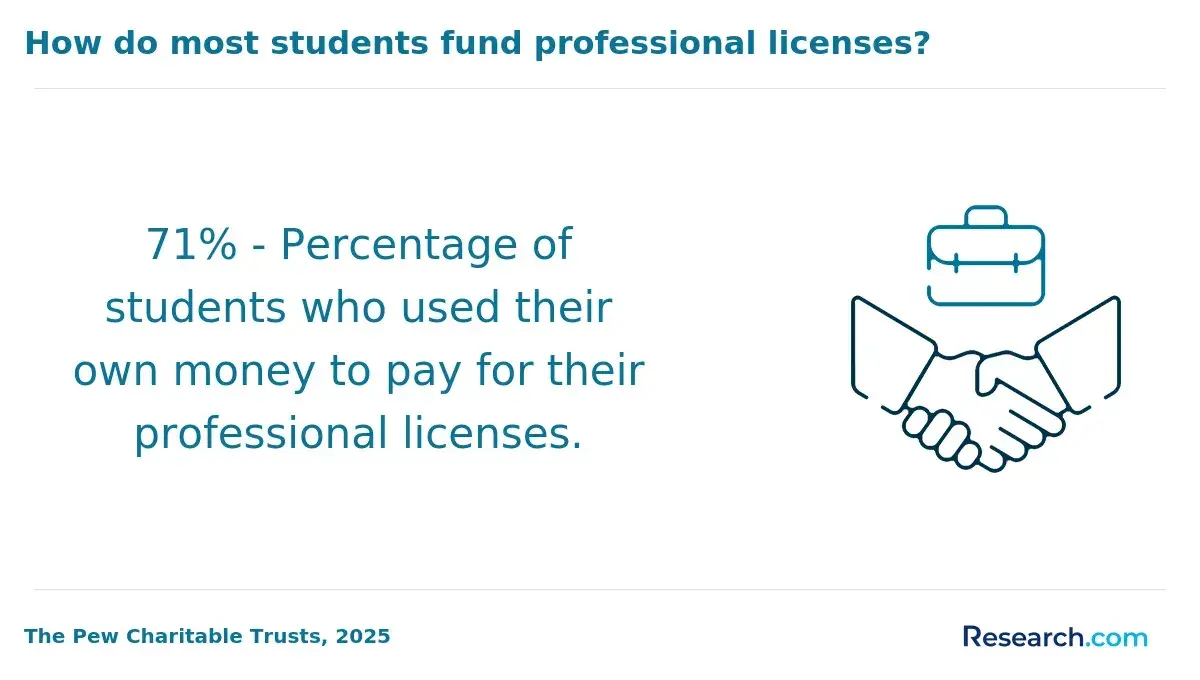
Institutional accreditation and program approval answer different questions. Confirm that the college holds accreditation recognized by the U.S. Department of Education, then check any field-specific requirement: for example, CSWE accreditation for a social work pathway, relevant nursing program approval, or ABET accreditation for an engineering program where appropriate.
For a licensed career, ask the school and the intended state licensing board whether this exact program and delivery format satisfy educational requirements.
Also ask how the school supports students who relocate during placements. A frequent mistake is treating institutional accreditation, eligibility for federal aid, and eligibility for a professional license as interchangeable; each needs its own check.
Which online degree programs best support military spouse mobility?
For a spouse expecting another move, an online program works best when required courses remain available each term, part-time enrollment is permitted, and exams or internships can be completed after relocation.
Business, IT, and computer science may have fewer mandatory local placements than nursing or teacher preparation, but policies vary by program. "Online" does not necessarily mean asynchronous: live meetings, fixed deadlines, proctored exams, and internships may still apply.
When comparing a best online college for military option with another school, look beyond the institution's military-friendly label. Request the specific program schedule, transfer-credit evaluation, tuition and fee estimate, and written policy for a mid-program move.
What certificate and associate degree programs qualify for military spouse funding?
Approved certificate, license, and associate-degree pathways may qualify for MyCAA funding for eligible spouses; approval is specific to the applicant, school, and program.
Examples worth checking include IT credentials, medical assisting, and career-oriented associate programs. A program's short duration or online format does not make it automatically eligible, and funding rules should be confirmed before registration.
Online associate degree programs can be useful for career entry or later transfer, but scrutinize unusually short completion claims.
They may assume substantial accepted prior credit, and an associate degree's full requirements do not disappear because individual courses are brief. Ask which credits apply to your intended major and how many must still be completed at the school.
What admission requirements apply to military spouse college programs?
Requirements depend on the credential and field. Undergraduate applicants generally provide prior transcripts; graduate applicants normally need a bachelor's degree and may need prerequisite courses, professional experience, recommendations, or a portfolio.
Nursing cohorts, counseling programs, and other placement-based options can have separate selective admission, health, or background-screening requirements. Do not assume that general admission to a college guarantees a seat in its professional program.
If a background check may affect your intended occupation, research the relevant licensing board and employer rules before enrolling.
Guidance about degrees felons can get may help frame education options, but admission and eventual licensing are separate decisions. Ask admissions staff for current program-specific criteria rather than relying on university-wide summaries.
How long do military spouse college programs take and what do they cost?
Certificates may take months, associate degrees commonly require about two years of full-time study, and bachelor's degrees commonly take about four years. Master's timelines vary with prerequisites, enrollment intensity, and placements.
These are planning benchmarks, not promises: accepted transfer credit may shorten the remaining coursework, while a move, a clinical rotation, or infrequently offered classes can extend it.
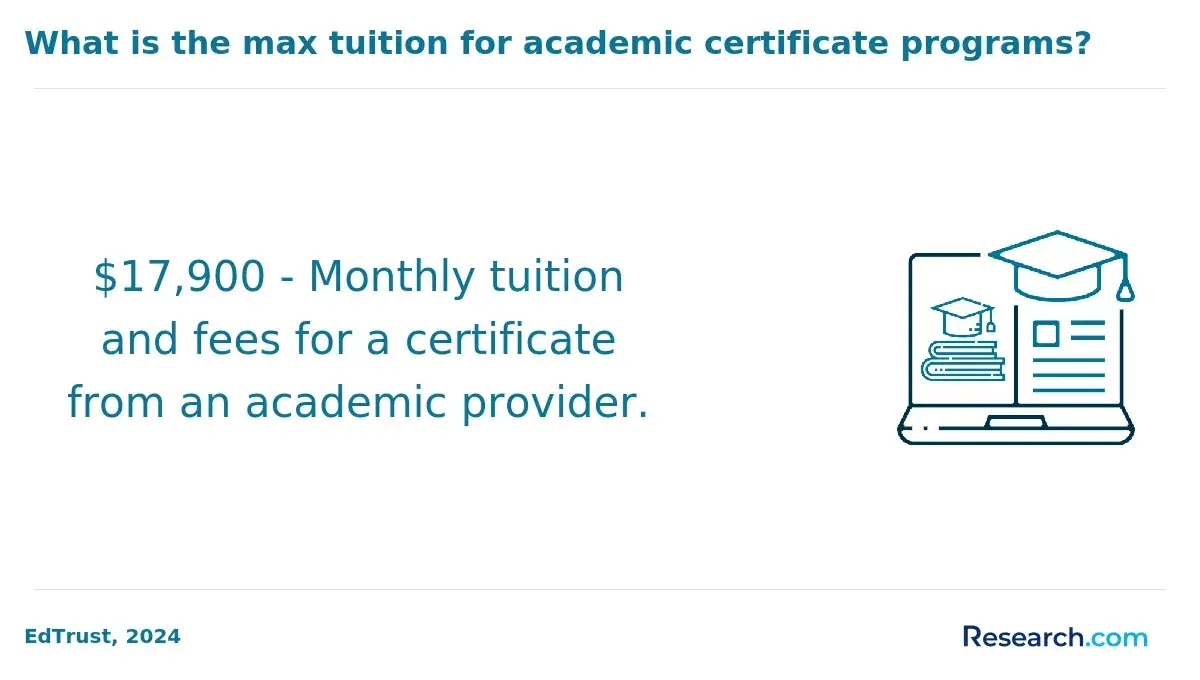
Published tuition is only a starting point. College Board's 2024-25 average of $11,610 in public four-year in-state tuition and fees does not include books or living costs, and your school's rate may differ.
Request a total remaining-program estimate that includes mandatory fees, technology charges, exams, travel, and placement expenses. Compare that estimate after confirmed grants and accepted transfer credit - not just the advertised price per credit.
What careers, salaries, and job outlooks follow military spouse programs?
Occupational wages help put potential careers in context, but they are not predicted earnings for graduates of any program. The following U.S. Bureau of Labor Statistics 2024 median annual wages describe workers in each occupation, including experienced workers.
| Occupation | 2024 median annual wage | Important qualification |
| Registered nurse | $93,600 | Approved nursing education and licensure are required. |
| Software developer | $133,080 | Employers assess programming skills and experience; a degree alone does not secure a role. |
| Social worker | $61,330 | Clinical practice requires additional education and state licensure. |
Use the figures to compare career directions, then weigh local job availability, remote-work eligibility, required experience, and total education cost. Software work may travel more readily than clinical work, while nursing has a defined licensing route; neither advantage removes competition or state-specific requirements.
Which licenses and certifications do military spouses need for portable careers?
The most portable credential is not always the one with the simplest rules. Registered nurses, teachers, clinical social workers, counselors, and professional engineers should check the destination state's licensing board before a move.
Interstate agreements or compact privileges may help eligible professionals, but participation and individual requirements vary. In IT, voluntary industry certifications can demonstrate specific skills, while certain jobs may impose additional employer or government requirements.
Before enrollment, identify the job title you want, its required license or certification, the program's eligibility pathway, and where you may need to complete supervised work. Keep course descriptions and placement records.
The costly mistake to avoid is finishing an otherwise reputable program and only then discovering that its curriculum or fieldwork does not meet a destination state's rules.
Other Things You Should Know About
No. MyCAA supports approved credentials within its rules, not bachelor's degrees. Check federal aid, scholarships, and any eligible transferred GI Bill benefits for a bachelor's program.
Not necessarily. Confirm course access after relocation and ask whether internships, clinicals, exams, or placements can be arranged in the new location.
Start with the target job's actual entry requirements. A certificate may be enough to begin some IT work; licensed nursing, teaching, or clinical social work requires a specific approved education pathway.
The receiving school decides which eligible credits it accepts and how they apply to your chosen program. Request an official evaluation before estimating your remaining time or cost.
References
- Military Spouse Jobs & Education Support | militaryonesource.mil https://www.militaryonesource.mil/resources/network/spouseworks/
- Filling Out the FAFSA® Form | Federal Student Aid https://studentaid.gov/apply-for-aid/fafsa/filling-out
- MyCAA Military Spouse Scholarship Program | northshore.edu https://www.northshore.edu/veterans/mycaa.html
- MyCAA Program for Military Spouse Career Advancement | estrellamountain.edu https://www.estrellamountain.edu/students/veterans-services/mycaa-program-military-spouse-career-advancement
- Military Spouse Scholarships | Hope For the Warriors https://www.hopeforthewarriors.org/programs-and-services/scholarships/