2027 Best Colleges for Working Adults

Co-Founder and Chief Data Scientist
Choosing a college while working means finding a program you can finish—not just one you can enter. The stakes are substantial: Bureau of Labor Statistics data show that workers with a bachelor's degree had median weekly earnings of $1,543 in 2024, compared with $930 for workers with a high school diploma. That difference describes broad groups, not a guaranteed return on tuition.
This guide helps employed and returning students compare colleges, graduate fields, schedules, costs, and career requirements so they can build a shortlist that fits their lives.
Key Things You Should Know
- The best college for a working adult offers a workable schedule, reliable course availability, appropriate accreditation, and a realistic total cost—not merely online classes.
- For 2024-25, College Board reported average published tuition and fees of $11,610 at public four-year colleges for in-state students, versus $43,350 at private nonprofit four-year colleges. Compare your actual program price and aid, not these averages alone.
- Request a written evaluation of previous credits and confirm any required live classes, campus visits, or field placements before committing; these details can change both cost and graduation time.
Top 10 Best Colleges for Working Adults
Business Programs
An MBA is a broad graduate option for experienced professionals considering management, while specialized master's degrees in accounting, finance, or analytics offer a narrower focus. Compare evening or asynchronous coursework, group-project schedules, and any required residencies. An MBA is not automatically necessary for advancement; ask whether the roles you want value the credential and whether your employer will help pay for it. Accounting students pursuing CPA licensure should check their state's education requirements separately.
Healthcare Programs
Master's programs in healthcare administration, public health, and health informatics serve different goals: organizational leadership, population health, and health-data work. They generally differ from clinical degrees that prepare students for direct patient care. Working adults should check whether internships, applied projects, or scheduled team activities fit their jobs. For a career change, compare each program's prerequisites and placement expectations before assuming that a general healthcare master's degree leads to a licensed occupation.
Information Technology Programs
A master's in information technology may cover systems management, cybersecurity, networking, or cloud infrastructure. It can suit professionals seeking technical depth or leadership preparation, but employers may also value relevant experience and industry certifications. Ask whether courses require scheduled labs, collaborative projects, or access to particular software. Students changing fields should check foundation-course requirements, which can add time and expense beyond the advertised graduate curriculum.
Computer Science Programs
Computer science master's degrees emphasize areas such as algorithms, software systems, artificial intelligence, and data science. Some welcome career changers through prerequisite or bridge coursework; others expect substantial programming and mathematics preparation. Compare those entry requirements along with thesis, project, and course-only options. An online format may accommodate a job, but intensive assignments still require predictable study time. A shorter technical certificate may make more sense when the goal is one specific skill rather than a broader degree.
Nursing Programs
Master of Science in Nursing programs may prepare eligible nurses for leadership, education, informatics, or advanced clinical practice. Admission commonly depends on an existing nursing credential and applicable prerequisites. Clinical tracks can require supervised placements and state-specific authorization even when coursework is online. Before applying, confirm that the school accepts students in your state, helps arrange placements if needed, and offers a track aligned with the certification and licensure rules for your intended role.
Psychology Programs
A psychology master's degree can support research, organizational, or further-study goals, but the title alone does not establish eligibility to practice as a psychologist. Counseling and other clinical careers have distinct degree, supervised-practice, examination, and state licensing requirements. Working adults should compare research commitments, practicums, and any daytime placement hours. Choose a program against the requirements of a specific occupation, not a broad promise to "work in psychology."
Education Programs
Master's degrees in education can focus on curriculum, educational leadership, special education, or teaching practice. Some are intended for licensed teachers; others provide a pathway toward initial certification. These are not interchangeable. Check state approval, student-teaching or practicum requirements, and whether school-based activities occur during working hours. Teachers seeking a salary increase should also confirm how their district treats the specific credential rather than assuming every education master's degree qualifies.
Criminal Justice Programs
A criminal justice master's degree may explore policy, public administration, research, or organizational leadership. It may appeal to experienced public-safety professionals, but many entry-level justice roles do not require graduate study. Compare the curriculum with the hiring criteria for your target agency and check whether a capstone, internship, or field project has fixed hours. If you need a particular technical skill or promotion credential, employer training or a focused certificate may be a better first step.
Engineering Programs
Engineering master's programs offer advanced study in disciplines such as electrical, mechanical, or systems engineering. Admission often requires relevant quantitative preparation, and some tracks involve labs, design teams, or a thesis. Professionals should compare course sequencing and employer tuition support alongside specialization. A graduate degree does not replace professional engineer licensure requirements where those apply; state rules generally involve an approved educational pathway, examinations, and qualifying experience.
Social Work Programs
A Master of Social Work can prepare students for advanced social work practice, but clinical licensure also requires state-specific supervised experience and examination requirements. Field education is a major scheduling consideration for employed students; online classes do not make placements virtual or available outside business hours. Some schools offer advanced-standing pathways to eligible applicants with a qualifying bachelor's degree in social work. Confirm eligibility and the remaining fieldwork before relying on an accelerated timeline.
What makes a college a good choice for working adults?
It offers a degree you actually need through a schedule you can sustain, at a cost you can plan for. Institutional accreditation, dependable course rotation, part-time options, responsive advising, and clear transfer policies matter more than an "adult-friendly" label. Online access helps only when live meetings, deadlines, and required in-person work also fit your availability.
These institutions illustrate different places to begin a shortlist, not a ranked set of winners. Compare the specific program and current policies rather than assuming a school-wide feature applies to every student.
| Institution to investigate | Potential reason to compare it | Program-level detail to confirm |
| University of Maryland Global Campus | Programs aimed at adult and military-affiliated learners | Course schedule, transfer evaluation, and total fees |
| Western Governors University | Competency-based degree model | Whether its learning structure and program requirements fit your pace |
| Arizona State University | Broad university offerings, including online programs | Availability and attendance rules for your chosen degree |
| CUNY School of Professional Studies | Programs designed with returning learners in mind | Residency-based pricing and required course formats |
A nearby public college may be a stronger choice if its evening courses, employer partnerships, or in-person support better suit your circumstances. None of these institutions is automatically the least expensive or most flexible option for every program.
How can working adults compare accredited online and campus colleges?
Start with one intended credential and compare schools against the same requirements. Institutional accreditation applies to the college; a field may also require programmatic accreditation or state approval. Campus, hybrid, and online programs can all be good options, but their schedules impose different constraints.
Use the following sequence to turn a broad search into a manageable decision:
- Check the accreditation and, for a regulated career, the program approval required for your state.
- Ask for a term-by-term course plan showing part-time availability, live sessions, deadlines, and any campus or placement requirements.
- Request an official review of previous coursework and ask which credits satisfy degree requirements rather than counting only as electives.
- Compare estimated remaining tuition, mandatory fees, aid, and time to completion using the same planned course load.
A common mistake is treating "online" as synonymous with "self-paced." Another is selecting the lowest advertised tuition without checking whether required courses are offered when you can take them.
What degrees and certificates offer the best career pathways for adults?
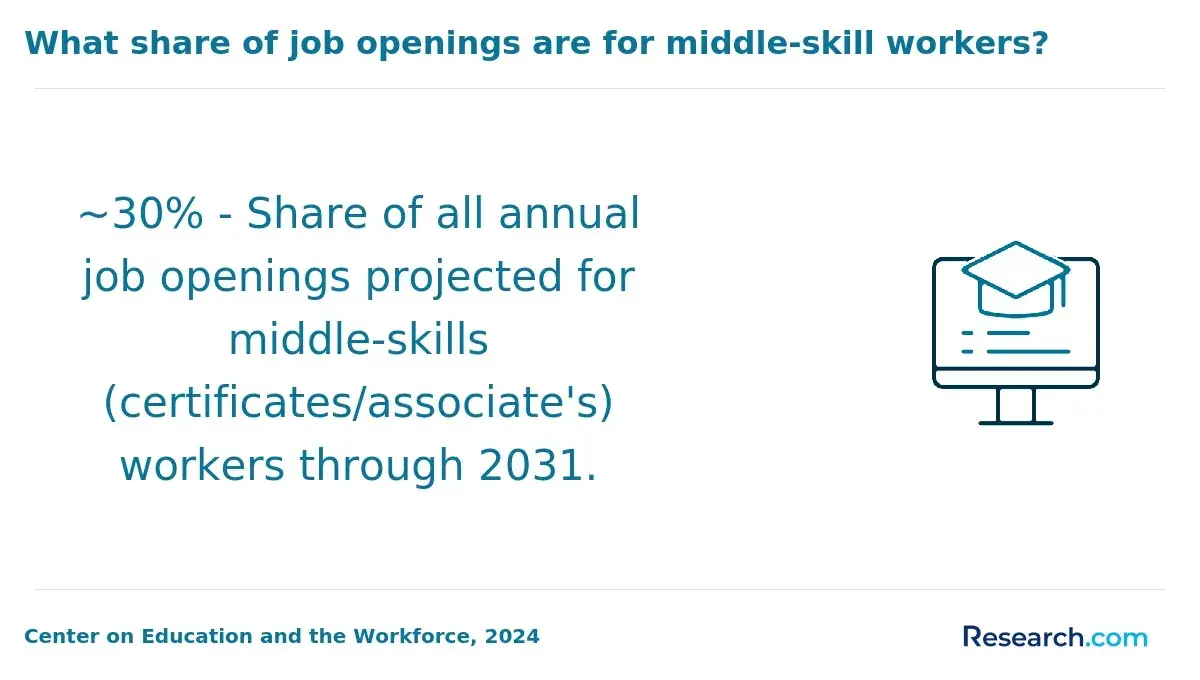
The best credential is the one that meets a target occupation's entry or advancement requirements without unnecessary coursework. An associate degree or career certificate can be appropriate for a defined technical role; a bachelor's degree may open a broader set of positions; a master's degree usually makes the most sense when it supports a specific specialization, career change, or professional requirement.
For example, an experienced professional comparing a certificate with the quickest cheapest master's degree options should first ask whether employers require the degree at all. The least costly route is not good value if it misses a licensing requirement, while a master's can be unnecessary when a shorter credential and relevant experience meet the goal. Check whether certificates stack into a later degree, but obtain the college's written policy before counting on those credits.
What admission requirements apply to adult college students?
Requirements depend on the credential and the particular program. Undergraduate applicants may need school transcripts and previous college records; graduate applicants generally need a bachelor's degree and may face GPA, prerequisite, résumé, recommendation, portfolio, or licensure requirements. A college's general admission policy does not override selective entry rules for nursing, teaching, or other professional programs.
Ask admissions staff to review your actual academic history, including older credits and unfinished coursework. If application costs are a barrier, a university with free application fee may be worth investigating, but verify that the waiver applies to your program and applicant category. An easy application should never substitute for checking program fit and total cost.
How long do adult degree programs take, and how much do they cost?
There is no dependable completion time based on degree name alone. Your remaining credits, course load, transfer evaluation, prerequisite work, course rotation, and any internship or clinical placement determine the timeline. An advertised accelerated program may assume prior credits, an existing license, or full-time enrollment that you do not have.
What do working adults study in flexible college programs?
Content depends on the credential, not the delivery format. Undergraduate programs combine general education, major courses, and electives; graduate programs focus more narrowly on advanced coursework and may culminate in a thesis, capstone, portfolio, or supervised practice. Certificates usually concentrate on a smaller set of skills.
Before enrolling, examine the course sequence—not just the catalog descriptions. A flexible first term offers little benefit if a required course appears infrequently or its lab meets during your shift. Ask how group projects, examinations, and experiential work are scheduled and whether a part-time student can progress without avoidable gaps.
Which careers can working adults pursue after graduation?
Possibilities depend on the degree, previous experience, and occupation-specific rules. Business and IT study may support advancement or a move into related roles; nursing, social work, education, and some healthcare paths require close attention to licensure. A career change can also require entry-level experience even when the student holds an advanced degree.
Work backward from current job postings: identify required credentials, preferred skills, and location or licensing restrictions. If the positions you want consistently ask for a portfolio, certification, or hands-on experience rather than another degree, consider a focused alternative. Career services can assist with preparation, but their availability is not evidence of a job placement guarantee.
What salaries and job outlooks can graduates expect?
Use occupational figures as context, not as predicted graduate earnings. The Bureau of Labor Statistics reports a 2024 median annual wage of $93,600 for registered nurses. That figure describes employed nurses across experience levels and settings; earning a nursing degree alone does not establish RN licensure or guarantee that wage.
Compare roles, locations, and entry requirements before weighing salary against education cost. Readers exploring majors that make money and are fun should also account for the work itself and the time needed to qualify. Demand can shift with technology and employer needs, so favor programs that build demonstrable skills alongside a recognized credential.
How can students verify college accreditation and professional licensing requirements?
Check institutional accreditation in the U.S. Department of Education's accreditation database and confirm the institution's status with the listed accreditor. Then check any programmatic accreditation or state approval required for the occupation. A school can be institutionally accredited while a particular program does not meet the rules for a license in your state.
For a regulated career, follow these checks before paying a deposit:
- Find the licensing board for the state where you intend to work and read its current education, examination, and supervised-practice rules.
- Ask the program, in writing, whether its specific track meets those requirements for students in your state.
- Confirm who arranges required clinical, practicum, internship, or student-teaching placements and where they may occur.
A red flag is an unqualified claim that an online degree "leads to licensure everywhere." State rules and individual eligibility can differ.
Other Things You Should Know About
Yes, if the course load and required meeting times fit your schedule. Ask for a part-time plan and account for study hours, fixed deadlines, and any field placements.
Delivery format alone does not determine credibility. Verify institutional accreditation, the specific program's requirements, and any approval needed for your intended occupation.
Possibly. The receiving college decides whether credits are eligible and where they apply. Request a degree-specific evaluation before estimating your remaining time or cost.
Choose based on the jobs you want. A certificate may efficiently build a specific skill; a degree may be necessary for broader opportunities or a regulated pathway. Check employer and licensing requirements first.
References
- Your financial path to graduation | consumerfinance.gov https://www.consumerfinance.gov/paying-for-college/your-financial-path-to-graduation/
- Cost of Attendance (Budget) | 2025-2026 Federal Student Aid Handbook https://fsapartners.ed.gov/knowledge-center/fsa-handbook/2025-2026/vol3/ch2-cost-attendance-budget
- Annual Earnings by Educational Attainment - COE https://nces.ed.gov/programs/coe/indicator/cba/annual-earnings
- Accreditation in the U.S. | ed.gov http://www.ed.gov/laws-and-policy/higher-education-laws-and-policy/college-accreditation/accreditation-in-the-us
- State Authorization | Office of Academic Affairs https://oaa.osu.edu/academic-administration/state-authorization
- Choosing a learning format that works for you | Gary W. Rollins College of Business https://blog.utc.edu/business/2025/06/09/choosing-a-learning-format-that-works-for-you/
- Bachelor's Degrees for Working Adults | Mercer University https://www.mercer.edu/academics/bachelors-degrees-for-working-adults/
- Can You Mix Online and On-Campus Classes? | Online College | NMSU Global Campus https://global.nmsu.edu/blog/general/mixing-online-and-on-campus-college/
- Advising & Student Supports | Community College Research Center https://ccrc.tc.columbia.edu/research/advising-student-supports.html
- Why Comply? - State Authorization Network https://wcetsan.wiche.edu/state-authorization/why-comply