
2027 Best Online Career Programs for Career Advancement

Co-Founder and Chief Data Scientist
Choosing an online program for career advancement means deciding whether the credential will help you reach a specific role - not just fit your schedule. The stakes are especially clear in fast-growing fields: the U.S. Bureau of Labor Statistics (BLS) projected 33% employment growth for information security analysts from 2023 to 2033, but employers typically expect relevant skills and experience.
This guide compares career-focused program families, from certificates to master's degrees, and shows working professionals and career changers how to weigh practical training, cost, online requirements, and licensing before enrolling.
Key Things You Should Know
- The best program matches a target occupation and your starting credentials: a short certificate can build a specific skill, while licensed or advanced roles may require a qualifying degree and supervised training.
- Online does not necessarily mean entirely remote or self-paced; nursing, teaching, counseling, social work, and some engineering programs can require scheduled classes or in-person placements.
- Compare total cost with realistic career value, not advertised salary alone. BLS reported a $86,070 median annual wage for registered nurses in 2023, but completing an online program does not guarantee that wage or eligibility for RN licensure.
Top 10 Best Online Career Programs for Career Advancement
Business Programs
Online MBA, Master of Management, and specialized master's programs in accounting, finance, or business analytics can help experienced professionals pursue management or specialist responsibilities. Choose an MBA for broad organizational leadership; choose a specialized degree when a particular technical skill matters more.
Compare employer recognition, projects, networking access, and whether the curriculum assumes prior business coursework. A graduate certificate may be more economical for a narrow skill gap.
It's important to note that neither a business degree nor an MBA automatically leads to promotion, and accounting licensure has separate state education and examination requirements.
Healthcare Programs
Online master's programs in healthcare administration, public health, and health informatics serve different goals: operating care organizations, addressing population health, or managing health data. They generally prepare students for professional work rather than direct patient-care licensure.
An experienced healthcare worker might use a capstone to solve a workplace problem; a career changer should check whether internships or prior healthcare experience are expected. Compare analytics training, placement support, and any required in-person experiences. Do not assume a healthcare administration degree qualifies you for a clinical role.
Information Technology Programs
Online master's programs in cybersecurity, information systems, and IT management can support advancement from technical work into security, architecture, or leadership. Cybersecurity suits professionals who want deeper risk and defense skills; IT management emphasizes budgets, teams, and systems strategy. Hands-on labs and an applied capstone matter more than a broad course title. Some roles also value professional certifications and substantial experience.
If you lack IT fundamentals, a targeted certificate or foundational coursework may be a better first step than a graduate degree.
Computer Science Programs
Online master's programs in computer science often cover algorithms, software systems, artificial intelligence, or data-intensive computing. They fit developers seeking deeper technical specialization, but admission may require programming, mathematics, and data-structures preparation. A bridge or foundation sequence can make a program accessible to career changers while adding time and cost.
Compare project-based and research-oriented tracks, available electives, and whether required courses run often enough for part-time study. A master's degree is not required for every software role; a strong portfolio and experience remain important.
Nursing Programs
Online MSN programs can prepare licensed nurses for leadership, education, informatics, or advanced practice, depending on the track. An RN-to-MSN pathway has different entry requirements from an MSN for bachelor's-prepared nurses.
Advanced-practice tracks commonly require clinical hours, preceptors, and eligibility for state licensure and national certification; coursework may be online while placements occur locally.
Before applying, confirm that your current nursing license, prior degree, clinical-site access, and intended state of practice match the program. An MSN alone does not authorize advanced practice.
Psychology Programs
Online master's programs in psychology may focus on research, applied behavior, or workplace behavior. They are not interchangeable with licensure-oriented clinical counseling programs. Someone seeking organizational work should examine research methods and assessment coursework; someone seeking to provide therapy must instead verify the precise degree, supervised-hours pathway, and state board rules for the intended license.
Some programs require a thesis or research project, while others emphasize applied work. Ask what graduates are academically eligible to do before treating "psychology" as a clinical credential.
Education Programs
Online master's programs in curriculum and instruction, educational leadership, and special education can help teachers develop specialized or supervisory skills. A degree for practicing educators may require an existing teaching license, while an initial-licensure pathway can have different admissions and student-teaching requirements.
Leadership credentials may also depend on teaching experience and a state-approved preparation route. Compare classroom applications, school-based placements, and state eligibility - not just online coursework. Teachers seeking a pay increase should check their district's salary schedule before assuming a master's degree will change their compensation.
Criminal Justice Programs
Online master's programs in criminal justice, criminology, or public safety leadership can suit experienced professionals pursuing policy, analysis, or administrative work. A criminology curriculum may emphasize research; a leadership program may focus on operations and organizational decision-making. Compare data-analysis training, applied projects, and agency tuition benefits.
Many law-enforcement and federal positions use their own hiring, training, and experience standards, so a master's degree does not substitute for academy training or qualify an applicant automatically for promotion.
Engineering Programs
Online master's programs in engineering management, electrical engineering, or systems engineering can deepen technical expertise or prepare experienced engineers to coordinate complex projects. Look for appropriate lab access, design work, faculty expertise, and a capstone or thesis that fits your goal. Some courses may require scheduled participation or campus-based activities.
Professional engineer licensure follows state rules involving education, examinations, and experience; an online master's does not replace them. Engineering management may fit established engineers better than applicants seeking an entry-level engineering foundation.
Social Work Programs
Online Master of Social Work programs can prepare students for advanced social-work practice, but field placements take place in person. A traditional pathway generally serves students without a qualifying social-work bachelor's degree; advanced standing is restricted to eligible BSW graduates and can shorten remaining study.
Compare placement assistance, supervision requirements, program accreditation, and eligibility in the state where you plan to practice. Clinical social-work licensure generally requires supervised post-degree experience and an examination. "Online" describes coursework, not the entire route to practice.
What Are the Best Online Career Programs for Advancement?
The best online career program is the least extensive credential that credibly closes the gap between your current qualifications and your target role. That may be a certificate for a defined technical skill, a bachelor's completion program for roles requiring a degree, or a master's program for advanced professional preparation. No field is universally best: advancement depends on employer requirements, experience, program quality, and whether the credential meets licensing rules.
For experienced professionals, business, IT, computer science, and healthcare administration offer different combinations of leadership and specialist training. Nursing, education, and social work have clearer credential-dependent pathways but more placement or licensing constraints. Compare most in demand master's degrees against your actual job target rather than choosing a field solely because it appears on a demand list.
How Do You Choose an Accredited Online Career Program?
Start with institutional accreditation, then check any programmatic accreditation required or preferred for your occupation. Accreditation is a threshold, not a complete quality rating: two accredited programs can differ substantially in placement support, course scheduling, and career relevance.
Use this sequence to narrow your choices before requesting a final cost and degree audit:
- Identify the job or advancement requirement, including any state license, employer credential, or experience requirement.
- Confirm accreditation and ask whether the specific online program meets requirements where you intend to work.
- Compare required courses, practical training, live meetings, campus visits, and local placement responsibilities.
- Request a written estimate of remaining credits and total required charges after an evaluation of eligible prior coursework.
- Ask for program-specific completion and career-outcome information, and note when the school cannot provide it.
Returning learners should also compare advising, part-time course availability, and technology support. Those considerations apply whether you are restarting midcareer or exploring online degrees for seniors. A red flag is a program that promises licensure, a promotion, or a salary without explaining the conditions.
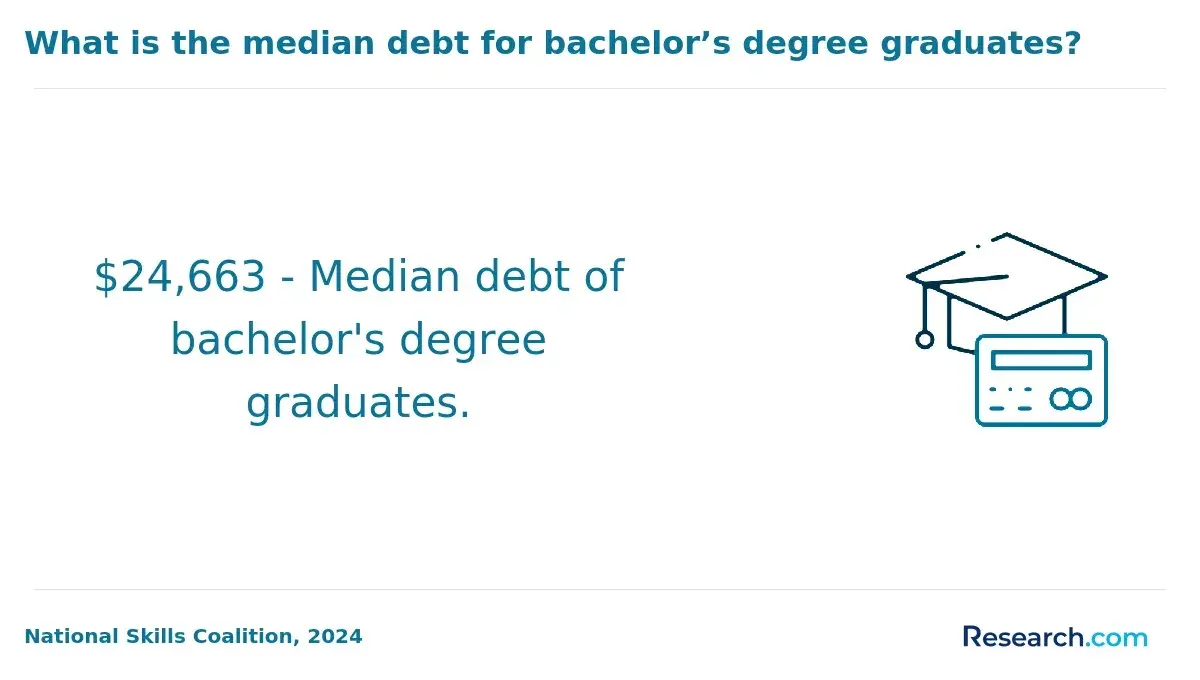
Do Online Career Programs Meet Licensing and Certification Requirements?
Not automatically. An online program may deliver academic coursework while the occupation requires an approved curriculum, in-person training, a separate examination, supervised practice, or state authorization. Nursing, teaching, clinical counseling, and social work are especially sensitive to where you plan to work. Professional certification in IT or business follows the certifying organization's rules rather than the school's degree requirements.
Before enrolling, identify your intended state and occupation, then ask the program for written confirmation of its eligibility disclosures and placement arrangements. Check those claims against the relevant licensing board or certification body. If you move during your studies, eligibility and clinical-placement options may change. Never treat institutional accreditation alone as proof that a particular degree satisfies a professional board.
Which Online Degrees and Certificates Lead to In-Demand Careers?
In-demand pathways include cybersecurity, software development, nursing, and selected healthcare roles, but "in demand" describes occupations - not a promise that a particular credential will secure one. For an experienced IT worker, a cybersecurity certificate may address a specific skills gap; a career changer may need broader technical preparation. A licensed RN considering advanced practice needs a qualifying nursing program and the applicable clinical and licensing steps.
Match the credential to the entry point. An associate degree can support some career paths more directly than an unrelated master's degree; compare 2-year online degrees that pay well if you do not yet have a bachelor's degree. Verify whether laboratory, clinical, or internship requirements can be completed near home.
What Do Online Career Programs Teach?
Career-focused online programs combine field knowledge with work you can apply: case analyses in business, secure-system labs in IT, coding projects in computer science, or supervised practice in clinical fields. A graduate program may add research methods, leadership, a specialization, and a thesis or capstone. Its exact curriculum matters more than its broad field label.
Look at required - not just elective - courses. If your goal is analytics, determine how much data work every student completes. If your goal is practice with patients, clients, or students, find out who arranges local placements and how performance is assessed. A strong program should let you describe concrete skills you will practice before graduation.
What Are the Admission Requirements for Online Career Programs?
Requirements depend on the credential and field. A certificate may have few academic prerequisites, while a master's program usually requires a bachelor's degree and may specify prior coursework, relevant experience, a portfolio, recommendations, or a minimum GPA. Nursing graduate tracks can require an active RN license; advanced-standing MSW applicants generally need a qualifying BSW. Test policies and conditional admission vary by program rather than by the word "online."
Ask admissions to evaluate prerequisites before you commit. A missing statistics, programming, or anatomy course may require additional study that changes both cost and timing. If you have previous college credit, ask which courses satisfy your intended program's requirements; accepted elective credit is not the same as credit toward a required major or graduate course.
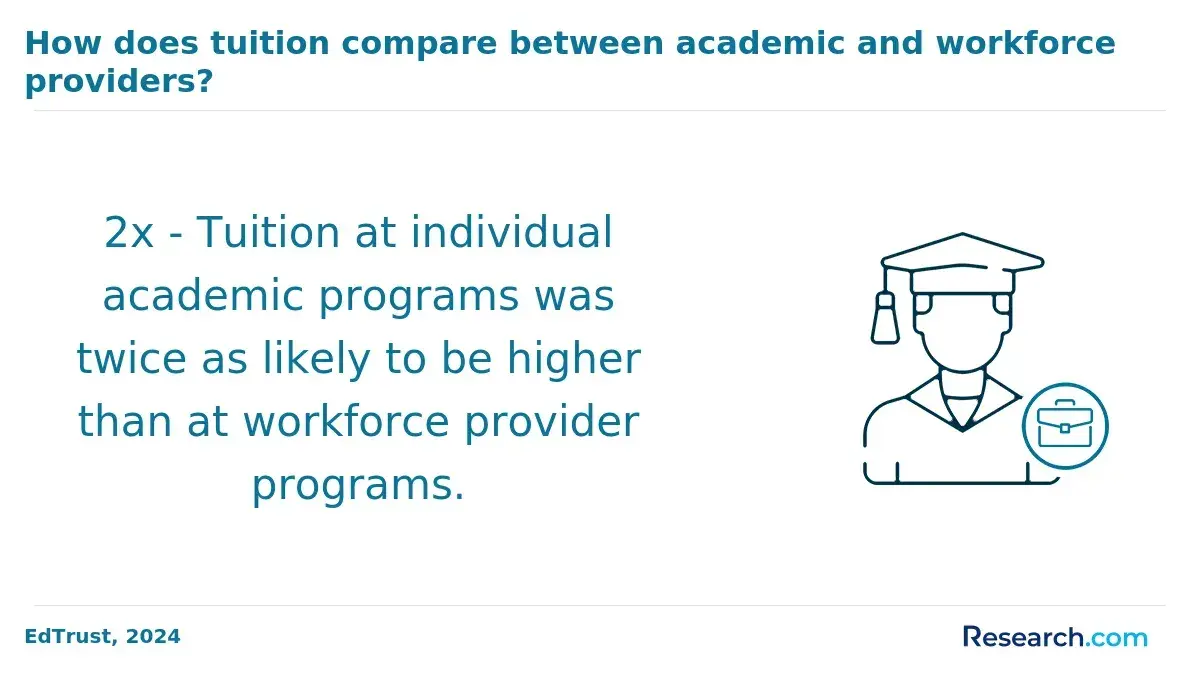
How Long Do Online Career Programs Take and What Do They Cost?
Time and cost vary too much for a single useful price tag. A focused certificate can take less time than a degree, while a part-time master's with sequenced courses, a thesis, or clinical placements can take longer than its advertised full-time schedule. An advanced-standing or bridge timeline applies only to students who meet that pathway's specific entry conditions.
Compare a written total-to-completion estimate: remaining credits multiplied by applicable tuition, plus mandatory, technology, laboratory, placement, residency, and graduation charges. Include travel, equipment, and income you may forgo during unpaid fieldwork. Ask whether employer tuition assistance, scholarships, or federal aid apply to the particular credential; not every short certificate is aid-eligible. Cheaper tuition per credit may not mean a cheaper completed program.
What Careers and Salaries Can Online Programs Lead To?
Online programs can support a move into specialist, licensed, or supervisory work when their training matches the role's requirements. The BLS figures below are 2023 median annual wages for occupations, not salaries of program graduates or expected earnings from enrolling.
| Occupation | 2023 median annual wage | Important qualification |
| Registered nurse | $86,070 | Requires RN licensure; an unrelated healthcare degree does not qualify someone. |
| Information security analyst | $120,360 | Employers typically seek relevant technical preparation and experience. |
| Software developer | $132,270 | A specific master's degree is not required for every position. |
These medians include workers at different experience levels and in different locations. When weighing majors that make money and are fun, compare the work itself, your likely entry point, and total education cost - not only an occupation's median wage.
Which Online Career Fields Have the Strongest Job Outlook?
Cybersecurity offers one clear example of strong demand: BLS projected 33% growth in information security analyst employment from 2023 to 2033. That outlook makes relevant preparation worth investigating, but it does not show how many openings will be available to new graduates in your area or whether employers will accept a certificate in place of experience.
Healthcare and technology can offer advancement routes with very different barriers. Clinical roles may require licenses and supervised practice; technical roles may require demonstrable projects and continuing skill development.
Business, education, engineering, and social-work opportunities likewise depend on specialty, location, and employer needs. Use occupational projections to shortlist fields, then inspect local job postings for recurring credentials, experience requirements, and duties before selecting a program.
Other Things You Should Know About
It can help you build qualifications, but promotion depends on your employer's criteria, performance, available positions, and experience. Ask which credentials your target role actually requires.
Choose a certificate for a defined skill gap if employers accept it. Consider a master's when the target role requires graduate preparation or you need broader advanced training that justifies the added cost.
Some programs allow it, but online coursework can still involve live meetings, proctored assessments, campus visits, or local clinical, field, and student-teaching placements. Check the specific program's requirements.
Confirm accreditation, career or licensing eligibility, a written total-cost estimate, a review of any prior credits, the course schedule, and who arranges required placements.
References
- High-Demand Fields - Texas Higher Education Coordinating Board https://www.highered.texas.gov/community-college-finance/high-demand-fields/
- Employer-Educator Partnerships and Industry Credentials Can Transform America's Workforce | U.S. Department of Education https://www.ed.gov/about/homeroom-blog/employer-educator-partnerships-and-industry-credentials-can-transform-americas-workforce
- Projected openings in occupations that require a college degree: Career Outlook: U.S. Bureau of Labor Statistics https://www.bls.gov/careeroutlook/2021/article/projected-openings-college-degree.htm
- An Overview of Accreditation of Higher Education in the United States | Congress.gov | Library of Congress https://www.congress.gov/crs-product/R43826
- Understanding College Costs | studentaid.gov https://studentaid.gov/resources/prepare-for-college/students/choosing-schools/consider-costs
- Accredited or Approved Programs | az.gov https://bbhe.az.gov/applying-licensure/accredited-or-approved-programs
- Explore career options - Minnesota MyHigherEd https://myhighered.mn.gov/adult-students/explore-career-options
- Cost of Attendance (Budget) | 2025-2026 Federal Student Aid Handbook https://fsapartners.ed.gov/knowledge-center/fsa-handbook/2025-2026/vol3/ch2-cost-attendance-budget
- Everyone wants to train workers for "high-demand" jobs - but which exactly are those? | Project on Workforce https://pw.hks.harvard.edu/post/everyone-wants-to-train-workers-for-high-demand-jobs-but-which-exactly-are-those
- Career Clusters | careertech.org https://careertech.org/career-clusters/


