2027 Best Online College Degrees for Low Student Debt

Co-Founder and Chief Data Scientist
The best online degree for avoiding student debt is not necessarily the one with the lowest advertised tuition. Required credits, fees, financial aid, and the job you can realistically pursue all affect the payoff. College Board reported average published tuition and fees of $43,350 at private nonprofit four-year colleges in 2024-25—a reminder to compare the full cost of a degree, not just its format.
This guide helps first-time, transfer, and returning students weigh online fields against their budgets and career goals, including when a master's degree is worth considering.
Key Things You Should Know
- Business, information technology, and computer science can offer career options without occupation-specific licenses, but compare each program's total price and employment requirements before borrowing.
- College Board reported average published in-state tuition and fees of $11,610 at public four-year colleges in 2024-25; that benchmark is not a quote for any particular online degree.
- For eligible students, the maximum federal Pell Grant was $7,395 in 2025-26. Request a personalized aid offer and a degree audit before deciding how much you need to borrow.
Top 10 Best Online College Degrees for Low Student Debt
Business Programs
An online MBA or specialized master's in accounting, finance, or management may make sense when a specific role requires graduate study or an employer pays part of the bill. Otherwise, relevant work experience or a lower-cost bachelor's degree may be the less risky route. Compare required foundation courses, fees, and credits remaining after any approved transfer evaluation. An MBA does not by itself qualify someone for a management job, and an accounting degree does not automatically satisfy a state's CPA licensing rules.
Healthcare Programs
Online master's degrees in health administration, public health, and health informatics serve different goals. Administration may suit experienced healthcare staff seeking operational roles; informatics combines health systems and data skills. Public health programs may require a practicum, adding time or travel costs. Compare each curriculum with actual job postings before paying for a graduate credential. A healthcare master's degree does not grant a clinical license, and some leadership positions also require substantial experience.
Information Technology Programs
Online master's programs in IT, cybersecurity, and information systems can help professionals specialize, but they may not be the lowest-debt entry route. Ask whether the curriculum assumes prior computing coursework and whether labs or projects require paid software. For an entry-level goal, compare the master's degree with an affordable bachelor's program, employer-sponsored training, and relevant certifications. Experience and demonstrated technical skills matter alongside the credential.
Computer Science Programs
An online computer science master's degree may suit someone seeking advanced software, data, or computing coursework. Applicants from other majors should check prerequisites: extra foundation classes can change the total cost substantially. Look for substantial programming and project work, not just a short completion claim. If the goal is a first software job, compare graduate tuition with a bachelor's pathway or targeted coursework; a master's degree is not the standard requirement for every software development role.
Nursing Programs
Online MSN programs generally require an existing nursing credential and include clinical or other practice requirements that cannot be completed entirely from home. Compare preceptor support, placement rules, and travel expenses before treating published tuition as the full cost. An MSN may support advanced practice, education, or leadership goals, but requirements differ by role and state. An applicant who is not already a nurse needs an appropriate entry-to-practice nursing pathway instead.
Psychology Programs
An online psychology master's degree can support research, organizational, or other specialized interests, but it does not automatically qualify a graduate to practice as a psychologist or licensed counselor. Those occupations have distinct state rules, and psychologist roles commonly require doctoral preparation. Before borrowing, match the curriculum and any supervised training to a specific occupation. Applicants seeking clinical practice should confirm licensure eligibility with the relevant state board rather than relying on the degree's name.
Education Programs
Online education master's programs may serve licensed teachers seeking specialization or applicants pursuing an initial teaching credential; those are not interchangeable paths. Check whether a program requires an existing license and whether student teaching or fieldwork must occur locally. If salary advancement is the goal, verify the employer's pay policy before taking on debt. Initial teacher licensure depends on state-approved preparation and other state requirements, not simply completion of an online master's degree.
Criminal Justice Programs
An online criminal justice master's degree may be useful for a specific advancement goal in policy, administration, or research. It is less compelling as a default purchase for entry-level public-safety work, where agencies may emphasize hiring standards, training, and experience. Compare employer requirements with the program's total cost, and check whether any internship creates scheduling or travel expenses. Do not assume a graduate degree replaces police academy training or qualifies you for a particular agency role.
Engineering Programs
Online engineering master's degrees typically build on substantial undergraduate preparation and may involve specialized software, labs, or a project. Verify prerequisites and any in-person requirements before estimating cost. A graduate degree can be worthwhile for an employer-supported specialty, but it is not a substitute for an appropriate undergraduate foundation. If professional engineer licensure is the goal, check the state board's education and experience rules, including whether programmatic accreditation matters to your pathway.
Social Work Programs
An online MSW can be a necessary step toward clinical social work licensure, but required field placements make the degree more than an online classroom commitment. Confirm program accreditation, placement support, local availability, and state licensing rules. Students with an eligible bachelor's in social work may qualify for an advanced-standing pathway; others generally follow a different curriculum. Compare the actual credits and fieldwork remaining before accepting a projected completion time or borrowing amount.
What are the best online degrees for avoiding student debt?
The best online degrees for avoiding student debt are those you can complete at a manageable net cost and use for a realistic next step. For many students, an affordable bachelor's degree in business, IT, or computer science deserves an early look because these fields offer multiple career directions without a single occupation-specific license. Nursing, education, and social work can also be sound choices when the program meets the precise requirements for the role you want. None is automatically low-debt.
This comparison shows the main cost and career trade-off by field. It describes degree paths, not a ranking of colleges or a promise of earnings.
| Degree field | Potential advantage | Debt-related risk to check |
| Business | Broad range of roles | Paying for a graduate degree a target employer does not require |
| IT or computer science | Transferable technical skills | Prerequisite courses and weak hands-on preparation |
| Nursing | Defined licensed career path | Clinical placement and program fees |
| Education or social work | Clear professional purpose | Licensure rules and unpaid fieldwork time |
| Psychology or criminal justice | Several possible applications | Assuming the degree alone qualifies you for a specific occupation |
If you already hold applicable credits, request a degree audit before comparing completion claims. An accelerated bachelor's degree online accredited may reduce time only if its pace, accepted credits, and remaining requirements fit your circumstances; faster is not necessarily cheaper.
How much do affordable online college degrees typically cost?
There is no reliable single price for an "affordable online degree." Tuition can vary by institution, residency, degree level, and program; the amount you pay also depends on aid and how many credits you must complete there. Published tuition is the stated charge, net price reflects grants and scholarships, and total completion cost includes remaining required courses and related expenses.
Use the same cost categories for every offer so a low per-credit rate does not hide a more expensive degree:
| Cost category | What to compare |
| Tuition | The rate that applies to your residency status and required program credits |
| Mandatory charges | Technology, course, program, and graduation fees |
| Required participation | Travel, placements, materials, exams, and equipment |
| Aid and existing credit | Grants, employer benefits, and previously earned credits that apply to this degree |
Ask each school for an individualized estimate after it evaluates your transcript. Eligible service members and families should also compare benefit rules and program costs at online colleges for military students; an advertised discount alone does not establish the lowest out-of-pocket cost.
Are online degrees cheaper than campus-based college programs?
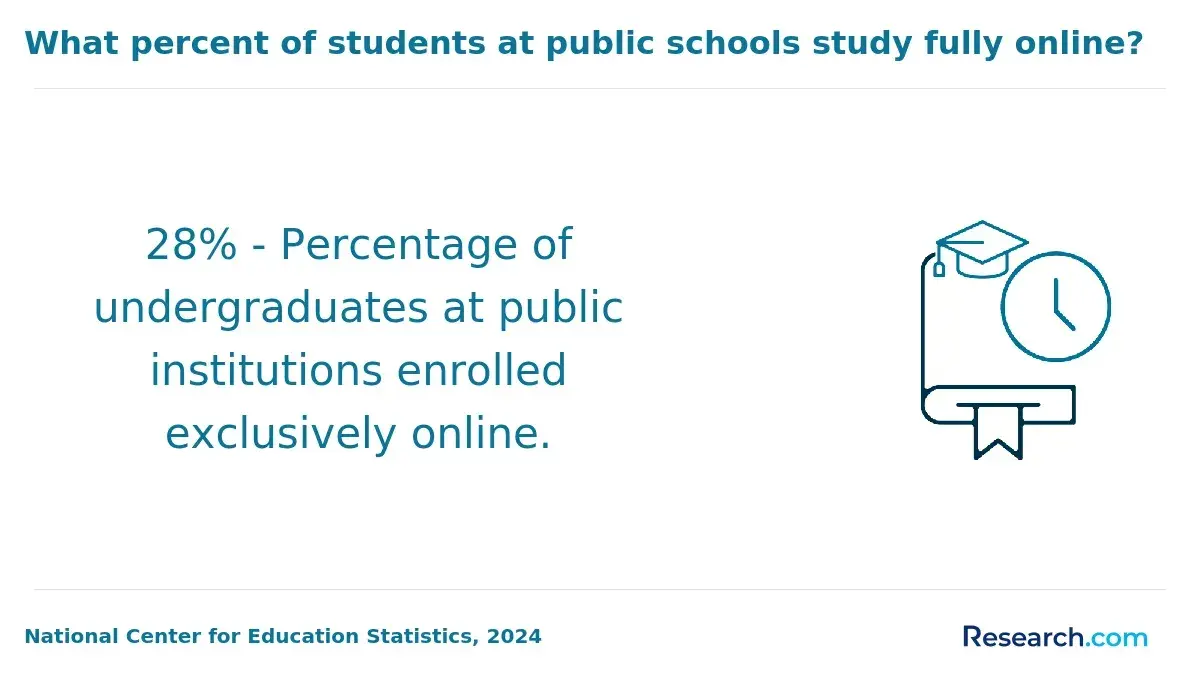
Online degrees can cost less than campus study, particularly when they eliminate a move or commute. They are not automatically cheaper: some schools charge online or technology fees, and local clinical placements, residencies, or required equipment can add costs. A student studying from home may still face ordinary living expenses.
Compare the same credential at the same enrollment pace. Request an itemized estimate for tuition, fees, books, and required travel, then subtract grants and other aid for which you actually qualify. Include potential lost work hours if scheduled classes or fieldwork affect your job. The lower sticker price is not necessarily the lower-cost path to completion.
Which online degrees offer the strongest salary potential after graduation?
Computer science and some IT-related paths can lead toward well-paid occupations, but occupational wages are not graduate starting salaries. The Bureau of Labor Statistics reported a 2023 median annual wage of $132,270 for software developers. That figure covers workers across experience levels and does not mean completing an online computer science degree will produce that income.
Business, nursing, and engineering can also support strong earnings, depending on the job, location, and experience required. Before taking on debt, identify an attainable entry role and compare its hiring requirements with the curriculum. If location flexibility matters, consider the best degrees for remote work alongside employer postings; an online degree does not make its related jobs remote.
How do you verify online college accreditation and program quality?
Check that the institution holds accreditation from an agency recognized by the U.S. Department of Education or the Council for Higher Education Accreditation. Then check programmatic accreditation where it matters to your goal—for example, nursing, social work, certain engineering pathways, or professional preparation in education. Institutional accreditation alone does not establish licensure eligibility.
Confirm the exact online program's status directly with the accreditor and ask the school for its catalog, curriculum, required in-person activities, and state-authorization information. A useful red flag is a school that discusses accreditation generally but will not clarify whether your particular program meets your state's professional requirements.
What admission requirements apply to affordable online degree programs?
Affordable online bachelor's programs generally ask for a high school credential or its equivalent; graduate programs generally require a bachelor's degree. Requirements can also include transcripts, prerequisite courses, a GPA threshold, professional experience, or a current license. Selective nursing and other professional programs may impose separate requirements even when admission to the institution is broadly accessible.
Ask admissions to distinguish entry requirements from requirements for your intended major. If you have prior college work, request an evaluation showing which courses satisfy general education, major, and elective requirements. Accepted credits reduce cost only when they replace coursework you would otherwise need to pay for.
How long do online degree programs take to complete?
Completion time depends on credits still required, course availability, enrollment pace, and any labs, capstone, internship, or field placement. A bachelor's degree often entails a substantially longer course of study than a master's degree, but a transfer student and a first-time student should not expect the same timeline. Likewise, an advanced-standing MSW depends on qualifying prior preparation.
Ask for a term-by-term plan based on your evaluated credits, including prerequisites and courses offered only at particular times. If you already have a bachelor's degree, compare the remaining requirements of online masters programs with less costly alternatives. A short advertised timeline may assume full-time enrollment or prior qualifications you do not have.
Which online degrees require professional licenses or certifications?
Nursing, teaching, clinical social work, counseling, and some engineering roles involve state licensure or certification rules beyond earning a degree. Requirements may include an approved program, examinations, supervised experience, and background checks. Requirements differ by state and occupation; a degree marketed nationally may not meet every state's rules.
Before enrolling, identify the exact license and state you are targeting. Check the state board's current requirements and obtain written clarification from the program about whether its curriculum and placements satisfy the educational portion. This step is especially important when an online program arranges fieldwork where you live.
How can you compare online degrees by job outlook and career demand?
Start with the occupation, not the degree's name. Use Bureau of Labor Statistics occupational profiles to compare projected employment and typical entry requirements, then inspect local job postings for skills, experience, and license expectations. National growth can signal opportunity, but it cannot tell you whether an employer in your area is hiring new graduates.
Current demand for technical skills can make IT and computer science appealing, while clinical and public-service paths may have more defined credential requirements. Avoid treating a high occupational median wage as a forecast of your own pay. The stronger low-debt choice is a program whose full cost you can justify against an attainable role—not an impressive salary figure disconnected from the work you can enter.
Other Things You Should Know About
Possibly. Compare grants, scholarships, employer assistance, and an affordable enrollment pace before borrowing. Your options depend on eligibility and the program's full cost.
No. Credits must apply to your specific degree requirements. Ask for a written degree audit showing what remains and what must be completed at the new school.
It depends on your starting credential and career goal. Do not pay for graduate study unless the target role requires it or its likely value justifies the additional cost.
Some can, but online delivery alone tells you nothing about eligibility. Check the program and your state board's rules before enrolling.
References
- Fast Facts: Tuition costs of colleges and universities (76) | ed.gov https://nces.ed.gov/fastfacts/display.asp
- Your financial path to graduation | consumerfinance.gov https://www.consumerfinance.gov/paying-for-college/your-financial-path-to-graduation/
- Federal Student Aid Estimator https://studentaid.gov/aid-estimator/
- Cost of Attendance (Budget) | 2026-2027 Federal Student Aid Handbook https://fsapartners.ed.gov/knowledge-center/fsa-handbook/2026-2027/vol3/ch2-cost-attendance-budget
- Financial Aid Glossary | Kettering University https://www.kettering.edu/admissions-aid/financial-aid-affordability/financial-aid/tools-resources/financial-aid-glossary
- Licensure Programs - Office of Institutional Effectiveness https://institutionaleffectiveness.louisiana.edu/accreditation/licensure-programs
- 5 facts about student loans | Pew Research Center https://www.pewresearch.org/short-reads/2024/09/18/facts-about-student-loans/
- 10 Key Facts about Student Debt in the United States | Peterson Foundation https://www.pgpf.org/article/10-key-facts-about-student-debt-in-the-united-states/
- Average Cost of College [2025]: Yearly Tuition + Expenses | Education Data Initiative https://educationdata.org/average-cost-of-college
- What is the typical debt load for graduates of four-year public universities - APLU https://www.aplu.org/our-work/publicuvalues/student-debt/