2027 Best Degree Programs for Career Growth

Co-Founder and Chief Data Scientist
Choosing a degree for career growth means looking beyond the program name: the credential must fit the job you want, its entry requirements, and its total cost. The U.S. Bureau of Labor Statistics (BLS) reported a $93,600 median annual wage for registered nurses in 2024, but an advanced nursing degree does not automatically lead to that wage - or qualify someone for nursing practice.
This guide compares career-focused master's program families, then shows how to assess job prospects, licensing, format, and return on your investment.
Key Things You Should Know
- For advancement in an existing field, match a master's program to a specific role and check whether employers require the degree, value experience more, or accept a shorter credential.
- BLS projects 23% employment growth for medical and health services managers from 2024 to 2034; many roles still require healthcare experience, not simply a graduate degree.
- Compare total cost and time alongside accreditation and licensing eligibility. A flexible online schedule cannot replace required clinical practice, student teaching, or supervised hours.
Top 10 Best Degree Programs for Career Growth
Business Programs
An MBA can suit professionals seeking broader management responsibilities; a master's in accounting, finance, or business analytics offers more specialized preparation. Compare curricula against the work you want: an MBA may emphasize strategy and leadership, while analytics programs require substantial quantitative work.
Many management jobs value experience as much as graduate education. If you are changing fields, ask whether the program requires foundation courses and whether its internships or employer projects are accessible to part-time students. Accreditation from AACSB, ACBSP, or IACBE can be one quality signal, but check career fit and total cost too.
Healthcare Programs
A master's in healthcare administration or public health can support moves into operations, policy, or population health. Choose administration for managing services and systems; choose public health for work centered on prevention, epidemiology, or community programs. Employers commonly expect relevant experience for management positions.
A graduate healthcare degree generally does not confer a clinical license. Ask whether the curriculum includes a practicum, which roles alumni enter, and whether specialized accreditation - such as CAHME for applicable healthcare management programs - matters to your target employers.
Information Technology Programs
A master's in information technology, cybersecurity, or information systems can help experienced professionals move toward security, infrastructure, or technology leadership. These programs often emphasize applying systems to organizational needs rather than developing computer science theory.
Check whether courses cover hands-on labs, cloud platforms, risk management, and current security practices. A master's is not the standard entry requirement for every IT role; demonstrable skills, experience, and relevant industry certifications may offer a better first step for someone entering the field.
Computer Science Programs
A master's in computer science can support specialization in areas such as artificial intelligence, systems, or software engineering. It fits applicants who want deeper technical coursework or research preparation, provided they have - or can complete - programming and mathematics prerequisites.
Compare thesis, project, and coursework-only tracks: the best fit depends on whether your goal is research, applied engineering, or a career change. Many software development jobs typically require a bachelor's degree rather than a master's, so weigh the additional expense against the skills your intended role demands.
Nursing Programs
Master of science in nursing (MSN) programs may prepare registered nurses for advanced practice, education, informatics, or leadership, but those tracks lead to different opportunities. An advanced-practice role has specific clinical training, certification, and state licensure requirements beyond earning an MSN.
Verify that a program admits applicants with your current nursing credential and meets requirements where you plan to practice. Online coursework may be available, while clinical placements still require substantial in-person time. An RN-to-MSN bridge has separate eligibility and completion requirements.
Psychology Programs
A master's in psychology can strengthen research, behavioral science, or organizational skills, but the program title does not establish eligibility to practice as a psychologist. Independent psychologist licensure generally requires a doctoral degree and additional supervised training.
Some counseling-related master's programs lead toward different licenses, subject to state-specific coursework and clinical requirements. Choose based on the occupation and license you want, then verify that the exact program - not just the institution - meets the applicable requirements before enrolling.
Education Programs
A master of education can support curriculum, instructional leadership, or specialized teaching goals. Programs designed for already-licensed teachers differ from initial teacher-preparation programs: an M. Ed. alone may not qualify a career changer to teach.
Compare the degree's focus with your state's rules for certification, endorsements, or administrative roles. Ask about student teaching, school-based projects, and scheduled class meetings. For current teachers, also confirm whether the district recognizes the program for salary advancement before using that potential benefit to justify its cost.
Criminal Justice Programs
A master's in criminal justice or criminology may suit professionals seeking policy, research, analysis, or agency leadership work. Coursework can include research methods, law and society, and program evaluation. The degree does not replace hiring, academy, or experience requirements for sworn law-enforcement positions, and many entry-level jobs do not require graduate study.
Before committing, compare postings for your target role with the program's curriculum. If employers primarily request investigative experience or a specific technical skill, a certificate or direct work experience may be more useful.
Engineering Programs
A master of engineering often emphasizes applied professional work, while a master of science may offer a stronger research or thesis pathway; structures vary by school. Specialization can help engineers pursue more technical responsibilities, but experience remains important.
Some programs require an engineering bachelor's degree or prerequisite mathematics and science courses. If your goal involves signing engineering plans or offering regulated services, investigate professional engineer licensure separately: degree accreditation, qualifying experience, examinations, and state rules can all matter.
Social Work Programs
A master of social work (MSW) is a common educational route toward advanced social work practice. Clinical licensure also requires supervised post-degree experience and a state examination. Look for Council on Social Work Education accreditation and confirm eligibility in your intended state.
Field placements can make even an otherwise online program difficult to combine with full-time work. Applicants with an eligible accredited bachelor of social work may qualify for advanced standing, but admission rules and remaining field requirements differ from those in a standard MSW pathway.
What degree programs offer the strongest career growth potential?
The strongest career-growth program is the one that closes a documented gap between your current qualifications and a realistic next role. Healthcare administration can be promising for experienced healthcare workers, specialized computing degrees for people with technical foundations, and licensure-aligned nursing or social work programs for qualified applicants. None is universally "best": the credential's value depends on occupation, experience, location, and cost.
Start with job postings for the position you want and separate required qualifications from preferred ones. If a bachelor's degree plus experience is the usual route, compare a master's with employer training or certification. If you are earlier in your education, a guide to majors in college can help you evaluate foundational fields before selecting a graduate specialization.
Which high-demand careers require a degree or certificate?
Some high-demand careers require a degree, while others have multiple entry routes. Registered nursing requires an approved nursing education pathway and licensure, but not necessarily a master's. Software development commonly calls for a bachelor's degree and strong programming ability; a computer science master's is an optional specialization for many jobs. Healthcare management roles commonly require a bachelor's degree and related experience, with graduate study useful for some positions.
Certificates and industry certifications can be worthwhile when they teach a skill employers request, particularly in IT. They are not substitutes for a legally required professional degree or license. Parents comparing school with work and caregiving commitments can explore college programs for moms, then check whether the specific program permits part-time study and requires daytime placements.
How do online and campus-based degree programs compare?
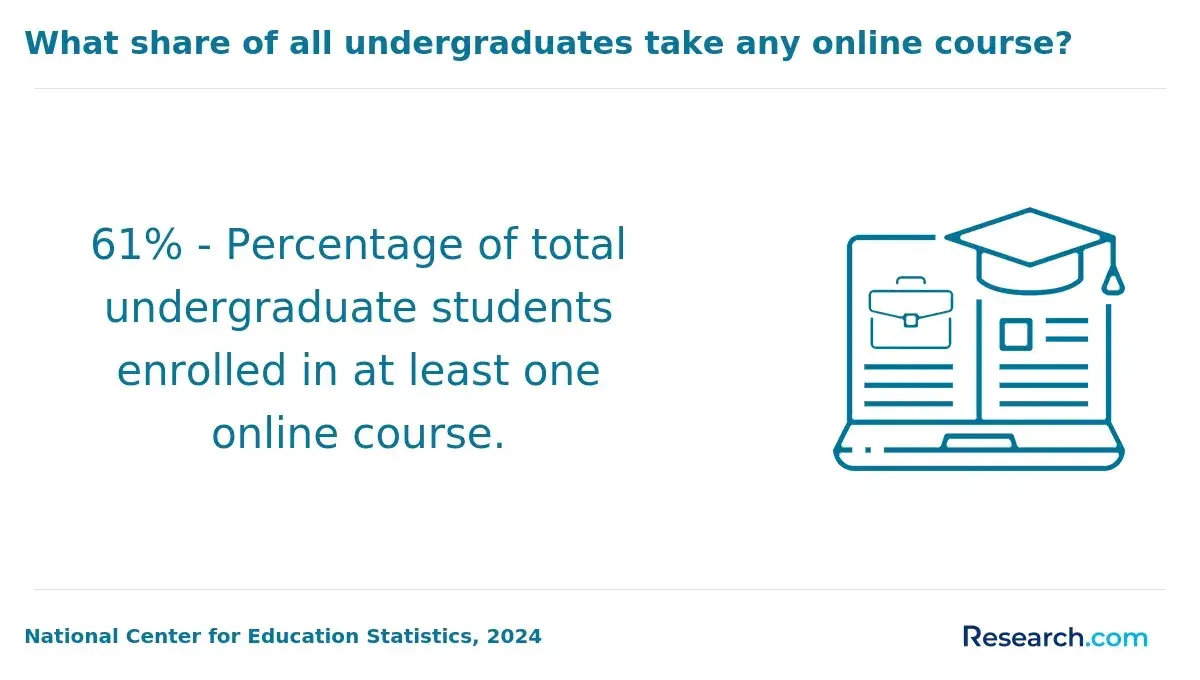
Online study changes where you take classes, not necessarily when you must attend or how you complete practical work. Online programs may use live meetings and fixed deadlines; campus programs provide in-person access to labs and faculty but require travel. Hybrid programs combine both. Nursing clinicals, social work fieldwork, and student teaching generally take place in person regardless of how academic courses are delivered.
Before choosing a format, ask for a sample course schedule and placement requirements for your location. If control over study hours is essential, investigate self-paced online college options - but confirm whether the particular degree is self-paced. Online, asynchronous, and self-paced are different arrangements.
What accreditation should students verify before enrolling?
Verify institutional accreditation first, then any programmatic approval relevant to your intended profession. Accreditation is not the same as state authorization or professional licensure eligibility. This distinction matters most for nursing, social work, teaching, counseling, and other regulated paths.
A check with both the school and the authority that governs your intended career can prevent an expensive mismatch:
- Confirm the institution's current accreditation in the U.S. Department of Education's accreditation database or with the recognized accreditor.
- Ask the program which specialized accreditation or approval applies to your exact degree and track.
- Check your state licensing board's education requirements and ask whether the program meets them for your intended state of practice.
What do these degree programs cost and how long do they take?
Master's programs vary in credits, prerequisites, clinical hours, and pace, so there is no reliable single price or completion time for these fields. A shorter advertised timeline may assume full-time enrollment, prior coursework, or advanced-standing eligibility. Request an individualized degree plan before comparing offers.
The factors below show why a low tuition rate may not produce the lowest cost to finish. Use each school's published charges and your expected enrollment pattern to build a comparable total.
| Cost or time factor | What to compare |
| Tuition and required fees | Charges for all remaining credits, including program, technology, and nonresident fees |
| Preparation and placements | Foundation courses, travel, background checks, clinical supplies, and possible reduced work hours |
| Program structure | Course sequencing, part-time availability, capstone or thesis, and placement availability |
| Funding and prior credit | Grants, employer assistance, loans, and any graduate credits the program actually applies |
Financial aid eligibility depends on the school, program, and student. Compare aid offers and borrowing with total completion cost - not just the first term's bill. Readers considering a less expensive undergraduate starting point can compare cheap online degrees, while checking fees and transfer applicability just as carefully.
What coursework prepares graduates for in-demand careers?
Useful coursework depends on the occupation. Business analytics students may need statistics and applied projects; cybersecurity students need practical systems and risk work; healthcare administration students benefit from finance, quality, and operations. For licensed professions, required clinical, field, or teaching experiences matter as much as classroom topics.
Compare the published course sequence with several job descriptions, then examine the culminating requirement. A research thesis may suit doctoral ambitions, while an applied capstone may better demonstrate workplace skills. Neither substitutes for supervised practice when a licensing authority requires it. Ask who arranges placements and whether students can complete them near home.
What are the admission requirements for career-focused programs?
Most master's applicants need a bachelor's degree, but additional requirements vary widely. A computer science program may require calculus and programming; an MSN track may require an active RN license; an advanced-standing MSW typically requires an eligible social work bachelor's degree. Schools may also assess GPA, references, statements, experience, or interviews. Do not assume that a university's general graduate-admission policy applies to a selective professional program.
Ask admissions staff to evaluate your transcript against prerequisites before you budget for a particular timeline. If you hope to use previous graduate coursework, request a written explanation of which requirements it satisfies; undergraduate credits and work experience do not automatically become graduate credit. Returning students should also confirm course availability and whether part-time enrollment changes aid eligibility.
What salaries and job outlooks can graduates expect?
BLS occupational wages describe people working in those jobs - not the expected earnings of graduates from a particular program. The examples below provide U.S. salary context; experience, location, employer, and licensing can materially change an individual outcome.
| Occupation | 2024 U.S. median annual wage | Important qualification distinction |
| Registered nurse | $93,600 | Requires nursing education and licensure; an MSN is not required for every RN job. |
| Software developer | $133,080 | Typically enters with a bachelor's degree; a computer science master's is not universally required. |
| Medical and health services manager | $117,960 | Typically needs relevant education and healthcare work experience. |
BLS projects medical and health services manager employment to grow 23% from 2024 to 2034. That signals potential demand, not a promise of entry-level management openings. For a personal return-on-investment estimate, compare the jobs you can realistically pursue after meeting experience and licensing requirements with tuition, borrowing, and earnings you may give up while studying.
Which licenses and certifications do these careers require?
A degree, professional license, and voluntary certification serve different purposes. State licensure controls entry to regulated practice; certification may demonstrate a specialty or be required as part of a licensing pathway. Requirements can change and differ by state.
For advanced-practice nursing, verify your state's education, clinical, examination, and certification rules for the intended role. Clinical social work generally requires an accredited qualifying degree, supervised experience, and an exam. Public-school teaching and some engineering practice also have state-governed requirements. In contrast, many business and software roles have no general occupational license. Check the applicable board before enrolling rather than relying on a program's broad claim that it "prepares" students for a career.
Other Things You Should Know About
Not always. Compare the requirements in jobs you want with your existing education and experience. A master's is most compelling when it supplies required preparation or skills you cannot obtain more efficiently another way.
Choose a program with an entry route for your background and coursework tied to the target job. Check prerequisites and whether a license, internship, or substantial experience is still required afterward.
It can if the exact program meets the applicable education and placement requirements. Confirm eligibility with the licensing board in the state where you intend to work before enrolling.
Compare the full cost and realistic time to completion with the qualifications employers request. Include foregone earnings and borrowing, and treat occupational salary figures as context rather than a prediction of your pay.
References
- Annual Earnings by Educational Attainment - COE https://nces.ed.gov/programs/coe/indicator/cba/annual-earnings
- Certification Procedures - Questions and Answers http://www.ed.gov/laws-and-policy/higher-education-laws-and-policy/certification-procedures-questions-and-answers
- General Schedule Qualification Policies | U.S. Office of Personnel Management https://www.opm.gov/policy-data-oversight/classification-qualifications/general-schedule-qualification-policies/
- Fastest Growing Occupations | bls.gov https://www.bls.gov/ooh/fastest-growing.htm
- Trends in College Pricing Highlights | College Board Research https://research.collegeboard.org/trends/college-pricing/highlights
- Fastest Growing Careers | careeronestop.org https://www.careeronestop.org/Toolkit/Careers/fastest-growing-careers.aspx