2027 Best College Programs for Transfer Students

Co-Founder and Chief Data Scientist
The best program for a transfer student is not necessarily the one that accepts the most credits. It is the one that applies those credits toward the degree you want, leaving an affordable, realistic path to graduation. The distinction matters: the U.S. Bureau of Labor Statistics reports that workers with a bachelor's degree had median weekly earnings of $1,543 in 2024, compared with $1,099 for those with an associate degree. Those figures are not a promise of higher earnings for any individual. This guide compares program families and shows how to check credit fit, remaining requirements, cost, and career relevance.
Key Things You Should Know
- Business, information technology, psychology, and some criminal justice programs may offer room for general education and elective credits; nursing, engineering, and licensure-oriented programs usually require closer prerequisite and course-sequence matching.
- Count credits that satisfy your intended degree - not just credits a college accepts. Check major requirements, minimum grades, credit-age rules, and the credits you must complete at the new institution.
- Career goals matter: the Bureau of Labor Statistics reports a May 2024 median annual wage of $93,600 for registered nurses, but an eligible nursing program, clinical training, and state licensure are required to enter that occupation.
Top 10 Best College Programs for Transfer Students
Business Programs
A bachelor's in business administration, accounting, or management can suit students transferring general education and introductory business courses. Accounting often has a tighter course sequence than general management; ask whether previous accounting classes meet upper-division major requirements. A master's in business, such as an MBA, serves a different purpose: professional advancement after a bachelor's degree. Undergraduate credits do not ordinarily replace graduate coursework. Choose based on the remaining degree audit, not the number of credits accepted as electives.
Healthcare Programs
Healthcare administration and public health bachelor's programs may accommodate prior general education or health-related coursework, but science prerequisites can still affect progress. A master's in public health or healthcare administration generally requires a completed bachelor's degree and may be better suited to career advancement than clinical entry. Neither credential automatically qualifies a graduate for a licensed clinical role. Compare course equivalencies, internship requirements, and whether the program supports the healthcare job you actually want.
Information Technology Programs
IT bachelor's programs may apply previous networking, systems, programming, or general education courses, making them worth considering for students with relevant technical credit. A master's in IT typically builds on a bachelor's degree, sometimes with foundation courses for applicants from other fields. Check whether older technical courses still satisfy current major requirements; acceptance as electives is less useful. Compare hands-on projects and the specific skills employers request for your target roles.
Computer Science Programs
Computer science bachelor's degrees often build on calculus and sequenced programming courses. Transfer students should verify language, lab, and math equivalencies early; a school may accept a programming course without treating it as the required major course. A computer science master's may require a bachelor's degree plus specific computing preparation or bridge coursework. This path fits students seeking substantial software or computing theory, but missed prerequisites can extend completion time.
Nursing Programs
For prospective registered nurses, compare prelicensure BSN programs and, if already an RN, RN-to-BSN pathways. Admission to a college does not necessarily mean admission to its nursing major. Anatomy, microbiology, clinical sequencing, and state-approved placements can limit how transferred credits shorten a prelicensure program. An MSN generally requires prior nursing preparation; some pathways have additional eligibility rules. Confirm program accreditation, state licensure eligibility, and clinical location requirements before enrolling.
Psychology Programs
A psychology bachelor's can make use of transferred general education, statistics, and introductory psychology credits, subject to the new school's major rules. Compare research methods, laboratory, and upper-division requirements before assuming junior standing means two years remain. A psychology master's has a different admissions process and may lead to specialized work, but a bachelor's or master's alone does not qualify someone for every psychologist or counseling license. Check the requirements of the occupation and state you intend to enter.
Education Programs
Education bachelor's programs can be transfer pathways into teaching, but admission to teacher preparation may be separate from college admission. Required subject courses, fieldwork, and student teaching can constrain scheduling. Master's programs in education vary: some serve licensed teachers, while others offer an initial-licensure pathway. Verify which applies, whether your credits satisfy the subject major, and whether the program meets requirements in the state where you plan to teach.
Criminal Justice Programs
Criminal justice bachelor's programs may offer room for transferred social science, writing, and elective credit. Compare concentrations and internships against your intended work rather than assuming a degree is required for every justice-system job. A criminal justice master's generally serves graduates seeking specialized study or advancement, and undergraduate credits normally do not transfer into it as graduate credit. Public-sector hiring, academy training, and background requirements can matter independently of the degree.
Engineering Programs
Engineering bachelor's programs require especially careful matching of calculus, physics, laboratories, and sequenced major courses. A large elective-credit award may do little to shorten the program if a prerequisite is missing. Look for applicable ABET program accreditation when it matters to your career or future licensure plans. An engineering master's usually requires a completed bachelor's degree and relevant preparation; it is not a substitute for checking how undergraduate transfer courses fit an engineering curriculum.
Social Work Programs
A bachelor of social work (BSW) combines coursework with field education. Verify whether previous classes meet the major's requirements and whether placements are available where you live. For students considering an MSW, a qualifying BSW may support an advanced-standing application, but eligibility, credits, and timelines depend on the graduate program. Social work licensure varies by state and role; confirm accreditation and supervised-practice requirements rather than assuming graduation alone permits clinical practice.
What college programs are best for transfer students?
The best program is one that applies your existing coursework to a credential aligned with your goal, without leaving an impractical sequence of courses. No field is universally the most transfer-friendly: a flexible elective structure helps some students, while a clear, guaranteed major pathway may be more valuable to others.
This comparison shows where transfer students often find flexibility and where they should expect more tightly sequenced requirements. Policies vary by institution and individual program.
| Program family | Potential transfer advantage | Main constraint to check |
| Business, IT, criminal justice | General education or relevant electives may apply | Whether prior courses replace major requirements |
| Psychology, healthcare administration | Introductory and general education courses may align | Statistics, science, or upper-division requirements |
| Computer science, engineering | Planned math and technical pathways can align well | Prerequisite sequences and course equivalency |
| Nursing, education, social work | Established pathways may support a defined career goal | Selective admission, placements, and licensure rules |
If your goal is a bachelor's-level career, compare programs against the occupations discussed in 4 year degrees that pay well, then check the actual requirements for the job you want. A higher-paying occupation does not make every related degree a good financial choice.
How do transfer students find colleges that accept the most credits?
Start with schools that publish transfer equivalencies or articulation agreements, but judge each offer by applicable credits. An accepted course might fulfill general education, replace a major requirement, count only as an elective, or not count toward the intended degree at all.
Use the same review process for each school so the resulting degree audits are comparable:
- Send transcripts from every prior college and request an official or documented preliminary evaluation for the specific major.
- Ask for the maximum transferable credits, minimum grade and course-age rules, and the institution's minimum in-residence credits.
- Compare the remaining general education, major, elective, and culminating requirements - not just the total credits accepted.
- Request a term-by-term completion plan that accounts for course availability, prerequisites, and full- or part-time enrollment.
Graduate transfer is a separate question. Someone comparing an easiest master degree should not assume undergraduate credits count toward it; ask the graduate program which prior graduate courses, if any, it accepts.
What are the admission requirements for transfer students?
Requirements depend on the college, the degree level, and the major. Undergraduate applicants commonly submit prior college transcripts and must meet the institution's academic-standing rules. Schools may also review GPA, completed credits, prerequisites, and high school records when an applicant has limited college coursework. Test policies vary.
Competitive majors may impose a second admission process after - or alongside - university admission. Nursing, engineering, education, and social work applicants should check prerequisite grades, application deadlines, interviews or assessments where applicable, and placement eligibility. Master's applicants generally need a completed bachelor's degree and must meet the graduate program's own preparation and admissions rules. Ask which requirements apply to your applicant category before planning a move.
Which degree pathways make transferring from community college easier?
An associate degree designed for transfer, paired with a current articulation or guaranteed-admission agreement, can make the route to a bachelor's clearer. An associate degree built primarily for immediate employment may still transfer, but its specialized courses might count only as electives. Agreements can be limited to particular institutions, campuses, majors, grades, or entry terms.
For a sequenced major, follow the receiving university's recommended community-college course map before choosing electives. A general transfer agreement may cover admission or general education without guaranteeing admission to a selective major. Keep copies of the agreement and confirm its terms with both schools.
Are online or campus-based programs better for transfer students?
Choose by the availability of your remaining courses and required experiences, not delivery label alone. Online study can reduce travel and expand choices, but scheduled meetings, fixed deadlines, exams, and local placements can still limit flexibility. Campus study may simplify access to laboratories or placements but add commuting or relocation costs.
Ask whether required major courses are offered online every term, whether part-time enrollment is allowed, and where any clinical, practicum, internship, or student-teaching component takes place. If controlling your study schedule is essential, compare a self paced accredited online college with a conventional online option; verify the scheduling format for your particular program rather than assuming every course is self-paced.
How much do transfer programs cost and how long do they take?
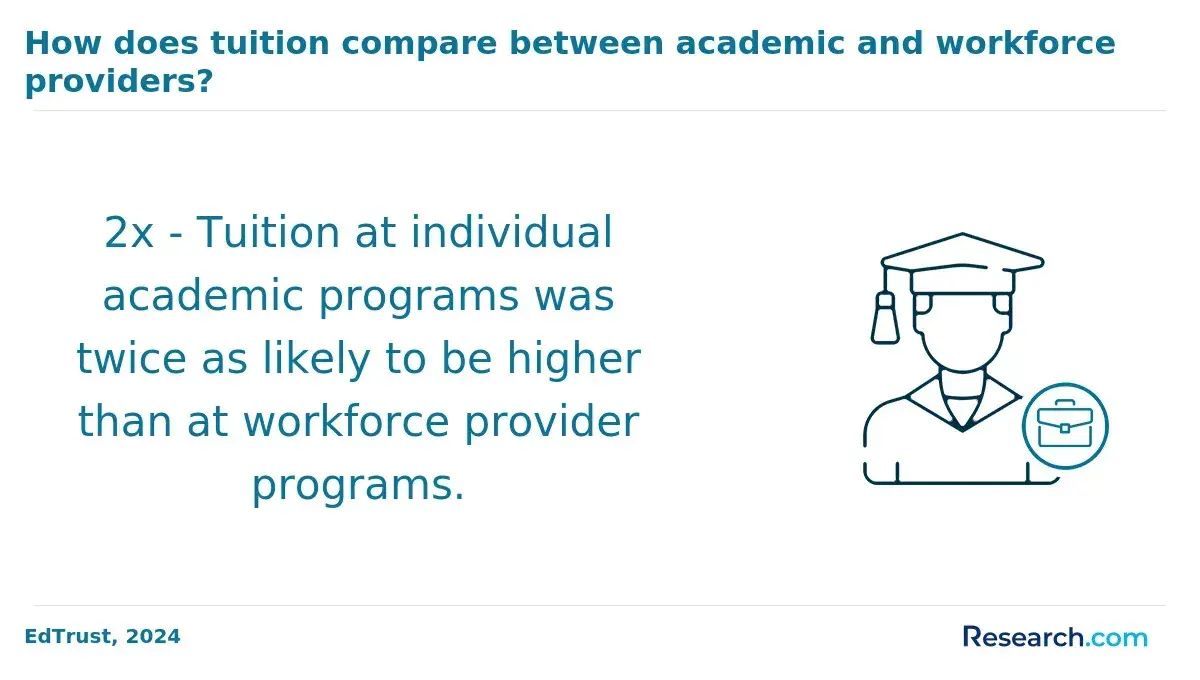
There is no reliable single price or timeline for all transfer students. The useful estimate is the cost and time to complete remaining applicable requirements after an evaluation. Tuition varies by institution, residency status, enrollment intensity, and program; aid offers can change the amount a student ultimately pays.
The following cost categories explain why a low tuition quote may not produce the lowest completion cost.
| Cost category | Why it matters after transfer |
| Remaining credits and tuition | Credits accepted only as electives may leave more major coursework to pay for. |
| Mandatory and program fees | Technology, laboratory, clinical, or other required charges add to tuition. |
| Attendance and placements | Travel, equipment, and placement-related expenses may differ by program. |
| Living costs and lost work time | Course schedules and placement hours can affect a student's budget. |
Request a written remaining-credit plan and current fee schedule, then compare financial aid offers and likely living expenses. Federal aid eligibility depends on the student and institution; completing the FAFSA is a practical starting point. A short advertised timeline may assume substantial applicable transfer credit, full-time study, and immediate access to every required course.
What coursework should transfer students complete before changing colleges?
Complete courses that the intended receiving program identifies as equivalent - often writing, mathematics, and applicable general education requirements - before taking extra electives. For nursing or engineering, the correct science and math sequence may matter more than accumulating credits quickly. For computer science, confirm both programming and math expectations.
Before registering for another course, compare the receiving school's current degree map with its transfer-equivalency guidance and ask an adviser to confirm any uncertain match in writing. Keep syllabi for courses that may need individual review. A common costly mistake is finishing an associate degree under an outdated plan, then discovering that a missing prerequisite delays entry into the major.
What careers and salaries can transfer students expect after graduation?
Career options depend on the degree completed, prior experience, location, and any required credentials - not on transfer status alone. Business graduates may pursue varied business roles; IT and computer science graduates may seek technical positions; nursing and teaching involve distinct licensing requirements. A degree does not guarantee entry into any occupation.
For a salary benchmark, the Bureau of Labor Statistics reports a May 2024 median annual wage of $133,080 for software developers. That is an occupational median, not the typical starting salary of a computer science graduate; applicants must still demonstrate relevant skills and meet employers' requirements. Compare job descriptions with a program's coursework and outcomes before committing. If the target role does not require a degree, jobs that only require a certificate may offer an alternative worth evaluating.
How can students verify accreditation, licensing, and program quality?
Confirm the college's institutional accreditation through its accreditor or U.S. Department of Education-recognized accreditation information. For a regulated career, check the applicable state licensing board and any required programmatic accreditation or approval. Institutional accreditation alone does not establish that a particular nursing, teaching, engineering, or social work pathway meets every professional requirement.
Then ask the program for a degree audit, course-rotation information, placement rules, and published outcomes relevant to your goal. Be cautious if a school promises that all credits will transfer before reviewing transcripts, advertises rapid completion without stating its assumptions, or describes career services as guaranteed employment. Get consequential answers in writing before paying an enrollment deposit.
Other Things You Should Know About
Possibly, but the receiving school decides which courses it accepts and where they fit. Ask for a degree-specific evaluation; credits awarded as electives may not replace required major courses.
Not generally. An articulation agreement may offer an admission pathway, but it can have GPA, course, deadline, or major-specific conditions. Selective programs may require a separate application.
Some institutions evaluate documented learning through approved prior-learning processes. Credit is not automatic, and any award may apply only to electives or particular requirements.
Compare both options with the receiving school. Finishing may satisfy an agreement or general education block, while transferring earlier may avoid courses that would not advance your intended bachelor's major.
References
- Cost of Attendance (Budget) | 2025-2026 Federal Student Aid Handbook https://fsapartners.ed.gov/knowledge-center/fsa-handbook/2025-2026/vol3/ch2-cost-attendance-budget
- Fast Facts: Undergraduate graduation rates (40) | ed.gov https://nces.ed.gov/fastfacts/display.asp
- Transferring Credits | cofo.edu https://www.cofo.edu/transfercredit
- Community College to University Pathway | Mississippi's Institutions of Higher Learning https://www.mississippi.edu/student-parent-resources/community-college-university-pathway
- Eligibility Requirements for Transfer Applicants | Brown University https://admission.brown.edu/transfer/eligibility-requirements
- Transfer Information + Transcript Analyst Transfer Credit Policy - Emporia State University https://www.emporia.edu/academics-majors/academic-affairs/office-registrar/grades/transfer-information-transcript-analyst/transfer-credit-policy/
- North Carolina Community College Students | Transfer Student Resources https://transfer.ncsu.edu/resources/north-carolina-community-college-students/
- Transfer Credit - UA Catalog - The University of Alabama https://catalog.ua.edu/undergraduate/about/academic-regulations/policies/transfer-credit/
- Advising Transfer Students - NACADA - Kansas State University https://nacada.ksu.edu/Resources/Clearinghouse/View-Articles/Advising-Transfer-Students
- Transfer Pathways to Independent Colleges - Ithaka S+R https://sr.ithaka.org/publications/transfer-pathways-to-independent-colleges/