
2027 Best Adult Degree Programs for Career Growth

Co-Founder and Chief Data Scientist
Choosing a degree while working means weighing more than the subject: you need a schedule you can sustain and a credential that fits your career goal. The stakes are substantial. According to the U.S. Bureau of Labor Statistics (BLS), workers with a bachelor's degree had median weekly earnings of $1,543 in 2024, compared with $930 for workers whose highest credential was a high school diploma.
Those population-wide figures do not predict an individual return. This guide helps working and returning adults compare program families, costs, completion requirements, and realistic career paths before enrolling.
Key Things You Should Know
- For career growth, match the program to a specific role first: business and technology can support advancement across industries, while nursing, teaching, and social work may require a state-approved licensure path.
- Flexibility depends on more than online access. Ask about live meetings, part-time course rotation, clinical or field hours, and how previous credits will apply.
- Use occupational pay as context, not a promised outcome: BLS reports a 2024 median annual wage of $93,600 for registered nurses, a role that requires appropriate nursing education and licensure.
Top 10 Best Adult Degree Programs for Career Growth
Business Programs
Master of Business Administration (MBA), Master of Management, and specialized master's programs in accounting, analytics, or supply chain management suit adults seeking broader responsibilities or a targeted change. An MBA often builds on work experience; a specialized degree may fit better when you need particular technical skills. Compare part-time scheduling, team-project meeting times, employer reimbursement, and whether the curriculum develops skills your target employers request. An MBA alone does not qualify someone for a management position, and accounting licensure has separate state education and examination rules.
Healthcare Programs
Master's programs in healthcare administration, public health, and health informatics prepare students for different work. Administration emphasizes operations and finance; public health emphasizes population-level research and programs; informatics connects clinical workflows with data systems. Experienced healthcare employees may use these degrees to pursue advancement, but many management roles also require substantial related experience. Check whether evening or online courses still involve scheduled group work, internships, or a capstone. Do not assume a nonclinical healthcare master's degree confers a clinical license.
Information Technology Programs
Master's programs in information technology, cybersecurity, and information systems can help experienced professionals move toward systems leadership, security, or enterprise technology roles. For a career changer, prerequisites in networking, programming, or databases may add time and cost. Compare hands-on labs, security projects, course schedules, and whether the degree teaches current tools alongside durable fundamentals. Security employers may value relevant experience and certifications as well as a degree; a master's is not the only route into the field.
Computer Science Programs
A master's in computer science usually goes deeper into algorithms, software systems, artificial intelligence, or computing research than a general IT degree. It can suit developers seeking technical specialization, but applicants without substantial programming and mathematics preparation may need foundation courses. Compare thesis and project tracks, prerequisite policies, and access to computing resources before choosing an online or campus format. Software employers commonly assess demonstrated skills and experience, so an advanced degree does not independently secure a development role.
Nursing Programs
Master of Science in Nursing (MSN) programs may prepare licensed registered nurses for education, leadership, or advanced practice. Requirements vary sharply by track: an advanced-practice pathway typically includes supervised clinical training and must meet applicable state and certification rules. An RN-to-MSN bridge has different entry requirements from a conventional MSN. Working nurses should confirm clinical placement responsibilities, shift-compatible scheduling, and eligibility in the state where they intend to practice. An MSN is not a substitute for initial RN licensure.
Psychology Programs
A master's in psychology can support research, behavioral-health-adjacent work, or preparation for further study, but its career value depends heavily on the concentration. A general psychology master's does not ordinarily qualify someone to practice independently as a licensed psychologist; that path generally requires doctoral education and additional state requirements. Adults seeking counseling work should instead compare appropriately designed counseling programs against their state's licensure standards. Check whether the curriculum includes a thesis, practicum, or both.
Education Programs
Master's programs in curriculum and instruction, educational leadership, and teaching serve different goals. A licensed teacher seeking advancement may need a different program from a career changer seeking initial certification. Verify state approval, endorsement eligibility, student-teaching or fieldwork requirements, and whether classes fit the school calendar. An online coursework option may still require in-person teaching practice. If your goal is school administration, ask whether the program meets state credential rules and whether professional teaching experience is required.
Criminal Justice Programs
A master's in criminal justice can help experienced public-safety or justice-system professionals study policy, leadership, analytics, and administration. It is less clearly valuable for someone targeting an entry-level position whose hiring process does not require graduate education. Compare research and applied tracks, employer tuition support, and the experience requirements for your target role. Law-enforcement hiring, background checks, and agency training are separate from degree admission or completion.
Engineering Programs
Master's programs in engineering can deepen a practicing engineer's expertise in areas such as electrical, mechanical, civil, or systems engineering. Look closely at required undergraduate preparation, laboratory or project access, and whether courses rotate often enough for part-time completion. A technical master's can be valuable for specialized work, but a different concentration may be a poor investment if it does not match your industry. Professional Engineer licensure follows state rules and generally involves more than earning a master's degree.
Social Work Programs
A Master of Social Work (MSW) is a practice-oriented option for adults pursuing social work roles, including potential clinical practice. Field placements can be difficult to combine with a full-time job, even when academic courses are online. Applicants with an eligible bachelor's in social work may qualify for an advanced-standing pathway; others generally follow a longer standard route. Confirm program accreditation, placement hours, and state licensure eligibility. Independent clinical practice also requires supervised experience and other state-mandated steps after graduation.
What are the best degree programs for working adults?
The best adult degree program is the one that connects your current qualifications to a realistic next role without making completion financially or logistically unworkable. A bachelor's-completion program may offer more value than a master's if you have substantial undergraduate credit but no degree; a focused master's may make more sense when you already hold the required bachelor's credential and need specialized preparation.
This comparison shows which program types are most useful for common starting points. It also highlights the constraint most likely to affect a working adult's completion.
| Starting point and goal | Program type to compare | Critical fit question |
| Previous college credit; degree required for advancement | Bachelor's-completion program | How many accepted credits fulfill degree requirements rather than electives? |
| Bachelor's degree; broader management responsibilities | Part-time MBA or management master's | Does the curriculum fit the target role and work schedule? |
| Technical experience; specialist role | IT, computer science, or engineering master's | What prerequisites and hands-on work are required? |
| Goal is a regulated profession | State-eligible nursing, education, counseling, or social work pathway | Can required in-person training and licensure steps be completed? |
Shorter terms can help some students progress, but compare the entire degree plan - not the length of one class. Accelerated online degree programs are worth exploring if their course load, credit assumptions, and deadlines fit your responsibilities.
Which adult degree programs lead to high-demand careers?
Programs connected to healthcare operations, nursing, software, cybersecurity, and certain education roles can lead toward occupations with ongoing hiring needs. Demand alone is not enough to make a degree worthwhile: entry requirements, local opportunities, and the experience you already have matter just as much. BLS projects employment growth for medical and health services managers, for example, but those jobs typically also require related work experience.
For an adult testing a new field, a smaller credential may be a sensible first step. Compare employer-recognized quick certifications that pay well with a full degree, while checking whether the certification actually appears in postings for your intended role. Certificates and certifications are not interchangeable with professional licenses.
How do you choose an accredited adult degree program?
Start with institutional accreditation recognized by the U.S. Department of Education or the Council for Higher Education Accreditation. Then check whether your particular program needs specialized accreditation or state approval for your goal - for example, nursing, social work, counseling, or educator preparation. Institutional accreditation alone does not establish eligibility for every professional license.
Accreditation is a first screen, not a complete quality rating. Before applying, take these steps to check whether the credential will work where you plan to live and work.
- Confirm the institution's current accreditation status directly with the accreditor.
- Check the program's accreditation or approval status, including the specific campus or online pathway.
- Ask the relevant state licensing board whether graduates of that pathway meet its education requirements.
- Request written details about placements, exam eligibility, and any restrictions on students outside the school's home state.
Are online or campus-based programs better for adult learners?
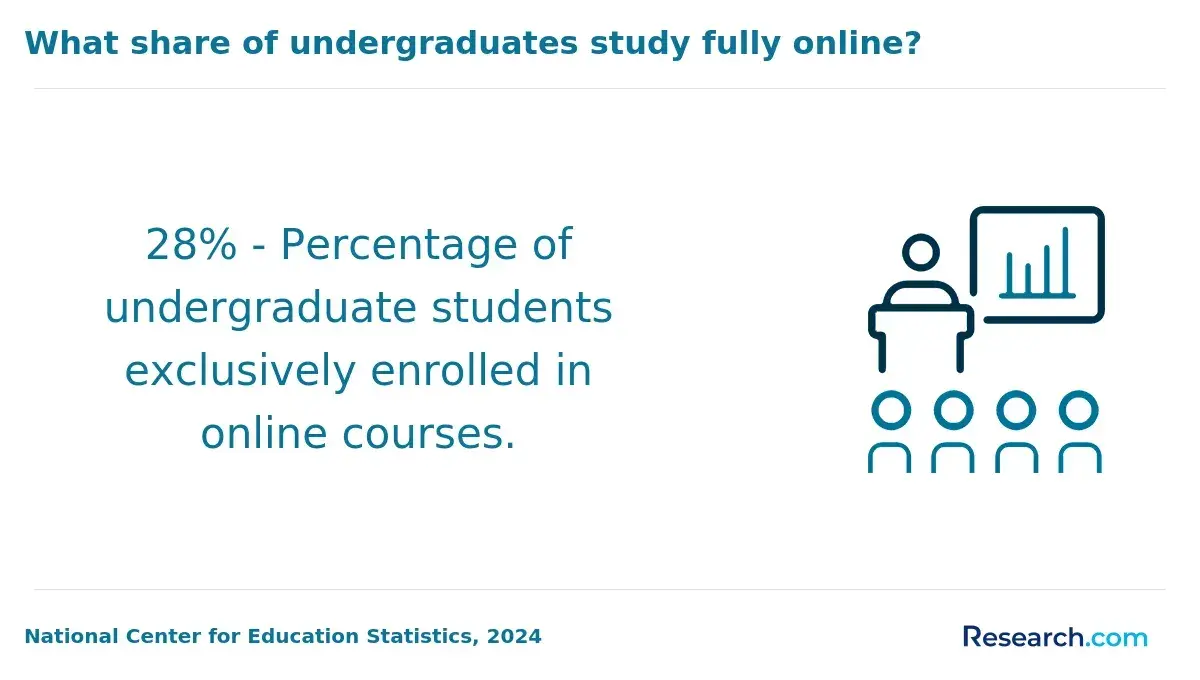
Online study can reduce commuting and make part-time enrollment easier, but it does not necessarily mean self-paced study. Live classes, fixed weekly deadlines, proctored exams, and group projects may still shape your schedule. Campus or hybrid study may be preferable when you need laboratory access, in-person mentoring, or a dependable place to study away from home.
Choose based on the commitments you can actually meet. Ask for a sample term schedule, the frequency of required courses, and the location and hours of any clinical, internship, practicum, residency, or student-teaching requirement. For adults arranging work shifts or caregiving, a predictable schedule can matter more than whether the program is labeled "online."
What coursework do career-focused adult degree programs include?
Career-focused curricula usually combine field fundamentals with applied assignments. Business students might analyze operations and financial decisions; computing students may build or secure systems; nursing and social work students complete supervised practice appropriate to their tracks. Graduate programs may also require foundation courses, electives, a capstone, a thesis, or a comprehensive examination. Ask for the full degree map so you can identify courses offered only occasionally.
A thesis or research-intensive track is most useful when it supports your intended work or further study. If your goal is independent academic research, compare that preparation with the distinct time and research commitments of online PhD programs; a master's capstone is not the equivalent of a doctorate.
What are the admission requirements for adult degree programs?
Requirements depend on both the credential and the program. Bachelor's-completion applicants generally submit previous college transcripts; a graduate applicant normally needs a bachelor's degree and may need prerequisites, professional experience, recommendations, an interview, or a portfolio. Clinical and other selective tracks can impose additional standards. Testing and GPA rules vary, so check the applicable program's current admissions page rather than assuming a university-wide policy applies.
If you lack the preparation for your preferred program, ask admissions to evaluate your transcripts before you pay for more courses. For some returning students, an easiest associate degree to get online comparison can help identify an intermediate option, but "easy" does not establish that its credits will meet a later bachelor's program's requirements.
How long do adult degree programs take and what do they cost?
There is no reliable single completion time or price for adult degree programs. Remaining credits, part-time course availability, prerequisites, transfer evaluations, and fieldwork determine the timeline. Graduate credits do not automatically transfer from undergraduate study; likewise, work experience earns academic credit only when an institution has an applicable assessment policy and awards it.
The comparison below separates expenses that are often combined in advertised tuition figures. Request a personalized estimate using your actual remaining requirements before comparing offers.
| Cost or time factor | Why it changes the comparison |
| Tuition and mandatory fees | Per-credit prices can omit technology, program, or other required fees. |
| Accepted credit and residency rules | Accepted credits may reduce coursework, but schools still require specified credits completed through them. |
| Course rotation and enrollment pace | A required course offered infrequently can extend part-time study. |
| Experiential requirements | Clinical, field, laboratory, or teaching hours may add travel costs or reduce paid work hours. |
Ask about grants, federal aid eligibility, employer tuition assistance, and payment plans. Compare estimated total cost to finish, including fees and lost work time, with the likely value of the credential for your target role. A low per-credit price is not automatically the lowest-cost path.
What careers, salaries, and job outlooks follow adult degree programs?
Occupational wage data helps set expectations, but it does not measure what graduates of a particular program earn. The BLS 2024 national median annual wages below describe people already working in each occupation, across experience levels and educational backgrounds. Use them alongside local job postings and the role's entry requirements.
| Occupation | 2024 U.S. median annual wage | Important qualification context |
| Registered nurse | $93,600 | Requires nursing education and state licensure; an MSN is not required for all RN roles. |
| Medical and health services manager | $117,960 | Typically requires related healthcare experience; a healthcare master's is not always required. |
| Software developer | $133,080 | Programming ability and experience matter; a computer science master's is not universally required. |
Career growth might mean entry to a licensed profession, a move into a specialty, or advancement within your current employer. Before borrowing for a degree, compare openings you would realistically qualify for after completion with those available now. Avoid treating a national occupational median - or a program's career-services access - as a salary or promotion guarantee.
Which licenses and certifications do adult degree graduates need?
Licensing depends on the occupation and state, not simply the degree title. Registered nurses need state licensure; teachers need the applicable state credential; clinical social workers generally need an eligible MSW, supervised experience, and examinations. Counseling and advanced-practice nursing have their own program, clinical, certification, and state requirements. Engineering licensure matters for certain professional duties, while many technology and business roles have no single mandatory license.
Before enrolling, identify the exact job title and state where you intend to work. Then verify the education, examination, supervised-practice, and continuing-education rules with that state's licensing board. A program described as career-focused - or delivered online - may still fail to meet the requirements for your intended license.
Other Things You Should Know About
Often, but feasibility depends on course load, scheduled meetings, and required fieldwork. Request a part-time degree plan before enrolling.
Not automatically. Some schools evaluate documented prior learning for eligible undergraduate credit; ask how credit is awarded and whether it fulfills your specific requirements.
It depends on your preparation and target occupation. A master's can deepen existing expertise, while a bachelor's or licensure pathway may be necessary when changing into a field with foundational or regulated requirements.
Ask for your remaining degree requirements, a realistic part-time schedule, total estimated cost, all in-person obligations, and written confirmation of any relevant licensure eligibility.
References
- TNReconnect | Prior Learning Assessment Information https://tnreconnect.gov/Choose-a-Degree-College-Path/Prior-Learning-Assessment-Information
- Employer-offered educational assistance programs can help pay for college | Internal Revenue Service https://www.irs.gov/newsroom/employer-offered-educational-assistance-programs-can-help-pay-for-college
- Annual Earnings by Educational Attainment - COE https://nces.ed.gov/programs/coe/indicator/cba/annual-earnings
- Semester Course Load and Student Performance - PMC - NIH https://pmc.ncbi.nlm.nih.gov/articles/PMC7568764/
- Adult Programs - U.S. Department of Education https://www.ed.gov/adult-programs
- Fastest Growing Occupations | bls.gov https://www.bls.gov/ooh/fastest-growing.htm
- Data Home - College Scorecard - Department of Education https://collegescorecard.ed.gov/data/
- Cost of Attendance (Budget) | 2025-2026 Federal Student Aid Handbook https://fsapartners.ed.gov/knowledge-center/fsa-handbook/2025-2026/vol3/ch2-cost-attendance-budget
- Community College Outcomes Vary by Program and Age | NC Commerce https://www.commerce.nc.gov/blog/2019/06/25/community-college-outcomes-vary-program-and-age
- Earning College Credit for Work Experience | Goodwin College of Professional Studies https://drexel.edu/soe/resources/community/college-credit-work-experience/


