2027 Best Adult Degree Programs for Students With Some College Credit

Co-Founder and Chief Data Scientist
Returning to college is easier to plan once you know which old credits will actually count. The National Student Clearinghouse Research Center identified 36.8 million working-age U.S. adults with some college but no credential in its 2024 report, making degree completion a consequential decision for many households. This guide compares bachelor's completion fields and the master's programs they can lead to. You'll learn how to judge transfer policies, scheduling, cost, licensing requirements, and career fit before committing to a program.
Key Things You Should Know
- Start with a bachelor's completion program if you have college credit but no bachelor's degree; the master's fields below generally require a completed bachelor's degree first.
- Ask for a degree-specific transfer evaluation: accepted credits can still fall into electives rather than satisfy major requirements, and the school's residency rules determine how many credits remain.
- Compare total remaining cost, course availability, and required in-person work - not just online access. College Board reported average published in-state tuition and fees of $11,610 at public four-year colleges for 2024-25, but your bill depends on the institution and credits left to complete.
Top 10 Best Adult Degree Programs for Students With Some College Credit
Business Programs
A bachelor's completion program in business administration can make use of prior general education and introductory business courses while preparing students for varied organizational roles. An MBA or specialized business master's is a later option for students who already hold a bachelor's degree.
Compare accounting, finance, analytics, and management requirements separately: a school may accept an old course as transfer credit without counting it toward the major. Business is useful when you want broad career options, but a focused accounting pathway may be better if your goal is CPA eligibility, which has separate state requirements.
Healthcare Programs
Healthcare administration and health information management bachelor's completion programs may suit adults with previous coursework or healthcare experience. A master's in health administration is generally for bachelor's graduates seeking advanced preparation; previous undergraduate credits ordinarily do not replace graduate courses.
Check whether the curriculum emphasizes operations, data, or public health before choosing.
Administrative programs do not qualify graduates to practice medicine, nursing, or another licensed clinical profession. If you need clinical credentials, compare the profession's accredited entry pathway instead, including any required placements that could conflict with work hours.
Information Technology Programs
An IT bachelor's completion program can build on prior computing courses and prepare students for systems, networks, cloud, or security work. Master's programs in IT or cybersecurity generally require a bachelor's degree and may expect technical preparation.
Ask whether older technology credits still satisfy current major requirements; they may transfer only as electives.
Compare hands-on labs, certification-aligned coursework, and project work rather than assuming the degree itself awards an industry certification. IT is a strong fit for applied systems work; students seeking more intensive mathematics and software theory may prefer computer science.
Computer Science Programs
Computer science bachelor's completion programs can serve adults targeting software development or computing fundamentals, but course sequences often depend on calculus, programming, and data structures. A computer science master's normally requires a bachelor's degree and may require additional foundation courses for applicants from other majors.
An old programming course may not meet a current prerequisite even if its credits transfer. Before enrolling, request a term-by-term plan showing when required courses run. Choose this route for its technical depth, not on the assumption that prior elective credits will shorten the major substantially.
Nursing Programs
For an already licensed registered nurse with an associate degree, an RN-to-BSN program is a distinct completion pathway; admission typically requires an active RN license. A master's in nursing generally requires prior nursing preparation, and some pathways specify a BSN or offer a separately defined bridge.
Nursing courses and clinical requirements may have stricter transfer limits than general education courses. If you are not an RN, an RN-to-BSN program is not an entry route: investigate an approved prelicensure nursing program instead. Confirm state authorization and clinical placement arrangements before choosing an online option.
Psychology Programs
A psychology bachelor's completion program may accept prior social science and general education coursework and can support careers that do not require clinical licensure. A psychology master's typically requires a bachelor's degree, but its purpose varies: research, industrial-organizational practice, and counseling preparation are not interchangeable.
A general psychology degree does not, by itself, qualify someone to practice as a psychologist. If clinical practice is your goal, check your state's rules and the specific program's licensure pathway before investing in additional study.
Education Programs
Education bachelor's completion pathways can be attractive to classroom aides or career changers, but teacher-preparation majors may require sequenced coursework and supervised student teaching. Education master's programs usually require a bachelor's degree; some serve licensed teachers, while others offer an initial-licensure route.
Those are materially different options. Ask whether your previous credits satisfy the approved preparation program - not merely university graduation requirements - and whether placements are available near you. State approval and subject-area requirements matter more than a program's general claim of flexibility.
Criminal Justice Programs
A criminal justice bachelor's completion program may make practical use of previous general education coursework and can support interests in public safety, corrections, or administration. A criminal justice master's is a separate advanced option for bachelor's graduates, often emphasizing policy, leadership, or analysis.
Neither credential automatically qualifies someone for law enforcement: agencies set their own hiring, training, and fitness standards. Compare the degree's remaining required courses against your intended job, and check whether direct entry, an academy, or a different major would serve that goal at lower cost.
Engineering Programs
Engineering is less forgiving of mismatched transfer credits because mathematics, laboratory, and design courses often form a strict sequence. A bachelor's completion applicant should obtain course-by-course equivalencies and check whether the specific engineering program has ABET accreditation when professional engineering licensure is a goal.
Engineering master's programs require a bachelor's degree and may specify prerequisite engineering coursework. An engineering technology degree can be a useful alternative for applied work, but it is not interchangeable with an engineering degree for every licensing board or employer.
Social Work Programs
For a student without a bachelor's degree, a bachelor of social work can provide an entry route into the field; check whether the program has Council on Social Work Education accreditation. An accredited BSW may also make its graduates eligible to apply to an advanced-standing MSW pathway, subject to program rules.
Other applicants may need the standard MSW route. Both pathways include field education, so online classes do not eliminate placement hours. Clinical social work licensure also requires state-specific steps beyond earning a degree.
What degree programs are best for adults with some college credit?
The best first choice for most adults with some college credit but no bachelor's degree is a bachelor's completion program that applies the most usable credits to a career-relevant major. If you already hold a bachelor's degree, compare master's programs instead; undergraduate credits do not ordinarily transfer into graduate requirements.
The ten fields above are options to investigate, not a universal ranking. This comparison separates the most common starting points. It helps prevent an attractive program name from obscuring the credential you actually need next.
| Starting point | Path to compare | Deciding factor |
| Some college, no degree | Bachelor's completion in business, IT, psychology, or another suitable major | How prior credits apply to general education, the major, and electives |
| Associate degree and active RN license | RN-to-BSN | Nursing-specific admission, clinical expectations, and credit rules |
| Bachelor's degree completed | Relevant master's or professional pathway | Graduate prerequisites, career purpose, and any licensing requirements |
| Accredited BSW completed | Potential advanced-standing MSW | Program eligibility and remaining field-placement requirements |
Favor business for broad organizational interests, IT for applied computing, and computer science when you want deeper software and mathematical preparation.
Choose nursing, education, engineering, or social work only after checking the particular professional pathway. If earnings are a major consideration, compare degrees you can get online that pay well with the actual cost and qualifications required for the occupation - not salary figures alone.
How do transfer credits work for adult degree-completion programs?
Transfer credit is previous college coursework a new institution accepts after evaluating transcripts. Accepted does not necessarily mean useful toward your chosen degree: a course might fulfill a major requirement, general education requirement, or elective - or fail to apply at all.
Each institution sets its own course-equivalency, minimum-grade, maximum-transfer, and minimum in-residence credit rules. Technical or clinical courses may face additional recency requirements.
A degree-specific evaluation is more useful than a general estimate. Use this sequence before paying a deposit:
- Send official transcripts from every previous college and identify your intended major and catalog requirements.
- Request a written evaluation showing where each accepted course applies and which requirements remain.
- Ask about credit for documented military education, examinations, certificates, or assessed prior learning if the school offers those routes; experience alone does not automatically earn credit.
- Confirm the minimum credits to complete at the new institution and whether changed majors or prerequisite sequences would alter the estimate.
Do not assume that an associate degree clears every lower-division requirement or that undergraduate coursework counts toward a master's. An advertised short completion time may assume far more applicable credit - or a qualifying credential - than you have.
Are online degree-completion programs as effective as campus programs?
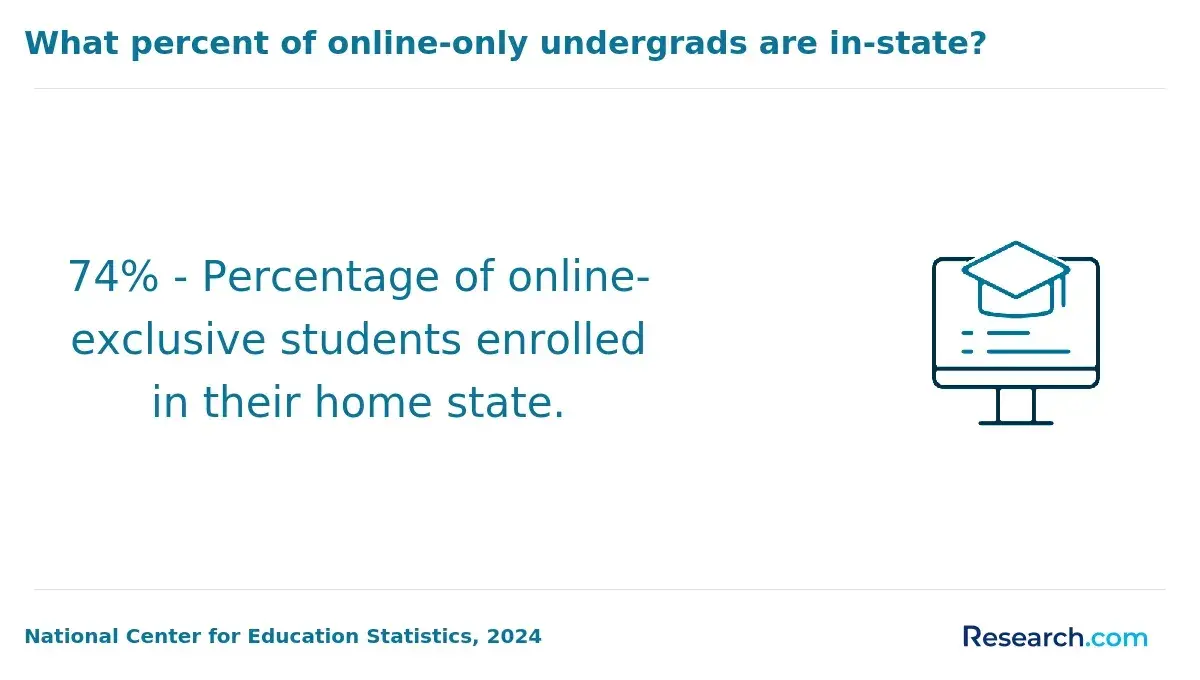
Online degree-completion programs can be effective for adults who need to study around work, but delivery format alone does not establish educational quality or personal fit. Compare the same institutional accreditation, curriculum, instructor access, advising, and degree requirements you would examine on campus.
Then assess whether the schedule is workable: online courses may still have live sessions, weekly deadlines, proctored exams, or required placements.
For a student with variable shifts, asynchronous coursework and predictable course rotations may matter more than an "online" label. For a student who learns best through scheduled discussion or needs specialized labs, hybrid or campus study may work better.
Browse online degree programs for possible fields, then confirm the specific school's attendance and in-person requirements directly. In nursing, education, and social work, local experiential work can remain mandatory even when classes are online.
What accreditation should adult students look for in a degree program?
Start with institutional accreditation recognized by the U.S. Department of Education. It matters for federal student-aid eligibility and can affect how other schools assess transfer or graduate admission, although accreditation never guarantees that a particular course will transfer. Verify the institution and the specific degree location or delivery arrangement rather than relying on an accreditation logo in an advertisement.
Then check programmatic accreditation where your intended profession makes it consequential. Examples include ABET for many engineering pathways and Council on Social Work Education accreditation for social work education.
Nursing and teacher preparation require close attention to applicable program approval and state rules. Ask the relevant state licensing board whether the specific program meets its educational requirements; institutional accreditation alone is not a substitute.
What admission requirements apply to adult degree-completion programs?
Adult bachelor's completion applicants commonly submit an application and official transcripts; some programs also set minimum completed-credit, grade, or prerequisite requirements. A university's general transfer admission does not necessarily grant entry to a selective nursing, engineering, or teacher-preparation major.
Master's applicants generally need a completed bachelor's degree and may face program-specific GPA, prerequisite, license, portfolio, or professional-experience requirements. Testing policies vary, so check the applicable admissions page rather than assuming an exam is required or waived.
If earlier grades are a concern, ask whether the school evaluates recent coursework separately, offers conditional admission, or permits prerequisite courses before entry to the major. Online colleges that accept low GPA can provide a starting point, but verify the published policy for your degree and applicant category. Avoid assuming that an accessible university-wide admissions policy overrides a selective program's standards.
How long and how much do adult degree programs take to complete?
Completion time depends on credits still required, course sequencing, and the number of courses you can take while managing other responsibilities. A bachelor's degree typically requires about 120 semester credits in total, but that does not tell you how many you personally have left.
A master's adds graduate study after the bachelor's; its requirements and timeline vary by field and may include a capstone, thesis, clinical work, or placement. Shorter class terms do not mean the whole degree is short.
For a cost baseline, College Board's 2024-25 average published in-state tuition and fees at public four-year colleges was $11,610. That is an annual sector average, not a quote for an adult completion program or your net price after aid.
Estimate total remaining cost using the school's tuition and fee schedule, credits left, residency status, books, technology or program fees, and travel or placement costs.
Ask whether transfer and assessed prior-learning credit reduce billed courses, and check federal aid eligibility and employer tuition benefits. Online schools no application fee may reduce an upfront expense, but the fee is minor compared with total degree cost.
What courses are included in adult degree-completion programs?
Most bachelor's completion plans combine remaining general education, major courses, electives, and often a capstone. The exact mix depends on which earlier courses satisfy the current degree audit. Business may require accounting and management; computer science may require programming, mathematics, and upper-level computing; professional majors may add tightly sequenced labs or field experiences.
Master's programs instead contain graduate-level core courses, specialization work, and, in some fields, a thesis, project, or supervised practice.
Request a course-by-course plan for the remaining curriculum, not a generic catalog list. Check whether required classes are offered each term, whether prerequisites delay enrollment, and whether an internship or placement can be completed near home. A common mistake is choosing the program that accepts the most credits when another program applies fewer credits but leaves fewer costly major requirements.
What careers and salaries can adult degree programs lead to?
Adult degree programs can support career entry, a change in field, or preparation for graduate study, but no credential guarantees a job, promotion, or salary. For context, the U.S. Bureau of Labor Statistics reported a May 2024 median annual wage of $93,600 for registered nurses.
That figure describes people employed as RNs - not RN-to-BSN graduates - and becoming an RN requires an approved educational route and licensure. Use occupational pay alongside entry requirements, local openings, and the amount you would spend to finish.
Business graduates may pursue operations or administrative roles; computing graduates may pursue technical roles subject to demonstrated skills; social work and education students must distinguish general employment from licensed practice.
Before enrolling, review job postings for your intended role and ask whether the degree is required, preferred, or unnecessary. If a less expensive certificate or direct work experience meets the same goal, compare that alternative with the time and cost of a degree.
Which certifications or licenses require an accredited degree?
Accredited education can be essential for some credentials, but the exact requirement belongs to the licensing board or certifying organization - not a program's marketing page. Requirements may include an approved program, examination, supervised experience, and a background check. They can also differ by state.
These examples show why the intended occupation should shape the program decision:
- Registered nurse: RN licensure requires an approved nursing education pathway and the applicable licensing examination; an RN-to-BSN is for people who already hold RN licensure.
- Teacher: Initial certification commonly depends on state-approved preparation, assessments, and supervised teaching, not merely an education degree.
- Social worker: State requirements vary by license level; clinical practice generally requires additional supervised experience and examination after qualifying education.
- Professional engineer: State boards determine educational eligibility and additional examination and experience requirements; check how they treat the specific engineering degree.
Before applying, identify the state where you intend to practice and ask its board whether graduates of the exact program and delivery arrangement are eligible. Do this early if you may move, because an online program available in your state is not necessarily a licensure pathway there.
Other Things You Should Know About
Often, yes. A school may accept older general education courses while applying recency or equivalency rules to technical, clinical, or major courses. Request a current degree-specific evaluation.
Not always. Some programs admit students with qualifying credits but no associate degree; others require a completed credential or a minimum number of credits. Check the program's admission rules.
Only when a school offers an applicable prior-learning assessment and awards credit after evaluating evidence such as examinations, portfolios, or documented training. Ask what credit can satisfy your particular degree requirements.
Not automatically. Compare the credits that fulfill required courses, the credits you must earn at the new school, total cost, course scheduling, and any licensing implications. The best offer is the one that leaves you with a workable path to your goal.
References
- School-Determined Requirements - FSA Partner Connect https://fsapartners.ed.gov/knowledge-center/fsa-handbook/2026-2027/vol1/ch1-school-determined-requirements
- College Credit for Military Training & Experiences | dantes.mil https://www.dantes.mil/credit4training/
- What It's Like to Take an Online Program at the University of Kentucky? | UK Online https://online.uky.edu/blog/what-its-take-online-program-university-kentucky
- Regional vs. National Accreditation: Which is Better? | Drexel University Online https://www.online.drexel.edu/news/national-vs-regional-accreditation.aspx
- JDinteractive: Hybrid Online J.D. Program - Syracuse Law https://law.syracuse.edu/academics/degree-programs/jdinteractive
- The Returning Adult Learner: Advising Strategies to Support Their Degree Completion Efforts | ksu.edu https://nacada.ksu.edu/Resources/Academic-Advising-Today/View-Articles/The-Returning-Adult-Learner-Advising-Strategies-to-Support-Their-Degree-Completion-Efforts
- Basic requirements | UC Admissions - University of California https://admission.universityofcalifornia.edu/admission-requirements/transfer-requirements/preparing-to-transfer/basic-requirements.html
- 4 Flexible Ways to Earn a College Degree on Your Schedule | stjohns.edu https://www.stjohns.edu/news-media/johnnies-blog/4-flexible-ways-earn-college-degree-your-schedule-0
- Tracking Transfer: State-by-State Outcomes | Community College Research Center https://ccrc.tc.columbia.edu/dashboard/tracking-transfer-state-outcomes.html
- Pikes Peak State College, PPSC https://www.pikespeak.edu/admissions/records/transcripts/cpl.php