2027 Best Degree Programs With Easy Admission Requirements

Co-Founder and Chief Data Scientist
A degree program can be accessible at admission and still be demanding - or lead to a career that requires additional credentials. That distinction matters when you are choosing among open-admission colleges, flexible bachelor's programs, and less restrictive master's pathways.
The College Board reported average published tuition and fees of $11,610 for in-state students at public four-year colleges in 2024-25, making a poor program match costly. This guide compares fields by entry barriers, career purpose, cost, and licensing requirements so you can find an attainable path that serves your goal.
Key Things You Should Know
- Open-admission associate programs generally offer the broadest entry access; the College Board reported average published tuition and fees of $4,050 at public two-year colleges in 2024-25, before aid or other expenses.
- For master's programs, "easy admission" usually means a more flexible review - not open admission. A bachelor's degree, relevant preparation, or a professional credential may still be required.
- Check admission to the specific program, not just the college: nursing, teacher preparation, and clinical social work pathways may add selective entry or licensing requirements.
Top 10 Best Degree Programs With Easy Admission Requirements
Business Programs
Business administration offers several graduate options, including an MBA and specialized master's degrees in management or accounting. Some programs review applicants holistically or waive the GMAT or GRE, but that does not mean they waive the bachelor's degree or assess every applicant the same way. An MBA often suits professionals seeking broader management skills; a specialized degree better fits a defined role.
Compare published work-experience expectations, foundation courses, total cost, and capstone requirements. An easier application is little advantage if the curriculum does not match your career stage.
Healthcare Programs
Graduate healthcare administration and public health programs may welcome applicants from several undergraduate majors, making them worth investigating for career changers. They prepare students for organizational or population-health work, not clinical practice.
Check whether admission requires statistics, professional experience, or prerequisite courses, and whether the degree includes an internship or practicum. If your goal is a licensed clinical occupation, confirm that the specific degree meets that profession's educational requirements; a broadly accessible healthcare master's usually will not substitute for clinical training.
Information Technology Programs
Some master's programs in information technology consider applicants whose bachelor's degrees are outside computing and provide foundation courses. That can make entry more approachable, although foundation work may add cost and time. Look for coursework in systems, networking, cybersecurity, and project management, then compare it with the skills your target jobs request. Confirm whether programming or mathematics is expected before enrollment and whether online courses have scheduled meetings.
Applicants seeking a faster route to a specific technical skill may find a focused certification more appropriate.
Computer Science Programs
Computer science master's degrees can accept career changers, but accessible admission should not be confused with a light curriculum. Programs may require prior programming, algorithms, calculus, or bridge courses even when they do not require a computer science bachelor's degree. Compare the preparation required before admission with coursework completed after admission.
A conversion-style pathway can make sense if you want substantial computing depth; an IT program may be a better fit if your goal is technology operations rather than software development or computing theory.
Nursing Programs
Nursing master's programs are generally not easy-entry options for applicants without nursing preparation. Many require a nursing degree and an active RN license; advanced-practice tracks may add clinical-experience requirements and supervised placements.
RN-to-MSN and direct-entry pathways exist, but their eligibility rules differ substantially. Check the exact track, clinical placement responsibilities, state authorization, and whether graduates meet the educational criteria for their intended certification or license. If you are not already a nurse, compare an accredited entry-level nursing pathway before considering a graduate specialization.
Psychology Programs
A general psychology master's may consider applicants from different bachelor's majors and use holistic admissions, though research methods or statistics prerequisites can apply. Its purpose matters: a general or research-oriented degree does not necessarily qualify graduates for psychologist licensure or independent therapy practice.
Compare thesis and non-thesis tracks, supervised-experience opportunities, and the requirements of the occupation you want. Applicants interested primarily in counseling should investigate a licensure-aligned counseling program rather than assuming any psychology master's will meet state rules.
Education Programs
Curriculum and instruction or educational leadership master's programs may offer flexible admissions review, but leadership tracks can require a teaching license and classroom experience. A master's intended for current educators differs from an initial-licensure program for career changers. Before applying, confirm which group the program serves, whether student teaching is required, and whether the curriculum meets your state's rules.
An online course format does not eliminate school-based fieldwork. Choose a non-licensure track only if it advances your goal without a new teaching credential.
Criminal Justice Programs
Criminal justice master's programs may accept applicants from several undergraduate fields and offer coursework in policy, leadership, or research. Published GPA thresholds, writing requirements, and experience preferences vary, so review the program's own admissions page.
This degree may be useful for an established professional seeking specialized knowledge, but it is not generally a prerequisite for entering every justice-related occupation. Compare its price with employer training or a narrower credential, and check whether your target role has separate hiring, background-check, or academy requirements.
Engineering Programs
An engineering master's may offer a GRE waiver or conditional admission, yet still expect substantial mathematics and technical preparation. Requirements depend on the discipline and whether the degree is practice-oriented or research-focused. Applicants changing fields should ask which prerequisites must be completed and whether they count toward the graduate degree.
Check laboratory, project, or thesis obligations as well as delivery format. If professional engineering licensure is the goal, review your state board's education and experience rules separately; admission to a master's program does not establish licensure eligibility.
Social Work Programs
Master of Social Work programs sometimes welcome applicants with bachelor's degrees in other fields, but admission can still involve academic, experience, or interview requirements. Advanced-standing tracks typically have separate eligibility tied to a qualifying social work bachelor's degree; they are not a shortcut available to every applicant.
Field placements remain a major time commitment even in online programs. For clinical practice, verify program accreditation and your state's supervised-experience and examination rules. A general-entry track is the relevant comparison if you do not qualify for advanced standing.
What Are Easy-Admission Degree Programs?
Easy-admission degree programs have entry policies that reduce a barrier for an eligible applicant - for example, open undergraduate admission, test-optional review, conditional admission, or a bridge for applicants from another field. The phrase is comparative, not an official accreditation or quality designation. It does not mean automatic acceptance, easy coursework, or guaranteed entry to a licensed profession.
The most useful question is "Easy for whom?" A community college may admit broadly while its nursing cohort selects applicants separately. A master's program may waive standardized tests while requiring a completed bachelor's degree and prerequisite courses. If graduate study is your goal, compare what is the easiest master's degree to get against the preparation you already have - not simply the length of the application.
Which Degree Programs Have the Easiest Admission Requirements?
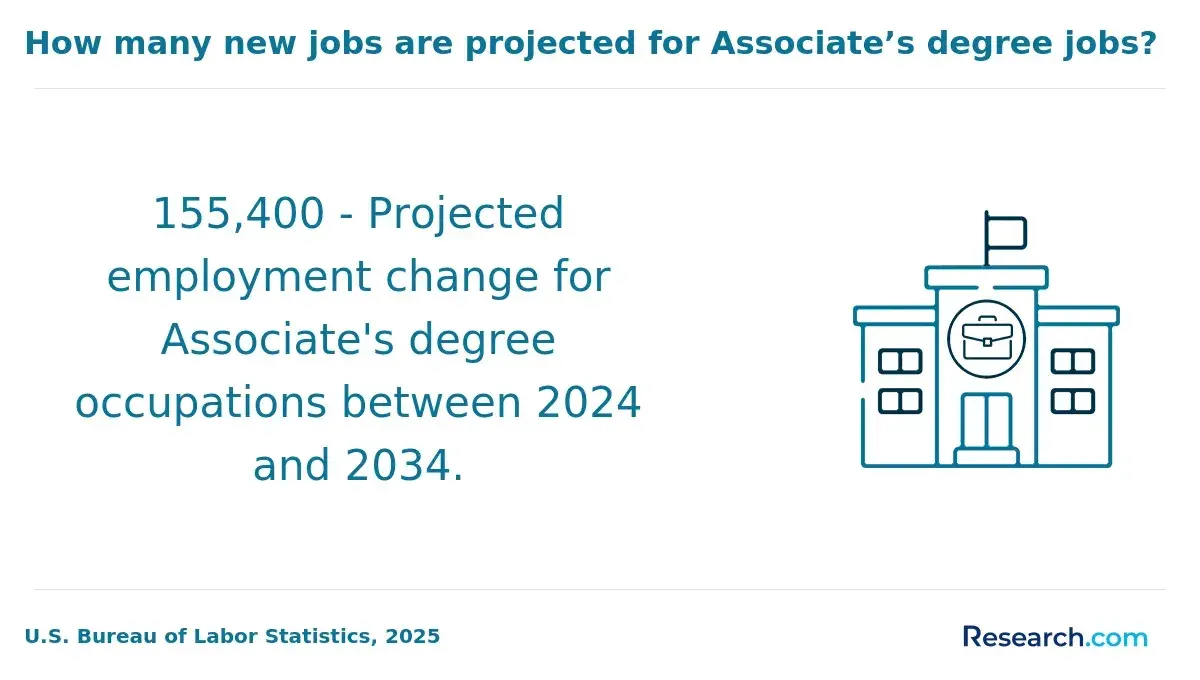
Open-admission associate programs are usually the clearest starting point for applicants seeking minimal entry barriers. General studies, business, and some introductory IT pathways commonly allow students to begin college-level study without competing for a limited cohort.
At the bachelor's level, business, psychology, and criminal justice may have more straightforward entry than programs with clinical or laboratory capacity limits. At the master's level, admissions flexibility depends far more on the individual program than on the field name.
This comparison separates initial college admission from admission to a major or professional track - the distinction most likely to change your plans.
| Program type | Likely entry barrier to investigate | Best fit |
| Open-admission associate degree | Proof of prior education and placement or course-readiness rules | Starting college, building transferable credits, or exploring a field |
| Broad-entry bachelor's major | University admission plus any major-specific GPA or course rules | Applicants seeking a defined four-year credential |
| Flexible-review master's | Bachelor's degree, prerequisites, and possible experience requirements | Graduates building on existing academic or professional preparation |
| Clinical or licensure-oriented program | Separate selection, placements, and professional eligibility rules | Applicants committed to a regulated occupation |
What Are the Basic Requirements for Open-Admission Colleges?
An open-admission college generally gives eligible applicants a route to enroll rather than selecting a small entering class. Applicants commonly need to submit an application and evidence of a high school diploma or equivalent, though eligibility policies vary. Placement measures may determine which courses you can take first; they are not necessarily grounds for denying college admission. Financial aid can require additional eligibility documentation.
Open admission to the college is not open admission to every program. Ask whether your intended major has a separate application, prerequisite grades, background checks, or limited clinical seats. If you plan to transfer, confirm that courses will satisfy the receiving institution's degree requirements rather than merely being accepted as elective credit.
Which Accredited Online Degrees Offer Flexible Admission Options?
Accredited online associate and bachelor's programs can offer accessible entry through open admission, test-optional review, or transfer-friendly policies. Some graduate programs offer conditional entry or consider applicants from unrelated majors. None of these features follows automatically from the word "online": inspect the admissions rules for your credential and applicant category.
Schedule flexibility also varies. A course may be asynchronous but have weekly deadlines; another may require live meetings, a campus laboratory, or a local practicum. If control over study hours is essential, compare published scheduling rules with options described as self-paced online universities, and verify how the specific program operates. Confirm institutional accreditation, online availability for your major, and any in-person requirements before applying.
How Do Associate, Bachelor's, and Certificate Pathways Compare?
The right credential depends on both your starting point and the job you want. These pathways differ in admission, breadth, and how much education usually remains - not just in the name on the award.
| Pathway | Typical purpose | Admission and completion consideration |
| Certificate | Focused skills or an initial career step | May have accessible entry, but credits do not always apply to a later degree |
| Associate degree | Career preparation or transfer | Often broadly accessible; transfer value depends on course equivalency |
| Bachelor's degree | Broader preparation or entry to graduate study | Major admission can be more restrictive than university admission |
| Master's degree | Specialization, advancement, or professional preparation | Requires prior higher education and may require prerequisites or licensure |
A certificate may be sensible when a job calls for a specific skill rather than a degree. Compare academic certificates with easy licenses and certifications to get: a professional certification or license is issued under different rules and is not interchangeable with college credit. Ask whether a certificate stacks into a degree and get a written transfer evaluation before relying on a shortened completion plan.
What Do Easy-Admission Degree Programs Cost and How Long Do They Take?
Admission flexibility does not determine price. The College Board's 2024-25 national averages below are annual published tuition and fees, not quotes for a particular program or the full cost of attendance. They provide a starting point for comparing routes, especially if you might begin at a community college and transfer.
| Institution type | Average annual published tuition and fees | Important limitation |
| Public two-year, in-district | $4,050 | Does not include living costs, books, or a later transfer institution |
| Public four-year, in-state | $11,610 | Does not represent every major, graduate program, or student's net price |
An associate degree commonly requires about two years of full-time study and a bachelor's about four years from the beginning; master's timelines vary by credits, prerequisites, enrollment pace, and fieldwork. Part-time study takes longer.
To compare actual offers, request the program's required credits, tuition and mandatory fees, estimated books and placement costs, and a term-by-term plan. Subtract grants and scholarships to assess net cost, and check federal aid eligibility before assuming a low-cost certificate qualifies.
What Coursework Will You Complete in These Degree Programs?
Coursework follows the credential's purpose. Associate and bachelor's students may complete general education alongside introductory and advanced major courses. Business programs can include accounting and analytics; IT and computer science may require programming; psychology commonly includes research methods. Graduate programs generally concentrate on specialized courses rather than repeating a full undergraduate curriculum.
The requirements that most affect completion time are often outside ordinary lectures: prerequisite or foundation courses, sequenced laboratories, a thesis or capstone, and supervised placements. Nursing, education, and social work can require substantial in-person practice even when lectures are online. Request a degree map showing when each required course and field experience is offered; a flexible admissions policy will not help if required courses conflict with your work schedule.
What Careers, Salaries, and Job Outlook Do These Degrees Offer?
Career value depends on whether the program prepares you for a role you can realistically enter. A business degree may support several kinds of work, while an RN role requires nursing education and licensure. The U.S. Bureau of Labor Statistics reported a May 2024 median annual wage of $93,600 for registered nurses. That is an occupational wage across working RNs, not a salary promised to new nursing graduates or evidence that nursing has easy program admission.
BLS also projects RN employment to grow 5% from 2024 to 2034. Use that outlook as context, then weigh local openings, licensing steps, and total education cost. Similarly, lists of highest paid degrees can suggest fields to investigate, but they cannot establish your likely earnings from a particular program. Before enrolling, compare job postings for your target role with the curriculum and identify any experience or credentials the degree does not provide.
How Can You Verify Accreditation, Licensing, and Program Quality?
Verify the pathway before paying an enrollment deposit. An accredited institution, an accessible admissions page, and a relevant-sounding program title are separate pieces of evidence. Use this sequence to catch costly mismatches:
- Check the institution's accreditation through the U.S. Department of Education's accreditation database or the named accreditor, and confirm that it covers your school.
- Read the specific program's admissions and catalog pages for degree level, prerequisites, minimum grades, tests, conditional entry, and separate major admission.
- For a licensed occupation, consult the relevant state board and required programmatic accreditor; ask the school how its curriculum and placements meet rules in the state where you intend to practice.
- Request a written evaluation of transfer credits or prior learning, including how credits apply to your major and how many credits must be completed at the institution.
- Get an itemized cost and completion plan that accounts for fees, course availability, campus visits, and clinical or field placements.
Be wary of claims that "no tests" means no academic screening, that online means no in-person work, or that accreditation alone guarantees licensure. If the school cannot clearly document a requirement central to your goal, compare another program before committing.
Other Things You Should Know About
Possibly. Open-admission colleges can provide a starting point, while some bachelor's and master's programs use holistic or conditional review. Check the exact program policy; selective majors may have separate grade requirements.
Requirements vary. Undergraduate and graduate programs use different exams, and a test waiver may apply only to certain applicants. Confirm the current policy on the program's admissions page.
Open admission describes entry policy, not degree quality. Check institutional accreditation, relevant programmatic accreditation, coursework, and whether the credential meets the requirements of the jobs you want.
Some programs may allow it, but online lectures do not rule out scheduled meetings, laboratories, clinical placements, or student teaching. Verify every required component for your specific degree.
References
- Recognition of Accrediting Agencies | Texas Higher Education Coordinating Board https://www.highered.texas.gov/recognition-of-accrediting-agencies/
- Paying For College - Ohio Department of Higher Education https://highered.ohio.gov/wps/portal/gov/odhe/students/pay-for-college
- Admissions Selectivity Categories | dhewd.mo.gov https://dhewd.mo.gov/about/policy/admissions-selectivity
- Chapter 3 - Courses and Enrollment, Full Course of Study, and Reduced Course Load | USCIS https://www.uscis.gov/policy-manual/volume-2-part-f-chapter-3
- Undergraduate Retention and Graduation Rates - COE https://nces.ed.gov/programs/coe/indicator/ctr/undergrad-retention-graduation
- Accreditation in the U.S. | ed.gov http://www.ed.gov/laws-and-policy/higher-education-laws-and-policy/college-accreditation/accreditation-in-the-us
- How Do Transfer Credits Work? A Guide for Adult Learners | Whitworth Online https://online.whitworth.edu/news-articles/how-do-transfer-credits-work-when-you-go-back-to-school/
- Transfer & Credit for Prior Learning | morgan.edu https://www.morgan.edu/college-of-interdisciplinary-and-continuing-studies/new-students/transfer-and-credit-for-prior-learning
- Freshman Requirements - Undergraduate Admissions https://admissions.ua.edu/freshman/requirements/
- Admissions Requirements | Illinois Central College Catalog https://catalog.icc.edu/cataloginfo/admissions/requirements