2027 Best Colleges With the Best ROI

Co-Founder and Chief Data Scientist
A college with impressive earnings figures can still be a poor financial choice if its cost leaves you with substantial debt. According to the U.S. Bureau of Labor Statistics (BLS), workers with a bachelor's degree had median weekly earnings of $1,543 in 2024, compared with $930 for workers whose highest credential was a high school diploma. That gap shows why education matters, but it does not tell you which college is worth its price. This guide helps prospective students and families compare schools by what they may pay, borrow, study, and earn - not by reputation alone.
Key Things You Should Know
- Compare your aid-adjusted net price and likely borrowing with outcomes for your intended program, not another student's sticker price or an institution-wide average.
- The federal College Scorecard reports institutional earnings measured 10 years after entry; that figure is not a starting salary or a guarantee for every graduate.
- BLS reports a 2024 median occupational wage of $133,080 for software developers, but that wage describes employed developers - not the expected pay of computer science graduates.
Top 10 Best Colleges With the Best ROI
Business Programs
An MBA or specialized master's in accounting, finance, or analytics may offer value when it supports a specific promotion or career change. Compare the total price with employer tuition assistance and the experience employers expect for your target role. An MBA does not itself qualify someone for management. If you plan to pursue CPA licensure, confirm that the accounting coursework meets your state's education rules; a general MBA may not. Ask each school for outcomes for the specific master's program, not just its business graduates overall.
Healthcare Programs
Healthcare master's degrees serve different goals: public health may support population-health work, while physician assistant programs prepare students for a licensed clinical occupation. These are not interchangeable investments. Check prerequisites, clinical placements, accreditation where applicable, and your state's licensing rules before comparing tuition. A lower-cost program may offer poor value if it cannot place you in required clinical training or does not meet the requirements for the role you want.
Information Technology Programs
A master's in information technology may help experienced professionals move toward systems architecture, cybersecurity, or IT leadership. Compare technical depth, hands-on projects, and employer recognition with a less costly certification or direct work experience. Some programs admit applicants from other majors but require foundation coursework that adds time and expense. Management positions generally require relevant experience; the degree alone does not secure one.
Computer Science Programs
A computer science master's can be worthwhile for advanced computing work or a career change, but prerequisites in programming and mathematics can materially affect its cost. Compare research-oriented and applied programs, required projects or theses, and internship access. BLS occupational wages for software developers should not be read as master's-graduate salaries: employers may hire bachelor's graduates too, and experience strongly affects pay. Seek program-level outcomes if the school publishes them.
Nursing Programs
A nursing master's can prepare registered nurses for education, leadership, or an advanced practice pathway. Admission commonly depends on an existing nursing credential, and clinical routes have additional placement and state licensure requirements. Compare required practice hours, placement support, and eligibility in the state where you intend to work. A nursing master's is not a direct substitute for the initial education and licensure needed to become an RN.
Psychology Programs
Psychology master's degrees vary widely: some emphasize research or organizational work, while counseling-focused programs may be designed around a particular license. A general psychology master's does not automatically qualify a graduate to practice as a psychologist or therapist. Verify your state board's degree, supervised-practice, and examination rules before enrolling. If your goal requires a doctorate, include those additional years and costs in your ROI comparison.
Education Programs
An education master's may benefit teachers seeking a documented salary-lane change, specialization, or school leadership pathway. Ask your district whether it recognizes the degree and what pay change, if any, applies. Initial teacher licensure and administrator credentials have separate state requirements; a general education master's may satisfy neither. Compare part-time scheduling and tuition reimbursement against the actual benefit available in your employment setting.
Criminal Justice Programs
A criminal justice master's may suit practitioners pursuing policy, analysis, or advancement within an agency. Before paying for one, check whether the positions you want require a graduate credential, favor experience, or use employer-funded training instead. Requirements differ across law enforcement, corrections, and federal roles. Compare a program's research or management coursework with the skills specified in actual job postings rather than assuming the degree produces a promotion.
Engineering Programs
An engineering master's can deepen expertise in a specialty, particularly when an employer helps pay. Compare laboratory access, thesis and non-thesis routes, and whether the curriculum fits your technical goal. If professional engineer licensure matters, review your state board's education and experience rules; a master's does not replace the required examinations or supervised work. A lower-priced program is not necessarily better if it lacks the equipment or specialization your role requires.
Social Work Programs
A Master of Social Work can be a practical route toward clinical social work, but licensure requires more than graduation. Check program accreditation, field-placement arrangements, and your state's supervised-experience and examination rules. Eligible applicants with a qualifying bachelor's in social work may find advanced-standing pathways; other applicants should not assume the same timeline. Compare the full cost of fieldwork, including any reduction in paid work hours, when assessing value.
What does college return on investment mean for students?
College return on investment (ROI) is the value of an education relative to what it costs a student to obtain it. Costs include tuition, required fees, living expenses, borrowing costs, and potentially earnings forgone while studying. Benefits can include access to an occupation, higher earnings, advancement, and options for further study. Not every benefit has a reliable price tag.
For a useful comparison, calculate what you would pay after grants and scholarships, estimate borrowing through completion, and examine outcomes for the intended field. Neither a high salary nor a low tuition bill establishes ROI on its own. College Scorecard earnings are measured after entry and reflect former students' outcomes; they do not isolate the effect of attending that college.
Which colleges offer the highest graduate earnings and lowest net costs?
No single college consistently offers both the highest earnings and the lowest net cost for every applicant. Aid eligibility, state residency, housing, and major can reverse the apparent order. The schools below are comparison candidates, not a verified ROI ranking; their value depends on your offer and intended program.
| College | Why compare it | What could change its value for you |
| Princeton University | Need-based aid may substantially change the price compared with published tuition. | Your individual aid offer and the outcomes available for your intended field. |
| Massachusetts Institute of Technology | Offers a useful comparison between a private-college aid offer and public-university options for technical fields. | Admission, aid, program fit, and borrowing after grants. |
| Georgia Institute of Technology | Provides a public-university option to assess for engineering and computing. | Residency classification, program costs, and your net price. |
| University of California, Berkeley | Allows comparison of a public research university with other California and out-of-state choices. | Residency, housing costs, aid, and major-specific outcomes. |
| Baruch College, CUNY | Offers an urban public-college comparison for business-oriented students. | Residency, commuting or housing costs, and career fit. |
Use each school's current financial-aid estimate and official cost of attendance, then check College Scorecard net price, debt, completion, and earnings measures. Scorecard data cover earlier student cohorts, so use them as evidence to investigate - not as a prediction of your offer or paycheck. If two schools have similar outcomes for your goal, the one requiring less borrowing may be the stronger financial choice.
How can you compare college costs, debt, earnings, and career outcomes?
Compare colleges on the same basis: the credential and career you want, a realistic enrollment period, and your own aid eligibility. A published tuition figure omits expenses that can materially change the result.
Use this sequence to build a comparison you can revisit when admission and aid offers arrive:
- Request each college's cost of attendance and aid estimate; separate grants from loans and work-study.
- Estimate total remaining costs through completion, including mandatory fees, housing, supplies, and any required placement or travel.
- Ask how accepted transfer credit applies to the degree - not merely how many credits the college will accept.
- Compare likely borrowing and repayment obligations with College Scorecard debt and earnings measures, noting who each measure includes.
- Check completion rates and program-specific career or licensure outcomes where available; ask the school how those figures were calculated.
One common mistake is comparing one college's sticker price with another's net price. Another is treating average institutional earnings as the salary for a chosen major. If program-level data are unavailable or have small cohorts, state that uncertainty in your decision rather than filling it with a guessed salary.
Why does accreditation matter when evaluating a college's ROI?
Institutional accreditation is a baseline check on a college, not proof of strong ROI. It can affect federal aid eligibility and whether another school or employer recognizes the education. Confirm the institution and accreditor in the U.S. Department of Education's accreditation database, and check the status of the specific program when its profession requires programmatic accreditation.
For an online search, a list of accredited online colleges can help generate options, but verify each school's current status and program details directly. In fields such as nursing, social work, and certain healthcare professions, accreditation and state authorization deserve particular attention. An accredited institution can still offer a program that does not meet your intended state's licensing requirements.
Which degree programs lead to the strongest salary potential?
Fields connected to computing, engineering, and some licensed healthcare roles can offer strong salary potential, but the relevant comparison is between realistic career paths - not degree titles alone. For example, BLS reports a 2024 median occupational wage of $93,600 for registered nurses. That figure covers employed RNs across experience levels and does not describe what a newly qualified nursing graduate will earn.
Check whether the occupation requires the credential you are considering. Software development may be accessible with a bachelor's degree and demonstrated skills; advanced practice nursing requires qualifying nursing education and licensure; many management jobs depend heavily on experience. A guide to the easiest doctorate to get is not a substitute for checking whether a doctorate is necessary - or financially justified - for your target role.
Are online colleges as valuable as campus-based colleges?
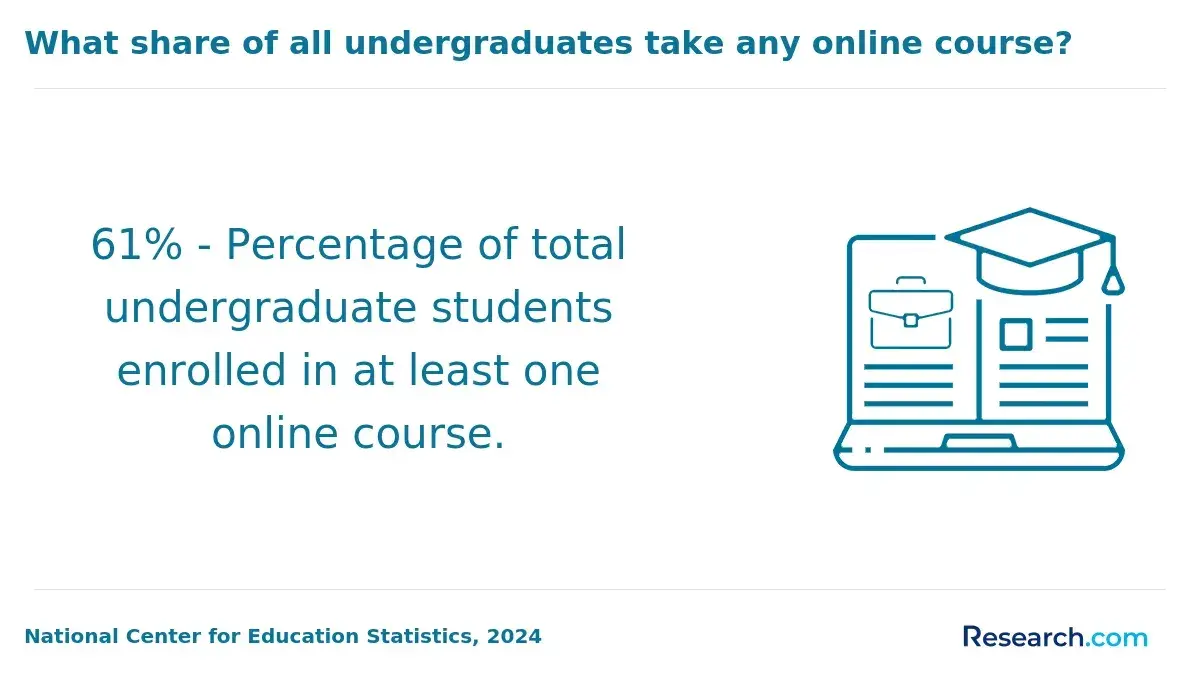
Online study can offer comparable academic value when the college is appropriately accredited, the program fits the career goal, and students can complete its requirements. It is not automatically cheaper or easier to finish. Compare online tuition and technology fees with campus costs, and ask about scheduled classes, examinations, internships, clinical placements, and required visits.
Students balancing work may want to investigate accredited self-paced online courses, but should verify how any course would apply to a specific degree before enrolling. Self-paced, asynchronous, and fully online describe different arrangements. For a licensed occupation, confirm that the online program meets the rules where you plan to practice.
What admission requirements and program lengths affect college value?
Admission requirements and time to completion affect ROI because an extra term can mean additional fees, living costs, and delayed entry into work. General undergraduate admission may consider prior coursework and school records; selective majors can impose separate prerequisites. Graduate programs typically require a bachelor's degree and may assess field preparation, experience, or a portfolio. Ask about the requirements for the specific program, not just the institution.
Students comparing an easiest online bachelor degree with a longer or more selective route should test both against their career goal. A shorter advertised timeline may assume full-time enrollment or qualifying transfer credit. Request a degree audit showing which credits satisfy major and general-education requirements, what must be completed at the college, and when required courses are offered.
Which careers offer strong job outlooks after graduation?
Strong job outlook can improve the case for a degree, but national projections do not guarantee local openings or employment after graduation. BLS projects employment for software developers, quality assurance analysts, and testers to grow 15% from 2024 to 2034; that is an occupational projection, not a placement rate for a computer science program.
These examples show why the route into a career matters alongside its outlook. Use the requirements column to rule out programs that do not prepare you for the role.
| Career direction | Relevant education | Requirement to verify |
| Software development | Computing degree or another route with substantial programming preparation | Employer skill expectations and opportunities to demonstrate practical work |
| Registered nursing | Qualifying nursing education | State licensure eligibility and required examination |
| Clinical social work | Qualifying social work graduate education | State rules for accreditation, supervised practice, and examination |
| Teaching | State-approved preparation pathway | Certification rules for the state and subject you intend to teach |
Review current job postings where you hope to work. They can reveal whether employers seek a particular license, experience, or technical skill that a broad degree description does not address.
How should you choose a reputable college with the best ROI?
The reputable college with the best ROI is the one that can credibly prepare you for your goal at a manageable total cost. Begin with career eligibility and program fit, then compare accredited schools using your aid offers, expected borrowing, completion requirements, and available outcomes. Give more weight to evidence for your intended program than to a general ranking.
Before committing, ask admissions and program staff for a written cost estimate, a degree audit if you have previous credit, and an explanation of any required in-person work. Ask the financial-aid office what happens if enrollment takes longer than planned. Be cautious if a school cannot clarify licensure eligibility, presents occupational median wages as its graduates' salaries, or highlights low tuition while leaving mandatory costs unclear.
Other Things You Should Know About
There is no universal cutoff. A useful result is an affordable path to your intended work without borrowing more than you can reasonably repay. Compare your net cost and likely debt with credible outcomes, while accounting for completion risk.
No. Generous aid can make a private college competitive, while a lower-cost public option may offer similar preparation for your goal. Compare actual offers and program fit rather than names alone.
No. Its earnings figures describe measured outcomes for former students, generally 10 years after entry. They are useful context, not a personal salary forecast or necessarily a figure for your major.
Compare the final net cost and borrowing, not the size of the aid package. Grants reduce cost; loans must be repaid. Also check whether aid renews and whether the program meets your career requirements.
References
- Research Summary: Education and Lifetime Earnings | ssa.gov https://www.ssa.gov/policy/docs/research-summaries/education-earnings.html
- Net Price Calculator Center | ed.gov https://collegecost.ed.gov/net-price
- Annual Earnings by Educational Attainment - COE https://nces.ed.gov/programs/coe/indicator/cba/annual-earnings
- Data Home - College Scorecard - Department of Education https://collegescorecard.ed.gov/data/
- Ranking 4,500 Colleges by ROI (2022) - CEW Georgetown https://cew.georgetown.edu/cew-reports/roi2022/
- Ed Dept makes student debt, earnings data searchable by program | Higher Ed Dive https://www.highereddive.com/news/ed-dept-makes-student-debt-earnings-data-searchable-by-program/567753/
- Does College Pay Off? A Comprehensive Return On Investment Analysis - FREOPP https://freopp.org/whitepapers/does-college-pay-off-a-comprehensive-return-on-investment-analysis/
- From the Field - Postsecondary Value Commission https://www.postsecondaryvalue.org/resources/