
2027 Best Colleges With Fast Transfer Credit Evaluation

Co-Founder and Chief Data Scientist
A quick transfer credit evaluation can tell you whether returning to college is practical before you commit to a program. The need is substantial: the National Student Clearinghouse Research Center estimates that 43.1 million working-age Americans have some college credit but no credential.
For those students - and for graduates considering a master's degree - the crucial question is not just how soon a college responds, but how previous coursework applies to the intended program. This guide compares colleges with pre-enrollment evaluation options and shows you how to check timing, remaining requirements, and cost.
Key Things You Should Know
- Southern New Hampshire University, University of Maryland Global Campus, and Western Governors University are useful colleges to compare for pre-enrollment transfer review; ask each for a current, program-specific turnaround estimate rather than assuming one is fastest.
- SNHU generally permits up to 90 transfer credits toward a bachelor's degree, but the number that satisfies your major may be lower; graduate programs have separate rules.
- The decision-making document is a written degree audit showing accepted credits, where they apply, and what remains - not a preliminary count of transferable courses.
Top 10 Best Colleges With Fast Transfer Credit Evaluation
Business Programs
MBA and specialized business master's programs may review prior graduate coursework in accounting, analytics, management, or related subjects. A quick evaluation is less useful if credits count only as electives while required core courses remain. Ask whether the program accepts graduate-level transfer work, imposes a recency rule, or requires its capstone in residence. Undergraduate business credits usually do not replace graduate courses unless the school publishes a specific pathway.
Healthcare Programs
Healthcare administration and public health master's programs may accept equivalent graduate coursework, but practice-focused requirements can be harder to replace. Compare course content, grades, credit age, and whether an internship or culminating project must be completed through the new institution. A healthcare management degree does not itself confer a clinical license. If professional eligibility matters, confirm the program's accreditation and your state's requirements before relying on a preliminary evaluation.
Information Technology Programs
IT master's programs can differ substantially in cybersecurity, networking, and systems coursework. An evaluation should identify whether earlier graduate courses meet current technical requirements or merely fill electives. Some colleges separately assess certifications for credit, but a certification is not automatically equivalent to a graduate course. Ask about course-age limits, required labs or projects, and whether the capstone must be taken at the receiving institution.
Computer Science Programs
For a computer science master's degree, prior algorithms, software engineering, or advanced computing courses may be evaluated individually. A fast admission decision is not the same as a transfer decision: applicants changing fields may still need foundation courses even with a previous bachelor's degree. Compare syllabi and prerequisite requirements, particularly when older coursework covers tools that have changed. Research and thesis requirements may also limit how much transferred coursework advances graduation.
Nursing Programs
MSN and other graduate nursing pathways often require an active nursing license and may have separate admission, clinical, and accreditation rules. A receiving program might accept equivalent graduate theory courses while requiring its own specialty courses or supervised clinical hours. Ask for a review by the nursing program - not just general admissions - and verify that the degree supports your intended certification or state licensure. Transfer approval alone does not establish clinical placement or professional eligibility.
Psychology Programs
Psychology master's programs may accept relevant graduate courses in research methods, statistics, or a specialization, subject to program limits. The intended outcome matters: a general psychology degree and a clinical or counseling pathway can have very different supervised-practice requirements. Confirm whether transferred courses satisfy the actual degree plan and, if you seek licensure, whether the complete program meets your state's educational rules.
Education Programs
Graduate education programs may review previous coursework in curriculum, assessment, or educational leadership. Teacher preparation, however, can require specific state-approved courses, fieldwork, and student teaching that transfer credit cannot replace. Ask the program which requirements remain after evaluation and whether the pathway leads to initial licensure, an added endorsement, or professional development only. Online coursework does not necessarily eliminate local placement requirements.
Criminal Justice Programs
A criminal justice master's program may consider equivalent graduate work in policy, criminology, or research methods. Check whether accepted credits replace required courses or only electives, and whether a thesis or capstone must be completed at the new school. These degrees can support professional development, but they do not by themselves confer law-enforcement authority or guarantee advancement. Match the curriculum to the role you want before choosing the quickest evaluation.
Engineering Programs
Engineering master's programs often evaluate prior graduate courses against a specific discipline and concentration. A course with a similar title may not meet a required technical sequence, especially if laboratory or design content differs. Send syllabi early and ask whether a thesis, project, or residency must be completed at the receiving institution. If professional engineer licensure is your goal, review applicable state board rules separately; transferring graduate credits does not establish licensure eligibility.
Social Work Programs
MSW applicants should distinguish ordinary graduate transfer credit from advanced standing, which is typically a separate pathway for eligible graduates of accredited bachelor's social work programs. Previous coursework may be accepted without waiving field education or concentration requirements. Confirm the program's accreditation, field placement expectations, and your state's licensing rules. Request a written evaluation specifying whether you qualify for advanced standing or the standard MSW curriculum.
What Is Fast Transfer Credit Evaluation and How Long Does It Take?
Fast transfer credit evaluation means a college reviews prior learning early enough to inform your enrollment decision. It can produce a preliminary estimate, a course-by-course evaluation, or a degree audit. These are not interchangeable: only the latter two can show reliably where accepted credit fits in a particular program.
There is no dependable nationwide turnaround standard. Timing starts when the college has what it needs - not necessarily when you first contact admissions - and varies with transcript delivery, course matching, faculty review, and application volume. Ask whether the quoted timeline covers an informal estimate or a final decision, and whether it begins after all official records arrive.
Which Colleges Offer the Fastest Transfer Credit Evaluations?
No college can fairly be named the fastest for every applicant without comparable, current turnaround data. These institutions are useful starting points because they provide transfer review processes, but you should confirm whether your particular program can be evaluated before you make an enrollment commitment.
The comparison separates a published transfer feature from the timing question each student still needs answered.
| College | Relevant transfer feature | What to confirm before choosing |
| Southern New Hampshire University | Offers transfer credit evaluation; its bachelor's programs generally allow up to 90 transfer credits. | When you will receive a program-specific evaluation and how many credits meet your major. |
| University of Maryland Global Campus | Offers transfer credit review and permits substantial eligible transfer credit in bachelor's programs. | Whether a preliminary review is available before enrollment and when an official degree audit follows. |
| Western Governors University | Evaluates prior coursework against the requirements of its selected degree program. | When all transcripts must arrive for your intended start and which requirements remain after evaluation. |
These are comparison candidates, not a speed ranking. Transfer limits and evaluation procedures can differ by credential and program. Get the current policy and a written timeline directly from each college, particularly if you are applying to a master's program rather than a bachelor's program.
How Do Colleges Determine Which Transfer Credits They Accept?
Colleges typically review the sending institution, course level, grade, content, credit value, and age of the coursework. They then determine both whether credit is accepted and whether it fulfills a general education, major, elective, or other requirement. An accepted elective may do little to shorten a degree if required courses still need to be taken.
Graduate transfer rules are often narrower than undergraduate rules, so do not apply a college's bachelor's transfer maximum to a master's program. If you are comparing easiest masters degrees, ask each program to evaluate previous graduate coursework against its own curriculum rather than assuming that an undergraduate degree supplies graduate transfer credit.
Are Colleges With Fast Transfer Evaluations Properly Accredited?
A fast evaluation does not establish that a college is accredited - or that a particular professional program meets licensing requirements. Verify current institutional accreditation through the college's named accreditor and the U.S. Department of Education's accreditation records. Where applicable, check programmatic accreditation and state approval as separate questions.
This distinction is especially important in nursing, social work, education, and clinical fields. A college may be institutionally accredited while a specific program is not suitable for your intended license. Accreditation also does not guarantee that another institution will accept its credits; the receiving college makes that decision.
What Documents Do You Need for a Transfer Credit Evaluation?
The document requirements below help prevent an avoidable delay: a college cannot finish reviewing coursework it cannot identify or verify. Ask whether an initial estimate can use unofficial records and what is required for the final decision.
- Transcripts from every college attended, including records of courses that already transferred elsewhere.
- Course descriptions or syllabi for classes that have no established equivalency.
- Documentation for exams, military education, certifications, or other learning the college explicitly evaluates for credit.
- Any program-specific materials needed for clinical, laboratory, graduate, or professional coursework.
Order official transcripts early and check that your name and identifying details match across records. An unofficial review can guide a shortlist, but do not plan graduation around credits until the college confirms them in writing.
Do Online Colleges Evaluate Transfer Credits Faster Than Campus Colleges?
Not necessarily. An online college may offer convenient electronic submission and dedicated transfer staff, but a campus college may already have an established course equivalency or articulation agreement that speeds its review. Either can need additional time for unfamiliar courses or department approval.
Compare the same milestone at each school: the time from receipt of all required records to a written, program-specific decision. Also ask whether online study includes scheduled sessions or in-person requirements. The delivery format tells you little about evaluation speed or the time needed to finish the degree.
How Can You Compare Transfer Policies, Costs, and Maximum Credit Limits?
A generous transfer maximum is valuable only if the accepted credits satisfy the degree you want. Compare written evaluations alongside each college's residency requirement, required courses, tuition, fees, and any costs of labs, placements, or campus attendance. Published per-credit tuition is not the same as your remaining graduation cost.
Use the same set of questions with each college so the answers are comparable:
- What is the maximum transfer credit for my exact credential and program, and how much must I complete here?
- Which of my credits meet major or general education requirements, and which count only as electives?
- What grade, course-age, accreditation, or syllabus rules could change the preliminary result?
- What is the estimated cost and course sequence for the requirements I still need?
If your goal is a shorter undergraduate credential, compare how existing courses apply to an associate's degree online as well as to a bachelor's pathway. The better option depends on the credential you need, not simply which institution accepts the most credits.
How Do Transfer Credits Affect Degree Completion and Graduation Costs?
Accepted credit can reduce the courses you must pay for, but it does not remove required courses, program fees, or prerequisites. It may also fail to shorten the calendar if a remaining course runs infrequently or must precede a capstone, clinical placement, or student-teaching term.
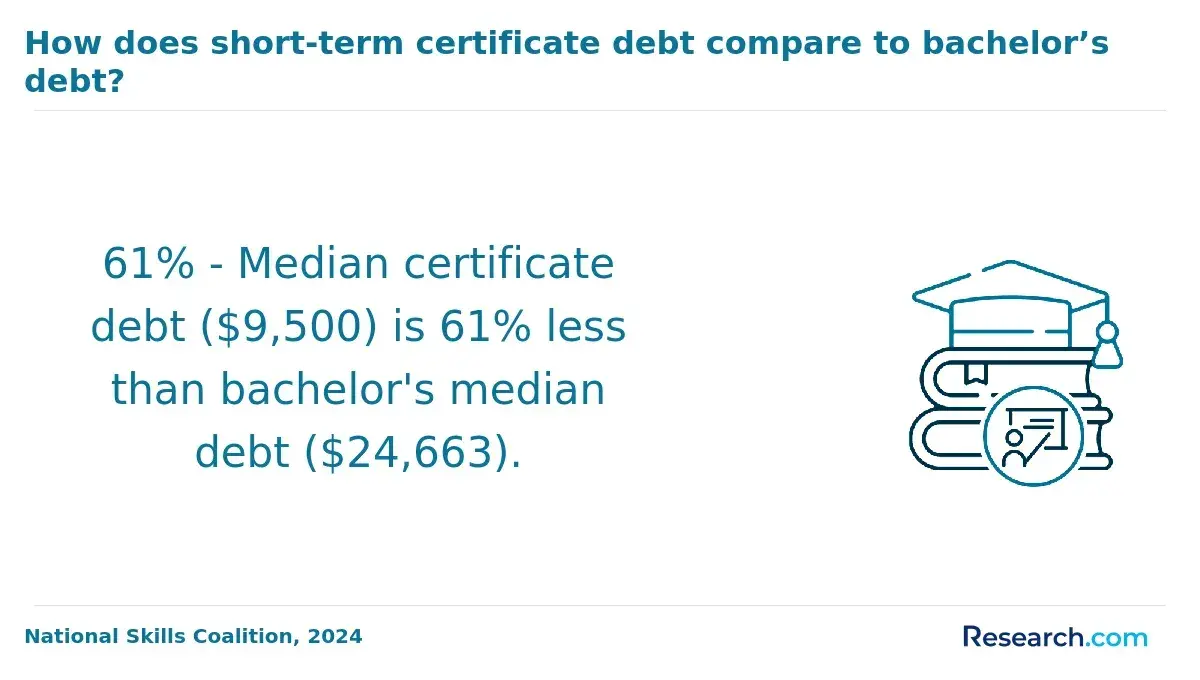
For cost context, the College Board reported average published in-state tuition and fees of $11,610 at public four-year institutions for the 2024-25 academic year. That figure is a sector average, not the price of your remaining coursework. Request a personalized estimate based on the degree audit and your likely enrollment pace. If you need a targeted skill rather than another degree, 6 week certification programs online may be worth comparing - but a short course should not be mistaken for a professional license or a degree.
How Can You Choose a Reputable College for Transfer Credit?
Choose the college that provides the clearest verified route to completion, not just the earliest reply. First confirm accreditation and program fit. Then obtain a written credit evaluation, a remaining-course plan, and an estimate covering tuition and required fees. Ask when required courses are offered and whether a preliminary transfer decision can change after enrollment.
Watch for red flags: promises that every prior course will count, an unexplained transfer total, pressure to enroll before you see how credits apply, or a licensure claim that has not been checked against state rules. Returning students exploring degrees for older adults should also compare advising and scheduling support. The best evaluation is the one you can use to make an informed enrollment decision.
Other Things You Should Know About
Some colleges offer preliminary reviews before admission; others require an application or official transcripts first. Ask what the review includes and whether it is binding.
No. Credits may transfer as electives without replacing required courses. Request a degree audit showing exactly which requirements remain.
Policies vary. A college may accept older general education work while applying stricter recency rules to technical, science, or professional courses.
Many colleges have a reconsideration process. Ask for the reason for denial and whether a syllabus, course description, or department review could establish equivalency.
References
- Program Integrity Questions and Answers - Credit Hour http://www.ed.gov/laws-and-policy/higher-education-laws-and-policy/program-integrity-information-questions-and-12
- .14 Evaluation and Review Process for Transfer of Courses and Credits. | Library of Maryland Regulations https://regs.maryland.gov/us/md/exec/comar/13B.06.02.14
- How Do Transfer Credits Work? A Guide for Adult Learners | Whitworth Online https://online.whitworth.edu/news-articles/how-do-transfer-credits-work-when-you-go-back-to-school/
- How College Transfer Credits Work | Lackawanna College https://www.lackawanna.edu/college-transfer-credits-guide/
- Degree Audit and Transfer Credit - Registration and Records https://registrar.ncsu.edu/operations/degree-audit-and-transfer-credit/
- Unofficial Transcript Collection | Global Campus | International Programs Office https://nmu.edu/online/unofficial-transcript-collection
- Transfer Credit Evaluation - TXST Admissions https://www.admissions.txst.edu/future-students/transfer-credit-evaluation.html
- UNC Policy 400.1.5.3[R] | northcarolina.edu https://www.northcarolina.edu/apps/policy/doc.php
- Undergraduate Transfer Credit Policy | nyu.edu https://www.nyu.edu/about/policies-guidelines-compliance/policies-and-guidelines/UndergraduateTransferCreditPolicy.html
- Advanced Placement (AP) | sunyorange.edu https://sunyorange.edu/registrar/transfer_credit.html


