2027 Best Colleges for In-Demand Careers

Co-Founder and Chief Data Scientist
Choosing a college for an in-demand career means looking beyond a school's reputation: the program must teach relevant skills, fit your budget, and meet any licensing requirements. Demand also varies by occupation. For example, the U.S. Bureau of Labor Statistics (BLS) projected 33% employment growth for information security analysts from 2023 to 2033, but that outlook does not guarantee a job for every graduate.
This guide compares career-focused master's program families, shows how to evaluate colleges, and helps you identify the credential and training your intended role actually requires.
Key Things You Should Know
- Start with the occupation, not the ranking. A master's degree may be valuable for counseling or advanced nursing practice, while some technology jobs have other entry routes.
- Check the exact program's requirements. Institutional accreditation, applicable program accreditation, placements, state authorization, and licensure eligibility can matter more than a college's overall reputation.
- Compare total cost against realistic outcomes. BLS projected 33% growth for information security analysts from 2023 to 2033, but occupational demand is not a promise of admission, employment, or graduate earnings.
Top 10 Best Colleges for In-Demand Careers
Business Programs
Master of Business Administration (MBA) and specialized master's programs in accounting, analytics, or finance suit different goals. An MBA often builds broad management skills and may be most useful after professional experience; a specialized degree can offer a more direct route into technical business work. Compare employer recruiting, internship access, total tuition, and whether a program's schedule accommodates your job. Accounting applicants should also check their state's CPA education rules. A business degree alone does not qualify someone for management or guarantee a promotion.
Healthcare Programs
Master's programs in healthcare administration, public health, and health informatics prepare students for distinct work. Administration emphasizes operations and finance; public health emphasizes population-level research and intervention; informatics connects clinical workflows with data systems. Employers may expect relevant experience for leadership roles, so a degree is not necessarily an entry-level shortcut. Compare applied projects, access to healthcare partners, and the background required for admission. If your goal involves direct patient care, confirm whether the program leads to the specific clinical credential you need.
Information Technology Programs
A master's in information technology, cybersecurity, or information systems can support work in infrastructure, security, and technology operations. Programs differ in how much networking, cloud computing, risk management, and hands-on lab work they require. Applicants without computing experience may need foundation courses. Compare the program's practical projects with the jobs you want: an IT management curriculum is not interchangeable with intensive security engineering training. Employers may also value experience and role-specific certifications alongside a graduate degree.
Computer Science Programs
Computer science master's degrees typically emphasize algorithms, software systems, artificial intelligence, or research. They suit applicants seeking deeper technical preparation, but admissions may require substantial mathematics and programming coursework. Compare thesis and project options, prerequisites, computing resources, and opportunities to build demonstrable software. If your immediate goal is an entry-level development job, assess whether a graduate degree adds enough value beyond your current skills, portfolio, and available lower-cost training.
Nursing Programs
Master of Science in Nursing (MSN) programs can focus on advanced practice, nursing education, informatics, or leadership. Admission commonly requires nursing preparation and an active registered nurse license; clinical tracks may have additional experience and placement requirements. An MSN does not automatically authorize advanced practice. Before applying, verify the track's accreditation, supervised clinical arrangements, certification eligibility, and the rules of the state where you intend to practice. Online coursework may still require substantial in-person clinical hours.
Psychology Programs
A psychology master's degree may focus on research, applied behavior, industrial-organizational psychology, or preparation for further study. Its title alone does not establish eligibility to practice as a psychologist, which generally requires doctoral education and state licensure. Applicants interested in therapy should compare licensure-oriented counseling or clinical social work programs instead, then verify state-specific requirements. For research-oriented degrees, examine faculty interests, methods training, and whether a thesis is required.
Education Programs
Master's programs in education range from curriculum and instructional design to educational leadership and initial teacher preparation. The right choice depends on whether you already hold a teaching license and what your state requires for your intended role. An online education degree may still include classroom observation or student teaching. Compare placement support, endorsement eligibility, and whether courses address the grade level or subject you plan to teach. A non-licensure master's should not be mistaken for a teacher-certification pathway.
Criminal Justice Programs
Criminal justice master's programs commonly cover policy, criminology, research methods, and organizational leadership. They may fit professionals seeking analytical or administrative work, but many law-enforcement positions do not require a master's degree. Compare the curriculum with the hiring standards for your target occupation, particularly if you are considering forensic science or a specialized investigative role that requires different technical training. Ask whether internships, agency partnerships, and career outcomes are documented rather than assumed.
Engineering Programs
Engineering master's programs can deepen expertise in fields such as electrical, mechanical, civil, or industrial engineering. Compare laboratory access, design projects, employer connections, and whether the degree is thesis-based or practice-oriented. Applicants changing fields may face substantial prerequisite coursework. For work involving licensed professional engineering practice, check your state board's education and experience rules; a master's degree does not replace required examinations or supervised experience. Choose a specialization tied to the work you want, not simply a broad growth trend.
Social Work Programs
A Master of Social Work (MSW) can prepare students for social work practice, but clinical practice requires additional supervised experience, examinations, and state licensure. Programs usually include field education even when academic courses are online. Compare field-placement assistance, scheduling, accreditation by the Council on Social Work Education, and the licensing rules in your intended state. Advanced-standing pathways may be available to eligible graduates of qualifying bachelor's social work programs; other applicants should not assume the same completion timeline.
What Are the Most In-Demand Careers and College Programs?
The most in-demand option is the one connected to a real occupation you want and can qualify for. Healthcare, computing, education, and social services include careers with different entry credentials; a master's is essential for some paths, useful but optional for others, and insufficient on its own for licensed practice. If a full degree is unnecessary for your goal, compare shorter routes to certificate jobs that pay well before committing to graduate tuition.
The examples below are starting points for researching colleges, not a verified ranking of their current prices or outcomes. Each represents a distinct program-to-career question to investigate.
| College to investigate | Program area | What to compare |
| Georgia Institute of Technology | Computer science | Technical prerequisites, specialization, and delivery format |
| Johns Hopkins University | Nursing | Track eligibility, clinical placements, and total cost |
| Carnegie Mellon University | Information systems | Applied projects, career fit, and required preparation |
| University of Pennsylvania | Social work | Field education, accreditation, and licensing alignment |
These colleges are not interchangeable: compare the specific credential and current program details, then add in-state public universities and other eligible colleges to see whether a less expensive option meets the same career requirements.
How Do You Choose an Accredited College for Career Training?
First, confirm that the college holds recognized institutional accreditation. Then check whether your intended occupation requires or strongly favors programmatic accreditation, such as accreditation relevant to social work, nursing, engineering, or another regulated field. Accreditation establishes a baseline; it does not by itself establish quality, affordability, or licensure eligibility in every state.
Use a short, consistent review process when comparing colleges:
- Name the occupation and state where you plan to work; obtain that state board's current education rules if the role is licensed.
- Confirm the exact degree, specialization, accreditation status, and any disclosures about state licensure eligibility.
- Ask for a written estimate of tuition, mandatory fees, placement expenses, and your remaining requirements after any credit evaluation.
- Compare course schedules, experiential training, student support, and available program-level outcomes before applying.
A common mistake is treating a college-wide ranking as evidence that every graduate program fits a particular career. Program requirements and costs deserve their own review.
Which Degrees and Certificates Lead to High-Growth Careers?
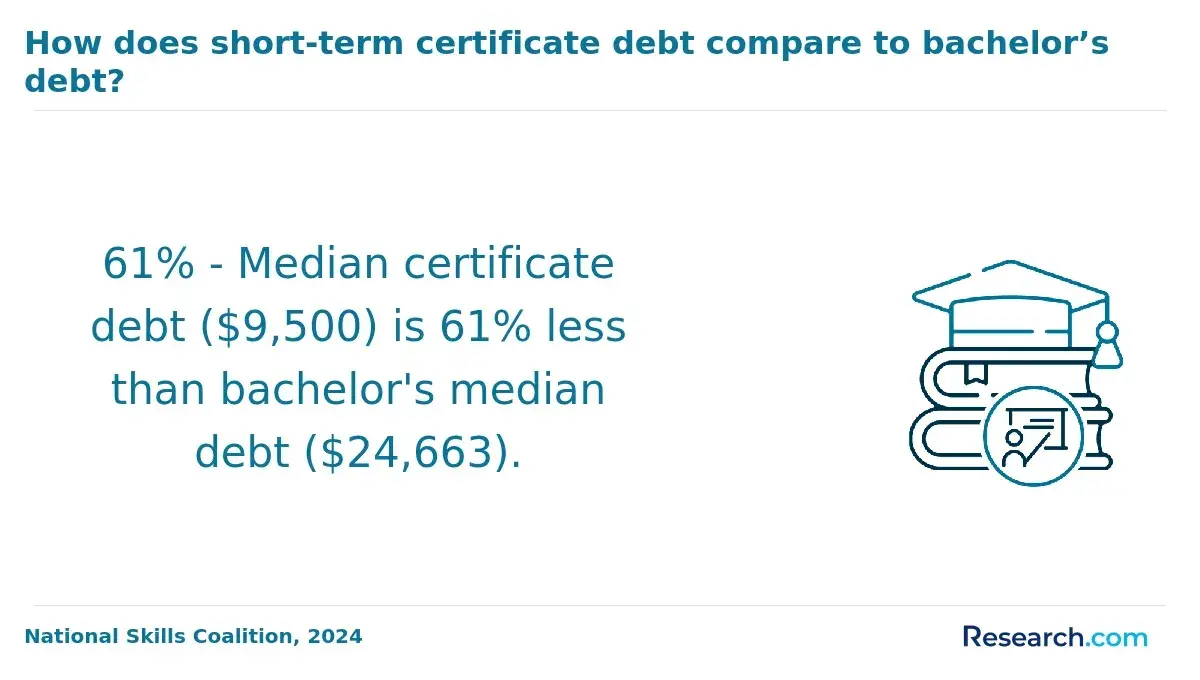
Certificates, associate degrees, bachelor's degrees, and master's degrees can all connect to growing occupations, but they serve different entry requirements. For example, registered nursing has multiple approved educational routes to initial licensure, while advanced practice nursing requires substantially more education and clinical preparation. In technology, a certificate can document a targeted skill, whereas some employers seek broader computing education and experience.
Choose the shortest credential that meets your actual goal, not the shortest one advertised. An associate program may be a practical starting point for some roles; compare easiest associate degrees against transferability, required technical coursework, and employer expectations rather than assuming ease predicts career value. Check whether certificates stack toward a degree and whether the receiving college will apply those credits to your intended major.
Are Online Colleges as Effective as Campus-Based Programs?
Online colleges can be effective when the specific program offers the instruction, feedback, equipment access, and supervised practice your goal requires. Delivery format alone does not establish equivalent outcomes. A computing student might complete projects remotely, while a nursing or social work student may need local clinical or field placements. Scheduled video classes, fixed deadlines, proctored assessments, and occasional campus visits can also limit flexibility.
Working adults can compare conventional terms with competency based universities, but should verify assessment rules, tuition structure, transfer policies, and whether the chosen program and any required placements use that model. Prefer campus study when access to specialized labs or in-person recruiting is central to your plan; prefer online study when its documented schedule and local training arrangements genuinely fit your life.
What Do In-Demand Career Programs Teach?
Career-focused programs combine subject knowledge with work that resembles professional practice. Business students might analyze financial decisions; cybersecurity students may investigate incidents; engineering students may complete design projects. Licensure-oriented nursing, teaching, counseling, and social work pathways add supervised practice that cannot be replaced by coursework alone.
Read the required-course list rather than relying on a program title. Look for foundations, specialization courses, electives, and a thesis, capstone, internship, practicum, or clinical component that matches your target role. Because AI tools are changing many workplaces, also consider whether students learn to evaluate technology's outputs, protect sensitive information, and apply professional judgment - not merely use a particular tool.
What Are the Admission Requirements for Career-Focused Programs?
Master's programs generally require a bachelor's degree, but relevant coursework and professional requirements vary sharply by field. Computer science may require programming and mathematics; nursing tracks commonly require RN licensure; some business programs value work experience. Licensure-oriented programs may have separate background checks, health documentation, or placement conditions. A college's general graduate admission policy may not cover these program-specific requirements.
Before paying an application fee, ask admissions to evaluate any missing prerequisites and explain whether conditional admission is available. Confirm current GPA and test policies for the exact program rather than assuming a college-wide test waiver applies. If you have previous graduate coursework or professional credentials, request a written determination of what, if anything, counts toward program requirements.
How Long Do Career Programs Take and What Do They Cost?
Completion time depends on required credits, enrollment intensity, prerequisites, course sequencing, and experiential work. A part-time student or someone arranging clinical hours may take longer than a published full-time schedule suggests. An advanced-standing MSW or another bridge pathway can shorten remaining study only for applicants who meet its specific prior-education requirements. Short classes do not mean a short overall degree.
Compare total completion cost: tuition, mandatory and program fees, books or equipment, travel, placement expenses, and income you may give up while studying. Ask each college for an individualized cost estimate after a formal credit review, and check eligibility for federal aid, scholarships, and employer assistance. If speed is a priority, use lists of fast online degrees that pay well as leads to investigate - not proof of a program's actual duration or your likely earnings.
What Salaries and Job Outlook Can Graduates Expect?
Salary and growth figures describe occupations, not the earnings of graduates from a particular college. As one comparison point, BLS reported a May 2023 median annual wage of $120,360 for information security analysts. That figure includes workers with varied education and experience; it should not be treated as a starting salary for someone completing an IT master's.
Job outlook likewise depends on the occupation, location, specialization, and hiring conditions when you graduate. Compare an occupation's BLS outlook with local job postings and the qualifications employers request. For return on investment, weigh the full cost and time away from work against whether the degree is required, whether a lower-cost credential would suffice, and what credible program-level employment information the college can provide. Avoid any program implying that broad national wages guarantee individual results.
Which Licenses and Certifications Do In-Demand Careers Require?
Licensing and certification rules are occupation-specific. Registered nurses need state licensure; nurse practitioners have additional education, certification, and state requirements. Clinical social workers need a qualifying degree followed by state-defined supervised experience and other licensing steps. Public-school teachers and professional engineers also face state-specific requirements. In IT, a vendor or professional certification may help demonstrate skills without functioning as a government license.
Before enrolling, identify the regulator or credentialing body for your intended role and check its current requirements in the state where you plan to work. Ask the program to explain, in writing, which requirements its curriculum satisfies and which steps remain after graduation. This is especially important for online programs serving students across state lines.
Other Things You Should Know About
No. The best fit depends on your intended occupation, the exact program's requirements, accreditation, total cost, training opportunities, and any state licensing rules.
Not always. Some roles have certificate, associate, bachelor's, or experience-based entry routes. Check job requirements before paying for graduate study.
Some academic coursework can be online, but a program may require live sessions, labs, clinical work, field placements, or campus visits. Confirm the exact requirements with the college.
Compare total cost and time to completion with the credential your target role requires, available lower-cost routes, and credible career outcomes. Do not treat an occupation's median wage as a graduate earnings estimate.
References
- Diploma Mills and Accreditation | ed.gov http://www.ed.gov/laws-and-policy/higher-education-laws-and-policy/college-accreditation/diploma-mills-and-accreditation
- Fastest Growing Occupations | bls.gov https://www.bls.gov/ooh/fastest-growing.htm
- Fast Facts: Employment after degree (1157) | ed.gov https://nces.ed.gov/fastfacts/display.asp
- Types of Financial Aid: Grants, Work-Study, and Loans | studentaid.gov https://studentaid.gov/understand-aid/types
- Completion Rates and Time to Degree Completion | Academic Affairs https://academicaffairs.uams.edu/irpa/office-of-institutional-studies/student-outcomes/completion-rates/
- Graduate Admission Requirements | University of Cincinnati Admissions https://www.admissions.uc.edu/apply/graduate/requirements.html
- Future of Jobs Report 2025: 78 Million New Job Opportunities by 2030 but Urgent Upskilling Needed to Prepare Workforces https://www.weforum.org/press/2025/01/future-of-jobs-report-2025-78-million-new-job-opportunities-by-2030-but-urgent-upskilling-needed-to-prepare-workforces/
- All Bright Outlook Occupations | onetonline.org https://onetonline.org/help/bright/