
2027 Best College Degrees for Adults Returning to College

Co-Founder and Chief Data Scientist
Returning to college means choosing a degree you can finish alongside work and other responsibilities, not simply picking a promising major. The stakes are substantial: the U.S. Bureau of Labor Statistics (BLS) reports that workers with a bachelor's degree had median weekly earnings of $1,543 in 2024, though a degree does not guarantee higher pay for any individual.
This guide compares fields, credentials, schedules, costs, and career requirements so returning adults can identify a realistic path and avoid paying for credits or training that will not serve their goal.
Key Things You Should Know
- The best fit depends on your starting credits, career goal, and available study time: business and IT offer broad options, while nursing, teaching, and social work require closer attention to supervised training and licensure.
- A bachelor's degree commonly requires about 120 semester credits, but accepted transfer credit can reduce what remains, ask for a degree-specific evaluation before committing.
- Compare careers, not just degree names: BLS reports a 2024 median annual wage of $93,600 for registered nurses, but an eligible nursing education pathway and state licensure are required to practice.
Top 10 Best College Degrees for Adults Returning to College
Business Programs
A bachelor's in business administration, accounting, or supply chain management can build on an adult learner's existing workplace experience. Business administration offers breadth; accounting is more specialized and may require additional coursework for CPA eligibility. Online and part-time options can accommodate work, but check whether required courses run often enough to support your timeline. Adults who already hold a bachelor's degree might consider an MBA or specialized master's instead of earning a second bachelor's. A business credential alone does not confer a management position.
Healthcare Programs
Healthcare administration and health information management suit adults interested in healthcare operations rather than direct patient care. An associate or bachelor's program may cover records, reimbursement, compliance, and management; a master's may suit experienced professionals seeking broader responsibilities. Check whether the curriculum supports your intended role and any relevant certification eligibility. Online coursework can be convenient, but internships or employer-based projects may still require scheduled time. These degrees do not qualify graduates to practice medicine or nursing.
Information Technology Programs
An IT associate or bachelor's degree typically emphasizes networks, systems, cloud infrastructure, and security operations. It may suit career changers who prefer applied technology to the heavier mathematics and theory often found in computer science. Labs, projects, and relevant experience matter alongside coursework; some roles also value industry certifications. Check whether an online program provides accessible lab tools and career support. A certificate may be a less costly first step if you want to test the field before pursuing a degree.
Computer Science Programs
A computer science bachelor's degree usually develops programming, algorithms, data structures, and mathematics. It offers a stronger theoretical foundation than many applied IT programs and may fit adults targeting software development or further technical study. Ask how the school sequences math and programming prerequisites: missing courses can extend completion time even with substantial transfer credit. A portfolio of working projects helps demonstrate ability, while a degree alone does not secure a developer role.
Nursing Programs
Adults seeking registered nurse licensure should compare an associate degree in nursing, a prelicensure bachelor of science in nursing, and - if already licensed - an RN-to-BSN pathway. Admission to the college may not mean admission to its nursing program. Prerequisites, clinical placements, and state board approval can limit scheduling flexibility; an online lecture does not eliminate in-person clinical work. Before enrolling, confirm the program's approval status and whether graduates are eligible to apply for the NCLEX-RN in the state where they plan to practice.
Psychology Programs
A psychology bachelor's degree develops research, communication, and behavioral-science skills applicable to varied roles, but it does not qualify someone to practice as a licensed psychologist. Choose it for broad preparation or a defined plan for further study, not on the assumption that counseling jobs follow automatically. A master's can prepare students for some counseling paths when its curriculum meets state rules; psychologist licensure generally requires doctoral education and additional requirements. Verify the exact occupation before choosing a program.
Education Programs
A teacher-preparation bachelor's degree may suit adults seeking a classroom career, while a master's may serve current educators or career changers entering an approved alternative pathway. Licensure rules, testing, background checks, and supervised student teaching vary by state. Student teaching can conflict with full-time employment, even when classes are online. If your goal is instructional design or corporate training rather than school teaching, compare programs that do not center on teacher licensure.
Criminal Justice Programs
An associate or bachelor's in criminal justice covers courts, corrections, policy, and related systems. It can complement experience in public service, but many law-enforcement and federal roles have separate hiring, fitness, background, or training requirements; some do not require this particular major. Adults interested in forensic laboratory work should check whether a science degree is more appropriate. Compare the requirements of specific employers before paying for a credential based solely on a job title.
Engineering Programs
An engineering bachelor's degree is a substantial commitment for adults changing fields because mathematics, laboratory work, and sequential courses can restrict part-time pacing. Engineering technology is a distinct, more applied path and should not be assumed interchangeable for every job or professional engineer license. If licensure is a goal, investigate program accreditation and your state board's education rules. Ask schools to map previous math and science courses before estimating time to graduation.
Social Work Programs
A bachelor of social work can prepare students for generalist social-service roles and, at some schools, provide an eligible route to advanced-standing master of social work admission. A master's in social work is typically the relevant degree for clinical licensure, followed by state-specific supervised practice and examination requirements. Field placements demand scheduled hours regardless of online coursework. Adults should confirm both placement support and licensure eligibility in the state where they intend to work.
What are the best college degrees for adults returning to college?
The best college degree for a returning adult is the one that matches a specific career goal and a workable completion plan. Business, IT, and computer science offer multiple career directions; nursing, education, and social work offer clearer professional pathways but involve more location-dependent requirements. Psychology and criminal justice warrant especially careful checks of the credentials employers actually request.
This comparison highlights the central trade-off in several common choices; individual programs may differ.
| Degree path | Good fit when you want | Main constraint to check |
| Business or IT | Broad options that may build on work experience | Relevant coursework, projects, and course availability |
| Computer science or engineering | Technical depth | Math prerequisites and course sequencing |
| Nursing, education, or social work | A defined professional pathway | Licensure eligibility and required placements |
If you already have a bachelor's degree, compare the remaining requirements of a second bachelor's with those of a targeted graduate program. For cost-conscious graduate study, a guide to the cheapest online master's degree options can help you frame questions about tuition and fees; verify that any program also meets your career requirements.
Which college degrees offer the strongest career opportunities and job outlook?
Career opportunity depends on the occupation, location, experience, and required credentials - not on a major's name alone. BLS projects registered nurse employment to grow 6% from 2023 to 2033. That makes nursing worth investigating for adults who want clinical work, but the projection neither guarantees a job nor removes the need for licensure and clinical training.
Technical, healthcare, and business roles can all offer opportunities, but they reward different preparation. Compare several local job postings for your target occupation: note required degrees, licenses, software skills, and experience. If postings consistently call for a credential your proposed program does not provide, reconsider the program before enrolling. AI-related changes also make it important to examine whether coursework teaches adaptable problem-solving and current tools rather than a narrow software package.
How much do the best college degrees for adult learners cost and take to complete?
Cost and duration depend on the credential, institution, enrollment pace, and credits that actually apply to the degree. An associate degree commonly comprises about 60 semester credits and a bachelor's about 120; a returning student's remaining credits are the more useful measure. Graduate programs, prerequisites, clinical hours, and sequential courses require separate estimates. Part-time study may make weekly workloads manageable while extending the calendar timeline.
Request a written degree audit and a term-by-term plan. Then compare tuition for remaining credits plus mandatory, technology, laboratory, placement, travel, and other required costs. Ask about employer tuition assistance and federal aid eligibility rather than assuming a low advertised per-credit rate means the lowest total bill. A guide addressing what is the cheapest online college can inform an initial search, but your degree-specific net cost is the deciding figure.
Are online or campus-based degree programs better for working adults?
Neither format is automatically better for working adults. Online study can reduce commuting, but scheduled video classes and fixed deadlines may still conflict with shifts or caregiving. Campus classes can provide hands-on access and a predictable routine; hybrid delivery can balance those benefits when labs or placements are required.
The differences below help identify which scheduling questions matter before you apply.
| Format | Potential advantage | Constraint to verify |
| Online | Less routine travel | Live sessions, deadlines, proctoring, and placements |
| Hybrid | Remote coursework with some in-person learning | Frequency and location of required attendance |
| Campus-based | On-site facilities and face-to-face instruction | Commute and class times across the full course sequence |
Ask for the schedule of required courses, not just electives, and confirm whether part-time students can obtain needed classes every term. For clinical, teaching, or social work programs, ask who arranges placements and whether placements can be completed near your home or workplace.
What admission requirements apply to adults returning to college?
Adults generally need prior transcripts and must meet the college's applicable admission rules; requirements for a particular major can be more selective. Nursing may require science prerequisites and a separate application, engineering may depend on math readiness, and graduate study generally requires an eligible bachelor's degree. Testing, GPA, portfolio, and work-experience rules vary by program, so do not assume an institution-wide policy applies to your intended degree.
Have each school review your transcripts before you choose a start date. Ask which courses satisfy major requirements, which count only as electives, whether older coursework remains eligible, and how many credits must be completed at the school. Credit for military or workplace learning, when offered, requires the institution's evaluation; experience alone is not automatic credit.
Which certificate and degree pathways lead to in-demand careers?
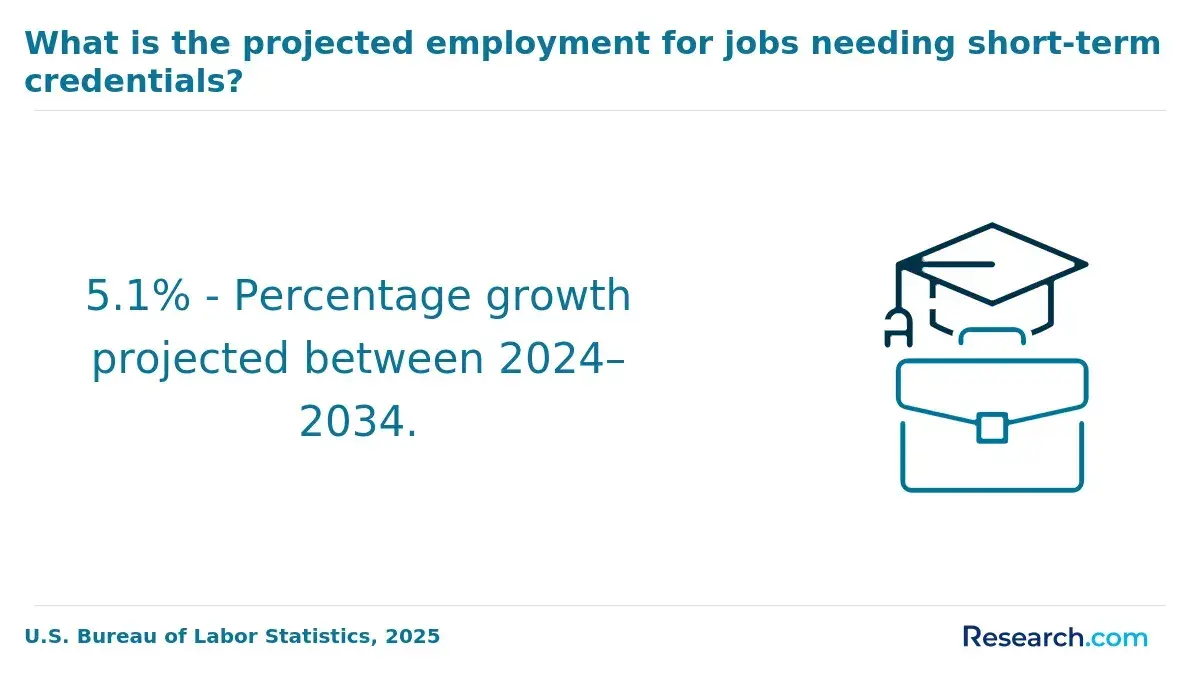
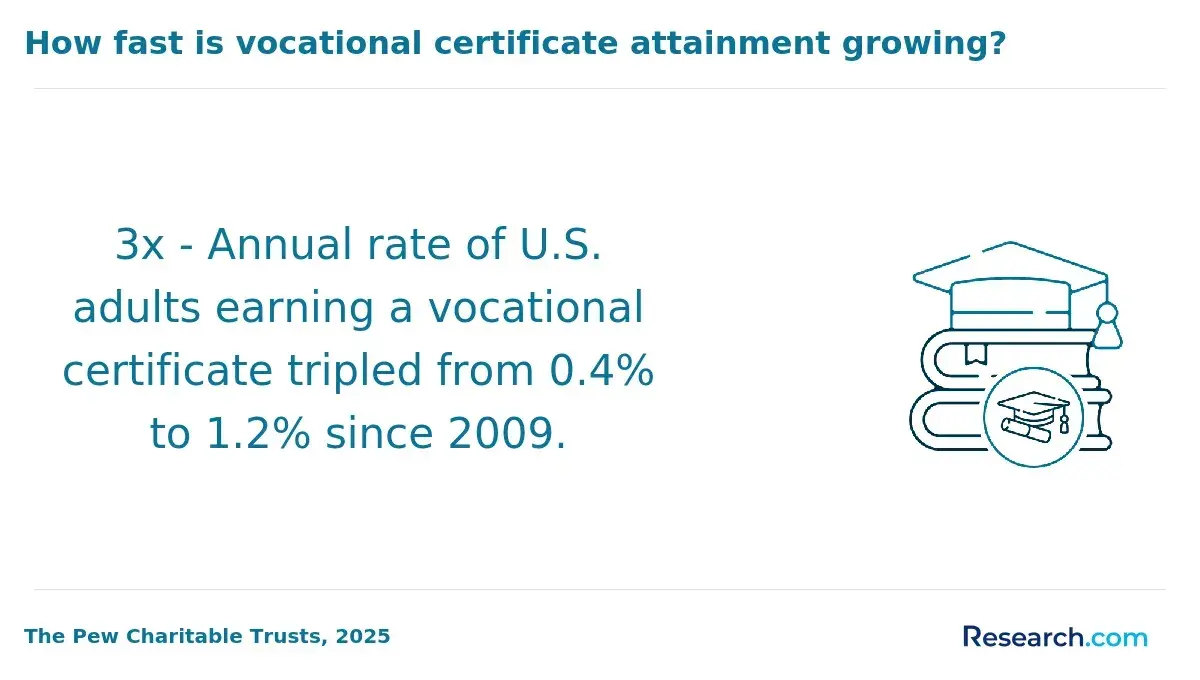
A certificate can be a useful entry point when you need a defined skill or want to test a field before committing to a degree. IT certificates and industry certifications may complement a later associate or bachelor's degree; healthcare support certificates can lead toward specific entry-level roles. Neither automatically transfers into a degree or substitutes for a professional license.
Before choosing a short pathway, compare its target jobs, required examinations, aid eligibility, and whether credits will count toward a future credential. A guide to 6-month certificate programs that pay well can suggest alternatives, but verify local hiring requirements and the program's actual completion schedule. Adults aiming for licensed nursing, teaching, or clinical social work should map the complete approved education pathway rather than stopping at a related certificate.
How can adults verify college accreditation and program quality?
Institutional accreditation is a starting point, not proof that every program qualifies graduates for a particular license. Check a school's current status through the U.S. Department of Education's accreditation database or its recognized accreditor. Then check program-specific approval or accreditation where your occupation requires it - for example, with the relevant state nursing or teacher-licensing authority.
Compare quality using evidence tied to your goal: required-course availability, placement arrangements, transfer evaluations, graduation information, and career outcomes for the specific program when published. Treat vague job-placement claims, unclear mandatory fees, or reluctance to confirm licensure eligibility in writing as reasons to pause. Accreditation also does not mean another school must accept every transfer credit.
Which degrees require professional licenses or industry certifications?
Nursing, public-school teaching, and clinical social work are examples of paths where a degree alone is insufficient: graduates must meet applicable state licensing rules. Psychologist licensure generally calls for doctoral education, supervised experience, and examination, while counseling occupations have their own degree and licensing standards. Adults considering that route can explore shortest doctoral programs, but should not equate a short advertised timeline or online coursework with psychology licensure eligibility.
Other fields distinguish optional credentials from legal permission to practice. IT certifications can demonstrate particular skills; CPA and professional engineer licenses have jurisdiction-specific education, experience, and examination requirements. Identify the exact job and state first, then confirm the program meets that pathway's rules before applying.
How should adult learners compare salaries and graduate employment outcomes?
Use BLS wages as context for an occupation, not as an estimate of what a particular college's graduates earn. For example, the BLS 2024 median annual wage of $93,600 describes employed registered nurses across experience levels and settings; it is not an entry-level salary promise or the expected return on a nursing degree.
For a practical comparison, pair occupational wage and outlook information with local job postings and any program-level outcomes the school publishes. Check whether reported employment includes only respondents, whether jobs are in the intended field, and whether outcomes reflect adults changing careers. Weigh likely remaining tuition and fees, borrowing, required unpaid placements, and reduced work hours against realistic opportunities. Avoid choosing solely by the highest national median wage.
Other Things You Should Know About
Often, yes. A school may accept prior college coursework, but it must evaluate how each course applies to your intended degree. Request a written audit of remaining requirements.
Business and some IT programs may offer substantial online coursework. Compare actual class times, deadlines, part-time course availability, and any required projects or placements rather than relying on an "online" label.
It can be if it supports an entry-level goal or has a clear transfer agreement. Confirm that its courses satisfy the bachelor's program you want; an associate degree does not automatically shorten every bachelor's pathway.
Compare prerequisites, remaining credits, total cost, and the credential required for your target job. A master's may build efficiently on a related bachelor's, while a second bachelor's may better supply missing foundational or licensure coursework.
References
- Verify Accreditation of a College or University - Certification https://www.nj.gov/education/certification/usaccred.shtml
- Types of Financial Aid: Grants, Work-Study, and Loans | studentaid.gov https://studentaid.gov/understand-aid/types
- Student Outcomes | THECB Data https://databridge.highered.texas.gov/outcomes/
- Credit for Prior Learning - Ohio Department of Higher Education https://highered.ohio.gov/students/adult-learners/credit-for-prior-learning
- Fast Facts: Tuition costs of colleges and universities (76) | ed.gov https://nces.ed.gov/fastfacts/display.asp
- Accreditation in the U.S. | ed.gov http://www.ed.gov/laws-and-policy/higher-education-laws-and-policy/college-accreditation/accreditation-in-the-us
- Education level: Career Outlook | bls.gov https://www.bls.gov/careeroutlook/subject/education_level.htm
- Licensure - Office of Academic Compliance https://academic-compliance.provost.virginia.edu/professional-licensure
- Understanding Degrees & Certificates | Colorado Community College System https://cccs.edu/our-colleges/understanding-degrees-certificates/
- How to Turn Work and Life Experience Into College Credit | St. Thomas University https://www.stu.edu/news/how-to-turn-work-and-life-experience-into-college-credit/






