2027 Best Online Colleges for Veterans

Co-Founder and Chief Data Scientist
Choosing an online college after military service involves more than finding a flexible schedule: the wrong program can leave benefits unused, credits unapplied, or licensing requirements unmet. Most eligible students can receive up to 36 months of Post-9/11 GI Bill benefits, according to the Department of Veterans Affairs (VA), making program length and remaining entitlement consequential.
This guide compares colleges through a veteran-specific lens, then explains how to check benefits, accreditation, costs, and career pathways before enrolling. It is designed for veterans choosing a first degree, finishing one, or considering graduate study.
Key Things You Should Know
- Start with a VA-approved program, not a school's general military-friendly label; most eligible students have up to 36 months of Post-9/11 GI Bill benefits to plan around.
- For exclusively online enrollment, the Post-9/11 GI Bill housing allowance is based on one-half of the national average military housing allowance, subject to eligibility and enrollment rules; compare that with any required in-person attendance.
- The strongest shortlist combines documented online availability, an evaluation of military and transfer learning, a usable benefits package, and support for the specific credential or license you want.
Top 10 Best Online Colleges for Veterans
Business Programs
Online master's degrees in business, such as an MBA or an MS in management, can help veterans translate logistics, operations, and leadership experience into civilian business roles. An MBA is broader; specialized degrees may fit a defined goal such as accounting or supply-chain management. Compare prerequisites, required credits, team projects, and whether classes meet live. Military leadership may strengthen an application but does not automatically earn graduate credit or qualify a student for management work. An accounting goal may require specific coursework and state CPA requirements beyond the degree.
Healthcare Programs
Online master's programs in healthcare administration or public health can suit veterans interested in hospital operations, population health, or health policy rather than direct patient care. An MHA commonly emphasizes organizational management; an MPH typically emphasizes public-health methods and practice. Ask whether the program requires an internship, practicum, or campus visit and whether your military medical training meets prerequisites. These degrees do not themselves confer a clinical license, and employers may expect relevant civilian healthcare experience.
Information Technology Programs
Online master's programs in information technology may cover networks, cloud systems, cybersecurity, and IT management. They can build on military communications or systems experience, but applicants may need programming or technical foundations. Compare hands-on labs, access to software, and whether a capstone uses real projects. An IT master's is not a substitute for every employer-requested certification or security clearance; choose a curriculum that matches the work you want to do.
Computer Science Programs
An online computer science master's typically goes deeper into algorithms, software systems, or artificial intelligence than a general IT degree. It can fit veterans seeking software engineering or technical specialization, especially those with substantial math and programming preparation. Applicants without a related bachelor's degree should check foundation courses, which can increase both time and cost. Verify whether exams are proctored, projects require group meetings, and any research or thesis track fits your career goal.
Nursing Programs
Online MSN programs generally serve licensed registered nurses seeking advanced practice, education, or leadership preparation. They are not an entry route to RN licensure for veterans without a nursing degree. Even when coursework is online, clinical placements and supervised hours may be in person. Before applying, confirm RN-license requirements, placement responsibilities, state authorization, and any specialized accreditation or certification eligibility needed for your intended role.
Psychology Programs
An online master's in psychology can support research, behavioral-health administration, or preparation for further study. It does not automatically qualify graduates to practice as psychologists; that occupation generally requires a doctorate and state licensure. Counseling is a separate pathway with program and supervised-practice requirements that vary by state. Veterans interested in clinical work should check the exact license first, then compare programs against its education, practicum, and location requirements.
Education Programs
Online master's degrees in education may focus on curriculum, instructional design, leadership, or teacher preparation. A degree intended for working teachers differs from an initial-licensure program. Veterans entering teaching should confirm whether the program accepts applicants without a teaching license, includes student teaching, and meets the target state's requirements. School placements and scheduled observations can limit flexibility even when academic courses are online.
Criminal Justice Programs
An online master's in criminal justice can deepen study of policy, investigations, administration, or public safety. It may appeal to veterans with security or law-enforcement experience, but it is not usually required for entry-level policing and does not replace agency hiring or training. Compare analytical coursework and capstone options with your target role. A less expensive certification or direct application to an agency may be a better first step for some career changers.
Engineering Programs
Online engineering master's programs can serve veterans with an engineering or closely related bachelor's degree who want deeper technical expertise. Some programs require prerequisite math, labs, a thesis, or a project, so "online" does not always mean location-independent. Check the engineering discipline rather than relying on a school's general reputation. Professional engineer licensure has separate education, examination, and experience rules; a master's degree alone does not provide a license.
Social Work Programs
An online MSW is a professional route toward social-work practice, but accredited programs require supervised field education that must be completed in person. Veterans with a qualifying BSW may be eligible for an advanced-standing track; military service alone does not establish eligibility. Check Council on Social Work Education accreditation, field-placement assistance, state authorization, and licensing-board rules before using benefits. Part-time enrollment can ease scheduling while extending completion time and benefit use.
What are the best online colleges for veterans?
The best online college for a veteran is the one that offers a suitable, VA-approved program at a manageable net cost while applying eligible prior learning and providing dependable support. No institution wins on every measure. The schools below are starting points for comparison, not a claim that every program, benefit, or delivery format is identical across them.
This comparison identifies a practical reason to investigate each institution and the most important question to resolve before applying. Verify the current program and benefit details directly with each school and the VA.
| College | Why a veteran might consider it | What to verify for your program |
| University of Maryland Global Campus | Extensive online offerings and a long-standing focus on military-connected students | How evaluated military learning applies to the chosen degree and which fees remain |
| Arizona State University Online | Broad online program selection across career fields | Program-specific tuition, scheduling, and eligibility for applicable veteran benefits |
| Penn State World Campus | Online degrees within a large public university | Program approval, transfer application, and any required in-person components |
| Oregon State University Ecampus | Online options spanning technical and nontechnical fields | Major-specific course availability, labs, and total charges |
| Southern New Hampshire University | Online undergraduate and graduate choices | Military-credit evaluation, remaining degree requirements, and benefit processing |
Use the table to create a shortlist, not a ranking. Request a degree audit and an itemized benefits estimate for the same credential at each school; then compare them with other affordable online colleges if out-of-pocket cost is your limiting factor. A lower tuition rate matters less if more credits remain or required fees are higher.
Which online colleges accept GI Bill benefits and offer Yellow Ribbon support?
Many online colleges certify eligible students for GI Bill benefits, but school participation does not establish that every individual program is approved. Yellow Ribbon is a separate, voluntary arrangement that can help eligible Post-9/11 GI Bill students with tuition and fees the benefit otherwise does not cover. Its availability, contribution, and any enrollment limits depend on the school's current agreement; it is not a universal discount for all veterans.
Begin with colleges on your shortlist, including UMGC, ASU Online, Penn State World Campus, Oregon State Ecampus, and SNHU, and check each specific program through the VA's GI Bill Comparison Tool. Then ask the school certifying official whether the program is currently approved, whether its online version is covered, and whether Yellow Ribbon applies to your eligibility category and enrollment period. Get the answer for your anticipated start term: participation and charges can change.
How can veterans verify an online college's accreditation and VA approval?
Institutional accreditation, programmatic accreditation, and VA approval answer different questions. Institutional accreditation concerns the college; a profession may also require accreditation of its nursing, social-work, counseling, or other program. VA approval concerns whether eligible students may use benefits for a particular course of study. None of these checks substitutes for the others.
Make these checks before paying an enrollment deposit. They are especially important if you expect to transfer credits, seek a professional license, or use GI Bill benefits.
- Find the college and its recognized institutional accreditor in the U.S. Department of Education's accreditation database or the accreditor's directory.
- For a licensed profession, check the relevant programmatic accreditor and the licensing board in the state where you plan to practice.
- Use the VA GI Bill Comparison Tool to check the school and program, then confirm the exact online degree and start term with the school certifying official.
- Request written clarification if a campus program is approved but the online version, concentration, or location is not clearly listed.
Accreditation terminology can be confusing; a guide to nationally accredited online colleges can help frame questions, but always verify a school's current status with the accreditor. A common mistake is treating an accreditation claim on a marketing page as proof of VA approval or state licensure eligibility.
What online degree programs offer strong career pathways for veterans?
Strong career pathways depend on the role and its entry requirements, not just a degree's title. Business and supply-chain programs may build on military logistics experience; IT and computer science can fit technical service backgrounds; healthcare administration may suit veterans interested in operations without clinical practice. Nursing, teaching, and social work can lead toward licensed work, but each has additional eligibility and in-person training requirements.
Compare programs against actual job postings in your target location. Check whether employers ask for a license, certification, portfolio, clearance, experience, or a particular degree. If earnings are a priority, use occupational data alongside guides to online degrees that pay well; occupational pay describes workers in a role, not the expected salary of a new graduate. A certificate or direct employment may offer better value than a second degree when you already meet hiring requirements.
How do online colleges compare with campus programs for veterans?
Online study can make relocation, work, and family responsibilities easier to manage, but it may change the housing allowance and does not eliminate scheduled classes or fieldwork. Campus attendance can provide face-to-face access and may affect the Post-9/11 GI Bill housing calculation. Neither format is inherently more supportive or less expensive.
The comparison below highlights differences to test against your schedule and benefit estimate. Actual requirements depend on the individual program and your enrollment.
| Factor | Online program | Campus program |
| Scheduling | May allow remote access but still have live meetings and deadlines | Requires travel and scheduled on-site attendance |
| Hands-on work | May require local clinicals, labs, practicums, or teaching placements | May offer on-site facilities and placements, with required attendance |
| Housing benefit | Exclusively online enrollment uses a different VA housing calculation | Qualifying in-person enrollment may use a location-based calculation |
| Extra costs | May include technology, equipment, travel, or placement expenses | May include commuting, parking, relocation, or housing expenses |
If you need predictable remote access, compare individual course schedules and required placements - not merely an "online" label. Resources on online degree programs for working adults may help identify scheduling questions, but faster terms do not automatically shorten the entire degree or conserve benefit months.
What admission requirements do online colleges have for veterans?
Veteran status generally does not replace academic admission requirements. Undergraduate applicants may need a high school credential and transcripts from every prior college; graduate applicants ordinarily need a qualifying bachelor's degree and may face program-specific prerequisites, GPA standards, recommendations, or professional-license requirements. Test policies vary by institution and program, so do not assume an institution-wide rule covers an MBA, MSN, or engineering master's.
Submit military training records, such as a Joint Services Transcript when applicable, for an official evaluation. Ask how accepted learning applies to major and general education requirements, not just electives, and how many credits must still be completed at the institution. For a graduate program, ask separately whether any prior graduate coursework can transfer; undergraduate military credit does not automatically count toward a master's degree.
How much do online colleges cost after military education benefits?
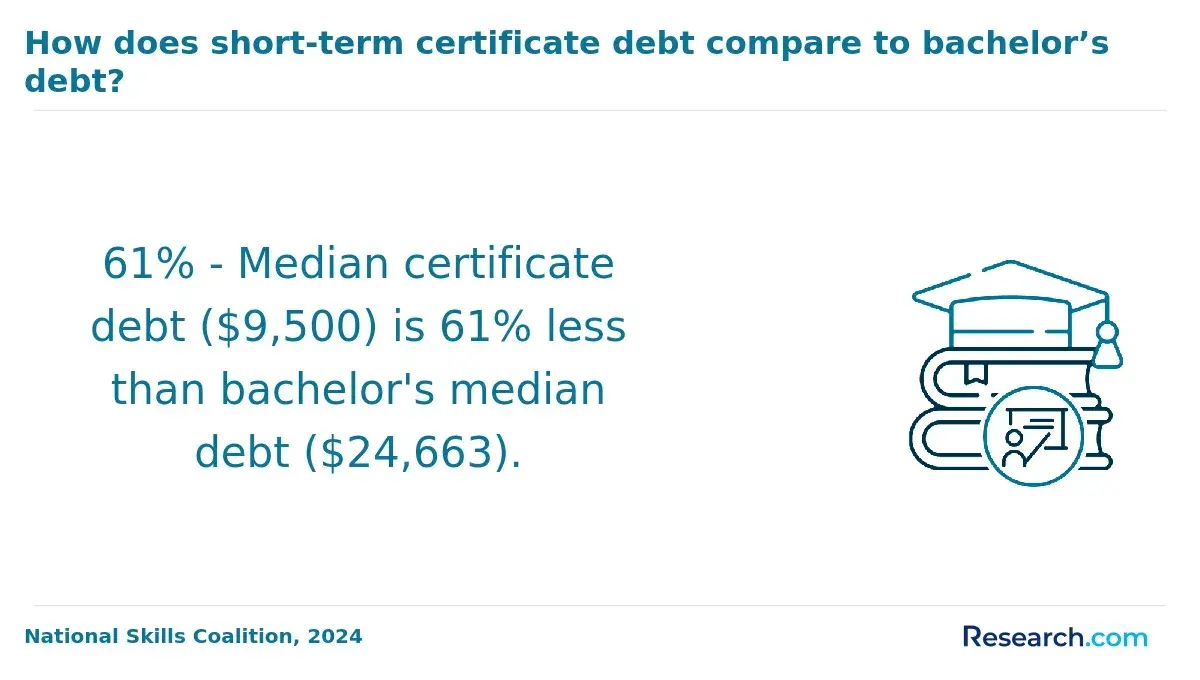
There is no single veteran net price. The amount left to pay depends on the school's tuition and mandatory fees, your GI Bill eligibility, whether the program is public or private, remaining entitlement, course load, and any Yellow Ribbon contribution. Books, equipment, technology charges, travel to required activities, and costs beyond covered tuition may also affect the budget. Scholarships or other aid can help, but their treatment should be confirmed with the financial aid office.
Ask each school for an itemized estimate covering the remaining degree, not just a per-credit quote. An approved transfer or military-credit evaluation can reduce required courses, while prerequisites and nontransferable credits can increase them. Compare the estimate with the VA's benefit information and ask the school certifying official how charges will be reported. Avoid assuming that "GI Bill eligible" means tuition, fees, and living costs will all be covered.
What veteran support services should online colleges provide?
Useful veteran support is specific and accessible to online students. Look for a school certifying official who explains enrollment changes, an advisor who can produce a degree audit, help obtaining a military-credit evaluation, and tutoring and career services available remotely. Disability accommodations, mental-health resources, and assistance finding required local placements may also matter, depending on the program.
Test the service before enrolling: ask who handles a delayed VA payment, how quickly an advisor can revise your degree plan, and whether online students can use the same career appointments as campus students. Support services are valuable, but their availability is not evidence of guaranteed graduation or employment.
What careers, salaries, and job outlooks can online degrees lead to?
Online degrees can prepare veterans for varied careers, but pay data describes occupations, not a guaranteed return from a particular college. The Bureau of Labor Statistics reports the following U.S. median annual wages for 2024. Use them to assess a career target alongside its qualifications, local openings, and the cost of reaching it.
| Occupation | 2024 median annual wage | Important qualification context |
| Registered nurse | $93,600 | Requires an approved nursing education pathway and state licensure; an online MSN alone is not an entry route |
| Software developer | $133,080 | Employers commonly assess programming ability; a computer science master's is not required for every role |
Career outlook also varies within broad fields. Before committing benefits to graduate study, compare current BLS projections for the specific occupation you want with job postings and licensing rules in your intended state. For example, an applicant aiming for registered nursing needs an entry-level licensure pathway, while an experienced developer may benefit more from a targeted specialization than another general degree. Neither occupational median predicts an individual veteran's starting pay.
Other Things You Should Know About
Yes, if they meet benefit eligibility rules and the specific program is VA-approved. Confirm the online program and start term in the VA GI Bill Comparison Tool and with the school certifying official.
It may. A college can evaluate military training and prior coursework, but it decides what credit to award and whether that credit satisfies degree requirements. Request an official evaluation before estimating completion time.
No. Participation and contributions depend on the institution's agreement, the student's eligibility, and the applicable program and enrollment period. Ask for a written benefits estimate.
Not necessarily. Nursing, teaching, social work, and other regulated fields can require approved education, in-person training, examinations, and a state license. Check the relevant state board before enrolling.
References
- Education and Training - About This Tool https://www.benefits.va.gov/gibill/comparison_tool/about_this_tool.asp
- Independent Study And Online Learning | Veterans Affairs https://www.va.gov/education/about-gi-bill-benefits/how-to-use-benefits/online-distance-learning/
- College Credit for Military Training & Experiences | dantes.mil https://www.dantes.mil/credit4training/
- Undergraduate Retention and Graduation Rates - COE https://nces.ed.gov/programs/coe/indicator/ctr/undergrad-retention-graduation
- Yellow Ribbon Program Explained | NU - National University https://www.nu.edu/military-and-veterans/yellow-ribbon-program/
- Transfer Credit for Military Experience | Official Catalog | Charter Oak State College https://www.charteroak.edu/catalog/current/academic_policies_regulations/transfer_credit_military_exp.php
- Resources for Veterans | seekUT https://seekut.utsystem.edu/resources_for_veterans
- Supporting Veteran and Military-Connected Students | Teaching and Learning Resource Center https://teaching.resources.osu.edu/teaching-topics/supporting-veteran-military
- Military Credits | Riverland https://www.riverland.edu/admissions/veterans-resource-center/military-credits/
- 2025 Best Military-Friendly Online Colleges | onlineu.com https://www.onlineu.com/online-schools/military-friendly