
2027 Best Degrees for Transfer Students

Co-Founder and Chief Data Scientist
Choosing a major after earning college credits is not just a career decision: the wrong transfer pathway can leave you repeating courses or adding semesters. The U.S. Bureau of Labor Statistics reports that workers with a bachelor's degree had median weekly earnings of $1,543 in 2024, though a degree does not guarantee that outcome.
This guide compares transfer-friendly bachelor's fields, explains where prerequisites and licensure complicate the move, and shows how to get a degree audit before committing. It is for community college students, returning learners, and anyone changing schools with credits already earned.
Key Things You Should Know
- Best overall fit: Business, information technology, and some psychology programs often offer room for general education and elective credits; nursing and engineering require closer course-by-course matching.
- Check usable credits, not accepted credits: A typical bachelor's degree requires about 120 semester credits. Even 60 accepted credits may leave more than 60 to complete if major prerequisites or residency rules remain.
- Compare the remaining degree: Request a written evaluation showing required courses, their availability, total tuition and fees, and any clinical, teaching, or licensing requirements before enrolling.
Top 10 Best Degrees for Transfer Students
Business Programs
A bachelor's in business administration can suit transfer students whose accounting, economics, statistics, and general education courses align with the new school's requirements. Broad elective space may accommodate credits that do not fit a narrower major. Accounting is a more structured alternative for students pursuing CPA eligibility; state rules can require coursework beyond a bachelor's degree. Ask whether previous business courses count toward the major or merely as electives, and compare concentrations against the work you want to do.
Healthcare Programs
Healthcare administration and public health bachelor's programs can be practical choices for students interested in health systems rather than direct patient care. Prior biology, statistics, and general education courses may apply, but internships or upper-level major requirements can affect the timeline. These degrees do not confer a clinical license. Students aiming to become a nurse, therapist, or another licensed clinician should choose the specific qualifying pathway instead of assuming a broad healthcare degree will suffice.
Information Technology Programs
An information technology bachelor's degree emphasizes systems, networks, databases, and security. It may fit students transferring technical coursework or seeking a computing path with less advanced mathematics than some computer science programs. Credit for certifications or professional learning is school-specific, not automatic. Check whether old technology courses still meet current requirements and whether the program offers the hands-on projects or internships needed for your target role.
Computer Science Programs
Computer science can offer a strong match for students targeting software development or technical research, provided their programming and mathematics sequences transfer as equivalents. Missing calculus, discrete mathematics, or introductory programming can delay upper-level courses even when many credits are accepted. Compare the receiving school's course sequence with your transcript before choosing a start term. If your goal is primarily systems administration, an IT degree may make better use of previous coursework.
Nursing Programs
The right nursing pathway depends on your starting credential. A licensed registered nurse with an associate degree may qualify for an RN-to-BSN program, while a student without RN licensure generally needs a prelicensure BSN pathway with separate admission, clinical placements, and state-board requirements. Science prerequisites may have grade or recency rules. Never assume acceptance into a university means acceptance into its nursing major; confirm clinical placement and licensing eligibility before transferring.
Psychology Programs
A psychology bachelor's degree may use previous general education, statistics, and social science courses efficiently. It suits students interested in human behavior and roles that value research, communication, or support skills. Becoming a licensed psychologist generally requires graduate education and supervised training; many counseling roles also require a graduate degree and license. If you want a specific occupation immediately after graduation, compare its entry requirements with this broad major before enrolling.
Education Programs
Education bachelor's pathways can prepare transfer students for teaching, but state-approved licensure programs typically prescribe subject coursework, field experiences, and student teaching. Those requirements may limit the value of unrelated transfer electives and require daytime, in-person attendance even when other classes are online. Verify that the program prepares candidates for the state and grade level where you intend to teach. A general education-studies degree is not necessarily a teacher-licensure program.
Criminal Justice Programs
Criminal justice bachelor's programs may accommodate prior social science and general education credits. They can support interests in courts, corrections, public safety, or policy, but employers set different hiring and training requirements. A degree alone does not qualify someone to practice law or guarantee a law-enforcement position. Compare internships, research methods coursework, and employer requirements; students focused on technical investigations may benefit more from a computing or accounting major.
Engineering Programs
Engineering rewards careful transfer planning. Calculus, physics, chemistry, and design courses often form a tightly sequenced curriculum, so an accepted course that lacks direct equivalency may not advance the major. Students should check whether the specific bachelor's program holds ABET accreditation when that matters for their goals, particularly future professional engineer licensure. A transfer agreement or engineering-focused associate pathway can help, but obtain a department-level review of prerequisites before assuming a two-year completion timeline.
Social Work Programs
A bachelor of social work, or BSW, is a focused option for students seeking social service practice and possibly a later advanced-standing MSW. Field education and program-specific course sequences can extend completion time. Verify accreditation by the Council on Social Work Education if future MSW admission or licensure is a goal. Social work licensing rules vary by state and role; a BSW does not independently qualify someone for every licensed clinical position.
What are the best bachelor's degrees for transfer students?
For many transfer students, business administration, information technology, and psychology are strong bachelor's options because their broader curricula may make use of varied prior credits. Nursing, education, social work, computer science, and engineering may be better choices when they match a specific career goal, but they demand closer prerequisite planning. "Best" means the degree that applies the most relevant credits and leads toward your intended work - not the one that accepts the largest number as electives. Use this comparison alongside your search for good majors in college.
The table highlights how your starting coursework changes the appeal of different fields. It is a screening tool, not a substitute for a school's individual degree audit.
| Degree field | Most promising starting point | Main transfer risk |
| Business administration | General education and introductory business courses | Prior courses count only as electives |
| Information technology | Recent computing or networking coursework | Technical courses no longer meet current requirements |
| Psychology | Social science, statistics, and general education credits | Career goal requires graduate study |
| Nursing or engineering | Matching prerequisites or a formal transfer pathway | Selective admission and tightly sequenced courses |
How do transfer students choose between online and campus-based degree programs?
Choose a delivery format by examining the remaining courses, not the university's general description. Online study can reduce commuting, but scheduled live classes, proctored assessments, labs, clinicals, internships, and student teaching may still require fixed hours or a local site. Campus study may make laboratories and in-person advising easier; hybrid study can combine those benefits with less travel. Students comparing popular online colleges should verify that their exact major and required courses are available in the advertised format.
Ask an advisor for a sample schedule covering the next two terms. An asynchronous course still has deadlines, while a program offered online may not offer every required course every term. For a licensed field, confirm where practical placements can occur and whether the program meets the requirements of the state where you plan to practice.
What accreditation should transfer students verify before choosing a degree program?
First, verify that the receiving institution has accreditation recognized by the U.S. Department of Education and that it accepts coursework from your previous institution under its published transfer policy. Accreditation does not make individual courses automatically equivalent: the receiving school decides how each course applies. Check its catalog for minimum grades, course-age limits, and restrictions on technical or developmental coursework.
Then check programmatic accreditation if your career path depends on it. Examples include ABET for relevant engineering programs and the Council on Social Work Education for BSW programs. Nursing and teacher-preparation requirements also involve state approval and may involve specialized accreditation. Confirm the exact program and campus or delivery pathway - not just a college-wide claim - and ask the relevant state board how it affects licensing eligibility.
Which associate degrees transfer most efficiently into bachelor's programs?
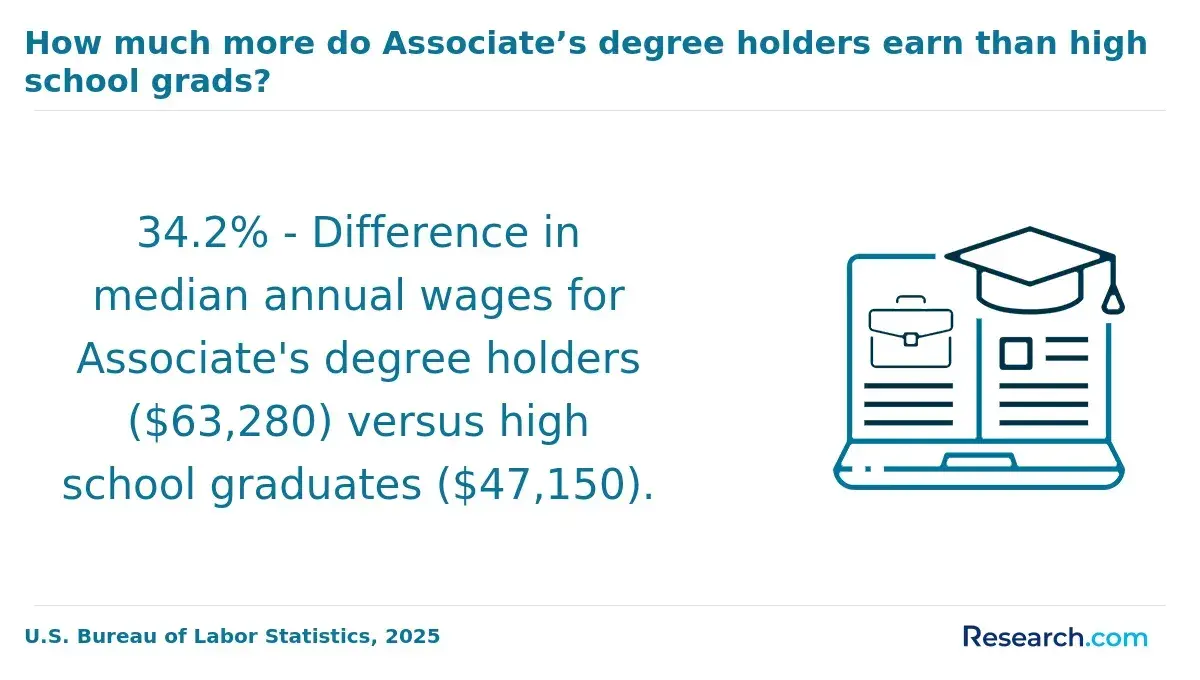
An Associate of Arts or Associate of Science designed for transfer often fits a bachelor's pathway more readily than an Associate of Applied Science designed primarily for workforce entry. But degree labels are not guarantees. A statewide general education agreement may satisfy a block of requirements while leaving major prerequisites unfinished; an applied associate degree may transfer well when a university has a specific completion agreement.
Returning learners, including those considering college degrees for seniors, should request an evaluation of older coursework before ruling it out. Ask how credits are classified - as general education, major requirements, or electives - and whether the school reviews examinations, military education, certifications, or portfolios for credit. Such credit requires an applicable institutional policy and evaluation; experience alone does not automatically earn it.
What admission requirements do colleges set for transfer students?
Transfer admission commonly calls for transcripts from every college attended and may require a minimum amount of completed college coursework, a qualifying GPA, and good academic standing. Rules differ by institution; applicants with fewer college credits may also need to provide high school records. Many schools treat transfer admission separately from admission to selective majors such as nursing, engineering, or teacher preparation.
Check the deadline and prerequisites for both decisions. A university may admit you while denying entry to a full major or requiring additional courses. Ask whether conditional admission is possible if a prerequisite is underway, and whether previously earned credits must meet a minimum grade to count toward the major. Do not interpret a school's general test-optional policy as proof that every specialized program has identical requirements.
How long and how much does it take to complete a degree after transferring?
A bachelor's degree commonly requires around 120 semester credits, but your remaining workload depends on how credits apply. If 60 previous credits satisfy 60 degree requirements, roughly 60 remain; if many become unused electives, you may need substantially more. Upper-level requirements, the minimum credits that must be completed at the receiving school, course sequencing, and part-time enrollment can change the finish date. A clinical or student-teaching placement can constrain scheduling even when classroom credits are complete.
For a useful price comparison, multiply remaining billable credits by the applicable tuition rate, then add mandatory, program, technology, laboratory, and placement-related fees. Include travel and lost work time where relevant, and compare expected grants and scholarships rather than tuition alone. Cheap online colleges may not yield the lowest completion cost if fewer of your credits fulfill the degree. Request a written audit and financial aid estimate from each finalist.
What coursework should transfer students expect in high-value degree programs?
High-value coursework depends on the job you want. Business students might combine accounting and analytics with a project; IT students need current technical practice; computer science students should expect substantial programming and mathematics. Nursing, education, and social work add supervised experiences, while engineering requires sequenced math, science, and design. A broad major is most useful when you deliberately choose electives, internships, or a capstone that demonstrate skills relevant to your target role.
Before registering, compare your completed courses with the major's prerequisite map. A common mistake is filling a schedule with transferable electives while postponing a required gateway course offered only once a year. Ask which classes unlock upper-level work, whether an internship is required, and whether an older course must be retaken because of a recency rule.
What careers, salaries, and job outlooks can transfer students expect after graduation?
These degrees connect to different occupations, not a single guaranteed salary. For example, the Bureau of Labor Statistics reports a 2024 median annual wage of $133,080 for software developers. That is an occupational figure for employed workers at varied career stages - not the expected starting salary of a computer science or IT graduate. BLS also projects growth in software developer employment over 2024-2034, making practical coding ability and relevant experience important alongside the credential.
The comparison below separates plausible directions from jobs that usually require additional qualifications. Use it to test whether a degree's remaining cost and coursework fit your intended destination.
| Degree direction | Potential work | Qualification to check |
| Business or IT | Operations, systems support, or analytics | Employer skill and experience expectations |
| Computer science | Software development | Programming portfolio and hiring requirements |
| Psychology | Research or support roles | Graduate education for licensed psychologist roles |
| Nursing, education, or social work | Field-specific practice | State licensing or certification rules |
Which certifications or licenses may transfer students need for their chosen careers?
A bachelor's degree and professional permission to practice are different credentials. Registered nurses need state licensure and must meet applicable examination requirements. Public school teachers generally need state certification or licensure. Social work licensing levels vary by state and role; clinical practice typically requires graduate education and supervised experience. Engineering graduates pursuing professional engineer licensure face state-specific education, examination, and experience requirements.
For a regulated career, check the state licensing board's rules before choosing a transfer destination. Ask the academic department whether its particular program and delivery pathway meet those rules. In IT and business, optional industry certifications can demonstrate specific skills, but they do not replace a license where one is legally required - or make an unrelated bachelor's degree automatically qualify you for a role.
Other Things You Should Know About
Not necessarily. A college may accept a course but apply it only as an elective. Request a written degree audit showing which credits satisfy general education, major, and other graduation requirements.
Possibly, if enough credits fulfill your chosen degree, required courses are available, and your enrollment pace allows it. Sequenced prerequisites, residency rules, and placements can extend the timeline.
It can be if the exact major accepts your credits and offers your remaining courses in a workable schedule. Check for live meetings, labs, local placements, and state licensing restrictions.
Compare written degree audits and estimates of remaining tuition and fees from your finalists. Confirm admission to your intended major, not just the university, and verify any accreditation or licensing requirements tied to your career goal.
References
- Study on Best Practices in Credit Transfer | texas.gov https://reportcenter.highered.texas.gov/reports/data/board-x-m-transfer-of-course-credit-between-public-institutions-of-higher-education-10-18/
- Fast Facts: Undergraduate graduation rates (40) | ed.gov https://nces.ed.gov/fastfacts/display.asp
- Predictors and Consequences of Math Course Repetition - PMC https://pmc.ncbi.nlm.nih.gov/articles/PMC10923562/
- Transfers | wa.gov https://wsac.wa.gov/transfers
- Field of degree: Occupational Outlook Handbook | bls.gov https://www.bls.gov/ooh/field-of-degree/
- Iowa Community College Transfer Majors https://educate.iowa.gov/higher-ed/community-colleges/transferring/transfer-majors
- Partnerships and Articulation Agreements | wichita.edu https://www.wichita.edu/articulation
- Major Preparation in the College | Undergraduate Admission https://admission.ucla.edu/apply/transfer/deciding-on-major/major-preparation-the-college
- Transferring Credits to UT Dallas https://enroll.utdallas.edu/transfer/transferring-credits/
- Transfer Issues | Seattle Central College https://seattlecentral.edu/campus-life/college-transfer-and-study-abroad-center/transfer/transfer-issues


