
2027 Best Colleges for High-Paying Careers

Co-Founder and Chief Data Scientist
A college with a strong reputation is not necessarily the best investment for your career. The useful question is whether its specific program prepares you for work you want at a cost you can manage. The U.S. Bureau of Labor Statistics reports that workers with a bachelor's degree had median weekly earnings of $1,543 in 2024, compared with $930 for high school graduates. Those are broad averages, not a return promised by any college. This guide compares colleges across 10 master's program families and shows how to weigh career requirements, earnings, costs, and fit before enrolling.
Key Things You Should Know
- Compare colleges at the program level: the credential, total cost, practical training, and access to your target occupation matter more than institutional reputation alone.
- Occupation pay is not graduate pay: the Bureau of Labor Statistics reported a 2024 median annual wage of $133,080 for software developers, but a computer science master's degree does not guarantee that job or salary.
- Check licensing before paying a deposit. Nursing, clinical psychology, teaching, and social work pathways can have state-specific requirements that a degree alone does not fulfill.
Top 10 Best Colleges for High-Paying Careers
Business Programs
The University of Pennsylvania's Wharton School and Indiana University's Kelley School of Business offer MBA pathways worth comparing for management, finance, and consulting goals. An MBA is generally an advancement credential, not a requirement for every business job. Compare each school's published tuition, scholarships, recruiting access, internship opportunities, and employment reports for the program and format you would attend. Experienced applicants may value a strong employer network; someone entering accounting may get more direct value from a specialized degree and the coursework needed for professional certification.
Healthcare Programs
Johns Hopkins University's public health programs and the University of Alabama at Birmingham's healthcare administration programs illustrate different master's routes. A Master of Public Health can suit population-health or policy work; a healthcare administration degree more directly targets health-system operations. Neither qualifies its holder to practice medicine or nursing. Compare applied projects, placements, employer connections, and total cost. For management roles, weigh professional experience alongside the degree: employers commonly expect both.
Information Technology Programs
Georgia Tech's MS in Cybersecurity and Carnegie Mellon University's information-security master's offerings serve students seeking specialized technical work. Compare the curriculum against actual job requirements: security engineering, governance, and IT management require different strengths. A master's may help an experienced professional specialize, while someone without an IT foundation may first need networking, systems, or programming experience. Ask how each college supports hands-on projects and whether its course schedule fits your work commitments.
Computer Science Programs
Georgia Tech's Online Master of Science in Computer Science and the University of Illinois Urbana-Champaign's online Master of Computer Science are options for applicants who already have substantial computing preparation. Compare prerequisite expectations, course choice, project work, and the total price for your enrollment plan. Software development employers may value demonstrated skills and experience as much as an additional degree. If you need foundational programming instruction rather than graduate-level specialization, a bachelor's, post-baccalaureate route, or targeted coursework may fit better.
Nursing Programs
Duke University's nursing master's offerings and Johns Hopkins University's MSN Entry into Nursing show why program names require close reading. The latter is an entry pathway for eligible non-nursing graduates; other MSN pathways generally build on nursing preparation and may require an RN license. Compare admission eligibility, clinical-placement arrangements, specialty outcomes, and the state where you intend to practice. An MSN does not, by itself, confer a nursing license or advanced-practice authorization.
Psychology Programs
Pepperdine University's MA in Clinical Psychology and Teachers College, Columbia University's psychology-in-education master's offerings have different professional purposes. Before choosing a college, decide whether your goal is research, a counseling-related license, or eventual doctoral study. Verify the exact program's curriculum and your state board's rules; a master's in psychology does not automatically qualify someone to practice as a licensed psychologist. Required supervision and examinations may extend the path well beyond graduation.
Education Programs
The University of Florida's graduate education offerings and Vanderbilt University's Peabody College provide options for educators interested in curriculum, policy, or leadership. Choose a concentration that matches your role rather than assuming any MEd leads to a pay increase. If you want initial teacher certification, verify that the exact program meets your state's preparation requirements; many education master's programs are intended for already licensed professionals. Compare school-based experience, scheduling during the academic year, and any employer tuition support.
Criminal Justice Programs
Michigan State University and the University of Cincinnati offer criminal justice master's programs that may suit professionals pursuing research, policy, or agency leadership. Compare analytical coursework, faculty expertise, schedule, and cost against the roles you seek. Police, federal, and investigative employers set their own entry and experience requirements; a graduate degree does not replace an academy, background check, or required service. Applicants targeting a particular agency should review its hiring standards before committing to graduate tuition.
Engineering Programs
MIT's graduate mechanical engineering offerings and Georgia Tech's MS in Mechanical Engineering illustrate research-intensive and career-oriented possibilities within the same field. Compare laboratory access, thesis or project requirements, specialization, and employer ties - not just the college name. A master's can support deeper technical work, but many engineering jobs accept a bachelor's degree. For work requiring a Professional Engineer license, check your state board's education, experience, and examination rules separately.
Social Work Programs
The University of Michigan and Boston University offer Master of Social Work programs for students considering clinical, community, or policy practice. Compare concentrations, field-placement support, format, and the cost of completing required supervised work. For clinical practice, the MSW is usually one stage of a longer state-licensing process involving supervised experience and an examination. Confirm that a program's accreditation and placement options meet the rules where you plan to work.
What Makes a College Effective for High-Paying Careers?
The best college for a high-paying career is the one with a credible route to your specific occupation at a defensible total cost. The colleges above are examples to investigate, not a salary-ranked list: comparable, verified earnings and debt results for every named master's program are not available here. A familiar institutional name cannot establish an individual program's return on investment.
Start with the job's normal entry credential. Then compare programs using the same standards: applicable accreditation, required coursework and experience, completion time, net cost after aid, and outcomes reported for that program. Ask for the reporting period, response rate, and definition behind any employment or salary claim. A school that cannot distinguish program outcomes from university-wide figures gives you less evidence for a major financial decision.
Which Degrees Lead to the Highest-Paying Careers?
Degrees in computer science, engineering, business, and some healthcare fields can connect to well-paid occupations, but no degree field pays a single salary. Software developers had a 2024 median annual wage of $133,080, according to the Bureau of Labor Statistics. That is a wage for employed software developers across experience levels, not an expected starting salary for computer science graduates.
Match the degree level to the job. Many software development and engineering positions accept a bachelor's degree; an MBA often supports advancement after work experience; advanced nursing roles require the appropriate nursing preparation and authorization. Paying for a master's solely because its field appears on a high-salary list can produce a poor return if the intended role does not require it.
How Much Do Graduates Earn After Attending These Colleges?
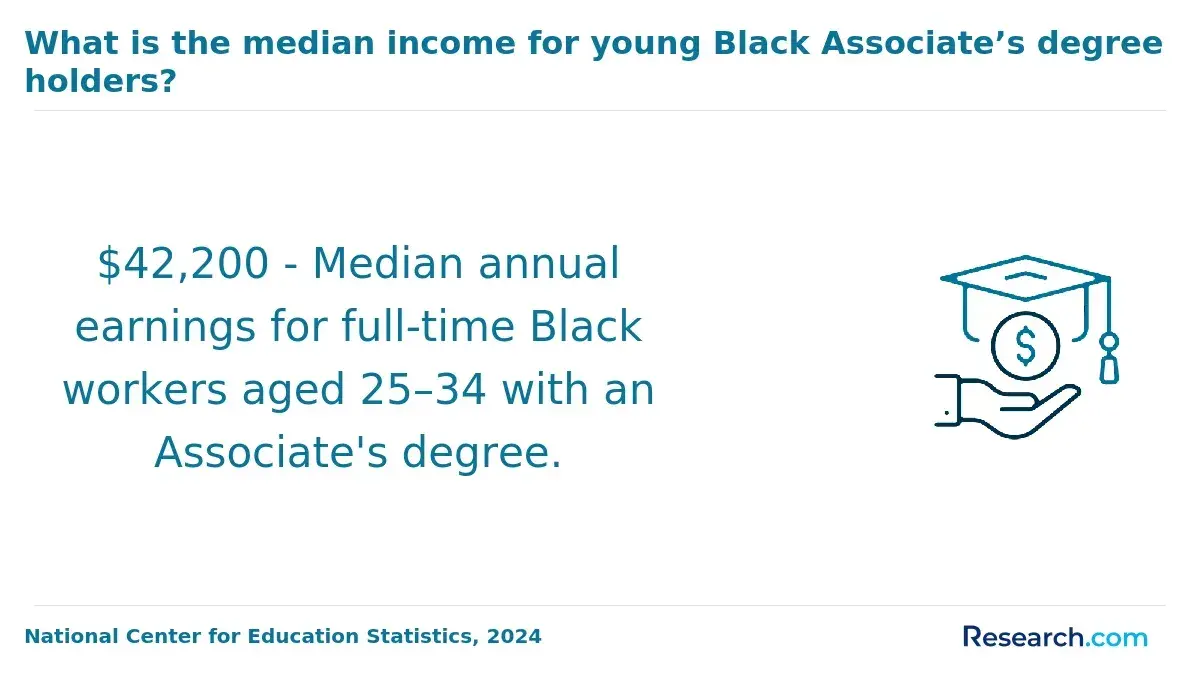
There is no reliable single figure for what graduates of the colleges in this guide earn. Earnings depend on the program, occupation, location, experience, and whether graduates change jobs. Federal occupational data provide useful context, but they do not measure the earnings caused by attending a particular institution. For example, the Bureau of Labor Statistics reports a 2024 median annual wage of $93,600 for registered nurses; that figure covers working nurses with varied education and experience, not graduates of an MSN program.
For a closer estimate, request the college's program-specific outcomes and compare them with its total cost and your likely borrowing. Check whether reported earnings include only respondents, whether they are measured shortly after graduation, and whether they represent career changers or experienced professionals. Treat missing or selectively reported results as uncertainty, not proof of either success or failure.
What Career Paths Are Available Through These Colleges?
These program families lead toward different kinds of work, and the highest-paid role associated with a field is rarely its automatic entry point. The comparison below separates common career directions from qualifications that may still be necessary.
| Program family | Possible career direction | Important qualification beyond the degree |
| Business | Operations or financial management | Relevant experience; some finance roles require separate credentials |
| Computer science or IT | Software development or cybersecurity | Demonstrated technical skills and, often, experience |
| Nursing or healthcare | Nursing practice or health-system management | Applicable license for practice; experience for many management roles |
| Psychology or social work | Research, services, or clinical practice | Additional education or state-specific supervised practice and licensure for regulated roles |
| Education or criminal justice | Teaching, policy, or agency work | State certification or employer-specific hiring requirements where applicable |
Experience and a narrower credential can sometimes serve an immediate goal better than graduate school. If you need a defined technical skill rather than a master's, compare quick certifications that pay well with actual job postings; a certificate does not substitute for a required degree or professional license.
How Do Online and Campus Programs Compare for Career Preparation?
Online study can reduce travel and make it easier to keep working, while campus study may offer more convenient access to laboratories, recruiting events, and in-person collaboration. Neither format is inherently better for career preparation. Compare the experiences required by the occupation and what the specific program actually provides.
An online label does not mean self-paced study. Ask whether classes meet live, whether exams are proctored, and who arranges internships, clinical placements, or student teaching near you. Students who relocate frequently should pay particular attention to state authorization and placement rules; guidance on colleges for military spouses can help frame those questions. For licensed occupations, confirm eligibility in the state where you expect to work before enrolling.
What Accreditation Should Students Verify Before Enrolling?
Verify that the college holds recognized institutional accreditation, then check whether the particular program needs specialized accreditation for your goal. Institutional accreditation concerns the school; programmatic accreditation applies to a field or specific program. The distinction matters most when a licensing board, employer, or future school requires a particular form of preparation.
For example, prospective MSW students should check Council on Social Work Education accreditation, and nursing applicants should check the program's applicable nursing accreditation and state approval. Psychology and education requirements vary by credential and jurisdiction. Confirm the program's current status with the accreditor and the relevant state board rather than relying on an admissions page's general statement that the university is accredited.
What Are the Admission Requirements for High-Value Programs?
Master's admissions usually begin with a bachelor's degree, but preparation varies substantially. A computer science program may expect programming and mathematics coursework; an MBA may weigh professional experience; an advanced nursing program may require an RN license. Clinical, education, and social work pathways can add prerequisite courses, interviews, background checks, or placement requirements. Graduate admission to a university does not necessarily mean admission to its selective professional program.
Request the current requirements for your exact degree and concentration, including GPA rules, test policies, prerequisite equivalencies, and any conditional-admission option. If your immediate priority is manageable coursework, you can explore easiest online degrees, but assess academic fit separately from career value: a less demanding admission route may not prepare you for a regulated or technical occupation.
How Long Do Programs Take and How Much Do They Cost?
Master's programs vary from shorter, coursework-focused options to longer programs with prerequisites, research, clinical work, or field placements. Your actual timeline depends on course sequencing, full- or part-time enrollment, and requirements that cannot be completed remotely. Published tuition is only a starting point: add mandatory and program fees, materials, travel, placement expenses, and income you may give up while studying.
Ask each college for an estimated total cost to completion for your format and enrollment pace, then subtract grants or employer benefits you are eligible to receive. Confirm whether previously completed graduate coursework can apply; acceptance as transfer credit does not mean it will satisfy a required course. If a research career truly requires doctoral study, compare funding offers before looking at cheapest online doctoral programs. An inexpensive doctorate is not automatically a substitute for the training, research access, or licensure preparation your goal requires.
How Can Students Compare Job Outlook, Licensing, and Certifications?
Job outlook describes projected demand for an occupation, not the chance that an individual graduate will be hired. Use Bureau of Labor Statistics occupation profiles to compare duties, typical entry education, wages, and projected employment change. Then read current postings in your target location to see which skills and credentials employers actually request. Rapid growth is less useful to you if the available roles require experience you do not yet have.
For a regulated job, check the state licensing board for approved education, examinations, supervised hours, and renewal requirements. For an optional certification, check the issuing organization's eligibility rules and whether local employers value it. A common mistake is to choose a college based on a high occupational wage, then discover that its program does not meet the occupation's entry requirements. Verify that connection before applying.
Other Things You Should Know About
There is no universal winner. Choose a college whose specific program meets your target job's requirements, offers relevant experience, and has a total cost you can justify against realistic career options.
Not necessarily. Some well-paid occupations typically accept a bachelor's degree plus skills and experience. Other roles require graduate education or a professional license; check the occupation before choosing a credential.
It can in some cases, but delivery format alone establishes nothing. Confirm program approval, required in-person training, and eligibility with the licensing board in the state where you plan to work.
Request results for the exact program and graduation period. Check who was included, how many graduates responded, whether figures describe starting pay, and how debt and total program cost compare.
References
- Field of Study in College and Lifetime Earnings in the United States - PMC https://pmc.ncbi.nlm.nih.gov/articles/PMC5198720/
- Estimate your college cost | USAGov https://www.usa.gov/estimate-college-cost
- Research Summary: Education and Lifetime Earnings | ssa.gov https://www.ssa.gov/policy/docs/research-summaries/education-earnings.html
- A Snapshot of Federal Student Loan Debt | congress.gov https://www.congress.gov/crs-product/IF10158
- Annual Earnings by Educational Attainment - COE https://nces.ed.gov/programs/coe/indicator/cba/annual-earnings
- U.S. Bureau of Labor Statistics https://www.bls.gov/
- Research: Cold Networking Key to Finding Internships and Jobs | virginia.edu https://economics.virginia.edu/research-cold-networking-key-finding-internships-and-jobs
- Using earnings data to rank colleges: A value-added approach updated with College Scorecard data | Brookings https://www.brookings.edu/articles/using-earnings-data-to-rank-colleges-a-value-added-approach-updated-with-college-scorecard-data/
- Same major, same economic returns? College selectivity and earnings inequality in young adulthood - ScienceDirect https://www.sciencedirect.com/science/article/pii/S0276562421000676
- OECD Employment Outlook 2026 https://www.oecd.org/en/publications/oecd-employment-outlook-2026_7e710f54-en/full-report/workers-households-regions-geographic-disparities-in-labour-market-outcomes-and-the-distribution-of-income_1e6f0949.html


