
2027 Best Majors With Generous Transfer Credit Policies

Co-Founder and Chief Data Scientist
A college may accept your old coursework yet leave you repeating classes for your chosen major. That distinction matters when tuition adds up: the College Board reported average published in-state tuition and fees of $11,610 at public four-year colleges for 2024-25. If you have previous college credit, this guide helps you compare transfer-friendly majors - including graduate options - by looking at degree applicability, remaining requirements, cost, and career fit. You'll learn what to request from schools before committing, rather than choosing a program based on its advertised transfer maximum.
Key Things You Should Know
- Business, information technology, psychology, and criminal justice can offer room for applicable electives, but the best major is the one that uses your credits toward requirements - not merely one that accepts them.
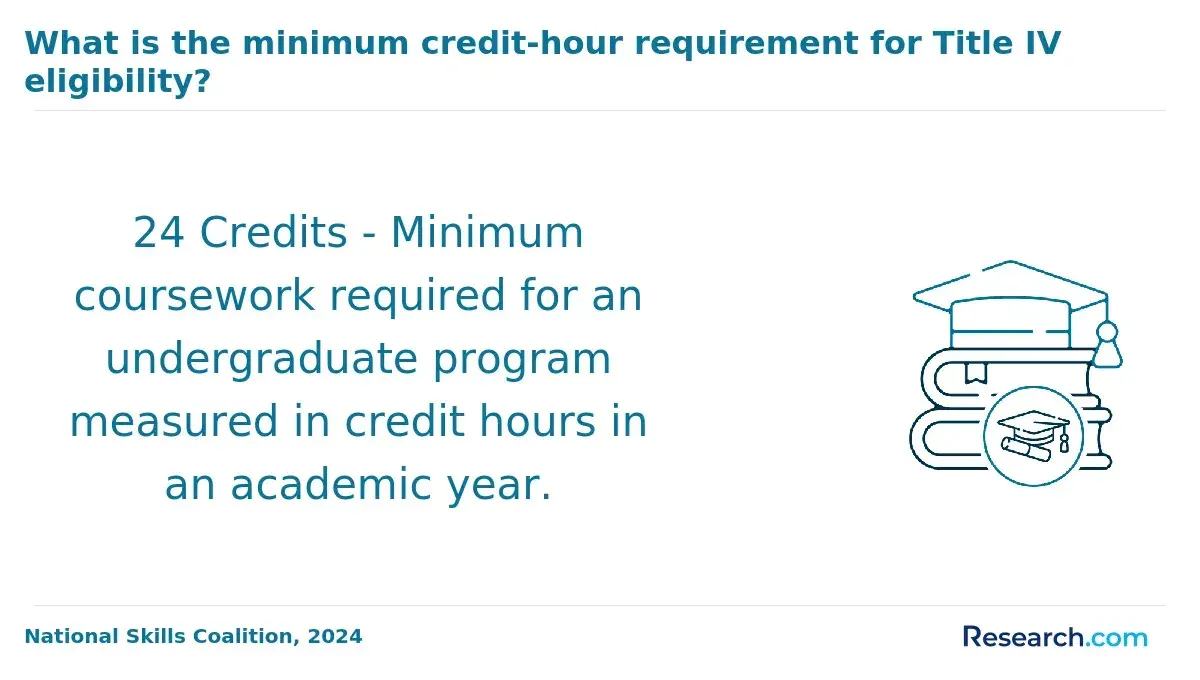
- A bachelor's degree commonly requires about 120 credits; ask for a degree audit showing how many of your credits satisfy general education, major, and elective requirements, plus the credits you must earn in residence.
- Graduate transfer rules are separate from undergraduate rules. Master's programs may accept relevant graduate coursework, but prerequisites, clinical training, licensure requirements, and capstones can limit what counts.
Top 10 Best Majors With Generous Transfer Credit Policies
Business Programs
Business administration is often a practical undergraduate choice when prior courses cover accounting, economics, statistics, management, or general education. A broad elective structure may also accommodate unrelated credits; a specialized accounting major may not. For an MBA or other business master's, ask whether previous graduate coursework replaces required classes or only electives. Undergraduate business credits ordinarily serve as admission preparation, not automatic master's-level transfer credit. Compare the remaining major sequence and any capstone before assuming a high transfer maximum means a short path to graduation.
Healthcare Programs
Healthcare administration and health sciences may suit students with previous anatomy, statistics, or health-related coursework. They are not interchangeable with clinical credentials: a healthcare administration degree does not qualify someone to practice nursing or another licensed profession. At the master's level, healthcare management programs may evaluate relevant graduate courses, while public health programs may require specific methods coursework or a practicum. Check whether older science credits remain eligible and whether an online program has local fieldwork requirements. Choose the major that fits your intended role, not simply the one accepting the most electives.
Information Technology Programs
Information technology majors can be a good match for prior programming, networking, database, or general education courses. Some programs also evaluate professional certifications through a published credit-assessment process; certification alone does not guarantee credit. Graduate IT programs usually assess prior graduate courses separately and may require current technical prerequisites. Because tools change, ask about age limits on computing coursework and whether accepted credits replace core requirements. An IT major may fit infrastructure or cybersecurity goals better than computer science, but verify the actual curriculum before choosing.
Computer Science Programs
Computer science is worth considering if your prior work includes calculus, discrete mathematics, programming, and other courses equivalent to the destination school's sequence. Unrelated credits may fill electives without shortening a prerequisite chain. A master's in computer science may require substantial undergraduate preparation even when it accepts some previous graduate coursework. Compare course equivalencies, laboratory requirements, and when required classes are offered. If your goal is applied systems work and you lack the mathematics prerequisites, an information technology program may use more of your existing credit.
Nursing Programs
Nursing transfer decisions depend heavily on program sequence, clinical placement, and licensure eligibility. Previous anatomy or general education courses may count while nursing courses require separate review. An RN-to-BSN pathway is designed for already licensed registered nurses; it is not an entry-level route to RN licensure. Likewise, an MSN may require an RN license, a nursing degree, or a specific bridge pathway. Confirm state-board eligibility, applicable nursing accreditation, clinical requirements, and exactly which credits meet the curriculum before comparing completion times.
Psychology Programs
Psychology can accommodate previous general education and, depending on the curriculum, elective coursework. Statistics and research methods may need close equivalency review. A bachelor's in psychology does not qualify someone for independent clinical practice. Master's programs differ: some prepare students for research or further study, while counseling-focused degrees have specific supervised-training and state licensure requirements. Prior undergraduate psychology classes normally establish preparation rather than count as graduate credit. Select a program by its professional purpose as well as its transfer evaluation.
Education Programs
Education majors can use previous general education and subject-area coursework, but teacher-preparation sequences and student teaching may restrict transfer options. A graduate education program may serve licensed teachers seeking advancement, whereas an initial-licensure program must meet state-specific requirements. These are different pathways even when their titles sound similar. Ask whether the program qualifies you for certification in the state where you plan to teach, how prior courses apply to subject requirements, and whether placements can be completed locally.
Criminal Justice Programs
Criminal justice may be transfer-friendly when it offers substantial electives alongside coursework in law, policy, and research. Credit for academy training or professional learning is possible only where a school publishes an applicable evaluation process. At the master's level, previous graduate work in criminology or public administration may be reviewed, but professional experience is not automatically academic credit. The degree can support certain public-service goals; it does not replace agency hiring standards, academy requirements, or qualifications for legal practice.
Engineering Programs
Engineering is often less flexible than broad majors because mathematics, science, laboratory, and design courses build in sequence. An institution might accept a course as an elective without counting it toward an engineering requirement. For a professional engineering goal, check the specific program's ABET accreditation and your state's licensure rules. Engineering master's programs may evaluate prior graduate coursework but can require a matching undergraduate background. Request a term-by-term plan: a missed prerequisite may delay graduation even when many credits transfer.
Social Work Programs
A bachelor's in social work can provide a defined professional foundation, but field education and program accreditation make transfer planning important. Students considering an MSW should distinguish a standard pathway from advanced standing, which typically requires an eligible accredited BSW and has separate admission rules. Advanced standing is not simply a generous transfer-credit allowance. Ask how previous courses and fieldwork are evaluated, whether placements can be arranged near you, and what your state requires for the social work license you want.
What majors typically accept the most transfer credits?
Broad bachelor's majors often provide the most flexibility. Business administration, information technology, psychology, and criminal justice may have elective space for credits that do not match a required major course. That can make them useful for students with varied previous coursework, but no major is universally the most transfer-friendly: a closely matched associate degree may fit a more structured major better than a collection of unrelated credits fits a broad one.
Separate three outcomes in every evaluation: credits the college accepts, credits that satisfy degree requirements, and credits that reduce the courses you still need to take. If you have professional training rather than college coursework, compare the school's published prior-learning process; online certificates are not automatically transferable college credit.
How do transfer credit policies vary among accredited colleges?
Accredited colleges set their own transfer rules, and policies may differ by degree and department. A school-wide maximum does not promise that your major will use that many credits. Compare the minimum acceptable grade, course equivalencies, limits on older coursework, treatment of lower-division courses, and the credits you must complete at the destination institution. For graduate applicants, ask specifically about graduate-level transfer limits; a generous bachelor's policy does not establish an equally generous master's policy.
Articulation agreements can make a route from a particular community college clearer, but read the agreement for the intended major and catalog year. Also ask what happens if you change majors or take courses outside the prescribed pathway. The decision-making document is an individualized degree audit, not a general promise that credits "transfer."
Which online degree programs offer generous transfer credit options?
Online bachelor's completion programs in broad fields such as business, IT, and interdisciplinary studies may be useful when they evaluate substantial prior coursework and offer enough remaining courses online. Online graduate options exist too, but their transfer rules are usually narrower and program-specific. No online format, by itself, signals a generous transfer policy.
Compare an online option against accelerated degree programs using the same starting credits and required courses. An advertised short timeline may assume an associate degree, full-time enrollment, or qualifying prior learning. Confirm live-class schedules, in-person labs or placements, and course availability before treating an online offer as a flexible or faster route.
What accreditation standards affect transfer credit acceptance?
Institutional accreditation matters, but it does not compel one college to accept another's courses. The receiving institution decides whether coursework meets its standards and fits the intended degree. Verify that the institution is accredited by an agency recognized by the U.S. Department of Education, then read the receiving school's applicable policy rather than assuming an accredited transcript will transfer in full.
Programmatic accreditation matters most where it affects professional preparation. ABET accreditation may be important in engineering; nursing, social work, and teacher-preparation pathways have additional accreditation or state-approval considerations. A school can award transferable elective credit without finding a previous course equivalent to a required professional course. Check both the destination program's status and the rules for your intended state license.
How can students determine which previous courses will transfer?
Start with a formal evaluation for the exact major and credential you intend to pursue. An unofficial estimator can help narrow choices, but it may not settle course equivalencies or professional requirements. These steps turn a transfer maximum into a usable graduation plan:
- Collect transcripts from every prior college and obtain syllabi for courses likely to meet major or prerequisite requirements.
- Ask each prospective school for an evaluation showing accepted credits, their requirement categories, and any courses still awaiting departmental review.
- Request a degree audit and term-by-term plan that identifies residency credits, course sequences, and remaining experiential requirements.
- Compare plans using the same intended enrollment pace, then obtain written clarification for any disputed equivalency before enrolling.
Ask separately about examinations, military education, certifications, or portfolios if they apply to you. Credit through those routes depends on the institution's published assessment policy and may be limited to particular degree requirements.
What are the admission requirements for transfer-friendly degree programs?
Transfer admission and admission to a specific major may be separate decisions. Colleges commonly request official transcripts and evidence that applicants meet their transfer-entry requirements. A competitive or professionally regulated program may also require prerequisite courses, a minimum GPA, an interview, a portfolio, a background check, or eligibility for a clinical placement. Graduate programs generally require a bachelor's degree and may have additional field-specific prerequisites.
Do not assume that credits accepted by the institution establish eligibility for nursing, education, engineering, or another selective program. Ask admissions and the department which requirements must be complete before entry, which can be finished afterward, and whether a previously earned credential qualifies you for a bridge or advanced-standing pathway.
How do transfer credits affect program length and total cost?
Accepted credits can reduce the courses you must pay for, but savings depend on where those credits fit. A transferred elective does little for a student who still needs a full sequence of required major courses. Estimate total remaining tuition and mandatory fees, then add books, technology or program fees, travel, and any lost work time for required placements. Compare financial-aid eligibility and employer tuition assistance against that remaining cost, not just a school's price per credit.
Time works the same way: course sequencing, part-time enrollment, and annual class availability can outweigh a large credit award. Even 6 week online courses with certificates describe individual course formats, not the time needed to finish a degree. Use each school's written degree plan to estimate your own completion date.
What careers and salaries can transfer-friendly majors lead to?
Transfer-friendly majors can support different occupations, but a degree title alone does not establish hiring eligibility or expected pay. The U.S. Bureau of Labor Statistics reported a 2024 median annual wage of $93,600 for registered nurses. That is an occupational figure, not the salary of nursing graduates or transfer students; becoming an RN also requires an approved route to licensure and passing the applicable licensing examination.
Business and IT majors can support roles across industries, while psychology, education, engineering, and social work lead to options with different requirements for graduate study, experience, or licensure. If location flexibility is a priority, explore degrees for remote work, but evaluate the occupation and employer expectations separately from whether classes are online. Compare actual job postings in your area with each program's curriculum before estimating career value.
How should students compare transfer policies, outcomes, and professional requirements?
The strongest choice is the program that applies the most useful credit while meeting your career requirements at a manageable remaining cost. A broad major with generous electives may be ideal for finishing a degree; it may be the wrong substitute for an accredited licensure pathway. Likewise, low tuition can lose its advantage if you must repeat prerequisites or travel for required placements.
For each finalist, obtain a written degree audit, a remaining-course schedule, an estimate of tuition and required fees, and confirmation of accreditation and any state licensure eligibility. A common mistake is comparing schools by their advertised transfer maximum alone. Compare how many credits satisfy your chosen degree, what you still must complete, and whether the resulting credential serves the work you want to do.
Other Things You Should Know About
No. Some count only as electives or exceed the space available in your degree plan. Request an audit showing which requirements each credit fulfills.
Possibly, if the school offers a relevant prior-learning assessment. You may need an approved examination, portfolio, or evaluated training; experience alone does not automatically earn credit.
Usually, undergraduate coursework provides preparation rather than graduate credit. Ask the specific program whether it offers a published bridge or combined-degree pathway.
Not necessarily. Choose the option that uses your credits toward graduation and meets your career or licensure goal, then compare remaining time and total cost.
References
- Definitions - Transfer Credit Ohio https://transfercredit.ohio.gov/educational-partners/educational-partner-initiatives/articulation-transfer-policy-policy/articulation-transfer-policy-definitions
- College Credit for Military Training & Experiences | dantes.mil https://www.dantes.mil/credit4training/
- Transfer Credit Policy | SUNY Niagara https://sunyniagara.edu/registration-records/transfer-credit-policy/
- Transfer Credit Evaluation - TXST Admissions https://www.admissions.txst.edu/future-students/transfer-credit-evaluation.html
- Transfer credit policies - Office of Admissions https://admit.washington.edu/apply/transfer/policies/
- Transfer credit - UC Admissions - University of California https://admission.universityofcalifornia.edu/admission-requirements/transfer-requirements/preparing-to-transfer/transfer-credit.html
- Undergraduate Transfer Credit | Florida International University Catalog https://catalog.fiu.edu/policiesandprocesses/courses-credit/credit/undergraduate-transfer
- Step-by-Step Transfer Evaluation Process | catholic.edu https://undergraduate-studies.catholic.edu/academic-support/transfers/incoming/process-incoming.html
- How to Get College Credit for Work Experience | post.edu https://post.edu/blog/pla-101-can-a-prior-learning-assessment-get-me-college-credit-for-work-experience/
- Graduate Credit Transfer Policy - Campus Offices https://campus.collegeforcreativestudies.edu/policy/transfer-credits-graduate/




