2027 Best Online Degrees for Military Spouses

Co-Founder and Chief Data Scientist
A military move can interrupt a degree or force a career change just as it begins to pay off. Online study can help, but the best choice depends on more than whether classes are remote: clinical placements, state licenses, and course schedules can still tie you to a location. The U.S. Bureau of Labor Statistics projects 15% employment growth for software developers, quality assurance analysts, and testers from 2024 to 2034, illustrating why career demand belongs in the decision.
This guide compares degree fields and shows military spouses how to check portability, costs, benefits, and career requirements before enrolling.
Key Things You Should Know
- For a career that can survive a move, compare remote-work potential and state licensing rules - not just whether the coursework is online.
- MyCAA can provide eligible spouses up to $4,000 for approved training, but it does not generally fund a bachelor's or master's degree.
- Career pay is not a graduate outcome: the Bureau of Labor Statistics reports a $93,600 median annual wage for registered nurses in May 2024, and an online nursing degree alone does not qualify someone for RN licensure.
Top 10 Best Online Degrees for Military Spouses
Business Programs
An online MBA or master's in management can suit spouses seeking advancement in operations, finance, or project work across industries. Some programs accept applicants from any undergraduate major; others expect business coursework or experience. Compare scheduled team meetings, internship expectations, and total fees. A general MBA offers flexibility, but a specialized accounting program may fit better if your goal is a credential with specific coursework requirements. Neither degree alone guarantees a management position.
Healthcare Programs
An online Master of Healthcare Administration or health informatics master's can prepare spouses for administrative, analytical, or technology-focused work without claiming clinical licensure. An MHA may favor applicants with healthcare experience and may require a practicum; informatics programs may expect technical preparation. Some jobs can be performed remotely, while hospital operations roles are often site-based. Choose this path for healthcare systems work, not as a substitute for a nursing or other clinical credential.
Information Technology Programs
An online master's in information technology can develop skills in networks, cloud systems, cybersecurity, and IT leadership. Some programs admit career changers with foundation courses; others require computing experience. IT work can be portable, but security-clearance, employer-location, or on-site infrastructure requirements may limit remote options. Compare hands-on labs and whether a program's content supports the roles you want; professional certifications can complement a degree but have separate requirements.
Computer Science Programs
An online computer science master's emphasizes algorithms, software systems, and advanced computing. It is a strong option for spouses with programming and mathematics preparation who want software or technical roles. Applicants without that background may need prerequisites before graduate study. Look closely at collaborative projects, live sessions, and any required campus components. A focused portfolio can help demonstrate ability, but the degree does not make every software position remote.
Nursing Programs
Online MSN programs generally serve already licensed registered nurses; they are not an entry route to RN practice. Leadership and education tracks may travel more easily than advanced-practice tracks, which require supervised clinical training and state-specific authorization. Even programs with online classes can require local placements, and a move may disrupt them. Before enrolling, ask whether the school can support clinical placements and meet professional requirements in every state where you may live.
Psychology Programs
An online master's in psychology can support research, human-services, or workplace-related goals, depending on the curriculum. It should not be confused with a clinical psychology doctorate or a state-approved counseling pathway. If independent practice is your goal, confirm the exact degree, supervised-hours, examination, and state licensing requirements first. Research methods and a thesis may also make some programs less schedule-flexible than their online label suggests.
Education Programs
An online master's in education may serve licensed teachers seeking specialization or applicants pursuing an initial teaching license - but those are different pathways. Initial-licensure programs typically involve student teaching and state approval, creating complications during a move. A non-licensure master's may be easier to complete remotely but will not by itself authorize classroom teaching. Check whether placements can be arranged near your duty station and how a future state will evaluate your credentials.
Criminal Justice Programs
An online master's in criminal justice may suit spouses interested in policy, analysis, corrections administration, or related public-service work. Many roles value experience as well as education, and jobs tied to local agencies are less portable than the coursework. Distinguish an academic criminal justice degree from police academy training or other employer-specific qualifications. Applicants seeking federal work should also check citizenship, clearance, and location requirements for particular positions.
Engineering Programs
An online engineering master's can help spouses with an engineering background deepen technical expertise without stopping study during a move. Specializations differ: some center on simulations and design software, while others may require physical laboratories or site-based projects. Many programs expect an engineering or closely related bachelor's degree. If professional engineer licensure matters, investigate undergraduate-program accreditation, experience, examinations, and state board rules separately; a master's alone does not confer a license.
Social Work Programs
An online Master of Social Work can prepare spouses for social-work roles, but field placements are in person and state licensure requires additional steps. A Council on Social Work Education-accredited BSW may qualify an applicant for an advanced-standing pathway; other applicants generally take a longer foundational route. Ask whether placements can be arranged after a relocation and whether the program supports your intended state's licensing requirements. Online classes cannot eliminate supervised fieldwork.
What online degrees offer the best career opportunities for military spouses?
There is no single best online degree for every military spouse. Business, IT, and computer science often offer a useful combination of cross-industry skills and potential geographic mobility. Nursing, education, and social work can lead to clearly defined professions, but their placements and licenses require more planning around moves. If you already hold a bachelor's degree, compare graduate study with a targeted certificate or quick degree programs before committing to a master's.
This comparison shows the main mobility trade-off for each group of fields. "Portable" describes potential career flexibility, not a promise of remote employment.
| Degree fields | Potential advantage | Main move-related constraint |
| Business, IT, computer science | Skills used across many employers and locations | Individual jobs may still require on-site work or fixed hours |
| Healthcare administration, psychology, criminal justice | Multiple possible job settings | Relevant experience and job availability vary by location |
| Nursing, education, social work | Established professional pathways | Placements, licenses, and interstate rules |
| Engineering | Specialized technical career options | Labs, employer sites, and role-specific licensing |
How can military spouses use MyCAA and other education benefits online?
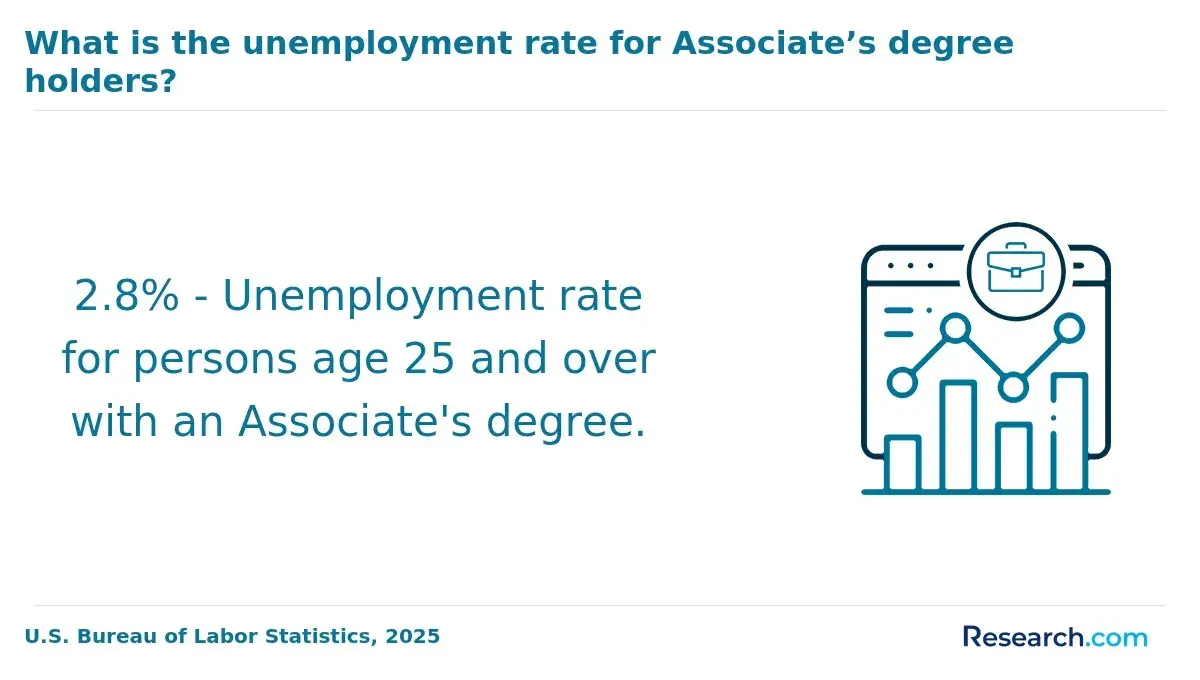
The Military Spouse Career Advancement Account, or MyCAA, can cover up to $4,000 for eligible spouses pursuing an approved license, certification, or associate degree for a portable career. Eligibility, approved plans, and funding limits must be confirmed before enrollment. MyCAA generally is not a way to pay for a bachelor's or master's degree, even when the subject is career-related.
For a degree beyond MyCAA's scope, check federal financial aid eligibility, school scholarships, employer assistance, and any applicable transferred Post-9/11 GI Bill benefits. These programs have different rules: being a military spouse does not automatically establish eligibility. Obtain a written estimate of what each benefit will cover before paying a deposit or registering for courses.
How do military spouses choose an accredited online degree program?
Start with institutional accreditation recognized by the U.S. Department of Education, then check any programmatic accreditation needed for your intended profession. For example, social-work students should examine Council on Social Work Education accreditation, while prospective nurses and teachers must investigate the approvals relevant to their licensing path. Accreditation is a starting point, not proof that a program meets every state's requirements.
Ask admissions for the official catalog, a complete cost estimate, an online-course schedule, and written details about placements or campus visits. Confirm where the school can enroll you and whether it can support you if you move. An easiest online college comparison may help you explore accessibility, but ease of admission should not outweigh career fit or professional eligibility.
Which online degree fields provide portable careers after military moves?
The most portable fields usually combine skills employers use in many places with few location-specific training requirements. Business analytics, software development, and some IT roles can meet that test, although remote hiring depends on the employer and job. Healthcare administration and engineering can also travel well for an experienced professional, but many positions require presence at a facility or worksite.
A licensed career can remain portable without being frictionless. Before choosing nursing, teaching, or social work, investigate interstate compacts or reciprocity for the specific license you intend to hold. Rules differ by profession and state, and a transfer may involve an application, documentation, or additional requirements. Treat "online degree" and "portable career" as separate claims to verify.
What are the admission requirements for online degree programs?
Most master's programs require an accredited bachelor's degree and transcripts. Requirements beyond that vary by field: computer science may require programming and mathematics; engineering often expects related undergraduate preparation; MSN admission generally requires RN licensure; and advanced-standing MSW admission typically requires an eligible accredited BSW. Schools may also request recommendations, a statement of purpose, experience, or a test score. Check the particular graduate program's policy rather than assuming university-wide rules apply.
If you do not yet have a bachelor's degree, compare the entry requirements and career purpose of undergraduate options first. An easiest bachelor's degree to get may be manageable alongside military life, but it still needs to support your intended graduate program or occupation. Request a transfer evaluation showing which previous courses satisfy major requirements - not merely how many elective credits the school will accept.
How long do online degrees take and how much do they cost?
A bachelor's degree commonly requires substantially more coursework than a master's, but neither credential has a universal online completion time or price. A master's often takes about one to two years of full-time study; prerequisites, part-time enrollment, course sequencing, and fieldwork can extend that timeline. Published examples of fast masters degrees should be checked against their admission assumptions and all remaining requirements, not just course length.
Compare total cost to completion: remaining credits multiplied by the applicable tuition rate, plus mandatory, technology, program, and placement-related fees. Add travel or lost work hours if in-person activities are required. Ask for a degree audit and a personalized estimate after transfer-credit review; a low per-credit price can cost more overall if fewer of your previous credits apply.
What coursework do common online degree programs for military spouses include?
Business programs commonly cover finance, operations, and strategy; IT and computer science emphasize technical systems, programming, or security; and healthcare administration addresses organizational and regulatory work. Engineering adds advanced technical design or analysis. Most programs also require electives, a project, a capstone, or a thesis, so compare the actual curriculum rather than the degree title alone.
Practice-oriented fields add requirements that matter especially during a move. Nursing may include supervised clinical hours, education may require student teaching, and social work requires field education. Psychology and criminal justice programs may offer research or applied projects rather than a professional license. Request a term-by-term course plan showing when each required class and experiential component is available, including whether any live meetings are mandatory.
What careers, salaries, and job outlooks follow online degrees?
Career prospects depend on the occupation, your experience, and credentials beyond the degree. Bureau of Labor Statistics wage figures describe everyone working in an occupation - not new graduates of a particular online program. The examples below pair national median annual wages from May 2024 with an important entry distinction.
| Occupation | U.S. median annual wage | Education and entry context |
| Registered nurse | $93,600 | Requires approved nursing preparation and RN licensure; an MSN is not the standard entry requirement. |
| Software developer | $133,080 | Typically requires computing skills; a computer science master's is not generally required for entry. |
Pay varies by employer, region, experience, and specialty. Use these figures to understand occupations, then compare local job postings with the coursework and credentials a program actually provides. The projected growth in software-related employment is encouraging, but competition and an employer's on-site policies still affect an individual spouse's options.
Which licenses and certifications do military spouses need for their careers?
Licenses and certifications are not interchangeable with degrees. RN practice requires nursing-board authorization; classroom teaching requires state educator credentials; and clinical social work requires a state license plus applicable supervised experience and examination. Engineering licensure applies to particular professional work, while IT certifications may demonstrate a vendor-specific skill without granting a professional license.
Before enrolling in a licensure-oriented program, identify the state where you expect to seek your first license and ask the school how it meets that state's educational requirements. Then ask the relevant licensing board what happens if you relocate. A common - and expensive - mistake is assuming that national program accreditation, online enrollment, or a spouse's military status automatically resolves every state licensing requirement.
Other Things You Should Know About
Often, yes, if the school permits enrollment from your new location and required courses remain available. Confirm placement, licensing, and state-authorization rules before each move.
Generally, no. MyCAA is intended for approved licenses, certifications, and associate degrees for eligible spouses, subject to program rules and funding limits.
It can make changing schedules easier, but asynchronous courses still have deadlines. Check for live meetings, group projects, proctored exams, and in-person training.
Choose based on the job's actual requirements. A certificate may provide a shorter route to a specific skill; a degree may be necessary for broader academic preparation or a regulated career. Compare total cost and eligible education benefits for both.
References
- Military Spouse Eligibility for SpouseWorks Scholarship Program | militaryonesource.mil https://mycaa.militaryonesource.mil/mycaa/get-started
- Going Back to School as a Military Spouse | militaryonesource.mil https://www.militaryonesource.mil/education-employment/for-spouses/going-back-to-school-as-a-military-spouse/
- Certification Procedures - Questions and Answers http://www.ed.gov/laws-and-policy/higher-education-laws-and-policy/certification-procedures-questions-and-answers
- Rule 3358:5-7-14 | Student location policy. https://codes.ohio.gov/ohio-administrative-code/rule-3358:5-7-14
- Education And Career Benefits For Family Members | Veterans Affairs https://www.va.gov/family-and-caregiver-benefits/education-and-careers/
- Undergraduate Retention and Graduation Rates - COE https://nces.ed.gov/programs/coe/indicator/ctr/undergrad-retention-graduation
- College Credit for Military Training & Experiences | dantes.mil https://www.dantes.mil/credit4training/
- DAPIP | Homepage - Office of Postsecondary Education (OPE) https://ope.ed.gov/dapip/
- Reimagining Military Spouse Employment | D'Aniello Institute for Veterans and Military Families https://ivmf.syracuse.edu/reimagining-military-spouse-employment/
- State Authorization/Student Location Determination - Main View https://my.zanestate.edu/ICS/Resources/State_Authorization_Reciprocity_Agreement_(SARA).jnz