2027 Fastest Online Colleges

Co-Founder and Chief Data Scientist
Finishing college sooner can mean entering a new career earlier - but an eight-week class does not make an eight-week degree. The fastest online college for you depends on the credits you already have, the requirements you still need, and how much coursework you can sustain.
The U.S. Bureau of Labor Statistics reports that workers with a bachelor's degree had median weekly earnings of $1,543 in 2024, compared with $930 for workers whose highest credential was a high school diploma; individual outcomes vary. This guide compares accelerated formats and shows you how to test a school's graduation timeline before enrolling.
Key Things You Should Know
- Compare remaining degree requirements, not course length alone: a typical bachelor's degree requires around 120 semester credits, and accepted transfer credit can substantially change your timeline.
- Western Governors University uses six-month competency-based terms; Southern New Hampshire University offers eight-week online undergraduate courses; and the University of Maine at Presque Isle offers eight-week YourPace sessions.
- None of those formats guarantees a particular graduation date. Before enrolling, get a written degree audit showing accepted credits, required courses, course availability, and a term-by-term completion estimate.
Top 10 Fastest Online Colleges
Business Programs
Online bachelor's programs in business administration may be relatively straightforward to accelerate when general education and introductory business credits transfer. At the master's level, an MBA usually requires a completed bachelor's degree; some programs also require work experience, foundation courses, or a capstone. Look beyond short terms: accounting sequences, group projects, and course availability can slow completion. Choose an accelerated MBA if its pace fits your experience and career goal, not because it promises an automatic promotion.
Healthcare Programs
Healthcare administration and public health programs can offer online coursework, but their timelines differ from those of clinical degrees. An undergraduate administration program may accept general education transfers; an MPH may require a practicum or other applied experience. Check whether placements can be completed locally and whether the program prepares you for the specific role you want. A fast nonclinical degree does not qualify you to practice in a licensed healthcare profession.
Information Technology Programs
Online IT bachelor's and master's programs commonly cover networking, cybersecurity, systems, or cloud computing. Students with applicable technical coursework or evaluated professional certifications may have fewer requirements left, depending on the school's policy. At the master's level, prerequisites and a capstone may determine the real timeline. If your goal is one specific technical skill, compare a degree with a shorter certificate or industry certification; employers may value demonstrated experience alongside either option.
Computer Science Programs
Computer science programs build on programming, mathematics, and algorithms, so required sequences can limit how quickly you progress. A second bachelor's applicant may still need substantial major coursework even if general education requirements are satisfied. Master's programs may require prerequisite computing courses, a project, or a thesis. Ask which courses run every term and whether labs or exams require scheduled attendance. For a career change, compare the full degree timeline with prerequisite courses and portfolio-building alternatives.
Nursing Programs
Speed claims in nursing depend heavily on your starting license. An online RN-to-BSN pathway is for already licensed registered nurses; it is not a route to initial RN licensure. Online nursing master's programs may require an active RN license, clinical hours, and an approved local placement. Prelicensure programs include supervised clinical training that cannot simply be compressed into online coursework. Confirm state authorization, clinical-placement arrangements, and applicable nursing accreditation before treating any advertised timeline as realistic.
Psychology Programs
An online psychology bachelor's degree can be transfer-friendly, but a faster bachelor's does not by itself qualify someone to practice as a psychologist. Psychology master's programs vary: research-oriented options may include a thesis, while practice-oriented programs may require supervised training. Licensure rules depend on the profession and state, and becoming a licensed psychologist generally requires doctoral education and additional requirements. Choose the pathway backward from the occupation you want.
Education Programs
Online education bachelor's and master's programs may offer accelerated coursework, but initial teacher licensure generally involves state-specific requirements and supervised student teaching. A master's designed for licensed educators may follow a different schedule from an initial-licensure program. Check whether your state accepts the program, who arranges placements, and when required courses are offered. A shorter academic calendar will not necessarily shorten the time needed for classroom experience or certification exams.
Criminal Justice Programs
Criminal justice bachelor's completion programs can suit students with transferable general education or prior college coursework. Online master's programs may emphasize administration, policy, or research and may include a capstone. Neither credential automatically qualifies a graduate for a law-enforcement position: agencies can impose separate hiring, academy, background-check, and fitness requirements. Compare the degree's remaining credits with the actual entry requirements for your target job before paying for speed.
Engineering Programs
Engineering is harder to accelerate than many nonlaboratory fields because mathematics, design courses, and labs often form strict sequences. Some online engineering master's programs serve applicants who already hold an engineering or closely related bachelor's degree; missing prerequisites can extend completion time. Check laboratory and campus requirements, as well as ABET accreditation where relevant to your professional plans. Do not assume that an engineering technology degree and an engineering degree meet the same employer or licensure requirements.
Social Work Programs
An online bachelor of social work may require field education even when classes are online. Master of social work programs can offer advanced standing to applicants with an eligible BSW, potentially reducing required coursework; applicants without one generally follow a longer pathway. Eligibility, field hours, placement support, and state licensure rules matter more than short course terms. Verify Council on Social Work Education accreditation and ask how the school supports placements where you live.
What Are the Fastest Online Colleges and How Quickly Can You Graduate?
The fastest online college is the accredited school that lets you complete an eligible program's remaining requirements soonest. There is no defensible institution-wide winner: a school might be fast for a transfer student in business but slower for a new student in a sequenced technical major. The examples below show distinct formats to investigate, not a ranking or a promise of graduation time.
Use this comparison to identify what each format could speed up - and what still needs verification for your degree.
| College | Relevant online format | What to verify before calling it faster |
| Western Governors University | Competency-based programs with six-month terms | Program availability, transfer evaluation, required assessments, and a sustainable pace for completing courses within each term |
| Southern New Hampshire University | Eight-week online undergraduate courses | Accepted transfer credits, courses offered each term, and the number of courses you can take at once |
| University of Maine at Presque Isle | Eight-week YourPace competency-based sessions in eligible programs | Eligibility, applied transfer credits, degree-specific requirements, and how many competencies you can complete per session |
A typical bachelor's program requires around 120 semester credits, though individual requirements vary. A first-time student and someone entering with most general education requirements completed should not expect the same timeline. More frequent entry points can reduce waiting time, but check the best online colleges with weekly start dates against the start dates for your particular program; frequent starts do not shorten its academic requirements.
Which Fast Online Colleges Are Accredited?
The colleges compared above hold institutional accreditation: Western Governors University is accredited by the Northwest Commission on Colleges and Universities; Southern New Hampshire University and the University of Maine at Presque Isle by the New England Commission of Higher Education. Accreditation applies to the institution, not as a blanket assurance that every degree meets a profession's licensing rules.
Confirm current institutional status directly with the accreditor or the U.S. Department of Education's accreditation database. For nursing, social work, education, engineering, and other regulated fields, also check the relevant programmatic accreditation and your state board's requirements. Ask whether the online version of the program is eligible where you live and whether required placements can be completed locally.
How Do Accelerated Online Degree Programs Work?
Accelerated online programs shorten the calendar between course opportunities, let eligible students demonstrate competencies, or apply previously earned credit toward a degree. These mechanisms are different. An eight-week course is still one course; a six-month competency-based term may let a prepared student progress faster, but only after completing each required assessment.
A realistic estimate starts with a degree audit: subtract credits that satisfy specific requirements from the program's total, then account for prerequisites, course sequencing, enrollment limits, capstones, and experiential work. Online does not necessarily mean self-paced or asynchronous. Ask whether classes have live meetings, fixed deadlines, proctored exams, campus visits, or local placements before committing to a full-time schedule.
Which Online Degree Pathways Can You Complete Most Quickly?
For students starting with substantial applicable college credit, a bachelor's completion program may be quicker than beginning a new bachelor's degree. For licensed RNs, an RN-to-BSN pathway serves a different starting point than prelicensure nursing. Eligible BSW graduates may qualify for an advanced-standing MSW. Competency-based programs can also suit students prepared to demonstrate what they know - but any time savings depend on passing required assessments.
Graduate applicants should distinguish an accelerated program from an academically lighter one. A short advertised master's timeline may assume full-time enrollment, a related bachelor's degree, or no foundation courses. If you are weighing workload as well as speed, a guide to what is the easiest masters degree to get online can help frame the question, but no master's is universally easiest or fastest. Request a personalized plan rather than relying on a program-wide estimate.
How Much Do Fast Online Colleges Cost?
Fastest and cheapest are not the same. Compare the cost of all remaining requirements, including mandatory fees, books, assessments, travel, and any placements. A per-credit program can become less expensive when more credits apply; a term-priced program may be economical for a student who can complete substantial work each term but costly if progress slows.
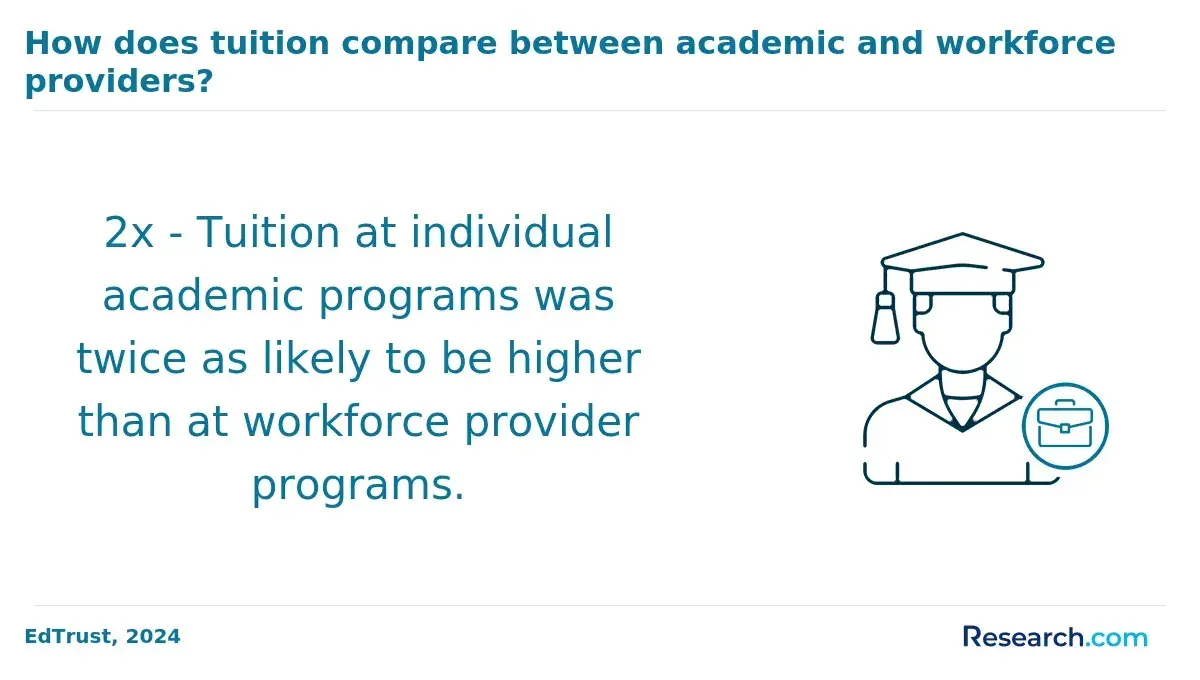
As a broad benchmark, the College Board reported average published tuition and fees of $4,050 for public two-year in-district students and $11,610 for public four-year in-state students in 2024-25. Those are sector averages, not online-program quotes or estimates of what you will pay after aid. The following comparison shows why pricing structure matters more than a low advertised rate.
| Pricing structure | Potential speed-cost trade-off | Costs to include |
| Per credit | Accepted credits can reduce tuition owed; taking more courses at once does not usually reduce the price of each credit. | Remaining credits, per-credit tuition, required course and technology fees |
| Per term or subscription | Faster progress may lower the number of paid terms; delays can increase the total. | Number of expected terms, term charges, assessments, and extension policies |
| Transfer-first pathway | Lower-cost eligible coursework may reduce degree cost, but only if it applies to the intended program. | Transfer course charges, evaluation fees if applicable, and required institutional credits |
Compare each school's written estimate of remaining tuition and fees with its financial aid offer, not with a national average alone. If you still need an online bachelor degree, check federal aid eligibility and employer tuition assistance, and confirm that any proposed lower-cost transfer courses will satisfy your degree requirements before enrolling in them.
What Are the Admission Requirements for Fast Online Colleges?
Undergraduate applicants generally need a high school diploma or equivalent; transfer applicants submit college transcripts. Graduate applicants generally need an eligible bachelor's degree, and individual programs may add prerequisites, professional experience, a license, references, or a portfolio. Selective nursing, education, and clinical pathways may have requirements beyond general university admission.
Ask admissions staff to separate admission to the college from admission to your program. Confirm whether a GPA threshold, standardized test, or prerequisite applies to your applicant category. If you are missing preparation, find out whether foundation courses must be completed before the advertised accelerated schedule begins.
Do Fast Online Colleges Accept Transfer Credits and Work Experience?
Many online colleges consider previously earned college credit; some also evaluate examinations, military education, professional training, portfolios, or demonstrated competencies. Work experience does not automatically become academic credit. Each institution decides what qualifies, how it is evaluated, and whether an award fulfills a major requirement, general education requirement, or only an elective.
The most useful document is a program-specific transfer evaluation. Ask for the maximum applicable credits, the minimum credits you must earn at the college, grade and course-age rules, and any fees or deadlines for prior-learning assessment. Graduate credit does not automatically substitute for undergraduate requirements, or vice versa. Recalculate both time and total cost after the school confirms what remains; an impressive transfer maximum means little if your courses do not fulfill required classes.
What Careers and Salaries Can Fast Online Degrees Lead To?
A faster degree may help you meet educational requirements sooner, but the credential alone does not determine your job offer or pay. The U.S. Bureau of Labor Statistics' 2024 occupational medians below describe workers in those occupations - not graduates of any particular online college. They provide context for evaluating a career goal alongside the training it actually requires.
| Occupation | 2024 median annual pay | Education and other requirements to check |
| Software developer | $133,080 | A bachelor's degree in computer science or a related field is typical; employers also assess technical skills and experience. |
| Registered nurse | $93,600 | Requires an approved nursing education pathway and state licensure; an RN-to-BSN program is for people who are already RNs. |
For a career change, compare the school's total cost and time away from work with the qualifications in actual job postings. Technology hiring can shift with changing tools, including AI, so assess whether a program teaches durable fundamentals and provides opportunities to demonstrate current skills. Neither an occupational median nor a school's career services guarantees an individual outcome.
How Can You Choose a Reputable Fast Online College?
Start with your target credential and occupation, then compare colleges using the same starting assumptions: your transcripts, available study hours, location, and budget. A nonprofit university may be worth considering, but nonprofit status alone does not establish that a particular online program is fast, affordable, or suitable for licensure.
Before paying an enrollment deposit, complete these checks in order:
- Verify institutional accreditation, and check programmatic accreditation and state eligibility if your occupation requires them.
- Request a written evaluation showing accepted credits, requirements remaining, course sequence, and any residency-credit minimum.
- Get a realistic schedule based on your planned course load, including prerequisites, capstones, placements, and required in-person activities.
- Compare the estimated total tuition and fees under that schedule with your aid offer; ask what happens to cost if completion takes another term.
Be cautious of a graduation promise based only on short classes, an unspecified transfer-credit assumption, or a quoted tuition rate that excludes required charges. If a school cannot explain how its timeline applies to your transcript and program, keep comparing.
Other Things You Should Know About
Some students with substantial applicable transfer credit may be able to, depending on remaining requirements and course availability. It is not a realistic general timeline for someone starting without college credit.
They can be for students ready to demonstrate required knowledge and devote enough time to assessments. Progress, program rules, and the number of remaining requirements determine the actual timeline.
No. Eight weeks describes the length of an individual course or session, not the time needed to complete every requirement in a degree.
Not automatically. Check the program's accreditation and your state board's education, supervised-practice, examination, and other requirements before enrolling.
References
- Program Eligibility, Written Arrangements, and Distance Education | 2024-2025 Federal Student Aid Handbook https://fsapartners.ed.gov/knowledge-center/fsa-handbook/2024-2025/vol2/ch2-program-eligibility-written-arrangements-and-distance-education
- Certification Procedures - Questions and Answers http://www.ed.gov/laws-and-policy/higher-education-laws-and-policy/certification-procedures-questions-and-answers
- Tentative Tuition and Fees 2026-2027 | Pace University New York https://catalog.pace.edu/undergraduate/general-university/tuition-fees/tentative-tuition-fees/
- 90-Credit Online Bachelor Degree Programs | Saint Mary's University of Minnesota https://www.smumn.edu/90-credit-online-bachelor-degree-programs/
- Credit for Prior Learning | University of Arizona Catalog https://catalog.arizona.edu/policy/courses-credit/credit/credit-prior-learning
- Is a 3-Year Degree the Same as an Accelerated Degree? | National https://www.national.edu/2026/06/01/3-year-vs-accelerated-degree-program/
- KU Estimated Cost of Attendance | The University of Kansas https://financialaid.ku.edu/estimated-cost-of-attendance
- UMass Global MyPath: Self-Paced Programs https://www.umassglobal.edu/why-umassglobal/flexible-ways-to-learn/self-paced
- Point University Catalog https://catalog.point.edu/policy/standinghonors/creditforpriorlearning
- Undergraduate and Graduate Tuition and Fees | Purdue Global https://www.purdueglobal.edu/tuition-financial-aid/undergraduate-graduate-tuition-and-fees/