2027 Best College Degrees With Competency-Based Programs

Co-Founder and Chief Data Scientist
Choosing a competency-based degree means deciding whether you can demonstrate what you know without losing the instruction, feedback, or supervised training your career requires. That choice matters in fields with strong demand: the U.S. Bureau of Labor Statistics projects employment for information security analysts to grow 29% from 2024 to 2034. For working professionals considering a master's degree, this guide compares ten fields by their fit for competency-based study, then explains how to check cost, accreditation, scheduling, and licensing before enrolling.
Key Things You Should Know
- Business and IT are often strong fits for competency-based master's study because professional skills can be assessed through projects; clinical and licensure-focused fields need closer scrutiny.
- For context, the BLS reports a $133,080 median annual wage for software developers in 2024, but that is an occupational figure - not an expected salary for degree graduates.
- The best option is the accredited program whose assessments, total cost, schedule, and remaining requirements fit your starting skills and career goal - not necessarily the one advertising the fastest pace.
Top 10 Best College Degrees With Competency-Based Programs
Business Programs
A competency-based MBA or master's in management can suit professionals ready to demonstrate skills in accounting, strategy, operations, and leadership through applied projects. Compare the curriculum with your goal: a general MBA may help with broad management preparation, while a specialized analytics or accounting degree may offer more relevant depth.
Check whether assessments require group work or scheduled presentations. Experience may help you progress, but it does not necessarily replace required graduate coursework.
Healthcare Programs
Master's programs in healthcare administration, health informatics, or public health may assess budgeting, policy, data use, and quality improvement through workplace-style assignments. They are worth considering for experienced healthcare staff pursuing nonclinical roles.
A healthcare administration degree does not confer a clinical license. Confirm whether the program requires a placement, access to workplace data, or a capstone - and whether you can complete those requirements in your current role.
Information Technology Programs
Competency-based master's options in IT management, cybersecurity, or cloud-related fields may appeal to professionals who already troubleshoot systems and document solutions. Look for assessments involving architecture, security controls, or risk decisions rather than quizzes alone.
A broad IT degree can support management goals; a focused cybersecurity curriculum may better suit security work. Verify that required tools and projects match current employer expectations, including how students use AI responsibly.
Computer Science Programs
A competency-based master's in computer science should develop and assess substantial technical work, such as algorithms, software design, or a final project. It may suit experienced developers who want deeper theory, but applicants changing careers should check prerequisites in programming and mathematics.
Do not assume a self-paced format makes advanced material quick to master. Compare the program's technical depth with a conventional computer science degree or a shorter certificate before committing.
Nursing Programs
Competency-based MSN pathways may fit registered nurses who can apply clinical and leadership experience to graduate assessments. Entry requirements commonly include an active RN license, and the requirements vary by specialty.
An MSN in nursing leadership is not interchangeable with a nurse practitioner pathway: advanced practice preparation involves specialty-specific clinical training and separate certification and state licensure. Confirm who arranges clinical placements and whether the program meets requirements where you intend to practice.
Psychology Programs
A competency-based master's in psychology may work well for studying research, behavior, or organizational applications through papers and projects. It is not automatically a route to becoming a psychologist or licensed counselor.
Those occupations have distinct degree, supervised-practice, and examination requirements that vary by state. If practice is your goal, verify the exact credential and required placements before choosing a flexible general psychology program.
Education Programs
Competency-based master's programs in curriculum and instruction or educational leadership can let practicing educators connect assessments to classroom or school work. They may be less convenient if you cannot access a suitable teaching setting.
A master's degree does not automatically add a teaching or administrator license; state approval, experience, examinations, and fieldwork may apply. Ask whether the program prepares students for the specific endorsement you need.
Criminal Justice Programs
A competency-based master's in criminal justice or public safety may suit experienced personnel studying policy, leadership, and organizational decision-making. Assessments can build on professional scenarios without granting credit simply for years of service.
Compare the curriculum with your intended role: agency leadership, research, and legal practice require different preparation. A criminal justice degree does not qualify someone to practice law, and advancement within an agency may depend heavily on service and promotion rules.
Engineering Programs
Engineering management may be a more practical competency-based master's option for experienced engineers than a highly laboratory-dependent technical specialty.
Applied projects can assess planning, systems thinking, and operations, but verify whether the degree includes the technical depth your employer expects. If professional engineer licensure is your goal, investigate your state board's education and experience rules; a graduate management degree does not substitute for them.
Social Work Programs
An MSW has supervised field education requirements that cannot be replaced simply by testing out of material. That makes fully self-paced completion harder to arrange than in many business programs.
If you find an MSW advertised as competency-based, verify its field-placement structure, accreditation status, and state licensure relevance. Applicants who already hold an eligible BSW should ask about a separately defined advanced-standing pathway rather than assuming work experience alone shortens the degree.
What Are Competency-Based College Degree Programs?
Competency-based education awards progress when students demonstrate specified knowledge and skills through assessments, rather than relying only on time spent in class. A program may still have deadlines, required courses, or scheduled terms. Its assessments might include exams, papers, simulations, and workplace-style projects.
Not every program uses the same model. Some organize learning around courses and grades; others use broader assessments.
When reviewing competency based programs, ask to see sample assessments, grading standards, instructor access, and rules for revising unsuccessful work. The deciding question is whether the format helps you learn what you do not yet know - not merely prove what you already do.
Which College Degrees Offer Competency-Based Learning?
The strongest field match depends on what a program can assess independently and what must be practiced under supervision. Business, IT, and some nonclinical healthcare degrees often lend themselves to applied projects.
Nursing, teacher licensure, counseling, and social work require closer attention to placements and state rules. These are field-level comparisons, not a claim that every degree in a field has a competency-based option.
If you are still deciding among college majors, work backward from the role you want, then confirm that an actual competency-based program offers the right credential and specialization. At the master's level, check whether a bachelor's major, prerequisites, or professional license is required before comparing formats.
Are Competency-Based Degree Programs Accredited?
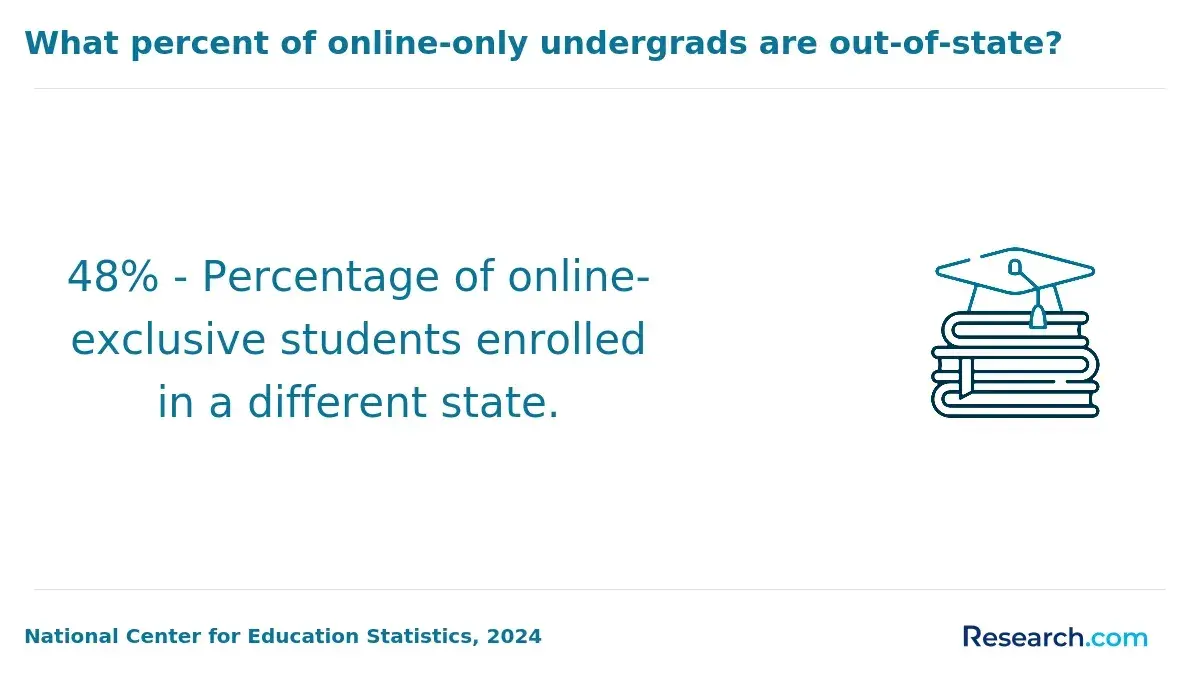
Competency-based degrees can be accredited, but the format itself is not an accreditation status. Verify that the institution is accredited by a U.S. Department of Education-recognized institutional accreditor. Then check whether your intended profession also calls for programmatic accreditation or state approval. These are separate checks.
A common mistake is finding an accredited university and assuming its particular degree satisfies licensing requirements. Request the exact program name and ask the relevant licensing board whether it meets educational requirements in the state where you plan to work. This is especially important for nursing, education, counseling, social work, and engineering.
How Do Online and Campus-Based Competency Programs Compare?
Online delivery can reduce travel, while campus study may offer easier access to facilities and face-to-face practice. Neither format guarantees a flexible schedule. The comparison below highlights obligations to confirm for the specific degree you are considering.
| Format | Potential advantage | Requirement to check |
| Online | Study without routine campus travel | Live sessions, deadlines, proctored assessments, and local placements |
| Hybrid | Online work alongside scheduled in-person learning | Frequency and cost of campus visits |
| Campus-based | Direct access to facilities and in-person instruction | Commute, class times, and attendance expectations |
Use lists of best online universities as a starting point, not proof that a particular master's program is online or competency-based. Obtain its current schedule and ask whether clinicals, labs, residencies, or student teaching must be completed in person.
What Do You Study in a Competency-Based Degree Program?
You study the subject of your degree, but demonstrate mastery through clearly defined competencies. A business student might analyze an operating problem; an IT student might design a security response. Expect foundation work where you have knowledge gaps, as well as any required concentration, elective, or culminating project.
Review the assessment map before enrolling. A short description such as "learn at your own pace" tells you little about the difficulty of graduate research, team assignments, labs, or a capstone. Ask how instructors teach unfamiliar material and what happens if you do not pass an assessment on the first attempt.
What Are the Admission Requirements for Competency-Based Degrees?
Master's admission generally starts with a bachelor's degree, but prerequisites and selection rules depend on the program. Computer science may require substantial technical preparation; nursing pathways may require an RN license; other fields may ask for relevant work experience, a statement, or recommendations.
Do not assume that a university's general admission policy governs every graduate program.
Before applying, request the current program-specific requirements, including any GPA threshold, prerequisite courses, and testing policy. Ask for an evaluation of previous graduate coursework if you hope to transfer credit. Professional experience can make assessments more familiar, but it does not automatically earn academic credit or waive admission requirements.
How Long Do Competency-Based Degrees Take and What Do They Cost?
Completion time and cost vary with the remaining curriculum, enrollment pace, assessment attempts, and any capstone or supervised work. A flat-rate term can benefit someone prepared to make steady progress, but paying for extra terms can erase that advantage. A per-credit program may be more predictable for a student who must study part time.
Request a written estimate covering tuition, mandatory and technology fees, materials, assessment charges, and travel or placement expenses. Then compare scenarios based on your realistic study time rather than a fastest-finish example.
Ask when transfer decisions are made, which credits apply to degree requirements, and whether financial aid is available for your enrollment pattern. Treat an advertised low term price - not the likely total bill - as a red flag.
What Careers and Salaries Can Competency-Based Degrees Lead To?
Career fit depends on the specialization and qualifications an employer or licensing board requires. A competency-based IT degree may support a move toward technical leadership; a healthcare administration degree may support nonclinical management work. Neither creates an automatic promotion.
The BLS reports a 2024 median annual wage of $93,600 for registered nurses, but that figure covers workers in the occupation, not graduates of a competency-based MSN. When comparing highest paying majors, do not treat occupational medians as a return-on-investment forecast.
Compare the likely total program cost with the jobs you can realistically pursue, including any experience, license, or certification you still need. A shorter certificate or employer-sponsored training may be the better choice if you need one specific skill rather than a graduate credential.
Which Certifications or Licenses Require Additional Training?
A degree and permission to practice are different credentials. Nursing advanced practice, clinical social work, counseling, teaching, and professional engineering can involve requirements beyond graduate coursework.
The additional steps may include an approved program, supervised experience, a certification examination, and a state license; the combination depends on the occupation and jurisdiction.
Before paying a deposit, identify the precise license or certification named in job postings you hope to pursue. Confirm eligibility with the state board or credentialing body, then ask the program how it supports required placements and disclosures for your state. Do not rely on a broad claim that graduates are "prepared for licensure" without checking the credential and location it covers.
Other Things You Should Know About
Possibly, if you already know the material and can devote time to assessments. Required coursework, term rules, capstones, and placements can still set the pace.
Not automatically. Ask whether the specific program evaluates prior learning or accepts transfer coursework and how any approved credit applies to the degree.
Employers evaluate credentials in context. Institutional accreditation, relevant skills, the exact degree, and applicable professional requirements matter more than the pacing model alone.
Start with the role you want and its entry requirements. Choose a competency-based program only after confirming that its curriculum, assessments, schedule, and total cost fit that goal.
References
- Direct Assessment (Competency-Based) Programs | ed.gov http://www.ed.gov/laws-and-policy/higher-education-laws-and-policy/higher-education-policy/direct-assessment-competency-based-programs
- Competency-Based Education (CBE) Programs | Texas Higher Education Coordinating Board https://www.highered.texas.gov/competency-based-education-programs/
- How a Competency-Based Education Can Lower College Tuition | University of Wisconsin Flexible Option https://flex.wisconsin.edu/stories-news/math-competency-based-education-reduces-costs-students/
- Competency-Based Education: Saving Students Time and Money | educause.edu https://er.educause.edu/articles/2016/12/competency-based-education-saving-students-time-and-money
- Competency Based Education (CBE) | NCCCS https://www.nccommunitycolleges.edu/cbe/
- Competency Based Education - Online Learning | UMass Global https://www.umassglobal.edu/blog-news/competency-based-education-9-things-know-self-paced-online-learning
- Awarding Credit for Prior Learning | acenet.edu https://www.acenet.edu/Programs-Services/Pages/Credit-Transcripts/Awarding-Credit-for-Prior-Learning.aspx
- Professional Licensure - State Authorization Network https://wcetsan.wiche.edu/resources/professional-licensure
- Midland University Catalog https://grad.catalog.midlandu.edu/academicpolicies/cpl
- FAQs - Competency Based Education - UWA Online https://online.uwa.edu/faqs-cbe/